Dental Implants vs. Bridges: Which Tooth Replacement Option Is Better?
Losing a tooth changes more than just your smile. It affects how you chew, how you speak, and over time, it can even change the shape of your face. Left unaddressed, a missing tooth causes the surrounding teeth to shift, the jawbone to deteriorate, and bite problems to develop—none of which are easy or cheap to fix later.
The good news? Modern dentistry offers reliable solutions. Dental implants and bridges are the two most common tooth replacement options, and both can restore your smile effectively. But they work differently, cost differently, and suit different patients. Choosing the wrong one can mean additional procedures, higher costs, and less-than-ideal results down the line.
At The Dental Retreat, restorative care is about more than filling a gap. It’s about finding the solution that fits your oral health, your lifestyle, and your long-term wellbeing. This guide breaks down both options in detail—so you can walk into your consultation with confidence.
What Are Dental Implants?
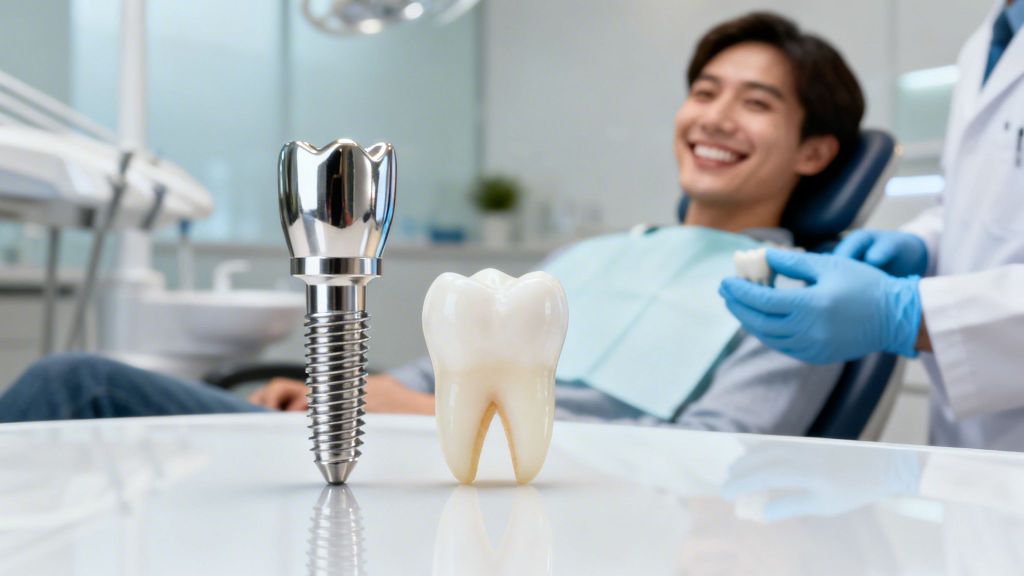
A dental implant is a small, biocompatible titanium post that is surgically inserted into the jawbone to serve as an artificial tooth root. Over time, the implant undergoes a process called osseointegration, where it fuses with the surrounding bone to create a strong and stable foundation. Once this integration is complete, a custom-made crown is securely attached to the top of the implant. The crown is carefully designed to match the appearance, shape, and color of your natural teeth, ensuring a seamless and natural look. The result is a durable and fully functional replacement tooth that feels, looks, and performs just like a real one, allowing you to chew, speak, and smile with confidence. Dental implants are an excellent long-term solution for restoring missing teeth and improving overall oral health.
The Implant Procedure
The dental implant procedure is a multi-step process that typically spans several months to ensure a stable and lasting result. Here’s a breakdown of what you can expect:
Initial Implant Placement:
The journey begins with a minor surgical procedure to place the titanium implant post directly into your jawbone, where it will serve as the new tooth root.
Osseointegration (Healing and Fusion):
Following the placement, a crucial healing period of three to six months begins. During this time, a process called osseointegration occurs, where the implant post naturally fuses with your jawbone. This creates an incredibly strong and stable foundation for your new tooth.
Abutment and Crown Placement:
Once osseointegration is complete, you’ll return for the next step. A small connector piece, called an abutment, is attached to the top of the implant post. Finally, your custom-made crown is secured to the abutment, completing the restoration.
What If Bone Loss Is a Concern?
For an implant to be successful, it needs sufficient jawbone to anchor it. If you’ve experienced bone loss, a bone grafting procedure may be necessary before the implant can be placed. This involves adding bone material to the area to build it back up. While this will add extra time to your overall treatment plan, it is a critical step to ensure the long-term stability and success of your implant.
Why Patients Choose Implants
The appeal of dental implants comes down to longevity and function. With proper care, implants can last 20 to 30 years—sometimes a lifetime. They don’t rely on adjacent teeth for support, which means neighboring teeth remain untouched and structurally intact.
Implants also stimulate the jawbone in the same way natural tooth roots do. This prevents the bone loss that typically follows tooth extraction, maintaining your facial structure and preventing that sunken look that can develop over time.
From an aesthetic standpoint, implants are hard to distinguish from natural teeth. Each crown is custom-shaded and shaped to blend seamlessly with the surrounding teeth.
What Are Dental Bridges?
A dental bridge literally “dental bridges” the gap left by a missing tooth. It consists of one or more artificial teeth (called pontics) held in place by crowns attached to the natural teeth on either side of the gap. These supporting teeth are called abutment teeth.
Types of Dental Bridges
There are several types of bridges, each suited to different situations:
Traditional bridges:
The most common type, supported by crowns on both adjacent teeth.
Cantilever bridges:
Used when there’s only one natural tooth next to the gap.
Maryland bridges:
A more conservative option that uses a metal or porcelain framework bonded to the backs of adjacent teeth—no crowns required.
Implant-supported bridges:
Anchored by implants rather than natural teeth, typically used when multiple adjacent teeth are missing.
The Bridge Procedure
Getting a bridge usually takes two appointments. During the first visit, the abutment teeth are filed down and reshaped to accommodate the crowns. Impressions are taken and sent to a dental lab, where the bridge is custom-fabricated. A temporary bridge protects the area in the meantime. On the second visit, the permanent bridge is fitted, adjusted, and cemented into place.
The entire process is faster than implants, with no surgery involved—an appealing factor for many patients.

Dental Implants vs. Bridges: A Side-by-Side Comparison
Cost and Long-Term Value
Upfront, bridges are the more affordable option. A single-tooth bridge typically costs less than an implant when you factor in the surgery, abutment, and crown associated with the implant process.
However, the long-term picture shifts considerably. Bridges generally last 10 to 15 years before they need to be replaced. Implants, cared for properly, can last decades. When you factor in the cost of replacement and any associated dental work over a lifetime, implants often prove to be the more cost-effective solution in the long run.
It’s also worth noting that bridge placement requires altering healthy adjacent teeth. If those teeth develop complications down the line—decay under the crowns, for instance—the cost of treatment increases significantly.
Impact on Jawbone Health
This is where implants hold a clear advantage. When a tooth root is lost, the jawbone beneath it begins to resorb—essentially shrinking because it no longer receives stimulation. Bridges do nothing to address this. The bone beneath the pontic continues to deteriorate over time, which can eventually affect the fit of the bridge and the health of surrounding teeth.
Implants, by contrast, preserve bone mass. The titanium post mimics a tooth root, providing the stimulation the jawbone needs to stay healthy and dense. For patients concerned about long-term oral health and facial structure, this is a significant consideration.
Aesthetic Outcomes
Both implants and bridges can produce natural-looking results when done well. However, implants have a slight edge in this area. Because they emerge from the gumline just like natural teeth, they tend to look more realistic—especially in close-up or when smiling. Bridges, while effective, can sometimes show slight gaps at the gumline as the bone beneath the pontic gradually resorbs.
Procedure and Recovery
Bridges win on convenience. The procedure is non-surgical, faster, and involves minimal recovery time. Most patients return to normal activities the same day.
Implants require surgery, regional anesthesia, and a healing period of several months. For patients who are medically compromised, on blood thinners, or simply prefer to avoid surgery, a bridge may be the more appropriate choice.
Maintenance and Care
Caring for Dental Implants
Implants are remarkably low-maintenance. Brush twice daily, floss regularly, and attend routine dental check-ups—that’s essentially it. Because implants are not susceptible to cavities, the focus of care is on keeping the surrounding gum tissue healthy and monitoring the implant at check-ups.
Avoid habits that can damage implants, such as chewing ice, grinding your teeth (a night guard can help if you grind), or using your teeth as tools.
Caring for Dental Bridges
Bridges require a bit more attention, particularly when it comes to cleaning beneath the pontic. Food debris and plaque can accumulate in the space between the bridge and the gumline—an area that a regular toothbrush can’t reach. Floss threaders, interdental brushes, or a water flosser are essential tools for keeping this area clean and preventing decay in the abutment teeth.
Regular dental check-ups allow your dentist to monitor the condition of the bridge, the underlying gum tissue, and the abutment teeth.
How to Choose the Right Option for You
There’s no universally “better” option—it comes down to your individual circumstances.
Dental implants may be the right choice if:
You have good overall oral and bone health
You’re looking for the most durable, long-term solution
You want to preserve your jawbone and facial structure
You’re willing to invest more upfront for a longer-lasting result
A dental bridge may be the right choice if:
You want a faster, non-surgical solution
Cost is a significant factor in the short term
The adjacent teeth are already damaged or have crowns
You have health conditions that make surgery inadvisable
Age, bone density, smoking habits, and the presence of conditions like diabetes can all influence which option is appropriate. A thorough consultation with your dentist is essential before making a decision.

Take the Next Step Toward a Healthier Smile
Both dental implants and bridges are proven, effective solutions for replacing missing teeth. Implants offer superior longevity and bone preservation; bridges offer speed, simplicity, and lower upfront costs. The right choice depends on where you are today—your oral health, your budget, and what you want from your smile long-term.
The team at The Dental Retreat is here to help you make that decision with clarity. A consultation gives you the chance to discuss your options in detail, ask questions, and get a personalized recommendation based on your specific needs—not a one-size-fits-all answer.
Schedule your consultation at The Dental Retreat today and take the first step toward restoring your smile with confidence.
The Dental Retreat
https://www.google.com/maps?cid=12091687882530918159
28047 Stockdick School Rd #200, Katy, TX 77493
(281) 717-6696
https://dentalretreattx.com/