You sip ice water on a warm Katy afternoon, and one tooth answers with a fast, sharp jolt. It's startling, and it can make you wonder if something serious is going on.
That reaction is common, and it usually has a real, identifiable cause. More than 12% of Americans experience tooth sensitivity, with cold as the most common trigger, according to this overview of hot and cold tooth sensitivity. The good news is that cold sensitivity often points to a problem dentists can find and treat.
If you've been searching for a dentist near me or a dentist in Katy, TX because cold drinks, cold air, or ice cream suddenly hurt, it helps to know what's happening inside the tooth first. Once that part makes sense, the causes and treatment options become much less confusing.
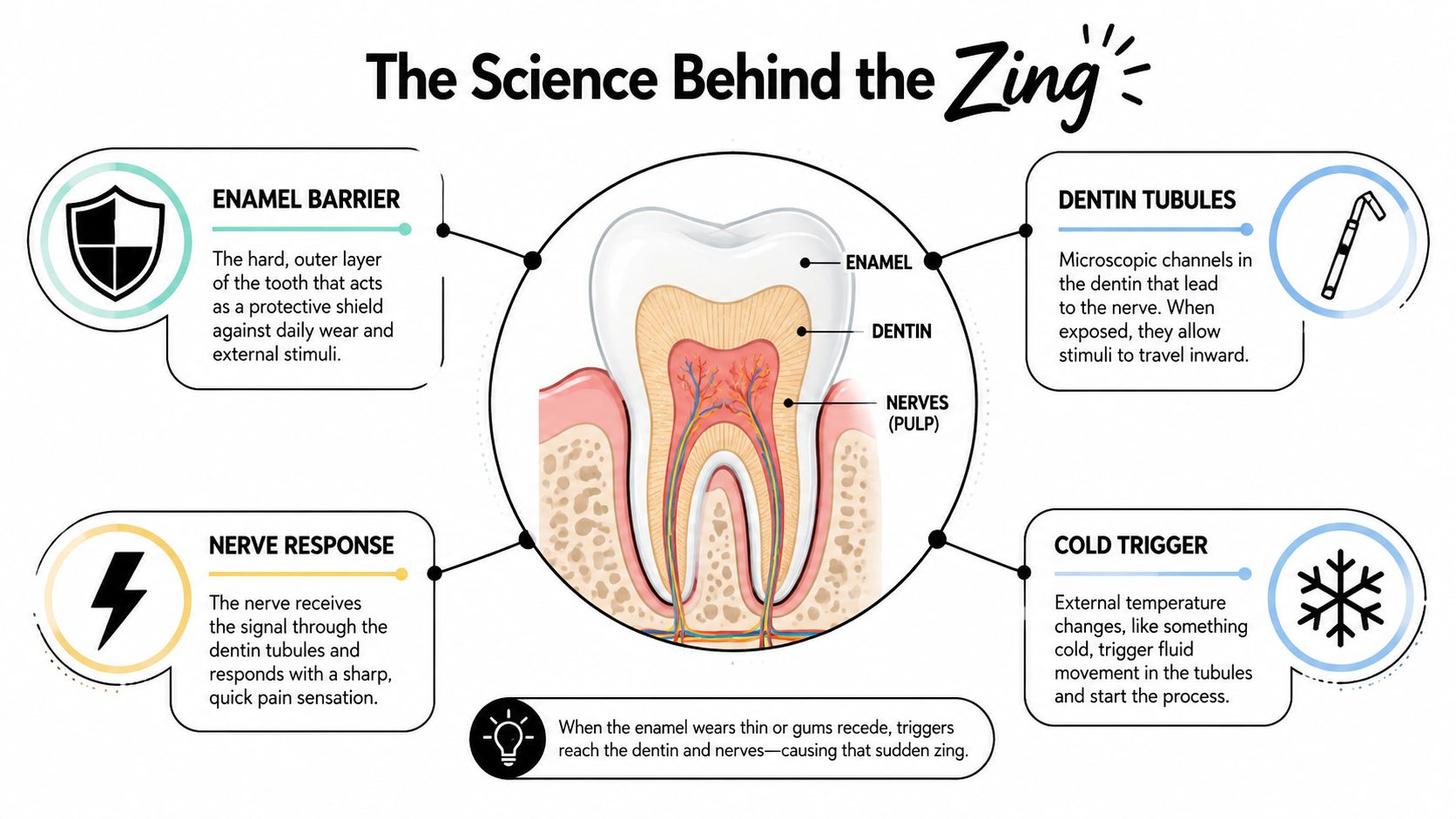
The Science Behind the Zing Why Your Teeth Hurt from Cold
On the outside, a tooth looks solid and simple. Inside, it is built in layers. Enamel forms the hard outer shield you see above the gumline. Beneath it sits dentin, and at the center is the pulp, which holds the tooth's nerve and blood supply.
Cold sensitivity usually begins after dentin loses some of that outer protection.
What dentin actually does
Dentin is not a smooth, sealed wall. It contains thousands of microscopic channels called dentinal tubules that run inward toward the nerve. A close look at dentin structure from the National Institute of Dental and Craniofacial Research helps explain why a small opening in that protective layer can make a tooth react so quickly.
A helpful way to picture it is to compare enamel to a well-insulated exterior wall. Once that wall gets thin or uncovered, cold reaches the inner part of the tooth much more easily. The fluid inside those tiny tubules shifts in response to temperature changes, and that movement irritates the nerve. The result is the fast, sharp zing many patients describe.
Dentists call this the hydrodynamic mechanism. The name sounds technical, but the idea is straightforward. Cold does not need to touch the nerve directly. It only needs a pathway that lets the fluid in those tubules move.
Practical rule: Sensitivity that feels quick and sharp often means cold is reaching exposed dentin and triggering the nerve through those microscopic channels.
Why exposed areas react so strongly
Those tubules are usually covered and buffered. Trouble starts when enamel thins, a filling margin breaks down, or the gumline pulls back and exposes the root surface. Root surfaces are especially reactive because they do not have the same thick enamel covering as the visible crown of the tooth.
That is why dentists pay close attention to enamel loss and recession. They change the tooth's insulation. If you want a clearer picture of how that outer layer wears down over time, this guide on tooth enamel erosion explains the process in everyday terms.
In our Katy office, we often reassure patients that this pain has a mechanical reason. Your tooth is not being dramatic. It is responding to a shortcut that lets cold reach sensitive inner structures faster than it should.
Why cold pain can feel different from biting pain
Patients often tell us, “It only hurts with ice water,” or “Cold air catches one spot near the gumline.” That detail helps. Pain from cold often points to exposed dentin or early irritation inside the tooth. Pain when biting suggests a different kind of stress, such as a crack, a filling problem, or pressure around the tooth's supporting tissues.
A quick comparison helps:
| Trigger | What it can suggest |
|---|---|
| Cold drinks or cold air | Exposed dentin, enamel wear, gum recession, early irritation |
| Pain when biting | Crack, fracture, filling issue, pressure-related problem |
| Lingering pain after cold | Deeper irritation that needs prompt evaluation |
For a lot of Katy families, understanding this science lowers the anxiety right away. Once you know why the zing happens, the next step feels less mysterious. At The Dental Retreat, we use that understanding to guide calm, comfortable care in a setting that feels more like a wellness visit than a rushed dental appointment.
Top 4 Reasons Your Teeth Are Sensitive to Cold
Most cold sensitivity starts with the same basic problem: the tooth loses part of its protective cover, and cold reaches a layer that is much more reactive.
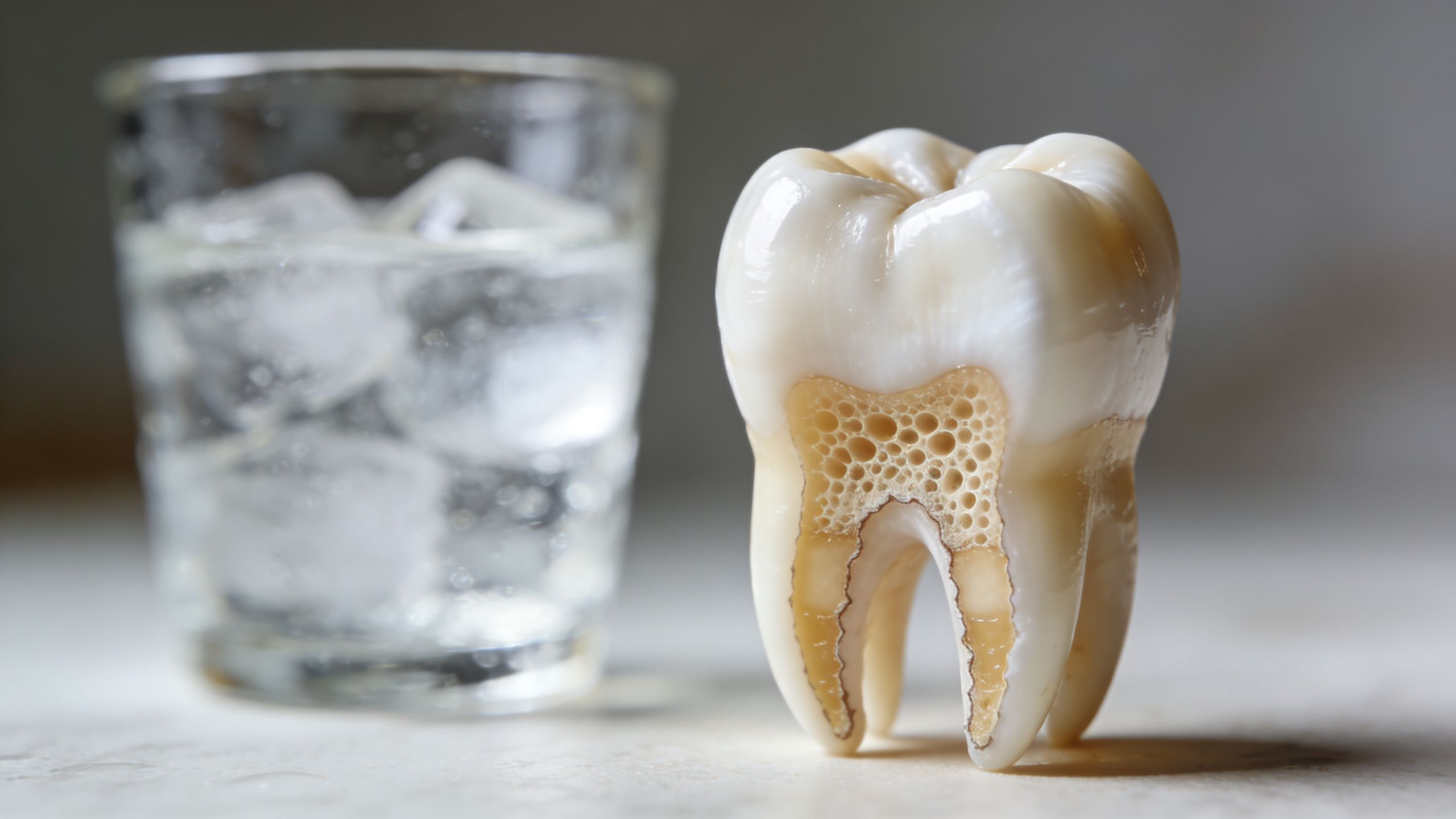
At The Dental Retreat in Katy, we often explain it like a house with insulation that has gotten thin in one spot. The cold gets in faster there. Teeth react in a similar way. Once enamel, gum tissue, or a restoration no longer seals the tooth well, icy drinks and cold air can trigger that familiar zing.
Enamel wear from acid and brushing habits
Enamel is your tooth's hard outer shield, but it is not indestructible. Acidic drinks, frequent snacking, teeth grinding, and aggressive brushing can slowly thin that surface.
A review from Abella Dental on cold tooth sensitivity connects rising cold sensitivity with modern habits such as frequent acidic beverage use. In real life, this often looks like sparkling water all day, lemon in water, sports drinks after workouts, or a firm toothbrush used with too much pressure.
The result is gradual, not dramatic. Then one day, ice water suddenly feels sharp.
Gum recession that exposes the root
Pain near the gumline often points here. As gums recede, they uncover the root surface, which does not have the same thick enamel protection as the visible part of the tooth.
That exposed root can react quickly to temperature changes, especially with cold drinks or a breath of chilly air. Brushing too hard, clenching, gum disease, and natural tissue changes over time can all play a role.
This is a very common reason people in Katy tell us, “It only hurts in one spot right by the gum.”
Cavities and worn dental work
A cavity creates a weak point in the tooth. Older fillings, crowns, or bonding can do the same if they start to wear down, chip, or pull slightly away from the tooth.
Cold can slip through those tiny openings and irritate the inner layers. Sometimes you can see the problem. Often you cannot. A small cavity between teeth or a failing filling edge may only show up during an exam or on X-rays.
This is one reason a tooth that was fine last month can suddenly become sensitive now.
Cracks you can't always see
Tiny cracks can form from clenching, grinding, chewing ice, biting hard foods, or years of normal wear. Some are so small that the tooth looks normal in the mirror.
But cold can still find that narrow pathway. The crack opens just enough for temperature changes to irritate the inside of the tooth, which can cause a quick, sharp response. If the tooth also feels odd when you bite or release pressure, a crack moves higher on the list of possibilities.
A simple pattern check can help:
- Several teeth feel sensitive: enamel wear, acid exposure, grinding, or brushing habits are more likely.
- One area hurts near the gumline: gum recession and exposed root surfaces are common causes.
- One tooth suddenly reacts to cold: a cavity, crack, or worn filling becomes more likely.
- Cold pain plus chewing pain: the tooth may have a crack or fracture.
The good news is that these patterns are usually treatable. In our spa-inspired Katy office, we use them to narrow down the cause quickly and recommend care that feels calm, practical, and customized for your comfort.
Less Obvious Triggers You Might Not Suspect
A tooth can react to cold even when the problem did not start with brushing, sugar, or a visible cavity. Sometimes the trigger begins in your overall health, a recent treatment, or even your sinuses. That is why two people in Katy can both say, “Cold water hurts,” while the causes are completely different.
Medications, dry mouth, and hidden enamel stress
Saliva works like your mouth's rinse cycle. It helps wash away food particles, buffers acids, and gives enamel a chance to recover after meals. When saliva drops, teeth stay exposed longer.
As noted in Cleveland Clinic's review of tooth sensitivity, some medications, including certain antidepressants and blood pressure medicines, can cause dry mouth and make sensitivity more likely. If your symptoms started after a new prescription or dosage change, bring that up at your visit. That detail can be surprisingly helpful.
If dry mouth is part of the picture, daily enamel support matters more. Simple habits that strengthen tooth enamel naturally can lower the strain on already sensitive teeth.
Acid reflux can affect teeth, too
Some patients do all the usual things right and still develop cold sensitivity because acid is reaching the teeth from the stomach instead of from food or drinks. Over time, that repeated exposure can soften and thin enamel, especially on surfaces you may not notice in the mirror.
Your teeth do not care where the acid came from. They react to the wear it leaves behind.
This is one reason we ask about reflux symptoms, throat irritation, and frequent heartburn at The Dental Retreat. In a wellness-focused practice, those health clues matter. Sometimes the path to a calmer tooth starts with connecting oral symptoms to the rest of your body.
Sometimes the best answer to cold sensitivity is broader than the tooth itself.
Whitening, recent cleanings, and new dental work
Teeth can feel more reactive for a short time after whitening. The same can happen after a professional cleaning, especially if tartar had been covering areas near the gumline, or after a new filling.
That kind of tenderness is often temporary. A good rule is to watch the direction. If the sensitivity is gradually easing, that usually fits a normal recovery pattern. If it becomes sharper, lingers, or wakes you up, the tooth needs a closer look.
In our spa-inspired Katy office, we talk patients through that difference carefully so you are not left guessing whether to wait or call.
Sinus pressure can mimic a tooth problem
Upper back teeth sit close to the sinus spaces, so congestion and allergy pressure can create pain that feels dental. In Katy, that comes up often during seasonal allergy swings. People may say several top teeth hurt with cold at the same time, even though the teeth themselves are not the true source.
That pattern can be confusing. Tooth pain usually stays more focused. Sinus-related discomfort often feels broader, heavier, and tied to congestion, facial pressure, or bending forward. A dental exam can help sort out which one you are dealing with, so you can get relief without chasing the wrong problem.
Home Care for Sensitivity and When to Call Your Dentist Immediately
If the sensitivity is mild and brief, a few home changes can calm things down. But home care works best as a first step, not a permanent substitute for diagnosis. The right treatment depends on the cause.
What you can do at home
Start with the simple things that protect enamel and reduce nerve irritation.
- Use a desensitizing toothpaste: Potassium nitrate is a well-known ingredient for sensitivity relief. Use it consistently, not just once in a while.
- Switch to a soft-bristled toothbrush: Gentle pressure protects both enamel and gums.
- Brush with a lighter touch: Scrubbing harder doesn't clean better. It just adds wear.
- Cut back on frequent acid exposure: If you drink acidic beverages, try to keep them with meals instead of sipping all day.
- Rinse with plain water after acidic foods or drinks: That helps clear the mouth without more abrasion.
- Protect enamel habits long term: This guide on how to strengthen tooth enamel naturally offers practical ways to support daily enamel care.
What home care can and can't fix
Desensitizing toothpaste can reduce symptoms. Better brushing can stop further damage. Avoiding triggers can make daily life more comfortable.
But none of those steps can seal a crack, remove decay, fix a leaking filling, or treat advanced gum recession. If a tooth is sending a warning signal, comfort measures help, but they don't replace a clinical exam.
Home relief is useful. Diagnosis is what prevents a small problem from turning into a painful one.
Call an emergency dentist if you notice these signs
Some kinds of sensitivity need prompt attention because they may point to infection, nerve inflammation, or structural damage.
A same-day or urgent dental visit is wise if you have:
- Pain that lingers after the cold is gone
- Sensitivity to heat as well as cold
- Pain that wakes you up at night
- A single tooth with sudden, intense pain
- Swelling, a bump on the gums, or a bad taste in the mouth
- Pain when biting down
- A visible crack, broken tooth, or lost filling
If you're in Katy, Sunterra, Cane Island, Elyson, Katy Lakes, Ventanna Lakes, or nearby neighborhoods and you're searching for an emergency dentist, it's better to have sharp or lingering cold sensitivity checked sooner rather than later. Teeth rarely send repeated pain signals for no reason.
How The Dental Retreat Diagnoses and Treats Your Tooth Sensitivity
Cold sensitivity has a few common causes, but the feeling can be surprisingly similar from one problem to the next. A small area of gum recession, a worn filling, a crack, or an irritated nerve can all create that same quick jolt. The goal of your visit is to figure out which doorway the cold is slipping through.
What happens at your exam
At The Dental Retreat in Katy, the appointment usually starts with a careful conversation. We ask where you feel the pain, how long it lasts, and what sets it off. A tooth that stings for one second after ice water suggests a different problem than a tooth that throbs long after the drink is gone.
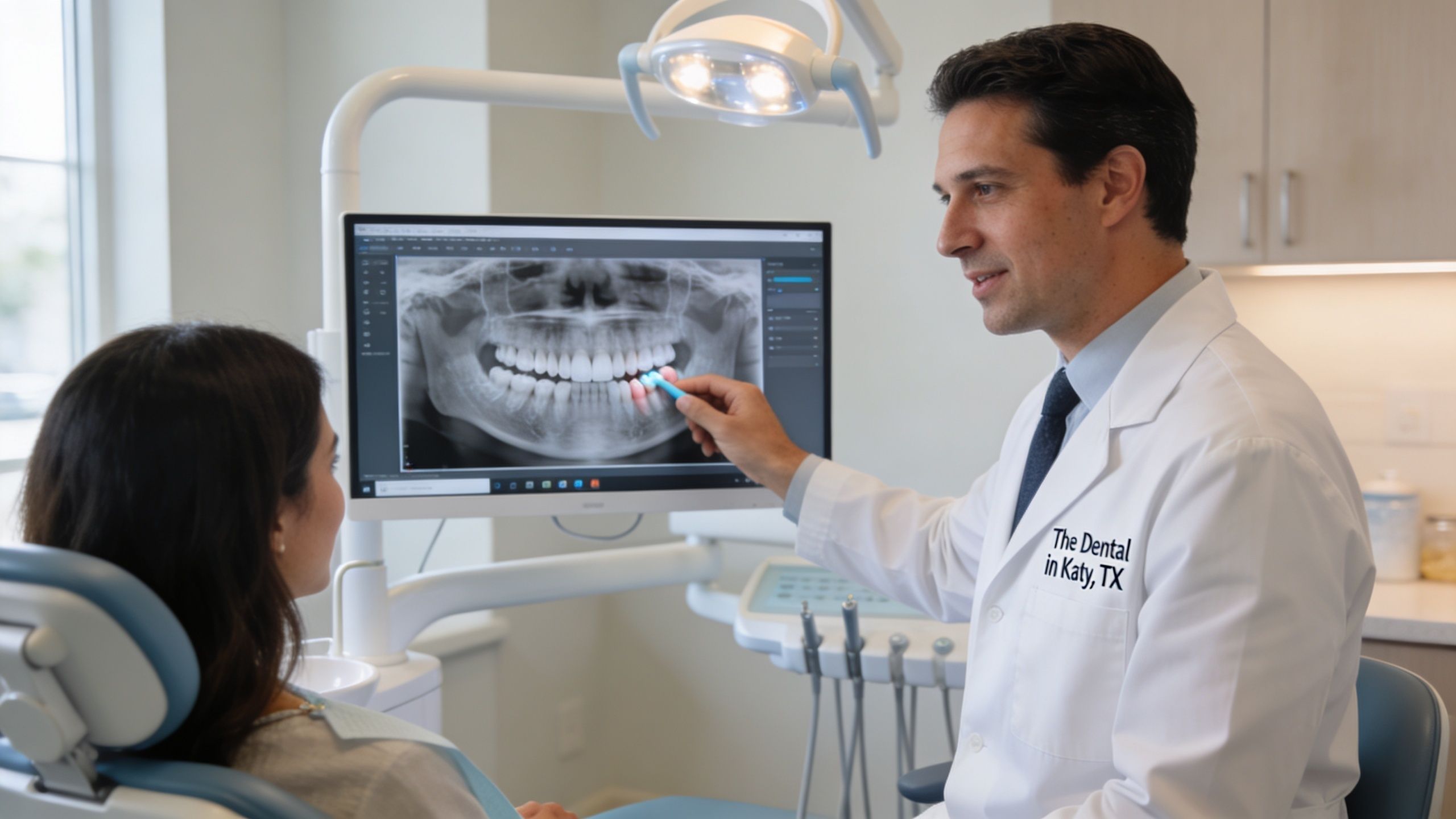
Next comes the clinical exam. The dentist checks your enamel, gums, bite, and any older dental work because sensitivity often starts at a weak spot that is easy to miss at home. Digital X-rays help show what the eye cannot see well, including decay between teeth, changes around the roots, bone loss, or trouble hiding under a filling or crown.
For many Katy patients, the $139 new patient exam with cleaning and X-rays is a practical first step. It gives you answers without guesswork and helps us choose the least invasive treatment that fits the underlying cause.
Why diagnosis changes the treatment
A sensitive tooth works a lot like a house with a draft. You can put on a sweater and feel a little better, but the effective fix is finding the gap that lets the cold air in. Teeth behave the same way.
If the outer layer has worn thin, the answer may be strengthening and sealing the surface. If a filling has opened at the edge, that opening needs repair. If the nerve inside the tooth is inflamed, the plan changes again. Good diagnosis saves time, avoids unnecessary treatment, and often brings relief faster because the care matches the problem.
The quickest path to lasting relief is treating the source of the pain.
Here's how exam findings often connect to treatment:
| What the exam finds | Common treatment approach |
|---|---|
| Early enamel wear | Fluoride treatment, desensitizing products, habit changes |
| Exposed root surface | Bonding, fluoride varnish, periodontal care |
| Cavity or failing filling | New filling or restorative repair |
| Cracked or weakened tooth | Crown or other protective restoration |
| Deep nerve inflammation | Endodontic treatment such as a root canal |
Treatments that target the actual cause
Mild sensitivity often improves with fluoride varnish or a stronger home product that helps rebuild and protect the tooth surface. If the problem is exposed dentin near the gumline, bonded resin can cover that area and block the cold from reaching the inner channels of the tooth.
Gum recession calls for its own plan. In that case, treatment may include periodontal therapy to calm inflammation, protect the roots, and reduce future irritation. If decay or a leaking filling is letting cold reach the inside of the tooth, restorative treatment closes that pathway.
A cracked or weakened tooth may need a crown. The crown acts like a protective shell, helping the tooth handle pressure and temperature changes with less pain. If the nerve has become badly inflamed, a root canal may be the best way to remove the damaged tissue and keep the tooth.
Many people hear that term and tense up. In real life, root canal treatment is often the step that stops the lingering pain and lets a patient drink something cold without bracing for it.
This short video gives a helpful overview of how dentists think through sensitivity and treatment options.
Care that fits the whole picture
Sensitivity can be the first sign of a larger oral health issue, so the visit often looks at more than one tooth. Some patients need a routine cleaning, updated dental X-rays, gum evaluation, or a plan for worn dental work. Others want to talk about appearance once the discomfort settles, including teeth whitening or other cosmetic dentistry options.
That broader view is part of what makes care at The Dental Retreat feel different for families in Katy and nearby neighborhoods. The focus is not just on stopping a zing from cold water today. It is on protecting your comfort, your long-term dental health, and your sense of ease in the chair.
If a tooth needs more involved repair, the same diagnostic visit can help map out restorative dentistry, a tooth extraction if the tooth cannot be saved, or replacement options such as dental implants near me if that question is already on your list. In a community-centered, spa-inspired practice, careful diagnosis is the start of getting you comfortable again.
A Different Kind of Dental Visit Your Comfort Is Our Priority
Many people wait too long to address sensitivity because they dread the appointment more than the cold drink. That's understandable, especially if you've had rushed or uncomfortable dental visits in the past.
At The Dental Retreat, the experience is designed to feel calmer from the moment you arrive. Patients from Katy, Sunterra, Cane Island, Katy Manor, Kingscrossing, Lakehouse, Marisol, The Grange, Anniston, Katy Lakes, Elyson, and Ventanna Lakes often want the same thing. Relief without added stress.

What a more relaxing visit can feel like
Instead of a cold, clinical atmosphere, the office leans into a spa-inspired setting. You may settle into a heated massage chair, use noise-cancelling headphones, and watch a show on a TV in the treatment room while the team takes care of the details. Small touches such as aromatherapy help soften the edge that often comes with dental anxiety.
That matters when you're already dealing with pain. A calmer environment makes it easier to explain symptoms clearly, ask questions, and move forward with treatment before the problem worsens.
Gentle care for anxious patients
Some patients only need reassurance and a gentle approach. Others need more support. The Dental Retreat also offers sedation dentistry, which can be especially helpful for people who avoid care because of fear, a strong gag reflex, or difficult past experiences.
The atmosphere is judgment-free. If you haven't had a cleaning and exam in a while, or if you're coming in because one tooth suddenly hurts and you're worried it might turn into an emergency, the focus stays on comfort, clarity, and practical next steps.
A good dental visit should leave you feeling relieved, informed, and cared for.
That patient-first approach also helps when your needs go beyond sensitivity alone. Some families are looking for a long-term dentist in Katy, TX for cleaning and exams, some need an emergency dentist, and others are exploring cosmetic dentist near me or dental implants near me after solving the immediate pain. The setting and the care model support both urgent treatment and long-term oral health.
If cold drinks, cold air, or ice cream keep making you wince, you don't have to keep guessing. The Dental Retreat offers gentle exams, digital X-rays, emergency dental care, cosmetic and restorative treatment, and a spa-inspired experience right here in Katy, TX. Whether you're in Elyson, Cane Island, Sunterra, Katy Lakes, or a nearby neighborhood, scheduling a visit is the simplest way to find the cause and get comfortable again.