Understanding the Technology Behind All-on-X Implants
Losing multiple teeth can feel like losing a part of yourself. Eating becomes a challenge. Smiling feels uncomfortable. And traditional solutions—dentures that slip, individual implants that take months—often fall short of restoring real confidence.
All-on-X dental implants have changed what’s possible. What was once a multi-year, multi-procedure process can now be completed in a single day, with results that look, feel, and function like natural teeth. But how exactly does the technology work? And what makes modern All-on-X procedures so different from earlier approaches to tooth replacement?
This post breaks down the science and engineering behind All-on-X implants—from the mechanics of the implant system to the materials used in the final restoration. Understanding the technology helps you ask better questions, set realistic expectations, and feel confident walking into your consultation.
What Are All-on-X Implants?
All-on-X is a full-arch restoration technique that replaces an entire row of teeth using just four to six strategically placed implants. The “X” in the name refers to the number of implants used—most commonly four (All-on-4) or six (All-on-6)—which act as anchors for a fixed, permanent bridge.
Unlike traditional implants that require one post per missing tooth, All-on-X consolidates the entire arch onto a minimal number of anchor points. This makes it suitable for patients with significant bone loss, who might not otherwise qualify for individual implants.
The result is a fully functional set of teeth that doesn’t need to be removed for cleaning, doesn’t shift when you eat, and looks remarkably natural.
How the Implant System Actually Works
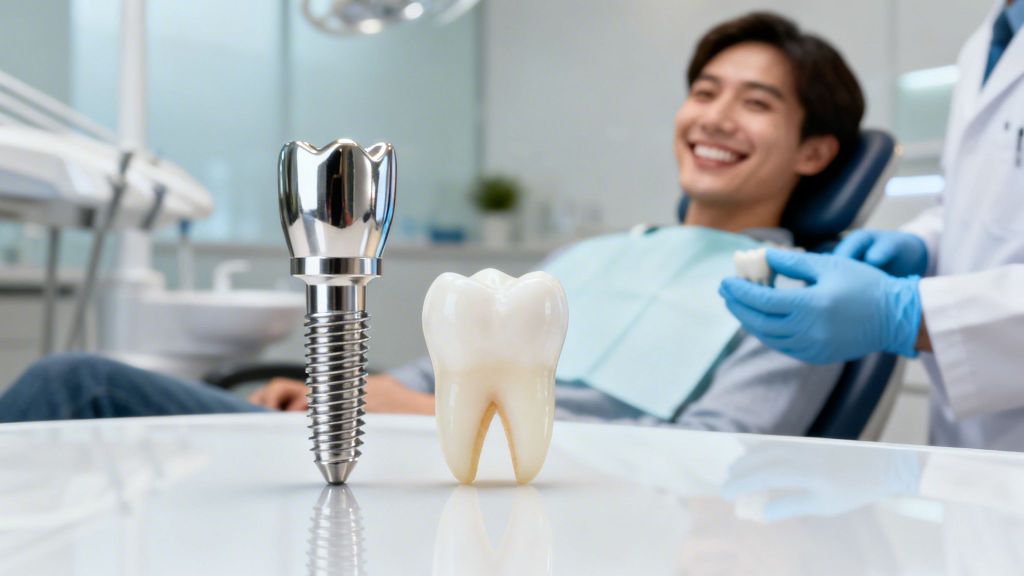
The engineering behind All-on-X is elegant in its simplicity. Four to six titanium posts are inserted into the jawbone at precise angles. The rear implants are typically tilted at 30 to 45 degrees, which allows them to anchor in denser areas of bone further forward in the jaw. This tilt maximizes contact with available bone while avoiding the sinuses and nerve canals.
Once in place, the implants integrate with the jawbone through a process called osseointegration—where bone tissue grows directly around the titanium surface, locking the posts in place. This biological bonding is what gives All-on-X implants their stability and longevity.
A fixed bridge is then attached to these posts, distributing bite force evenly across all anchor points. Because the load is shared rather than concentrated, the risk of implant failure is significantly reduced.
The Role of 3D Imaging and Digital Surgical Guides
Precision is everything with All-on-X. Placing implants even a millimeter off-target can affect stability, aesthetics, and long-term outcomes. That’s why modern All-on-X dental implants procedures rely heavily on cone beam computed tomography (CBCT) scanning and digital surgical guides.
A CBCT scan produces a detailed three-dimensional image of the jaw, including bone density, nerve pathways, sinus cavities, and existing dental structures. This gives the implant surgeon a complete map of the mouth before a single incision is made.
From that scan, a custom surgical guide is fabricated—a precise, patient-specific template that fits over the gums and directs the drill to the exact position and angle needed for each implant. Think of it as a GPS system for surgery. The guide eliminates guesswork, reduces operating time, and significantly improves the accuracy of implant placement.
Digital planning software also allows the surgical team to simulate the entire procedure virtually before entering the operating room, identifying potential complications and optimizing the treatment plan in advance.
Material Science: Titanium, Zirconia, and Hybrid Bridges
The implant posts themselves are almost universally made from medical-grade titanium or titanium alloy. Titanium is the gold standard for implants because it’s biocompatible, highly resistant to corrosion, and uniquely capable of bonding with bone. Its surface is often treated with microgrooves or coatings that encourage faster osseointegration.
The bridge that sits on top of those posts—the visible, functional part of the restoration—has evolved considerably over the years. Earlier All-on-X restorations used acrylic bridges reinforced with metal frameworks. While functional, these could be bulky and prone to wear.
Today, two materials dominate:
High-strength zirconia: A ceramic material known for its durability, translucency, and close resemblance to natural enamel. Zirconia bridges are milled from solid blocks using CAD/CAM technology, producing highly accurate, aesthetically refined restorations.
Hybrid bridges: A combination of acrylic or composite resin fused to a titanium or zirconia framework. Hybrids are lighter than full zirconia and can be easier to repair if individual teeth chip or crack.
The choice between zirconia and hybrid depends on a range of factors, including bone density, bite force, aesthetic goals, and budget. Your dental team will help determine which material is best suited to your specific anatomy and lifestyle.
The Dental Retreat Approach: Technology Meets Patient Comfort
At The Dental Retreat, All-on-X procedures are built around two equally important priorities: clinical precision and patient experience. Advanced technology is only as effective as the environment in which it’s applied—and a nervous or uncomfortable patient is less likely to achieve the best outcome.
The Dental Retreat integrates the full suite of All-on-X technology, including CBCT scanning, digital surgical planning, and CAD/CAM fabrication, within a practice designed to reduce anxiety and support recovery. From the initial consultation through to the final restoration, patients receive clear explanations at every stage, helping them feel informed and in control.
This combination of cutting-edge technology and a calm, communicative care environment is central to what makes The Dental Retreat’s approach stand out.
Step-by-Step: From Initial Scan to Final Restoration
Understanding the procedure from start to finish can make the whole experience far less daunting. Here’s how a typical All-on-X treatment unfolds:
Consultation and CBCT scan: The process begins with a comprehensive assessment, including a full 3D scan of the jaw. This allows the surgical team to evaluate bone volume, plan implant positioning, and anticipate any complications.
Digital treatment planning: Using specialized software, the surgeon maps out exact implant placement and designs the surgical guide. In many cases, the provisional bridge is also fabricated at this stage.
Surgery and immediate loading: On the day of surgery, any remaining teeth are extracted if needed, implants are placed using the surgical guide, and a temporary (provisional) bridge is attached the same day. Patients leave with functional teeth.
Healing and osseointegration: Over the following three to six months, the implants fuse with the jawbone. Patients follow a modified diet during this period to protect the healing site.
Final restoration: Once osseointegration is confirmed, the provisional bridge is replaced with the permanent zirconia or hybrid restoration. This is custom-designed to match the patient’s facial structure, bite, and aesthetic preferences.
Benefits for Bone Preservation and Facial Structure
One of the less-discussed advantages of All-on-X implants service is their impact on the jawbone. When teeth are lost, the bone beneath them begins to resorb—a process where the body reabsorbs bone tissue that no longer has a functional role. Over time, this leads to the sunken facial appearance often associated with long-term denture use.
Because implants integrate directly with the bone and transmit chewing forces into the jaw, they stimulate the bone in the same way natural tooth roots do. This halts and, in some cases, partially reverses bone resorption. The result is not just a restored smile, but a maintained facial structure that supports the cheeks, lips, and overall lower face.
For many patients, this preservation of facial contour is one of the most meaningful long-term benefits of choosing implants over removable alternatives.
Post-Operative Care and Long-Term Maintenance
All-on-X implants are designed to last decades—but that longevity depends on consistent care. The maintenance routine is simpler than many patients expect, though it does require daily attention.
Key care guidelines include:
Dental brushing twice daily using a soft-bristled toothbrush and non-abrasive toothpaste
Flossing under the bridge with implant-specific floss or a water flosser to remove debris from beneath the restoration
Regular professional cleanings, typically every three to six months, using instruments designed for implant surfaces
Avoiding habits that place excessive force on the bridge, such as grinding teeth or biting hard objects
Zirconia bridges are highly resistant to staining and fracture, but no restoration is indestructible. Attending scheduled check-ups ensures any early signs of wear, gum inflammation, or implant stress are caught and addressed before they become serious issues.
Making an Informed Decision About Your Smile
The technology behind All-on-X implants represents decades of biomechanical research, material science, and digital innovation converging into a single, life-changing procedure. Understanding how each component—the titanium posts, the surgical guides, the zirconia bridge—contributes to the outcome helps patients evaluate their options from a position of knowledge rather than uncertainty.
If you’re exploring All-on-X implants treatment, the most important next step is a detailed consultation with an experienced implant team. At The Dental Retreat, that conversation starts with listening—understanding your goals, your concerns, and your anatomy—before any treatment is planned.
A new smile is a significant investment. The more you understand the process, the more confident you can be in the decision you make.
The Dental Retreat
https://www.google.com/maps?cid=12091687882530918159
28047 Stockdick School Rd #200, Katy, TX 77493
(281) 717-6696
https://dentalretreattx.com/