A lot of people looking into veneers in Katy are trying to solve the same problem. They want a cleaner, brighter, more balanced smile, but they don't want their teeth aggressively drilled down to get it. They're also trying to answer the practical question that matters most before they book anything: what will I pay?
That's where non-prep veneers get attention. They're designed for a more conservative cosmetic approach, and for the right patient, they can improve color, shape, and small spacing issues without the level of tooth reduction used for traditional porcelain veneers. But the price isn't one flat number. It depends on the material, the brand, how many teeth are being treated, and whether you're a good clinical candidate in the first place.
If you've been searching for a cosmetic dentist near me or a dentist in Katy, TX and you're comparing smile makeover options, it helps to understand both the national cost picture and what changes that price locally. Patients from Katy, Sunterra, Cane Island, Katy Manor, Kingscrossing, Lakehouse, Marisol, The Grange, Anniston, Katy Lakes, Elyson, and Ventanna Lakes usually want the same thing: a result that looks natural, feels comfortable, and fits a real household budget.
Your Cosmetic Dentist for a Brighter Smile in Katy TX
A common starting point is simple. You like your smile well enough, but not enough to stop thinking about the small things. Maybe one front tooth looks shorter than the other. Maybe there are tiny chips, faint discoloration, or spaces that show up in every photo. You want cosmetic improvement, but you don't want the treatment to feel like too much.
That's why non-prep veneers come up so often in cosmetic consultations. They appeal to patients who want a more conservative path than traditional veneers, especially when the concern is cosmetic rather than structural. For many adults in Katy, that feels like the middle ground between doing nothing and committing to a more aggressive procedure.
Why patients ask about them first
Those searching for a cosmetic dentist near me aren't only asking about appearance. They're asking about comfort, reversibility, long-term value, and whether the result will still look like them. Non-prep veneers are popular because they speak to all of those concerns at once, at least in the right case.
They can be a thoughtful option for patients who want to:
- Refine small imperfections without changing healthy teeth more than necessary
- Improve smile symmetry when the issues are mild
- Avoid a more invasive approach if enamel preservation matters to them
- Get a cosmetic plan with clarity instead of guessing from online price ranges
Practical rule: If the smile problem is small, the treatment should stay small whenever possible.
Patients in Cane Island, Sunterra, and Katy Manor often arrive expecting one universal veneer solution. There isn't one. The right choice depends on the teeth you already have, your bite, your gum health, and how much change you want.
What matters more than the label
“Non-prep” sounds simple, but the main question is whether your teeth can support that style of veneer without looking bulky or feeling off. A skilled cosmetic plan doesn't start with the product. It starts with candidacy.
That's the part many generic articles skip. They talk about veneers in broad terms, but they don't help you decide whether this is the right path for your smile, your budget, or your comfort.
Understanding Non Prep Veneers
Non-prep veneers are ultra-thin shells that bond to the front surface of your teeth with little to no enamel removal. A simple way to think about them is this: they're a bit like contact lenses for teeth. They're thin, cosmetic, and designed to improve what shows when you smile.
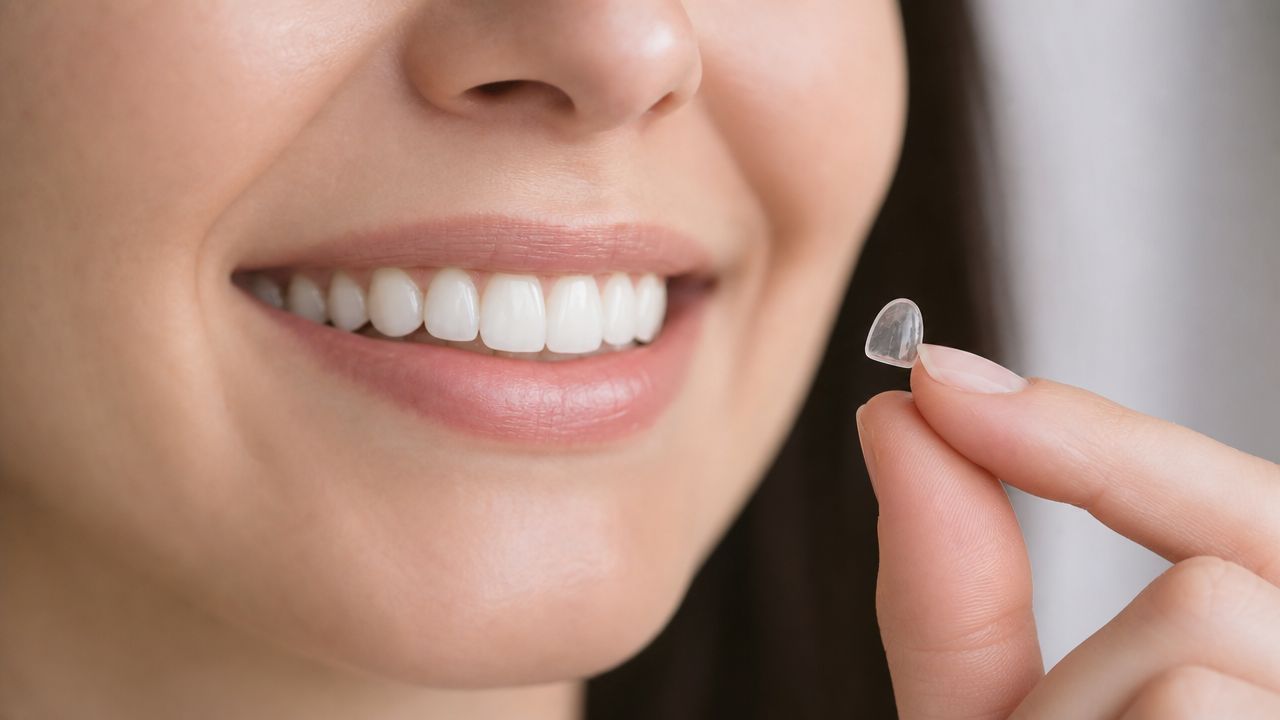
Traditional veneers usually require more reshaping so the porcelain sits flush and doesn't add bulk. Non-prep veneers try to achieve a cosmetic upgrade while preserving more natural tooth structure. That's the main reason patients are drawn to them.
What they're used for
They're usually considered when the cosmetic issue is modest. Think of concerns like slight spacing, small chips, minor shape differences, or discoloration that doesn't respond well to whitening. They aren't meant to fix every smile problem, and they work best when the natural teeth already have a good foundation.
Common goals include:
- Smoother shape for worn or uneven front teeth
- Better color uniformity when whitening alone won't do enough
- Closing small gaps in visible smile zones
- A more polished look without major drilling
If you're also comparing material choices, this guide on composite veneers vs porcelain can help you understand how appearance, durability, and maintenance differ.
Why patients like the idea
The appeal is easy to understand. Less drilling usually means a more conservative experience. In many cases, that also means less anxiety around treatment. For patients who've put off cosmetic dentistry because they didn't want an aggressive procedure, non-prep veneers can feel far more approachable.
The best veneer case is one where the final result looks natural and the teeth underneath were respected.
That said, “less invasive” doesn't automatically mean “better.” If a veneer is too thick for the tooth underneath, the smile can look bulky. If the bite isn't right, the result may not hold up the way the patient expects. That's why proper planning matters more than marketing language.
What Is the Real Non Prep Veneers Cost
Most online searches for non prep veneers cost lead to a single number. That's rarely helpful. Veneers are priced per tooth in many cases, but patients don't buy one isolated veneer in theory. They're usually planning a visible smile zone, and the total investment depends on the full treatment plan.
Here's the broad national benchmark. CareCredit's minimally invasive veneers cost guide reports an average national cost of $1,068 for a single composite, lab-manufactured minimally invasive veneer, with a typical range of $783 to $1,760. The same source lists $751 for an in-office composite veneer, with a typical range of $541 to $1,220. It also notes a national-average traditional veneer cost of $1,455, which helps show why minimally invasive options can come in lower on average.
To make that easier to visualize, this graphic gives a quick price snapshot.

Other published estimates place no-prep veneers at roughly $800 to $2,500 per tooth nationally, which tells you the category is wide. Entry-level treatment and premium cosmetic cases are not priced the same.
Why national averages only tell part of the story
Those averages are useful as a starting point, not as a quote. In Katy, the final cost depends on your smile design, your material, and whether your teeth are suited for a non-prep approach. A patient improving two teeth has a very different plan from someone changing the visible upper smile.
A realistic consultation should answer questions like:
- How many teeth are needed for the look you want
- Whether composite or ceramic fits your case
- If any pre-treatment is needed before veneers are placed
- What's included in the full fee instead of only a per-tooth sticker price
Many patients also want a more visual explanation before they commit, so it helps to hear a straightforward overview from a dentist. This short video is a useful introduction.
The all-in budget matters more than the headline price
A single per-tooth price doesn't tell you what a smile makeover will cost from start to finish. Published guidance on this topic points out a major gap in online content: patients often see per-tooth numbers, but not a realistic full treatment budget. One source notes that published full-smile estimates can range from about $8,000 to over $30,000, depending on how many veneers are involved and how complex the case is in this discussion of no-prep veneer budgeting.
That's why the right conversation in Katy isn't “What's the cheapest veneer?” It's “What treatment gives me the right result, and what will the complete plan cost?”
Key Factors That Influence Your Final Price
Two patients can both ask about non-prep veneers and get very different estimates for good clinical reasons. The biggest cost drivers are material choice, brand, delivery method, and how much smile design work is needed to make the result look natural.
Material and brand change the price first
The price of non-prep veneers is heavily shaped by the material and system used. Andepol's overview of no-prep veneer pricing describes composite options as the most affordable tier and lists premium ceramic systems such as Lumineers®, DURAthin®, and Vivaneers™ at higher per-tooth price points because of lab costs, material science, and technique requirements.
If you strip it down, the trade-off usually looks like this:
- Composite non-prep veneers tend to be the lower-cost option.
- Premium ceramic systems usually cost more because they involve more advanced materials and outside fabrication.
- Same-day or direct techniques may be priced differently from veneers made by a specialized lab.
The number of teeth changes the total quickly
Patients often get surprised by the actual cost. The per-tooth fee may sound manageable until you multiply it by the number of teeth needed for a balanced smile. Cosmetic cases are rarely about one tooth unless a single tooth is the only thing that's visibly different.
A smile that looks natural often depends on treating enough teeth to create consistency in:
- Shade
- Width
- Length
- Smile line
A lower per-tooth price doesn't always produce the lower total cost if the result has to be revised later.
Case complexity matters more than patients expect
If teeth are crowded, rotated, heavily stained, or shaped in a way that doesn't support a thin veneer, treatment gets more complex. Sometimes non-prep veneers are still possible. Sometimes a better plan involves whitening first, orthodontic movement, or a more traditional veneer approach.
Here's a simple comparison that helps frame the decision:
| Feature | Non-Prep Veneers | Traditional Porcelain Veneers |
|---|---|---|
| Invasiveness | Minimal to no enamel removal in selected cases | More tooth preparation is usually required |
| Upfront cost pattern | Often lower than traditional veneers, depending on material and case | Often higher on average |
| Best use | Mild cosmetic changes | Broader cosmetic correction |
| Longevity pattern | Varies by material and candidacy | Often chosen for stronger long-term durability |
| Risk if poorly selected | Can look bulky or feel overbuilt | More invasive, but may fit complex cases better |
The smart way to compare options isn't by asking which veneer is “better” in general. It's by asking which veneer works for your teeth.
Are Non Prep Veneers the Right Choice for You
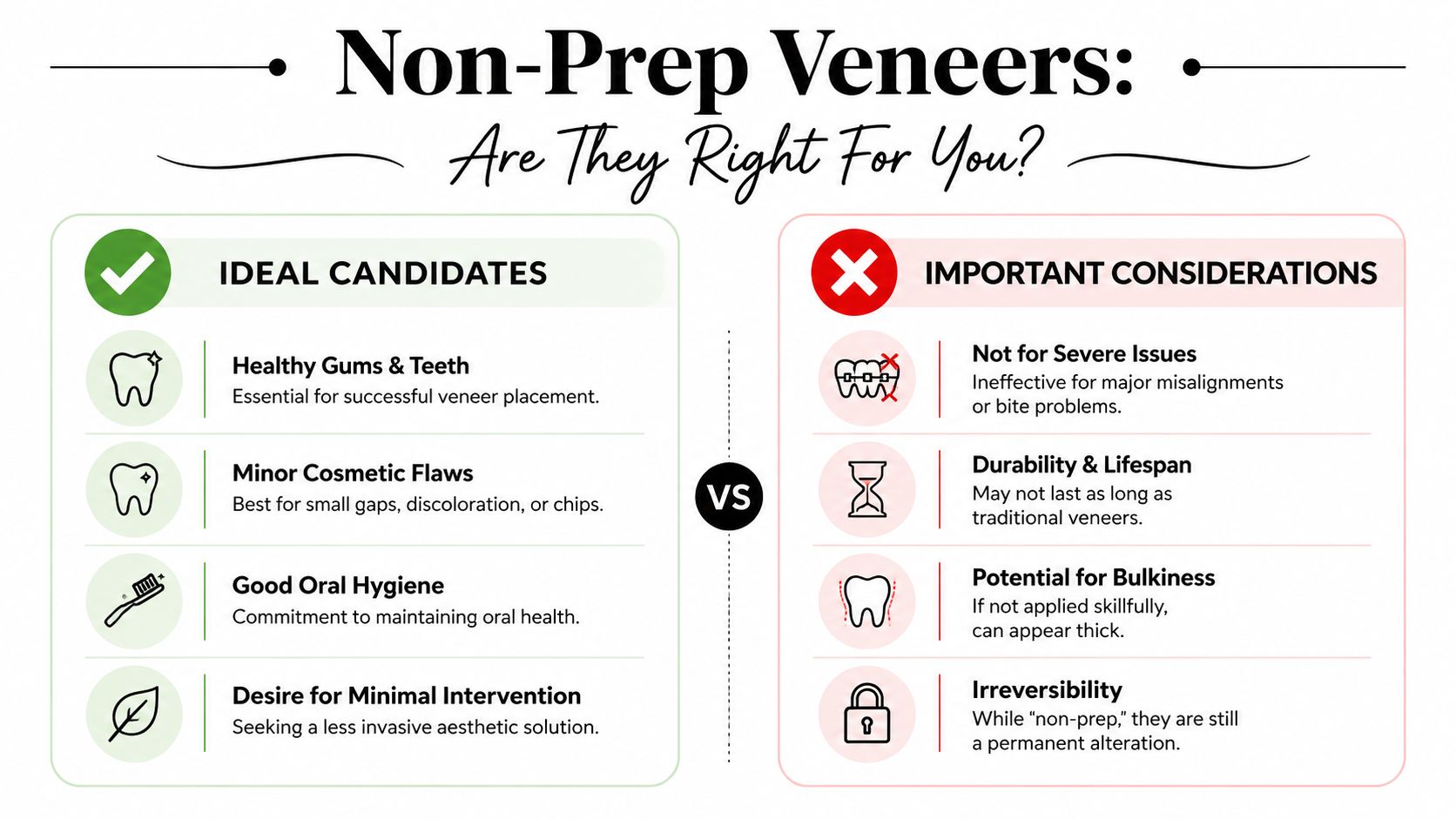
Non-prep veneers can be an excellent treatment for the right patient, but they're not a shortcut around proper diagnosis. If a smile needs alignment correction, bite correction, or major shape changes, choosing the least invasive option just because it sounds easier can lead to a disappointing result.
Patients who usually fit this option well
This treatment tends to work best when the teeth and gums are already healthy and the cosmetic goals are modest. Good candidates often want refinement, not total reinvention.
Signs you may be a stronger candidate include:
- Healthy gums and stable enamel
- Small chips or mild wear
- Minor spacing
- Color or shape concerns that are limited to the front teeth
- A desire to preserve as much natural tooth structure as possible
Patients who often need a different plan
This is the part patients deserve to hear clearly. Perrott's guidance on no-prep porcelain veneer candidacy notes that non-prep veneers are not ideal for everyone. Patients with crowding, bite issues, or a need for major shape changes may do better with orthodontics or traditional veneers because those options can produce a more durable and predictable result.
That means non-prep veneers may not be the right first choice if you have:
- Noticeable crowding
- An unstable bite
- Teeth that need major contour changes
- A smile where added thickness would be obvious
Sometimes the most conservative choice is not the treatment with the least drilling. It's the treatment least likely to fail.
In those cases, a more thoughtful cosmetic plan might involve clear aligners, whitening, bonding, or traditional porcelain veneers. Patients in The Grange, Anniston, and nearby Katy neighborhoods often feel relieved when they hear that. It means the recommendation is based on outcome, not sales language.
Your Smile Makeover Journey at The Dental Retreat
A new patient often walks in with one practical question. If I decide to do this, what will the process look like from the first visit to the day I see my new smile in the mirror?
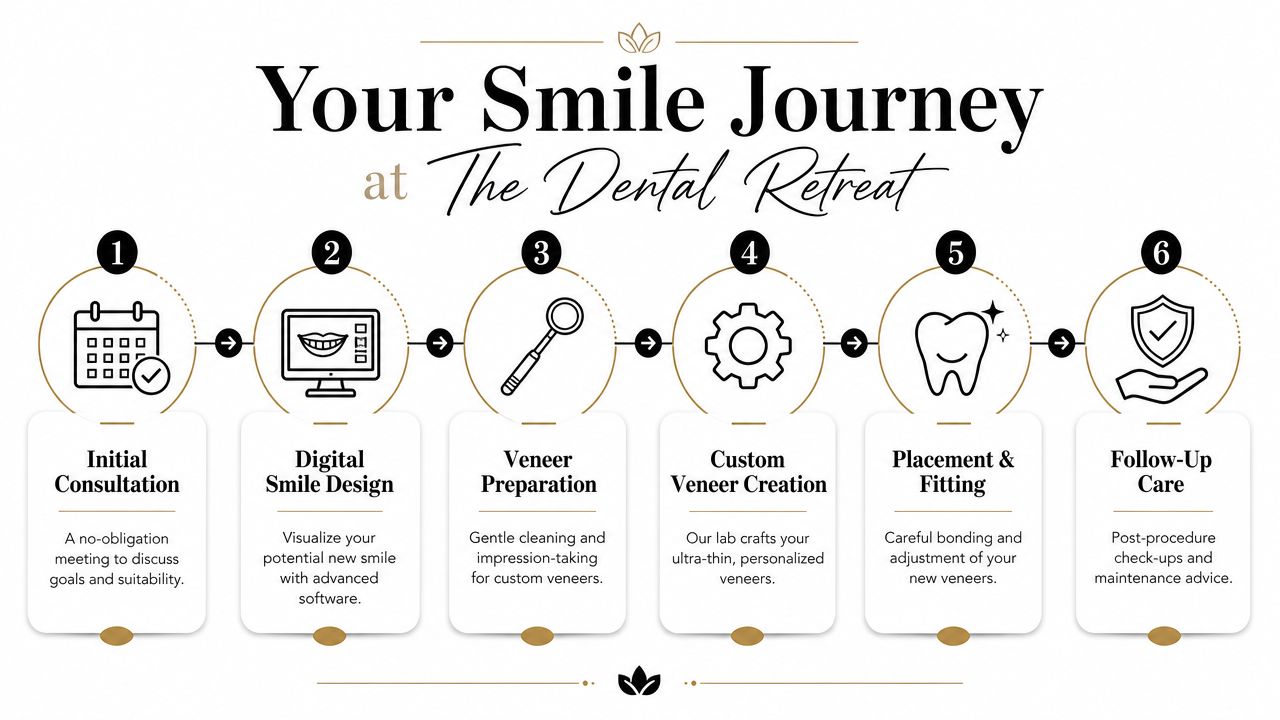
At The Dental Retreat, that process starts with a cosmetic consultation focused on fit, not pressure. We review what you want to change, examine your teeth and gums, and decide whether non-prep veneers are the right option or whether another cosmetic plan would give you a better result. Patients usually appreciate that clarity early, especially when they are trying to balance appearance, comfort, and budget.
What the visit sequence usually looks like
Most non-prep veneer cases follow a straightforward sequence:
Consultation and exam
The first visit is where we confirm candidacy, document your starting smile, and talk through the look you want.Smile planning
Photos, digital scans, and shade and shape decisions guide the design so the final veneers fit your face and bite.Veneer fabrication or placement
Some cases require lab-made porcelain veneers. Others may involve a more direct cosmetic approach, depending on the material and treatment plan.Bonding and final adjustments
At the delivery visit, we check fit, bite, contour, and overall appearance before completing the case.
That step-by-step structure matters. It helps patients understand where the fees come from and what is included in the full smile plan, instead of hearing a vague per-tooth number with no context.
Comfort matters too.
Cosmetic treatment should feel calm and predictable, especially for patients who have put off dental visits because of anxiety. The Dental Retreat offers a spa-inspired setting with massage and heated chairs, aromatherapy, noise-cancelling headphones, and TVs in treatment rooms. For patients in Katy Lakes, Elyson, and nearby neighborhoods, that can make the consultation feel much easier than expected.
If you are also weighing the financial side before booking, our guide on how to afford dental care without insurance explains practical ways patients in Katy often make treatment fit their budget.
Making Your Dream Smile Affordable in Katy
Cost worries stop a lot of patients before they even schedule the consultation. That's understandable. Veneers are cosmetic treatment, and patients typically want to know how the full plan fits into everyday finances before they move forward.
One of the biggest problems with online veneer pricing is that it often overlooks the essential budget conversation. The more useful question isn't just the non-prep veneers cost per tooth. It's the complete investment for the smile you want, plus the payment options that make it manageable.
Look at the full financial picture
Published guidance on this topic highlights the gap clearly. Patients often find per-tooth pricing, but not a practical explanation of the full smile makeover budget. That's why financing and membership plans matter so much in real treatment decisions, as noted earlier in the budgeting discussion.
Before saying yes to treatment, ask for clarity on:
- What the consultation includes
- Whether diagnostics are part of the estimate
- How many teeth are being recommended
- What payment pathways are available
Ways patients often make treatment more manageable
For uninsured patients in Katy, it helps to start with value-driven entry points. The practice offers a $139 complete exam with cleaning and X-rays for new patients without insurance, a $79 problem-focused visit, and membership plans that start at $299 per year. Those details can make the first step feel much more realistic for someone who's still evaluating options.
There are also practical ways to spread out cosmetic costs. Third-party financing, including CareCredit, is one route many patients consider. Membership plans can also help reduce the strain of paying entirely out of pocket. If you want a clearer overview of those options, this page on how to afford dental care without insurance is a useful place to start.
A smart financial plan should reduce uncertainty. It should help you compare treatment choices without feeling pressured into the wrong one.
Frequently Asked Questions About Non Prep Veneers
Do non-prep veneers hurt to get
For the right patient, they're usually more comfortable than traditional veneers because there may be little to no enamel removal. That often means a less invasive appointment and a smoother experience overall. Comfort still depends on the case, your sensitivity level, and whether any additional treatment is needed before veneers are placed.
How long do non-prep veneers last
Longevity varies by material, bite, and case selection. Newport Modern Dentistry's comparison of no-prep and traditional veneers notes that no-prep veneers are often described as lasting about 5 to 7 years, while premium brands can last 10 to 15 years. The same discussion notes that traditional veneers may also last 10 to 15 years or more.
That's why longevity shouldn't be treated as a side note. Tooth preservation matters, but so does durability.
Can non-prep veneers be removed
Patients often hear that they're reversible, but that idea needs nuance. Some no-prep cases preserve more enamel than traditional veneers, which is one reason they're considered conservative. Still, once a veneer treatment plan is designed and bonded, it should be approached as a long-term cosmetic decision, not a casual trial.
Are they always cheaper than traditional veneers
Not always. They can be meaningfully less expensive on average in some categories, but premium no-prep systems can still be costly. The final price depends on the material, the lab work, the number of teeth, and whether you're a strong candidate. A veneer that costs less upfront can still be the worse value if it doesn't fit your bite or needs to be redone sooner.
What if I'm not a good candidate
That doesn't mean you're out of cosmetic options. Many patients get better results from whitening, bonding, clear aligners, or traditional veneers, depending on what they're trying to correct. A good cosmetic consultation should tell you when non-prep veneers fit, and when another option makes more sense.
If you're comparing smile options and want a realistic answer about what you may pay, the next step is a consultation with The Dental Retreat. You can get clear guidance on candidacy, treatment options, and the full cost of care in Katy, TX, without relying on vague online estimates.