You're probably here because buying an electric toothbrush felt like it should be simple, and then suddenly it wasn't. You stand in the store aisle or scroll online, and every brush claims to be smarter, gentler, faster, deeper cleaning, better for whitening, better for gums, better for everything. After a while, they all start to sound the same.
As a dentist educator, I can tell you, individuals don't need a giant list of “top picks.” They need clear electric toothbrush recommendations based on their mouth, their habits, and the dental work they already have. A brush that works well for someone with healthy gums may not be the right fit for someone with gum recession, braces, a crown, or dental implants.
That's the approach we use for patients in Katy, TX and nearby communities like Sunterra, Cane Island, Katy Manor, Kingscrossing, Lakehouse, Marisol, The Grange, Anniston, Katy Lakes, Elyson, and Ventanna Lakes. If you're searching for a dentist near me, a dentist in Katy, TX, or even care related to dental implants near me, cosmetic dentist near me, tooth extraction, or an emergency dentist, home care advice still matters. The toothbrush you use every day plays a real role in keeping your smile healthy between visits.
Choosing Your Best Toothbrush in Katy TX
A patient recently described the toothbrush aisle to me perfectly. She said it felt like shopping for a phone plan. Too many choices, too many claims, and no clear answer about what counts.
That's common. Many people in Katy buy a brush based on packaging, price, or whichever model has the most features. Then they get home and realize they still don't know whether they made the right choice for sensitive gums, tight crowding, or an old crown that always seems to catch plaque.
Why the choice feels confusing
The problem isn't that there are too few good brushes. The problem is that most buying guides focus on ranking products instead of helping you match features to real oral health needs.
Someone with healthy gums and good brushing technique may do well with a basic powered brush with a timer. Someone else with hand dexterity concerns may need a handle that feels easier to grip. A person with implant restorations may need a gentler cleaning setup around certain areas. That's why broad “best overall” advice often falls short.
Practical rule: The right toothbrush isn't the one with the most buttons. It's the one you'll use correctly, comfortably, and consistently.
Why this matters for oral health
Your toothbrush affects more than surface stain. It affects how well you remove plaque along the gumline, how much pressure you use, and whether you miss the same hard-to-reach spots every day. Those small habits can shape your long-term gum health and help protect fillings, crowns, bridges, and implants.
A good recommendation should answer questions like these:
- Do your gums feel sore after brushing? You may need softer bristles, a pressure sensor, or a sensitive mode.
- Do you have braces or aligner attachments? You may need a brush head shape that helps you clean around hardware more carefully.
- Do you have crowns, implants, or bonded dental work? You may need a brush that cleans thoroughly without encouraging heavy scrubbing.
- Do you tend to rush? A timer and pacing cue can help make your routine more complete.
People often assume toothbrush advice is separate from dental care. It isn't. Preventive dentistry starts at home. The brush you choose can support the same goals we work on during cleanings and exams, whether you're visiting for routine dental care, restorative dentistry, cosmetic dentistry, or follow-up after more advanced treatment.
Sonic vs Oscillating What Our Dentists Recommend
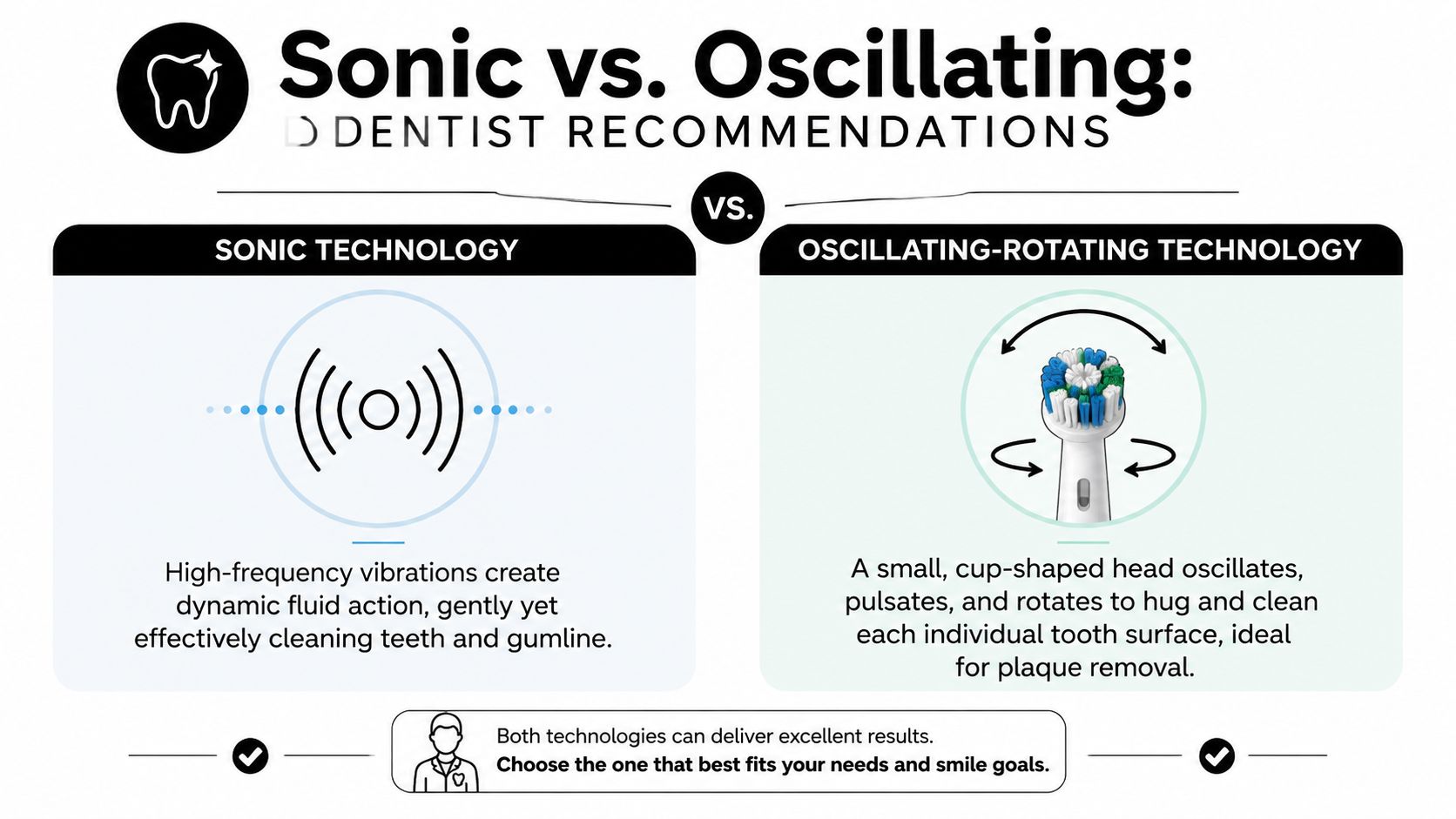
Most electric toothbrushes fall into two main categories. Sonic and oscillating-rotating. Both can be effective. What matters is understanding how they feel and how they clean.
How each type feels in your hand
A sonic toothbrush usually has a brush head that looks more like a traditional manual brush. It works with very fast vibrations. Many patients describe it as a humming or buzzing sensation.
An oscillating-rotating toothbrush usually has a small round head. That head moves in a small, concentrated cleaning motion around each tooth. Many people say it feels more targeted.
A simple way to think about it:
| Type | What it feels like | Who may like it |
|---|---|---|
| Sonic | Fast vibration across a larger head | People who prefer a more familiar brush shape |
| Oscillating-rotating | Small round head moving tooth by tooth | People who like a more focused cleaning feel |
What the research supports
If your main question is plaque removal, powered brushes have a meaningful evidence base behind them. A 2022 systematic review and network meta-analysis found a statistically significant advantage for oscillating-rotating powered toothbrushes versus manual toothbrushes for plaque removal, with SMD = -0.43; 95% CI -0.696 to -0.171, and concluded there is “high certainty for a small effect” in favor of powered toothbrushes. The same review also notes that powered brushes are generally more effective than manual brushes at reducing plaque, gingivitis, and bleeding.
That doesn't mean every person should buy the same brush. It means there is good reason many dentists recommend powered brushing.
Here's a quick visual overview if you want to see the motion difference in action.
What we usually tell patients
Some patients love sonic brushes because they feel smooth and familiar. Others prefer oscillating-rotating brushes because the smaller head can make it easier to clean one tooth at a time, especially around back teeth.
If a brush feels too harsh, too bulky, or too awkward, you're less likely to use it well. Comfort matters because consistency matters.
If you've been using a manual toothbrush and brushing hard, either type may feel strange at first. That doesn't mean it's wrong. It often means you need a short adjustment period, the right brush head, and a little coaching on technique.
Key Features to Look For in an Electric Toothbrush
Once you've narrowed it down to a powered brush, the next question is what features matter. Many shoppers overspend on extras and miss the basics that protect their teeth and gums.
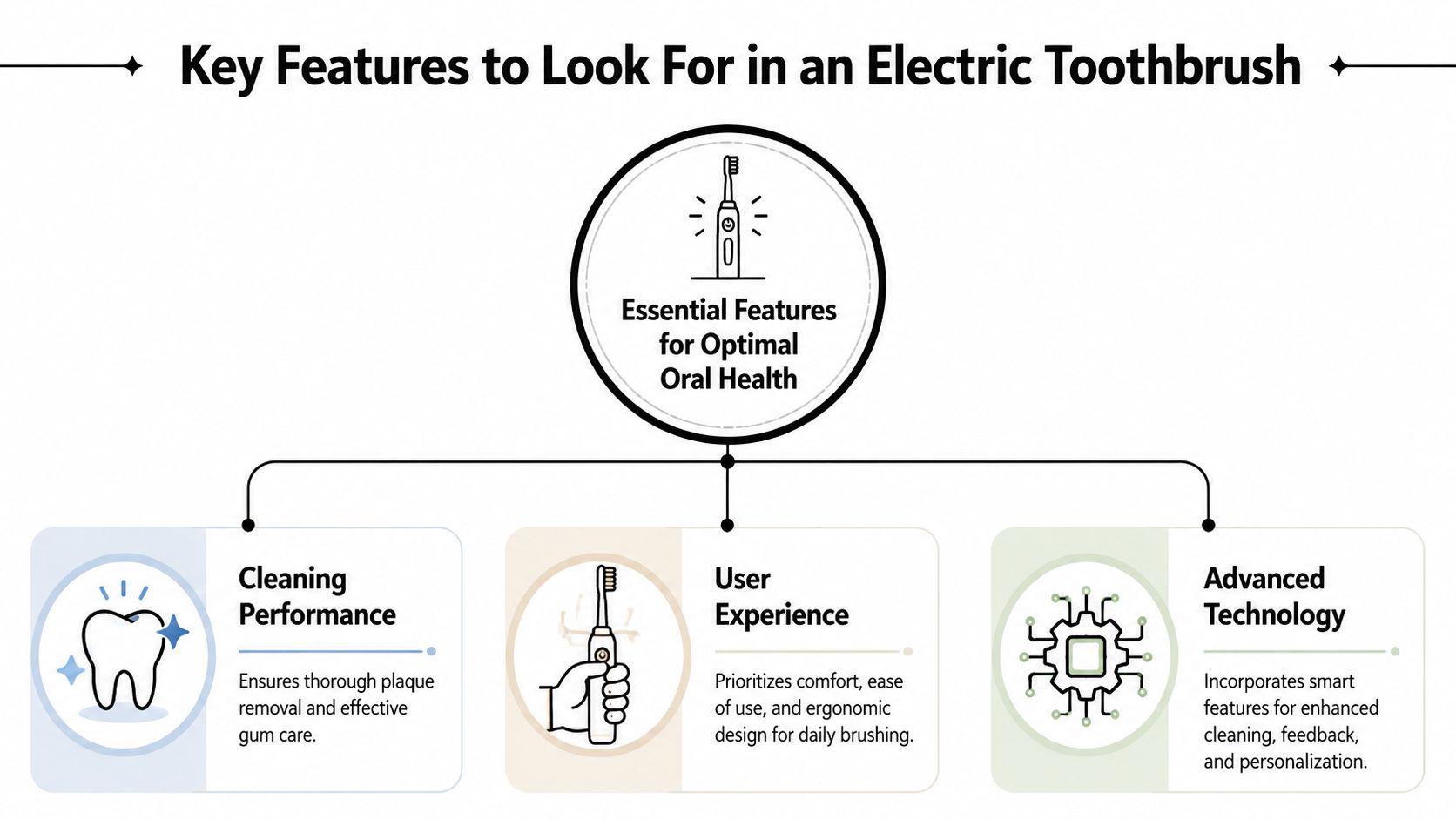
In the U.S., electric toothbrush use is already substantial. One market summary cited by a dental source reported that regular use rose to 87.95 million in 2020, and modern recommendations now focus on practical features like pressure sensors, timers, replacement heads, battery life, and ADA-related buying criteria rather than just manual versus electric choice. You can see that shift discussed in this electric toothbrush buying overview.
Features that help most people
These are the features I'd pay attention to first.
- Pressure sensor. This helps warn you when you're brushing too hard. That matters because aggressive brushing can irritate gums and can be especially unhelpful if you already have recession or sensitivity.
- Two-minute timer. Many people stop too early without realizing it. A built-in timer creates a more complete routine.
- Pacing cue. Some brushes pause briefly as a signal to move to another part of the mouth. That helps prevent spending too long on the easy areas and not long enough on the harder ones.
- Soft bristle options. This is especially useful if your gums feel tender or you're transitioning from a manual brush.
- Easy-to-find replacement heads. If replacement heads are hard to buy, people delay changing them. Worn bristles don't clean as well.
Features that depend on the person
Not every useful feature is necessary for every patient.
Sensitive mode
This can be very helpful if brushing has felt uncomfortable, especially after dental treatment or during periods of gum tenderness. A gentler mode can make it easier to stick with daily brushing instead of avoiding sore areas.
Brush head size
Smaller heads can help some people reach behind the back molars more comfortably. Larger heads may feel more familiar to others. If you have a smaller mouth, crowding, or limited opening, head size can make a real difference.
Battery and charging style
This matters more if you travel often or don't have a convenient charging setup. It's not usually the first thing I'd prioritize for oral health, but it affects convenience and long-term satisfaction.
Clinical takeaway: If your budget is limited, choose a brush with a pressure sensor, timer, and compatible soft brush heads before you pay for app features.
A lot of patients also ask whether a phone-connected brush is necessary. Usually, no. For some people, reminders and feedback are motivating. For others, the app gets ignored after the first week.
If you want to improve technique before you buy anything new, our guide on how to brush teeth properly step by step can help you get more out of whatever brush you're using now.
Matching a Toothbrush to Your Smile Needs
The most helpful electric toothbrush recommendations are personal. That's the missing piece in many online lists. A toothbrush isn't just a gadget. It's a daily tool that has to work with your gums, restorations, bite, and habits.
A dental guidance source highlights that many recommendation pages miss this exact issue. Patients with gum recession, post-procedure sensitivity, or implants often need specific advice on soft bristles, pressure sensors, and gentle modes, rather than a generic product ranking. That gap is discussed in this toothbrush selection article focused on practical needs.
If your gums are sensitive or receding
This is one of the most common situations I see. Patients often think they need a “stronger” brush because their gums don't feel healthy. In reality, many need a gentler setup and better technique.
A good starting point often includes:
- Soft bristles
- A pressure sensor
- A sensitive or gentle mode
- A reminder to avoid scrubbing motions
When gums have already receded, brushing harder won't clean better. It usually creates more irritation.
If you have braces or clear aligner attachments
Orthodontic patients often trap more plaque around brackets, wires, or attachment points. A powered brush can help, but only if the head shape and brushing approach work for those surfaces.
The small round head on an oscillating-rotating brush can be easier for some patients to angle around brackets. A sonic brush may feel more familiar to others and can still work well with careful positioning. The right answer depends on how well you reach the gumline and whether you miss plaque around the hardware.
If you're helping a teen build better brushing habits, our article on electric toothbrushes for teenagers may be useful.
If you have crowns, bridges, or dental implants
This group needs thoughtful advice. Restorative work is durable, but it still depends on healthy surrounding gum tissue and clean margins.
Patients with implant restorations often do better with:
| Smile need | Helpful features | Why it matters |
|---|---|---|
| Dental implants | Gentle mode, soft bristles, controlled pressure | Helps clean around the implant area without overbrushing |
| Crowns and bridges | Consistent timer, easy-to-angle head | Supports better plaque removal around edges and hard-to-reach zones |
| Post-treatment tenderness | Sensitive mode and softer feel | Makes brushing easier while tissues are healing or irritated |
This matters whether you're maintaining older restorations or exploring future care like dental implants near me, restorative dentistry, or cosmetic upgrades.
If you get anxious about brushing wrong
Some patients aren't worried about plaque. They're worried about doing damage. They ask if they're pushing too hard, holding the brush at the wrong angle, or missing important areas.
Those patients often benefit from a brush that gives simple feedback. A pressure sensor is especially helpful because it removes some guesswork. Sometimes the best recommendation is the brush that helps you feel calm enough to use it correctly every day.
That's also where a hands-on dental exam helps more than any product roundup. A dentist or hygienist can watch your technique, look at where plaque collects, and tell you whether the issue is the brush itself, the brush head, your pressure, or your pattern.
Buying Tips and Common Mistakes to Avoid
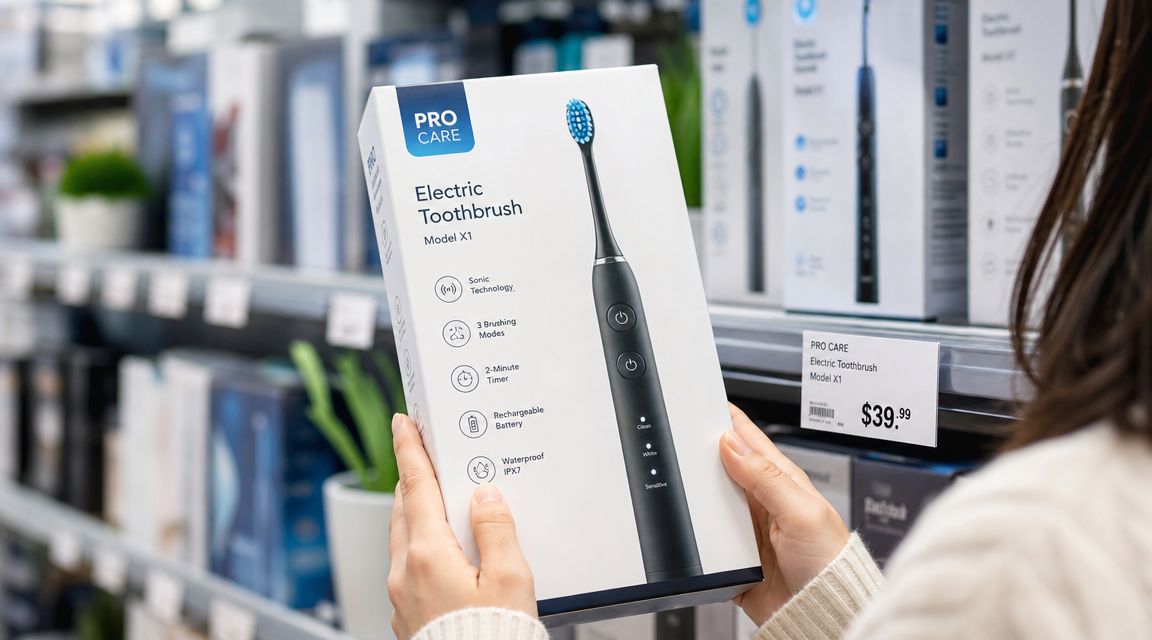
A good toothbrush purchase doesn't end at checkout. People get frustrated not only by what they buy, but by what happens after they open the box, attach the head, and start noticing little details that weren't explained anywhere.
Mistakes I see all the time
- Buying based on price alone. The cheapest brush may leave out the features that help you brush safely and thoroughly.
- Ignoring replacement head availability. If it's hard to find heads, routine maintenance becomes annoying fast.
- Choosing too many extras. More settings don't automatically mean better brushing. Many people use one mode and never touch the rest.
- Keeping the same head too long. Worn bristles are less effective and can make brushing feel rougher.
A question patients ask after purchase
One undercovered issue is the gap between the brush head and handle. Some people think the brush is defective when they notice a small space after attaching the head.
That concern is understandable. A troubleshooting video addressing this issue notes that a small intentional 1 to 2 mm gap is normal on many push-on electric toothbrush designs, as long as the head still feels secure. A larger gap or looseness is the point where manufacturer support makes sense, as shown in this video explanation of normal electric toothbrush head fit.
A little visible space doesn't always mean something is broken. What matters is whether the head seats properly and feels secure in use.
Simple buying and maintenance checklist
Before you buy
- Check for a pressure sensor if you know you brush hard or have gum sensitivity.
- Look for soft head options if you've had recession, tenderness, or recent dental treatment.
- Make sure replacement heads are easy to reorder so you don't end up stretching one head too long.
After you buy
- Rinse the handle and head thoroughly so toothpaste residue doesn't build up around the connection point.
- Replace worn heads on schedule. A common rule in patient guidance is every three months, or sooner if bristles splay.
- Don't panic about every design quirk. Some fit and movement are intentional parts of the design.
A better toothbrush should make daily care easier, not more stressful. If it creates confusion, the issue may not be the brand. It may be that nobody matched the brush to your actual needs before you bought it.
Your New Patient Visit at The Dental Retreat in Katy
You buy a toothbrush that gets great reviews, use it for a few weeks, and your gums still feel tender or certain spots never seem fully clean. That usually means the key question is not, "Which brush is best?" It is, "Which brush fits your mouth?"
A new patient visit helps answer that in a practical way. During the exam, we look at how your teeth and gums are doing right now, where plaque tends to stay behind, whether you are brushing with too much force, and how crowns, fillings, implants, or braces may change what kind of brush head and brushing mode makes sense. For patients looking for a dentist in Katy, TX, this part of the visit often saves a lot of guesswork.
Small feature differences can matter. A pressure sensor may help if your gums are getting irritated from heavy brushing. A smaller brush head may work better if you have crowding or orthodontic hardware. Softer bristles may be a better fit if you have recession, sensitivity, or recent dental treatment. Choosing an electric toothbrush works a lot like choosing shoes. The pair that fits one person perfectly can rub and cause problems for someone else.
What that visit can help uncover
Sometimes the toothbrush is fine, but the brushing pattern needs work. In other cases, the handle, head size, bristle firmness, or cleaning motion is the mismatch.
A new patient visit can help identify:
- Areas where you're overbrushing
- Spots you routinely miss
- Whether sensitivity comes from pressure, gum recession, or another dental issue
- How your home care should change if you have restorative or cosmetic dental work
That matters because better oral health is not only about removing plaque. It is also about protecting enamel, keeping gums comfortable, and cleaning around dental work without causing wear.
What patients can expect in Katy
At The Dental Retreat, new patients without insurance can choose a $139 full exam with cleaning and X-rays, based on the published practice information. That gives us a starting point for personalized home care advice instead of generic product rankings.
The visit is also designed to feel calm. The office includes spa-inspired touches such as aromatherapy, massage or heated chairs, noise-cancelling headphones, and TVs in each room. If dental visits make you tense, a more relaxed setting can make it easier to ask questions, practice technique changes, and remember what to do at home.
Good toothbrush advice should match your teeth, your gums, your dental history, and the restorations or appliances you already have.
That is especially helpful if you have implants, braces, crowns, veneers, gum sensitivity, or a history of brushing too hard. If you are not sure whether your current electric toothbrush is helping or getting in the way, a professional exam is the clearest next step.
FAQ and Scheduling Your Consultation
A common Katy scenario goes like this. You buy a highly rated electric toothbrush, use it every day, and still wonder why one area stays tender or why cleaning around a crown, implant, or braces feels awkward. The brush may not be wrong. It may just be the wrong match for your mouth.
Can an electric toothbrush damage my gums
Yes, if the brush head is too firm, the pressure is too heavy, or the mode is too aggressive for your gum condition. An electric toothbrush works like a power tool with safety settings. The motor helps with movement, but your technique still guides the result.
For patients with gum recession, tenderness, or a habit of scrubbing, we usually look closely at pressure control, soft bristles, and a smaller head that is easier to guide along the gumline. For implants or orthodontic appliances, the goal is slightly different. You need thorough cleaning around edges and tight spaces without irritating the surrounding tissue.
Is a more expensive brush always better
No. Price often reflects extra settings, app features, or charging upgrades.
What matters more is whether the brush helps you clean well every day. A simple model with a pressure sensor and the right brush head can do more for oral health than an expensive brush that feels bulky, harsh, or confusing to use. During a new patient exam, we help match the tool to the job, much like choosing the right size floss threader or interdental brush for a specific space.
Should I choose sonic or oscillating
Both can be good choices. The better option depends on what your teeth, gums, and dental work need.
Sonic brushes often feel smoother and may appeal to patients with sensitive gums. Oscillating brushes can be helpful for patients who like a more targeted feel around each tooth. If you have braces, implants, veneers, limited hand dexterity, or tight crowding, the answer becomes more personal. That is why a toothbrush recommendation during an exam is often more useful than a generic top-10 list.
Do I still need dental cleanings if I use a good electric toothbrush
Yes. Home care and professional care do different jobs.
Your toothbrush removes fresh plaque every day. A dental visit lets us check gum inflammation, look at how you are cleaning around restorations, watch for wear from brushing too hard, and address issues a toothbrush cannot fix on its own. If bleeding, sensitivity, or trapped food keeps happening in the same spot, that is often a sign to get the area examined rather than buying another brush.
If you want help choosing a brush that fits your smile, call (281) 789-8831 or request a visit through the online scheduling page. At The Dental Retreat in Katy, that conversation is part of learning what your mouth needs now, whether you are protecting natural teeth, caring for implants, cleaning around braces, or trying to keep sensitive gums comfortable.
If you are looking for a dentist in Katy, TX for preventive care, cleanings and exams, cosmetic dentistry, restorative treatment, dental implants, emergency visits, or practical guidance on your home routine, schedule a consultation with The Dental Retreat. We can help you choose a toothbrush setup that supports healthier gums, cleaner teeth, and a routine you can stick with.