You bite down, feel a sudden crunch, and then your tongue finds a rough edge that definitely wasn't there a minute ago. That moment can trigger a lot at once. Worry about pain, worry about your smile, and worry that you've just created a major dental problem.
A chipped tooth feels urgent because sometimes it is, and sometimes it only seems that way. The key is knowing what to do first, what can safely wait, and how a dentist decides between a simple cosmetic repair and more involved restorative care. If you're searching for how to fix chipped tooth concerns in Katy, TX, the good news is that modern treatment is often more conservative than people expect.
A Chipped Tooth Is Stressful We Can Help
A chipped tooth is rarely a planned event. It happens during dinner, while playing with the kids, after an accidental bump, or when an old weak spot finally gives way. What I see most often is not just the chip itself, but the stress that follows. Patients come in running their tongue over the edge, worried they'll worsen it, wondering if they'll need the tooth pulled, and hoping the damage won't show when they smile.
That anxiety is understandable. A front tooth chip can feel personal right away. Even a back tooth chip can make eating uncomfortable and leave you unsure whether the tooth is stable.
Why the first reaction matters
The first few hours matter less because you need to panic, and more because the right steps can protect the tooth until you're seen. Larger or deeper chips can sometimes expose the pulp and increase infection risk. That's why clinical guidance emphasizes getting evaluated quickly. Cleveland Clinic notes that patients should schedule an appointment ASAP after noticing a chip because only a provider can tell whether it needs a simple restoration or more advanced care, and Penn Dental Medicine outlines how treatment can range from re-contouring and bonding to crowns, root canal treatment, and implants depending on severity in its guidance on chipped or cracked teeth.
A chipped tooth isn't one problem. It's a category of problems, and the right fix depends on how deep the damage goes.
Calm, practical care in Katy
If you're looking for a dentist in Katy, TX or an emergency dentist for a tooth injury, clarity matters more than jargon. You need to know whether the tooth can be smoothed, bonded, covered, or saved with deeper treatment. You also need someone who'll explain the trade-offs clearly.
For patients in Katy, Sunterra, Cane Island, Katy Manor, Kingscrossing, Lakehouse, Marisol, The Grange, Anniston, Katy Lakes, Elyson, and Ventanna Lakes, the goal is simple. Protect the tooth, reduce discomfort, and restore your smile with the least invasive solution that will hold up.
What To Do Immediately After Chipping a Tooth
The right first aid won't replace dental care, but it can prevent the situation from getting worse before your appointment. Start with simple steps and avoid the common mistake of “testing” the tooth over and over with your bite.
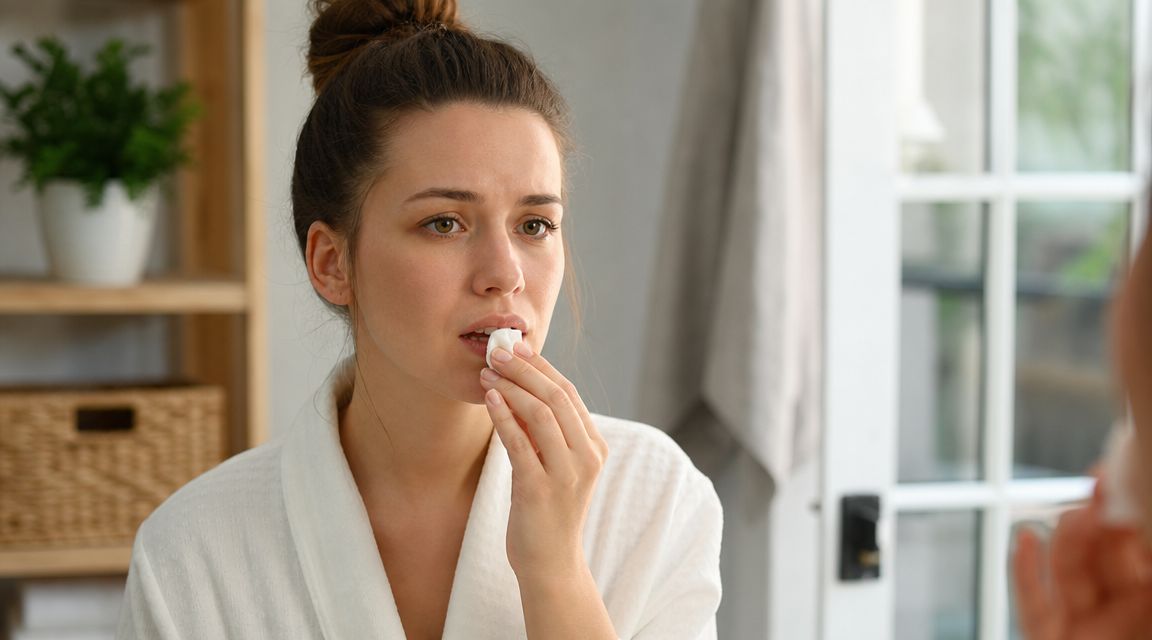
First steps at home
Rinse your mouth gently. Use warm water to clear away debris. If the area feels irritated, a warm saltwater rinse can help keep the mouth cleaner and soothe soft tissue.
Find the broken piece if you can. Don't scrub it. Handle it gently.
Place the fragment in milk. An expert-level triage rule is to save the tooth fragment in milk, protect jagged edges with dental wax or sugar-free gum, and avoid biting on the tooth until evaluation because larger chips may sometimes be repairable by reattachment, while pulp exposure may require a root canal followed by a crown, as explained in Lovett Dentistry Beaumont's article on methods for treating a chipped tooth.
How to protect the tooth until you're seen
A chipped tooth often hurts less from the tooth itself and more from what it does to surrounding tissue. The sharp edge can scrape your tongue, cheek, or lip every time you speak or swallow.
Use this short checklist:
- Cover rough edges: Dental wax is ideal. If you don't have it, sugar-free gum can serve as a temporary barrier.
- Use a cold compress: Hold an ice pack or cold compress on the outside of your face if there's swelling or tenderness.
- Choose soft foods: Yogurt, eggs, soup that isn't too hot, smoothies, and other soft foods are safer until the tooth is examined.
- Chew on the other side: Better yet, avoid chewing on that side at all.
- Don't “see if it's okay” by biting down: That can turn a manageable chip into a larger fracture.
Practical rule: If the tooth feels sharp, mobile, or sensitive when you bite, treat it gently and get it checked promptly instead of waiting to see if it settles down.
What doesn't work
People often try to ignore a chip if pain is mild. That's risky. Small-looking damage can be deeper than it appears, especially if the tooth already had wear, a filling, or a crack line.
Home repair kits also tend to create false confidence. They may cover the area briefly, but they don't tell you whether the tooth structure is still sound. If you're searching for an emergency dentist in Katy, think of home care as a bridge, not a final fix.
When a Chipped Tooth Is a Dental Emergency
Not every chip needs same-hour treatment. Some do. The difference usually comes down to pain, depth, and whether the injury has affected the living inner part of the tooth.
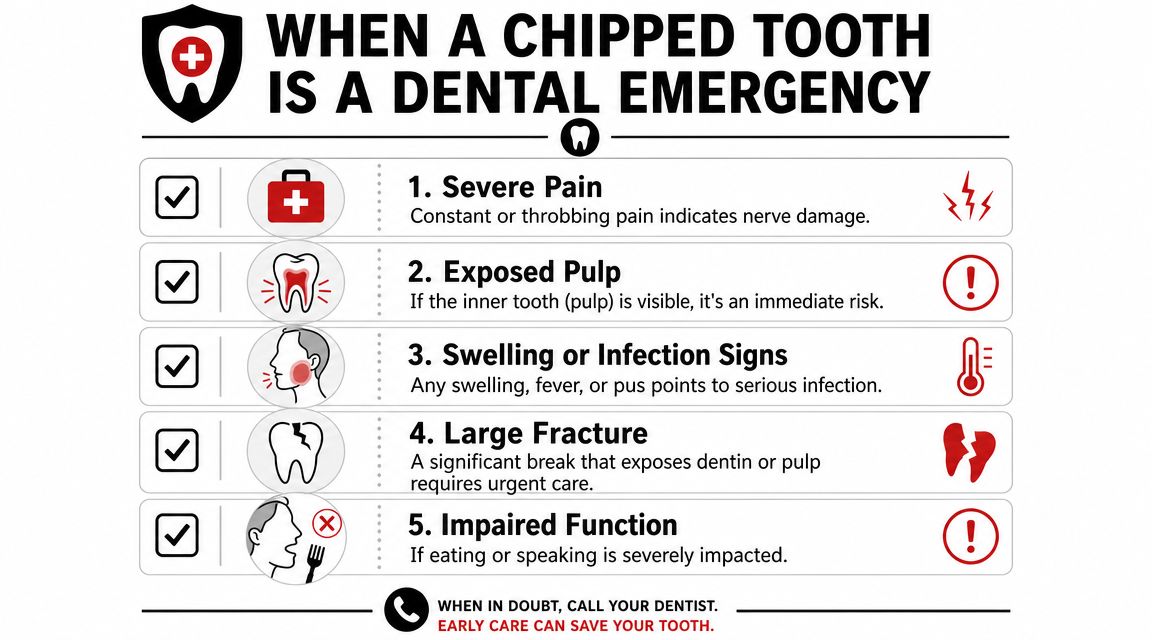
Signs you shouldn't wait on
A chip moves into emergency territory when the tooth is more than cosmetically damaged. These are the situations that deserve urgent attention from an emergency dentist near me search result that can readily see you:
- Severe pain: Constant, throbbing, or sharp pain suggests deeper injury.
- Visible inner tooth structure: If the inside of the tooth looks exposed, the pulp may be involved.
- Swelling or signs of infection: Facial swelling, gum swelling, drainage, or fever are red flags.
- A large missing section of tooth: Bigger fractures weaken the tooth and raise the risk of further breakage.
- Trouble eating or speaking normally: Function matters. If daily use is disrupted, it's not a small problem.
Chips that may be less urgent
A very small enamel chip can be surprisingly minor. Cleveland Clinic notes that very small chips may need no treatment, and for minor chipped teeth dentists often use bonding, re-contouring, or a simple filling, sometimes in one visit, in its overview of chipped tooth treatment options.
That said, “not urgent” doesn't mean “ignore it.” A rough edge still needs evaluation, especially if the chip is on a front tooth, near an old filling, or changing the way your bite feels.
A simple way to triage your situation
Here's a practical decision guide:
| Situation | Likely urgency |
|---|---|
| Tiny chip, no pain, no sensitivity | Prompt dental visit during regular hours |
| Sharp edge irritating tongue or cheek | Prompt visit to prevent soft tissue injury |
| Larger broken area or sensitivity with chewing | Same-day or urgent evaluation |
| Severe pain, swelling, or exposed inner tooth | Dental emergency |
If you're unsure, that's reason enough to call. Most patients aren't expected to diagnose whether dentin or pulp is exposed. A dentist examines the tooth, checks the bite, and may use dental X-rays to see whether the damage extends beyond what's visible.
For local guidance on urgent situations, this page on how to handle a dental emergency in Katy, TX is a useful next step.
How We Repair Chipped Teeth with Cosmetic and Restorative Dentistry
Once the tooth has been examined, the question then becomes which repair will last and still look natural. The answer depends on three things: how much tooth is missing, where the chip is located, and whether the nerve is involved.
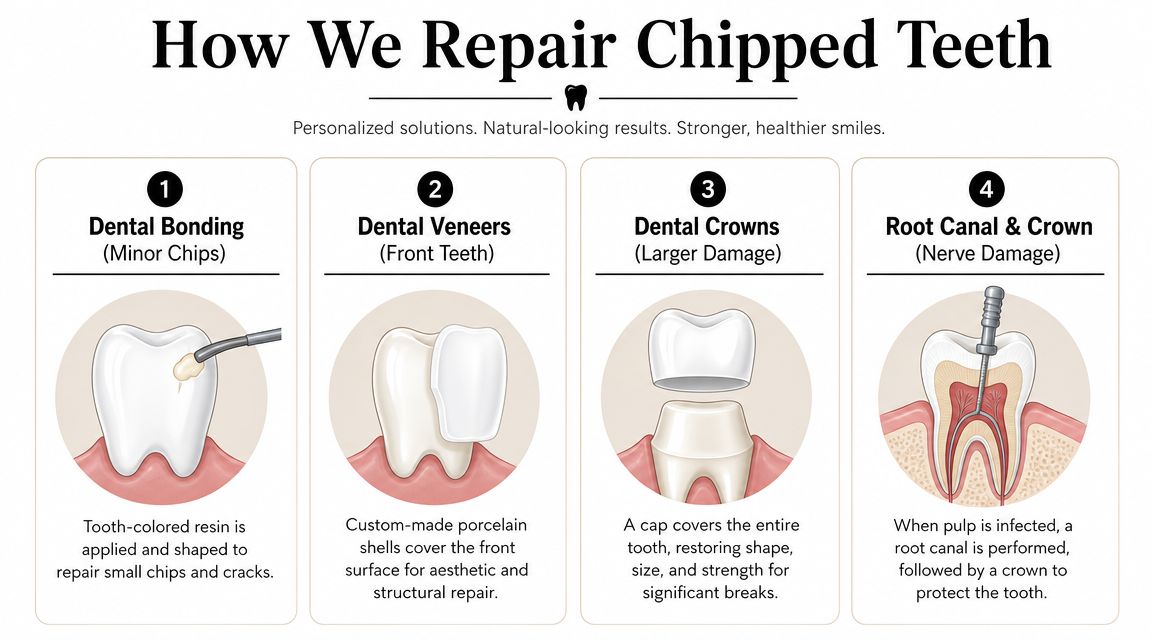
Bonding, smoothing, and small repairs
For a small enamel chip, the most common chairside repair is composite bonding. Dentologie describes the process as cleaning and isolating the tooth, etching the enamel, applying a tooth-colored resin, shaping it, and then light-curing it in its step-by-step guide to fixing a chipped tooth.
This is often the most efficient answer to the question of how to fix chipped tooth damage on front teeth or other visible areas.
A minor chip may be treated with:
- Re-contouring: Best when only a tiny bit of enamel needs smoothing.
- Bonding: Useful when the shape needs to be rebuilt and color matching matters.
- A simple filling: Sometimes appropriate when the chip affects an area that needs added support.
One local option for this type of repair is dental bonding in Katy, which uses tooth-colored composite to restore shape while keeping treatment conservative.
Veneers vs crowns
Some chips are technically repairable with bonding, but that doesn't always make bonding the best long-term choice. If the chip is on a front tooth in the smile line, esthetics, edge strength, and overall symmetry all matter.
Here's the practical comparison:
| Treatment | Best for | Main trade-off |
|---|---|---|
| Bonding | Small to moderate visible chips | Conservative, but may not be ideal for larger edge loss |
| Veneers | Front teeth where appearance is a major concern | More comprehensive cosmetic planning |
| Crowns | Larger damage or structurally weakened teeth | Covers more tooth to provide protection |
A veneer covers the front surface of the tooth and can work well when appearance is a major concern and the damage is limited to the front-facing portion. A crown covers the entire tooth and is usually the stronger choice when the remaining structure needs more support.
Here's a short visual overview of common repair paths:
What modern treatment does well
The biggest shift in chipped-tooth care is that treatment has become more minimally invasive, with an emphasis on preserving natural tooth structure whenever possible. That's good news for patients who assume every broken tooth needs a major procedure.
If the chip is limited, the repair should be limited too. Good dentistry protects what's healthy instead of removing more tooth than necessary.
The best repair isn't always the biggest one. It's the one that restores appearance, protects function, and matches the amount of actual damage.
Advanced Solutions for Severely Damaged Teeth
A severe chip changes the conversation. At that point, the goal isn't just making the tooth look whole again. It's protecting the nerve, stopping infection, and deciding whether the tooth can still be predictably saved.
When the damage goes deeper
Larger or deeper chips can expose the pulp, which raises the risk of infection and often pushes treatment beyond a simple cosmetic repair. In these cases, a dentist may recommend a root canal to remove damaged or infected tissue inside the tooth, followed by a crown to seal and protect what remains.
This is often the right move when the tooth is still restorable but no longer strong enough for bonding alone. A crown gives the tooth shape, structure, and function again.
When saving the tooth isn't realistic
Sometimes the fracture extends too far, or there isn't enough healthy structure left to support a lasting repair. In that situation, tooth extraction may be the most responsible option.
That doesn't mean the smile can't be restored. A missing tooth can often be replaced with a dental implant, which supports both function and appearance. For many patients in Katy looking up dental implants near me, the concern starts with a broken tooth that cannot be predictably rebuilt.
The hardest part for most patients is hearing that a simple fix won't hold. The important part is having a clear path forward, whether that means saving the tooth with a root canal and crown or replacing it after extraction.
How the decision gets made
Dentists look at more than what's visible above the gums. The evaluation usually includes:
- How far the fracture extends: Surface chip and deep split are very different problems.
- Whether the pulp is involved: Pain, sensitivity, and exam findings help guide this.
- How stable the remaining tooth is: A repair has to hold up under real chewing forces.
- Where the tooth sits in the mouth: Front and back teeth face different esthetic and functional demands.
Restorative dentistry, endodontic care, oral surgery, and implant planning are all interconnected. A severe chip may start as an emergency, but the final treatment plan should still be thoughtful, durable, and suited to the tooth's actual condition.
Your Comfort is Our Priority at The Dental Retreat in Katy
A chipped tooth is stressful enough. Dental care shouldn't add more tension to it. Patients who delay treatment often aren't only worried about the tooth. They're worried about discomfort, judgment, cost, and whether the visit will feel rushed.
That's why the experience matters. A calm setting helps people think clearly, ask better questions, and move forward with treatment they understand.
What patients can expect in Katy
For families and adults in Katy, TX, convenience matters just as much as clinical skill. If you live in Sunterra, Cane Island, Katy Manor, Kingscrossing, Lakehouse, Marisol, The Grange, Anniston, Katy Lakes, Elyson, or Ventanna Lakes, it helps to have a local office that can handle both routine care and urgent dental needs under one roof.
Patients visiting for a chipped tooth should expect:
- A focused exam: The first step is identifying whether the issue is cosmetic, structural, or endodontic.
- Clear treatment options: You should understand what can be smoothed, bonded, covered, or saved.
- Transparent next steps: If more than one repair is possible, the trade-offs should be explained in plain language.
- Support for anxious patients: Comfort measures and sedation options can make treatment much easier.
A better fit for anxious patients
A spa-inspired setting can make a real difference when you're already on edge from a dental injury. Comfort amenities like aromatherapy, massage and heated chairs, noise-cancelling headphones, and TVs in treatment rooms can help take the edge off a visit that might otherwise feel overwhelming.
Sedation dentistry also matters for patients who've avoided care because of fear. If a chipped tooth has left you embarrassed or nervous, a judgment-free approach changes the whole experience. That's especially important when treatment needs to happen quickly and you don't want to spend the entire appointment tense in the chair.
Practical help when you need answers fast
Cost is often one of the first questions after an unexpected dental problem. For patients without insurance, a $49 problem-focused visit is a practical way to get the tooth assessed and understand your options before committing to treatment. The same office also offers a $99 full exam with cleaning and X-rays for new patients without insurance and membership plans that start at $299 per year.
If you've been searching for a dentist near me, cosmetic dentist near me, or emergency dentist in Katy, the right next step is simple. Get the tooth looked at before a small problem turns into a bigger one.
If you've chipped a tooth and want calm, clear guidance, schedule a visit with The Dental Retreat. Whether you need a quick cosmetic repair, urgent pain relief, or a full restorative plan, you can get answers, comfort, and a practical path forward close to home in Katy.