You catch your smile in a video call, a family photo, or the mirror before heading into work, and your eyes go straight to the same thing every time. Maybe it's crowding in the front teeth. Maybe your bite feels off. Maybe you've spent years saying, “I should have fixed this earlier.”
A lot of adults in Katy have that same thought. Then they add another one that stops them from taking action. “I'm probably too old for braces now.”
You're not.
Adult orthodontic treatment is no longer something unusual or hard to fit into real life. It's a practical option for adults who want to feel better about their smile, improve how their teeth fit together, and make daily care easier. If you live in Katy, TX, or nearby neighborhoods like Cane Island, Elyson, Sunterra, Katy Lakes, or The Grange, you don't have to choose between your comfort, your schedule, and your long-term dental health.
This guide walks through what adult orthodontic treatment looks like, what your options are, how long it may take, and how to think about cost in a clear way. If you've been searching for a dentist near me in Katy, TX, or looking for a practice that offers both cosmetic and restorative dental care under one roof, this will help you make a confident next decision.
Is It Time to Reclaim Your Smile in Katy TX
You might be doing everything right and still feel distracted by your teeth.
A working parent in Katy Manor may feel polished and confident until it's time for pictures. A professional in Cane Island may notice that crowded lower teeth make them self-conscious when speaking with clients. Someone in The Grange may have had braces years ago, only to watch their teeth gradually shift again. These stories are different, but the feeling is often the same. You want your smile to match how you feel inside.
That desire isn't shallow. It's personal, and often practical too.
When teeth overlap, twist, or don't meet properly, everyday routines can feel more frustrating than they should. Brushing and flossing may take more effort. You may notice uneven wear, food trapping, or a bite that never feels fully comfortable. In some cases, adults put off treatment because they assume orthodontics belongs to the teenage years, or because they don't want a treatment option that feels too visible.
Adult orthodontic treatment can be about appearance and function at the same time. You don't have to pick one reason to start.
The emotional side matters too
A straighter smile often changes more than photos. Adults commonly tell their dental team they want to stop hiding their teeth when they laugh, stop covering their mouth in conversations, or stop editing their smile in every picture.
That matters. Confidence affects how you show up at work, in relationships, and in everyday life around Katy, from Sunterra to Anniston.
It may be time to take a closer look if
- You avoid smiling fully because your teeth feel crooked or uneven.
- Your teeth have shifted over time after earlier braces or retainers.
- Cleaning feels harder than it should because of crowding or overlap.
- Your bite feels off when you chew or close your mouth.
- You want a smile upgrade as part of broader cosmetic dentistry or restorative dentistry planning.
For many adults, the first step isn't committing to braces or aligners. It's getting answers. A thoughtful exam can show whether your concern is cosmetic, functional, or both, and whether treatment would fit well alongside cleanings and exams, dental x-rays, whitening, implants, or other care.
Why More Adults Are Choosing Orthodontic Treatment
A lot of adults reach a similar point. They notice themselves smiling with their lips closed in work photos, chewing more on one side, or wondering why a few teeth seem harder to clean than they used to be. Then a practical question follows. Is orthodontic treatment still an option now?
For many adults, the answer is yes. Adult orthodontics is common, and it is becoming more accepted as part of routine dental care. The American Association of Orthodontists reports that about 1 in 3 orthodontic patients are adults, and about 1 out of every 4 patients in the average orthodontic office is over 21, according to the AAO's overview of the rise in adult orthodontic care.
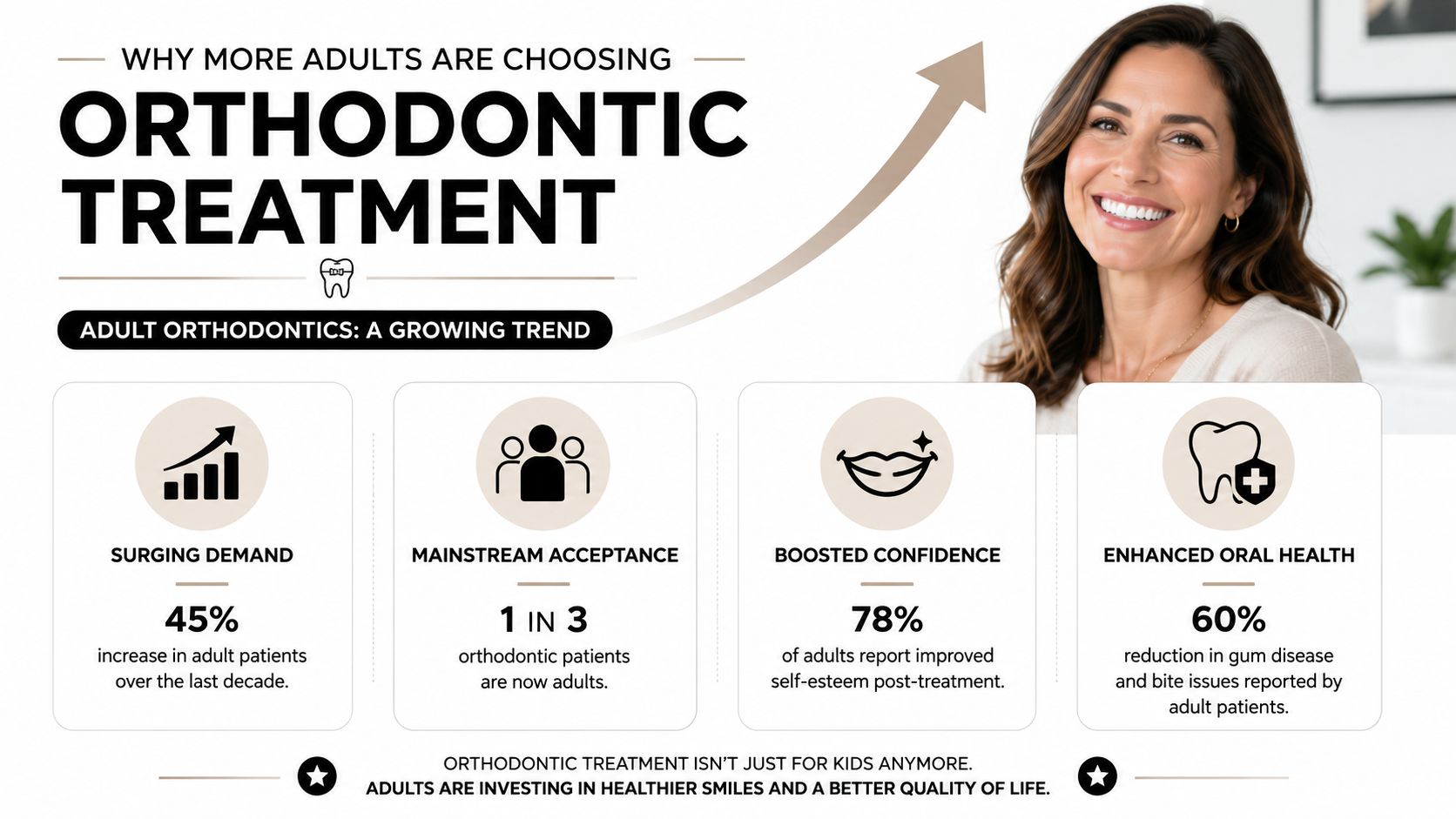
That trend matters because it changes expectations. Adults are no longer unusual orthodontic patients. They are teachers, engineers, parents, retirees, business owners, and busy professionals in Katy who want care that improves comfort and confidence without taking over daily life.
Adult treatment makes sense for real adult reasons
Adults usually say yes to treatment after a long period of putting up with small frustrations. A crooked tooth may seem cosmetic at first, but over time it can feel more like a pebble in a shoe. You can ignore it for a while, yet it keeps asking for attention.
Some patients want to feel better about their smile in photos and conversations. Others are more focused on function, such as a bite that feels uneven or areas that trap food and make brushing harder. Many adults have both goals at the same time, and that is completely normal.
| What adults notice | Why it matters |
|---|---|
| Teeth look crowded or uneven | It can affect confidence in social and professional settings |
| Bite does not feel balanced | Chewing and closing comfortably may feel less natural |
| Cleaning certain areas is harder | Daily home care can become more frustrating |
| Teeth shifted after childhood braces | Retreatment may help restore alignment and support long-term maintenance |
A direct evaluation makes more sense than guessing. Recurring concern about alignment, bite comfort, or cleaning difficulty is a good reason to have a dentist take a close look.
Better technology changed the decision
One reason more adults are moving ahead with orthodontic treatment is simple. The experience is different now than it was years ago.
Today's options can be lower profile, more comfortable, and easier to fit into adult schedules. Some adults prefer removable aligners for flexibility. Others need the precision of braces for more complex tooth movement. A side-by-side comparison of clear aligners and traditional braces can help make that choice feel less confusing.
Cost has changed the conversation too. Many adults once assumed orthodontics was out of reach unless they had ideal insurance or a large budget ready upfront. In reality, modern practices often offer staged payment options that make treatment easier to plan for month by month, especially for patients comparing priorities like family expenses, work travel, and other dental care.
That combination matters. Better treatment tools, clearer expectations, and more transparent financing have made orthodontics feel less like a teenage milestone and more like a smart, timed decision adults can make for themselves.
Your Modern Orthodontic Options at The Dental Retreat
Most adults want the same thing when they ask about orthodontics. They want a straighter smile, but they also want a treatment option that works with real life.
That's where modern orthodontics helps. Today's choices aren't limited to one look or one experience. Different appliances solve different problems, and the right option depends on your bite, your goals, and how much visibility and maintenance you're comfortable with.

Clear aligners for flexibility and appearance
Clear aligners are a popular choice because they're removable and low-profile. Adults often like that they can take them out for meals, brushing, flossing, and important events. That makes them feel easier to fit into workdays, date nights, and family routines.
They can address many of the concerns adults bring in for treatment. A recent adult-treatment summary reported that the most common issues were crowding in 40.6% of cases, malocclusion in 24.2%, and overbite in 18.8%, as described in this overview of adult orthodontic patterns and modern treatment options.
If you're weighing convenience against complexity, this comparison of clear aligners vs traditional braces can help frame the discussion.
Clear or ceramic braces for a balanced middle ground
Ceramic braces work like traditional braces, but the brackets blend in more naturally with the teeth. For adults who want a fixed option that's less noticeable than metal, they can be a strong fit.
They're often appealing when a patient wants steady tooth movement without needing to remember to remove and reinsert trays. Because they stay on the teeth, they also reduce the day-to-day responsibility that comes with removable appliances.
Traditional or lingual braces for specific needs
Traditional metal braces are still an excellent solution in many adult cases, especially when precise control matters. They're reliable, efficient, and often useful when the bite needs more involved correction.
Lingual braces are different. They sit on the inside of the teeth, so they're hidden from view in everyday conversation. Adults who want their orthodontics to stay out of sight sometimes ask about this option, especially if they need a fixed appliance.
Here's a quick side-by-side view:
| Option | Best known for | Daily lifestyle impact |
|---|---|---|
| Clear aligners | Discreet look and removability | Easy for meals and brushing, requires consistency |
| Ceramic braces | Less visible fixed treatment | No removing trays, but food care matters |
| Metal braces | Strong control for many cases | Most visible, reliable for detailed movement |
| Lingual braces | Hidden placement behind teeth | Very discreet, but may feel different at first |
To see how these options work visually, this short video gives a helpful overview.
How adults usually choose
Most adults don't choose based on one factor. They balance a few at once:
- Visibility: How noticeable do you want treatment to be in daily life?
- Comfort with routine: Are you okay managing removable trays carefully?
- Complexity of movement: Does your bite need more detailed correction?
- Personal priorities: Is your main goal convenience, subtle appearance, or broad bite improvement?
The best option is the one that fits both your mouth and your life.
Your Treatment Journey Step by Step
A lot of anxiety around adult orthodontic treatment comes from not knowing what the process will feel like. Once you can picture the steps, it becomes much easier to decide whether you're ready.
For adults, treatment usually moves at a steady pace rather than a rushed one. In one adult cohort, mean treatment duration was 18.6 months, and the same study noted crowding as the most common indication at 40.6%, according to this clinical review of adult orthodontic treatment duration and planning.

The first visit and your personalized plan
Your first appointment is about clarity. The dental team examines your teeth, reviews your bite, takes the needed records, and listens to what you want to change. Adults often come in saying one thing, like “my front teeth look crowded,” and learn there's also a bite issue worth addressing.
This planning stage matters because adult mouths often include previous fillings, crowns, worn teeth, or gum concerns that need to be considered carefully.
A useful preview of how planning unfolds is this guide to the treatment timeline for clear aligner therapy.
Active treatment and regular progress visits
Once treatment begins, teeth move gradually. If you're in aligners, you'll change trays on the schedule your provider gives you. If you're in braces, your progress is guided through adjustment visits and close monitoring.
This phase is where adults usually realize treatment is more manageable than they expected. You adapt to the appliance, learn the cleaning routine, and begin noticing small changes that build motivation.
A good orthodontic plan shouldn't feel generic. Adult treatment works best when it respects your restorations, gum health, bite stability, and long-term goals.
Finishing and retention
When your teeth reach the planned position, active treatment ends. But the process isn't over the day braces come off or the last aligner is finished.
Retention keeps your results in place. Teeth can shift, especially if retainers are ignored, so this phase protects the time and effort you invested.
A simple way to think about the journey is this:
Assessment
Your concerns, bite, scans, and goals come together in one treatment plan.Movement
Teeth shift in small, controlled steps with aligners or braces.Refinement
Final adjustments improve fit, appearance, and bite details.Maintenance
Retainers help preserve the result long after active treatment ends.
What adults often find surprising
Adults sometimes expect treatment to move just like it does for teenagers. It doesn't always. Mature bone and existing dental work mean planning tends to be more individualized.
That's not a drawback. It's part of what makes adult orthodontic treatment thoughtful and stable.
If you've also been considering cosmetic dentistry, teeth whitening, veneers, or restorative work such as crowns or dental implants near me, the sequence of treatment matters. Straightening first can create a better foundation for whatever comes next.
A Different Kind of Dental Experience in Katy
For many adults, the biggest obstacle isn't whether orthodontic treatment can work. It's whether the dental experience itself will feel stressful, rushed, or uncomfortable.
That concern is real. Some patients have dental anxiety. Others have busy schedules and want visits to feel calm and efficient instead of draining. Some want a practice environment that feels more welcoming than clinical.

Comfort changes the whole process
A spa-inspired setting can make a real difference when you're starting something as personal as adult orthodontic treatment. Patients often feel more at ease when the office experience supports comfort from the moment they arrive, not just when treatment begins.
Features like massage and heated chairs, personal TVs, noise-canceling headphones, and aromatherapy help create that sense of calm. For adults who've delayed care because they associate dentistry with tension or embarrassment, those details matter.
Anxiety-sensitive care helps adults move forward
Orthodontic treatment usually involves a series of visits, so feeling safe in the space matters just as much as liking the final result. Patients who are nervous about dental care often do better when the team explains each step clearly, moves at a comfortable pace, and offers sedation options when appropriate.
That kind of setting can be especially helpful if you're also managing broader dental needs, such as cleaning and exams, restorative dentistry, cosmetic dentistry, emergency dentist visits, tooth extraction planning, or implant consultations. Many adults don't come in with only one issue. They want a home for their dental care that feels organized and judgment-free.
The best dental visit is the one that lowers your stress enough to help you keep coming back.
What a supportive visit usually feels like
Instead of feeling hurried, a strong patient experience often feels like this:
- You're listened to first. Your concerns and priorities shape the conversation.
- You understand the plan. You know what happens now, what happens later, and why.
- You feel physically comfortable. Amenities and sedation options reduce tension.
- You're not judged. Whether you've been away from the dentist for months or years, the focus stays on helping you move forward.
For adults in Katy, including Kingscrossing, Ventanna Lakes, Lakehouse, and Marisol, that kind of atmosphere can make the decision to start treatment feel much more possible.
Financing Your Smile Transparently and Affordably
You finally decide to ask about straightening your teeth. The consultation goes well. Then the financial conversation starts, and the language gets fuzzy. One fee covers “treatment,” another may or may not include retainers, and it is suddenly hard to tell what you would be paying for.
That confusion stops many adults before they start.
A clear financial plan should feel like a written roadmap, not a guessing game. You should know the starting cost, what is included, what could change the total, and what payment choices are available if you want to spread treatment out over time. For adults balancing mortgages, childcare, insurance limits, and everyday expenses, that clarity matters just as much as the treatment itself.
Why clear pricing matters
Adult orthodontic treatment is a process, not a one-day purchase. The total fee may include the exam, records or imaging, the orthodontic appliance, adjustment visits, and retainers after treatment. Some offices package those items together. Others separate them. Neither approach is automatically wrong, but you should be able to see the difference in plain language.
That is the part many patients miss.
If a quote is hard to understand, it becomes almost impossible to compare one office with another. A lower number may leave out follow-up visits. A higher number may include more than you realized. The goal is not just to find the cheapest figure. The goal is to understand the full value of the plan in front of you.
Questions that make cost easier to understand
If you are comparing orthodontic care in Katy, ask for specifics:
- What does the quoted fee include? Ask whether the price covers the consultation, records, appliance, check-in visits, and final retainers.
- What is billed separately? Replacement aligners, broken brackets, extra retainers, or additional visits can affect the total.
- How does insurance apply? Adult orthodontic benefits vary widely, and many plans have lifetime maximums.
- Are monthly payment options available? A predictable payment schedule is often easier to manage than a large upfront fee.
- Is there an in-office membership plan or new-patient offer? For patients without traditional insurance, these can reduce the cost of exams and routine care.
This works like comparing two phone plans. The cheaper monthly number is not always the better deal if it leaves out the things you know you will need.
Affordable care should also be understandable
Adults often focus on the first number they hear because they are trying to answer a practical question fast. Can I fit this into my budget? That makes sense. Still, the smartest way to compare options is to look at both the total cost and the structure behind it.
A transparent office will usually explain your choices without pressure. You may have the option to pay in full, break treatment into monthly payments, or combine insurance benefits with an in-office plan for routine dental needs. If you live in Katy and want to improve your smile without financial surprises, that kind of conversation can make treatment feel much more realistic.
Good financing does not hide the details. It makes the details easier to live with.
The best payment plan is the one you understand clearly, can manage comfortably, and feel confident saying yes to.
Common Questions About Adult Orthodontics
You might be brushing your teeth before work, catch your smile in the mirror, and notice the same overlap or shifting you have been putting off for years. Then the questions start. Am I too old for this? Will it hurt? Will braces or aligners fit into my life if I already have crowns, veneers, or an implant?
Those are smart questions. Adults usually look at orthodontic treatment the way they look at any other health decision. They want clear reasoning, realistic expectations, and a plan that respects their time, comfort, and budget.
Am I too old for orthodontic treatment
Age alone usually does not rule you out.
Teeth can still move in adulthood if the gums and supporting bone are healthy. A better way to frame the question is this: are your teeth and gums ready for movement, and will orthodontics help solve the problem you want to fix? That could be crowding, bite strain, relapse after braces years ago, or a smile that no longer feels like you.
Many adult patients are not starting late. They are starting at the right time for their life now.
How uncomfortable is it
Most adults describe orthodontics as pressure and soreness, not sharp pain. The first few days after starting treatment, or after an adjustment, can feel similar to breaking in a new pair of shoes. You notice it, you adapt to it, and then it settles.
Your experience depends on the type of appliance, how much movement your teeth need, and how sensitive you tend to be. Small comfort strategies help. Softer foods for a day or two, orthodontic wax if needed, and clear instructions from your dentist can make the adjustment period much easier.
Can I get orthodontic treatment if I have crowns, veneers, or implants
Often, yes.
Adults frequently come in with existing dental work, and orthodontic treatment can still be possible. It just needs more planning. Crowns and veneers can often be worked around, though they may affect how attachments are placed or how forces are applied. Implants are different because they are fixed in the bone and do not move like natural teeth.
That matters because orthodontics is a sequence problem as much as a tooth movement problem. If an implant is already in place, the nearby teeth may need to move around it. If an implant or cosmetic work is planned for later, orthodontics may come first so the final result fits together properly.
Are clear aligners always the best choice for adults
Clear aligners are an excellent option for many adults, especially for mild to moderate crowding, spacing, and some bite issues. They are discreet, removable, and often easier to fit into a professional routine.
They are not automatically the best choice for every case. More complex bite corrections sometimes respond better to braces because braces give the dentist more direct control over certain types of tooth movement. A useful comparison is tools in a toolbox. Clear aligners and braces can both straighten teeth, but they do not solve every problem with the same level of precision.
That is why a consultation matters. The right question is not which option is more popular. The right question is which option gives you the best chance of a stable result with the least disruption to your life.
What if I also need other dental treatment
That is common in adult care.
Some patients need gum treatment before orthodontics. Others may need a filling, a crown, whitening, or planning for future restorative work. Orthodontics works best when it is part of a coordinated plan rather than a standalone decision. Straightening teeth can create better spacing for restorative work, improve cleaning access, and set up a healthier bite long term.
In other words, your smile is not a collection of separate projects. It works more like a house renovation. The order matters if you want the final result to look good and function well.
How long does adult orthodontic treatment usually take
Treatment time varies based on the amount of movement needed, the type of appliance, and how consistently instructions are followed. Some adults are treating a small relapse from earlier braces. Others are correcting years of crowding or bite changes. Those situations do not move at the same pace.
A consultation should give you a realistic timeline, not a sales version of one. That includes how often visits are needed, what could slow treatment down, and what you can do at home to keep things on track.
How do I know if I should take the next step
You do not need to be fully decided before booking a visit.
If your teeth are shifting, your bite feels off, food is getting trapped in crowded areas, or you feel less confident about your smile than you used to, those are valid reasons to ask questions. A consultation should help you understand what is minor, what is more involved, and what your options would look like in real life here in Katy, including practical payment choices if cost is part of the hesitation.
If you're ready to explore adult orthodontic treatment in Katy, TX, The Dental Retreat offers a calm, modern setting for patients who want clear answers, personalized care, and transparent options. Whether you're in Katy, Sunterra, Cane Island, Katy Lakes, Elyson, Ventanna Lakes, or a nearby neighborhood, you can schedule a consultation to talk through your smile goals, review your options, and take the next step with confidence.