You bite into lunch, hear a sharp click, and suddenly your tongue finds a rough edge that wasn't there an hour ago. That moment is upsetting. Thoughts quickly turn to concerns such as: Is the tooth ruined? Will this hurt all night? How expensive is this going to be?
Take a breath. A chipped tooth is a real dental problem, but it's usually manageable. The right next step is simple. Protect the tooth, avoid making it worse, and get it examined quickly so you know whether you need a small cosmetic fix or a stronger restorative repair.
If you're searching for a dentist near me in Katy, TX, or you need an emergency dentist because a front tooth chipped or a back tooth cracked, you're asking the right question. Fast care matters, especially if the tooth feels sharp, sensitive, or painful when you bite.
Chipped a Tooth? Get Emergency Help in Katy TX
A chipped tooth rarely happens at a convenient time. It happens during dinner in Cane Island, after a workout near Elyson, or while getting kids ready for school in Sunterra. You feel the edge with your tongue, look in the mirror, and the panic starts immediately.
Here's my direct advice. Don't wait around hoping it will smooth out on its own. Small chips can stay stable, but they can also get worse if you keep chewing on them. If the tooth is sensitive to air, cold drinks, or pressure, that's your cue to treat it like a real dental emergency.
A lot of patients in Katy make the same mistake first. They look only at the cosmetic side. If it's on a front tooth, they worry about how it looks. If it's on a back tooth, they assume it's no big deal because nobody can see it. That thinking gets people in trouble. A chipped molar can affect your bite, and a front tooth chip can expose enough structure to make eating uncomfortable.
Don't judge the damage by the mirror alone. The chip you can see is only part of the story.
If you live in Sunterra, Cane Island, Elyson, Katy Manor, Ventanna Lakes, or nearby neighborhoods, the smart move is to get seen promptly by a local office that handles emergency dental care, restorative dentistry, and cosmetic dentistry. If you want immediate guidance on what counts as urgent, read how to handle a dental emergency in Katy TX.
The good news is that chipped tooth repair often has clear, practical solutions. The treatment could be as simple as smoothing a tiny edge. It could mean bonding, a veneer, or a crown. The important part is getting the diagnosis right early, before the tooth fractures more extensively.
First Aid for a Chipped Tooth Before Your Dental Visit
The first hour matters. What you do at home can reduce pain, protect the tooth, and improve your options once you get to the dental office.

What to do right away
Rinse your mouth gently
Use warm water to clear away debris. If the area feels irritated, warm salt water can help keep things cleaner and calmer.
Save any broken piece you can find
If part of the tooth came off, don't throw it away. A dentist may be able to evaluate whether keeping the fragment helps with treatment planning.
Avoid chewing on that side
This is the fastest way to stop a small chip from becoming a bigger fracture. Stick with soft foods until the tooth is examined.
Cover a sharp edge if it's scraping your tongue or cheek
Dental wax can help temporarily. If you don't have that, the main goal is to avoid rubbing the area and get seen soon.
Use a cold compress if there's swelling
Swelling doesn't always happen with a chipped tooth, but if it does, cold on the outside of the face can help settle things down.
What matters if you found the fragment
Patients often hear one piece of advice over and over. Put the fragment in milk. That's reasonable first aid, but handling matters too. The missing detail in most advice is that reattachment success depends on more than storage.
One of the background concerns with broken tooth pieces is damage from rough handling or waiting too long. If you recover the fragment, be gentle with it and bring it with you. Don't scrub it. Don't try to glue it back yourself. Home repair kits are a bad idea.
Practical rule: If you're tempted to fix a chipped tooth at home, stop. Temporary self-repair often makes professional bonding more difficult.
A short video can also help if you need calm, visual guidance while you're figuring out your next step.
When it becomes more urgent
Call quickly if you notice any of these:
- Lingering pain: Pain that doesn't settle down suggests the damage may be deeper than enamel.
- Temperature sensitivity: Sharp sensitivity to cold or air can mean the tooth is more exposed.
- Bleeding near the tooth: That can point to trauma around the gumline.
- A bite that feels off: If your teeth don't come together normally, the fracture may be changing the way you chew.
You don't need to diagnose it yourself. You just need to protect it and get it checked.
Your Guide to Chipped Tooth Repair Options
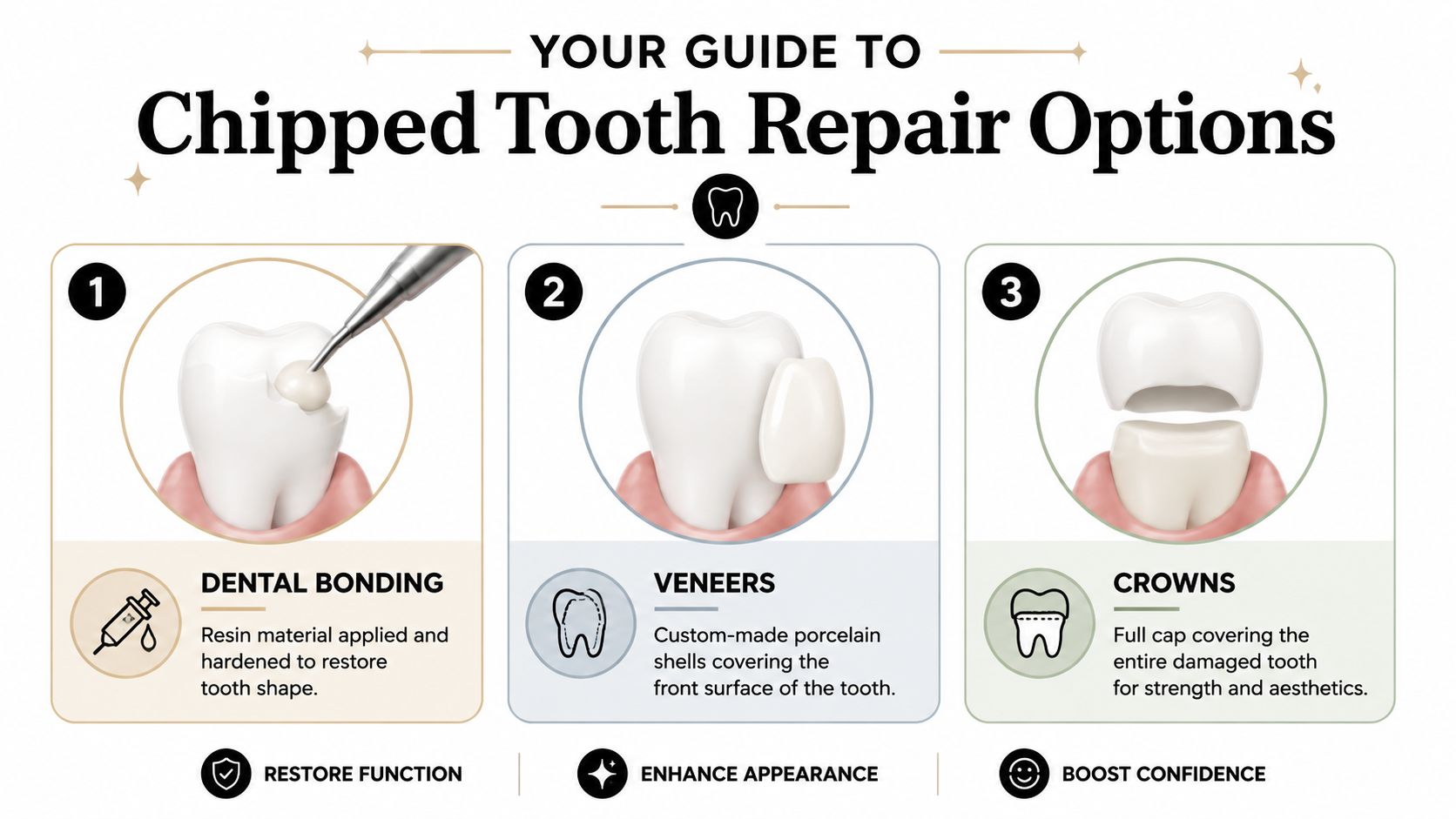
The right repair depends on one thing more than anything else. How much tooth is missing. That's why two patients can both say, “I chipped a tooth,” and need completely different treatment.
Bonding for small to moderate chips
For small to moderate enamel chips, composite bonding is a common repair. The dentist roughens the enamel, applies a tooth-colored resin, and light-cures it to rebuild the missing structure in a single visit. Clinical guidance cited by Affordable Dentures on chipped tooth repair places bonding at 3 to 5 years of service life for these cases.
Bonding is my go-to recommendation when the chip is visible, the tooth is otherwise healthy, and you want a fast repair that looks natural. It's conservative. It usually doesn't require major removal of healthy tooth structure. And for a front tooth, it can make a dramatic cosmetic difference in one appointment.
Bonding does have limits. It isn't the strongest option for a tooth that takes heavy bite force, and it can wear or stain over time. Another verified clinical summary notes bonding can offer a functional lifespan of about 10 years when properly maintained, though it generally needs more maintenance than veneers, crowns, or implants.
Veneers for cosmetic improvement on front teeth
Veneers make sense when the chip is part of a bigger cosmetic problem. If the tooth is chipped, misshapen, or discolored, a veneer can improve the overall look of the smile rather than just patching one area.
A porcelain veneer is a thin custom shell for the front surface of the tooth. Verified data places veneers in a durability range that can last up to 20 years with proper care. They're more of a cosmetic dentistry decision than a quick emergency patch, but they can be an excellent choice when appearance is the main concern and the remaining tooth is structurally sound.
Here's my opinion. Don't choose a veneer just because it sounds more premium. If a simple bond will do the job well, that's often the cleaner answer. Veneers are better when you want a broader smile upgrade, not just a basic repair.
Crowns for larger fractures
When a substantial portion of the tooth is gone, a crown is usually the more durable solution. Independent clinical guidance summarized by Gentle Dental's chipped tooth overview notes that crowns are often used when the remaining tooth structure is significantly compromised, with typical longevity around 10 to 15 years in practice.
A crown covers the tooth more completely. That matters because a weakened tooth doesn't just need to look normal again. It needs protection from flexing, cracking, and breaking further under bite pressure.
If a chip changed the way you bite, a crown often solves the real problem, not just the visible one.
If the break reaches the pulp, treatment may escalate to a root canal plus crown. If the fracture goes below the gum line and the tooth can't be predictably saved, extraction and replacement may become necessary. Verified clinical data also notes that in severe fractures where the structure is compromised below the gum line, extraction followed by a dental implant is the standard path, with the implant typically completed in two stages.
A quick comparison
| Repair option | Best fit | Typical durability | Main advantage |
|---|---|---|---|
| Bonding | Small to moderate chips | 3 to 5 years in common chipped-tooth cases | Fast, tooth-colored, often single visit |
| Veneers | Front teeth with cosmetic concerns | Up to 20 years | Excellent smile enhancement |
| Crowns | Larger fractures or weakened teeth | 10 to 15 years | Stronger protection for the tooth |
If you want a closer look at what that evaluation can involve, this chipped tooth repair page in Katy shows how dentists assess damage before recommending a fix.
One practical note. Tiny edge chips don't always need full restoration. In some cases, simple smoothing or enamel recontouring is enough. But once the chip affects shape, function, or bite contact, restoring the missing structure becomes much more important than just polishing the edge.
Understanding the Costs of Repair for Katy Residents
You chip a tooth, look in the mirror, and your next thought is usually not cosmetic. It is financial. You want to know what the fix will cost before the problem gets bigger.
The honest answer is that the price depends on how much tooth was lost and what it takes to protect it long term. A tiny edge chip is a very different repair from a fracture that exposes the nerve or leaves the tooth too weak to function safely.
What actually changes the price
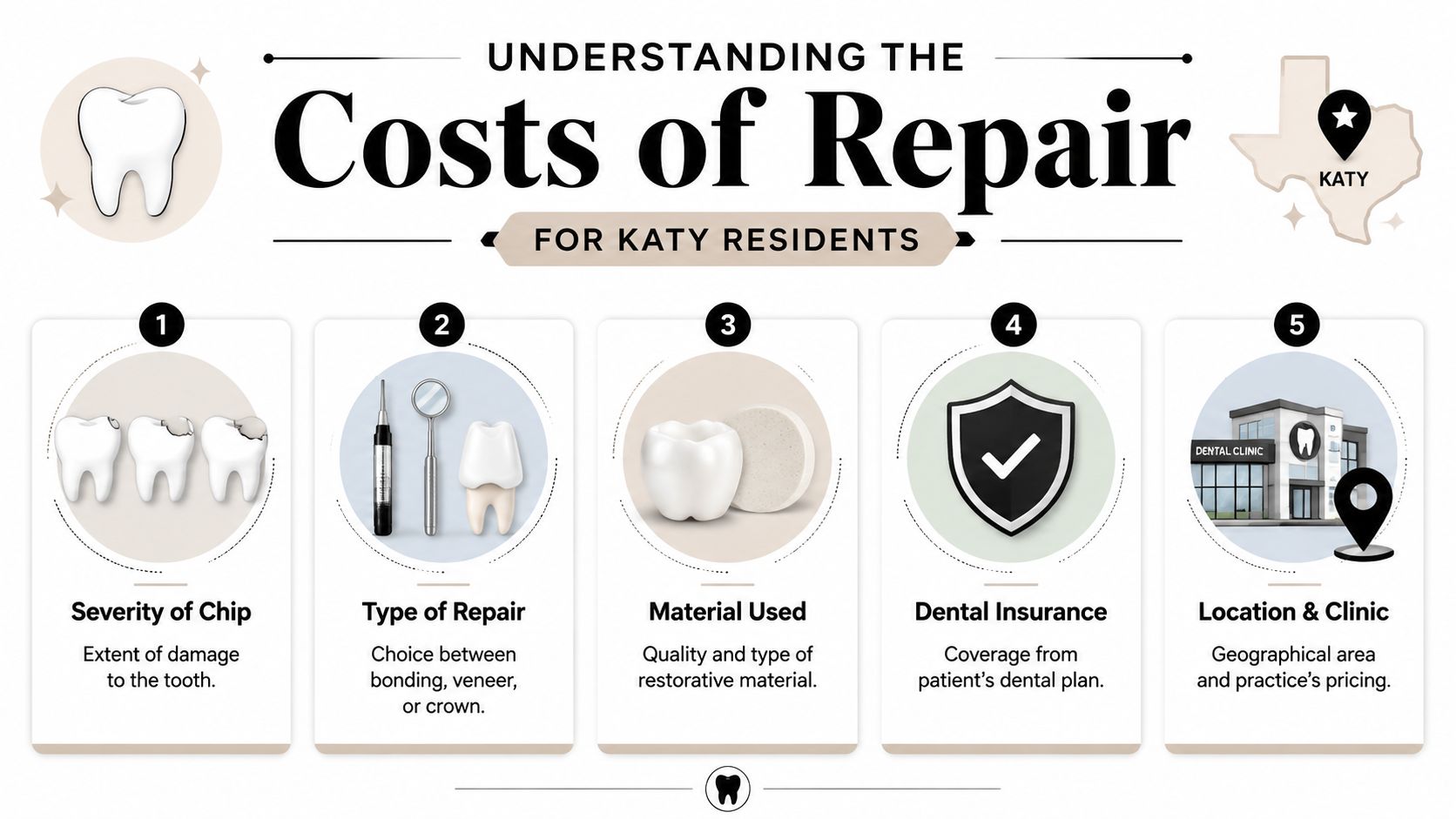
Four things usually drive the estimate:
- Depth of the break: A shallow chip costs less to repair than a crack or fracture that reaches the inner tooth.
- Type of treatment: Bonding, veneers, crowns, root canal treatment, and implants are not in the same price range.
- Whether the tooth is still strong enough to save predictably: Preserving a healthy, stable tooth is usually simpler than replacing one that cannot be restored.
- Insurance status: If treatment is medically necessary, insurance may reduce what you pay after your deductible and plan share.
Ask one question first. What treatment gives this tooth the best chance to stay out of trouble later? That is the number that matters.
Cheap now can cost more later
I do not recommend choosing based on the lowest upfront fee alone. That is how patients end up paying twice.
One planning note for uninsured patients states that bonding may seem cheaper initially at around $450, but repeat costs can rise to over $1,200 in 10 years, while a crown may cost around $1,100 upfront and last 15 to 20 years. In the right case, the crown is the better value because it solves the strength problem instead of patching over it.
The lowest estimate is not always the smartest estimate.
If the tooth is structurally weak, get the stronger repair. It usually saves money, time, and frustration.
Local options that make care easier to start
For Katy patients, the first barrier is often the exam fee. That is why practical entry points matter. At The Dental Retreat, uninsured patients can choose a $49 problem-focused exam or a $99 new patient special that includes an exam, cleaning, and X-rays. There is also an in-house membership plan that starts at $299 per year.
That matters if you live in Katy Lakes, Kingscrossing, Marisol, The Grange, or Anniston and have been putting this off because you assume the visit itself will be out of reach. Get the tooth checked early. A modest repair today is usually far easier on your wallet than waiting until you need a root canal, extraction, or implant.
A Calm and Comfortable Dental Visit in Katy
Some people aren't mainly afraid of the chipped tooth. They're afraid of the dental visit that comes next. If that's you, I want to be very clear. Dental anxiety is common, and a good office plans for it instead of pretending it doesn't exist.
A calmer visit starts before anyone touches the tooth. You walk in, the pace feels unhurried, and the environment doesn't feel clinical in the harsh, fluorescent sense people dread. That difference matters more than most practices admit.
What a more comfortable appointment feels like
A patient from Ventanna Lakes or Katy Manor might arrive tense, expecting the usual dental routine. Instead, the setting is quieter. The chair is heated. Massage features help reduce that full-body bracing people do when they're nervous. Aromatherapy softens the room. Noise-canceling headphones and a personal TV give your brain something else to focus on besides the sound of instruments.

That doesn't just make the visit feel nicer. It makes it easier to get care done. Anxious patients often postpone treatment until a manageable chip turns into a painful fracture. A more comfortable environment helps break that cycle.
What usually happens at the appointment
The visit itself is straightforward. The dentist examines the tooth, checks the bite, looks for deeper cracks, and takes dental X-rays if needed. From there, the conversation should be simple and honest.
You should expect answers to these questions:
- Is this only cosmetic, or is the tooth structurally weakened?
- Can it be repaired today, or does it need a second step?
- Will bonding work, or is a crown the safer long-term answer?
- Is the nerve involved?
- What will this cost before treatment starts?
A good emergency dental visit should leave you less worried than when you arrived.
That's especially important if you're searching for an emergency dentist, a cosmetic dentist near me, or a dentist in Katy, TX because you need both immediate relief and a plan you understand. A clear explanation, a calm room, and transparent next steps go a long way.
How to Prevent Future Dental Injuries
Once a chipped tooth is repaired, the next job is keeping it from happening again. This part is usually simple. Most repeat chips come from habits, bite stress, or sports injuries that nobody addressed.
Smart habits that protect your teeth
- Wear a mouthguard for sports: If there's any chance of contact, a guard is worth it. One hit to a front tooth can turn a small cosmetic issue into a major restorative case.
- Stop chewing hard objects: Ice, pens, hard candy, and popcorn kernels are common troublemakers.
- Don't ignore grinding or clenching: If you wake up with jaw tension or flattened teeth, ask about a nightguard. Repeated bite stress can weaken edges and existing dental work.
- Keep up with cleanings and exams: Routine visits help catch small cracks before they split further.
- Fix your bite when it's off: A chipped tooth that keeps taking the same heavy contact will often chip again.
My blunt advice on prevention
If you've chipped a tooth once, don't assume it was just bad luck. Sometimes it was. Often it wasn't. A hard bite pattern, untreated grinding, or an older restoration can set the stage for another break.
That's why preventive care matters. A dentist isn't only there to repair damage. Good dental care helps you avoid repeated emergencies, unnecessary tooth extraction, and more expensive restorative dentistry later. It also protects cosmetic work like bonding, veneers, teeth whitening results, and crowns.
For families in Katy, TX, including Sunterra, Cane Island, Elyson, Katy Lakes, and nearby neighborhoods, the best long-term plan is simple. Get the chip repaired properly, learn why it happened, and deal with the cause.
If you've chipped a tooth and want clear answers without the usual stress, schedule a visit with The Dental Retreat. Whether you need emergency dental care, cosmetic dentistry, restorative treatment, dental X-rays, or a straightforward new patient exam in Katy, TX, the next step is getting the tooth evaluated before it gets worse.