You may be doing many things right for your health right now. You might be watching your sugar, trying to walk more, taking blood pressure medication, or making sure your kids get yearly checkups. But a lot of people in Katy still treat dental visits as separate from “real health care.”
That's the part I want to gently clear up.
Your mouth isn't off to the side from the rest of your body. It's connected to it every day. The condition of your gums, teeth, and oral tissues can reflect what's happening in your overall health, and in some cases it can raise concerns worth discussing with your physician too. For families in Katy, TX, including neighborhoods like Sunterra, Cane Island, Elyson, and Ventanna Lakes, that makes routine dental care much more important than many people realize.
Your Trusted Katy Dentist for Whole-Body Wellness
A patient in Katy may be doing many things to stay healthy. Annual physicals are on the calendar. Blood pressure gets checked. Meals are a little better than they used to be. Then one small dental warning sign shows up, like bleeding while brushing or a tooth that stings with cold water, and it gets pushed aside for another month.
That happens all the time, and it makes sense. Many people were taught to see dental care as separate from the rest of health care. The dental office was where you went for a cleaning, a filling, a tooth extraction, or help improving your smile. Those services still matter. They just are not the whole story.
Your mouth works like an early warning zone for the body. Changes in the gums, teeth, tongue, saliva, and oral tissues can be the first signs that irritation, infection, inflammation, or daily habits are starting to affect more than your smile. The Centers for Disease Control and Prevention explains that oral health is tied to overall health and quality of life, which is why changes in the mouth deserve attention instead of delay. You can read more from the CDC overview on oral health.
Why patients often miss the connection
Dental problems often begin subtly.
A cavity can start small and stay painless for a while. Gum irritation can look mild even when inflammation is already present. Bad breath may seem like a nuisance instead of a health signal. It is easy to assume that if something is minor in the mouth, it will stay minor everywhere else.
Practical rule: If your gums bleed, stay swollen, or feel tender, treat that as a reason to schedule an exam. Healthy gums usually do not keep sending those signals.
What this means for daily life in Katy
Acting on a feeling that something is off is worthwhile. Seeking out a local Katy dental office after noticing sensitivity, gum bleeding, jaw discomfort, or a broken tooth is not just about fixing one symptom. It is often the first step in protecting your comfort, your ability to eat and speak normally, and your broader health.
That local piece matters. At The Dental Retreat, care is not limited to what is visible on the surface. Your visit gives our team a chance to examine signs of inflammation, infection, grinding, dry mouth, tissue changes, and patterns that may deserve closer attention. For families in Katy Lakes, professionals in Kingscrossing, and retirees in Lakehouse, that makes your neighborhood dentist more than a place for routine treatment. It makes your dental home a practical first line of defense for whole-body wellness.
Understanding the Oral Systemic Health Connection
A lot of Katy patients hear “oral-systemic health” and assume it sounds abstract. In everyday care, it is much more practical than that. Your mouth is one of the few places in the body where inflammation, infection, tissue changes, and healing problems can often be seen early during a routine exam.

The first pathway, bacteria leaving the mouth
Your mouth naturally contains bacteria all day, every day. Healthy brushing, flossing, saliva, and strong gum tissue usually keep that bacterial community in balance.
Problems start when harmful bacteria collect around the teeth and under the gumline long enough to irritate the tissues. Inflamed gums are easier to penetrate than healthy gums. A simple comparison helps here. Healthy gums work more like a tight seal, while irritated gums are closer to a worn weather strip around a door. They do not protect as well.
When that seal weakens, bacteria and bacterial byproducts can enter the bloodstream more easily. That does not mean every dental problem turns into a whole-body problem. It means the mouth can become one source of stress the body has to manage.
The second pathway, inflammation spreading beyond the gums
Inflammation is part of the body's defense system. In small doses, it helps you heal. When it stays active for long periods, it adds to the body's workload.
Gum disease often behaves this way. The irritation may seem limited to bleeding when you brush or tenderness near one area, yet the immune system keeps responding in the background. That ongoing response is one reason dentists and physicians both pay attention to periodontal health. If you want a clearer picture of how this process can progress, our guide on what happens if gum disease goes untreated walks through the stages in plain language.
Healthy gums do more than hold teeth in place. They help reduce one ongoing source of inflammation in the body.
Patients often ask a fair question. Does this mean a problem in the mouth is directly causing every other health issue? No. Oral disease is better understood as a possible contributor, a risk marker, or part of a larger pattern that can include inflammation, habits, medical history, and access to care.
Why the connection can feel confusing
This topic gets confusing because people want a yes-or-no answer, and health rarely works that way. Researchers often find associations before they can prove a direct cause. That is still useful in a dental office, because associations help us know what to watch closely and when to encourage patients to follow up with their physician.
The National Institute of Dental and Craniofacial Research explains that oral health is linked with overall health and points to two major ways the connection may work. Oral bacteria can enter the bloodstream, and inflammation in the mouth can affect other parts of the body. You can read that overview from the National Institute of Dental and Craniofacial Research.
For families here in Katy, that link matters because routine dental visits are not only about clean teeth or filling cavities. At The Dental Retreat, exams also give us a chance to spot patterns that may deserve attention sooner, monitor gum health over time, and help you protect more than your smile.
A short visual explanation can help make that easier to follow.
Health Conditions Linked to Your Oral Health
A lot of Katy patients hear "oral-systemic health" and picture a dramatic chain reaction. Its true nature is more practical, and in many ways more useful. Your mouth can act like an early warning window. Changes in your gums, saliva, or cavity pattern can sometimes point to inflammation or health stress that deserves a closer look.
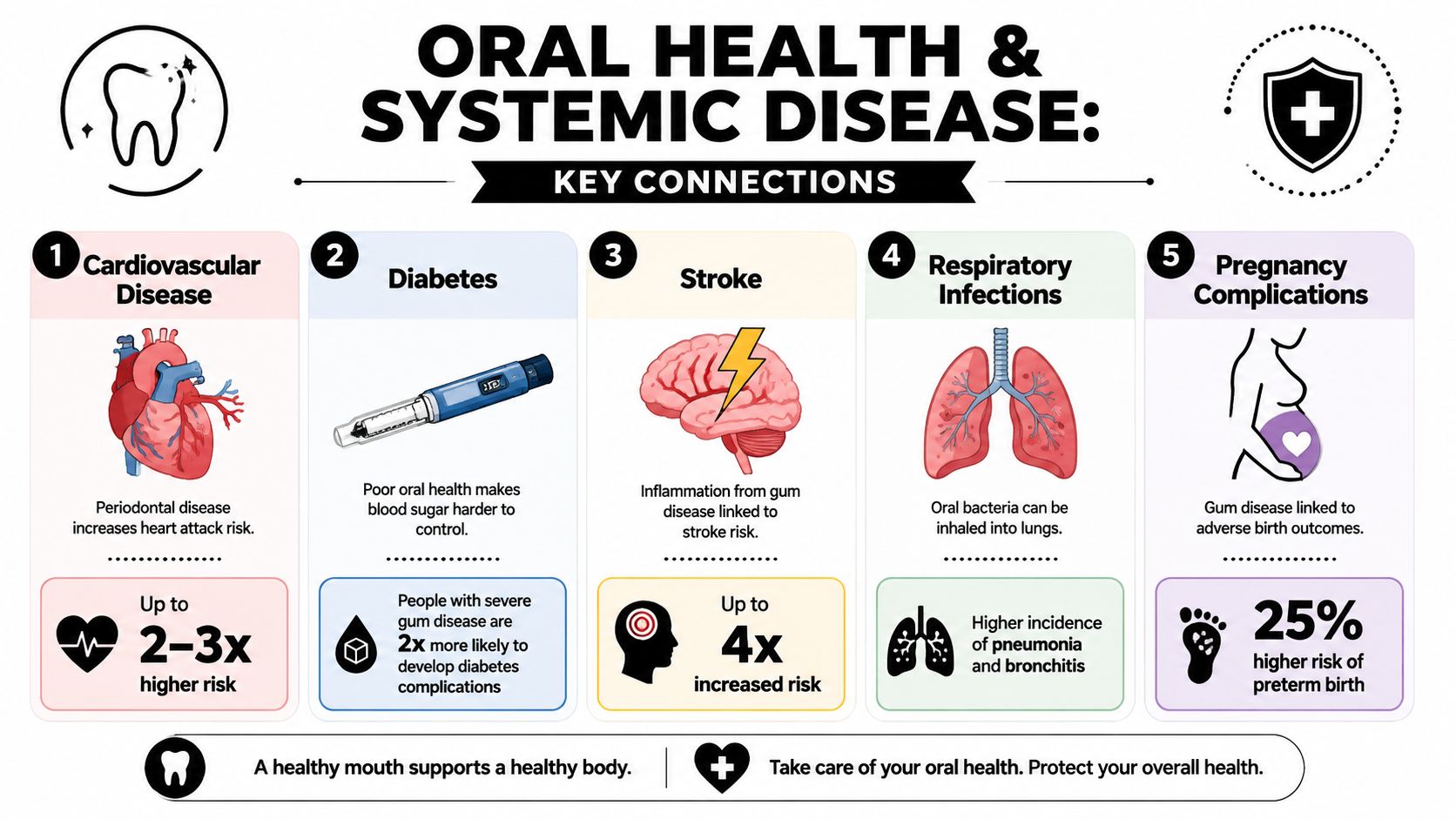
Heart and blood vessel concerns
Gum tissue is full of small blood vessels. When that tissue stays inflamed, it does not stay isolated neatly inside the mouth. That is one reason dentists and physicians both pay attention to periodontal disease.
Earlier in this article, we covered that oral inflammation has recognized links to systemic health. For patients, the practical point is straightforward. If your gums bleed often, look swollen, or pull away from the teeth, that is worth addressing early, not only for your smile but for your broader health picture too.
At The Dental Retreat, this matters because a routine exam in Katy is often the first place someone hears, "Your gums are showing ongoing inflammation." That conversation can prompt better home care, periodontal treatment, or a timely check-in with your physician.
Diabetes and blood sugar patterns
This is one of the clearest day-to-day examples of the mouth-body connection. Blood sugar and gum health can affect each other in ways patients can feel. Higher blood sugar can make it easier for gum problems to worsen. Active gum inflammation can make blood sugar harder to control.
A large NHANES analysis of U.S. adults found a moderate association between periodontitis and diabetes, and also between dental caries and hypertension, as discussed in this NHANES oral and systemic disease analysis.
That does not mean a dental exam diagnoses diabetes or high blood pressure. It means patterns in the mouth can raise a useful flag. If we see gum inflammation that keeps returning, unusually heavy tartar buildup, or decay that seems out of proportion to your routine, we may recommend that you loop in your physician.
That kind of coordination helps patients. It keeps separate health clues from living in separate boxes.
Brain and inflammatory conditions
Researchers have also reported associations between periodontal disease and conditions such as Alzheimer's disease, dementia, and rheumatoid arthritis. These findings deserve a calm explanation because headlines often make them sound more certain than they are.
A helpful way to view this is to compare your mouth to a busy front porch. If there is constant irritation and bacterial buildup at the entry point, the rest of the house is more likely to feel the effects over time. That does not prove one dental problem directly causes a brain or joint condition. It does explain why reducing chronic inflammation in the mouth is a smart part of protecting overall health.
What patients should do with this information
For Katy families, the takeaway is simple. Pay attention to small oral changes before they become long-term problems.
If you want a fuller picture of why early treatment matters, this article on what happens if gum disease goes untreated is a helpful next step.
- Bleeding gums need attention. They often signal inflammation, not "just brushing too hard."
- Frequent cavities can reflect a bigger pattern. Dry mouth, diet, medications, and health conditions can all play a role.
- Dry mouth deserves a conversation. Saliva protects teeth and soft tissues, so low saliva flow can raise cavity risk fast.
- Persistent bad breath can be a health clue. Bacteria, gum disease, and untreated decay are common causes.
In a local dental office, this information becomes actionable. Instead of hearing broad health theory, you get a trained team looking for patterns, tracking changes over time, and helping you decide when a dental fix is enough and when a medical follow-up also makes sense.
How Dental Care at The Dental Retreat Protects You
A lot of whole-body protection starts with very ordinary dental visits. In a Katy dental office, we are not only cleaning teeth. We are checking whether your mouth is giving early warning signs that deserve attention before they turn into pain, infection, or harder medical questions.
That matters because oral health problems tend to stay active unless someone interrupts them. Plaque keeps collecting. Inflamed gums keep reacting. A cracked area keeps trapping food and bacteria. Early care breaks that cycle and makes your mouth easier for you to care for at home.

Preventive care helps us catch patterns early
A cleaning and exam do more than polish the surfaces you can see.
They remove buildup from spots your toothbrush may never fully reach. They also let our team compare what your mouth looks like today with what we saw at your last visit. That timeline matters. A little bleeding in one area, a dry mouth pattern, or a cavity that keeps returning in the same type of spot can point to a problem that needs a better plan, not just a quick fix.
Consider routine maintenance on your car. If you wait for smoke, noise, or a breakdown, the repair is usually bigger. Regular dental visits give us the chance to spot the small warning lights first.
Periodontal treatment reduces irritation below the gumline
Gum disease often hides where you cannot see it well. If bacteria and hardened deposits stay under the gums, the tissues around the teeth can remain irritated even if you brush carefully every day.
That is why targeted gum treatment matters. It cleans the root surfaces below the gumline and helps lower the ongoing inflammation affecting the structures that hold your teeth in place. If you want a clearer picture of what that care involves, this overview of periodontal disease treatment options explains it in plain language.
For many patients, this is the point where oral-systemic health stops feeling abstract. Calmer gums are easier to maintain, easier to monitor, and less likely to keep sending up signs of trouble.
Restorative care can remove places where problems linger
Restorative treatment also plays a health role. A worn filling, a broken tooth, or a missing tooth can create little hiding places for bacteria or make brushing and flossing harder than they should be.
Here is how that works in practical terms:
| Concern | Why it matters for health | Dental support |
|---|---|---|
| Untreated decay | Gives bacteria a place to stay active | Fillings or crowns |
| Missing teeth | Can make chewing and cleaning harder | Bridges or options for dental implants |
| Infected teeth | Can lead to pain and ongoing irritation | Root canal treatment or tooth extraction |
| Broken teeth | Create rough, trap-prone areas | Restorative repair |
Replacing a missing tooth is a good example. Many patients first think about appearance, which is understandable. Function matters too. When your bite is more balanced and easier to clean, daily home care usually becomes more consistent.
What this means for patients in Katy
For families in Katy Manor, The Grange, Anniston, and Marisol, this connection becomes useful when it leads to action close to home. At The Dental Retreat, your dentist is part of your first line of defense. We look for changes, explain what they may mean, and help you decide when a dental solution is enough and when it would be smart to loop in your physician as well.
That local partnership is what makes the oral-systemic connection real. You are not left with a broad health concept. You get a team in Katy that knows your history, tracks changes over time, and helps protect both your smile and your overall well-being.
The Powerful Benefits of a Healthy Mouth
A healthy mouth feels good day to day. That part is obvious. You can chew comfortably, smile without worry, and brush without seeing blood in the sink.
But the bigger benefit is that a healthier mouth usually means fewer active problems your body has to respond to. Less inflammation. Fewer hard-to-clean infection sites. Fewer reasons for small issues to become disruptive.
Benefits patients often notice first
The first changes are usually practical.
- More comfort while eating. Sensitive, broken, or inflamed areas no longer interfere as much.
- Cleaner-feeling teeth and fresher breath. That can make daily life more pleasant and social situations less stressful.
- Better confidence. People smile more freely when they aren't preoccupied with stains, odor, or visible dental damage.
These improvements matter. They affect work, family life, and self-esteem.
Benefits that go beyond the smile
The deeper value is harder to see, but just as important. A stable mouth is easier to maintain. Healthy gums are less likely to bleed and stay irritated. Patients managing ongoing medical issues often appreciate having one less source of inflammation to think about.
A healthy mouth supports the rest of a healthy routine. It makes it easier to eat well, sleep without tooth pain, and stay consistent with preventive care.
For some people, this also brings peace of mind. If you've worried that a dental issue might be getting worse in the background, getting care replaces uncertainty with a plan. That alone can be a relief.
Why prevention is usually the better path
Most dental disease doesn't improve by being ignored. It usually gets more expensive, more uncomfortable, and more complex. Preventive care and early treatment are often the simplest path to staying ahead.
If you're weighing whether to book that visit, think about the long-term return:
- Fewer surprises
- Less chance of urgent pain
- Better support for your general wellness goals
- A mouth that's easier to keep healthy at home
That's a strong reason to keep up with cleanings and exams, whether you're looking for routine dental care, cosmetic dentist near me options, or help with a specific problem.
Your First Health-Focused Visit in Katy TX
A first dental visit goes more smoothly when you know what to expect. Most new patients aren't only wondering about treatment. They're also wondering whether they'll feel judged, rushed, or overwhelmed.
A health-focused visit should feel calm and clear. It starts with listening. If you've had bleeding gums, sensitivity, bad breath, dry mouth, jaw soreness, or trouble chewing, those details matter. If you're anxious, that matters too.
What a thorough visit usually includes
A complete exam gives the team a full view of what's happening, not just the area that bothers you most.
That often includes:
- A conversation about your health history. Medications, habits, and medical conditions can affect oral findings.
- A close look at the teeth and gums. The goal is to find both current problems and early warning signs.
- Dental X-rays. These help reveal decay, bone levels, and issues you can't see by looking in the mirror.
- A personalized treatment discussion. You should leave understanding what needs attention now, what can wait, and why.
For patients looking for dentist in Katy, TX care, that kind of visit can feel less like a sales appointment and more like real guidance.

Comfort matters too
Many adults avoid the dentist because past experiences felt tense or impersonal. A calmer setting can make a real difference, especially for anxious patients or families fitting appointments into a packed schedule.
In Katy, convenience matters just as much as quality. Patients often look for a practice near home in neighborhoods like Katy Lakes, Elyson, Cane Island, or Kingscrossing where they can get routine care, restorative dentistry, cosmetic services, emergency dentist support, and longer-term treatment planning in one place.
A practical next step for new patients
If you've been putting off care because of cost, uncertainty, or nerves, starting with a thorough new patient exam is often the easiest move. A clear diagnosis is what turns vague worry into an actual plan.
That first visit can answer questions like these:
| Question | What the visit helps clarify |
|---|---|
| Why do my gums bleed? | Whether irritation, gingivitis, or periodontal disease is present |
| Why does one tooth hurt? | Whether the issue is decay, a crack, infection, or bite-related |
| Do I need cosmetic or restorative treatment? | Which option fits your goals and oral condition |
| Is this urgent? | Whether you need prompt treatment or simple monitoring |
For many patients, that first appointment is the moment dental care stops feeling like guesswork.
If you're ready to take a more complete approach to your health, The Dental Retreat offers a calm, modern dental experience in Katy, TX with thorough exams, cleanings, restorative care, cosmetic dentistry, emergency visits, and periodontal support. Whether you're in Sunterra, Cane Island, Elyson, Ventanna Lakes, or nearby Katy neighborhoods, booking your visit is a practical step toward a healthier mouth and better overall well-being.