You look in the mirror before work, or before a family photo, and notice the same thing you've probably been noticing for a while. Your teeth don't look as bright as they used to. Then the questions start. Should you grab strips from the store? Is Zoom worth it? Will whitening make your teeth sensitive? And if you already have fillings or a crown, will everything still match?
That uncertainty is common. Teeth whitening sounds simple until you start comparing whitening toothpaste, LED kits, custom trays, and in-office treatment. For many people in Katy, TX, the hardest part isn't wanting a brighter smile. It's figuring out which option is safe, effective, and appropriate for their teeth.
Your Guide to a Brighter Smile in Katy TX
A lot of patients start in the same place. They've got an event coming up, they've tried a whitening toothpaste before, and they're wondering whether a stronger option will finally give them the change they want. Others are new to cosmetic dentistry and are searching for a cosmetic dentist near me or a dentist in Katy, TX because they want guidance from someone who can look at the whole smile, not just hand them a product.
That matters more than most online guides admit. Teeth don't all respond the same way. Surface stains from coffee or tea behave differently than deeper discoloration. A person with healthy enamel and no restorations may be a good whitening candidate. A person with older fillings on the front teeth may need a more careful plan so the final result doesn't look uneven.
Practical rule: The right whitening method depends on your teeth, your existing dental work, and how quickly you want to see change.
For families in Sunterra, Cane Island, and nearby Katy neighborhoods, whitening often starts as a cosmetic question and turns into a bigger conversation about overall dental care. If someone is overdue for a cleaning and exams, has a chipped filling, or needs updated dental x-rays, whitening shouldn't be the first step. Clean, healthy teeth respond more predictably, and a pre-treatment exam helps avoid disappointment.
Why personalized whitening matters
A good whitening plan should answer a few basic questions:
- What kind of stains are present. Some products mainly address surface stain, while professional gels affect stains below the surface.
- How sensitive are your teeth already. Whitening can be very effective, but sensitivity is a real trade-off for some patients.
- Do you have crowns, veneers, or fillings. Bleaching agents won't change the color of those materials.
- How fast do you want results. Some people want a brighter smile this week. Others would rather whiten gradually at home.
Patients looking for a dentist near me, emergency dentist, tooth extraction, or even dental implants near me often end up needing both cosmetic and restorative planning. A brighter smile looks best when the underlying dental health is solid. That's why whitening works best as part of a broader treatment plan, not as a one-size-fits-all purchase.
Comparing Whitening Options At a Glance
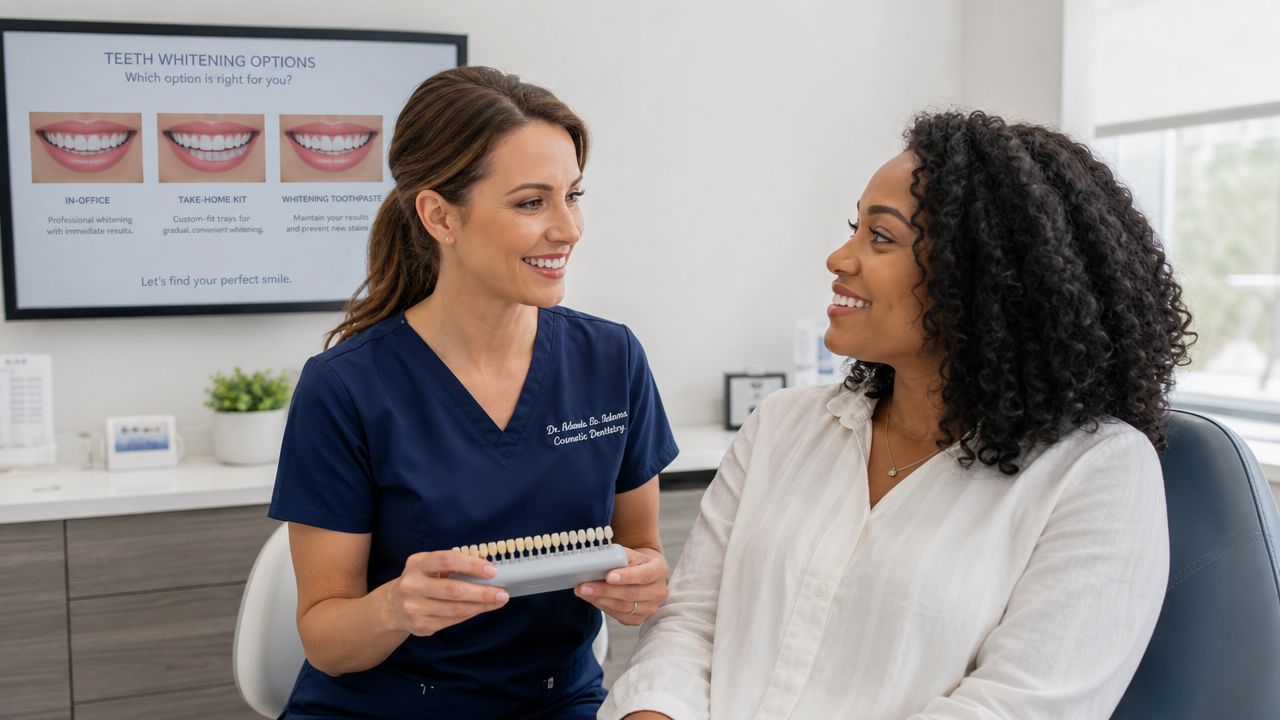
A patient from Katy will often ask a simple question. “Which whitening option makes sense for me?” The right answer depends on more than stain level. If you have a crown on a front tooth, older fillings, or bonding that already matches your current shade, the wrong whitening plan can leave natural teeth brighter while dental work stays the same color.

Teeth Whitening Options Compared
| Feature | In-Office (Zoom) | Custom Take-Home Trays | OTC Strips/Kits |
|---|---|---|---|
| Average effectiveness | Strongest and fastest visible change for many patients | More gradual, but usually more even and controllable than store-bought products | Mild to moderate improvement, usually best for lighter surface stain |
| Time to see results | Same visit | Days to weeks | Days to weeks, often less predictable |
| Typical cost | Highest upfront cost | Mid-range | Lowest upfront cost |
| Safety | Dentist-supervised, with gum protection and close monitoring | Dentist-supervised, lower strength, custom fit | More variable because fit, wear time, and ingredient strength vary |
| Ideal candidate | Someone who wants quick whitening and is a good match for a one-visit treatment | Someone who wants professional results at home with flexibility | Someone with a tighter budget and modest expectations |
| Limitation patients often miss | Existing crowns, veneers, fillings, and bonding will not whiten | Existing dental work still will not change color | Uneven contact can lead to patchy results, especially around dental work or crowded teeth |
The biggest mistake I see is choosing based on speed or price alone. Shade match matters just as much. Whitening gel changes natural tooth structure. It does not change porcelain, composite, or older restorations. For patients with visible dental work, the plan may include whitening first and then replacing a front filling or crown so the final smile looks balanced.
That point gets overlooked in a lot of online advice.
If you want a closer look at the pros and cons, this guide to professional and at-home teeth whitening options breaks down how each approach fits different goals.
How patients usually decide
Patients preparing for a wedding, photos, or a job interview often choose in-office whitening because time matters. Patients who want more control, or who know they are prone to sensitivity, often do better with custom trays and a slower schedule.
Store-bought products can still help. They are reasonable for mild staining and for people without crowns or bonding in the smile zone. The trade-off is consistency. A strip or generic tray cannot account for the exact shape of your teeth, the condition of your enamel, or the presence of dental work that may need separate cosmetic planning.
That is why a good whitening recommendation should answer two questions at the same time. How white can your natural teeth get safely, and will the rest of your smile still match once they do?
In-Office Whitening The Fastest Path to a Dazzling Smile
A patient comes in before a wedding or family photos and wants a noticeably brighter smile by the weekend. In that situation, in-office whitening is usually the fastest professional option because the gel is stronger, the teeth are isolated carefully, and the process is monitored from start to finish.

Why patients choose Zoom
Chairside whitening can produce a visible change in one visit. That speed matters for deadlines, but the main advantage is control. A dentist can protect the gums, watch for dehydration or uneven lift, and stop or modify the treatment if the teeth start reacting.
That supervision matters even more if you already have bonding, fillings, or crowns in the front of your smile. Whitening brightens natural enamel. It does not whiten porcelain or composite. I tell Katy patients to plan for the final color, not just the fastest color change, because a whiter tooth next to an older crown can make the restoration stand out more, not less.
For patients considering local treatment, in-office Zoom whitening in Katy is one dentist-supervised option. The current new patient offer is $350 for in-office Zoom whitening.
The trade-off is sensitivity
Fast whitening works because peroxide is active enough to move through enamel and break up stain. The trade-off is temporary sensitivity. Some patients feel brief zingers during treatment or for a day or two afterward, especially if they already have recession, enamel wear, or a history of sensitivity. A supervised visit helps because the teeth and gums can be checked first, and the protocol can be adjusted if you are not a good fit for the strongest approach.
One more point gets missed in a lot of whitening articles. A dramatic one-day result is only a good result if the smile still matches afterward. If a visible crown or filling is already slightly darker than the surrounding teeth, in-office whitening may improve the natural teeth while making that mismatch easier to see. In those cases, the right plan may be whitening first, then replacing selected dental work to match the new shade.
A quick look at what the process involves can make the decision easier:
Custom Trays The Professional Gold Standard at Home
A lot of adults in Katy want whitening they can do after dinner, before bed, or between work and family obligations. Custom trays are often the option I recommend when someone wants professional oversight without needing to get all of their whitening done in one appointment.
Dentist-made trays have a practical advantage over store-bought strips and generic trays. They are shaped to your teeth, so the gel stays in closer contact with the enamel and is less likely to spread onto the gums. That better fit is one reason custom tray whitening is widely regarded as a strong at-home option in dental practice, as explained in this overview of custom tray whitening.

Why fit changes everything
Fit affects more than comfort. It affects the result.
If whitening gel pools at the gumline or misses the edges of certain teeth, the color can develop unevenly. Custom trays help control that. They place the gel more precisely across the visible tooth surface, which usually means a more consistent shade change and less irritation.
This matters even more for patients who already have crowns, bonding, or tooth-colored fillings. Whitening gel changes natural enamel. It does not whiten dental work. A tray that delivers gel evenly can improve the natural teeth around those restorations, but it can also make an older crown or filling look darker by comparison. That is why I like custom trays for planning purposes. They let us lighten your natural teeth gradually, check how the existing dental work is blending, and decide whether any visible restoration should be replaced afterward to match the new shade.
Patients with sensitivity often do well with a slower, supervised approach. Lower-strength gel, shorter wear times, and a pause day between applications can make whitening much easier to tolerate. In practice, that level of control is one of the biggest advantages of custom trays.
Who usually prefers trays
Custom trays are often a good fit for patients who:
- Want more control. You can whiten a few days per week instead of committing to a single high-intensity session.
- Prefer gradual improvement. The change tends to build over days or weeks, which gives you time to judge the shade.
- Have a history of sensitivity. The protocol can be adjusted more easily than with one-size-fits-all products.
- Need to plan around existing dental work. A slower process makes it easier to spot mismatched crowns or fillings before the final shade is set.
This option is popular with busy patients in Katy because it fits real life. It also gives the dentist and patient room to make better cosmetic decisions, especially when the goal is a smile that looks uniform, not just whiter.
A custom tray is less about speed and more about control, comfort, and getting the natural teeth to a shade that works with the rest of your smile.
Understanding Over-the-Counter Whitening Products
A patient will often tell me, “I tried the strips from the drugstore, and now my front teeth look brighter but my crown looks darker.” That is one of the most common frustrations with over-the-counter whitening. The product may lighten natural enamel a little, but it will not change the color of a filling, crown, or veneer. In Katy, where many adults already have some dental work, that detail matters more than the box on the shelf suggests.
Whitening toothpastes and rinses mainly target surface stain. They can help remove discoloration from coffee, tea, red wine, or tobacco, but they do not usually create the kind of shade change patients expect from professional bleaching. Their role is maintenance, not major correction.
Strips and store-bought LED kits sit in the middle. They can brighten some smiles, especially if the teeth are naturally even in shape and the staining is mild. The trade-off is fit. A generic strip cannot adapt to every tooth contour, so coverage may be patchy near the gumline or along rotated teeth. If gel spills onto the gums, irritation is more likely.
That uneven fit creates another problem that many whitening guides skip. If you already have visible dental work, over-the-counter products can make the mismatch easier to see. Natural teeth may lighten a bit while the older filling or crown stays the same shade. Patients sometimes assume the product failed, when the issue is that whitening works only on natural tooth structure.
What over-the-counter products do well
For the right person, store-bought whitening can still be reasonable:
- Good for mild external stain. Helpful if the main issue is recent surface discoloration.
- Useful between professional treatments. Many patients use them to maintain a result they already like.
- Easy to start. No appointment, no impressions, no waiting.
- Lower upfront cost. That matters if you want a small improvement and understand the limits.
Where they disappoint
The biggest gap is predictability. Results vary from one smile to another, and the strongest marketing claims rarely explain who is likely to respond well.
They are usually a weaker choice for patients who want a noticeable color change, have sensitive teeth, or have crowns and fillings in the smile zone. In those cases, the lower price can lead to more frustration, especially if you end up whitening the natural teeth first and then need to replace visible restorations to make the smile look uniform.
I usually tell patients to judge store-bought whitening by one standard. If a subtle improvement would make you happy, it may be worth trying. If you want a smoother color match across natural teeth and existing dental work, a dentist-guided plan is the safer place to start.
Are You a Good Candidate for Teeth Whitening?
Whitening isn't the right first step for every patient. That surprises people, especially if they've seen whitening presented as a simple cosmetic add-on. In reality, the best results come when the teeth and gums are healthy first.
If you have untreated decay, gum inflammation, exposed roots, or severe sensitivity, whitening can become uncomfortable fast. If you're already dealing with dental pain, the priority may be restorative dentistry, a problem-focused exam, or even emergency care before any cosmetic treatment enters the conversation.
The issue most whitening guides skip
A critical and rarely explained issue is that bleaching agents do not alter restorative materials like veneers or composite fillings, which can create mismatched aesthetics for the 20% to 30% of adults who have at least one restoration and are seeking cosmetic upgrades, according to this discussion of whitening and restorations.
That detail matters. If your natural enamel lightens but a front filling, crown, or veneer stays the same shade, the final look may be less harmonious than before. This is one of the biggest reasons patients should talk with a dentist before whitening instead of assuming every visible tooth surface will respond the same way.
Signs you should get evaluated first
A pre-whitening consultation is smart if any of these apply:
- You have visible fillings or crowns on front teeth. Shade mismatch is a real possibility.
- Your teeth are already sensitive. The whitening formula may need to be adjusted.
- You've had recent dental work. Timing matters if future cosmetic changes are planned.
- You're also considering veneers, bonding, or implants. Whitening may need to happen before other cosmetic or restorative treatment.
- You've been searching for answers to pain or discomfort. Whitening shouldn't compete with needed care such as a filling, root canal, or tooth extraction.
If your smile includes both natural teeth and restorations, whitening isn't just about getting lighter. It's about making the final color look intentional.
For many patients in Lakehouse, Marisol, The Grange, Anniston, and Katy Lakes, that evaluation is what prevents disappointment. It turns whitening from a product decision into a complete smile plan.
Your Whitening Experience at The Dental Retreat in Katy
You whiten your teeth and the color looks fresher right away. A week later, the question changes. Will the result still look balanced once coffee, tea, and daily wear return, especially if you already have a crown or filling that does not lighten with bleach?
That is the part many whitening guides skip.
A good whitening visit starts with a plan for maintenance and shade harmony, not just the treatment itself. Natural enamel can pick up new surface stain over time. Existing dental work keeps its original shade. If a front tooth has bonding, a crown, or a visible filling, follow-up care is about preserving an even look across the whole smile.
How to keep teeth brighter longer
After whitening, a few habits make a visible difference:
- Be selective with staining drinks. Coffee, tea, red wine, and dark sodas can bring surface stain back faster.
- Stay current with cleanings and exams. Professional cleanings remove buildup that brushing alone often misses.
- Watch the color of existing dental work. A tooth may whiten while a nearby crown or filling stays the same, which can make contrast stand out more over time.
- Use touch-ups on the right schedule. Whitening too often can increase sensitivity without improving the final result much.
For patients with mixed dental work, I recommend thinking beyond "How white can my teeth get?" A better question is, "What shade will look natural on me, and will my restorations still match?" That is how you avoid a smile that looks patchy instead of refreshed.
What a visit in Katy feels like
Patients looking for a dentist in Katy, TX usually want clear answers as much as they want whiter teeth. They want to know whether discoloration is simple staining, wear, old bonding, or a crown that no longer blends well. They also want to know if whitening should happen before any new cosmetic work.
At The Dental Retreat on Stockdick School Rd., that conversation happens in one place. The practice offers general, cosmetic, restorative, emergency, implant, orthodontic, and surgical care, which helps if whitening connects to a larger treatment plan. A patient may come in asking about bleaching and learn that replacing an older front filling first, or whitening before veneers, will produce a better final match. Someone else may need sensitivity addressed before any whitening starts.
The office environment is designed to reduce stress. Massage and heated chairs, aromatherapy, noise-cancelling headphones, and TVs in treatment rooms help anxious patients settle in and ask the questions they have been putting off. That matters for busy families in Elyson and Ventanna Lakes, especially when cosmetic concerns overlap with routine or restorative care.
New patient offers can also make the first visit easier to plan. There is a $99 thorough exam with cleaning and X-rays, a $49 problem-focused visit, and a $350 in-office Zoom whitening option for patients who are ready for professionally supervised treatment.
If you've been comparing strips, trays, and office whitening, the next step is a real exam. It helps you find out what will whiten, what will stay the same shade, and whether your best result requires more than bleach alone.
If you're ready to talk through whitening, sensitivity, old fillings, or a full smile plan, schedule a visit with The Dental Retreat. Whether you're looking for a cosmetic dentist near me, a dentist near me for routine care, or a Katy office that can handle everything from cleanings and exams to restorative dentistry and emergency treatment, the team can help you choose a whitening option that fits your teeth and your goals.