A bad toothache has a way of taking over your whole day. You may be searching for a dentist near me in Katy, TX because chewing hurts, your jaw feels sore, or another office told you that a tooth needs to come out and now you're worried about what that means.
That anxiety is normal. Few individuals hear the words “oral surgery extraction” and feel relaxed.
What helps is knowing what's happening, why it's recommended, and what the experience can feel like when your care team takes comfort seriously. If you live in Katy, TX or nearby neighborhoods like Sunterra, Cane Island, Katy Manor, Kingscrossing, Lakehouse, Marisol, The Grange, Anniston, Katy Lakes, Elyson, or Ventanna Lakes, this guide is meant to answer the questions that usually come up before treatment.
Your Guide to Oral Surgery Extraction in Katy TX
If you've been told you need a tooth removed, you might be dealing with pain, swelling, pressure, or a tooth that suddenly cracked and changed your plans for the week. In other cases, the problem is quieter. A wisdom tooth may be stuck under the gums, or a broken tooth may no longer be fixable with restorative dentistry.
An oral surgery extraction is often recommended when removing the tooth safely requires more than a standard pull. That can sound intimidating, but it usually means your dentist needs better access to protect the surrounding gum and bone while taking the tooth out in a controlled way.
For many patients in Katy, the hardest part isn't the procedure itself. It's the uncertainty before it. You may wonder whether it will hurt, whether you'll need time off work or school, or whether an extraction means you'll eventually need dental implants near me or another replacement option.
A clear explanation often lowers fear more than anything else. People feel better when they know what will happen next.
If you're comparing options for a dentist in Katy, TX, it's worth looking for a practice that offers more than the technical procedure. You want careful diagnosis, thoughtful pain control, clear aftercare, and a setting that doesn't make stress worse. That matters whether you need a planned tooth extraction or same-day help from an emergency dentist.
Understanding Surgical vs Simple Tooth Extractions
The easiest way to understand the difference is this. Some teeth are easy to reach, and some aren't.
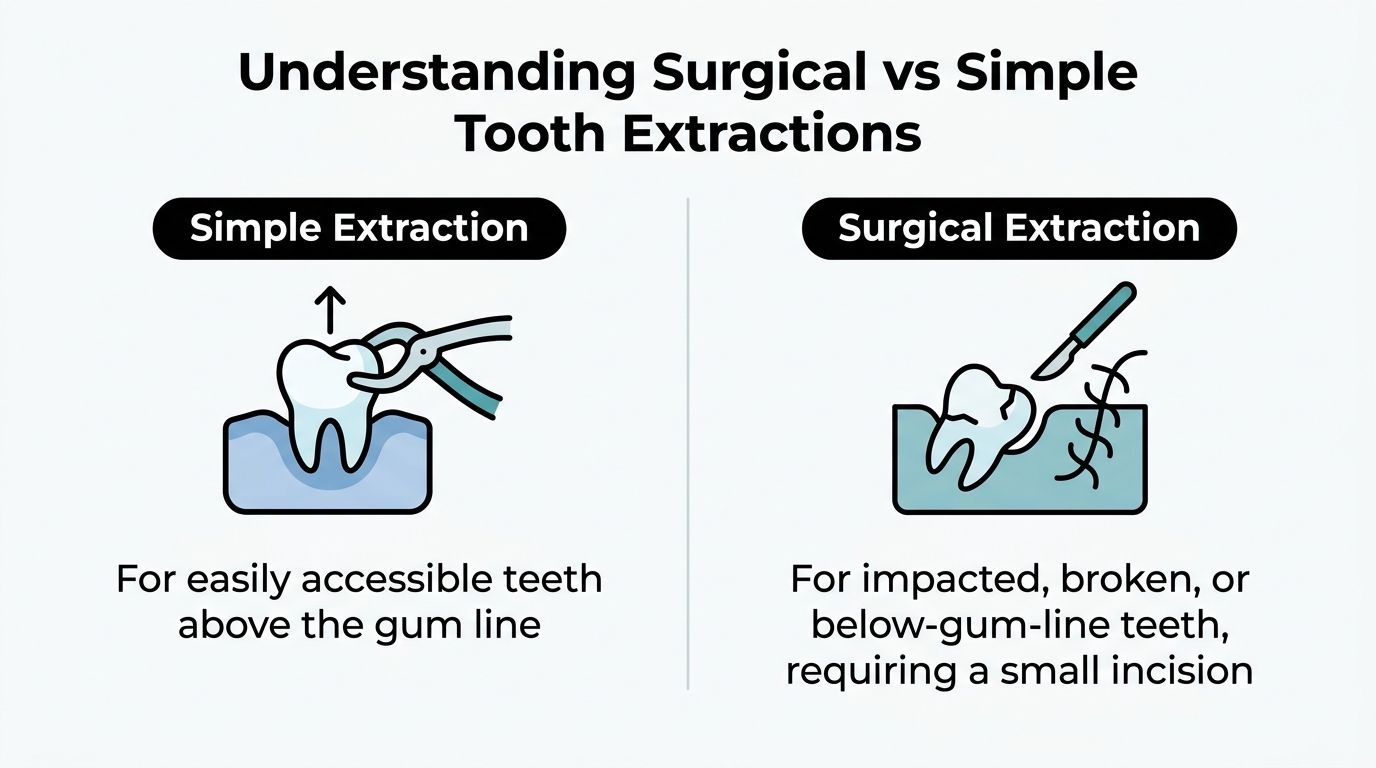
A simple extraction is used when the tooth is visible above the gum line and can be loosened and removed without making an incision. A surgical extraction is used when the tooth is broken, trapped below the gums, or difficult to access. According to this overview of dental extraction types, a simple extraction involves loosening the tooth with an elevator and removing it with forceps without incisions, while a surgical extraction requires an incision in the gum tissue and may involve bone removal or tooth sectioning to access the tooth.
Why the word surgical sounds scarier than it is
“Surgical” usually means access. It doesn't mean something has gone wrong. It means the dentist can't safely remove the tooth by only grabbing what's visible.
It's similar to removing a fence post. If the top is fully exposed, removal is more direct. If part of it is buried or snapped off, you need to uncover it first so it can come out cleanly. Teeth work the same way.
Here's a simple comparison:
| Type | Usually used when | What it involves |
|---|---|---|
| Simple extraction | The tooth is fully visible and accessible | Loosening with an elevator and removal with forceps |
| Surgical extraction | The tooth is impacted, broken, or below the gum line | A small incision, and sometimes bone removal or sectioning |
How dentists decide which one you need
The decision isn't based on guesswork. It comes from the exam, your symptoms, and dental X-rays that show the shape of the roots, the tooth position, and how close the tooth is to nearby structures.
That's why two people with “tooth pain” may need very different treatment. One may need a straightforward extraction. Another may need an oral surgery extraction because the tooth is fractured under the gum or only partially erupted.
For patients searching dentist near me because of pain, this distinction matters. It explains why the recommended procedure may be more involved, and why that extra planning is part of safer, more comfortable care.
Common Reasons You Might Need an Oral Surgery Extraction
Some extractions are planned. Others happen after a tooth suddenly becomes painful or breaks. What they have in common is that the tooth can't stay where it is without causing more trouble for your mouth.
Situations that often require surgical removal
Impacted wisdom teeth
Wisdom teeth are one of the most common reasons for oral surgery extraction. About 10 million wisdom teeth are removed annually in the United States, affecting roughly 5 million Americans each year, with about two extractions per patient. Globally, 37% of individuals have at least one impacted wisdom tooth, and the peak age for extraction is between 18 and 21 years, according to wisdom tooth removal statistics summarized here.A tooth broken at or below the gum line
If a tooth fractures and there isn't enough healthy structure to grasp, a surgical approach may be needed to reach the remaining part of the tooth.Severe decay that weakens the tooth
Tooth decay is the leading reason teeth are extracted worldwide, accounting for 36.0% to 55.3% of all tooth extractions, while periodontitis accounts for 24.8% to 38.1%, based on this published review of extraction reasons. When decay destroys too much of the tooth, saving it may no longer be possible.Advanced infection or damage around the root
Some teeth develop deep problems below the visible surface. If the root is badly compromised, removal may be the healthiest next step.
Other reasons patients are referred for extraction
Sometimes the issue isn't pain. A tooth may need to be removed because it blocks orthodontic movement, threatens nearby teeth, or has a position that makes long-term health difficult.
In some cases, people also ask for extractions even when the clinical reason isn't clear. That request is often tied to cost concerns or fear. A PLOS One report on non-indicated extraction requests notes that financial constraints and severe dental fear are major drivers behind these conversations.
Important perspective: Extraction should solve a problem, not create a bigger one. The right plan starts with confirming whether the tooth can be saved or whether removal is the safer choice.
Why acting sooner usually helps
Waiting can turn a manageable problem into a more painful one. Infection can spread, a cracked tooth can break further, and gum irritation around a partially erupted wisdom tooth can keep coming back.
If you're in Katy Lakes, Elyson, or nearby parts of Katy and looking for an emergency dentist or a second opinion about tooth extraction, getting evaluated early usually gives you more treatment options and a less stressful experience.
The Patient Experience What to Expect During Your Procedure
The day feels easier when you know the rhythm of it. Most patients arrive expecting the unknown to be the hardest part, then leave saying the process was much more manageable than they thought.
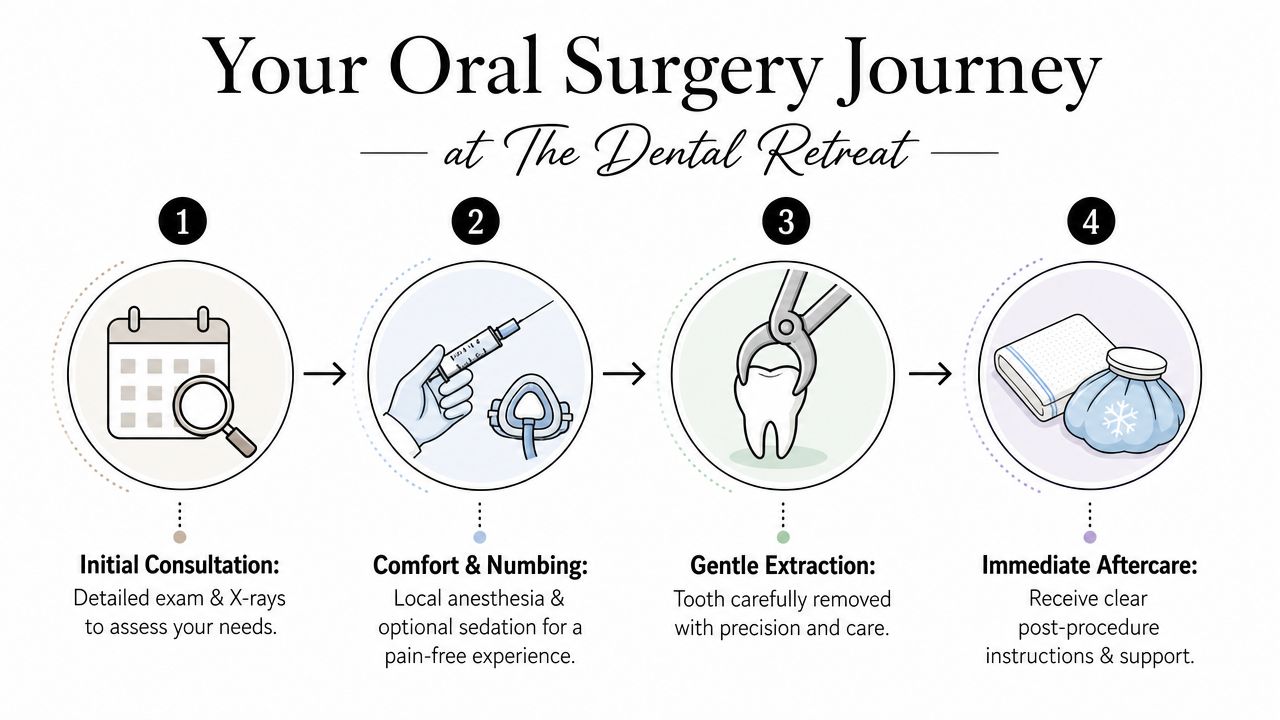
A good visit starts before the procedure. Your exam and X-rays help the dentist confirm the position of the tooth, explain why the extraction is needed, and review comfort options. If you'd like a practical checklist before treatment, this guide on how to prepare for tooth extraction can help you know what to do the day before and the morning of your visit.
Your comfort comes first
For anxious patients, the biggest question is usually pain. During an oral surgery extraction, the goal is that you feel pressure, movement, and time passing, but not sharp pain.
Numbing depends on where the tooth is located. According to this clinical review of dental anesthesia techniques, maxillary teeth are typically anesthetized with buccal and palatal infiltration using a short needle, while mandibular teeth usually require an inferior dental nerve block with buccal infiltration using a long needle, and that block can take up to five minutes to become fully effective.
That technical detail matters for one reason. Your dentist isn't rushing. They're making sure the area is fully numb before starting.
What the procedure often feels like from your chair
Once you're comfortable, the dentist gently opens the gum tissue if needed to reach the tooth. Some surgical extractions also require removing a small amount of bone or dividing the tooth into sections so it can come out with less force. The purpose is control, not drama.
A technical guide to surgical oral extraction describes the process as creating a flap for access, removing overlying buccal bone when needed, sectioning multirooted teeth into individual root components to reduce force, and smoothing sharp bony areas afterward to support healing, as outlined in this surgical extraction technique reference.
You won't be watching any of that closely, of course. What most patients notice is this:
- Pressure is normal. You may feel pushing or rocking.
- Sharp pain isn't expected. If you feel it, you let the team know and they pause.
- The procedure is deliberate. Careful technique protects surrounding tissue.
A short visual overview can make the sequence feel more familiar:
What happens right after the tooth is removed
Once the tooth is out, the area is cleaned, and the site may be closed if needed. The ADA's coding and extraction guidance notes that surgical removal involving cutting soft tissue and bone differs from simple extraction, and that closure is included for residual root surgery under code D7250 in this ADA guide to extractions and remnants.
Before you leave, you'll get instructions for bleeding control, eating, cleaning the area, and managing swelling. That part is just as important as the procedure itself.
Your Guide to a Smooth Recovery After Oral Surgery
Recovery tends to go well when patients protect the blood clot and keep the first few days simple. Most of the advice sounds basic, but those basics matter.
If you want a more detailed home-care reference after your visit, this tooth extraction recovery page is a helpful place to review instructions once you're back at home.
The first 24 hours
The first day is about protecting the area and keeping activity light. You'll usually want to rest, keep your head raised when possible, and follow instructions for gauze and medications.
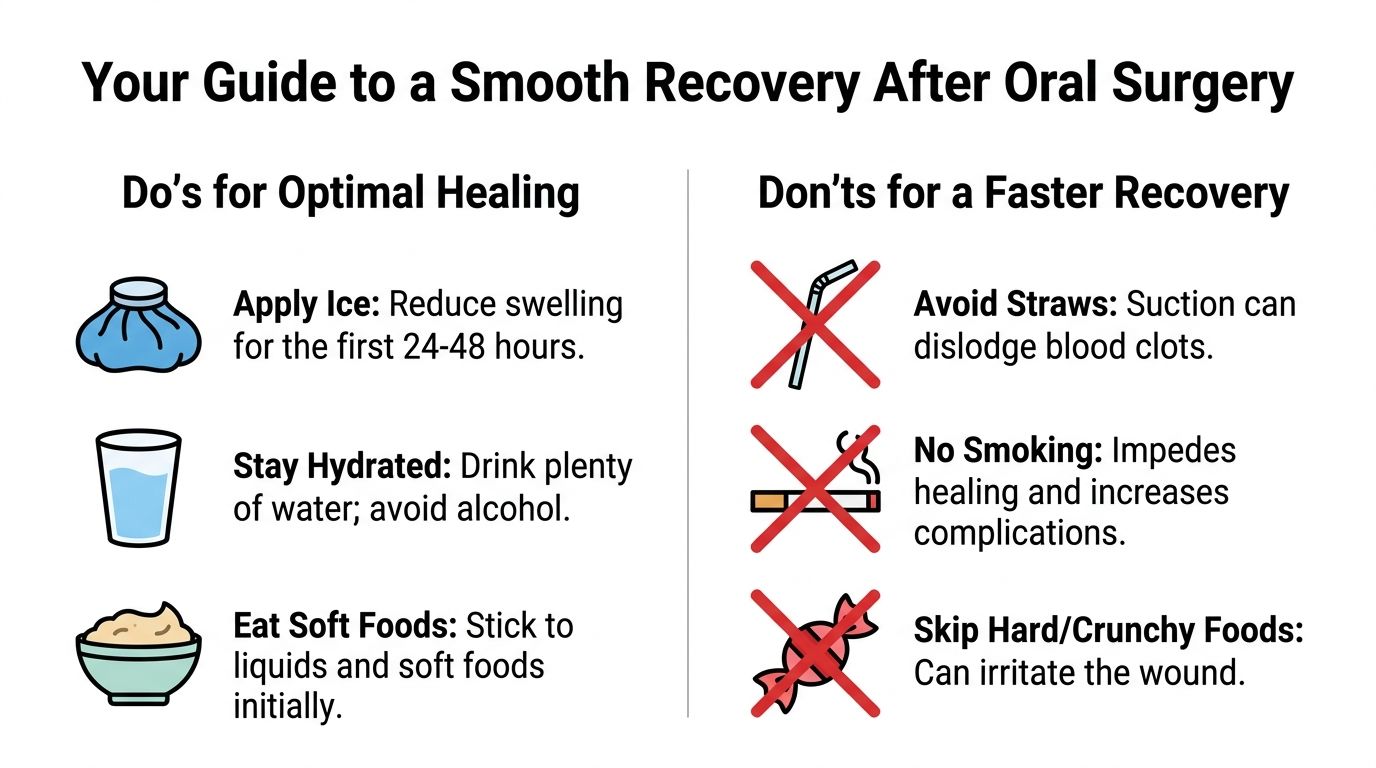
Focus on soft, cool, easy foods and steady hydration. Don't poke the area with your tongue or toothbrush. Don't test it.
Practical rule: The blood clot is doing important work. Treat the site like it needs stillness, not inspection.
The first 72 hours
This window matters because it's when dry socket can happen. Dry socket is a painful condition caused by losing the blood clot that should stay in place during early healing. To help prevent it, patients should avoid strenuous activity, spitting, rinsing vigorously, sucking on straws, smoking, or drinking alcohol for the first 72 hours after extraction, according to this post-extraction care guidance from UT Dentistry.
During this period, keep your routine simple:
- Choose soft foods like yogurt, soups that aren't too hot, mashed foods, smoothies eaten with a spoon, and eggs.
- Drink water often so your mouth doesn't feel dry.
- Skip suction and forceful rinsing because those actions can disturb the clot.
- Avoid hard or crunchy foods that can irritate the socket.
The first week
Swelling and soreness should gradually improve, not suddenly disappear. Many patients notice that each day gets a little easier. Gentle cleaning usually resumes around the area according to your dentist's instructions, while the extraction site itself is treated carefully.
A few signs deserve a call to the office:
| Sign | What it may mean |
|---|---|
| Pain that gets worse instead of better | The site may need to be checked |
| Bleeding that doesn't settle as instructed | You may need additional guidance |
| Fever, foul taste, or concerning swelling | The team should evaluate healing |
If you're planning a replacement tooth
If the removed tooth needs to be replaced, your long-term plan matters. Some patients heal and later move toward a bridge or implant. When bone grafting and implants are part of treatment, timing is longer. A guide to extraction and implant timelines notes that bone graft and implant healing ranges from 3 to 6 months, and the full implant process including extraction and grafting can take 6 to 12 months.
That doesn't mean every extraction leads to a long process. It just means your recovery plan should match your next step, whether that's simple healing, restorative dentistry, or future dental implants near me.
Navigating Costs Insurance and Alternatives for Extractions
For many patients, the most stressful part of treatment isn't the procedure. It's figuring out what it will cost and what insurance will pay.
The price depends on the type of extraction, the condition of the tooth, whether imaging is needed, and whether the tooth is broken, impacted, or under the gum. According to this patient cost overview for common extractions, surgical extractions start at $300 per tooth, while simple extractions range from $150 to $500. The same source notes that insurance may cover only half of wisdom tooth removal if it's considered medically necessary, and annual caps are often $1,000 to $1,500.
Why estimates can vary
Two patients may both say, “I need a tooth pulled,” while needing very different levels of care. One tooth may lift out with a standard approach. Another may require an incision and additional surgical steps. That's why a real estimate comes after the exam and X-rays, not before.
There's also a practical coding difference. The ADA guide on extractions explains that simple extraction and surgical removal of residual roots are reported differently, depending on whether cutting soft tissue and bone is required. That's part of why treatment plans can look different even when patients think the problem sounds similar.
When extraction isn't the only option
A painful tooth doesn't always need to be removed. Some can be saved with restorative treatment or endodontic care, depending on how much healthy structure remains and whether the problem is inside the tooth or around it.
Possible alternatives may include:
- Root canal treatment when the tooth structure can still be preserved
- A crown or other restorative dentistry when fracture or decay is treatable
- Monitoring if the concern isn't causing active damage and doesn't require immediate treatment
If extraction is the healthiest option, planning for replacement is the next conversation. That may involve a bridge, partial denture, or implant depending on the location of the tooth, your bite, and your goals.
Questions worth asking at your visit
Patients often feel more in control when they ask direct questions, such as:
- What makes this a surgical extraction rather than a simple one?
- Is the tooth saveable in any realistic way?
- What will insurance likely cover?
- If I don't replace the tooth right away, what happens next?
- Am I a future candidate for an implant or bridge?
Those questions are part of good dental care, not a sign that you're being difficult. Clear answers help you make decisions with less stress and fewer surprises.
Comfortable and Compassionate Extractions at The Dental Retreat
Patients seeking a dentist in Katy, TX often look for two things at once. They want the problem fixed, and they want to feel safe while it's being fixed.
That second part matters more than many practices realize. Dental anxiety can make people postpone treatment until pain forces the issue. A calmer setting can change that experience from something you dread to something you can get through with confidence.

What a comfort-focused visit can include
A patient-centered oral surgery visit should reduce stress at every step, not only during the extraction itself. That can include a quieter environment, a team that explains what's happening before doing it, and options that help anxious patients stay relaxed.
The Dental Retreat in Katy offers oral surgery, sedation, emergency care, and restorative follow-up in a spa-inspired setting with amenities such as aromatherapy, massage and heated chairs, noise-cancelling headphones, and TVs in every room. For some patients, that type of environment makes it easier to finally move forward with needed treatment instead of delaying it.
Why continuity matters after an extraction
An extraction is rarely the whole story. You may also need follow-up healing checks, help deciding whether to replace the tooth, or ongoing general dental care like cleaning and exams, dental X-rays, or a new patient exam if you're just getting established.
That's especially helpful for families in Ventanna Lakes, The Grange, Marisol, and nearby Katy neighborhoods who don't want to bounce between offices for every stage of care.
Good extraction care doesn't end when the tooth comes out. It includes diagnosis, comfort, healing support, and a plan for what your mouth needs next.
A different kind of local dental experience
If you've been putting off treatment because you're nervous, embarrassed, or worried that the visit will feel rushed, you're not alone. Many patients who seek an emergency dentist or tooth extraction haven't had a positive dental experience in the past.
A more supportive approach can make a real difference. It helps when the office feels calm, the team communicates clearly, and your treatment is explained in plain language. For people also looking ahead to cosmetic dentist near me, teeth whitening, or dental implants near me, that same relationship can carry forward into the next phase of care.
Frequently Asked Questions About Oral Surgery Extraction
Will I be in pain during the procedure
You shouldn't feel sharp pain during the extraction. You'll be numbed carefully, and many patients mainly notice pressure and movement. If something feels uncomfortable, tell the team right away so they can pause and make adjustments.
How much time should I take off work or school
That depends on the tooth, the difficulty of the extraction, and the kind of work or school schedule you have. Many people plan for at least a short recovery window so they can rest, manage swelling, and avoid overdoing it too soon. If your job is physically demanding, ask for specific guidance before the procedure.
What's the difference between oral surgery extraction and a regular tooth pull
A regular or simple extraction removes a tooth that is easy to reach without making an incision. An oral surgery extraction is used when the tooth is impacted, broken, or under the gum and needs a more controlled approach.
What are signs that I should call after the extraction
Call if pain worsens instead of improving, if bleeding doesn't slow down as instructed, or if you notice swelling, fever, or a bad taste that seems unusual. Most healing is straightforward, but it's always better to check than to sit at home worrying.
Will I need to replace the tooth afterward
Sometimes yes, sometimes no. Wisdom teeth often don't need replacement. Other teeth may need a bridge, implant, or another restorative option to protect chewing function and tooth alignment.
I'm very anxious about dental treatment. What should I do
Say that upfront. Anxiety is common, and it changes how care should be delivered. A good dental team will explain each step, discuss comfort measures, and help you feel more in control before treatment starts.
If you're dealing with tooth pain, a broken tooth, or you've been told you need an oral surgery extraction, The Dental Retreat offers a calm, patient-focused option in Katy, TX. You can contact the office to schedule a consultation, ask questions about treatment, or request help if you need an emergency dental visit.