You're probably here because you want to do the right thing for your child, but the schedule can feel scattered. One office talks about well-child visits, another talks about the first dental visit, and somewhere in between you're trying to remember when to ask about brushing, speech, behavior, sleep, and cavities.
That confusion is common for families in Katy, TX, whether you're raising a baby in Sunterra, juggling school schedules in Cane Island, or settling into daily routines in Elyson or Ventanna Lakes. Most parents aren't avoiding preventive care. They're trying to connect the dots.
The good news is that pediatric preventive care becomes much easier when you think of it as one plan with two parts. Your child's medical care and dental care work best together. That's especially important if you're searching for a dentist near me, a dentist in Katy, TX, or a family-friendly office that can help you stay ahead of problems instead of reacting to pain later.
Your Child's Healthiest Future Starts Today
A lot of parents start with the same question. “My child seems fine, so what should I be doing now?”
That question usually comes up in ordinary moments. Your baby's first tooth appears. Your toddler resists brushing. Your school-age child snacks constantly after class. Your teenager says nothing is wrong, but you still wonder if you're missing something. Preventive care starts there, in those small daily decisions.
Good pediatric preventive care isn't just a checklist of appointments. It's an ongoing way to protect growth, comfort, development, and confidence. It helps catch problems early, before they become stressful, expensive, or painful.
For many families, medical and dental care get separated in their minds. The pediatrician handles growth, behavior, and screenings. The dentist handles teeth. In real life, those two worlds overlap. Eating, sleeping, speaking, smiling, and pain-free chewing all affect a child's day-to-day health.
A helpful way to think about it: preventive care is less about “What's wrong?” and more about “What can we protect now?”
Parents also tend to worry that they've already started too late. In most cases, they haven't. Even if your child hasn't had a consistent routine yet, the next step still matters. The best time to begin is now, with simple habits and age-appropriate visits.
If you're also looking for practical dental support close to home, it makes sense to choose a dentist in Katy, TX who understands children, family schedules, and the way prevention fits into everyday life. That matters whether your child needs basic cleaning and exams, help with home brushing habits, or guidance on what counts as a dental warning sign.
Understanding Pediatric Preventive Care
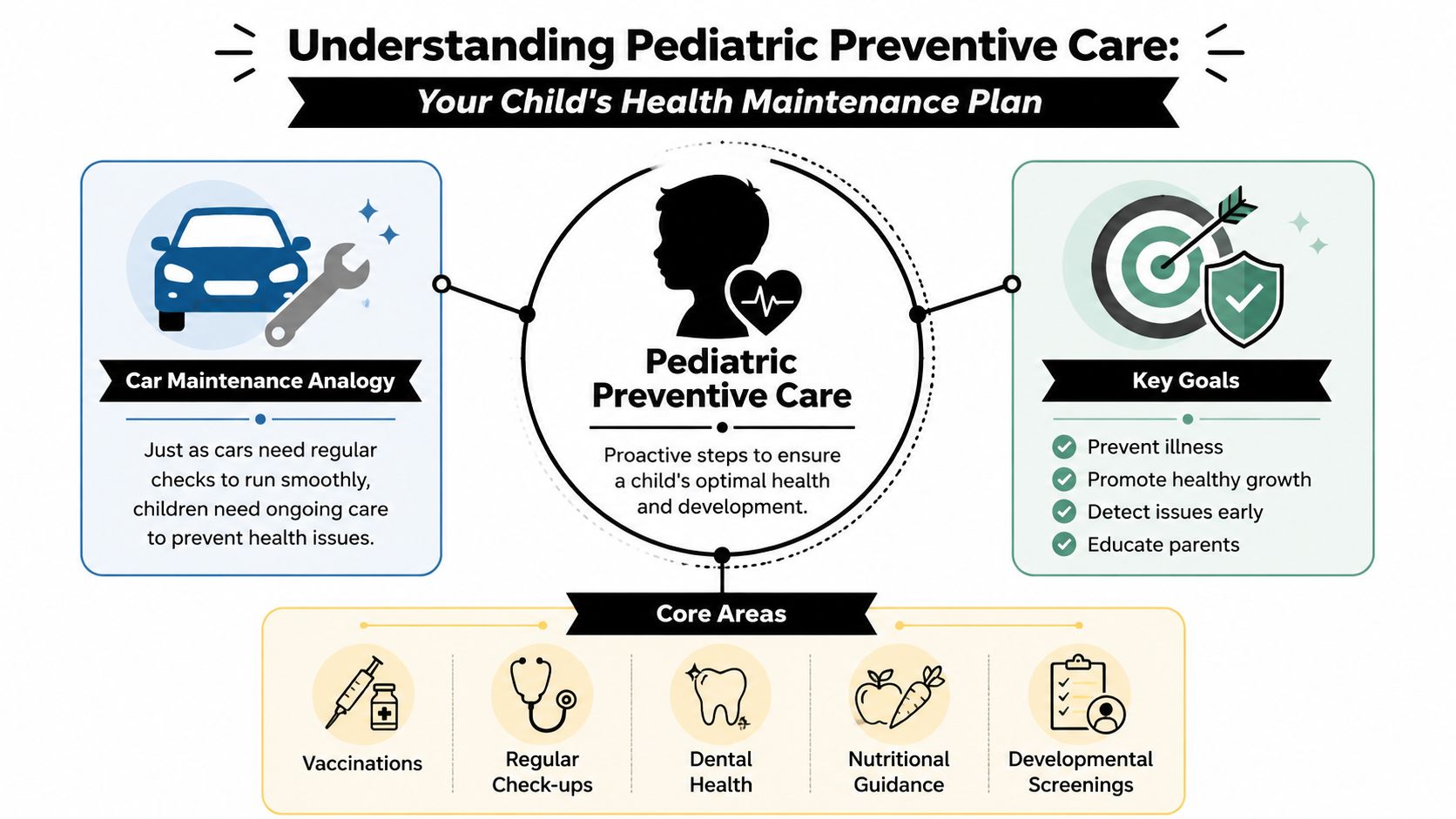
Preventive care is a lot like regular car maintenance. You don't wait for the engine to fail before checking the oil, the tires, or the brakes. You keep up with routine care so the bigger problems are less likely to happen.
The same idea applies to children. Preventive care means checking how your child is growing, watching for concerns early, supporting healthy habits, and giving parents clear guidance before something becomes urgent. It's proactive, not reactive.
What counts as preventive care
In plain language, pediatric preventive care usually includes several core areas:
- Routine checkups that track growth, development, and general health
- Screenings that help identify concerns with behavior, learning, mood, hearing, or blood pressure at the right ages
- Guidance for parents on nutrition, sleep, safety, and daily routines
- Oral health assessments that help spot early cavity risk and habits affecting the mouth
Many families encounter mixed messages. They may hear a lot about vaccines and yearly physicals, but much less about how oral health fits into the same prevention plan.
A recent review noted that failing to include oral health screening in routine pediatric care can miss early chances to address dental caries, and that the AAP Bright Futures guidelines now recommend universal oral health screening at selected visits, as described in this review of oral health integration in pediatric preventive care.
Why parents often feel behind
The system can make it seem like dental care is separate, optional, or only necessary once there's pain. That's one reason families delay visits. Another is simple overload. Parents already manage school forms, activities, and doctor appointments. Adding “oral health risk assessment” to the list can feel like one more technical task.
It helps to simplify the goal. You're trying to do three things:
- Prevent disease before it starts
- Notice changes early
- Build habits your child can keep for life
Preventive care works best when parents don't have to guess what matters. The simpler the routine, the more likely it gets done.
For families searching terms like dentist near me, new patient exams, or cleaning and exams, this matters because the right office should do more than fix problems. It should help you understand what your child needs now, what can wait, and what deserves attention sooner.
The Two Pillars of Your Child's Prevention Plan
When parents hear “preventive care,” they often picture the pediatrician first. That makes sense. Medical well-child visits are the backbone of childhood health monitoring. But they're only one pillar.
The other pillar is dental care. Not later. Not once baby teeth “really matter.” From the start.
Medical visits and dental visits do different jobs
A pediatrician looks at the whole child. That usually includes growth, developmental progress, general physical health, and age-based screenings. These visits are where parents often bring questions about sleep, milestones, feeding, mood, and behavior.
A dental visit focuses on the mouth, but that focus is broader than many people expect. It includes teeth, gums, bite development, oral habits, comfort with eating, cavity risk, brushing technique, and the early signs of disease that parents may not notice at home.
Here's a simple side-by-side view:
| Visit type | Main focus | Examples of what parents discuss |
|---|---|---|
| Medical preventive visit | Overall growth and development | sleep, behavior, school concerns, screenings |
| Dental preventive visit | Mouth health and cavity prevention | brushing, fluoride, tooth eruption, pain, spots on teeth |
Why the dental pillar matters so early
Dental caries is the most common chronic disease in young children, and the AAP recommends fluoride varnish applications starting at six months and oral health risk assessments no later than 12 months of age. For children at high risk, professional preventive visits are recommended every 3 months, according to this AAP oral health guidance summarized by AAFP.
That matters because cavities don't always begin with obvious pain. Early decay may look like chalky white spots, changes near the gumline, or areas that trap food more easily. A child can seem comfortable while a problem is already starting.
Practical rule: if teeth are present, prevention should already be part of the routine.
This is also why brushing alone isn't the whole answer. Home care is essential, but it doesn't replace a trained look at how the mouth is developing or whether fluoride, sealants, dietary changes, or closer follow-up might help.
Parents who want to go deeper on simple daily habits can learn more from this guide on how to prevent cavities naturally.
If you've been comparing a dentist near me with a pediatrician's recommendations and wondering whether one can cover the other, the short answer is no. They support the same child from different angles. The strongest prevention plan includes both.
A Timeline of Preventive Milestones for Your Child
The easiest way to make sense of preventive care is by age. You don't need to memorize every item. You just need a general roadmap so you know what matters most during each stage.

Infants from birth to age 1
In the first year, preventive care is frequent because babies change quickly. Medical visits focus on feeding, growth, early development, and general health. Parents often ask about sleep, digestion, comfort, and milestones.
Dental prevention starts earlier than many people expect. Once the first tooth appears, the mouth needs daily attention. Even before that, keeping gums clean and getting guidance on feeding habits can help.
A few milestones during this stage:
- Early oral health assessment helps identify cavity risk and feeding habits that may affect teeth later.
- Fluoride varnish timing becomes relevant beginning at six months, based on AAP guidance cited earlier.
- First-year dental connection gives parents a place to ask practical questions before a problem develops.
Toddlers from age 1 to 3
This is the stage when routines either start to stick or start to slip. Toddlers often snack often, resist brushing, and test limits around every daily task. That's normal. It also makes prevention more important.
The AAP Bright Futures Periodicity Schedule calls for an ASD-specific screening tool at the 18-month and 24-month visits, in addition to broader developmental screening, according to this Bright Futures pediatric preventive schedule summary.
A few other milestones matter in this same period. BMI should be calculated starting at age 2, and blood pressure checks are required beginning at age 3 for every well-child visit, as outlined in this Bright Futures overview for ages 0 to 21.
Toddlers don't need perfect cooperation. They need steady repetition, clear routines, and adults who stay calm.
For dental care, this is often when providers spot early wear, crowding patterns, thumb-sucking effects, or changes in enamel that parents didn't realize were significant.
Young children from age 4 to 10
School changes routines fast. Lunches, sports, snacks, and busy evenings can make home care inconsistent. Children in this stage need structure more than lectures.
Medical visits continue to monitor growth and school readiness, and dental visits often focus on cavity prevention, cleaning, bite development, and helping children become more confident in the chair.
This is a good age to reinforce:
- Twice-daily brushing with adult supervision as needed
- Flossing once teeth touch
- Water between meals instead of frequent sweet drinks
- Regular cleanings and exams to catch small changes before they turn into treatment needs
For many families searching dentist in Katy, TX, this stage is also when they begin asking about dental x-rays, spacing concerns, or whether a child's bite looks normal. Those questions are worth bringing up early.
Adolescents from age 11 to 21
Teens need preventive care too, even if they act like they don't. Their schedules get fuller, their eating habits change, and they often take on more responsibility for brushing and flossing before they're fully consistent.
Bright Futures calls for annual depression screening for adolescents ages 11 through 21, and the same schedule requires blood pressure screening at all visits starting at age 3, as noted in the earlier Bright Futures source. Additional pediatric preventive guidance states that audiometry including high frequencies should occur once between ages 11 to 14, 15 to 17, and 18 to 21, that the CRAFFT questionnaire is recommended for drug and alcohol screening, and that dyslipidemia screening is mandated at ages 9 to 11, according to this archived periodicity schedule reference.
For dental health, adolescence is often when prevention intersects with appearance and function. Some teens ask about straightening options, cosmetic dentist near me searches increase, and families start considering future care like restorative dentistry, whitening, or aligners. Prevention still comes first because healthy gums and clean teeth make every later treatment easier.
Preventive Care at Home and When to Call Your Dentist
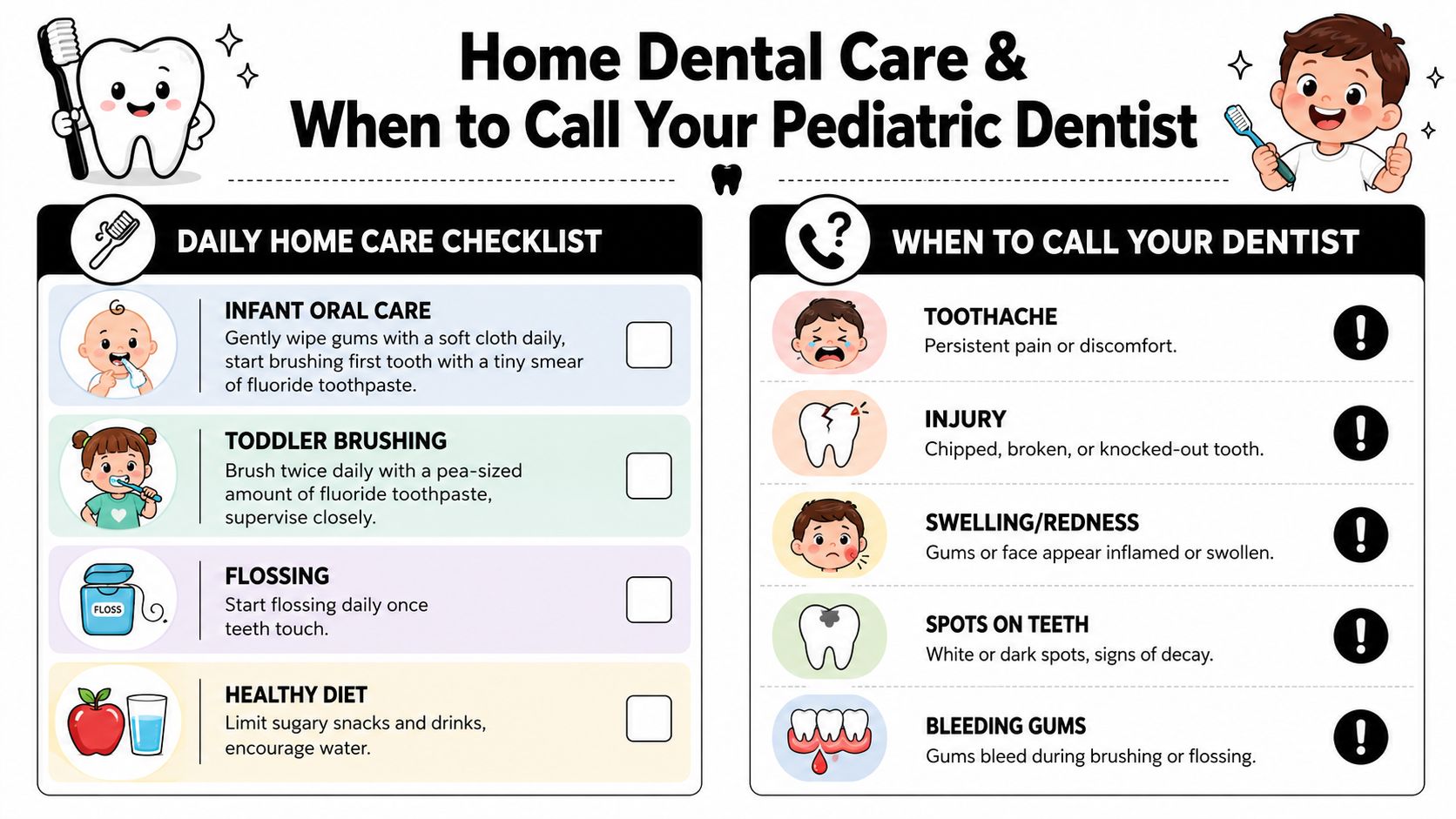
Most preventive care happens at home, not in the dental chair. Professional visits guide the process, but daily habits are what protect teeth between appointments.
That matters even more in Texas, where children face uneven access to coverage. In 2022, the proportion of uninsured children in Texas was 12.7%, which was 8.5 times higher than Massachusetts at 1.5%, according to this ASPE report on children's health coverage. When families are trying to avoid surprise costs, prevention at home becomes even more valuable.
Daily habits that make a real difference
You don't need a complicated routine. You need a consistent one.
- For infants gently clean the gums and begin brushing with a tiny smear of fluoride toothpaste once the first tooth appears.
- For toddlers brush twice a day and supervise closely. At this age, most children want independence before they have the coordination for effective brushing.
- For older kids keep helping longer than they think they need it. Many children can start brushing on their own before they can brush well.
- For all ages limit frequent sugary drinks and sticky snacks, and offer water regularly.
Signs not to ignore
Some symptoms mean it's smart to schedule a dental visit sooner rather than waiting for the next cleaning.
- White or dark spots on teeth can be early signs of decay
- Persistent bad breath may point to plaque buildup, dry mouth, or a hidden issue
- Bleeding gums during brushing or flossing shouldn't be dismissed as normal
- Tooth pain or sensitivity deserves attention, even if it comes and goes
- Swelling, redness, or injury should be checked promptly
If your child avoids chewing on one side, wakes with mouth pain, or suddenly refuses brushing, trust that change. Children often show discomfort through behavior before they describe it clearly.
Families looking for affordable prevention often start with basic new patient exams, cleaning and exams, or a focused visit when something feels off. Staying ahead of small concerns is usually easier than waiting until a child needs urgent care, a tooth extraction, or an emergency dentist visit because a small cavity turned into pain.
Creating a Calm Dental Visit for Your Child
A lot of parents worry less about the exam itself and more about how their child will react. That concern is valid. Some children are naturally cautious. Others have sensory sensitivities, previous bad experiences, or a strong fear of unfamiliar sounds and tools.
A calm visit starts with the environment.

What helps children feel safer
Children read a room before they listen to instructions. If the space feels rushed, loud, or cold, they tend to tense up. If the space feels welcoming, predictable, and patient, they're more likely to settle.
That's one reason many families prefer a practice designed for comfort. Features such as aromatherapy, massage or heated chairs, noise-cancelling headphones, and TVs in treatment rooms can lower the stress level for both children and parents. A calmer parent usually helps create a calmer child.
There's also a difference between forcing cooperation and building trust. The best dental experiences for children are usually paced well. The team explains what's happening, avoids surprises where possible, and adjusts the visit to the child's comfort level.
Some children need reassurance. Some need a pause. Some need a simple explanation and a chance to feel in control.
Parents who want practical strategies before the appointment can review these ideas on how to overcome dental anxiety.
When extra support may help
For some children, comfort measures in the room are enough. For others, sedation options can make care more manageable, especially if the child is very young, highly anxious, has special healthcare needs, or needs more involved treatment.
The key point for parents is simple. Sedation dentistry isn't about “making a child behave.” It's about helping treatment happen safely and more comfortably when standard approaches aren't enough. A good team explains the options in plain language, discusses medical history carefully, and makes sure parents understand what to expect.
A short look at the practice environment can help parents visualize what a calmer visit feels like.
If you've been searching dentist near me, emergency dentist, or even cosmetic dentist near me for older kids and teens who feel self-conscious about their smiles, comfort still matters. Children and adolescents are far more likely to keep up with care when their visits feel respectful and manageable.
Your Family's Dental Home in Katy TX
Families in Katy don't need a disconnected approach where one office handles emergencies, another handles cleanings, and no one really gets to know your child. A true dental home should make preventive care feel simpler, more personal, and easier to keep up with over time.
That's especially important for growing families in Katy, TX, including Sunterra, Cane Island, Katy Manor, Kingscrossing, Lakehouse, Marisol, The Grange, Anniston, Katy Lakes, Elyson, and Ventanna Lakes. Whether you're scheduling a child's first visit, looking for a dentist in Katy, TX, or trying to find help quickly for pain, convenience and trust both matter.
Why local family care makes prevention easier
A nearby office reduces friction. It's easier to keep recall visits, ask follow-up questions, and bring siblings to one trusted team. That consistency helps children feel more comfortable and helps parents stay ahead of problems.
For younger children, preventive visits focus on cavity risk, home habits, and positive experiences. For older children and teens, the same office may also help with concerns that overlap with long-term smile goals, such as restorative dentistry, teeth whitening, alignment questions, or planning ahead for future options like dental implants near me searches later in life if injury or tooth loss ever becomes part of the story.
A simple way to get started
The Dental Retreat offers practical entry points for families who want care without confusion. New patients without insurance can choose a $99 complete exam with cleaning and X-rays or a $49 problem-focused visit. For households that want a more predictable way to manage routine care, membership plans start at $299 per year.
Those options can make it easier to stop delaying care and book the visit your child needs now. That may be a routine preventive appointment, a second opinion on a tooth that doesn't look right, or relief from discomfort that needs prompt attention.
If you've been looking for a family-friendly dentist near me, an emergency dentist, support for tooth extraction, or a long-term home for dental care in Katy, choosing a practice that combines comfort, complete services, and clear pricing can make the decision much easier.
If your child is due for preventive dental care, has a tooth that's bothering them, or you want a trusted family dentist in Katy, The Dental Retreat is ready to help. Families across Katy, TX and neighborhoods like Sunterra, Cane Island, The Grange, Katy Lakes, Marisol, Elyson, and Ventanna Lakes can schedule a visit for gentle exams, preventive care, and supportive treatment in a calm setting. Reach out today to book an appointment and give your child a healthier, more comfortable start.