You catch your reflection in the car mirror or on a video call and notice it right away. Your teeth don't look as bright as they used to. Maybe they seem a little yellow near the edges, or one tooth looks darker than the others. Even when your teeth are healthy, discoloration can make you feel like your smile looks tired.
That concern is common. It's also fixable.
Patients across Katy, TX, including Sunterra, Cane Island, Katy Manor, Kingscrossing, Lakehouse, Marisol, The Grange, Anniston, Katy Lakes, Elyson, and Ventanna Lakes often want the same thing. They want to know why their teeth changed color, whether the stain is something simple, and what works to improve it. They also want answers without feeling judged for coffee habits, smoking history, or putting off a dental visit.
If you've been searching for a dentist near me, a cosmetic dentist near me, or a dentist in Katy, TX because of tooth discoloration, the first step is understanding the cause. Some stains sit on the surface and respond well to professional whitening. Others come from inside the tooth and need a different approach, such as cosmetic dentistry or restorative dentistry. That distinction matters.
A good evaluation also helps rule out other issues. In some cases, discoloration is only a cosmetic concern. In others, it can point to enamel wear, an old injury, or changes inside the tooth that deserve closer attention. That's why a stain shouldn't be dismissed just because it doesn't hurt.
A Brighter Smile is Closer Than You Think in Katy TX
A lot of people wait longer than they need to before asking about stained teeth. They assume the answer will be expensive, embarrassing, or complicated. Most of the time, it starts with something much simpler. A patient notices that whitening toothpaste hasn't changed much, or they see that photos make their smile look duller than they expected.
In a local practice setting, that conversation happens every day. One person drinks coffee every morning and wants to know why brushing isn't enough. Another has one tooth that turned darker after an old sports injury. Someone else takes great care of their teeth and still feels frustrated that age alone seems to have changed their smile.
Why stains can affect more than appearance
Tooth discoloration doesn't just change color. It can change behavior. People smile less, cover their mouth when talking, or avoid photos. That's especially true when the change happened gradually and they can't tell what caused it.
Practical rule: If the color change is recent, uneven, or limited to one tooth, it's worth having it examined instead of guessing with store-bought products.
There's also a difference between wanting a whiter smile and needing dental care. Sometimes a routine cleaning and exams visit removes a surprising amount of surface stain. Other times, the stain is part of a larger issue involving enamel, an old filling, or internal tooth changes that whitening alone won't fix.
What patients in Katy usually want to know
Most questions come down to a few practical concerns:
- Why are my teeth yellowing now even though my routine hasn't changed much?
- Will whitening help or is the stain too deep?
- Could this be from damage to the tooth rather than food or drinks?
- What if I'm nervous about dental visits or haven't been in for a while?
Those are reasonable questions. They're also why a local exam matters. A dentist in Katy, TX can look at the color pattern, review your history, and tell whether you need preventive dental care, teeth whitening, cosmetic dentistry, or restorative dentistry. For some patients, the right next step is simple. For others, it may involve a more complete plan that also includes new patient exams, dental x-rays, or treatment for worn or damaged teeth.
Common Causes of Tooth Discoloration
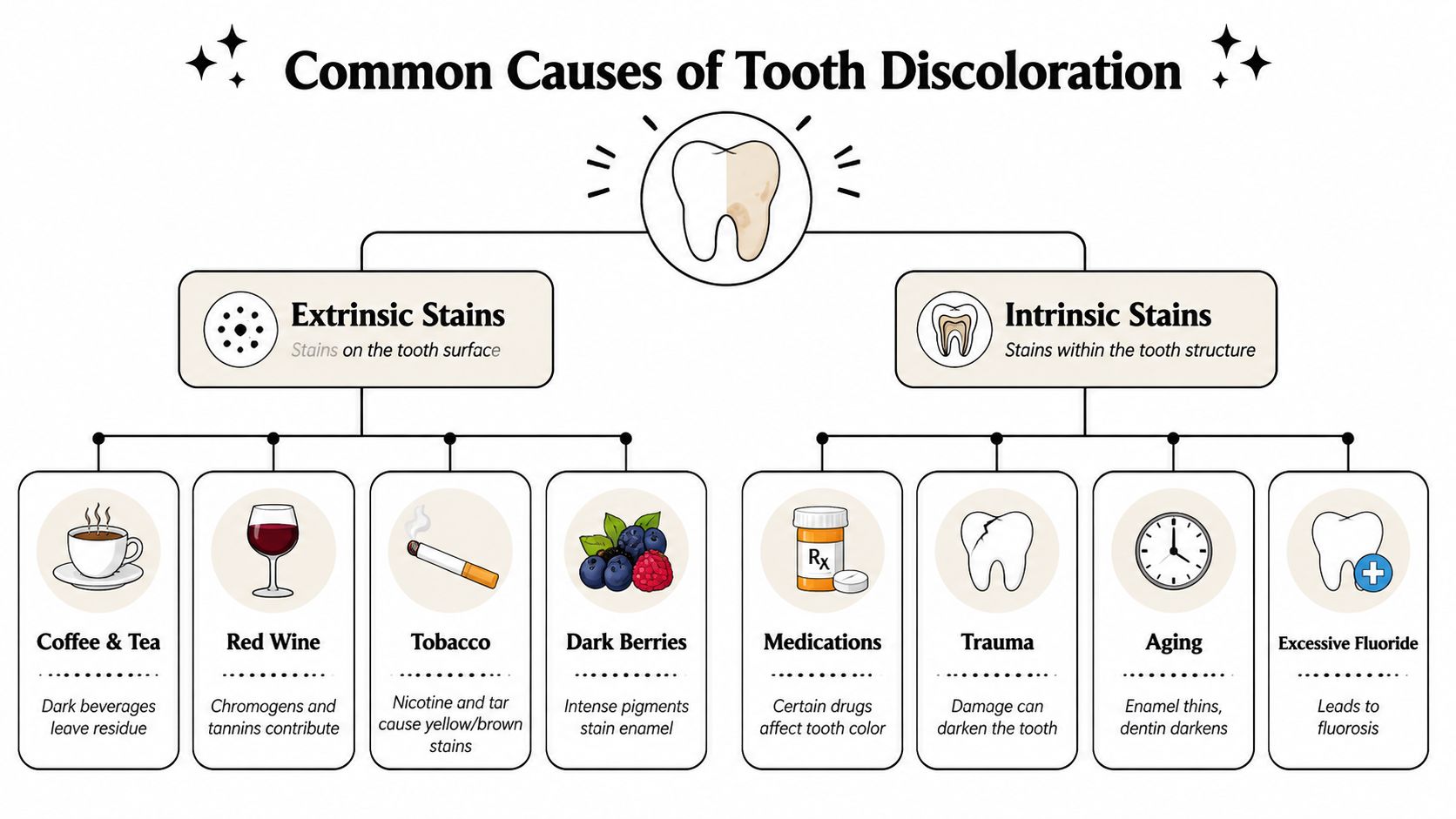
Tooth discoloration usually falls into two categories. Extrinsic stains collect on the outer surface of the teeth. Intrinsic stains develop within the tooth itself. That distinction matters because the right fix depends on where the color change starts. In our Katy office, this is often the point where patients stop blaming themselves and start getting clearer answers.
Extrinsic stains from daily habits
The most common surface stains come from repeated contact with dark foods, drinks, and tobacco. Coffee, tea, red wine, dark sodas, berries, tomato-based sauces, soy sauce, and similar foods leave pigment on enamel over time. Those pigments cling more easily when plaque and the thin protein film on teeth, called the pellicle, are present, as explained in this review of extrinsic staining mechanisms.
Acid adds another layer to the problem. Drinks and foods that soften enamel can make it easier for color to settle in. Patients often notice this combination with iced coffee, soda, sports drinks, or frequent sipping habits throughout the day. If enamel is wearing down, signs of tooth enamel erosion can make teeth look darker, duller, or more yellow even before a cavity is present.
Crest's overview of tooth stain causes also lists coffee, tea, red wine, dark sodas, berries, beets, chocolate, candies, and pickles as frequent contributors. In practice, the pattern matters as much as the item itself. A patient who slowly sips coffee all morning often sees more staining than someone who drinks it with breakfast and rinses with water afterward.
Tobacco stains are often heavier and harder to remove
Tobacco creates some of the most stubborn discoloration we see. Nicotine and tar build up on enamel and can leave yellow, brown, or patchy dark areas that do not respond well to whitening toothpaste alone. Chewing tobacco can be particularly harsh because it exposes certain teeth and gumline areas to concentrated staining for long periods.
A PMC article on tobacco-related staining reports higher rates of visible tooth staining among smokers than non-smokers. That matches what we see chairside. The longer the exposure continues, the more likely the stain becomes dense enough that a simple over-the-counter approach falls short.
Surface stains usually build gradually, then seem obvious all at once.
Extrinsic vs. Intrinsic Stains at a Glance
| Stain Type | Location | Common Causes | Appearance |
|---|---|---|---|
| Extrinsic | On the outer tooth surface | Coffee, tea, red wine, dark sodas, berries, tobacco, dental biofilm interactions with pigments | Yellow, brown, or generalized surface darkening |
| Intrinsic | Inside the tooth structure | Trauma, developmental conditions, medical treatments, excessive fluoride, internal tooth changes | Gray, deep yellow, brown, or localized darkening that doesn't brush away |
For patients searching for cosmetic dentist near me because whitening strips have not worked, this distinction often explains why. The issue may be deeper than surface stain. The good news is that you do not need to figure that out on your own. A local exam in Katy can sort out whether you need a cleaning, whitening, bonding, veneers, or treatment for an underlying dental problem. If you feel anxious or have been putting this off because you do not have insurance, there are still practical options and a judgment-free place to start.
Beyond Coffee Medical and Developmental Staining
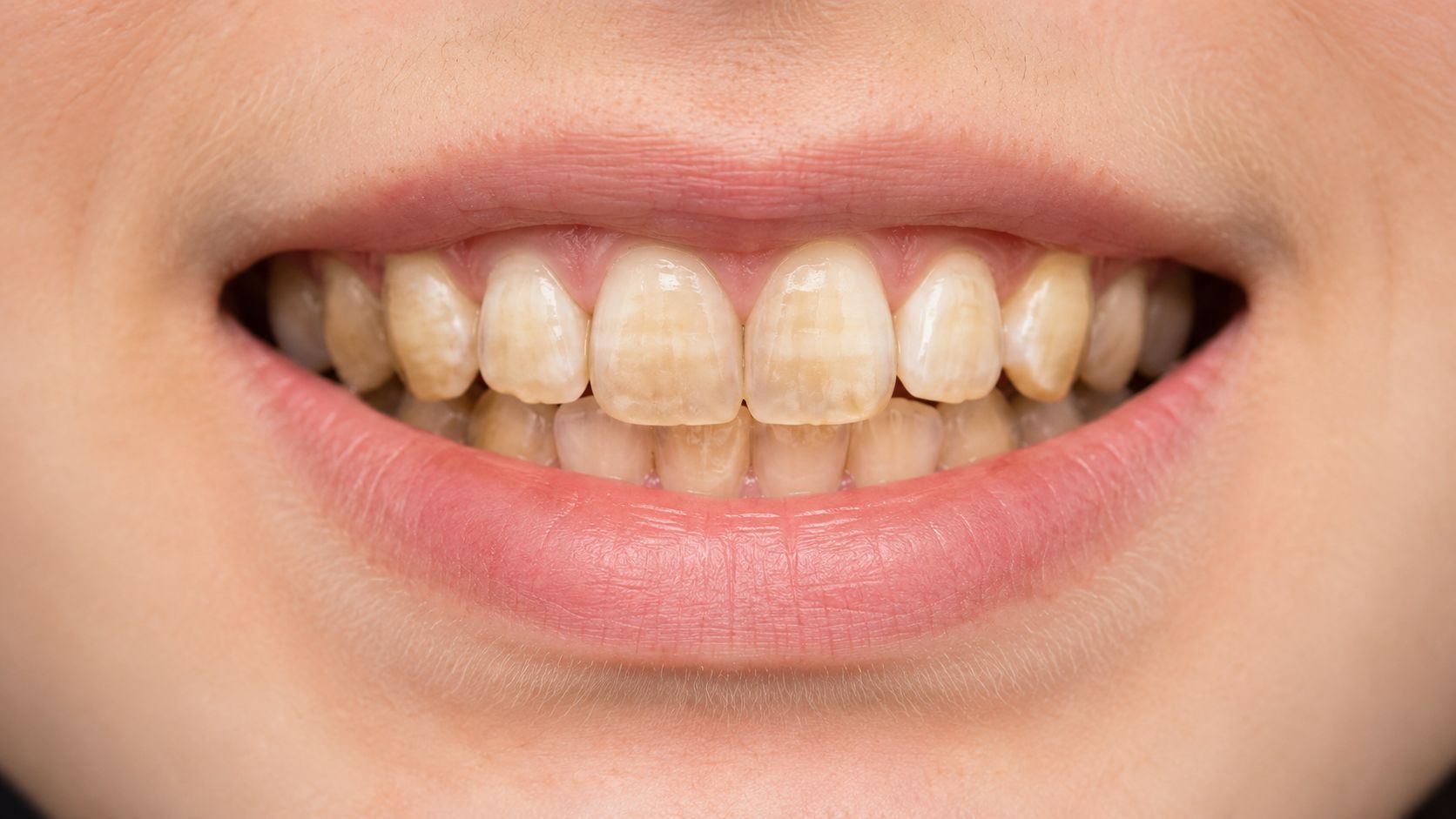
Some of the most frustrating discoloration happens in people who brush well, avoid tobacco, and don't have heavy coffee habits. When that happens, the cause may be inside the tooth rather than on the surface.
When discoloration starts from within
Intrinsic discoloration can come from medical treatment, developmental factors, or physical injury. According to WebMD's review of tooth discoloration causes, chemotherapy and radiation for head and neck cancer can affect enamel development and dentin structure, and abnormal tooth color can also be linked to genetic defects, high fever during tooth formation, porphyria, severe neonatal jaundice, and too much fluoride from environmental sources or excessive fluoride supplements.
Aging can also change color gradually. As enamel wears thinner, the naturally darker dentin underneath becomes more visible. Patients often describe this as a yellowing that seems to appear even though their brushing habits haven't changed.
If you've also noticed increasing sensitivity, roughness, or a more translucent edge to the teeth, it may help to learn how tooth enamel erosion affects the look and strength of teeth. Color change and enamel wear often overlap.
Trauma can darken a single tooth
An injured tooth can look very different from a stained tooth. Trauma to a permanent tooth can cause internal bleeding that discolors the tooth by darkening the inner dentin structure, which may develop a yellow, gray, or even black tint. This intrinsic staining can result from damage to a nerve or blood vessel inside the tooth, as explained in this discussion of trauma-related discoloration.
That's why one dark tooth should never be treated like a routine coffee stain. The right treatment may involve monitoring the pulp, endodontic care, internal whitening, bonding, or a crown, depending on the condition of the tooth.
A stain that affects one tooth differently from the rest usually needs diagnosis before whitening.
Developmental and trauma-related discoloration can still be improved. It just requires a plan that matches the cause. For some patients, that means cosmetic dentistry. For others, it may involve restorative dentistry to protect a compromised tooth while improving appearance at the same time.
Professional Whitening and Cosmetic Dentistry in Katy
A lot of patients come in after trying strips, whitening toothpastes, or social media tips for months, only to find that the color still looks uneven. Once we identify why the teeth changed color, treatment becomes much more straightforward. In our Katy office, that usually brings relief right away, especially for patients who have been guessing and spending money on products that were never a good match for the problem.

What whitening can do well
Professional whitening works best for many surface stains and overall yellowing from common foods and drinks. If the discoloration built up gradually over time, whitening is often a practical first step. It can produce a cleaner, brighter shade more predictably than over-the-counter products, especially when we can adjust the strength for sensitivity and monitor the teeth during treatment.
Store-bought products still have a place. They can help with mild surface discoloration, but they often fall short when stains are older, darker, or patchy. They also cannot tell you whether the color change is coming from the enamel, the inner tooth structure, or an old filling that no longer matches.
Patients who want to compare timing, comfort, and expected results can review professional and take-home teeth whitening options. That side-by-side look is helpful if you are balancing sensitivity, budget, and how quickly you want to see improvement.
When whitening is only part of the answer
Some teeth do not respond evenly to bleaching. We see that with internal discoloration, teeth darkened by past injury, developmental changes, and smiles that already include crowns, fillings, or veneers. Those materials do not whiten like natural enamel, so the plan has to account for shade matching, not just brightness.
That is where cosmetic dentistry becomes more useful than repeating whitening again and again.
Options often include:
- Dental bonding for a small dark area, a chipped front tooth, or one tooth that stands out from the others.
- Porcelain veneers for deeper discoloration or cases where color and shape both need improvement.
- Crowns or restorative care for teeth that are discolored and also weakened, cracked, or heavily filled.
For anxious patients, this process should feel calm and judgment-free. For uninsured patients, it also helps to know there is rarely just one path. We can often start with the option that addresses the biggest concern first, then phase additional cosmetic treatment over time if needed.
| Concern | What often works | What usually falls short |
|---|---|---|
| Surface stain from food and drinks | Cleaning, in-office whitening, take-home trays | Whitening toothpaste alone for established stains |
| General yellowing | Professional whitening | Short-term DIY products with limited contact time |
| One dark tooth after injury | Diagnosis first, then cosmetic or restorative treatment based on findings | Whitening strips before an exam |
| Deep internal discoloration | Veneers, bonding, crowns, selected internal treatment | Repeating bleach products and expecting even results |
A short visual can help if you're comparing options:
If a tooth changes color suddenly, the right first step is an exam. Patients searching for a dentist near me, cosmetic dentist near me, or emergency dentist in Katy usually want the same thing. A clear answer, a realistic plan, and treatment that fits their comfort level and budget.
How to Prevent Tooth Stains and Maintain a Bright Smile
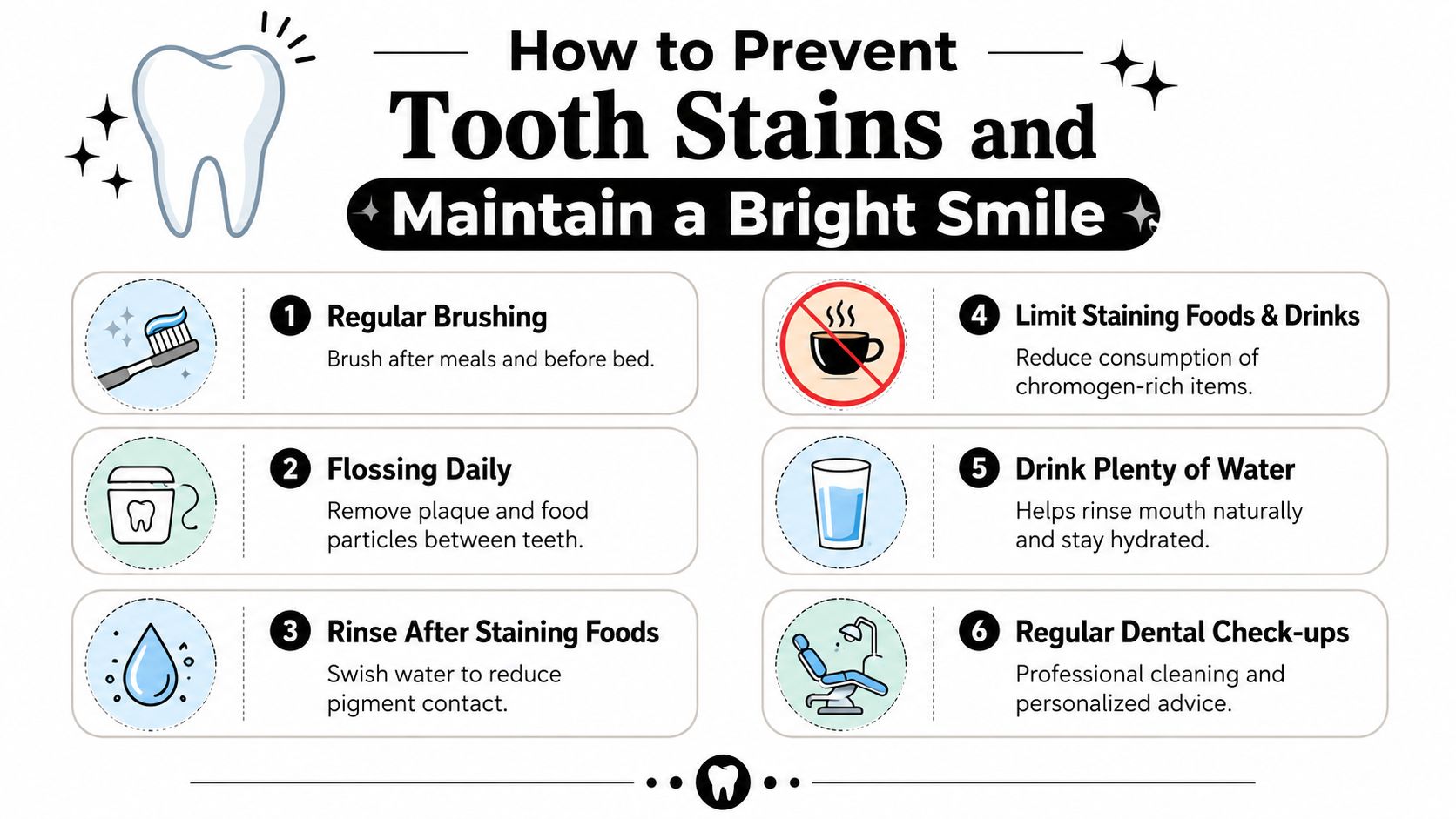
Preventing stains doesn't require perfection. It requires consistency. Most patients do well when they reduce contact time between pigments and teeth, keep plaque under control, and get regular cleanings and exams.
Daily habits that make a real difference
- Rinse after dark drinks or foods. Water helps clear pigments before they sit on the enamel longer than necessary.
- Brush and floss on schedule. Plaque gives stains more surface area to cling to, so daily home care matters.
- Use a straw when it makes sense. Cold coffee, iced tea, and dark sodas have less direct contact with front teeth this way.
- Be careful with whitening products. Over-the-counter options can help mildly, but they often disappoint when stains are internal or uneven.
- Stay current with checkups. Professional cleanings remove buildup that brushing at home can miss.
What prevention can and can't do
Prevention helps protect your results and slow new discoloration. It won't reverse every type of stain. If the issue is related to trauma, enamel wear, aging changes, or internal tooth structure, home care alone won't fully solve it.
The best stain-prevention routine is the one you'll actually follow every day.
For patients in Katy, TX looking for long-term dental care, regular visits also create a chance to spot other concerns early. That may include enamel erosion, failing restorations, gum recession, or a tooth that needs restorative treatment instead of more whitening.
Schedule Your Consultation at The Dental Retreat Today
If stained teeth have been bothering you, you don't have to keep guessing. A professional exam can tell you whether you need a cleaning, teeth whitening, cosmetic dentistry, restorative dentistry, or a closer look at a tooth that changed color for a deeper reason. That kind of clarity saves time, frustration, and money.
For many patients, the hardest part isn't the treatment. It's making the appointment. Dental anxiety is real, and cost concerns are common, especially for people without insurance. A patient-centered office should make both of those barriers easier to manage, not worse.
Care that feels calmer and more approachable
At The Dental Retreat in Katy, the environment is designed to reduce stress. Patients have access to comfort-focused touches like aromatherapy, massage and heated chairs, noise-cancelling headphones, and TVs in every room. Sedation options are also available for anxious patients or those coming in for more involved care.
That matters whether you're scheduling a routine visit, cosmetic consultation, tooth extraction, urgent treatment with an emergency dentist, or asking about long-term options such as dental implants near me after a damaged tooth is no longer restorable.
Helpful options for uninsured and new patients
For people in Elyson, Ventanna Lakes, and nearby Katy neighborhoods who have delayed care because of cost, there are straightforward ways to get started. New patients without insurance can choose a $99 full exam with cleaning and X-rays, a $49 problem-focused visit, or $350 in-office Zoom whitening. Membership plans also start at $299 per year.
If you want answers about discoloration without pressure or judgment, this is a good time to take that first step.
If your smile doesn't look the way you want, schedule a visit with The Dental Retreat. Whether you need a diagnosis for a dark tooth, professional teeth whitening, cosmetic dentistry, emergency dental care, or a new patient exam in Katy, TX, the team offers a calm, judgment-free experience for patients across Sunterra, Cane Island, Katy Manor, Kingscrossing, Lakehouse, Marisol, The Grange, Anniston, Katy Lakes, Elyson, and Ventanna Lakes.