If you're in Katy and you've ever put off a cleaning, ignored a nagging toothache, or delayed calling a dentist because you weren't sure what the bill would look like, you're not alone. For many adults and families, the hardest part isn't deciding whether care matters. It's figuring out how to pay for it without getting trapped in confusing insurance language, surprise costs, or treatment that feels financially out of reach.
That uncertainty affects everyday decisions. A routine exam gets postponed. A small cavity waits longer than it should. A cracked tooth turns into an urgent problem. Patients in Sunterra, Cane Island, and nearby Katy neighborhoods often want something simple. They want to know what care includes, what it costs, and how to plan ahead without guesswork.
Affordable Dental Care for You and Your Family in Katy TX
You call to schedule a cleaning for yourself, then remember your child is due for a checkup too. Before you book, the same question comes up for a lot of Katy families. What is this going to cost?
Patients looking for a dentist in Katy are often trying to solve two problems at once. They want good care, and they want a clear way to budget for it. If pricing feels vague, even routine visits can start to feel harder to commit to.
That is why transparent dental costs matter. Clear fees help families plan preventive care, say yes to treatment earlier, and avoid the stress that comes from guessing. If you want a practical starting point, our guide on how to afford dental care without insurance walks through the options in plain language.
Why transparent dental costs matter
An in-house dental membership plan gives patients a more direct arrangement with the office. Instead of sorting through deductibles, waiting periods, annual maximums, and coverage exceptions, patients know what preventive care is included and what discount applies to additional treatment.
That changes the experience in a real way.
The goal is not just to lower a fee here or there. The goal is to make dental care easier to keep up with over time. When patients can see the numbers clearly, they are more likely to stay on schedule with exams, cleanings, and X-rays, and more likely to address small problems before they grow.
A local option for Katy families
In Katy, families often want something simple and dependable. They want to know whether a plan makes sense for regular checkups, restorative work, or cosmetic dentistry, and they want to make that decision without insurance jargon getting in the way.
A membership plan can be a good fit for parents managing household costs, adults without employer dental benefits, and patients who want an ongoing relationship with one local office. It works best for people who value predictable preventive care and straightforward savings, not people who are trying to use a traditional insurance network across multiple practices.
That difference matters. A good membership plan should feel like a partnership in your long-term oral health, with pricing you can understand before you sit in the chair.
The Challenge of Paying for Dental Care Without Insurance
Without insurance, even basic care can feel like a decision you have to debate. A new patient exam, routine cleaning, and dental X-rays are all standard parts of good preventive dentistry, but when you're paying fully out of pocket, it's common to wonder whether now is the right time or whether you should wait one more month.
That delay rarely comes from neglect. More often, it comes from uncertainty. Patients in Elyson and Ventanna Lakes often know they should come in. They just don't want to step into an appointment without a clear sense of the financial side.
Routine care is easy to postpone
Preventive dental care usually looks manageable on paper. In real life, families juggle groceries, school expenses, home costs, and car payments. Dental visits can slide down the list when there isn't an obvious, built-in benefit plan to rely on.
Some of the most commonly delayed services include:
- New patient exams because patients don't want to commit before knowing the total cost
- Cleaning and exams when nothing hurts yet
- Dental X-rays that feel easy to skip, even though they often catch problems early
- Minor restorative work such as fillings, where waiting can let a small issue grow
For many people, that's also why treatment feels emotionally heavier than it should. The question isn't just "Do I need this?" It's "What happens if I need more than I expected?"
Dental emergencies create financial pressure fast
A toothache doesn't usually arrive on schedule. Neither does a chipped tooth, swelling, or a broken filling. When someone suddenly needs a tooth extraction, urgent pain relief, or a more advanced treatment plan, the lack of insurance can make the whole situation feel more intense.
The same goes for care that improves function and confidence over time. Cosmetic dentistry, veneers, and dental implants near me searches often come from patients who want a real solution but worry that the cost structure will be hard to understand or harder to manage.
Practical rule: The longer patients wait because of cost confusion, the fewer options they may have for simple treatment.
Why many uninsured patients hesitate
Most uninsured patients aren't asking for cheap dentistry. They're asking for straightforward dentistry. They want a dental office that explains fees early, gives realistic options, and doesn't force them to decode insurance-style language to take care of their smile.
If that's your situation, this guide on how to afford dental care without insurance is a useful next step. It lays out practical ways to think about treatment costs before you book.
A Clearer Path with Our In-House Dental Plan
A common Katy patient scenario goes like this. Someone knows they are due for a cleaning, suspects they may need a filling, and puts the visit off because they do not want to walk into an office unsure of the cost. An in-house plan gives that patient a clearer starting point.

What most plans are designed to include
An in-house dental membership plan is usually set up as a direct agreement between the patient and the dental office. In practical terms, patients pay a monthly or annual fee, receive routine preventive care through that plan, and get reduced fees on many additional services.
The exact details depend on the office. Many plans include exams, cleanings, and routine X-rays. Some also have separate options for children, periodontal maintenance, or patients with different preventive needs. The point is not that every office offers the same package. The point is that the terms are usually stated up front, so patients can see what is included before they commit.
That clarity matters.
Why patients often find the structure easier
From a patient perspective, the biggest benefit is usually predictability. Instead of trying to sort through deductibles, waiting periods, yearly maximums, and exceptions, you can focus on three practical questions:
- What is the membership fee?
- Which preventive visits and services are included?
- What reduced rate applies if more treatment is needed?
That structure helps patients budget for care with fewer surprises. It also changes the tone of the conversation in the operatory. We can spend more time discussing what your teeth and gums need, and less time guessing how a third party may process a claim.
What the partnership feels like
A good in-house plan should support long-term oral health, not just offer a small discount. Patients who stay on schedule with preventive visits often avoid larger and more expensive problems later, and the membership model gives them a simpler way to keep that routine in place.
There is also a real trade-off. An in-house plan is usually tied to one practice, so it does not work like broad insurance that may follow you across multiple offices. For many uninsured patients in Katy, that trade is worth it because the fees are clearer, the terms are easier to understand, and the relationship stays local.
That is why many patients view an in-house dental membership plan as a practical partnership. You know the basic costs ahead of time. You have a defined path for preventive care. If treatment comes up, the financial conversation is usually much more straightforward.
How Our Membership Plan Compares to Traditional Insurance
The easiest way to compare a membership plan with traditional insurance is to look at the patient experience. Most patients don't care about industry jargon. They care about what happens when it's time to schedule a cleaning, fix a tooth, or move forward with treatment.

Side by side differences that patients actually feel
| Option | What patients often notice |
|---|---|
| In-house membership plan | Direct payment to the office, clearer fees, preventive focus, and savings on additional treatment |
| Traditional dental insurance | Third-party rules, claim processing, plan limits, and coverage details that vary by policy |
Traditional insurance can be useful for some patients, especially if they already receive employer-sponsored benefits. But many patients feel boxed in by deductibles, annual maximums, waiting periods, network restrictions, and the uncertainty of what will or won't be approved.
An in-house model is different because treatment decisions stay closer to home. The discussion is usually simpler. You know the plan terms up front, and there isn't a separate company standing between your diagnosis and your next step.
Where membership plans reduce friction
Some of the most common frustrations with insurance aren't clinical. They're administrative.
- No claim filing burden means the process feels more direct.
- No annual maximums or deductibles in the usual insurance sense can make treatment planning easier to understand.
- No waiting on pre-authorization language helps patients move forward with less hesitation.
- No network-style confusion means you're working with the office's own plan structure.
Because membership plans create a direct financial relationship, they reduce administrative overhead. One industry source reports that this efficient model allows membership patients to generate 20% to 55% more net value for a practice than insured patients, which supports offering predictable benefits directly to patients, as summarized in this industry discussion of membership plan economics.
What works well and what doesn't
A membership plan works well for patients who want consistency, transparency, and an easier way to budget for preventive and restorative care. It also works well for people who don't have dental insurance and don't want to delay visits because they're unsure how the numbers will work.
It doesn't replace every financial tool. Some patients still prefer traditional insurance if they already have a plan through work and understand their policy well. Others may use separate financing for larger treatment when needed. The better option depends on how you want to manage your care, not on which label sounds more familiar.
If insurance feels like a maze, a membership plan often feels like a service agreement you can actually use.
Who Benefits Most from Our Katy Dental Plan
A patient calls our Katy office after skipping cleanings for two years because she does not have dental insurance and never feels sure what a visit will cost. She is not looking for a gimmick. She wants a clear monthly or yearly number, a dentist she can call, and a plan she can utilize.
That is the kind of patient who tends to do well with an in-house membership plan.
Patients who usually get the most value
This option often fits adults who are paying out of pocket and want a simpler way to stay on track with care. Freelancers, gig workers, small business owners, and retirees are common examples. Many families in Katy also like having a predictable structure for exams, cleanings, and savings on additional treatment instead of guessing what each visit might cost.

Patients who often benefit include:
- Adults without employer dental benefits who still want routine preventive care
- Parents watching household spending who prefer dental costs they can plan for
- Patients expecting restorative or cosmetic treatment who want a set discount through their dental home
- People who delay care because of cost uncertainty and need a clearer starting point
Why some patients do better with a direct plan
The biggest advantage is not just the discount. It is clarity.
Patients are more likely to schedule on time when they already know what preventive care includes and how additional treatment is priced. In day-to-day practice, that usually leads to better follow-through. Small problems are easier to treat early. Larger treatment plans feel more manageable when the numbers are explained up front and tied to a relationship with one local office.
That partnership matters. A membership plan works best for patients who want an ongoing dental home, not patients shopping for a one-time coupon.
A strong fit for patients who plan to use it
Patients in Katy, Sunterra, Marisol, and Lakehouse usually get the most from this kind of plan when they expect to come in regularly and want to keep care local. It can be a practical choice for preventive visits, future restorative work, and long-term family care, especially for people who would rather deal with one office directly than sort through insurance rules.
If you want to see what is included before making a decision, review the current Katy dental membership plan details at The Dental Retreat.
How to Join and Start Saving at The Dental Retreat
The process should feel simple from the first step. If you've been comparing in-house dental membership plans and want a direct option in Katy, the practical move is to review the details, ask what is included for your age or hygiene needs, and confirm how discounts apply to additional treatment.
A simple way to enroll
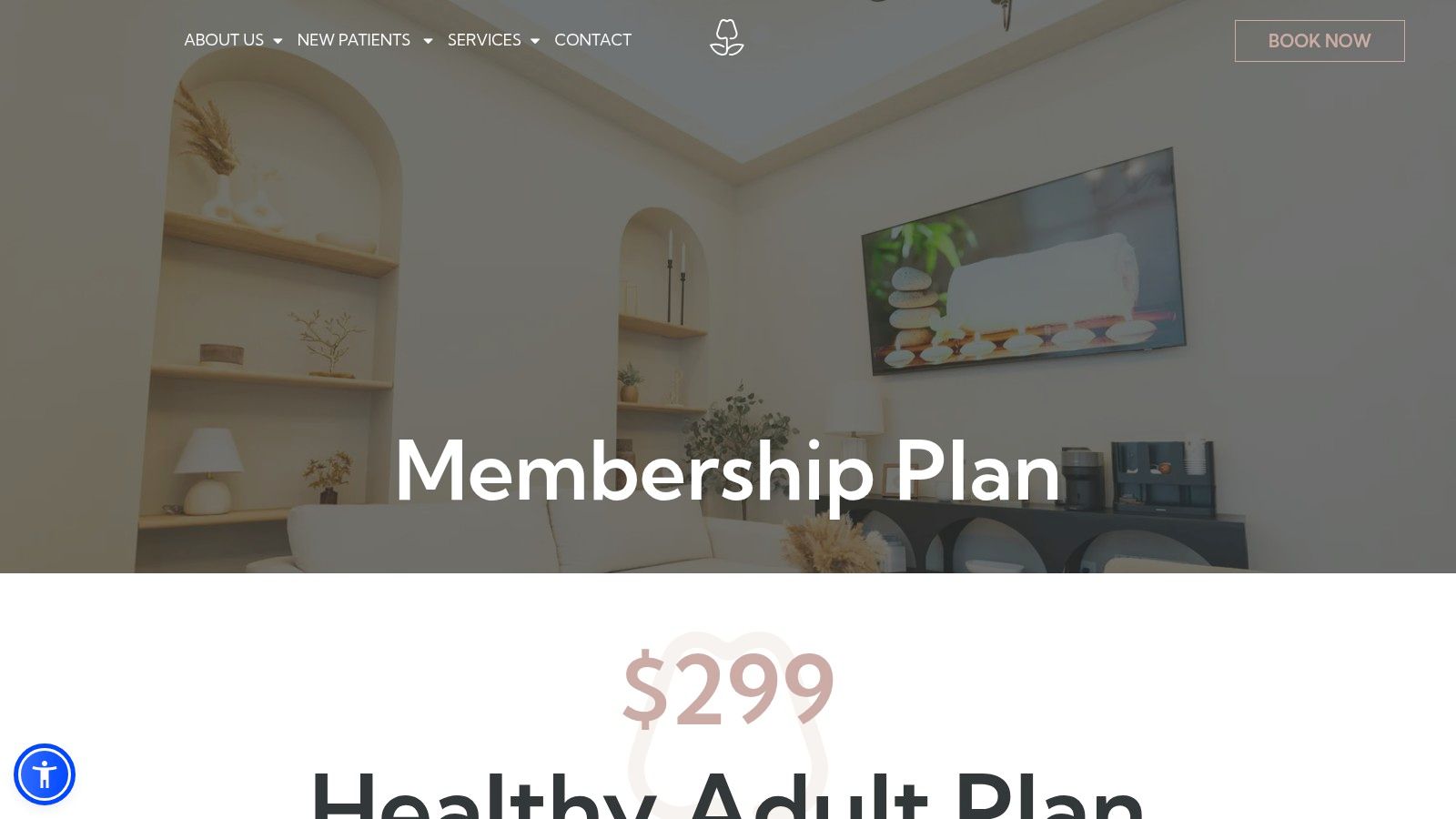
The Dental Retreat offers a membership plan that starts at $299 per year, with separate savings options for patients who need periodontal maintenance. If you want to review the current plan details directly, you can visit the practice's membership plan page.
Most patients should expect the enrollment process to be straightforward. In practical terms, it usually looks like this:
- Ask for the current plan options so you know which tier fits your needs.
- Review what preventive services are included and how discounts apply to other procedures.
- Complete the office sign-up process so your benefits are active through the practice.
- Schedule your exam or cleaning and start using the plan for routine care.
What the visit experience feels like
Cost transparency matters, but so does comfort. A lot of patients looking for a dentist in Katy, TX are also looking for a place that doesn't feel rushed or cold. A calm office environment can make it easier to keep up with preventive care, especially if you've been anxious about past dental visits.
At this practice on Stockdick School Rd., the atmosphere is designed to feel more relaxed than the standard medical setting. Amenities such as massage and heated chairs, aromatherapy, TVs in treatment rooms, and noise-cancelling headphones help create a visit that feels less clinical and more manageable for adults and families.
For a quick look at the practice and patient experience, this video gives helpful context.
When membership makes the most sense
If you don't have insurance and you expect to stay on top of cleanings, exams, and ongoing care, a membership plan is often the better long-term play than bouncing between one-time specials alone. New patient offers can be useful for getting started, but a membership plan is built for continuity. It gives you a clearer framework for future treatment, whether that's a filling, crown, whitening, clear aligner consultation, or emergency visit after a sudden dental problem.
Patients in Katy Manor, Kingscrossing, and Anniston often want exactly that. They want a dental home where costs are easier to understand and follow-up care doesn't feel financially unpredictable every time they call.
Frequently Asked Questions About Our Membership Plan
Is a membership plan the same as dental insurance
No. A membership plan is a direct agreement with the dental office. You pay the practice for a defined set of preventive services and treatment discounts rather than paying a third-party insurance carrier to administer benefits.
Can I use the plan for more than cleanings and exams
In many cases, yes. Membership plans are often designed to include preventive care and provide reduced fees on additional services. That may include restorative care and, depending on the office's plan terms, certain cosmetic or larger procedures. The important step is reviewing the exact included services and discount structure before treatment begins.
Can I add my spouse or children
Many offices offer plan options for adults, children, and sometimes periodontal patients. Family enrollment is common in this model because it gives households a simpler way to budget for dental care across different ages and needs.
What if I need a specialist
An in-house membership plan usually applies to care provided within the participating office. If your treatment requires a specialist outside that office, the membership terms generally won't transfer automatically. That doesn't mean the plan loses value. It still helps with preventive care and treatment completed in-house, and your general dentist can still coordinate the referral.
Is this a good option if I want cosmetic dentistry or restorative work
It can be. For patients interested in veneers, whitening, crowns, implants, or broader restorative planning, the biggest advantage is often predictability. You already know you have a direct relationship with the office and some level of built-in savings on eligible treatment, which makes planning easier.
What should I ask before joining
Ask practical questions, not broad ones. Good examples include:
- Included visits for cleanings, exams, and X-rays
- Discounted services and any exclusions
- Family options if more than one person may enroll
- Periodontal maintenance terms if you need more frequent hygiene care
- Use timing so you know when benefits begin
The right plan should leave you with fewer questions after you enroll, not more.
If you're looking for a clearer way to manage dental costs in Katy, TX, The Dental Retreat offers a patient-focused path that makes preventive care and ongoing treatment easier to understand. Whether you're in Cane Island, Elyson, Katy Lakes, or nearby neighborhoods, you can contact the office to review your options, ask about membership details, and schedule a visit that fits your goals and your budget.