You catch it in the mirror first. A tooth looks a little longer than it used to. Then cold water hits one spot near the gumline and you feel a quick sting. Nothing feels urgent, but it does feel unsettling.
That's often how gum recession begins for patients in Katy, TX. It can start subtly, with small changes that are easy to dismiss. The good news is that learning how to prevent gum recession gives you real control, especially when you pair smart home care with regular professional monitoring.
Your Partner in Gum Health in Katy TX
A new patient from Katy Manor recently described it this way. She hadn't noticed pain, but she felt like one front tooth looked “different” in photos. Another patient from Cane Island said his teeth seemed more sensitive near the edges of the gums after brushing. These are the kinds of changes that make people search for a dentist near me late at night, wondering if they've waited too long.
Usually, they haven't.
What matters most is catching patterns early and understanding what your gums need before recession deepens. Gum tissue doesn't grow back on its own once it pulls away, so prevention is often underestimated. At the same time, this isn't something to panic over. It's something to pay attention to.
According to MedlinePlus Magazine's summary of CDC gum disease data, more than 42% of all adults older than 30 in the United States have some form of gum disease, which is a primary driver of irreversible gum recession. The CDC also says these conditions are “largely preventable” through proper daily hygiene and professional care.
Practical rule: If your teeth suddenly look longer, your gums bleed often, or one area feels newly sensitive, don't wait for pain before scheduling an exam.
For families in Sunterra, Kingscrossing, Lakehouse, and nearby Katy neighborhoods, that message should feel reassuring. Many of the biggest risk factors for recession are things you can address. Better brushing habits help. So does cleaner technique with floss, gentler use of modern tools, and routine checkups with a dentist in Katy, TX who can spot small changes before they become bigger problems.
Prevention also fits into the bigger picture of dental care. A patient who comes in for cleaning and exams may also learn that grinding at night, an old bite issue, or neglected gum inflammation is affecting more than gum tissue. In some cases, a person looking for a cosmetic dentist near me, emergency dentist, or help with a future tooth extraction or dental implants near me first needs to stabilize gum health.
Why early attention changes the outcome
Small recession is easier to manage than advanced recession. When you know what your gums are reacting to, you can often slow or stop progression with focused changes.
That's why the best first step isn't guessing. It's noticing, asking, and getting a clear plan.
Understanding the Causes of Gum Recession
Gum recession has more than one cause. Most patients expect a simple answer, but the full picture usually involves a mix of biology, habits, and pressure on the teeth and gums.

Infection can damage the foundation
One major pathway is gum disease. Plaque sits along the gumline, bacteria irritate the tissue, and inflammation starts to weaken the attachment around the teeth. If that process continues, the gums can pull back and expose more of the tooth.
This is one reason bleeding gums shouldn't be brushed off as normal. Bleeding often means inflammation is already active.
Mechanical wear is more common than people think
The second pathway is physical damage. Some people brush too hard because they think more pressure means a better clean. It doesn't. Aggressive brushing can wear away gum tissue over time, especially along the front teeth or near prominent roots.
Modern devices can also create confusion. Electric toothbrushes, whitening products, and water flossers can all help when used properly. But “properly” matters. A strong hand, abrasive paste, or high-pressure stream can irritate delicate gum tissue.
Here's a simple comparison that helps:
| Cause category | What it looks like in daily life | Why it matters |
|---|---|---|
| Disease-related | Bleeding, swelling, persistent plaque near the gums | Inflammation breaks down supporting tissue |
| Mechanical | Scrubbing hard, abrasive whitening toothpaste, tool misuse | Repeated trauma can wear gums down |
| Biologic or inherited | Recession that seems to happen despite careful hygiene | Some gums are naturally more vulnerable |
Some gums are simply thinner
This is the part many patients haven't heard before. Not everyone starts with the same tissue thickness. Some people have a thin gingival biotype, which means the gum tissue is naturally more delicate and less forgiving.
The Cleveland Clinic's gum recession overview notes that gum recession can't always be prevented, especially if you are genetically predisposed to thin gum tissue, and it reports that 40% of patients with thin tissue experience recession despite perfect hygiene.
That point matters because it removes a lot of unnecessary guilt. If you've been brushing, flossing, and still noticing recession, you may not be “doing everything wrong.” You may need a more personalized strategy.
Thin gum tissue changes the prevention plan. The goal becomes lower friction, lower inflammation, and closer monitoring.
Why a diagnosis matters
A person in Elyson may have recession from brushing pressure. A patient in Ventanna Lakes may have recession tied to inflammation. Someone in Marisol may have naturally thin tissue that needs extra protection during routine care, orthodontic planning, or cosmetic treatment.
The surface problem can look similar. The underlying cause can be very different.
That's why guessing based on a social media tip rarely works. Gum recession prevention starts with knowing which pathway is affecting you.
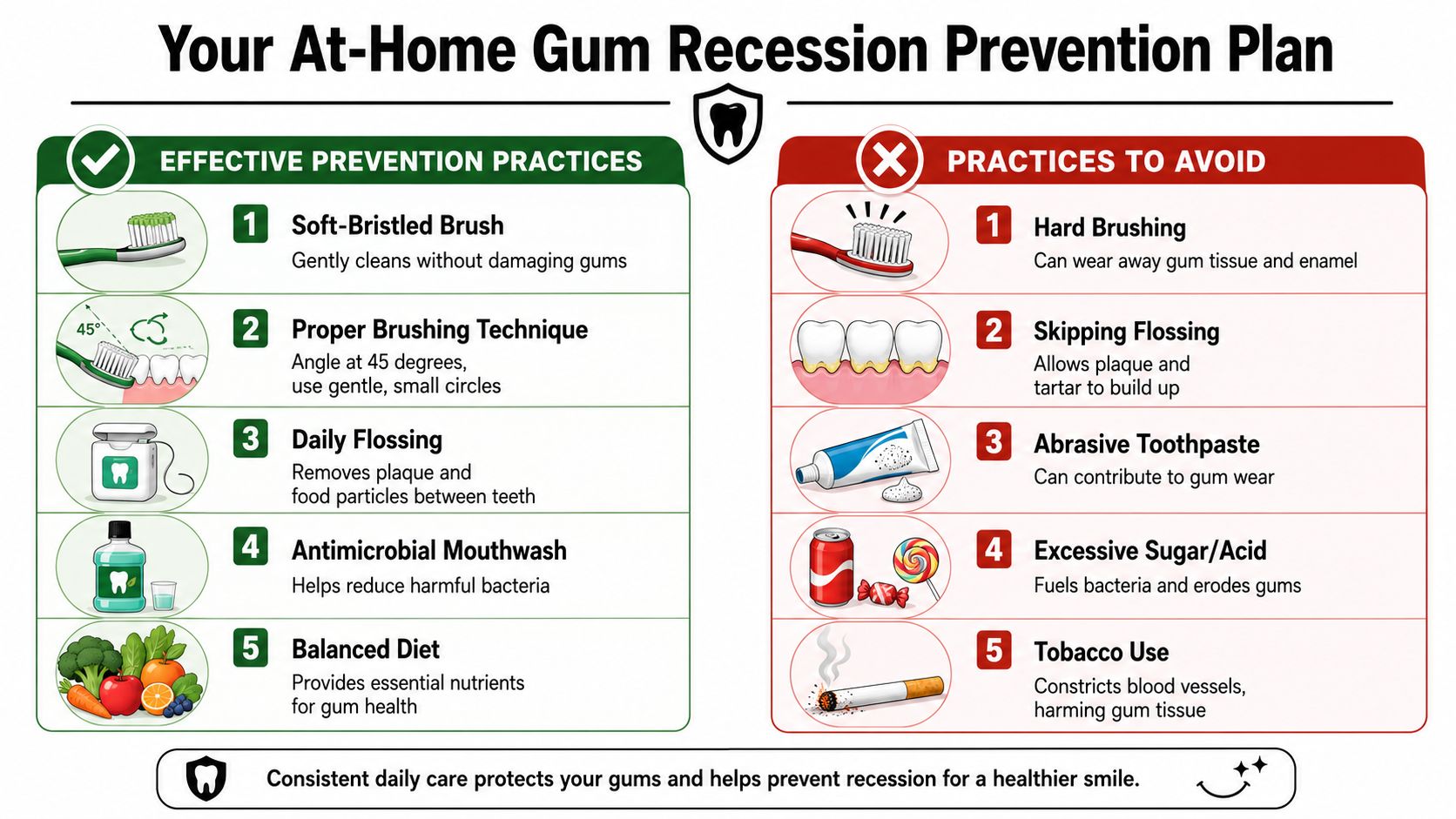
Your At-Home Gum Recession Prevention Plan
Daily care should protect your gums, not challenge them. That sounds obvious, but many people damage gum tissue while trying to do the right thing.
A safer routine starts with gentleness and consistency, not force.
Brush to clean the gumline, not scrub it
Use a soft-bristled toothbrush. Place the bristles at about a 45-degree angle toward the gumline, then use small circular motions. Think “massage and lift plaque away,” not “scrape the teeth clean.”
If the bristles flatten quickly, that usually means you're using too much pressure. If the toothbrush handle leaves your hand tense, lighten up.
A helpful routine looks like this:
- Start with the outer surfaces and slow down around the gumline.
- Switch to small circles instead of side-to-side scrubbing.
- Use the same pressure you'd use on a ripe peach.
- Pause at sensitive spots rather than attacking them.
Floss in a way that protects tissue
Flossing prevents plaque from staying where toothbrush bristles can't reach. But snapping floss straight down into the gums can cut or irritate the tissue.
Instead, guide the floss gently between the teeth, curve it around one tooth, slide it under the gum edge, and wipe upward. Then repeat on the neighboring tooth. If regular floss is awkward, a floss holder may improve control.
For patients trying to improve their routine naturally, this guide on ways to improve gum health naturally can help reinforce the basics without overcomplicating them.
The best home routine is the one you can repeat every day without causing trauma.
A short visual can make technique easier to understand in real time:
Be careful with modern tools
Many patients assume newer products are automatically safer. They aren't always. Tool choice and tool settings matter.
The Periodontist Phoenix guidance on recession prevention warns that many whitening toothpastes are too abrasive for sensitive gums, states that 28% of patients using water flossers incorrectly develop gum trauma, and notes that using electric brushes with force-detectors is essential to prevent over-brushing.
That translates into practical decisions at home:
- Choose gentler toothpaste: If a whitening toothpaste makes your gumline feel sore or raw, stop and switch.
- Use pressure-sensing electric brushes: A force detector helps when your hand naturally presses too hard.
- Keep water flossers controlled: Start low, aim carefully, and don't blast straight into the gums.
- Avoid treating sensitivity with more force: Sensitive spots usually need gentler care, not harder brushing.
Build a routine that's easy to repeat
You don't need a complicated shelf full of products. You need a routine that removes plaque while respecting the tissue.
A balanced at-home plan usually includes:
| Helpful habit | Why it supports prevention |
|---|---|
| Soft brush and light pressure | Reduces mechanical wear on the gumline |
| Daily flossing | Removes plaque between teeth |
| Antimicrobial mouthwash when advised | Helps reduce harmful bacteria |
| Less abrasive products | Lowers irritation for sensitive gums |
| Consistent timing | Makes prevention reliable instead of occasional |
That's the heart of how to prevent gum recession at home. Keep plaque under control, reduce friction, and stop any habit that leaves the gumline irritated after you clean.
How Lifestyle Choices Impact Your Gums
Your gums respond to what you do all day, not just the few minutes you spend brushing. Food choices, tobacco use, stress, and nighttime grinding can all shape how well gum tissue holds up over time.

Food choices change the environment in your mouth
Sugary foods and acidic drinks feed the kind of environment that makes gum problems easier to sustain. That doesn't mean you need a perfect diet. It means your daily pattern matters.
If you sip soda often, snack constantly, or go to bed without cleaning your teeth, plaque gets more opportunities to stay active along the gumline. A more gum-friendly routine looks simpler than people expect. Drink water regularly, limit frequent sugar exposure, and choose meals that don't keep the mouth under constant acid attack.
Tobacco makes healing harder
Smoking and chewing tobacco irritate gum tissue and make it harder for the mouth to maintain healthy circulation and response to inflammation. Many patients notice they don't see obvious bleeding, then assume their gums are fine. That can be misleading.
Tobacco can hide warning signs while the tissue still weakens underneath. If you use tobacco, quitting is one of the strongest prevention steps you can take for your gums and for future restorative work such as crowns, implants, or other long-term treatment.
Grinding can push recession forward
Stress often shows up in the mouth. Some patients clench while working. Others grind heavily in their sleep and wake with jaw soreness, tight facial muscles, or worn teeth.
The Leading Edge Specialized Dentistry discussion of gum recession risk explains that bruxism exerts abnormal mechanical forces on gum tissue and bone, contributing to recession, and that custom-fitted night guards are clinically proven to relieve these forces and prevent further tissue loss.
That matters because grinding doesn't just affect enamel. Repeated pressure can stress the tissues around the teeth, especially in areas where the supporting bone is naturally thin.
If you clench or grind, a custom night guard isn't just about comfort. It can be part of protecting the gumline from continued stress.
Age raises the stakes, but not the verdict
Aging increases the likelihood that recession will appear over time. That doesn't mean recession is unavoidable. It means your habits matter more with each decade.
If you live in Anniston, The Grange, Katy Lakes, or Lakehouse, the long-term goal is the same. Reduce avoidable stress on the gums now. Small daily choices are easier than trying to undo years of irritation later.
Professional Care at The Dental Retreat
Even a strong home routine has limits. Toothbrush bristles and floss can't remove hardened tartar, and they can't diagnose whether a sensitive area comes from inflammation, brushing trauma, or a bite problem.
That's where professional care becomes preventive, not just reactive.

What a preventive visit usually includes
A routine appointment gives your dental team a chance to look below the surface. Cleanings remove plaque and tartar that have bonded to the teeth. Exams check for early inflammation, recession patterns, bite wear, and areas where the gums are under stress. Dental X-rays help reveal what can't be seen by eye, including bone levels and hidden concerns.
For a new patient exam, that combination matters. You're not only getting your teeth cleaned. You're getting a baseline.
A preventive visit often helps identify:
- Early gum changes: Small recession or inflammation before symptoms become obvious
- Technique problems: Signs of over-brushing, abrasive product use, or floss trauma
- Bite-related stress: Wear patterns that suggest clenching or grinding
- Treatment priorities: Whether you need routine maintenance, periodontal care, restorative dentistry, or cosmetic planning first
Why consistency beats waiting for symptoms
Many patients search for an emergency dentist only after pain starts. Gum recession doesn't always work that way. It can progress imperceptibly. By the time sensitivity or visible root exposure becomes obvious, the tissue loss may already be established.
Regular visits create a record over time. That's especially helpful for patients with thin gums, old orthodontic movement, or habits that place extra force on the teeth. A hygienist may notice one area getting harder to clean. A dentist may spot early recession during a cleaning and exams visit before it becomes severe.
A practical first step for new patients in Katy
If you've been putting off care because you're unsure where to start, an affordable entry point makes a difference. A $99 exam, cleaning, and X-ray package can make it easier to establish care and get clear answers without overthinking the first visit.
That kind of appointment is useful whether you're looking for routine dental care, a cosmetic dentist near me, help planning dental implants near me, or a trustworthy dentist in Katy, TX who can monitor your gums with consistency.
For some patients, standard six-month visits are enough. Others benefit from more frequent periodontal maintenance because their gums need closer support. The right schedule depends on what your mouth is doing, not what a generic calendar says.
Options for Existing Gum Recession in Katy
If you already see recession, don't take that as a sign that you failed. Many careful patients still develop it. Some have thin tissue. Some have old inflammation. Some have pressure from grinding or bite changes they never felt.
What matters now is stopping further damage and choosing the right next step.
When treatment may be needed
If recession is tied to gum disease, a dentist may recommend scaling and root planing, often called a deep cleaning, to remove bacteria and buildup below the gumline. That can help calm inflammation and protect the support around the teeth.
If the recession is more advanced, treatment may involve protecting exposed roots, improving cleansability, or discussing soft tissue procedures such as grafting. The exact approach depends on your symptoms, appearance concerns, and the stability of the surrounding tissue. This overview of gum recession treatment options gives a helpful look at what may be considered.
Relief and repair can happen together
Some patients come in because cold air hurts. Others are worried about how their smile looks. Both concerns are valid. Recession can affect comfort, appearance, and long-term support for the teeth.
A personalized plan may also connect with other services. If a tooth has severe damage, restorative dentistry may be needed. If a tooth can't be saved, tooth extraction and replacement planning may become part of the conversation. If your smile goals include whitening or cosmetic dentistry, stabilizing the gums first usually creates a better result.
Existing recession isn't the end of the story. It's the point where a focused plan matters most.
If dental anxiety has kept you away, ask about sedation options. A calm, judgment-free visit can make it much easier to get answers and move forward.
If you're looking for a comfortable, trusted partner for gum health, The Dental Retreat welcomes patients from Katy, TX, Sunterra, Cane Island, Katy Manor, Kingscrossing, Lakehouse, Marisol, The Grange, Anniston, Katy Lakes, Elyson, and Ventanna Lakes. Whether you need a new patient exam, cleaning and exams, dental X-rays, help with gum recession, emergency dental care, restorative dentistry, cosmetic dentistry, or long-term planning for dental implants, the team offers thoughtful care in a calm, spa-inspired setting. Schedule a visit today and get a clear, personalized plan for protecting your smile.