If you're reading this after covering your mouth when you laugh, chewing on one side, or avoiding photos, you're not alone. Missing even one tooth can make daily life feel more complicated than it should. It can change how food feels, how certain words sound, and how confident you feel walking into work, dinner, or a family event in Katy, TX.
Many people start by typing dentist near me, dentist in Katy, TX, or even dental implants near me because they want a solution but don't know which one fits their life. That's a normal place to start. For many adults, the right answer isn't a full denture or a major procedure. It's a partial denture that fills the gap, restores function, and helps your smile feel like yours again.
Restore Your Smile with a Dentist in Katy TX
A common story goes like this. A patient loses a back tooth, then waits because it isn't visible. Months later, eating steak feels awkward. Crunchy foods get trapped. Smiling still looks mostly the same, but speaking and chewing don't feel as natural. By the time that patient looks for a dentist in Katy, TX, the problem feels bigger than the missing tooth itself.
That experience is more common than commonly perceived. Approximately 120 million adults in the United States have some missing teeth, and more than half of U.S. adults have lost at least one tooth, which is why partial dentures remain such an important treatment option for so many people, according to Healthline's overview of partial dentures.
Missing teeth affect more than appearance
A gap in your smile can be visible, but the hidden effects often matter more day to day. Patients often notice:
- Chewing changes: Food starts collecting in the open space, and you may avoid certain meals.
- Speech frustration: Some sounds may feel different, especially when front teeth are missing.
- Self-conscious smiling: You may start smiling with your lips closed without even realizing it.
- Stress about worsening damage: Many patients worry the gap will lead to more treatment later.
Practical rule: If a missing tooth is changing how you eat, speak, or smile, it's worth getting it evaluated sooner rather than later.
Partial denture options can be surprisingly practical. They don't all look or feel the same, and they don't all fit the same budget. Some are designed as affordable temporary solutions. Others are built for longer-term daily use with a slimmer, stronger framework.
A comfortable path forward in Katy
If you live in Sunterra, Cane Island, Katy Manor, Kingscrossing, Lakehouse, Marisol, The Grange, Anniston, Katy Lakes, Elyson, or Ventanna Lakes, getting answers shouldn't feel intimidating. Whether you're also looking into restorative dentistry, dental implants, cleaning and exams, or even an emergency dentist after a recent tooth loss, the first step is understanding your options.
You don't need to know the right treatment before you come in. You just need to know that there are solutions, and that replacing missing teeth can help you eat more comfortably, protect your oral health, and feel more like yourself again.
The Health Reasons for Replacing a Missing Tooth
A missing tooth isn't only a cosmetic concern. Your mouth works as a system, and when one part is missing, the rest of the system starts adapting. That adaptation usually isn't helpful.
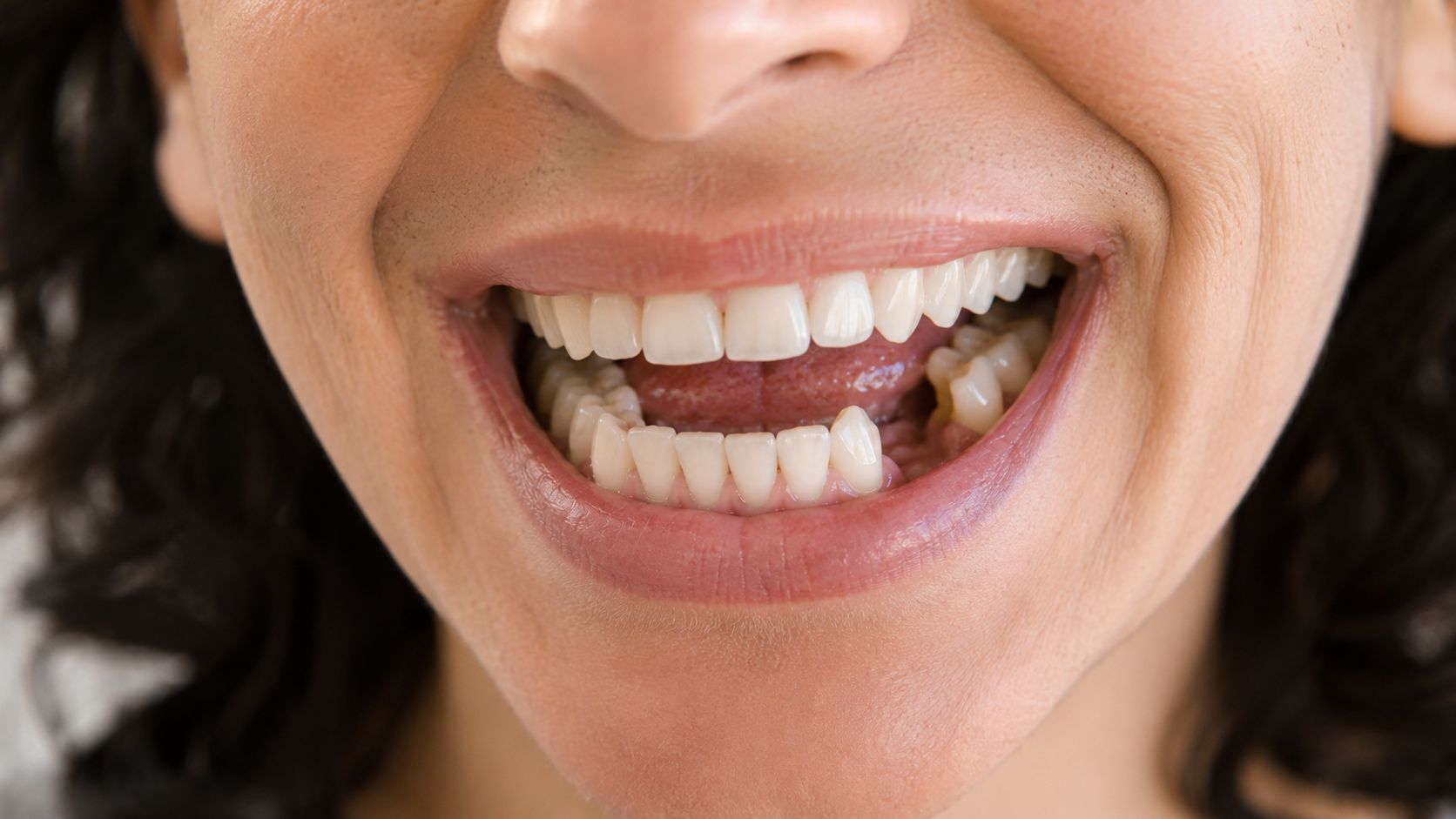
What happens after a tooth is lost
Teeth like contact. When one is gone, the neighboring teeth can begin to tilt or drift into the open space. The tooth above or below the gap may also start moving because it no longer has an opposing tooth to meet during biting.
That can lead to a chain reaction:
- Food traps form more easily: Crooked spacing makes brushing and flossing harder.
- Gums get irritated: Plaque tends to build up in areas that are difficult to clean.
- Biting can feel uneven: You may start chewing on one side and overwork certain teeth.
- Jawbone in that area can shrink over time: The bone no longer gets the same stimulation it once did.
When patients search for tooth extraction or emergency dentist care, the immediate problem often gets the attention. The follow-up plan is just as important. Leaving the space untreated can make later care more complicated.
Why replacement supports long-term oral health
Replacing the missing tooth helps restore balance. A well-designed partial denture can keep nearby teeth from wandering, support better chewing, and make it easier to maintain a healthier bite. It also gives patients a way to restore function without committing to the same type of treatment as everyone else.
Replacing a missing tooth isn't about perfection. It's about keeping a small problem from turning into a larger one.
A dentist can also check whether the missing space has already changed the way your bite fits together. That's one reason new patient exams, dental X-rays, and a full restorative evaluation matter. If you're looking for a dentist near me in Katy, TX because eating feels off or another tooth has started shifting, that concern is valid.
Small changes add up
Many people adapt so gradually that they don't notice how much has changed until treatment restores normal function. They say things like, "I didn't realize how much I was avoiding that side," or "I forgot what it felt like to chew comfortably."
That's the right time to explore partial denture options, bridges, or implants. The best treatment doesn't just fill a gap. It helps your mouth work more naturally again.
A Guide to Modern Partial Denture Options
Not all partials are the same. Some are better for short-term use. Others are made for stronger daily function. The right choice depends on where the missing teeth are, how many teeth are missing, how healthy the remaining teeth are, and what feels manageable for your budget and routine.
Cast metal partial dentures
Cast metal partial dentures use a rigid cobalt-chromium framework. That matters because the material allows a denture to be thinner while still staying strong. According to The Dental Lab's explanation of cast metal partial dentures, this rigid framework helps distribute chewing forces across the remaining teeth and helps prevent flexing that could stress the supporting teeth.
In plain language, this option often feels more precise and less bulky than a full acrylic removable partial. It usually includes metal clasps that help hold it in place.
Patients often like cast metal partials when they want:
- A slimmer fit: The framework can be thin without losing strength.
- More stability: Less flex can mean a more secure feel during chewing.
- A longer-term removable option: This is often chosen when daily durability matters.
The tradeoff is appearance. Some clasps may be visible depending on where the denture sits.
Flexible partial dentures
Flexible partial dentures are made from a bendable material and often use gum-colored retention instead of visible metal clasps. Many patients are drawn to them because they can feel softer and look more natural when they blend into the gumline.
These are often a good fit for people who care strongly about aesthetics or who haven't liked the feel of metal in the past. They can also be appealing for patients who want something in the middle ground between a basic acrylic option and a cast metal framework.
A few things to know:
- Comfort can be a major advantage: The material has some give.
- Appearance is often a selling point: Gum-colored components may be less noticeable.
- They still need maintenance: Flexible doesn't mean permanent.
Acrylic removable partial dentures
Acrylic partial dentures, often called flippers when used temporarily, are usually the simplest removable option. They replace one or more missing teeth on an acrylic base and can be a helpful short-term solution after tooth loss, while healing takes place, or while you decide on a longer-term plan.
They tend to be bulkier than cast metal options, but they can also be more accessible for patients who need to restore appearance and basic function quickly.
If you're unsure whether you need a temporary solution or a longer-term one, that's one of the most important questions to ask during a restorative consultation.
For a broader look at how dentures can support confidence and daily life, this article on fresh starts you can get with dentures in Katy, TX is a helpful next read.
Comparing Your Partial Denture Options
| Denture Type | Material | Pros | Cons |
|---|---|---|---|
| Cast metal partial denture | Cobalt-chromium framework with acrylic and replacement teeth | Thin, strong, stable, distributes chewing forces efficiently | Metal clasps may show, not always the most aesthetic |
| Flexible partial denture | Flexible resin-like material | More natural-looking retention, softer feel, often appealing cosmetically | May not feel as rigid during chewing, still requires upkeep |
| Acrylic removable partial denture | Acrylic base with replacement teeth | Accessible, useful as a temporary option, straightforward to fabricate | Bulkier feel, less stable than stronger frameworks |
A note on less common situations
Some patients don't fit neatly into standard categories. For those with long spans or abutment teeth that aren't ideal, unilateral removable partial dentures can be worth discussing. A British Dental Journal article on unilateral removable partial dentures describes them as a useful option in selected cases when conventional removable partial dentures are not acceptable or implants aren't feasible.
That doesn't mean they're right for everyone. It means a good treatment plan should be personalized, not forced into a one-size-fits-all menu.
Comparing Partial Denture Costs and Lifespan
Cost matters. It matters even more when you're comparing treatment choices that each solve the same problem in a different way. Most patients don't want the cheapest thing. They want the option that feels realistic now and still makes sense later.
What partial dentures typically cost
The cost of partial denture options varies by material and design. According to CareCredit's denture cost guide, a temporary flipper can cost around $605, a traditional resin partial averages $1,738, and flexible partials often range from $1,000 to $2,500.

Those numbers help frame the conversation, but your actual treatment plan depends on details like how many teeth are being replaced, how the appliance will be supported, and whether other care is needed first.
Cost isn't only the starting price
A lower upfront fee can still lead to more follow-up over time if the appliance needs more adjustments, relines, or replacement. Flexible partials are often chosen because they can feel like a good balance of comfort and affordability. Some patients prefer that tradeoff. Others would rather invest in a stronger framework from the beginning.
The infographic above gives a quick visual comparison, but it's best to treat those graphic figures as a general illustration rather than a substitute for a clinical exam and written estimate.
The most affordable treatment is the one that restores function well, fits your life, and doesn't create avoidable problems later.
How patients make a practical decision
For many families in Katy, Elyson, and Ventanna Lakes, the best choice comes down to three questions:
- How soon do I need to replace the tooth? A temporary option may make sense if treatment is starting now.
- How important is a slim, stable fit? Daily comfort often matters more than people expect.
- Am I planning around insurance or no insurance? Membership plans, exam specials, and phased treatment can make care easier to manage.
That last point matters for local patients looking for dental care, restorative dentistry, or even cosmetic dentist near me searches when the missing tooth is visible. Transparent planning helps you compare what you pay today with what you may need to maintain later.
Alternatives to Partial Dentures Dental Implants and Bridges
A partial denture isn't the only way to replace missing teeth. For some patients, a fixed solution makes more sense. The two main alternatives are dental bridges and dental implants.
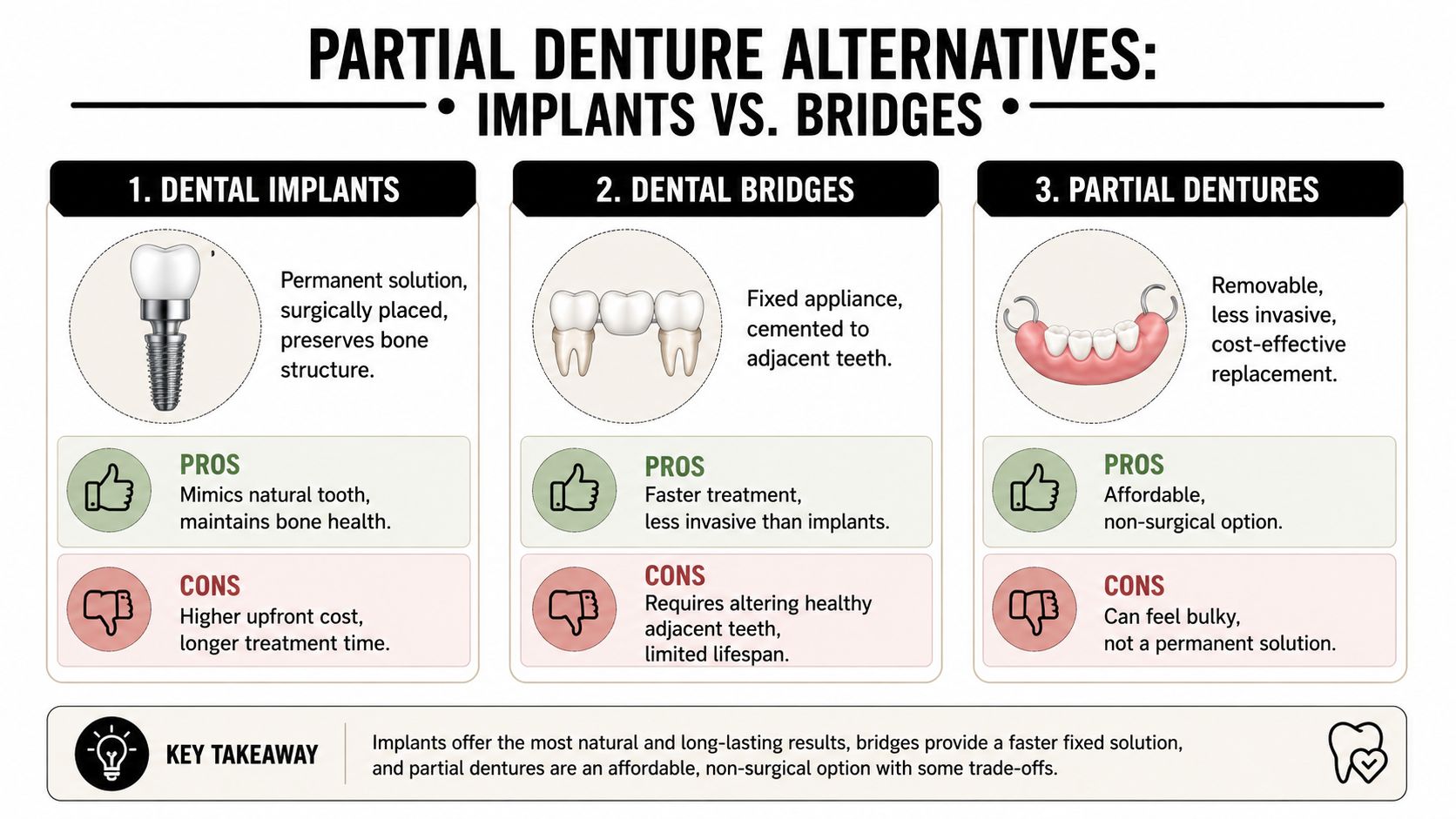
Dental bridges
A bridge fills the gap by attaching a replacement tooth to the teeth on either side. It stays in place and isn't removed at night like a denture.
The main concern is that a bridge usually requires changing healthy neighboring teeth. As explained by this overview of bridges and partial implants, fixed partial dentures require grinding down adjacent healthy teeth to serve as supports, which is irreversible.
That doesn't make bridges a bad option. It just means the decision should be intentional. Bridges can be very useful when the surrounding teeth already need crowns or when a patient wants a fixed restoration without surgery.
For patients considering this route, this guide to what you should know about a dental bridge in Katy, TX offers a good local overview.
Dental implants
When patients search dental implants near me, they're often looking for a replacement that feels closest to a natural tooth. An implant is placed in the jawbone and supports a crown or small bridge without altering neighboring teeth. That same source explains that implants preserve healthy adjacent tooth structure because they don't rely on grinding down the teeth beside the gap.
Implants can offer excellent stability, and some patients love knowing the replacement is independent from the surrounding teeth. There are also implant-supported removable partial denture designs for certain partially edentulous patients when a full fixed approach isn't ideal. A clinical review of implant-supported removable partial dentures notes that they can improve quality of life and satisfaction compared with traditional denture-supported removable partials in selected cases.
Which one is best
There isn't a universal winner. The best option depends on what you're trying to protect and improve.
| Option | Best fit for | Main advantage | Main consideration |
|---|---|---|---|
| Partial denture | Patients who want a removable, non-surgical path | Accessible and adaptable | Less stable than fixed options |
| Bridge | Patients who want a fixed replacement and have suitable neighboring teeth | Faster fixed option for many cases | Requires irreversible alteration of adjacent teeth |
| Implant | Patients who want a tooth-supported-by-bone solution | Preserves neighboring teeth | Higher cost and longer treatment process |
If you also need cleaning and exams, dental X-rays, or broader restorative dentistry, that evaluation often clarifies the answer quickly. A healthy mouth gives you more treatment choices.
What to Expect at Your Katy TX Dental Consultation
For many patients, the hardest part is not the treatment. It's the uncertainty before the first visit. They worry they'll be judged for waiting too long, pressured into one option, or overwhelmed by unfamiliar terms.
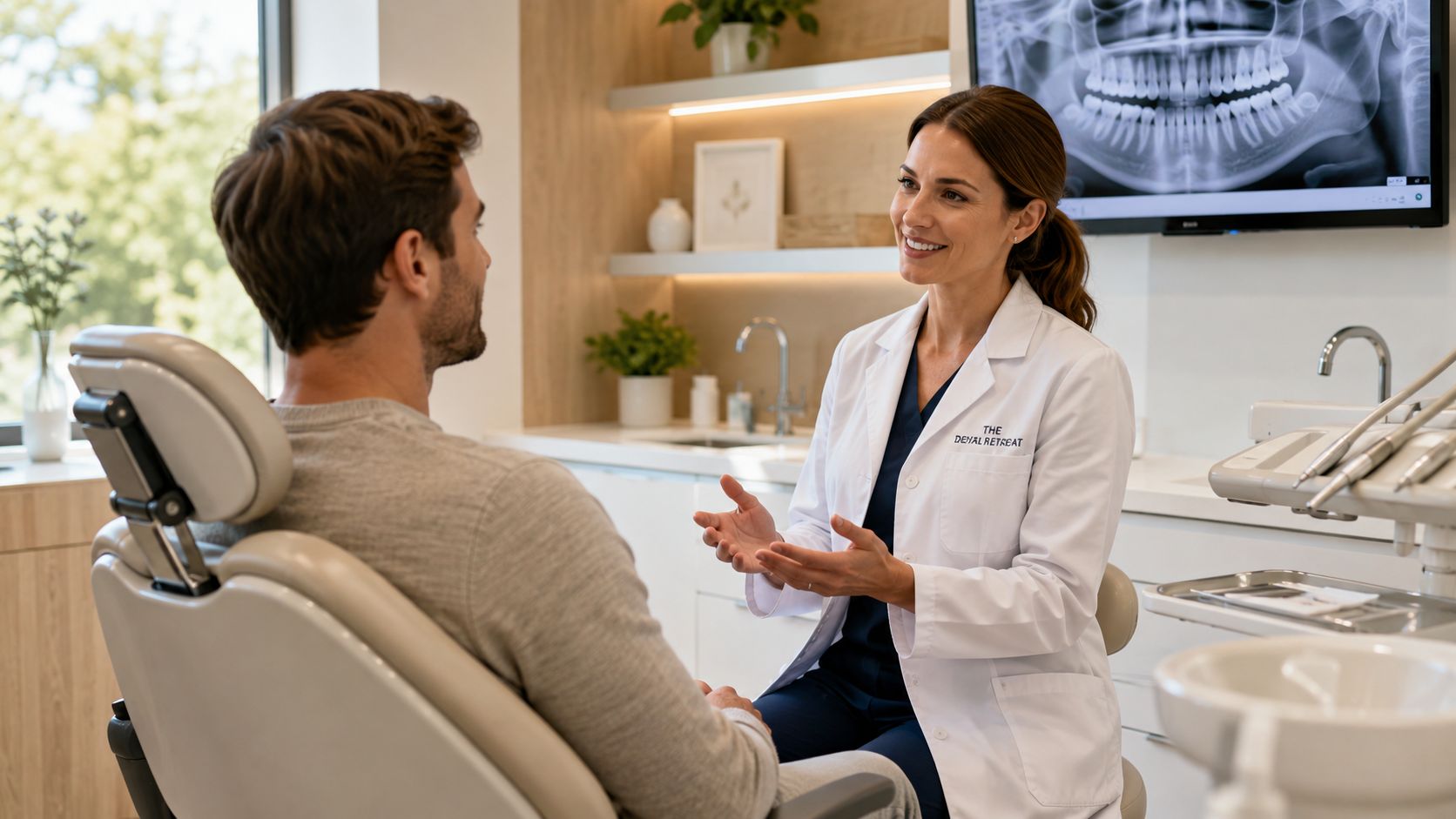
The first visit should feel calm and clear
A strong consultation starts with a conversation. You talk about what's bothering you, what feels different when you chew, whether appearance is part of your concern, and what kind of timeline and budget feel realistic.
Then comes the clinical part. That usually includes:
- A full exam: The dentist checks the missing area, supporting teeth, gums, and bite.
- Digital X-rays: These help reveal bone support, hidden decay, and other issues that affect treatment choices.
- A treatment discussion: You review whether a partial denture, bridge, implant, or another restorative plan makes the most sense.
Patients who feel anxious often do better when the environment itself lowers stress. Small details help. A quieter room, supportive communication, and comfort amenities can change the whole tone of the appointment.
You should leave a consultation understanding your options, not feeling rushed into one.
What a comfortable office experience can look like
A modern dental visit in Katy, TX can feel much different from what people expect. Practices that focus on comfort may offer things like aromatherapy, heated massage chairs, noise-cancelling headphones, TVs in treatment rooms, and options for sedation when needed. That can make a real difference for patients who have postponed care because of fear.
Here's a helpful look at a patient-centered dental environment:
Questions worth bringing with you
You don't need to know dental terminology. You just need a few honest questions:
- Will this be temporary or long-term?
- How will it feel when I eat and speak?
- What maintenance will I need?
- Am I a better candidate for a bridge or implant instead?
Whether you're visiting from Sunterra, Cane Island, Katy Lakes, or Marisol, a consultation should feel like a partnership. Good care starts with listening.
Your Partial Denture Questions Answered
Patients usually feel better once they understand what daily life with a partial denture is like. Most concerns are practical, not cosmetic. That's a good thing, because practical questions usually have clear answers.
Will it be hard to eat or talk at first
There's usually an adjustment period. Your tongue and cheeks need time to get used to the new shape in your mouth. Some foods may feel awkward at first, and certain words may sound different for a short time.
Most patients do best when they:
- Start with softer foods: Choose foods that are easy to chew while you adapt.
- Take smaller bites: This helps you learn how the denture feels during function.
- Practice speaking out loud: Reading aloud at home can help your speech normalize faster.
How do I clean a partial denture properly
A partial denture needs daily cleaning, and the natural teeth holding it also need special attention. This is especially important around clasps and contact points where plaque can collect.
Brush your natural teeth carefully, clean the denture as instructed, and don't ignore the teeth supporting the appliance. If the fit changes, don't try to bend or adjust it yourself. Schedule a visit.
A partial denture succeeds when the appliance stays clean and the supporting teeth stay healthy.
Are partial dentures really cheaper in the long run
Sometimes yes, sometimes no. While partial dentures are often cheaper upfront than implants, they can carry long-term maintenance costs for relining and adjustments, and they can increase the risk of decay on clasped teeth if hygiene isn't meticulous, as discussed in this patient-focused discussion of long-term maintenance considerations.
That doesn't mean partials are a poor choice. It means total cost matters more than sticker price. The best decision takes into account fit, durability, comfort, maintenance, and how likely you are to keep up with care.
How long does the process usually take
The timeline depends on your treatment plan. Some patients need an exam and records first. Others may need a tooth extraction, gum healing, or impressions before the final appliance is made. A temporary flipper may be used while a longer-term solution is being prepared.
If you're also considering cosmetic dentistry, teeth whitening, implants, or treatment after an urgent dental problem, the sequence may change. A good office will explain each step in plain language so you know what happens next and why.
When should I call sooner
Don't wait if:
- Your denture feels loose: Movement can irritate gums and stress supporting teeth.
- You notice sore spots: Small pressure areas can become bigger problems.
- A clasp feels different: Retention changes should be evaluated professionally.
- Your bite suddenly feels off: That can signal a fit issue or a change in a supporting tooth.
Replacing missing teeth should make life easier. If your current appliance isn't doing that, it's time for a closer look.
If you're ready to talk through your partial denture options, implants, bridges, or a full restorative plan, The Dental Retreat in Katy, TX offers a calm, judgment-free place to start. Whether you need a new patient exam, help after tooth loss, or a practical path that fits your budget, the team is here to help you feel comfortable, informed, and confident about your next step.