If you're asking is sedation dentistry expensive, you're probably dealing with two problems at the same time. One is fear. The other is the worry that comfort during treatment will cost more than you can manage.
That combination keeps a lot of people from scheduling care they already know they need. A painful tooth extraction gets delayed. A damaged tooth that may need restorative dentistry gets ignored. An implant consultation keeps getting pushed off. Patients searching for a dentist near me or an emergency dentist in Katy, TX often aren't looking for luxury. They're looking for a way to get through treatment without panic and without surprises on the bill.
For many families in Katy, Sunterra, Cane Island, Katy Manor, Kingscrossing, Lakehouse, Marisol, The Grange, Anniston, Katy Lakes, Elyson, and Ventanna Lakes, the question isn't just cost. It's whether comfortable dental care can be made predictable, practical, and worth it.
Answering Your Sedation Dentistry Questions in Katy TX
A lot of anxious patients have the same private thought before they ever call a dental office. They know they need care, but they don't know if they can handle the appointment. Then the next thought arrives just as fast. If sedation is the only way they'll get through it, is it going to be too expensive?
That concern is common. Industry data indicates that 61% of patients experience some level of dental fear, which helps explain why sedation matters to so many people seeking care in Katy, TX and nearby neighborhoods such as Elyson and Ventanna Lakes (Dental Economics on dental fear and sedation).
Why patients put treatment off
Some people avoid routine cleanings and exams for years. Others can manage a new patient exam or dental X-rays but freeze when they hear they need a root canal, tooth extraction, restorative dentistry, or dental implants. The issue usually isn't laziness or neglect. It's anxiety mixed with uncertainty.
A patient may tell themselves:
- The pain might be worse than I expect. That fear can make even a simple visit feel impossible.
- Sedation sounds helpful, but I assume it's only for major surgery. That's not always true.
- I don't want to agree to treatment and then get hit with a bill I didn't plan for. This is one of the most understandable worries patients have.
Sedation isn't only about comfort during treatment. For many people, it's what finally makes treatment possible.
What matters most when comparing cost
The better way to look at sedation isn't as a luxury add-on. It's as a tool. The right option depends on your anxiety level, the type of procedure, and how much support you need to feel calm.
That matters whether you're looking for a dentist in Katy, TX for preventive care, a cosmetic dentist near me for smile work, or help with urgent pain. If sedation lets you move forward with care instead of postponing it, the value can be very real.
Comparing Sedation Types and Typical Costs
Sedation isn't one single service. It comes in levels. The price usually rises as the depth of sedation, monitoring, and clinical complexity increase.
The three most common options
Nitrous oxide is the lightest option. You stay awake, you can respond normally, and many patients describe the feeling as relaxed and less tense. It's often a good fit for milder anxiety, shorter visits, and routine dental care.
Oral sedation usually involves taking a pill before treatment. You're still conscious, but much more relaxed. This can work well for moderate anxiety, longer restorative dentistry visits, or treatment that would otherwise feel overwhelming.
IV sedation is a deeper level of conscious sedation. It's commonly chosen for stronger dental fear, oral surgery, some tooth extraction appointments, or more involved treatment plans such as dental implants. It requires more monitoring and clinical oversight, which is part of why the cost is higher.
According to cost ranges for dental sedation by type, nitrous oxide typically costs $25 to $100, oral sedation ranges from $150 to $500, and IV sedation generally ranges from $500 to $1,500 per visit.
Sedation Dentistry Options at The Dental Retreat
| Sedation Type | Best For | Level of Sedation | Typical Cost Range |
|---|---|---|---|
| Nitrous Oxide | Mild anxiety, shorter appointments, cleaning and exams, simpler restorative visits | Light | $25 to $100 |
| Oral Sedation | Moderate anxiety, longer appointments, patients who want deeper relaxation without IV | Moderate | $150 to $500 |
| IV Sedation | Significant anxiety, complex procedures, oral surgery, some implant or extraction cases | Deeper conscious sedation | $500 to $1,500 |
What the experience feels like
Patients often choose based on how much awareness they want during treatment.
- Nitrous oxide feels lighter. You're relaxed, but usually alert enough to communicate easily.
- Oral sedation feels heavier. Many patients feel sleepy and much less bothered by the sights, sounds, and timing of the visit.
- IV sedation feels the most controlled and profound. It's often the best fit when fear is the main barrier to getting care done.
If you're weighing the difference between pill sedation and deeper sedation, this guide on oral sedation vs IV sedation gives a helpful side-by-side look at how patients usually decide.
Practical rule: The least expensive option isn't always the best value if it still leaves you too anxious to complete treatment.
For a patient who only needs help getting through a basic visit, nitrous oxide may be enough. For someone who has delayed care for years or needs a longer appointment, oral sedation or IV sedation may be the option that works.
What Factors Influence the Final Price of Your Care
The sedation type is only one part of the bill. A lot of confusion starts when patients assume the sedation fee is included in the treatment fee.
It usually isn't. Sedation is typically a separate fee added to the cost of the dental procedure itself, covering medication, provider time, and monitoring equipment, as explained in this overview of separate sedation fees.
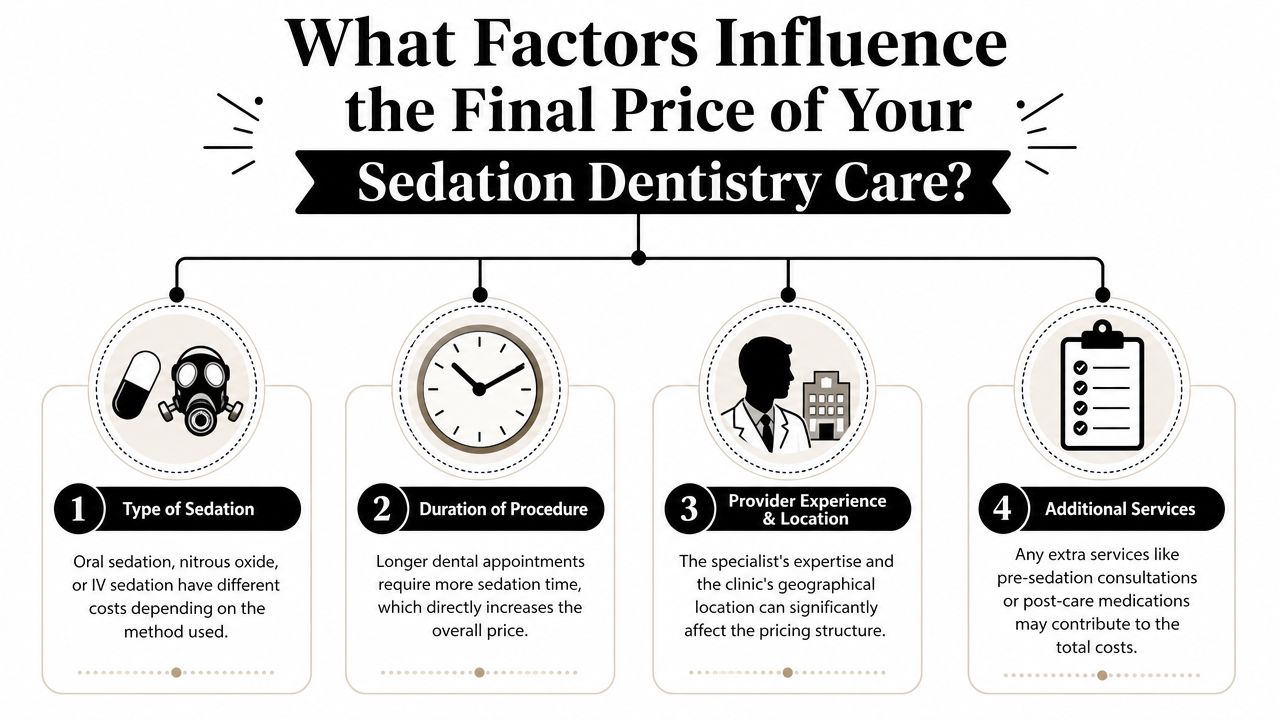
Why one patient pays less than another
Two patients can both say they're getting sedation, but their totals may look very different. That's because the final price depends on several practical variables.
- The procedure itself: A short visit and a complex surgical appointment don't require the same level of support.
- How long the appointment lasts: More treatment time can mean more sedation time.
- How much monitoring is needed: Deeper sedation requires more oversight.
- Clinical setup and expertise: More advanced sedation carries higher operating requirements.
The biggest cost drivers
A filling appointment and a full restorative case don't place the same demands on the team. A straightforward treatment visit may work well with nitrous oxide or oral sedation. A longer surgical visit, implant case, or multiple-tooth procedure may call for deeper sedation and more monitoring.
That's why patients considering tooth extraction, advanced restorative work, or dental implants near me should ask for the full picture, not just the sedation number in isolation. The treatment plan matters. The appointment length matters. The sedation method matters.
Ask whether your estimate separates the procedure cost from the sedation fee. That single question prevents a lot of confusion.
What doesn't work for budgeting
The least effective approach is assuming the online average you saw will match your exact case. National ranges are useful for orientation, but they don't replace a personalized treatment estimate.
A better approach is to ask for:
- The procedure fee
- The sedation fee
- Any pre-op or post-op items that could affect your total
That kind of breakdown helps patients in Katy Lakes, Anniston, and nearby communities make decisions without the stress of hidden add-ons.
Making Comfortable Dentistry Affordable for Katy Families
The hardest part of cost isn't always the amount itself. It's not knowing what help may be available. Patients often assume sedation will be fully uncovered and that they have no options beyond paying the full amount at once.
That isn't always the most useful way to approach it. Insurance can be limited, but practical planning can still make treatment more manageable.
Where insurance usually falls short
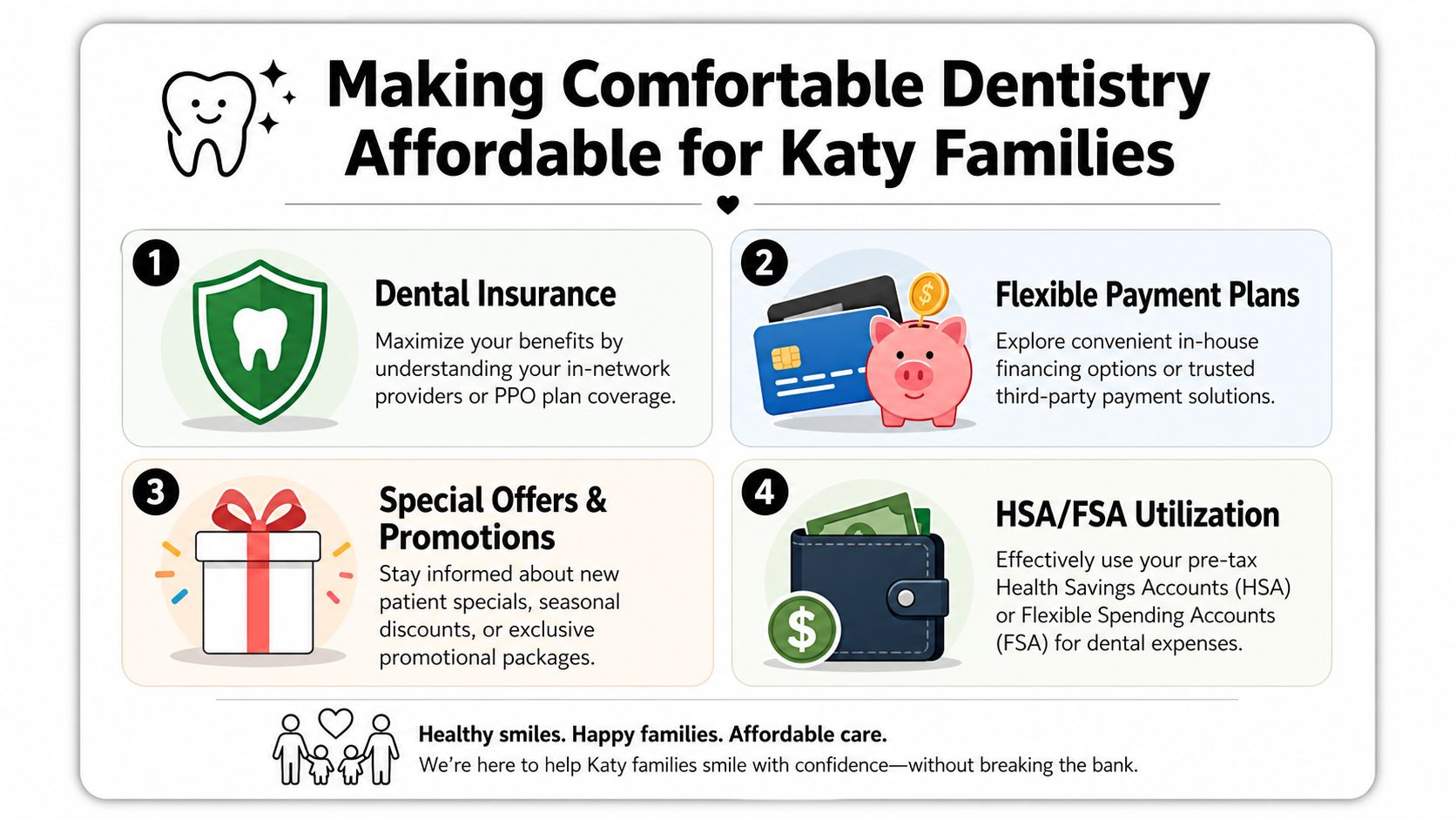
Most dental insurance plans don't treat sedation as a standard covered benefit. In many cases, carriers classify it as a comfort measure rather than a necessity, which leaves patients responsible for the out-of-pocket portion. That reality is one reason many offices rely on membership plans and financing to make comfortable care more accessible.
For families in Katy, TX, that means the smart question isn't just "Will my insurance pay?" It should also be "What other savings options can reduce the total cost of getting started?"
Local ways to reduce the barrier to care
For patients without insurance, an in-house savings option can make a meaningful difference. A membership plan doesn't erase every cost, but it can lower the cost of ongoing dental care and make it easier to budget for treatment over time. Patients who want to compare options can review in-house dental membership plans.
There are also practical entry points that lower the cost of the first visit. At this practice, new patients without insurance can access:
- A $139 full exam with cleaning and X-rays
- A $79 problem-focused visit
- Membership plans starting at $299 per year
These kinds of offers don't automatically cover sedation itself, but they can reduce the cost of diagnosis, planning, and preventive care. That matters because many patients first need a clear exam before deciding whether sedation, restorative treatment, cosmetic dentistry, or emergency dental services make sense.
What families should do first
If you're in Sunterra, Cane Island, Marisol, or The Grange, start with the appointment that gets you answers. Don't try to estimate your entire case from internet averages alone.
A useful first step is to ask:
- Can I start with a problem-focused exam if I'm in pain?
- Do I qualify for the membership plan if I don't have insurance?
- Can you separate the cost of treatment from the cost of sedation on my estimate?
- Can I use HSA or FSA funds for eligible dental expenses?
Those questions turn a vague money worry into a plan.
Your Sedation Dentistry Experience at The Dental Retreat
Cost matters, but experience matters too. For anxious patients, the environment can determine whether they follow through with treatment or cancel at the last minute.
This is especially true for people who have had rough dental visits before. If someone expects a cold, hurried appointment, even discussing sedation may not be enough to help them feel safe.

What a calming visit can look like
A more supportive appointment often starts before treatment begins. Instead of walking into a space that feels tense or rushed, patients are welcomed into a setting designed to lower stress. Spa-inspired touches such as aromatherapy, heated massage chairs, noise-canceling headphones, and TVs in every room can make a real difference for someone who is already on edge.
That kind of environment doesn't replace clinical skill. It supports it. When a patient feels calmer at the start, it's easier for the team to guide them through treatment with less resistance and less fear.
The visit from arrival to recovery
The best sedation visits don't feel confusing. They feel organized and gentle.
A typical patient experience may include:
- A clear consultation: concerns, health history, and treatment options are reviewed in plain language
- A comfort-focused setup: the team helps the patient settle in before treatment begins
- Attentive monitoring during care: the patient is supported throughout the procedure
- Recovery instructions that make sense: the next steps are explained without jargon
A calm dental visit rarely happens by accident. It happens when the setting, communication, and treatment plan all support the patient.
For patients in Katy Manor and Kingscrossing, that's often the missing piece. They don't just need a dentist in Katy, TX. They need a visit that feels manageable from the first conversation through recovery.
Common Questions About Sedation Dentistry
Patients usually have a few final questions before they decide. Most of them are less about dentistry and more about control, safety, and whether the cost will be worth it.
Will I be completely asleep?
Usually, no. With nitrous oxide, oral sedation, and IV sedation, patients are generally in a relaxed state rather than fully unconscious. The exact level depends on the method selected and the treatment being done.
That distinction matters because many people hear "sedation" and assume "sleep dentistry." In routine practice, sedation often means reduced awareness, less anxiety, and a more comfortable visit, not being fully asleep.
Is sedation dentistry safe?
For the right patient, with the right review of medical history and the right level of monitoring, sedation is a standard part of modern dental care. Safety starts with proper case selection. A dentist needs to understand your health history, medications, and the nature of the procedure before recommending the best option.
If you're pregnant, have significant medical conditions, or take certain medications, those details need to be reviewed carefully in advance.
Who is a good candidate?
Sedation can help patients who:
- Have dental fear or past traumatic dental experiences
- Need a longer or more complex procedure
- Struggle with gagging, restlessness, or tension during treatment
- Have delayed care because anxiety keeps stopping them
It's also worth discussing if you've postponed treatment for cosmetic dentistry, restorative dentistry, or an urgent tooth extraction because you don't feel able to sit through the visit comfortably.
How long does recovery take?
Recovery depends on the type of sedation used. Nitrous oxide tends to wear off quickly. Oral sedation and IV sedation usually require more downtime, and patients generally need someone to drive them home.
For those deeper options, it's smart to keep the rest of the day light. Plan for rest, follow the office instructions closely, and don't schedule anything demanding afterward.
Can medical insurance ever help cover sedation?
Sometimes, yes. While most dental plans exclude sedation, some medical insurance plans may reimburse sedation when it's considered medically necessary for patients with diagnosed anxiety disorders or certain health conditions. This possibility is outlined in guidance on when medical insurance may reimburse sedation.
That doesn't mean coverage is guaranteed. It does mean the question is worth asking, especially if your health history includes severe anxiety, a documented condition, or another factor that affects your ability to tolerate treatment.
So, is sedation dentistry expensive?
It can be. It can also be reasonable, depending on the type of sedation you need and the kind of treatment you're having.
The better question is whether the cost helps you finally get the care you've been avoiding. If sedation allows you to complete needed treatment, prevent a small issue from becoming a bigger one, or get through an appointment without panic, many patients find that it changes the equation completely.
If you've been delaying care because of fear, cost concerns, or both, The Dental Retreat offers a calm, judgment-free place to start. Whether you need an emergency dentist, a consultation for tooth extraction or dental implants, or a trusted dentist near me in Katy, TX for routine dental care, you can schedule a visit, ask about sedation options, and get a clear breakdown of your treatment plan before moving forward.