You run your tongue across your teeth and feel that fuzzy layer near the gumline. Maybe your breath seems off by lunchtime, or maybe you brush carefully and still wonder why your gums look a little puffy. That situation is common, and it's one reason many families start searching for a dentist near me or a dentist in Katy, TX when home care doesn't seem to solve the problem.
For many people in Katy, Sunterra, Cane Island, Katy Manor, Kingscrossing, Lakehouse, Marisol, The Grange, Anniston, Katy Lakes, Elyson, and Ventanna Lakes, the confusion starts with one word. People hear “plaque,” “tartar,” and “biofilm” used almost interchangeably, even though they don't mean the same thing. If that sounds familiar, you're not behind. You're asking the right question.
A good dental biofilm definition helps you understand why teeth can look fairly clean but still be at risk for cavities, gingivitis, and ongoing irritation. It also explains why regular dental care, including cleaning and exams, dental X-rays, and new patient exams, matters so much for long-term oral health. If you're also exploring cosmetic or restorative options such as teeth whitening, cosmetic dentistry, tooth extraction, dental implants near me, or an emergency dentist, this foundation matters because healthy gums and clean tooth surfaces support every other treatment.
Your Trusted Dentist in Katy TX for a Healthy Smile
A lot of patients don't come in because of severe pain at first. They come in because something feels off. Their teeth never feel fully smooth. Their gums bleed a little when they floss. They wake up with a stale taste in their mouth and start wondering if they're missing something in their routine.
That concern makes sense. Oral health problems rarely start with dramatic symptoms. More often, they begin subtly, with a sticky layer that keeps coming back no matter how often you brush.
What many Katy patients notice first
In everyday terms, biofilm often shows up as the “fuzzy” feeling on teeth. You might notice it most:
- After sleeping: Teeth feel coated by morning.
- Near the gums: The gumline feels rougher than the biting edge.
- Between teeth: Floss catches more debris than expected.
- Around dental work: Crowns, aligners, bridges, and implant areas may feel harder to keep clean.
People from fast-growing Katy neighborhoods often tell the same story. They've been trying to stay on top of brushing, juggling work, school schedules, sports, and errands, and they assume that if there's no sharp pain, everything is probably fine. Then the bleeding starts, or bad breath hangs around, or a routine cleaning turns into a conversation about gum inflammation.
Practical rule: If your mouth never feels fully clean, your home routine may be removing surface buildup but not fully disrupting the bacterial layer that keeps rebuilding.
Why this topic matters beyond clean-looking teeth
Many online explanations fall short; they describe plaque as a sticky film, which is partly true, but that wording makes it sound passive. It isn't passive. It's active, organized, and able to protect the microbes living inside it.
That's why patients searching for a cosmetic dentist near me, emergency dentist, or dentist in Katy, TX often end up needing the same starting point. Before whitening, veneers, restorative dentistry, or dental implants, the mouth needs a stable, healthy environment. Biofilm control is part of that foundation.
Here's the reassuring part. Once you understand what biofilm is and how it behaves, the path forward gets much clearer. Better brushing technique helps. Flossing helps. Professional cleanings matter even more than many people realize. And if you've fallen behind, that doesn't mean you've failed. It just means your mouth needs a more effective plan.
A Simple Dental Biofilm Definition The Living City on Your Teeth
If you run your tongue across your teeth at the end of a long day, the surface may feel a little fuzzy. Many people call that plaque. What is starting to form is often more complex than it looks.
A simple dental biofilm definition is this: a living, organized community of microorganisms that attaches to surfaces in the mouth and surrounds itself with a protective matrix. That matrix helps the community cling to teeth, roots, fillings, and implants. In plain terms, biofilm behaves less like crumbs that can be rinsed away and more like a settled neighborhood that builds structure, protection, and communication over time.
Researchers describe dental biofilm as a three-dimensional microbial community embedded in an extracellular matrix. This matrix, often called a glycocalyx, helps the biofilm stick tightly and resist removal. Early buildup can mature quickly if it is not physically disrupted, as explained in this review of how dental biofilm is structured and why it becomes harmful over time.

How the biofilm city gets built
Biofilm forms in stages, and that is part of what makes it so persistent.
First, a freshly cleaned tooth develops a thin protein film called the pellicle. Next, early bacteria attach to that surface. After that, more species join, the attachment becomes firmer, and the microorganisms begin producing the sticky material that holds the community together. Small clusters grow into a more stable system, and parts of that system can spread to nearby areas in the mouth, as described in this review of the sequence of dental biofilm formation.
A construction site is a useful comparison here:
- The site is prepared: The pellicle coats the tooth.
- The first workers arrive: Early microbes attach.
- The frame becomes stable: Attachment strengthens.
- More crews join in: Additional species move into the area.
- Protective structure develops: The matrix thickens around them.
- New sites can start elsewhere: Portions break away and attach in other spots.
If that sounds surprisingly organized, it is. Biofilm is not random buildup. It is a coordinated community.
Why rinsing alone usually falls short
This is a point many patients in Katy find reassuring once they hear it. If your mouth still feels unclean even though you use mouthwash, that does not mean you are doing something wrong. It means mouthwash has limits.
A rinse can reduce free-floating germs, but biofilm shelters microbes inside a protective layer. Brushing and flossing matter because they physically break that structure apart. Professional cleanings matter for the same reason. They remove buildup from areas that are hard to reach well at home, especially along the gumline and between teeth.
A larger and more diverse system than it appears
Oral biofilms are also highly diverse, containing about 600 to 1,000 distinct bacterial taxa according to this peer-reviewed review on oral biofilms. That is one reason the word biofilm is more accurate than the word plaque alone. Plaque is what a person may notice on the tooth surface. Biofilm describes the underlying living system that keeps rebuilding itself.
That distinction matters because a tooth can look cleaner than it really is. Visual cleanliness is helpful, but it is not the full goal. Real oral health means disrupting the organized bacterial community before it has time to mature and irritate the gums or feed decay.
Is Biofilm the Same as Plaque A Critical Distinction
One of the biggest misunderstandings in dentistry is the idea that plaque and biofilm are the same thing. They overlap, but they aren't identical.
Plaque is what people usually notice. It's the visible or feelable buildup on the tooth surface. Biofilm is the organized living system underneath. If you only focus on what you can see, you can miss the reason the problem keeps coming back.
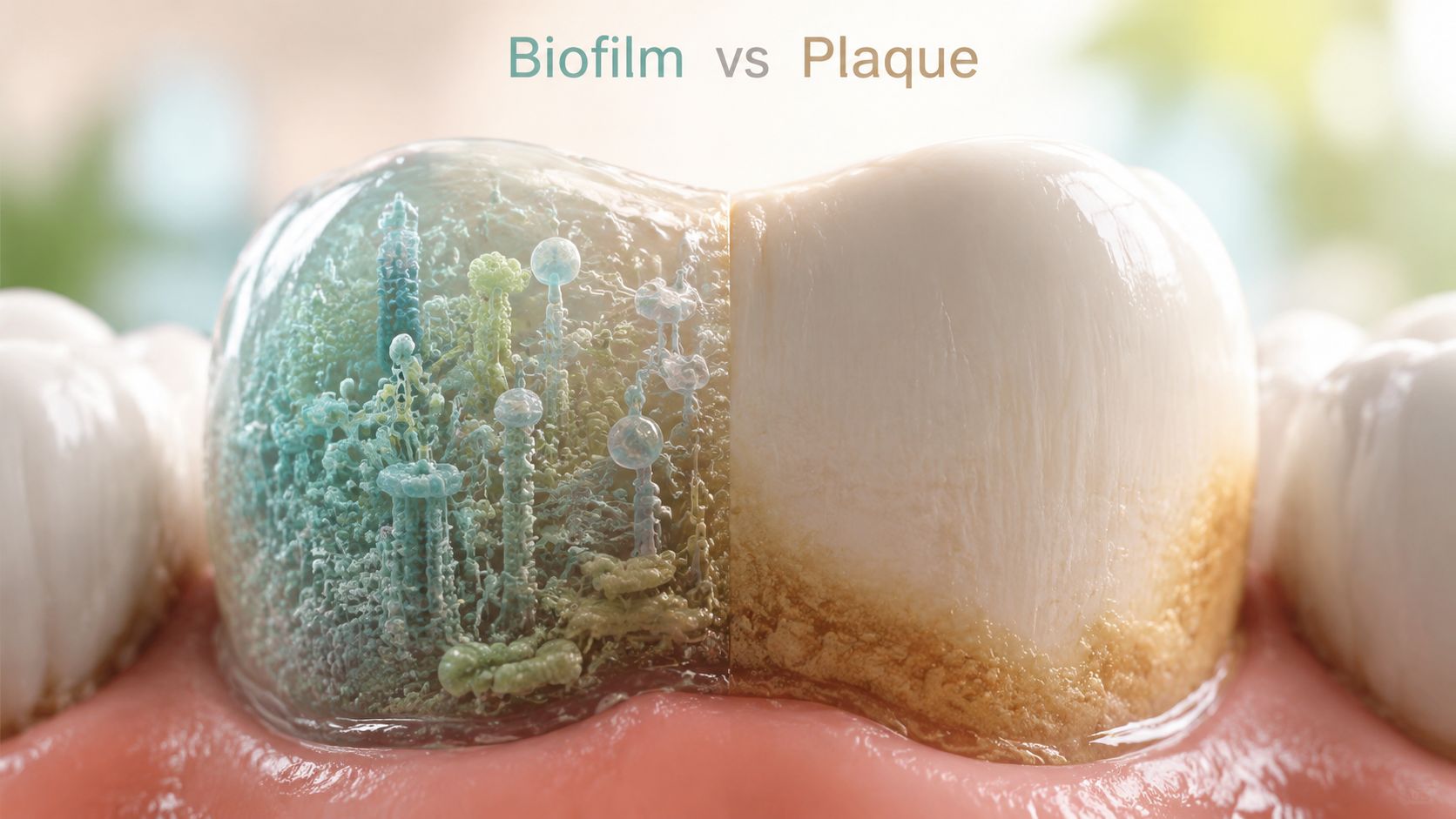
Plaque is the symptom and biofilm is the system
A helpful way to think about it is this:
| Term | What you notice | What it means |
|---|---|---|
| Plaque | A soft film or buildup you can sometimes see or feel | The visible accumulation |
| Biofilm | Usually not obvious as a “system” | The organized, acid-producing microbial community |
Clinical education aimed at patients has emphasized that biofilm is the system, plaque is the symptom. When someone only removes the visible buildup without disrupting the underlying matrix, acid production can continue and caries can still begin, as explained in this patient-facing discussion of plaque versus biofilm.
Why people get confused at home
The confusion is understandable because many home-care messages focus on appearances. If the front teeth look shiny in the mirror, it feels like the job is done. But the dangerous areas are often:
- Between teeth
- Along the gumline
- Around crowded teeth
- Near old fillings, crowns, or implants
- On the back molars
That's why someone can say, “My teeth look clean,” and still develop a cavity or early gingivitis.
When you only chase what's visible, you may leave the organized structure behind. That's why the mouth can still stay inflamed.
What this means for daily hygiene
This distinction changes the goal of home care. Brushing isn't just about polish. Flossing isn't just about dislodging food. The goal is mechanical disruption of the biofilm structure before it matures and causes harm.
That's also why professional cleanings aren't optional extras for many patients. A hygienist isn't just making teeth look nicer. They're removing stubborn deposits and breaking up areas that patients routinely miss, especially below the gumline or in hard-to-reach spots.
From Cavities to Gum Disease The Health Risks of Biofilm
Once biofilm matures, it can do damage in two main directions. It can attack the teeth themselves, and it can inflame the gums and supporting tissues around them.
When the biofilm community includes acid-producing species, sugars get converted into acids that erode enamel and set the stage for caries. Other species are more associated with inflammation of the gingival tissues, which can lead from gingivitis to periodontitis if the problem continues. That cause-and-effect chain is part of why untreated biofilm matters so much in daily dental care.
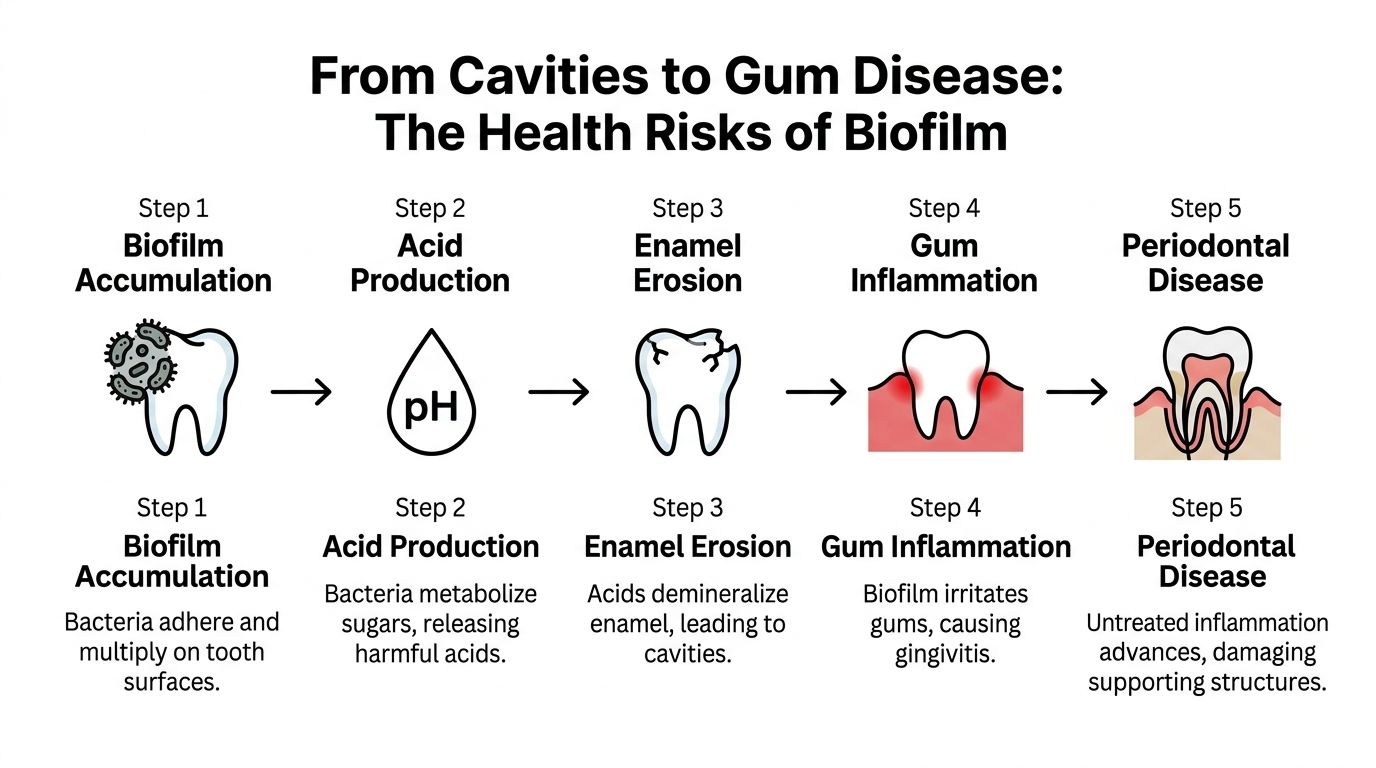
How cavities begin inside a biofilm environment
Many people were taught that sugar just “feeds bacteria.” That's incomplete. Research has shown a more important detail: sugars help fuel both the emergence of pathogens and the assembly of the extracellular matrix, which acidifies the biofilm environment and shifts it in a more harmful direction. In practical terms, sugar intake helps build the protective shield that makes biofilm harder to control with rinses or antibiotics, according to this research on sugar, matrix assembly, and cariogenic biofilm change.
That matters because it explains why someone can brush faithfully and still get decay if sugary snacks or drinks keep driving the same process.
How gum inflammation turns into a bigger problem
The gum side of the story often starts subtly. You may notice:
- Bleeding when brushing or flossing
- Tender or puffy gums
- Persistent bad breath
- A sour or stale taste
- Teeth that seem longer because gums are receding
At first, that may be gingivitis. Over time, if the inflammation remains active, deeper structures can become involved. That's when periodontitis becomes a concern, because the support around the teeth begins to break down.
If you'd like a plain-language look at the condition behind inflamed gums, this overview of what causes gum disease is a useful companion read.
Why “no pain” doesn't mean “no problem”
Cavities and gum disease don't always hurt right away. A tooth can demineralize slowly. Gums can stay chronically irritated for a long time before pain becomes obvious. That delay is one reason patients are often surprised when a routine exam reveals more than expected.
A mouth can look mostly fine in the mirror while biofilm continues producing acid near the enamel and irritation near the gums.
This is also why regular cleanings and exams matter for adults and children alike. Whether you're focused on prevention, restorative dentistry, or preparing for cosmetic treatment, controlling biofilm lowers the odds that small issues will progress into bigger ones.
Biofilm Prevention and Removal Your Plan for a Clean Smile
A clean-looking smile can still have an active biofilm problem. That is the part many patients in Katy find surprising. Plaque is what you may notice on the teeth. Biofilm is the organized bacterial community underneath it, attached to the tooth surface and protected by its own sticky layer.

A helpful way to picture it is a neighborhood that keeps rebuilding itself. If you disturb it regularly, it stays small and easier to control. If you miss areas day after day, that community becomes more established, especially along the gumline and between teeth. That is why prevention is less about making teeth look polished and more about disrupting a living system before it settles in.
What effective home care really looks like
Home care works best when it is deliberate.
- Brush at the gumline: Angle the bristles where the teeth and gums meet, because that is one of biofilm's favorite places to collect.
- Clean between teeth every day: Floss, interdental brushes, or a water flosser help break up the bacterial layer in spots your toothbrush cannot reach.
- Use a gentle, consistent technique: Steady daily removal works better than aggressive scrubbing once in a while.
- Limit frequent sugar exposure: Sipping or snacking often gives biofilm repeated fuel.
If your brushing routine feels rushed or unclear, this guide on how to brush teeth properly step by step can help you sharpen the basics.
Why professional cleanings still matter
Even patients with strong habits at home cannot fully remove everything on their own. Teeth have tight contact points, grooves, past dental work, and hard-to-see edges near the gums. Biofilm also changes over time. Once it hardens into tartar, it sticks too firmly to be removed with a toothbrush or floss.
That is the key difference between visual cleanliness and true disease prevention. Your mouth may feel fresh, but established deposits can still remain in places you cannot reach safely. Professional cleanings remove that buildup with instruments designed for the job, and they let your dental team check whether simple prevention is working or whether inflammation is still active.
Here's a helpful visual explanation of how dental care supports healthier teeth and gums over time:
When prevention becomes treatment
Sometimes routine home care and a regular cleaning are enough to get things back under control. Sometimes the gums are already irritated, bleeding, or pulling away from the teeth, and that calls for more targeted periodontal care.
That does not mean you have failed. It means the biofilm has been active long enough to affect the tissues, and your treatment should match what is happening now. For patients in Katy who are planning whitening, veneers, or other smile improvements, getting the gums healthy first also creates a better foundation for long-term results.
A practical prevention checklist
- Morning: Brush thoroughly and clean between the teeth.
- During the day: Rinse with water after sugary drinks or snacks if you cannot brush.
- Evening: Slow down and spend extra time around the back teeth and gumline.
- On schedule: Keep regular cleaning and exams instead of waiting for discomfort.
- If something seems off: Ongoing bleeding, bad breath, or gum tenderness deserves a professional evaluation.
Good oral health is not about getting your teeth to look clean for a day. It is about interrupting biofilm often enough that it never gets the upper hand.
Experience a New Kind of Dental Care at The Dental Retreat
Finding a dental home shouldn't feel stressful. If you've been putting off care because you're anxious, busy, or worried about cost, you're not alone. Many adults and families in Katy delay appointments for those exact reasons, even when they know they need a cleaning, an exam, or help with a painful tooth.
What makes a real difference is an environment that feels calm, respectful, and judgment-free. That matters for the parent booking a child's first visit, the adult searching for an emergency dentist, and the patient comparing options for restorative dentistry, teeth whitening, or a cosmetic dentist near me. Comfort doesn't replace clinical quality. It supports it, because relaxed patients are more likely to get the care they need and stay consistent with follow-up.
Care that fits real life in Katy
The Dental Retreat serves patients across Katy, TX, including Elyson, Ventanna Lakes, Sunterra, Cane Island, Katy Manor, Kingscrossing, Lakehouse, Marisol, The Grange, Anniston, and Katy Lakes. That local connection matters. People want a practice close to home that can handle routine prevention as well as bigger needs like oral surgery, implant care, or urgent treatment.
Patients also appreciate practical options when budgeting for care. New patients without insurance can take advantage of a $99 complete exam with cleaning and X-rays, and those dealing with a specific concern can choose a $49 problem-focused visit. For ongoing savings, membership plans start at $299 per year. Patients interested in smile enhancement can also ask about $350 in-office Zoom whitening.
Comfort features that help patients finally come in
Some patients need more than a convenient location. They need a setting that lowers their guard enough to take the first step.
- Spa-inspired touches: Aromatherapy, massage chairs, and heated seating help visits feel less clinical.
- Anxiety support: Noise-cancelling headphones, TVs in every room, and sedation options can make treatment easier.
- Wide-ranging services: General care, periodontal treatment, implants, clear aligners, endodontics, oral surgery, and cosmetic services are available in one place.
- Family-friendly access: Bilingual care and extended hours help make scheduling easier for busy households.
If you've been searching for a dentist near me in Katy, TX and want care that feels both thorough and welcoming, this is the kind of practice model that can make staying on top of your oral health much easier.
If you're ready to stop guessing about plaque, biofilm, bleeding gums, bad breath, or that fuzzy feeling on your teeth, schedule a visit with The Dental Retreat. Whether you need a new patient exam, a routine cleaning, urgent relief, cosmetic treatment, or a long-term plan for healthier gums, the team offers patient-focused dental care for families throughout Katy, TX and nearby neighborhoods.