You've invested in a smile that looks natural, bright, and polished. It's exciting to see the result in the mirror, but it's also normal to wonder what happens next. Patients often ask the same question after cosmetic treatment: how do I keep veneers looking this good for as long as possible?
The good news is that veneer care isn't complicated. It's mostly about doing the right small things every day and avoiding a few habits that shorten the life of beautiful dental work. If you're searching for a cosmetic dentist near me, a dentist in Katy, TX, or a long-term dental home near Sunterra, Cane Island, Katy Manor, or Kingscrossing, understanding that partnership matters. Veneers look their best when daily home care and regular professional care work together.
Veneers are thin restorations bonded to the front of teeth. They improve shape, color, and symmetry, but they still depend on healthy gums, clean margins, and careful habits. That's why good veneer care overlaps with the basics of strong dental care, including cleaning and exams, dental x-rays when needed, and prompt help from an emergency dentist if something chips or feels loose.
Protecting Your New Smile in Katy TX
A new set of veneers usually changes more than a smile. People smile wider, speak more confidently, and stop thinking about the teeth they used to hide. That feeling is worth protecting, especially when veneers are part of a broader cosmetic dentistry plan that may also include teeth whitening, restorative dentistry, or future treatment such as dental implants near me if missing teeth ever become part of the conversation.
Porcelain veneers can be very durable when cared for properly. Clinical data cited by Veenstra Dental's review of porcelain veneer durability notes a 96% survival rate after five years, with over 90% still functional after 10 to 12 years of consistent care. That kind of longevity doesn't happen by accident. It comes from protecting the veneer surface, protecting the bonding edge, and keeping the surrounding teeth and gums healthy.
Practical rule: Veneers don't need aggressive cleaning. They need precise, gentle cleaning.
If you live in Katy, TX, or nearby neighborhoods like Lakehouse, Marisol, or Anniston, the day-to-day goal is simple. Keep plaque away from the edge where veneer meets tooth, avoid habits that put excess force on front teeth, and stay consistent with checkups.
What matters most each day
Three things do the heavy lifting:
- Use gentle tools: A soft-bristled brush and non-abrasive toothpaste help preserve the finish instead of dulling it.
- Clean the margins carefully: The edge near the gumline is where problems can start if plaque sits there.
- Protect against force: Clenching, grinding, chewing ice, and biting hard objects cause avoidable damage.
When patients understand the why behind these steps, veneer care feels less like a list of restrictions and more like common-sense protection for a significant investment.
The Foundation of Veneer Care Your Daily Routine
A lot of veneer problems start in a quiet way. A patient feels fine, brushes hard to keep teeth extra clean, snaps floss through a tight contact, or uses a whitening toothpaste every day. A few months later, the veneer still looks good from a distance, but the polish has dulled, the gumline is irritated, or the edge where porcelain meets tooth is collecting plaque. In our Katy office, this is the part of veneer care I spend the most time teaching because small habits decide how well that investment holds up.
Brush with the right tools
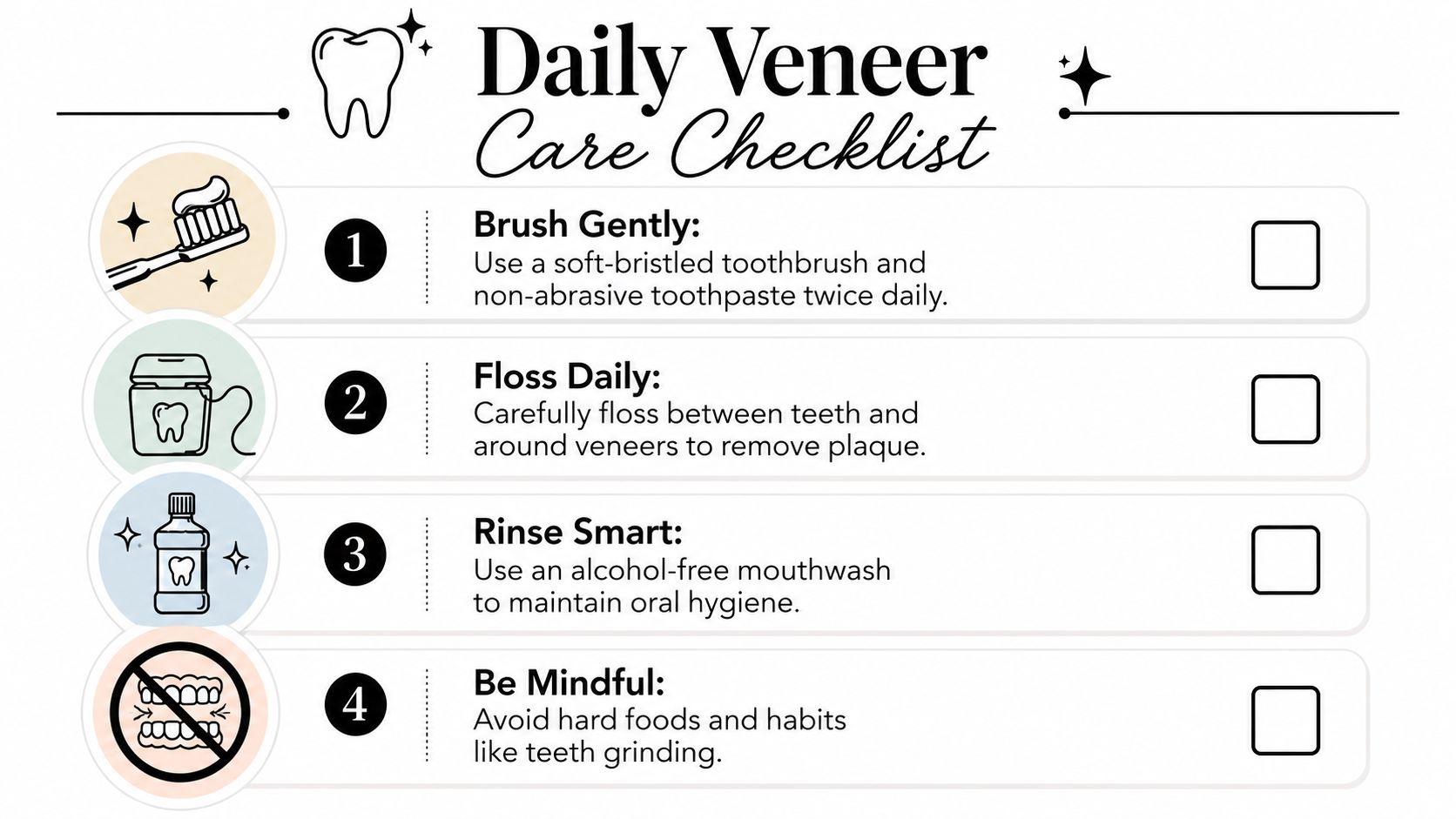
Use a soft-bristled toothbrush, light pressure, and a non-abrasive toothpaste. Dr. Loren Grossman's veneer care guidance advises patients with porcelain veneers to choose a gel toothpaste with an RDA below 70 and to avoid harsher brushing that can wear the surface and irritate the gums.
That matters for two reasons. First, the glossy finish on veneers helps them keep a natural look. Second, the gumline around veneers needs to stay healthy because recession can expose margins that are harder to keep clean. If you use an electric toothbrush, sensitive mode is usually a good choice.
Floss with control
Floss every day, but do it gently. Slide the floss between the teeth, curve it against the side of the tooth, clean under the gumline, and bring it out with control instead of snapping it back up at the contact.
I tell patients to slow down here. Fast flossing often misses the area that matters most, which is the margin near the gumline, and rough flossing can irritate tissue that we want to keep stable around the veneers.
Choose products that are kind to the surface
Some over-the-counter products create problems slowly. CareCredit's veneer aftercare guidance recommends using non-abrasive toothpaste and avoiding whitening toothpastes and those with baking soda because they can scratch the veneer surface. Alcohol-free mouthwash is also a better routine choice for many veneer patients, especially if we are trying to be conservative with bonding materials.
This is one of the trade-offs patients do not always expect. The products marketed as giving the strongest clean are often the wrong fit for cosmetic work. Veneers respond better to consistency than aggression.
A practical home routine usually looks like this:
- Morning brush: Soft brush, non-abrasive toothpaste, gentle pressure.
- Daily floss: Clean between every tooth and along the gumline without snapping at the contact.
- Smart rinse: Use an alcohol-free mouthwash.
- Night protection: Wear a night guard if your dentist prescribed one for clenching or grinding.
What works and what causes trouble
| Daily choice | Better option | What to avoid |
|---|---|---|
| Toothbrush | Soft-bristled manual brush or sensitive-mode electric brush | Medium or hard bristles |
| Toothpaste | Non-abrasive toothpaste | Whitening or baking soda toothpaste |
| Flossing | Gentle slide, controlled removal | Snapping floss against the veneer edge |
| Mouthwash | Alcohol-free rinse | Alcohol-based rinse used routinely |
The goal is a routine you can repeat without wearing down the work we just completed. If you want a clearer sense of what daily care adds up to over time, our guide on how long veneers last with proper maintenance explains what we watch for in follow-up visits and how home habits affect longevity. In practice, the best routine is the one that protects the veneer surface, keeps the margins clean, and fits easily into your morning and evening schedule.
Protecting Your Investment Foods and Habits to Avoid
You leave our Katy office with a new smile, stop for a cold drink, then bite into a cup of ice out of habit. That single moment causes more veneer problems than brushing mistakes ever do.

Veneers are strong, but they are not built for concentrated impact on the front edges. In practice, I see chips and loosened bonding most often from biting hard objects, chewing on non-food items, or using front teeth as a shortcut. That is usually what turns a small cosmetic issue into an urgent visit.
Foods to limit
The goal is not to make eating stressful. It is to lower avoidable risk.
- Very hard foods: Ice, hard candy, popcorn kernels, and very hard nuts can chip an edge or place too much force on the veneer.
- Tough bite-first foods: Whole apples, crusty bread, and thick pizza crust are safer when cut into smaller pieces and chewed with back teeth.
- Highly acidic drinks: Sodas, sports drinks, and frequent citrus exposure can be hard on the bonding area over time.
- Dark beverages: Coffee, tea, and red wine are more likely to leave staining at the margins, especially on composite veneers.
Some patients hear this and assume they need to avoid favorite foods forever. Usually, they just need a better method. Cut firm foods into smaller bites. Use your molars for the heavy work. Rinse with water after acidic or staining drinks if brushing right away is not practical.
Naba Dental's overview of veneer lifespan notes that porcelain veneers often last longer than composite veneers. That lines up with what I discuss with patients here in Katy. Material matters, but daily habits still shape how well veneers hold up and how natural they continue to look.
Habits to break
A lot of veneer damage has nothing to do with meals.
Do not use your teeth to open packages, tear tape, crack nutshells, hold bobby pins, or bite fingernails. Pen chewing is another common problem. These habits place sharp, uneven pressure on the exact area we try to protect.
Nighttime clenching matters too. If we recommended a night guard, wear it. Patients sometimes skip it because the veneers feel fine for months, then show up with small edge fractures that could have been prevented.
If you want a clearer picture of what these choices do over time, our guide on how long veneers last with good daily care explains the wear patterns we monitor at follow-up visits.
Porcelain and composite do not react the same way
Porcelain usually resists stains better and keeps its finish longer. Composite can still look beautiful, but it tends to show discoloration and surface wear sooner. That trade-off does not make composite a poor choice. It means patients with composite veneers need to be more careful with coffee, red wine, tobacco, and rough biting habits.
At our office, this is part of long-term support, not a one-time warning. We show patients where veneers are most vulnerable, review eating habits that raise the risk of chipping, and adjust guidance based on whether the case is porcelain or composite. Good veneer care is not complicated. It is a set of small, repeatable choices that protect work you paid for and want to keep looking excellent.
A quick patient education video can help reinforce what to avoid at home:
If you have to wonder whether your front teeth should do the job, use a different tool.
Porcelain vs Composite Tailoring Your Care Routine
A veneer can look perfect at placement and still age very differently based on the material. That matters in real life. The patient who starts every morning with coffee, clenches during stressful workdays, or likes crunchy snacks needs a care plan that fits the veneer they have.
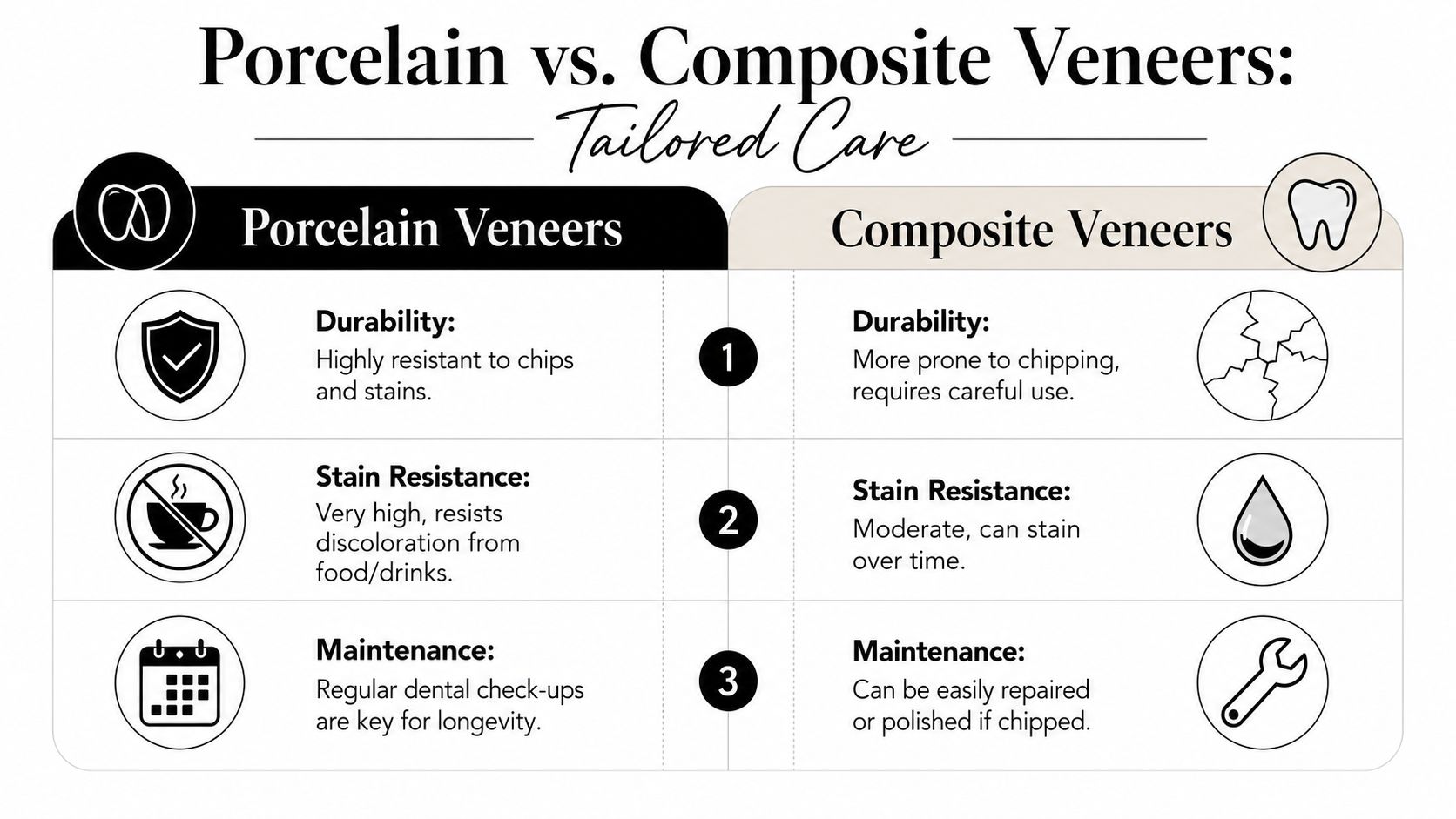
Porcelain is usually more forgiving with color and surface gloss. Composite often needs closer attention because it can pick up stains faster and lose its smooth finish sooner. Both materials can look excellent, but they do not ask for the same level of maintenance between visits.
What changes with porcelain vs composite
Porcelain patients usually do well with steady basics. Brush with a soft brush, floss carefully at the gumline, wear a night guard if clenching is part of the picture, and avoid using front teeth to open packages or bite hard objects.
Composite patients need those same habits, plus more attention to staining and wear. Rinsing with water after coffee, tea, red wine, or dark sodas helps. So does limiting tobacco exposure and coming in sooner if the surface starts to feel rough or look dull. In Katy, I often tell composite veneer patients that small daily choices show up faster on their smile, for better or worse.
Here is the practical difference:
| Veneer type | Usually more forgiving about | Usually needs closer attention |
|---|---|---|
| Porcelain | Surface stains, maintaining gloss, everyday color stability | Chipping from hard bites, grinding pressure, edge damage |
| Composite | Minor repairs in some cases, conservative treatment planning | Coffee and wine stains, surface wear, roughness, loss of polish |
The trade-off is simple. Composite can be a very good option, especially when patients want a more conservative or budget-conscious treatment path. It just asks for more upkeep at home and more occasional polishing in the office.
If you are still comparing materials, our guide to composite veneers vs porcelain explains how those differences affect appearance, maintenance, and long-term expectations.
At our Katy practice, we do not give every veneer patient the same script. We tailor home-care advice to the material, your bite, and the habits most likely to shorten the life of the work. That kind of follow-through helps protect the investment, not just the first result on day one.
Porcelain usually hides minor day-to-day wear better. Composite rewards patients who stay consistent with stain control and follow-up care.
The Role of Your Katy Dentist in Veneer Longevity
A patient comes in feeling that one veneer is “a little different,” even though nothing hurts. In many cases, that small change is the first warning sign. A rough margin, a bite shift, or early gum irritation is easier to correct when we catch it early than after a veneer chips or a tooth underneath becomes involved.

That is why regular follow-up matters so much after cosmetic treatment. Home care protects the surfaces you can reach. Professional exams help us evaluate the areas you cannot easily judge on your own, especially where the veneer meets the tooth and where the gums frame the smile.
For patients in Katy, TX, including Elyson, Ventanna Lakes, Katy Lakes, and The Grange, these visits are about more than keeping veneers bright. They help protect the bond, the underlying tooth structure, and the gum tissue that makes veneers look natural.
What your dentist checks
At routine visits, the dental team looks past the visible front surface and checks the details that affect how long veneers last.
- Bond integrity: Are the edges still sealed well, or is there a spot that may need closer attention?
- Gum health: Is there inflammation, recession, or plaque buildup around the margin?
- Bite balance: Is one tooth taking more force than it should during chewing or clenching?
- Surface condition: Does the veneer still feel smooth and polished, or is there wear that needs evaluation?
These checks matter because veneer problems rarely start as dramatic failures. They usually begin as small changes. In practice, those are the visits where we can make a minor adjustment, improve home-care technique, or monitor an area before it turns into a repair.
Night guards are often the difference-maker
Grinding and clenching put repeated force on veneers, especially along the edges. Many patients are surprised to learn they do most of that damage in their sleep.
My New Braunfels Dentist's veneer care advice advises patients who grind their teeth to wear a night guard to help protect veneers from chipping or cracking. I give the same recommendation in our Katy office when I see signs of bruxism, heavy bite pressure, or stress wear. A custom night guard can protect both the veneers and the natural teeth supporting them.
A night guard protects more than comfort. It helps protect the dental work you already invested in.
When to call sooner than your next checkup
Do not wait for your next cleaning if something changes. Call promptly for any of the following:
- A rough edge: This can point to a chip or a bonding problem.
- A loose feeling: Veneers should feel secure and stable.
- New sensitivity or gum irritation: This may signal inflammation or an issue at the margin.
- A bite that suddenly feels off: Uneven contact can place too much force on one area.
Patients looking for a dentist near me, new patient exams, routine dental care, or support after cosmetic treatment usually do best with a practice that can also provide restorative care, dental x-rays, urgent repairs, tooth extraction when necessary, and longer-term planning like implants. Veneers may be cosmetic, but keeping them healthy over time takes full-scope dental support.
Your Partner for a Lifetime of Healthy Smiles in Katy
A long-lasting veneer result comes down to a simple formula. Clean gently, avoid damaging habits, protect against grinding, and keep regular professional visits on the calendar. That's how a smile stays bright, comfortable, and natural-looking year after year.
For families and adults in Katy, TX, including Marisol, Sunterra, Cane Island, and Anniston, this kind of preventive mindset supports more than cosmetic results. It supports healthier gums, more stable teeth, fewer surprises, and fewer urgent visits for problems that could have been avoided. The same attention that protects veneers also strengthens your overall dental care routine.
If you've been looking for a dentist in Katy, TX, a cosmetic dentist near me, or a trusted office for cleaning and exams, emergency dentist care, restorative dentistry, or future treatment such as dental implants near me, it helps to choose a practice that sees the full picture. Great cosmetic dentistry isn't only about how teeth look on delivery day. It's about how well that result is protected over time.
Knowing how to care for veneers gives you control. Having the right dental team gives you support when questions come up, habits need adjusting, or a small issue needs attention before it turns into a larger repair.
If you're ready to protect your smile with thoughtful, long-term care, The Dental Retreat offers a calm, patient-centered dental home in Katy, TX. Whether you need a new patient exam, cosmetic dentistry consultation, cleaning and exams, help with teeth whitening, restorative dentistry, or prompt support from an emergency dentist, the team is here to help you maintain a healthy, confident smile for years to come.