Fear can prevent individuals from seeking a dentist near me in Katy, TX, and if this is your experience, you're not alone. A lot of people put off cleanings and exams, tooth extraction, dental implants, or even an emergency dentist visit because the idea of sitting in the chair feels overwhelming. Sometimes it's the sound of the drill. Sometimes it's a bad past experience. Sometimes it's not knowing what will happen.
That anxiety can grow into bigger problems. A small cavity turns into pain. A cracked tooth becomes an urgent issue. A smile you've wanted to improve with cosmetic dentistry or teeth whitening gets pushed further down the list. For many families in Katy, TX, including Sunterra, Cane Island, Katy Manor, Kingscrossing, Lakehouse, Marisol, The Grange, Anniston, Katy Lakes, Elyson, and Ventanna Lakes, the barrier isn't desire. It's fear.
One option that often changes everything is IV sedation dentistry. If you've been wondering what is IV sedation dentistry, the short answer is this: it's a way to help you feel very relaxed during treatment without being fully unconscious. That distinction matters, because many nervous patients assume IV sedation means being "put under" like surgery in a hospital. It doesn't.
Anxious About the Dentist? IV Sedation Dentistry in Katy TX Can Help
You might know this pattern well. You tell yourself you'll book a new patient exam after work settles down. Then a few months pass. Maybe your tooth only hurts when you chew, so it feels manageable. Maybe you want dental x-rays, restorative dentistry, or cosmetic dentist near me options, but every time you get close to scheduling, your stomach tightens and you put it off again.
For some people, anxiety shows up before they even make the call. For others, it starts in the parking lot. A patient may feel embarrassed that it's been years since their last cleaning and exams. Another may worry they'll panic during a tooth extraction. Someone planning dental implants near me might want the result, but dread the procedure itself.
Dental fear isn't a character flaw. It's a real barrier to care, and it deserves a real solution.
IV sedation can help break that cycle. It gives anxious patients a way to get needed treatment while feeling calm, detached from the stress, and far more comfortable than they expected. That can matter for routine care, but it's especially helpful when treatment is longer or more involved.
Why fear affects more than your appointment
When people avoid dental care, the impact often reaches beyond the mouth. Pain can interrupt sleep. Infection can make eating difficult. Missing or damaged teeth can affect confidence at work, in photos, and in everyday conversation.
That matters whether you're looking for an emergency dentist in Katy, TX, planning restorative dentistry, or trying to get back on track with regular dental care.
A more comfortable path forward
Patients often assume they have only two choices. Push through treatment while tense and miserable, or avoid it completely. IV sedation creates a middle path. You can receive care in a very relaxed state while your provider still communicates with you during treatment.
For people in Katy and nearby neighborhoods like Sunterra and Cane Island, that can make previously impossible treatment feel manageable. It can also make it easier to move ahead with care that improves comfort, function, and the appearance of your smile.
Understanding IV Sedation A Gentle Explanation
The biggest misunderstanding about IV sedation is also the one that scares people most. They hear "IV" and assume it means general anesthesia. That's not what this is.
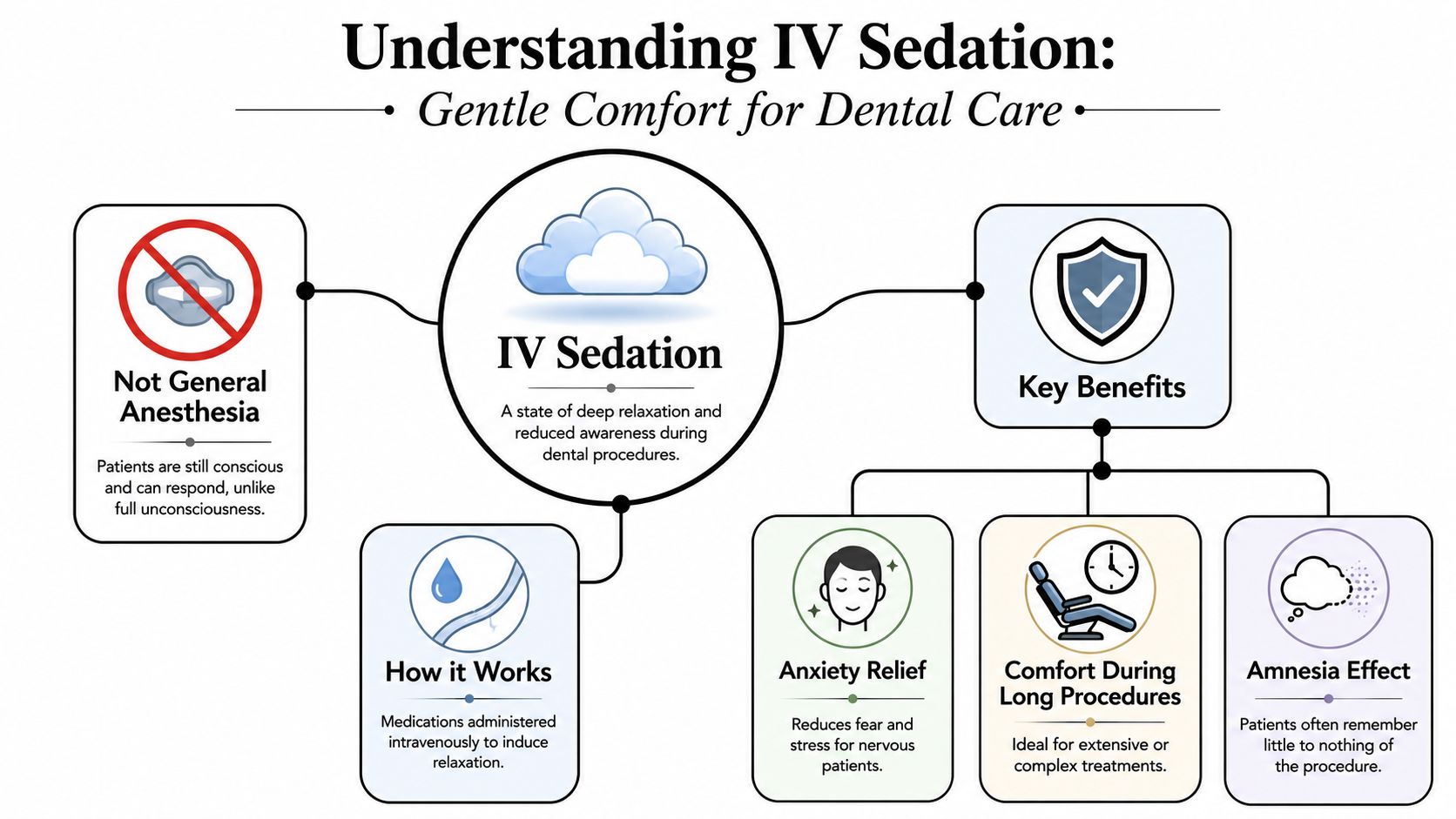
IV sedation dentistry is a form of conscious sedation. That means the medication is delivered into a vein so you relax significantly, but you aren't fully unconscious. You keep breathing on your own. You can still respond to simple verbal requests.
What it actually feels like
Most patients describe it more like a dream-like, floating, or twilight state than being "put under." You're very relaxed. Time often feels blurred. Many people remember little or nothing afterward, which is one reason it's so helpful for patients with dental fear.
A clinical overview of conscious intravenous sedation in dentistry explains that IV sedation is administered directly into the bloodstream to induce deep relaxation while patients remain responsive to verbal commands and maintain full control of their breathing. The same source notes that effects can begin within one minute of administration, and patients typically experience little to no memory of the procedure once the sedative wears off.
How it's different from general anesthesia
General anesthesia is designed to make a patient unconscious. IV sedation in dentistry is different because the goal is controlled relaxation, not full unconsciousness. That difference is one reason many nervous patients feel relieved once they understand it.
It's comparable to dimming the lights rather than turning the power off. You're not wide awake and tense, but you also aren't in a state where breathing has to be taken over for you.
If you'd like a more detailed overview of sedation options, this guide on how dental sedation works is a helpful next read.
Why this matters for anxious patients
When patients believe IV sedation is the same as hospital-style anesthesia, they often avoid a treatment that could make dental care much easier. In reality, it's commonly chosen because it helps people stay calm, cooperative, and comfortable during care without the deeper level of unconsciousness associated with general anesthesia.
The reassuring part is simple. You aren't being knocked out. You're being helped into a controlled, comfortable state where treatment feels easier to tolerate.
That distinction is often the turning point for patients who've been delaying dental care for years.
The Science of Comfort How IV Sedation Works
IV sedation works quickly because the medication goes straight into the bloodstream through a small IV line, usually placed in the hand or arm. That direct route gives the dental team a level of control that's harder to achieve with a pill taken ahead of time.

It isn't one fixed dose
Many patients get confused regarding this point. They assume sedation is given all at once, then everyone just hopes it works the right way. In IV sedation, the medication can be adjusted in real time based on how you're doing.
That process is called titration. A clinical explanation from Glisten Dental Studio's guide to sedation dentistry notes that the sedation dose is titrated in real time based on the patient's response, allowing the provider to adjust the sedation level, lighter when the patient tolerates treatment well and deeper when anxiety spikes, typically using midazolam combined with fentanyl.
Why titration helps patients feel safer
Think of titration like adjusting the temperature in a shower. If it feels too cool, it can be warmed gradually. If it feels too warm, it can be eased back. The goal is not "more sedation at all costs." The goal is the right level for that patient in that moment.
That matters because anxiety doesn't always stay the same throughout an appointment. Some patients are most nervous at the start. Others feel fine until a certain part of treatment begins. Real-time adjustment helps match the sedation to the actual experience, rather than guessing in advance.
What happens during the appointment
A typical visit follows a calm, monitored sequence:
- You get settled in. The team reviews your plan and checks that you're ready for treatment.
- A small IV is placed. This is usually done in the arm or hand.
- Medication begins working quickly. Patients often feel relaxed within a short time.
- Treatment starts once you're comfortable. Local anesthetic is still used so the area being treated stays numb.
- The team keeps watching your response throughout the procedure.
Later in the visit, this short video gives a helpful visual overview of the experience:
Why this method works well for longer care
For procedures that may take more time, including some oral surgery, complex restorative dentistry, or implant treatment, IV sedation offers a practical advantage. Because the level can be adjusted during the visit, comfort doesn't rely on a pill taken earlier that can't be changed once treatment begins.
That's one reason patients with strong anxiety, a sensitive gag reflex, or a long treatment plan often find IV sedation more predictable and more reassuring.
Your Safety Is Our Priority Sedation Protocols at The Dental Retreat
When patients ask whether IV sedation is safe, they're usually asking two questions at once. Is the medication itself safe, and is the process surrounding it safe? Both matter.
The answer depends on training, patient selection, and monitoring. IV sedation isn't something that should feel casual. It should feel organized, deliberate, and carefully supervised from start to finish.
What the safety data shows
A review from Western Surgical and Sedation states that modern IV sedation in dentistry has an exceptional safety profile when administered by trained practitioners following established protocols, with serious adverse events occurring in less than 0.1% of cases and a mortality rate of approximately 1 in 400,000. The same source explains that safety depends on thorough training and real-time monitoring equipment used to track vital signs.
Those details matter because they show safety doesn't come from luck. It comes from systems.
Practical rule: Safe sedation starts before the medication is given. It begins with proper training, medical review, and the right monitoring equipment.
What careful monitoring looks like
During IV sedation, the team doesn't only start treatment and check on you occasionally. Your vital signs are monitored continuously. That includes observing how you're tolerating the sedation throughout the visit.
Patients often feel reassured when they learn that sedation appointments involve more than comfort. They involve active oversight. The purpose is to keep the experience both calm and controlled.
Why screening matters
Not every patient is the same, and safe care reflects that. A sedation visit should include a review of your medical history, your medications, and the planned procedure. The goal is to confirm that IV sedation is appropriate for you and that the plan fits your health needs.
At a patient-centered office, that process should feel unrushed. You should be able to ask questions, talk through prior dental experiences, and explain concerns such as panic, difficulty getting numb, or past trouble with longer appointments.
Confidence comes from process
For many anxious patients, fear decreases once they understand the safeguards. There is a protocol. There is monitoring. There is training behind the experience. The calm feeling you see from the outside rests on a disciplined clinical process behind the scenes.
That combination is what makes IV sedation a reassuring option for many people seeking dental care in Katy, TX, especially when fear has delayed treatment.
Is IV Sedation Right for You
IV sedation isn't for every dental visit, but it can be an excellent choice for the right patient. The clearest sign is often simple: you need care, but anxiety keeps getting in the way.
A clinical review in the British Dental Journal notes that IV sedation is a specialized treatment for patients with dental phobia or medical compromise, and that it can help prevent stress-induced worsening of underlying disease during oral surgery under local anesthesia.
Patients who often benefit most
You may be a good candidate if any of these sound familiar:
- Severe dental anxiety. You cancel appointments, lose sleep before visits, or avoid treatment until pain forces the issue.
- A strong gag reflex. Even routine care can feel difficult when instruments trigger gagging.
- Longer or more complex treatment. This can include tooth extraction, implant placement, or full-mouth restorative work.
- Trouble sitting through dental visits. Some people feel restless, panicked, or overwhelmed during treatment.
- Medical concerns made worse by stress. For certain patients, reducing stress is part of making dental care more manageable.
Situations where people often ask about it
Many patients first ask about IV sedation when they need more than a routine cleaning. They may be searching online for dental implants near me, cosmetic dentist near me, or help with a damaged tooth that may require oral surgery or restorative treatment.
Others ask because of emotion, not procedure. They may only need standard dental care, but past experiences make even a simple visit feel impossible.
The best way to decide
You don't have to decide alone. Candidacy depends on your medical history, your anxiety level, and the type of care you need. A consultation should sort through those details carefully.
If your main thought is "I know I need treatment, but I don't know how I'll get through it," IV sedation is worth discussing.
For many people in Katy, TX and neighborhoods like Ventanna Lakes and The Grange, that conversation is the first step toward finally moving forward with care.
What to Expect During Your IV Sedation Visit in Katy
Not knowing what the day will feel like is a major source of stress. A sedation visit becomes much less intimidating when you can picture the flow from beginning to end.
Before your appointment
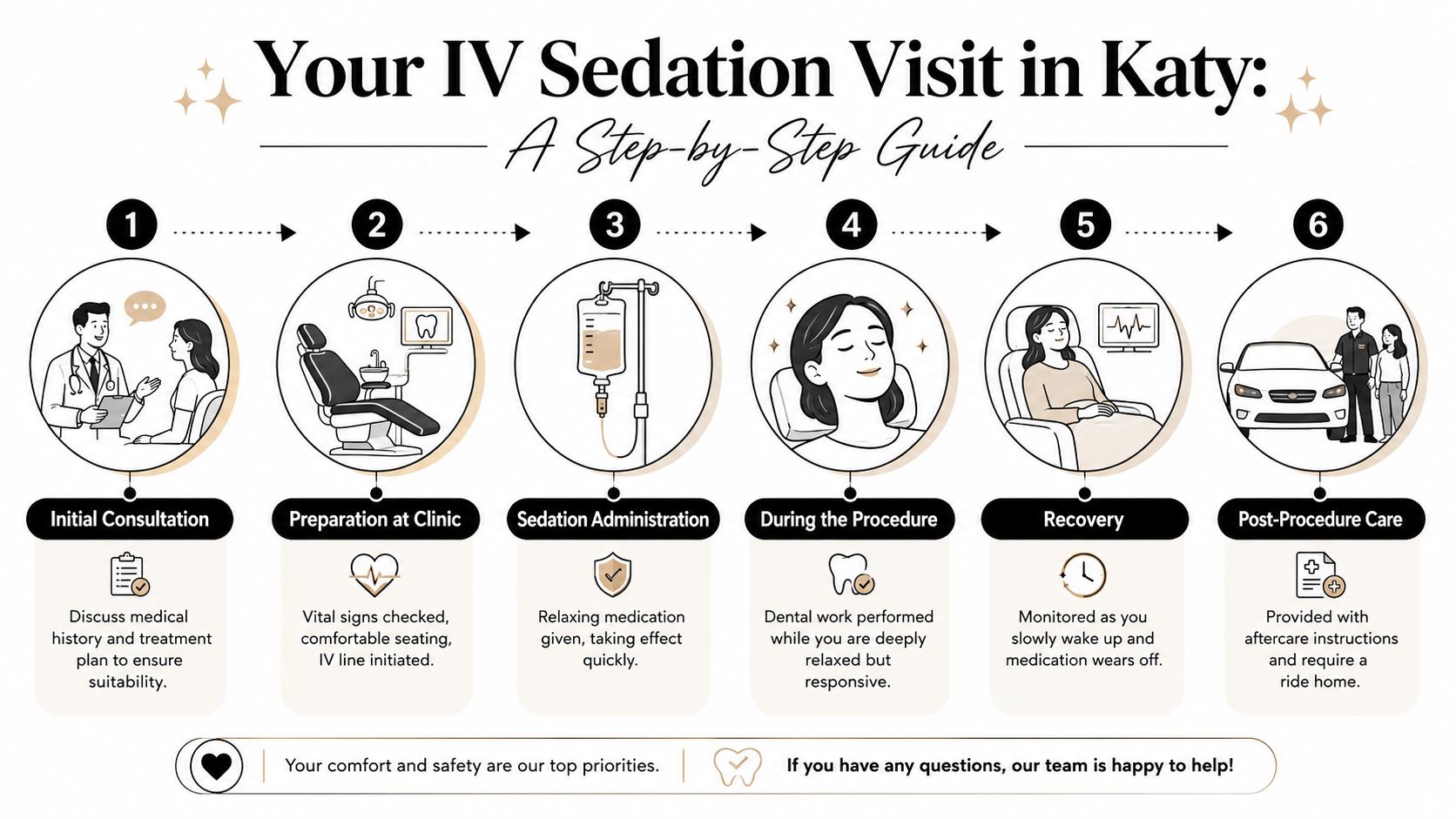
You'll receive instructions ahead of time. These usually include guidance on eating and drinking before the visit, what medications to discuss in advance, and the need to arrange a responsible adult to drive you home.
This part matters more than patients sometimes realize. Sedation appointments work best when you prepare for them as instructed and keep the rest of the day clear.
When you arrive
The team will review your health information, confirm the treatment plan, and help you get settled comfortably. Then the IV line is placed, usually in the arm or hand. Once medication begins, many patients notice the change quickly. They don't feel panicked or hyperaware. They feel removed from the stress.
From there, treatment proceeds while you're in a very relaxed state. Local anesthetic is still used to numb the treatment area so you don't feel pain during the procedure.
During treatment
Most patients don't experience the appointment the way they feared they would. They aren't tracking every sound or every minute. Time often feels shortened, vague, or missing altogether when they think back on it later.
That can be especially helpful during procedures that might otherwise feel mentally exhausting, such as longer restorative appointments, oral surgery, or dental implant treatment.
Recovery right after the visit
When treatment is complete, you'll spend some time recovering in the office while the team monitors you as the sedative begins to wear off. You may feel sleepy, groggy, or mentally foggy.
A patient handout from Cleveland Clinic's sedation dentistry overview notes that IV sedation often causes prolonged drowsiness and brain fog lasting 12 to 18 hours. That detail is important for practical planning, especially if you need childcare coverage, time away from work, or help at home after a long appointment.
The rest of the day
After you leave, plan to rest. You can't drive for 24 hours after IV sedation, and you shouldn't schedule demanding tasks for later that day. Even if you feel "mostly fine," your judgment and reaction time may not be back to normal.
A few practical tips help:
- Protect your schedule. Don't plan work calls, errands, or school pickup afterward.
- Arrange support early. Have your ride and any childcare help confirmed before the visit.
- Rest more than you think you need. Sedation recovery is smoother when you give yourself time.
Most patients do best when they treat the day of sedation like a recovery day, not a day they can squeeze back into a normal routine.
Knowing that in advance can make the experience feel much more manageable.
IV Sedation vs Other Options at The Dental Retreat
IV sedation isn't the only way to make dental treatment easier. Depending on your anxiety level, health history, and procedure, nitrous oxide or oral sedation may also be options. The key difference is the level of relaxation necessary and how much control is needed during the appointment.
If you've been comparing options, this overview of oral sedation vs IV sedation can help you understand the bigger picture.
Comparing Dental Sedation Options
| Feature | Nitrous Oxide ('Laughing Gas') | Oral Sedation (Pill) | IV Sedation ('Twilight Sleep') |
|---|---|---|---|
| Level of relaxation | Mild relaxation | Moderate relaxation for many patients | Deeper conscious sedation |
| How it's given | Inhaled through a mask | Taken by mouth before the visit | Given through a small IV line |
| Onset speed | Quick | Slower and less predictable | Very fast |
| Adjustability during treatment | Can be adjusted while in use | Fixed once taken | Can be titrated in real time |
| Awareness | Awake and aware | Drowsy but usually awake | Very relaxed, still responsive |
| Memory of the visit | Usually remembered | May be patchy | Often very limited |
| Recovery | Typically lighter recovery | Requires a ride home | Requires a ride home and a longer recovery day |
| Best fit | Mild nervousness | Moderate anxiety | High anxiety, gag reflex, or longer procedures |
When lighter options may be enough
Nitrous oxide can be a good fit if you're uneasy but still comfortable staying alert. Some patients use it for cleanings, dental x-rays, or smaller restorative visits. Oral sedation may suit patients who want more relaxation than nitrous offers but don't need the level of control that comes with IV sedation.
When IV sedation stands out
IV sedation is often the better choice when anxiety is intense, when the procedure is longer, or when a patient wants the most predictable path to a thoroughly calm experience. Its biggest practical advantage is control. Because the sedation can be adjusted during treatment, it doesn't rely on guessing how one pill will affect one person on one day.
That makes it especially appealing for patients planning tooth extraction, implant treatment, or more involved restorative dentistry. It can also help patients who have delayed care for years because they can't tolerate the usual dental experience.
The right option depends on the person
The best sedation choice isn't the strongest one. It's the one that matches your needs. Some patients do very well with a lighter approach. Others finally complete treatment only when IV sedation removes the fear that kept them away.
For a lot of anxious adults, the value of understanding these options is this: dental care doesn't have to be an all-or-nothing experience anymore.
Frequently Asked Questions About IV Sedation Dentistry
Will I be unconscious?
No. IV sedation for dental care is not the same as general anesthesia. You're in a very relaxed conscious state, and you can still respond to verbal guidance during treatment.
Will I feel pain?
Sedation helps you feel calm and detached from the procedure, but it doesn't replace numbing. Your dentist also uses local anesthetic to numb the treatment area. That combination is why patients often report a much easier experience.
Who is this usually for?
It's commonly considered for adults with strong dental anxiety, a difficult gag reflex, medical stress concerns, or longer procedures such as oral surgery and implant work. It can also help patients who haven't been able to follow through with needed care because fear keeps stopping them.
Is the recovery instant?
No. Plan for a real recovery period. You'll need a ride home, and the rest of the day should be reserved for rest. Some patients feel drowsy or mentally foggy well after the appointment, so it's wise to avoid work, driving, childcare duty by yourself, or important decisions that day.
Is IV sedation safer because I'm not fully put under?
For many patients, that distinction is reassuring. IV sedation is designed to keep you in a controlled conscious state rather than full unconsciousness. That means the goal is deep comfort with maintained responsiveness, not hospital-style anesthesia.
How much does it cost and is it covered?
Costs and insurance coverage vary based on the procedure, the length of the visit, and your plan details. The best dental offices will explain fees clearly before treatment so you know what to expect and can make an informed choice.
Who should I talk to if I'm nervous but still unsure?
Start with a consultation. Talk openly about what makes dental care hard for you, whether that's fear, embarrassment, gagging, past trauma, or concern about a specific treatment like cosmetic dentistry, restorative dentistry, or emergency care. The right discussion should leave you feeling clearer, not pressured.
If you've been postponing care because fear keeps taking over, The Dental Retreat offers a calm, spa-inspired dental experience for patients in Katy, TX, including Sunterra, Cane Island, Katy Manor, Kingscrossing, Lakehouse, Marisol, The Grange, Anniston, Katy Lakes, Elyson, and Ventanna Lakes. Whether you're looking for a dentist in Katy, TX, an emergency dentist, help with tooth extraction, dental implants near me, or a cosmetic dentist near me, the team provides patient-focused care with comfort in mind. Schedule a consultation to talk through your options, ask questions, and take the first step toward dental care that feels manageable again.