A lot of parents in Katy first think about sealants the same way. Their child isn't complaining much, but brushing around the back teeth has become a battle, food keeps sticking in those deep grooves, and a routine check starts to raise concern about early decay on newly erupted molars. That's usually the moment prevention stops feeling optional and starts feeling urgent.
Families in Katy, TX, including Sunterra, Cane Island, Katy Manor, Kingscrossing, Lakehouse, Marisol, The Grange, Anniston, Katy Lakes, Elyson, and Ventanna Lakes, often want the same thing. They want a practical way to lower cavity risk before a small problem turns into a filling, pain, or a missed day of school. For many children, dental sealants for kids are one of the smartest early steps in that plan.
Parents searching for a dentist near me in Katy, TX or comparing preventive care options with a family dentist, emergency dentist, or even a provider they already trust for cleaning and exams, dental x-rays, new patient exams, tooth extraction, restorative dentistry, cosmetic dentistry, or long-term care like dental implants near me usually have one key question. Are sealants worth it for my child?
Introduction to Dental Sealants for Kids
When a child's first adult molars come in, they often look sturdy from the outside but stay vulnerable where it matters most. The chewing surfaces have narrow grooves that trap food and plaque more easily than parents expect. Even in homes with solid brushing habits, those back teeth can be hard to clean well every day.
That's why parents often ask about dental sealants for kids during a preventive visit instead of waiting until a filling is needed. This isn't cosmetic care. It's targeted protection for the teeth that usually carry the highest cavity risk early on.
Why molars become a problem so quickly
Children don't usually get cavities on molars because anyone did something wrong. The issue is access. A toothbrush cleans smooth surfaces well, but it can miss the deep pits and fissures on the biting surface of back teeth.
Chewing teeth also go through a rough stage right after eruption. Kids are still learning to brush thoroughly, and the new molars sit far back in the mouth where it's harder for both children and parents to see what's building up.
Practical rule: If your child's new molars have deep grooves and brushing them is inconsistent, that's the window when prevention matters most.
Why this matters for local families
For parents looking for a dentist in Katy, TX, sealants fit into the same broader goal as regular dental care, cleaning and exams, and timely treatment when needed. The goal is to avoid preventable procedures later, whether that means fillings, restorative dentistry, or urgent visits to an emergency dentist for tooth pain.
That's especially true for busy families in growing Katy neighborhoods. A simple preventive step is often easier than managing a cavity after it forms, especially when the child already feels nervous about dental visits.
What Are Dental Sealants and How They Protect Teeth
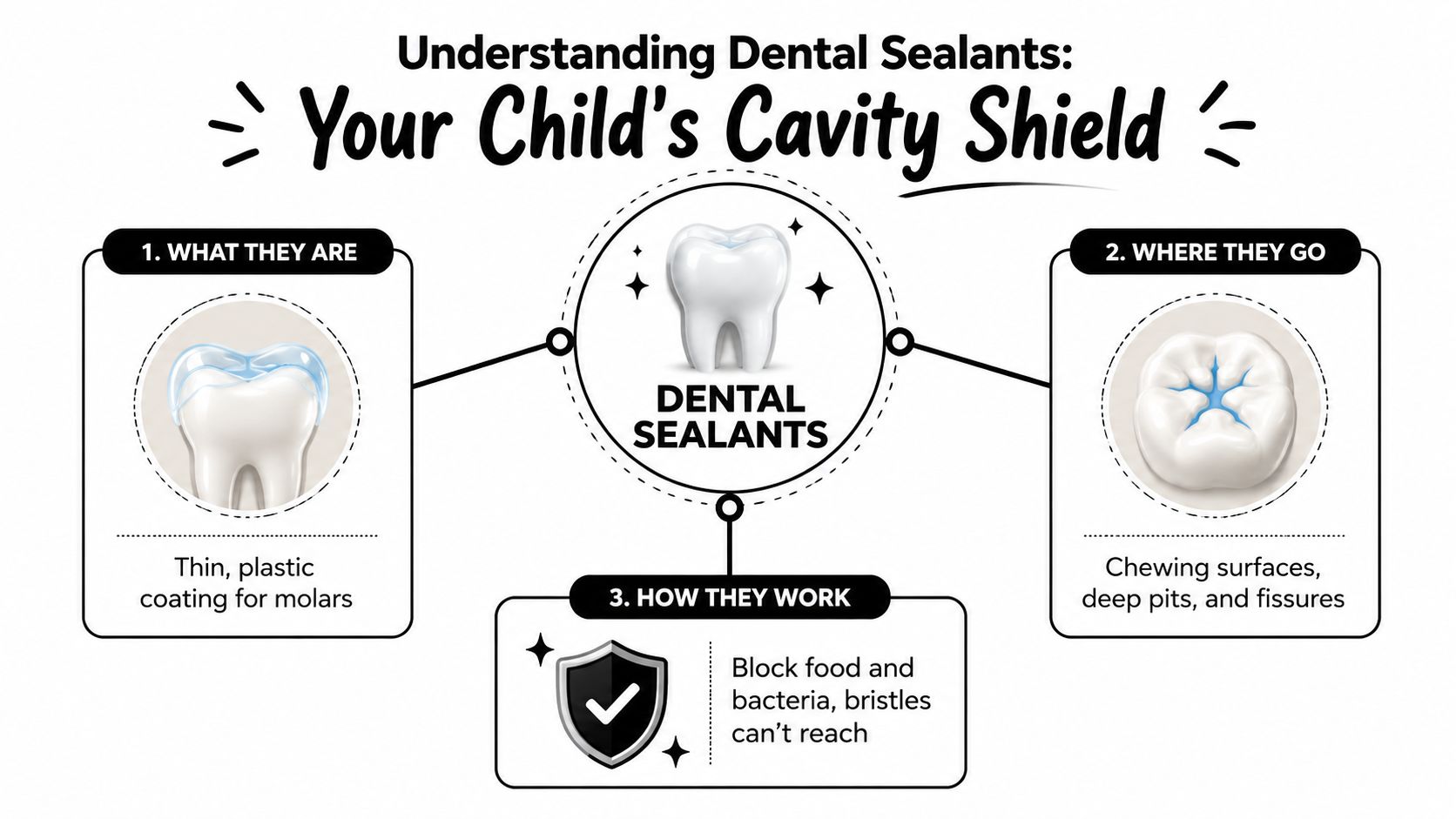
Dental sealants are thin protective coatings placed on the chewing surfaces of molars. They flow into the tiny grooves of the tooth and harden into a barrier that blocks food particles and bacteria from settling where brushing can't reliably reach.
A simple way to think about them is a raincoat for the back teeth. The tooth is still there, doing all its normal work, but the vulnerable grooves get covered so they're less exposed to the daily cycle of plaque and acid.
Where sealants go
Sealants are used on the back teeth, especially molars, because that's where the anatomy works against easy cleaning. According to the CDC fast facts on dental sealants, dental sealants prevent 80% of cavities over two years in the back teeth, where 90% of cavities occur in children.
That's why they're considered one of the strongest preventive tools in pediatric dentistry. They don't replace brushing, flossing, or fluoride. They protect the exact part of the tooth that's most likely to be missed.
Why the material matters
Not all sealant materials perform the same way. A review in the National Library of Medicine article on pit and fissure sealants found that resin-based sealants reduce occlusal caries by 78% after 2 years and 60% after 4 to 4.5 years compared to unsealed controls, and they show approximately 80% retention at 2 years, compared with 44% retention for glass ionomer at the same interval.
That difference matters in real life. Better retention usually means the barrier stays where it's needed longer, which lowers the chance that a child loses protection undetected between visits.
Sealants work best when they're placed well, cured properly, and checked during routine recall visits.
Ideal Ages and Who Needs Sealants
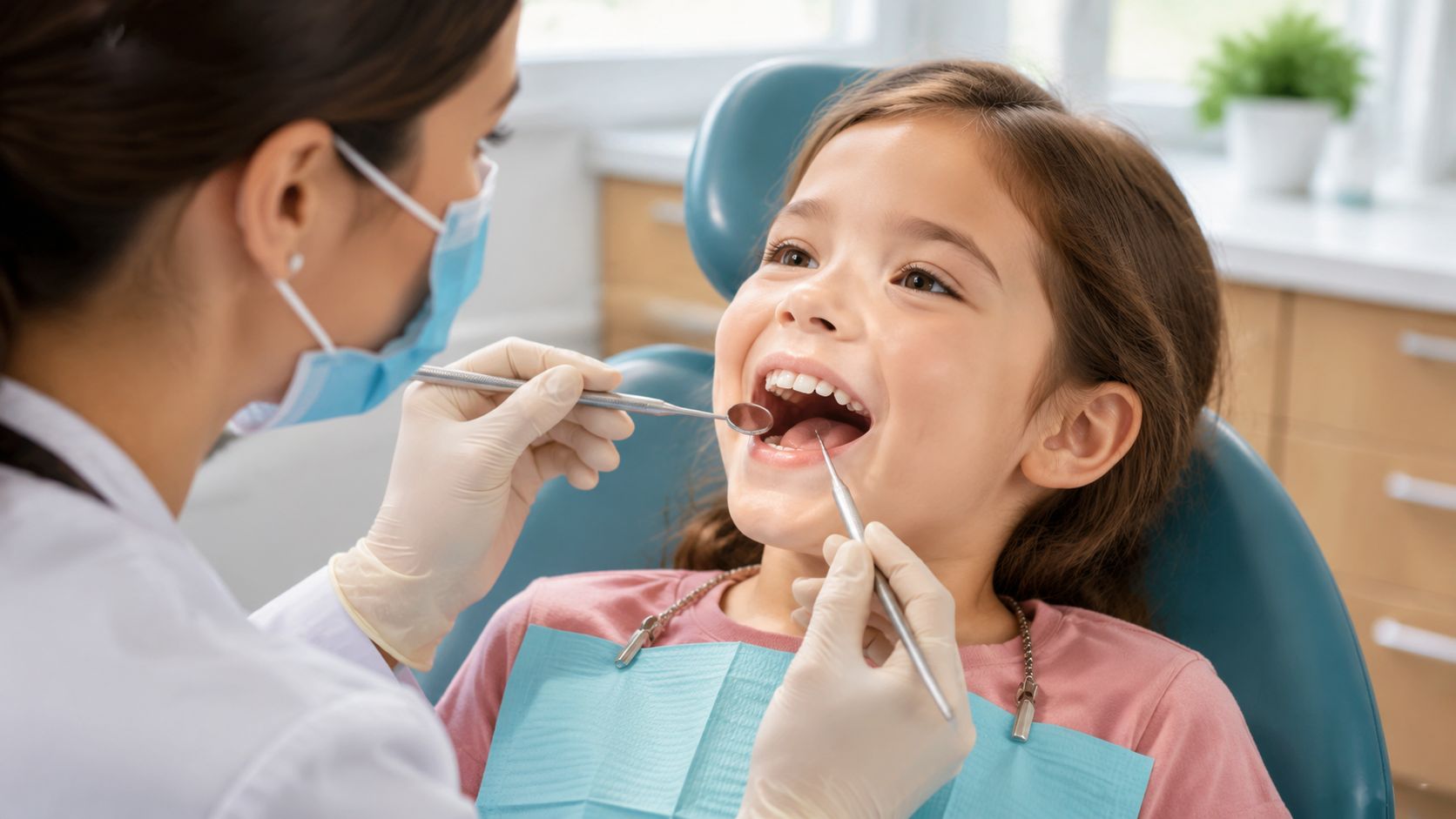
The timing for sealants is tied to when permanent molars erupt. First molars usually come in around age 6, and second molars around age 12, which is why those ages often trigger a closer conversation about prevention. The goal is to protect the tooth soon after it erupts, before plaque has months or years to settle into the grooves.
Which children benefit most
Sealants aren't always a blanket recommendation for every child at the exact same age. Clinical guidance in this Nature review on sealant recommendations states that sealants should be applied selectively to children with previous or current caries experience, because they're most effective and cost-effective in higher-risk children on the pits and fissures of permanent molars.
In practice, the decision usually comes down to a mix of factors:
- Cavity history: A child who has already had decay is more likely to benefit.
- Tooth anatomy: Deep grooves trap more debris than shallow ones.
- Home care challenges: Some children brush well on front teeth but miss the back molars consistently.
- Diet pattern: Frequent snacks and sugary drinks can raise risk.
- Eruption stage: Newly erupted molars are often the best teeth to protect early.
A practical way to decide
Parents don't need to guess. A risk-based exam is the right place to decide whether a child needs sealants now, later, or not at all. If you want a broader look at prevention habits, this guide to pediatric preventive care gives helpful context around how sealants fit into a child's routine.
Another important nuance is that high-risk children tend to gain the most from sealants. A review available through the National Library of Medicine found that children with high caries risk benefit significantly, while the preventive effect is negligible in low-caries-risk children when sealed and nonsealed teeth are compared.
Sealant Application Procedure at The Dental Retreat
For most kids, the sealant appointment is much easier than parents expect. There's no drilling for a routine sealant, and the process is designed to be quick, calm, and comfortable.

What happens in the chair
The steps are straightforward:
- The tooth is cleaned so the grooves are free of debris.
- The area is kept dry. This matters because moisture can interfere with bonding.
- A gentle etching material is placed on the enamel to help the sealant attach.
- The tooth is rinsed and dried again.
- The liquid sealant is painted into the grooves.
- A curing light hardens the material.
- The bite is checked so the tooth feels normal when the child closes down.
That's the whole sequence. Most children tolerate it very well, especially when the team explains each step in simple language and moves at a steady pace.
Why private setting details matter
Parents in Katy sometimes compare school-based sealant events with private visits. School programs can help expand access, but a private clinic usually has more control over isolation, material choice, curing technique, and follow-up. Those details matter because successful sealants depend on a dry field and careful placement.
A calm environment helps too. Noise-cancelling headphones, TVs in treatment rooms, and a setting that doesn't feel rushed can make a child more cooperative, which often improves placement quality.
A short visual can help parents know what to expect:
Children usually do best when adults frame sealants as protection, not treatment. That simple wording reduces anxiety before the visit even starts.
Benefits Risks and Longevity of Sealants
Sealants offer a rare combination in dentistry. They're conservative, quick to place, and strongly protective when used at the right time. For parents deciding between “watching” a vulnerable molar and protecting it early, that difference is often the reason a child avoids future restorative care.
How long protection lasts
The strongest protection comes early, but it doesn't stop there. The CDC report in MMWR on sealant effectiveness states that dental sealants prevent more than 80% of cavities in permanent molars at two years after placement, with effectiveness dropping to 50% at four years but continuing up to nine years through adolescence.
That tells parents two useful things. First, the early years after eruption are critical. Second, sealants aren't a one-day benefit. They can keep helping through the cavity-prone years if they're maintained.
Sealant effectiveness over time
| Time After Placement | Cavity Prevention Rate (%) |
|---|---|
| 2 years | More than 80% |
| 4 years | 50% |
| Up to 9 years through adolescence | Continuing protection |
If a sealant chips or wears, the solution usually isn't to abandon the idea. It's to catch the change during a recall exam and repair or replace the sealant when appropriate.
Safety concerns parents ask about
The most common concern I hear is BPA. The right answer isn't fear, and it isn't dismissal. It's context.
According to the ADA guidance on dental sealants, BPA exposure from sealants is minuscule, and the organization notes that there is no health concern relative to BPA exposure from dental sealants. That same guidance explains why technique matters. Proper curing, following manufacturer instructions, and washing the sealant surface for 30 seconds help reduce any unpolymerized residue.
For parents who want practical cavity prevention beyond sealants, this article on how to prevent cavities naturally pairs well with the same prevention mindset.
Maintenance Cost Insurance and Alternatives
Sealants work best when parents think of them as part of ongoing dental care, not a one-time box to check. The barrier protects the tooth, but the child still needs routine exams, home brushing, flossing, and periodic inspection of the sealed teeth.
School programs versus private clinic care
The local difference often matters most. School programs do meaningful preventive work, especially for children who may not have consistent access to care. But the parent experience is different from care delivered in a private office with regular follow-up.
The CDC page on school sealant programs and prevention notes that school sealant programs prevent 80% of cavities for two years but often use simpler materials and lack routine follow-up, while private clinics can provide regular monitoring.
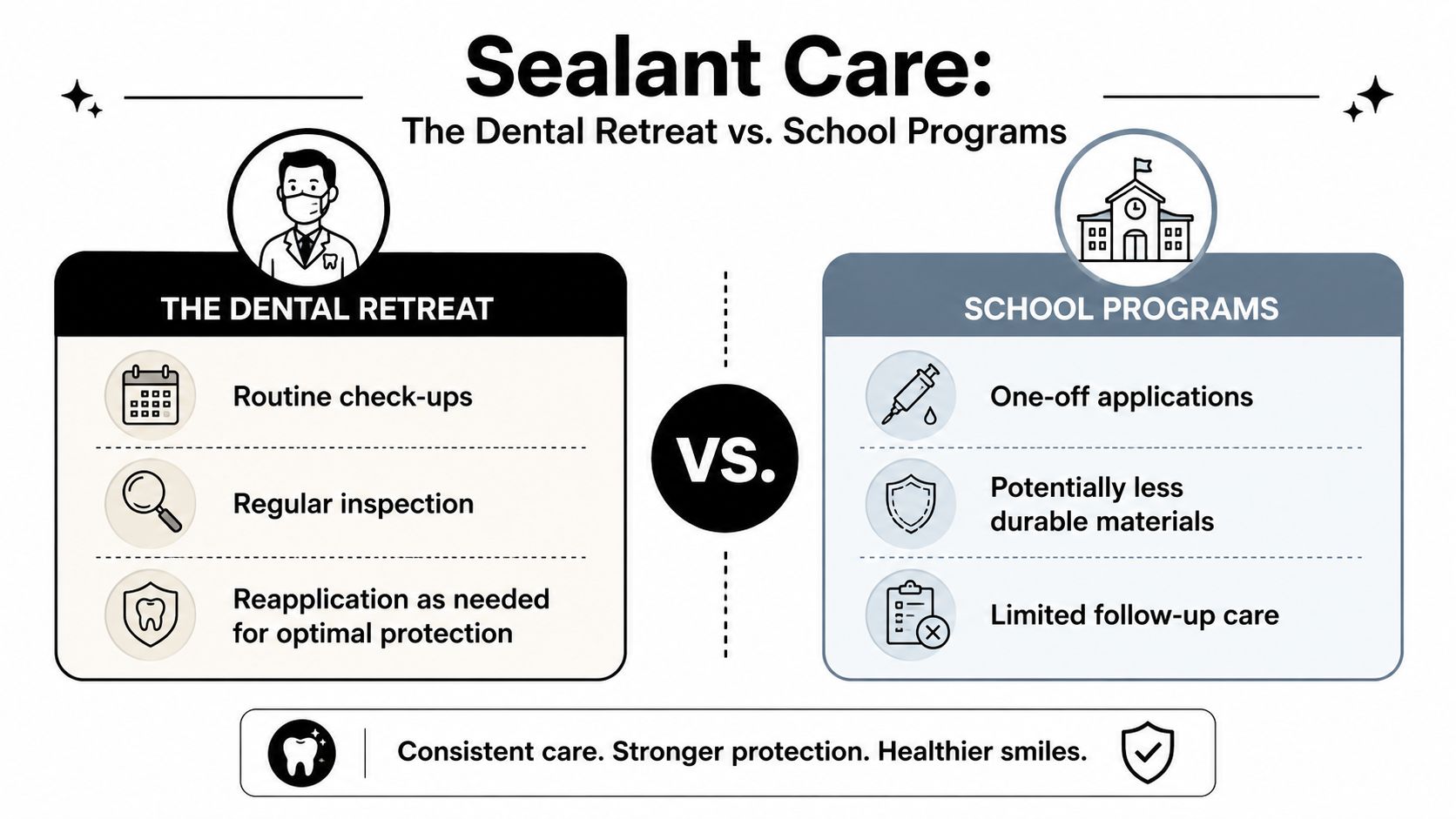
For families in Katy, that usually creates a clear trade-off:
- School programs: Convenient access, broad public health value, less built-in follow-up.
- Private visits: More individualized assessment, closer monitoring, easier repair if a sealant wears down.
What parents should ask before saying yes
Instead of focusing only on whether a sealant is offered, ask a few practical questions:
- Which teeth need it most: Not every molar needs the same approach.
- What material is being used: Retention can differ by material.
- How will it be checked later: Follow-up matters almost as much as placement.
- Is there already decay present: A proper exam should come before preventive treatment.
Sealants versus fluoride
Sealants and fluoride aren't interchangeable. Sealants cover the chewing grooves of molars. Fluoride supports enamel more broadly across the mouth. Many children benefit from both because they solve different problems.
Cost and insurance vary by plan, age, and whether the tooth meets coverage criteria, so the best approach is to confirm benefits before treatment. Families without insurance often do best with a practice that offers a clear new-patient exam option, transparent pricing, and membership savings so prevention stays manageable.
Next Steps and Scheduling Your Appointment
If your child has newly erupted molars, deep grooves, a history of cavities, or back teeth that are hard to brush well, it makes sense to ask about sealants before decay starts. That's especially true if you've already been searching for a dentist near me, a dentist in Katy, TX, or a family practice that can handle preventive care now and more advanced needs later, from restorative dentistry and tooth extraction to cosmetic dentistry, emergency dentist visits, and even long-range solutions like cosmetic dentist near me or dental implants near me for adult family members.
When to schedule
A good time to book is when:
- New molars have recently erupted: Early protection is usually better than waiting.
- Your child has had cavities before: Risk often stays high.
- Brushing the back teeth is inconsistent: This is common, especially in younger children.
- You want a prevention-first visit: Families often prefer a calm check before a problem becomes painful.
What a helpful visit should include
Parents should expect more than a quick glance. A useful appointment should include a full look at the molars, cavity-risk discussion, review of home habits, and a clear recommendation about whether sealants are appropriate now or better delayed.
That same visit may also include cleaning and exams, dental x-rays if needed, and a broader look at your child's oral development. If there's active decay instead of a tooth that needs protection, the plan may shift toward restorative treatment rather than sealants.
The best preventive visit leaves you with clarity. Which teeth need protection, which don't, and when to check them again.
For families in Katy, Sunterra, Cane Island, Katy Manor, Kingscrossing, Lakehouse, Marisol, The Grange, Anniston, Katy Lakes, Elyson, and Ventanna Lakes, the next step is simple. Book an exam while the molars are still healthy enough to protect.
If you're ready to protect your child's molars before cavities start, The Dental Retreat makes it easy to schedule a family-friendly visit in Katy, TX. Our team offers bilingual care, extended hours, a calm spa-inspired setting, and practical prevention planning for growing smiles. New patients without insurance can ask about the $99 complete exam with cleaning and X-rays, and families looking for long-term savings can explore membership options. Schedule online or contact our Stockdick School Road office to reserve your child's visit.