You've just left the dental chair in Katy, and the temporary crown already feels different from your natural tooth. That's normal, but it's also the moment when careful habits matter most. For the next few days, the goal is simple, protect the crown, protect the tooth underneath, and know which changes are worth a call to the office.
What to Expect Right After Your Temporary Crown

The first few hours after placement can feel a little awkward. The crown may feel slightly different when you bite, and the tooth can be sensitive while the cement settles. A published patient guide notes that a temporary crown is often worn for a short bridge period of 3 to 21 days while the permanent restoration is being made, so this is a short but important stretch of care Bellevue Dentist.
The first hour matters
Right after cementation, a simple rule helps most: don't chew for about 30 minutes so the cement can set properly. One instruction sheet states that cement setting takes 30 minutes and says not to chew during that time temporary crown care instructions. After that, start with a soft bite and keep the pressure light.
Practical rule: If the tooth feels “new” but not painful, that usually means the crown is seated and your mouth is just adapting.
A temporary crown is not the final restoration. It's a protective cover that keeps the prepared tooth from getting exposed to food, temperature changes, and irritation while the lab makes the permanent crown. In the meantime, your home care should be calm and deliberate, not obsessive. You don't need to baby the area so much that plaque builds up, but you also don't want to test the crown with every meal.
If you live in Katy, TX, or nearby neighborhoods like Sunterra, Cane Island, Katy Manor, Kingscrossing, Lakehouse, Marisol, The Grange, Anniston, Katy Lakes, Elyson, or Ventanna Lakes, this short window is where a little discipline pays off later.
What “normal” feels like
Expect mild tenderness, some awareness when you bite, and a slightly different surface against your tongue. Those sensations usually settle as your mouth adjusts. What shouldn't happen is a crown that keeps shifting, a bite that feels dramatically off, or pain that grows instead of fades.
The temporary crown is doing a job, and the better you protect it now, the smoother the final crown appointment tends to feel.
Why the Temporary Crown Matters and How Long It Stays

A temporary crown is more than a placeholder. It protects the prepared tooth, helps keep the space stable, and supports the gum tissue while the final crown is being fabricated. That matters because the tooth underneath is vulnerable until the permanent restoration is seated.
A modern retrospective cohort of 98 3D-printed temporary crowns in 63 patients reported a mean observation period of 255.99 days, with follow-up ranging from 18 to 557 days, and an overall survival rate of 98% PMC study. That kind of follow-up shows how temporary crowns are being evaluated with durability in mind, not just as same-week stopgaps.
Why the timeline is so short
Most patient guides still describe the temporary stage as brief, and one published source puts the usual wear time at 3 to 21 days Bellevue Dentist. That short window is exactly why small habits matter so much. A sticky snack, aggressive flossing, or biting too hard can create a problem fast.
Use this period to protect the tooth, not to “tough it out.” If the crown comes loose, gets high, or opens at the margin, the temporary stage can stop doing its job and the final appointment becomes less predictable.
For patients comparing options like restorative dentistry, cosmetic dentistry, tooth extraction follow-up care, or later treatment such as dental implants, temporary crowns often show up in the middle of the plan. They help hold things steady while the bigger treatment unfolds.
The point is simple. A temporary crown is part of the treatment, not an afterthought.
A well-kept temporary crown helps the gums stay calm and the tooth stay protected until the final crown is ready.
The Dental Retreat's caps page for crown care also outlines the broader crown process for Katy patients, and you can review it at temporary crown information for Katy patients.
Gentle Cleaning and Flossing Around a Temporary Crown

Good hygiene keeps the crown and the gum line healthy, but the technique needs a slight adjustment. Brush normally, just more gently near the crown edges and gum line. A soft-bristle brush works best, and the strokes should be light enough to clean without tugging at the cement temporary crown care tips.
Brush without scrubbing
Focus on the margin where the crown meets the gum. That's where plaque collects, and it's also where rough brushing can do the most harm. Gentle brushing keeps the tissue clean without putting the crown at risk.
Flossing takes a small but important change. Slide the floss between the teeth, then pull it out sideways, not upward. An upward pull can catch the temporary cement and lift the crown flossing guidance.
Rinses and water flossers
Some patients like an alcohol-free mouthwash or a warm salt-water rinse for short-term irritation. Those options can help soothe the area without adding a lot of force. If you use a Waterpik, keep the setting low, specifically 3 or 4, because a stronger stream can knock the crown off Waterpik guidance.
If flossing makes you nervous, this can help: how to floss teeth correctly.
Clean the area like you mean it, but don't “test” the crown with the floss. The goal is removal of plaque, not pressure.
You do not need to skip oral hygiene to protect the crown. In fact, avoiding the area too much can create a different problem, because plaque around the margin can irritate the gum tissue and make the temporary stage harder than it has to be. Gentle, regular cleaning is the safer middle ground.
Foods and Habits to Avoid While Wearing a Temporary
The easiest way to lose a temporary crown is to stress it with the wrong bite. Sticky, hard, crunchy, and chewy foods create pull-off forces that lighter temporary cement doesn't like. Patient instructions repeatedly warn against gum, caramel, nuts, popcorn, crusty bread or bagels, apples, ice, and hard candy temporary crown food guidance.
Safe vs Risky Foods With a Temporary Crown
| Food Category | Examples | Risk Level |
|---|---|---|
| Soft foods | Yogurt, eggs, pasta, cooked vegetables | Low |
| Chewy or sticky foods | Gum, caramel, sticky candy, tough bread | High |
| Hard or crunchy foods | Nuts, popcorn, ice, hard candy, crusty bagels | High |
| Friction-heavy foods | Apples bitten directly with the crowned tooth | High |
After cementation, wait the full 30 minutes before eating so the cement can set temporary crown instructions. Once you do eat, chew on the opposite side when you can. That small habit lowers the load on the temporary crown without changing your whole day.
Habits that cause trouble
Some problems come from behavior, not food. Biting nails, chewing on pens, tearing open packages with your teeth, or using the crown to crack something hard can loosen it just as fast as sticky candy can. These habits create sudden force, and temporary cement is not made for that kind of work.
If a snack or habit would make your natural tooth wince, it's a bad choice for a temporary crown. Keep meals soft for a few days, avoid testing the bite, and stay away from anything that grabs or snaps against the crown.
The most common mistake is thinking “just this once” won't matter. With a temporary crown, it can.
Reading the Symptoms, When a Temporary Crown Feels Loose, High, or Sensitive
A temporary crown can fail in a few different ways, and each one feels a little different. A prosthodontic review notes that clinicians assess retention, occlusion, marginal adaptation, sensitivity, gingival inflammation, fracture, and proximal contact, because a high crown can cause pain, mobility, cement loss, and pulpal symptoms, while an open margin should be relined or remade to protect dentin and prevent tissue inflammation prosthodontic review.
Loose, high, or open are not the same thing
A crown that feels slightly loose may wiggle a bit when you touch it with your tongue or bite. That means it needs attention soon, even if it hasn't fallen out yet. A crown that feels high usually hits first when you close, and that can make biting sore or make the tooth feel like it's taking too much pressure.
An open margin often feels like a rough edge, a small gap near the gum line, or food catching where the crown meets the tooth. That isn't just annoying. It can let tissue get irritated and leave the underlying tooth less protected.
What to do with each symptom
- Mild cold sensitivity: Monitor it if it's brief and fading, especially if the bite feels normal.
- Loose feeling: Call during business hours, because the crown may need to be adjusted before it comes off.
- High bite: Call the office the same day, since the crown may need a quick occlusal adjustment.
- Open margin or repeated food trapping: Call promptly, because the crown may need to be relined or remade.
If the sensation is getting worse instead of better, don't wait it out too long. Temporary crown problems are often mechanical, which means a small office fix can prevent a bigger issue later.
A crown that “just feels off” is worth mentioning. Patients usually notice the change before the problem becomes obvious.
What to Do If Your Temporary Crown Comes Off
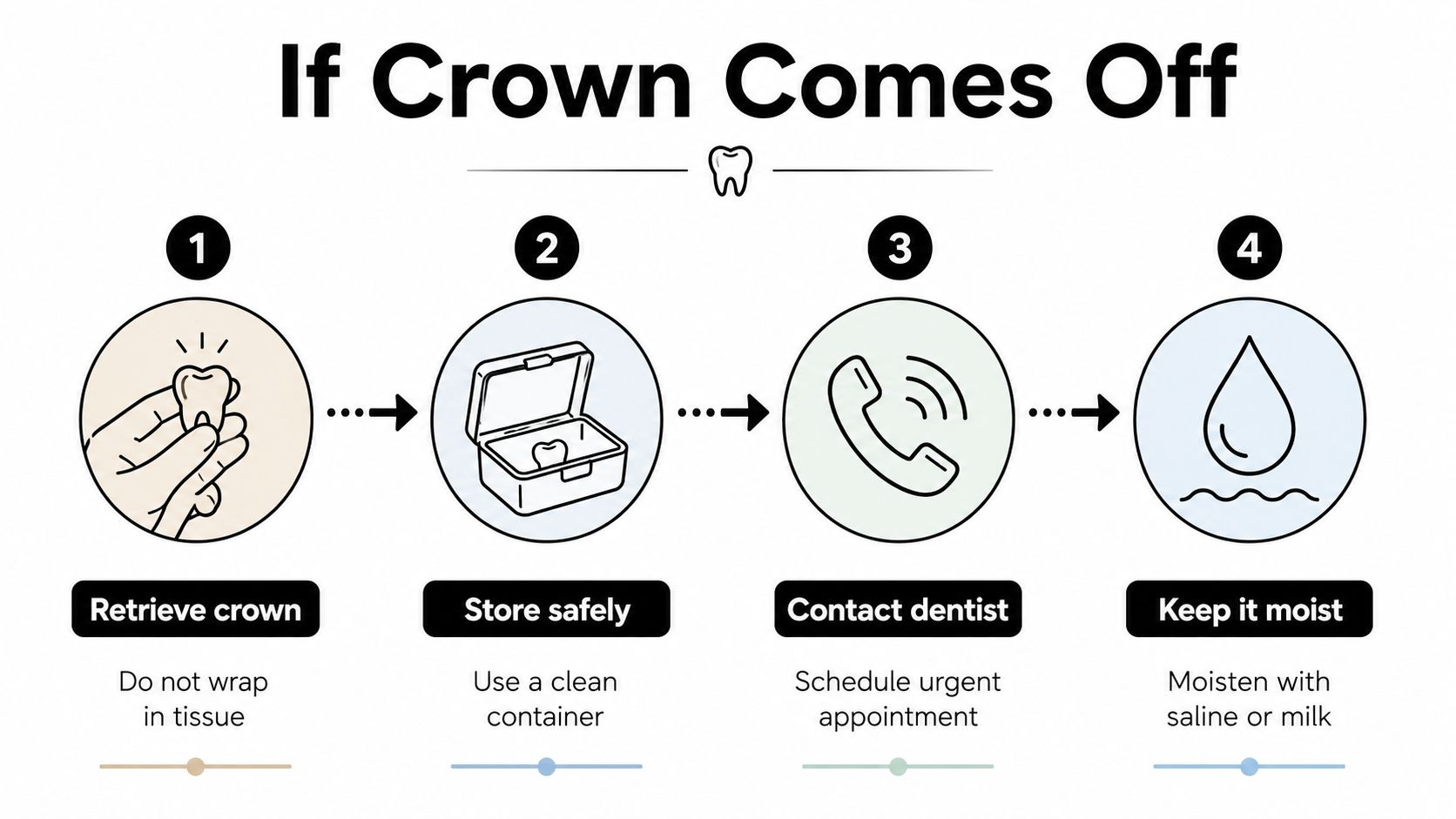
If the crown pops off, stay calm and move step by step. First, find the crown if you can. Put it in a clean container, not a tissue, so it doesn't get lost or damaged. Do not try to glue it back on with drugstore adhesive.
What to do first
- Retrieve the crown: Pick it up carefully and keep it clean.
- Store it safely: Use a small, clean container, not a napkin or pocket.
- Call the office: Ask for an urgent appointment, because the tooth needs protection.
- Keep it moist if needed: Saline or milk can help if the crown is waiting briefly for re-cementation.
If the tooth feels sensitive, avoid chewing on that side. Soft foods and lukewarm liquids are usually easier until the crown is replaced. If there is bleeding, severe pain, or the tooth itself looks damaged, that's more urgent.
The bigger risk is leaving the tooth uncovered too long. When a temporary crown is out, the tooth can become sensitive and the area can get irritated, which makes the final step harder. That's why same-week, and sometimes same-day, care is the right move.
If you've lost the crown, don't spend the day troubleshooting it at home. Get it to the dentist quickly, keep the crown safe, and let the office handle the re-cementation or replacement.
Managing Sensitivity and Discomfort Until Your Permanent Crown
Mild sensitivity is common, especially with cold drinks, chewing pressure, or gum tenderness around the crown. Warm salt-water rinses can soothe irritated tissue, and a desensitizing toothpaste used at the margin may help with temperature sensitivity. For short-term soreness, many patients also use an over-the-counter anti-inflammatory like ibuprofen if their doctor has said it's safe for them.
Pain that throbs, starts on its own, or wakes you up at night is different. That kind of pain isn't the usual temporary crown adjustment period, and it deserves a prompt call to the office.
A temporary crown is part of broader restorative and cosmetic dentistry care. Patients who are planning veneers, dental implants, or a full smile makeover often move through the same in-between stage before the final result is placed. Good temporary crown care helps that whole process feel smoother, because the gum tissue stays calmer and the tooth stays better protected.
If you're looking for a dentist in Katy, TX who understands both comfort and detail, The Dental Retreat offers spa-inspired care, bilingual support, extended hours, and new-patient specials like a $99 exam with cleaning and X-rays for patients without insurance. That matters when you're trying to get through a temporary crown stage without guesswork.
If your temporary crown feels loose, high, or uncomfortable, don't wait and hope it sorts itself out. The Dental Retreat helps Katy patients with restorative care, emergency visits, and the follow-through that makes the final crown appointment easier. Visit The Dental Retreat to schedule your visit and get the crown checked before a small issue turns into a bigger one.