You wake up with a sore jaw again. By lunchtime, your temples feel tight, your teeth don't seem to come together the same way, and that little click near your ear is back every time you chew. If that sounds familiar, you're not overreacting. Jaw pain can affect eating, sleeping, talking, and even your ability to get through a normal workday in Katy, TX.
A lot of people assume they just have to live with it, especially when symptoms come and go. They don't. TMJ problems are common, and in many cases they can be managed with thoughtful, conservative care. If you've been searching for a dentist near me, a dentist in Katy, TX, or even an emergency dentist because jaw pain suddenly flared up, it helps to understand what's happening and what treatment usually looks like.
This guide walks through TMJ disorder treatment in a calm, practical way. If you live in Katy, TX, or nearby neighborhoods like Sunterra, Cane Island, Katy Manor, Kingscrossing, Lakehouse, Marisol, The Grange, Anniston, Katy Lakes, Elyson, or Ventanna Lakes, you'll see what the first steps often are, when a custom dental device may help, and when more advanced care is considered.
Finding Jaw Pain Relief with a Dentist in Katy TX
For many patients, TMJ trouble doesn't start with one dramatic event. It starts with small frustrations that build. You notice popping when you yawn. You avoid chewy foods because your jaw gets tired. You get morning headaches and assume it's stress, poor sleep, or too much screen time.
Then one day it becomes hard to ignore.
A patient from the Katy area might describe it like this. “My jaw feels tight when I wake up, my face aches by the afternoon, and sometimes my ear feels full even though I don't have an ear infection.” That cluster of symptoms is common with temporomandibular joint problems. The pain may sit in the joint itself, in the chewing muscles, or both.
Why jaw pain can feel so confusing
TMJ discomfort often mimics other issues. It can feel like a toothache, sinus pressure, ear pain, tension headaches, or neck strain. That's one reason people often search for a dentist in Katy, TX before they realize the problem may involve the jaw joint and surrounding muscles.
Common complaints include:
- Clicking or popping sounds when opening or closing the mouth
- Headaches, especially in the morning
- Facial soreness around the cheeks, temples, or jawline
- Pain with chewing or wide opening
- Jaw stiffness that makes talking or eating uncomfortable
Jaw pain often looks bigger than “just the jaw.” It can affect the face, neck, ears, sleep, and daily comfort all at once.
Relief usually starts with simple care
The encouraging news is that aggressive treatment is often unnecessary. A careful dental evaluation can help sort out whether clenching, grinding, muscle tension, bite strain, joint irritation, or a combination is driving the pain. From there, treatment usually begins with the least invasive options first.
That patient-first approach matters. If you're also looking for help with broader dental needs like cleaning and exams, dental x-rays, new patient exams, restorative dentistry, tooth extraction, or even cosmetic dentist near me services, it's helpful to work with a dental office that can look at your whole oral health picture, not just one symptom in isolation.
Understanding TMJ Disorder Symptoms and Causes
The temporomandibular joint, or TMJ, works like a small hinge and sliding joint at the same time. It functions as a door hinge would, supported by muscles and cushioning. It helps your jaw open, close, glide, and move side to side when you talk, chew, swallow, and yawn.
When that system gets irritated, the joint may not move smoothly, and the muscles around it may tighten up in response. That's when symptoms show up.
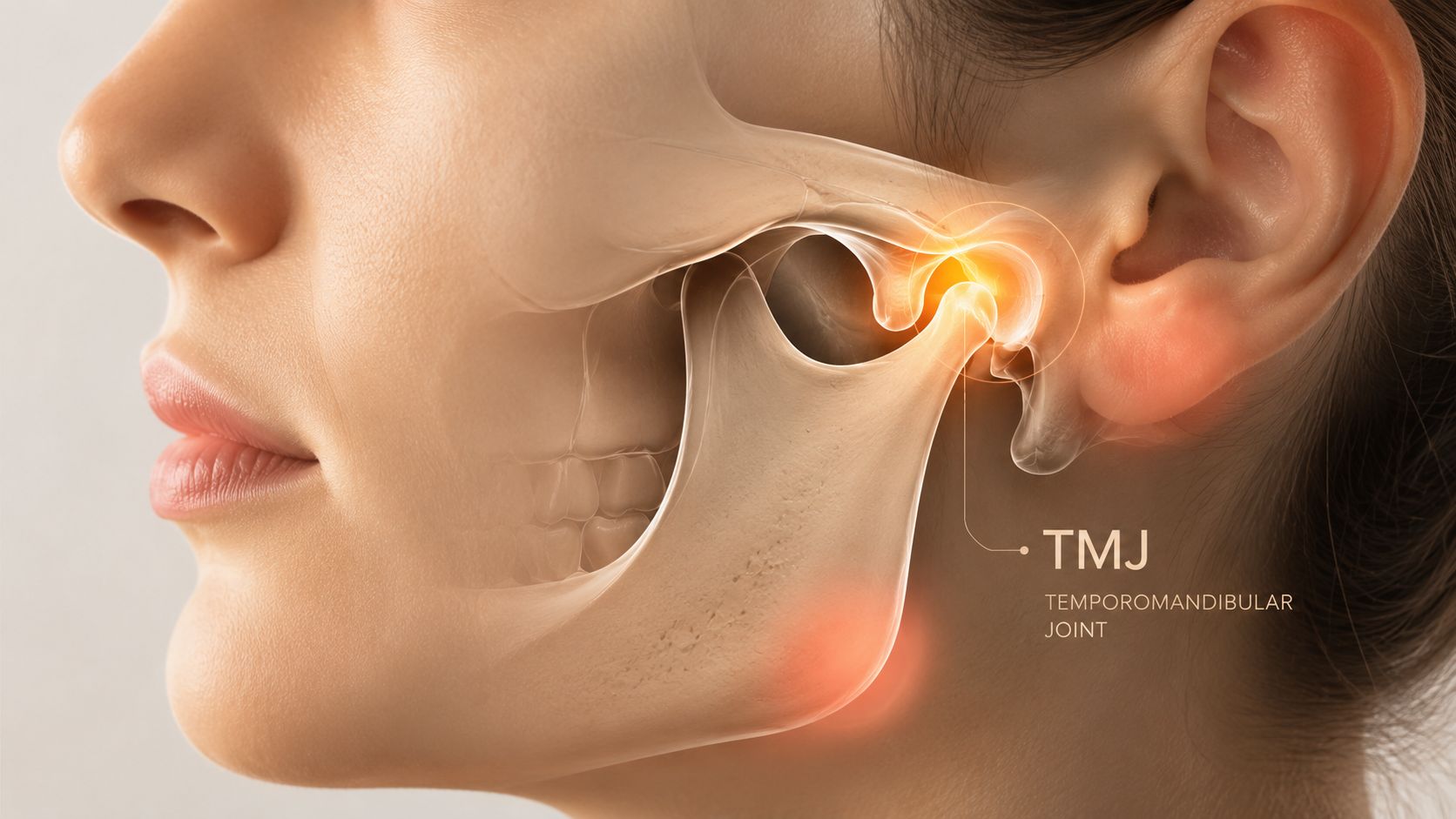
The joint, the muscles, and the triggers
It helps to break TMJ problems into three parts.
The joint can become inflamed, strained, or mechanically irritated.
The muscles can become overworked from clenching, grinding, or guarding against pain.
The triggers are the habits or conditions that keep the cycle going.
That's why one person may have mostly joint noise, while another has mostly muscle pain and headaches.
Symptoms people often notice first
Some signs are obvious. Others are easy to dismiss at first.
- Jaw clicking or popping that may or may not hurt
- Pain near the ears without a clear ear problem
- Difficulty chewing tough or crunchy foods
- Jaw locking or limited opening
- Tension headaches or facial fatigue
- Tender chewing muscles, especially after waking up
If you suspect nighttime grinding is part of the problem, this article on what causes teeth grinding at night can help connect the dots.
Causes are often layered
Many patients want one simple answer. Usually, there isn't just one. Stress can lead to clenching. Poor sleep can increase grinding. Arthritic changes can affect the joint itself. A strained bite pattern can overload already tense muscles.
Posture is another piece that gets missed. Research on TMD and the cervical spine notes a strong clinical link between jaw problems and upper cervical dysfunction, and it emphasizes maintaining good posture, especially if you work all day at a computer. Forward head posture can increase strain through the jaw, neck, and facial muscles.
Practical rule: If your jaw hurts more after long hours at a desk, the problem may involve both your jaw and your neck posture.
That's why treatment works best when it looks beyond the teeth alone. A good TMJ evaluation considers your bite, your muscles, your habits, your sleep, and how you hold your head and neck throughout the day.
Your First Steps Conservative Non-Surgical Treatments
You wake up in Katy with a sore jaw, your temples feel tight, and breakfast already sounds like work. That kind of morning can make TMJ problems feel bigger than they are. In many cases, the first phase of treatment is gentle, practical, and focused on calming irritated muscles and joints before anyone considers more involved care.
TMJ disorder treatment usually begins with conservative steps because the jaw often responds well when we reduce strain and give inflamed tissues time to recover. At The Dental Retreat, that patient-first approach matters, especially for people who already feel tense about dental visits. The goal is to help you feel informed, comfortable, and in control.
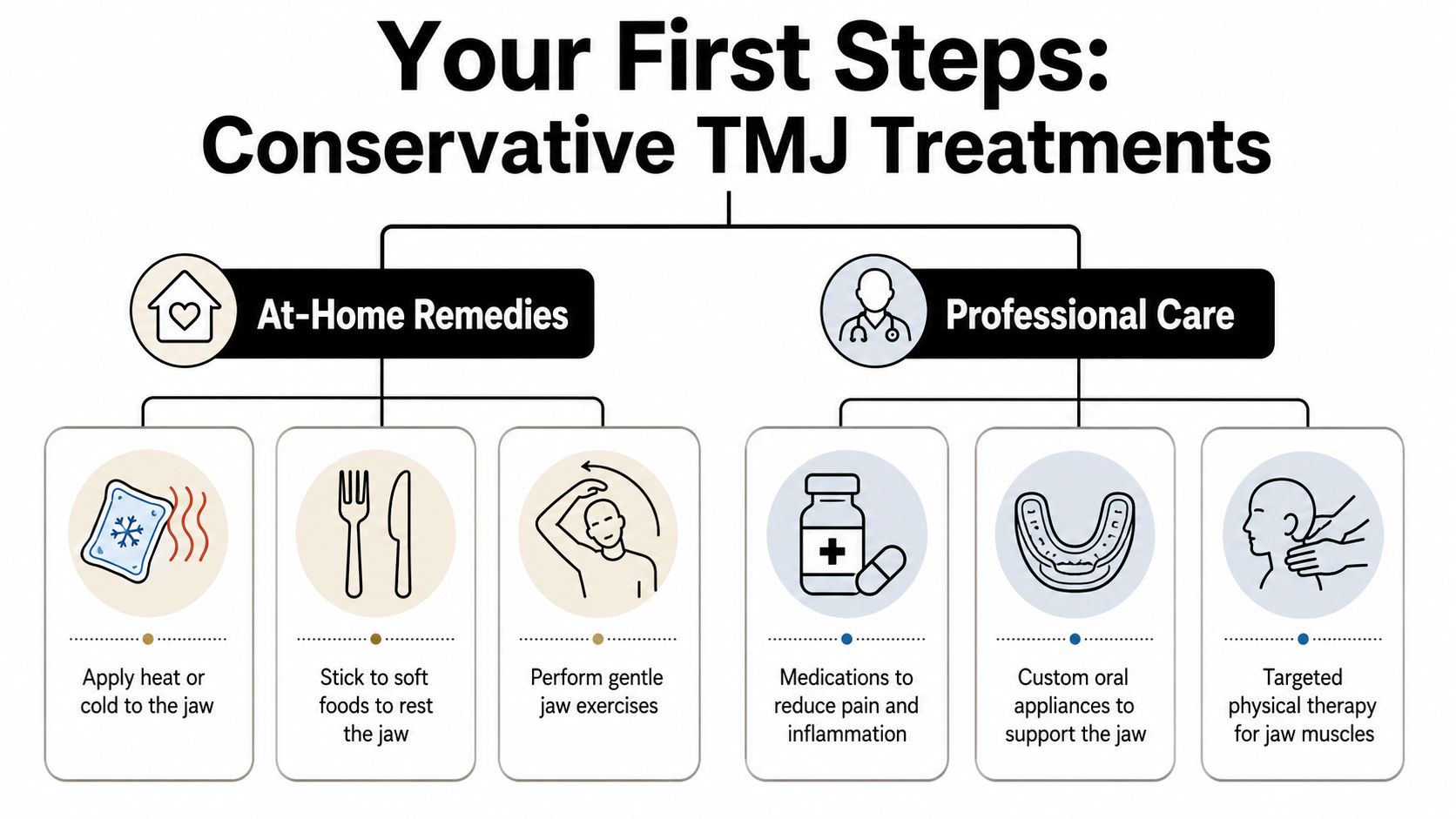
Start by lowering the strain on the joint
A sore jaw needs the same kind of common-sense protection you would give any overworked body part. If your knee were irritated, you would not choose a long run that day. The jaw works the same way. Less strain often means less irritation.
These first-line habits can help:
- Choose softer foods for a short period. Eggs, yogurt, soups, rice, pasta, fish, smoothies, and cooked vegetables are usually easier on the jaw than crusty bread, jerky, gum, nuts, or tough steak.
- Apply moist heat to sore muscles around the cheeks or temples. Gentle warmth can help tight muscles relax.
- Avoid very wide opening for a while. Big yawns, long dental appointments without breaks, gum chewing, nail biting, and singing loudly for long periods can all aggravate symptoms.
- Check for daytime clenching. A relaxed jaw position is simple: lips together, teeth apart, tongue resting lightly on the roof of the mouth.
- Adjust your workstation and driving posture if your symptoms build during the day.
Small changes add up.
Know when home care needs backup
If self-care helps only a little, that does not automatically point to a severe joint problem. It often means the muscles are staying guarded, the joint is still irritated, or habits like clenching are continuing in the background.
Doctors and dentists often recommend a short course of conservative care first. This may include patient education, a temporary soft diet, jaw rest, and medication chosen for your medical history. Anti-inflammatory medicine may be appropriate for some patients, and a muscle relaxer is sometimes considered when muscle spasm is a major part of the picture. Those choices need professional guidance, especially if you have stomach issues, kidney concerns, heart disease, take blood thinners, or use other medications.
Here's a helpful overview before we go further:
Physical therapy can help when the problem extends beyond the jaw
Many patients are surprised to learn that TMJ relief sometimes starts with the neck, shoulders, and surrounding muscles. The jaw does not work in isolation. It shares the workload with nearby muscles that help stabilize your head and guide movement.
A clinical handout from Ohio State University describes a multimodal physical therapy approach that includes at least five 30-minute sessions to produce clinically meaningful symptom reduction, along with soft tissue mobilization, gentle isometric work, and manual joint distraction.
That kind of care can be useful when your symptoms include muscle tightness, limited opening, neck tension, or pain that spreads into the temples and shoulders. A dentist may coordinate this care if your exam suggests both bite-related strain and musculoskeletal tension.
One approach to avoid early on
Trying to keep the jaw completely still is usually not the answer. An older AAFP review notes that TMJ immobilization has no therapeutic benefit and can worsen symptoms by contributing to muscle contracture, fatigue, and reduced synovial fluid production.
Comfortable movement is the target. Gentle function helps the joint stay nourished and the muscles stay more balanced.
For many anxious patients, this is a relief to hear. The first steps are often simple, conservative, and manageable. At a comfort-focused practice like The Dental Retreat in Katy, care can begin with education, reassurance, and a clear plan that moves from the least invasive options upward only if needed.
Custom Occlusal Guards a Core Dental Solution
When clenching or grinding is part of the problem, a custom occlusal guard is one of the most common dental tools used in TMJ disorder treatment. Many patients find this confusing, because all “mouthguards” are not the same.
A store-bought guard may protect teeth from some wear, but it isn't made to match your bite precisely. If the fit is off, it can feel bulky, shift during sleep, or place pressure where you don't want it. A custom device is designed around your specific teeth and jaw relationship.
Why precision matters
The point isn't only to create a barrier between upper and lower teeth. A well-made occlusal appliance can also support a more stable jaw position and reduce some of the strain that keeps chewing muscles tense.
That precision matters because TMJ pain often comes from uneven loading, guarded muscle activity, or pressure inside the joint area. If the appliance doesn't fit accurately, it may not help the muscles settle.
A simple comparison helps:
| Option | Main advantage | Main limitation |
|---|---|---|
| Store-bought guard | Easy to buy quickly | Generic fit may not support the jaw well |
| Custom occlusal guard | Made for your bite and treatment goals | Requires professional evaluation and fitting |
What the evidence says
TMJ disorders affect roughly 10 million people in the United States, and clinical evidence shows custom occlusal dental devices can alleviate symptoms in over 70% of patients who use them, according to Medscape's TMJ overview. That doesn't mean a guard is the answer for every patient. It does mean it's a meaningful conservative option when selected carefully.
At the same time, splints shouldn't be viewed as a magic fix in isolation. Some patients do best when a guard is combined with muscle work, posture changes, behavior awareness, and jaw exercises.
What getting a custom guard usually involves
The process is usually straightforward and comfortable:
- A detailed exam checks joint sounds, muscle tenderness, range of motion, wear patterns, and bite clues.
- Records of your teeth are taken so the appliance can be made to fit precisely.
- The device is adjusted so it contacts correctly and feels balanced.
- Follow-up visits make sure it's helping instead of simply covering teeth.
A custom occlusal guard should feel like part of a treatment plan, not a product pulled off a shelf.
This kind of appliance also fits naturally within broader dental care. If a patient is also dealing with worn teeth, cracked restorations, restorative dentistry needs, or future planning for dental implants near me searches after tooth loss, protecting the bite and reducing grinding forces can become even more important.
When to Consider Advanced or Surgical Interventions
A lot of patients hear the term "advanced treatment" and picture major surgery right away. For TMJ problems, that is usually not the path. In most cases, the next step only comes up after careful, steady conservative care has not brought enough relief.
A good way to understand this is to think about why the jaw hurts in the first place. If the problem is mostly muscle tension, clenching, or bite strain, more invasive treatment usually does not match the cause. If the joint itself has a lasting mechanical problem, such as repeated locking or limited movement that does not improve, a higher level of care may be appropriate.
Signs a higher level of care may be needed
Your dentist or a TMJ specialist may discuss advanced options when symptoms start affecting basic daily life, not just comfort. Common reasons include:
- Pain that continues after consistent non-surgical treatment
- Limited opening or episodes where the jaw locks
- Joint-related structural concerns seen on exam or imaging
- Trouble eating, speaking, or sleeping because of jaw symptoms
That progression matters. TMJ care should move in steps, from the least invasive option to the more involved ones, based on how your jaw responds. At The Dental Retreat's TMJ therapy in Katy, that patient-first approach helps keep the plan clear and less overwhelming, especially for people who already feel anxious about treatment.
What advanced treatments usually involve
The first advanced procedures are often minimally invasive, not open surgery.
Arthrocentesis uses fluid to rinse the joint space. In the right case, that can help reduce inflammation and improve movement.
Arthroscopy uses a very small camera and instruments to look inside the joint and treat certain problems more directly.
Open joint surgery is reserved for a much narrower group of patients with clear structural issues that have not responded to other care. That is one reason a careful diagnosis matters so much. Jaw clicking alone does not point to surgery. Persistent dysfunction does.
Some patients also ask about injections for severe muscle pain or joint inflammation. Those can have a role in selected cases, but they are not the default next step for routine jaw soreness.
The question that keeps treatment grounded
A better question is, "What is causing my pain, and what is the least invasive way to address it?"
That mindset can lower a lot of anxiety. It keeps the focus on matching the treatment to the problem instead of rushing toward the strongest-sounding option. Good TMJ care should feel measured, clear, and respectful of your comfort from the first self-care steps to referral for advanced treatment, if that referral is ever needed.
Your TMJ Treatment Experience at The Dental Retreat
When you're already dealing with jaw pain, even booking a dental appointment can feel stressful. Many patients worry that opening wide for an exam will hurt, that they'll feel rushed, or that they'll leave with vague advice and no real plan.
A better experience starts with listening. TMJ evaluations work best when the appointment includes time to talk about headaches, popping, clenching, sleep habits, neck tension, chewing discomfort, and what tends to trigger flare-ups.
What a visit typically includes
A TMJ-focused dental visit often begins with a review of your symptoms and health history. Then the dentist checks jaw movement, muscle tenderness, joint noises, bite patterns, and signs of grinding or uneven wear. If needed, dental x-rays or other records help rule out tooth or joint-related contributors.
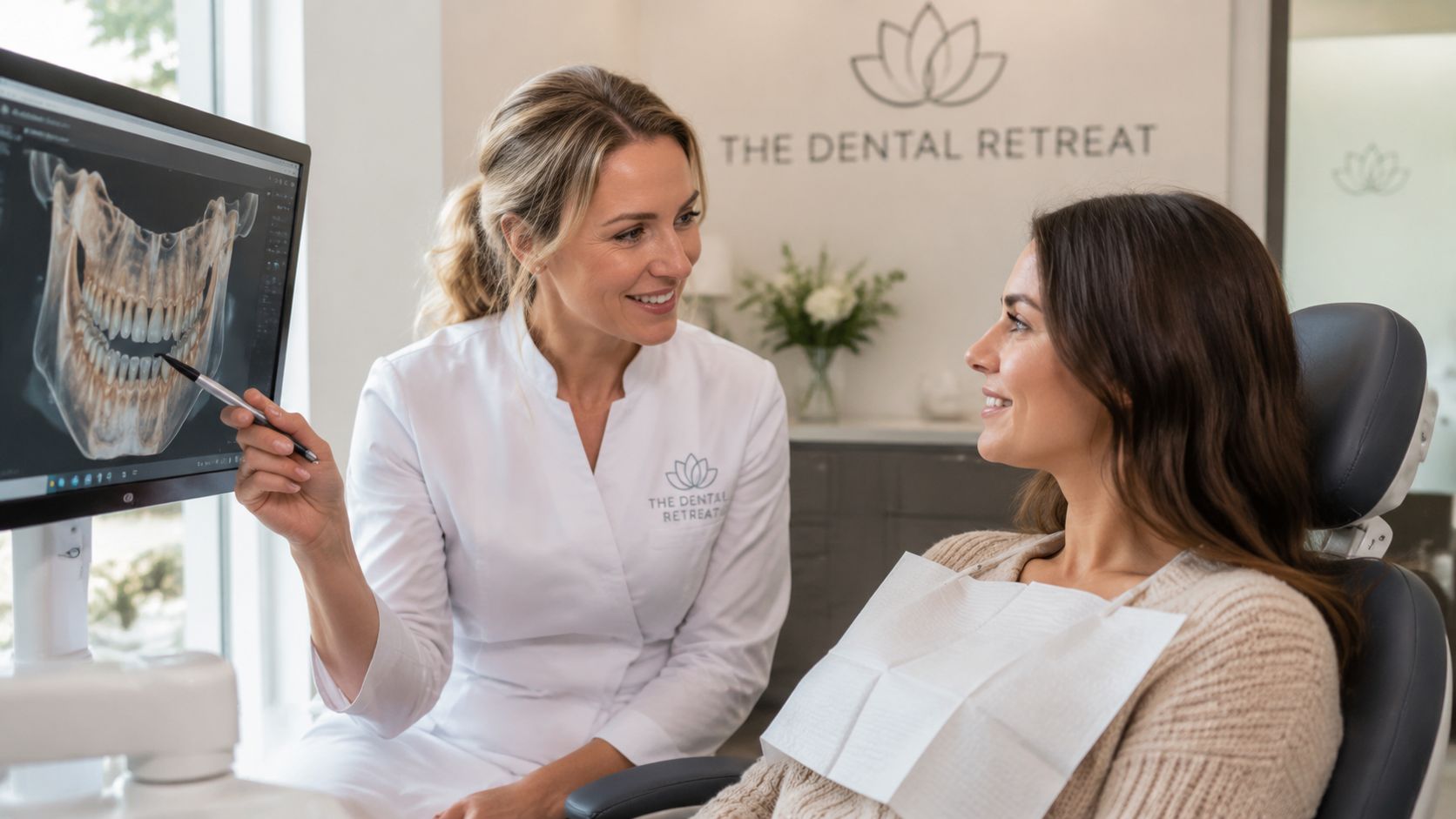
That kind of visit should feel methodical, not intimidating. The goal is to identify the likely pain drivers and build a plan that fits your symptoms.
Why comfort matters for TMJ patients
People with jaw pain are often tense before they even sit in the chair. That tension can make symptoms worse. A calmer environment can make the exam easier and can help anxious patients tolerate care more comfortably.
At a comfort-focused office, patients may appreciate features like:
- Heated massage chairs that reduce physical tension during appointments
- Aromatherapy and noise-cancelling headphones for a quieter experience
- TVs in treatment rooms to provide distraction and comfort
- Sedation options for patients whose anxiety or discomfort makes treatment difficult
- Bilingual support and extended hours that make care easier to access
For patients in Katy Manor, Kingscrossing, and Marisol, those details aren't extras. They can make the difference between putting off care and finally getting answers.
A plan that can connect your dental needs
TMJ treatment doesn't exist in a vacuum. During the same relationship with your dental team, you may also need cleaning and exams, emergency dentist care for a cracked tooth from grinding, tooth extraction planning for a non-restorable tooth, or longer-term cosmetic dentistry and restorative dentistry support after years of bite wear.
If you want to learn more about the clinical side of care, this page on TMJ therapy in Katy offers a helpful overview.
Good TMJ care should lower anxiety, clarify the diagnosis, and give you manageable next steps.
Frequently Asked Questions About TMJ Treatment
How long does TMJ treatment take to work
That depends on the cause and the treatment used. Some people feel improvement within weeks after reducing strain, adjusting habits, or starting a custom appliance. Others need a longer course, especially if muscle tension, grinding, posture, and joint irritation have been building for a long time.
Can TMJ pain go away on its own
Sometimes mild symptoms settle down, especially if they were triggered by temporary stress or overuse. But recurring pain, locking, headaches, or chewing difficulty usually means it's worth getting evaluated. Ongoing symptoms can keep cycling if the root cause isn't addressed.
Is TMJ treatment covered by insurance
Coverage varies widely. Some parts of care may fall under dental benefits, while others may involve medical coverage depending on the diagnosis and treatment. The best next step is to ask the office to review your benefits and explain expected costs before treatment begins.
Will I need surgery
Most patients won't. TMJ care usually starts with conservative options such as self-care, bite appliances, medication guidance, behavior changes, and physical therapy support. Surgery is generally reserved for a small group of patients with persistent structural problems.
Should I see a dentist if I also want help with other dental problems
Yes. That's often ideal. A dentist can look at jaw symptoms while also checking for tooth wear, fractures, gum issues, bite strain, and related needs like teeth whitening, dental implants near me, or other restorative concerns that may affect long-term comfort and function.
If jaw pain is affecting your sleep, meals, focus, or peace of mind, it's time to get clear answers. The Dental Retreat in Katy, TX offers patient-centered care in a calm, spa-inspired setting for individuals and families in Katy, Sunterra, Cane Island, Katy Manor, Kingscrossing, Lakehouse, Marisol, The Grange, Anniston, Katy Lakes, Elyson, and Ventanna Lakes. Whether you're searching for a dentist near me, an emergency dentist, help with TMJ disorder treatment, or complete dental care from exams to restorative and cosmetic services, schedule a consultation to get a personalized plan for lasting relief.