You're sitting in the chair, the procedure is done, and the part many patients worry about is already starting to feel real. Your mouth is numb, your heart is still a little fast, and the first question is always the same, how bad is this going to hurt once the anesthesia wears off?
The good news is that oral surgery pain management is usually a plan, not a guessing game. For patients in Katy, TX, that plan should feel clear before they leave the office, whether they're recovering from a tooth extraction, dental implant placement, or wisdom teeth removal. At The Dental Retreat, the goal is to help you know what's normal, what to take, and when to call, so recovery feels controlled instead of chaotic.
What to Expect After Oral Surgery in Katy
The moment after surgery can feel a little surreal. You're aware that your jaw was worked on, but you may not feel much yet because numbness is still doing its job. That gap between “I'm okay right now” and “what happens when the medicine wears off” is where most anxiety starts.
In real life, recovery is usually more predictable than people expect. Pain after oral surgery tends to follow a curve, not a straight line. A patient might feel fine in the chair, then notice discomfort a few hours later, then see it settle gradually over the first few days.
That is why a recovery plan matters more than toughing it out. A local team can walk you through the first night, the next morning, and the point where the soreness starts to ease. If you're comparing notes with a family member or searching for a dentist near me in Katy, it helps to know that this plan is meant to keep pain predictable and controllable, not force you to chase it after it gets worse.
For a helpful overview of extraction recovery, see tooth extraction recovery guidance.
A recovery map instead of a mystery
The goal after oral surgery isn't zero sensation. It's knowing what the next few hours and days should feel like, so normal swelling and soreness don't scare you.
Practical rule: If you know the timing of the discomfort, you can stay ahead of it instead of reacting late.
That mindset matters for patients across Sunterra, Cane Island, Katy Manor, Kingscrossing, Lakehouse, Marisol, The Grange, Anniston, Katy Lakes, Elyson, and Ventanna Lakes. The same recovery logic applies whether you're here for an extraction, implant placement, or wisdom teeth surgery.
Why Oral Surgery Hurts and How Pain Behaves
Pain after oral surgery starts in more than one place. The tooth or surgical site is one part of it, but the surrounding gum tissue, bone, and nerve endings are also disturbed during treatment. That is why soreness often shows up with swelling, throbbing, and jaw stiffness at the same time, because those tissues react together as the area begins to heal.
The mouth is healing from a controlled injury. An extraction socket and an implant site both need time to settle, and the body's inflammatory response is part of that process. The pain is real, but it usually follows a time-limited pattern rather than building without end.
The timing helps patients stay grounded. Clinical trials show oral surgery pain is typically most intense about 5 to 6 hours after the procedure, peaks during the first postoperative day, and analgesic use is greatest in the first 48 to 72 hours after third-molar extraction Wiley oral surgery pain timing study. Waiting until pain feels severe can backfire, because medicine works better when it is taken before discomfort has a chance to build.
Patient-experience data fits that pattern. In one study, 91% of respondents said their provider explained what to expect after extraction, 92% said they were told how to treat it, and 74% felt confident managing pain by the end of the visit patient experience study. That confidence comes from clear instructions, not guesswork.
What swelling and stiffness usually mean
Swelling is often the body's way of protecting the area. Jaw tightness can happen because the muscles around the surgical site are irritated, not because something is going wrong.
A bruised shin follows a similar pattern. You do not expect it to feel normal right away, and the jaw is no different when bone and soft tissue have been treated.
Pain that rises early, peaks, then eases is usually part of healing. Pain that gets sharply worse after improving deserves a call.
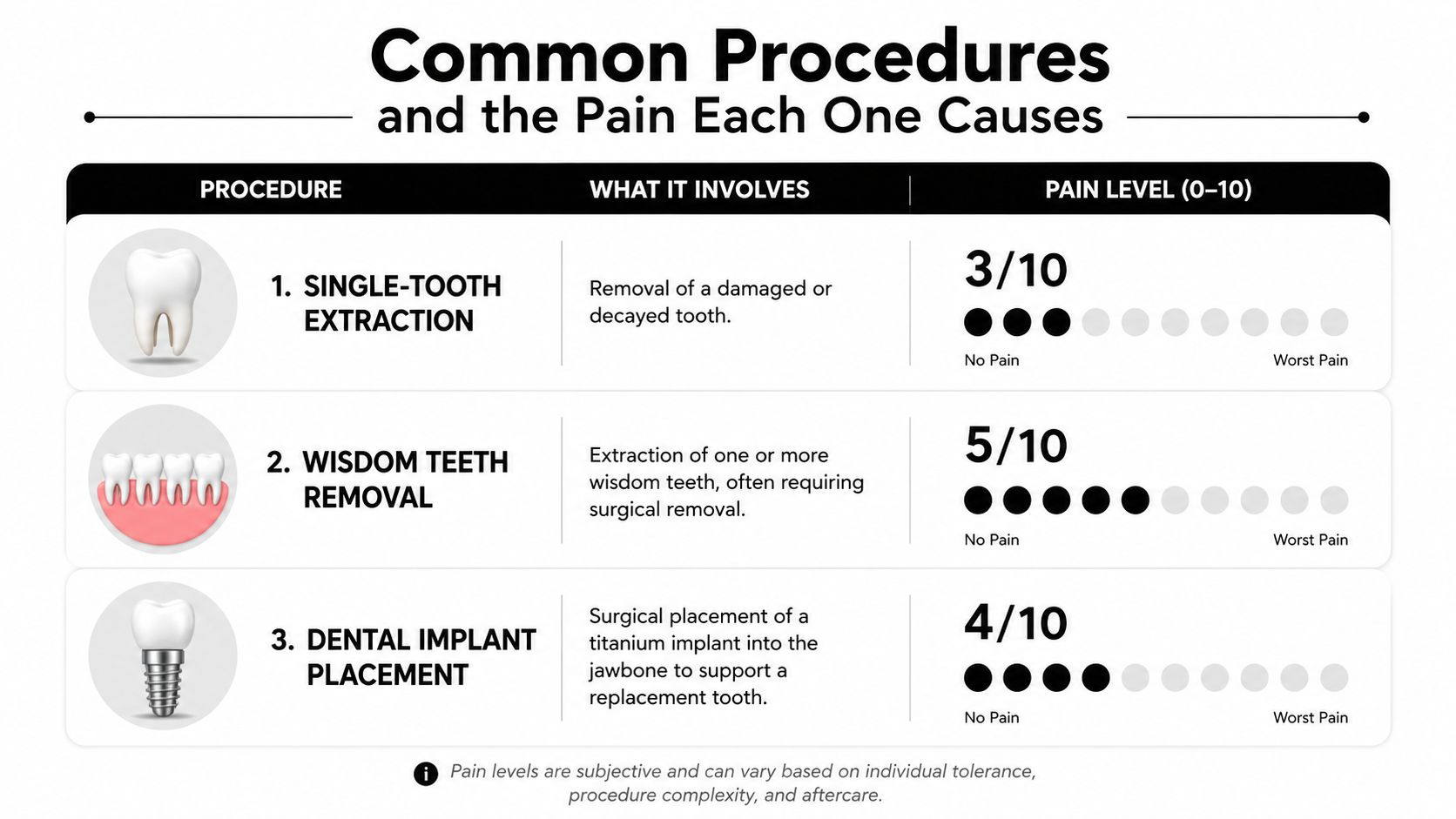
Common Procedures and the Pain Each One Causes
A single-tooth extraction is usually the simplest recovery of the three. You may feel soreness that is annoying but manageable, then notice it easing over the next few days as the socket closes and the surrounding tissue settles. Soft foods and light activity usually fit this phase well.
A dental implant often feels deeper than an extraction because the site reaches into bone. The implant osteotomy is a small, controlled bone site, so the soreness can feel more “inside the jaw” than on the surface. Patients usually need a little more patience here, since the surface discomfort can calm down before the bone underneath finishes healing.
Wisdom teeth removal, especially lower impacted wisdom teeth, is often the most intense recovery. Swelling and limited opening can peak around day two or three, and the jaw can feel tight enough that talking and chewing are awkward for a short stretch. That doesn't mean something is wrong, it means the tissues around a more involved surgery are responding normally.
The exact medicine plan can differ by procedure and medical history, which is why the office's instructions matter more than generic internet advice. A patient having bone removal may need a different plan than someone with a straightforward extraction. The important part is matching the recovery support to the procedure, not assuming every mouth heals the same way.

Reading your own recovery pattern
If your pain feels like surface soreness, it may behave more like a standard extraction. If it feels deeper and more bone-centered, that's more common after implants. If swelling and opening your mouth are the biggest issues, wisdom teeth recovery is often the likeliest match.
Clinical clue: The more bone work involved, the more you should expect stiffness and swelling to be part of the picture.
Evidence-Based Pain Control After Oral Surgery
A good recovery plan starts before the numbness fades. For oral surgery pain management, the current approach is non-opioid first-line therapy, usually an NSAID alone or an NSAID plus acetaminophen. The ADA-endorsed guideline for acute post-extraction pain supports that approach and includes examples such as ibuprofen 400 mg or naproxen sodium 440 mg, with acetaminophen 500 mg added when needed ADA-endorsed guideline. Opioids stay in reserve for pain that does not respond to first-line medicine or for patients who cannot use NSAIDs.
The goal is not to memorize a drug chart. It is to match the medicine to the size of the procedure and the person's medical history. A straightforward extraction usually needs less support than a surgery that involves bone removal, and the plan should reflect that difference instead of treating every mouth the same.
For patients and families, the simplest takeaway is this. If the procedure is mild, the plan often centers on standard over-the-counter anti-inflammatory medicine and acetaminophen. If the procedure is more involved, the office may build a stronger schedule around those same medicines rather than jumping straight to opioids. That fits the stepwise approach described in the oral surgery analgesics review and keeps the focus on controlling inflammation as well as pain oral surgery analgesics review.
The reason this combination is used so often is simple. In dental extraction pain, ibuprofen plus acetaminophen worked better than either medicine alone in the review synthesis, which is one reason the field has shifted away from routine opioid use PubMed review. For many patients, that means less grogginess and fewer side effects, while still staying ahead of the pain enough to eat, rest, and keep the mouth clean.
The steroid and the non-drug supports
Inflammation is part of the pain story, so reducing it early can change how recovery feels. A single 4 mg dose of dexamethasone fits into the “1–2–4–24” approach and has been shown to reduce pain, swelling, and trismus after third molar surgery, implant surgery, and endodontic procedures dexamethasone review. It is a focused anti-inflammatory step, not a substitute for the rest of the plan.
The rest of recovery care still matters. Ice packs, soft cool foods, head elevation, and giving the jaw a break all work like supports under a healing bridge, they do not replace the medicine, but they help the medicine work better. For a plain-language guide on home swelling care after extraction, this swelling guide is a useful companion.
If the pain plan is working, the mouth usually feels sore but manageable, not sharp and out of control. That is the target after oral surgery, steady relief, less swelling, and a recovery that stays predictable enough to follow.
How Comfort-Focused Care Changes Recovery in Katy
A good pain plan is easier to follow when the visit itself lowers stress. In Katy, that can mean sedation dentistry, a calm environment, and a team that explains the first 72 hours before you leave the office. Less anxiety doesn't erase healing, but it can make the whole recovery feel more manageable.
At The Dental Retreat, the comfort side is built into the visit. That includes aromatherapy, massage and heated chairs, noise-cancelling headphones, TVs in every room, weighted blankets, and warm towels, all of which can help a tense patient settle down after surgery. When the nervous system calms down, it's easier to eat soft foods, rest, and take medication on schedule.
Extended hours matter too. If you're sore after an extraction in Sunterra or worried about swelling after an implant in Elyson, being able to call the same day can keep a small issue from becoming an overnight panic. That access can be just as helpful as the medicine itself.
For patients without insurance, planning is also part of comfort. The $99 exam, the $49 problem-focused visit, and the $299 annual membership plan make it easier to schedule the surgery and the follow-up without waiting for a crisis. Those options matter for families near Stockdick School Rd., Cane Island, Katy Manor, and the surrounding Katy neighborhoods who want to prepare ahead of time.
Local convenience can lower recovery stress
When the office is close, instructions are easier to follow. When the environment is calm, patients are more likely to ask questions before they go home. That combination can make the first night feel less intimidating and the first morning less confusing.
Special Situations That Change the Pain Plan
Some patients can't use the default NSAID-first plan safely. If you take warfarin or a direct oral anticoagulant, the team has to think carefully about bleeding risk, timing, and whether a non-NSAID path makes more sense. In those cases, acetaminophen, longer-acting local anesthesia, and coordination with the prescribing physician become more important than routine ibuprofen.
Pregnancy and breastfeeding call for a similar adjustment. Acetaminophen is generally the starting point, and NSAIDs are used more cautiously and for limited periods when appropriate. The safest plan is the one that fits both the surgery and the stage of pregnancy, so the oral surgery team should coordinate with the obstetric clinician when needed.
Patients with chronic pain who already take opioids can also need a different path. Their pain threshold, medication tolerance, and follow-up needs are different from someone who has never used opioid therapy. A bridged plan and closer communication help prevent both under-treatment and over-treatment.
Anxious or phobic patients often benefit from sedation before surgery because it changes how the procedure is experienced in the first place. Oral or IV sedation doesn't replace good analgesia, but it can reduce the memory of the visit and lower the stress that makes pain feel louder afterward.
Safety principle: The safest pain plan is the one built around your medical history, not a one-size-fits-all medication list.

Red Flags and When to Call the Dentist
A little oozing after surgery is normal, and swelling often climbs before it falls. Pain that peaks on the first day and then starts easing is also part of the usual pattern. Limited jaw opening can happen too, and it should improve gradually rather than getting worse.
The warning signs are different. Severe throbbing pain that returns and worsens after day three or four can point to dry socket. Fevers above 101.5°F, uncontrolled bleeding, increasing swelling after day three, pus, foul taste, difficulty swallowing or breathing, and numbness that doesn't resolve all deserve prompt attention.
If you see those signs, call the office right away. If breathing or swallowing is affected, seek emergency care. Most recoveries don't turn that way, but knowing the line between normal and not normal can keep a problem from dragging on.
If the pain is getting better day by day, that's usually reassuring. If it's getting sharper after it had started to improve, call.
Your Next Step and Common Patient Questions
The best oral surgery recoveries usually come down to two things, the right non-opioid pain plan and clear instructions from a team that knows your medical history. When those pieces are in place, the first few days feel much less uncertain, even after extractions, implants, or wisdom teeth removal.
If you're in Katy, TX, and you want a calm place to plan ahead, schedule a consultation or new-patient exam with a team on Stockdick School Rd. The $99 new-patient offer, the membership plan for uninsured patients, extended hours, and bilingual support can make it easier to get care on a schedule that works for your family.
FAQ
How long does pain usually last after wisdom teeth removal?
Most patients feel the toughest stretch in the first few days, with swelling and stiffness easing after that. Recovery is usually more noticeable day by day once the peak passes.
When can I return to work or exercise?
That depends on the procedure and how much bone work was involved. Light activity often returns sooner than strenuous exercise, and heavy exertion should wait until bleeding and swelling are settling.
Are prescription opioids still routinely needed?
Not usually for routine extraction pain. The current standard favors NSAIDs alone or NSAIDs plus acetaminophen, with opioids saved for selected cases when first-line therapy isn't enough or can't be used.
What if I don't have dental insurance?
Options like the $49 problem-focused visit, the $99 exam, and the $299 membership plan make it easier to plan the procedure and the follow-up without waiting for pain to get worse.
If you're ready to make recovery feel more predictable, schedule your visit with The Dental Retreat in Katy. Their team can walk you through oral surgery pain management, answer your questions before treatment, and help you leave with a plan that fits your health, your schedule, and your comfort.