Waking up with a sore jaw, a dull headache, or a tooth that suddenly feels more sensitive than it did last night can leave you wondering if you slept wrong or if something bigger is going on. If you live in Katy, TX, that morning stiffness may point to teeth grinding at night, a habit many people never notice until the damage starts showing up on the enamel, in the jaw joints, or around older dental work.
A teeth grinding night guard is often the practical next step. It won't change the habit on its own, but it can help protect your teeth while you sleep, which is why patients in Sunterra, Cane Island, Katy Manor, Kingscrossing, Lakehouse, Marisol, The Grange, Anniston, Katy Lakes, Elyson, and Ventanna Lakes often ask about it when they're looking for a dentist near me or a dentist in Katy, TX who can explain what's happening in plain language.
Waking Up With Jaw Pain in Katy
You wake up and notice it first in small ways. The jaw feels tight on one side, the temples ache before coffee, or a partner says they heard grinding during the night. Sometimes the first clue is visual, a front tooth looks flatter than it did the day before.
That pattern deserves attention. Sleep bruxism affects approximately 10% to 16% of adults, and dentistry sources note that people who smoke or drink alcohol or coffee are twice as likely to grind their teeth as those who do not. When a habit shows up this often in adults, it is easy to see why people start looking for relief before the wear gets worse.
Practical rule: if the pain is worse in the morning and eases during the day, grinding belongs on the short list of causes.
For many patients, the concern is not only discomfort. It is the sense that something is slowly changing in the mouth. A teeth grinding night guard is often recommended because it creates a barrier between the upper and lower teeth, helping reduce the contact that chips edges, strains restorations, and leaves teeth feeling sore. The goal is protection, not a promise to stop the habit overnight.
Jaw pain that includes clicking, locking, or a tired feeling near the ears may also point to the temporomandibular joint, so a closer look is often worthwhile. TMJ disorder treatment information can help explain why those symptoms sometimes overlap with bruxism and why the bite needs to be checked carefully.
What Bruxism Is and Why It Happens
Bruxism means repeated grinding or clenching of the teeth. Some people do it mainly by pressing the teeth together, while others move the jaw side to side and create the rubbing sound that partners hear at night. Either way, the force lands on teeth, muscles, and the jaw joint.

Common signs people notice at home
People usually don't discover bruxism because they see themselves grinding. They notice the aftermath instead.
- Morning headaches, especially near the temples.
- Sore jaw muscles when chewing breakfast.
- Tooth sensitivity when drinking cold water or biting into something firm.
- Chipped enamel or little fractures along the edges of teeth.
- A partner hearing grinding or clenching sounds during sleep.
These signs matter because they point to repeated stress rather than a one-time flare-up. A worn tooth, for example, isn't just a cosmetic issue. It can mean the bite is taking more force than it was designed to handle. That's where a teeth grinding night guard helps, not by ending the habit, but by reducing direct tooth-to-tooth contact.
Bruxism is both a dental problem and a behavioral one. That's why the best plan usually combines protection for the teeth with a conversation about triggers and daily habits.
The causes are often mixed. Stress, sleep disruption, bite changes, missing teeth, or worn restorations can all play a part. Caffeine and alcohol can also be relevant, which fits with the adult population data above. For a patient, the useful question isn't “What single thing caused this?” It's “What pattern is my mouth showing, and what should I protect first?”
What causes teeth grinding at night can help patients connect the symptoms they feel at home with the wear a dentist sees in the chair.
How a Night Guard Actually Protects Your Teeth
A night guard is a shield, not a cure. It goes between the upper and lower teeth while you sleep, so the teeth are less likely to meet directly when the jaw clenches or grinds. That spacing is the whole idea, and in the chair it is often easier to explain than people expect.
For many patients at The Dental Retreat in Katy, the benefit becomes clear once they see how force moves through the mouth. A guard can take the brunt of the pressure, much like a bumper absorbs impact before it reaches the parts underneath. Clinical guidance notes that bite guards are preferably made from hard acrylic resin in at least one reference (StatPearls). A harder surface can help spread force more evenly, so one tooth is less likely to take the full load. In plain language, the appliance helps redistribute load, which means pressure is spread across the guard instead of being concentrated on enamel, crowns, or implants.
What it helps with, and what it does not change
A teeth grinding night guard can help with reducing wear on enamel, lowering the chance of chips and fractures, protecting crowns, veneers, and implants from grinding forces, and helping with morning sensitivity when tooth surfaces have been overworked.
It does not reliably stop bruxism itself. Evidence-based patient education and review summaries describe occlusal splints mainly as protective, and a Cochrane-reviewed evidence base plus a 2021 systematic review found insufficient proof that splints reduce grinding behavior itself (Khalid Al Etaibi summary of the evidence, Care Guard Initiative patient education). That point matters, because many patients hope the clenching will disappear once the guard is in place.
The real benefit is protection, not a promise to stop the habit overnight.
That keeps expectations realistic. If someone has moderate or severe wear, nightly use may need to continue, and the fit should be checked over time because the bite can change. Patients who understand that usually do better with the appliance, because they know what success looks like, fewer fractures, less sensitivity, and better preservation of the teeth they already have.
Custom Dental Night Guards vs Over-the-Counter Options
A store-bought guard can look like the easy answer at first. It is quick to buy and seems less expensive, so many people start there before they understand how much the fit affects comfort and protection overnight.
A custom dental night guard is made from a dentist's impression or scan. An over-the-counter guard is a generic shell or a boil-and-bite tray that tries to fit many mouths at once. That difference may sound small, but in sleep it changes how the appliance sits, how the jaw closes, and whether the wearer keeps using it.
A guard that fits your bite usually feels more stable. A generic tray can feel bulky, loose, or uneven, and those small problems can make a person wake up and pull it out before morning.
| Feature | Custom Dental Night Guard | Over-the-Counter Guard |
|---|---|---|
| Fit | Made for your teeth and bite | General fit, often approximate |
| Comfort | Usually more stable and balanced | Can feel bulky or uneven |
| Durability | Built for longer-term use | Often wears out faster |
| Bite stability | Can be adjusted for even back-tooth contact | Limited adjustment |
| Protection for restorations | Better suited for crowns, veneers, and implants | Less predictable |
Which patients usually need custom care
A custom appliance is often the better choice when a patient already has:
- Worn enamel.
- Cracked or chipped teeth.
- TMJ symptoms, like clicking or jaw soreness.
- Existing dental work, including crowns, veneers, bridges, or implants.
That is because fit affects force. If a guard sits unevenly, the bite can feel “off,” and some patients clench more because their jaw keeps searching for a comfortable position. A well-made guard aims for even back-tooth contact and a bite that feels steady, not one that tips the jaw forward or loads the front teeth too much (expert guidance video).
For mild, short-term, or temporary situations, an over-the-counter guard can still be a starting point. It may help someone get through a brief period of grinding until a dentist can evaluate the bite. When there is visible wear, a history of dental work, or ongoing jaw symptoms, a custom appliance is usually the wiser fit.
What to Expect at The Dental Retreat in Katy
A visit for teeth grinding night guard care usually starts with a conversation, not a device. At The Dental Retreat in Katy, the dentist first wants to understand what your mornings feel like, whether your jaw aches, and whether your teeth are showing signs of wear. That first step matters because bruxism shows up in more than one place, and a guard only works well when the full picture is clear.
The exam usually includes looking at the teeth, the bite, and the jaw together. Dental X-rays can show wear patterns, hidden cracks, or other problems that are easy to miss on the surface. If a patient has already been waking up sore or noticing chipped edges, that history helps the dentist connect the symptoms to the right kind of appliance.

After the exam, the next part is getting an accurate record of the teeth. That may involve impressions or digital scans, followed by a bite registration so the guard can match how the teeth meet. Those records are what guide the lab work, and they help the final appliance fit the mouth instead of fighting against it.
What the fitting visit is designed to do
The guard is then fabricated and brought back for delivery. During that visit, the dentist checks the fit, trims the appliance if needed, and adjusts it so the back teeth make even contact and the bite feels steady. A good guard should feel balanced, like a mouthguard made for sleep, not like a piece of plastic that tips the jaw forward or leaves the bite feeling uncertain.
That adjustment visit is also where patients learn what nightly wear should feel like. A custom guard is meant to protect the teeth from grinding forces, even though it does not stop the grinding itself. Some people notice that their jaw feels less strained once the teeth are no longer taking the direct impact, while others need a short period of getting used to the appliance before it feels natural.
The office experience is built to be easier for patients who feel tense about dental work. Aromatherapy, heated chairs, noise-cancelling headphones, and TVs in every room can make scans and fittings feel calmer, especially for someone who already dreads dental appliances or has had a rough experience in the past.
For Katy patients, the practical takeaway is simple. Treatment is usually a few visits, not a one-and-done fix, because fit and comfort matter as much as protection. That slower pace helps the dentist verify that the guard sits evenly, feels comfortable at night, and can be checked again if the bite changes.
Cost, Insurance, and Affordable Options in Katy
A lot of patients pause at the word “cost,” and that hesitation is easy to understand. A custom night guard is a dental appliance you pay for up front, but it is meant to protect enamel, fillings, and tooth edges from the repeated force of grinding, which can save you from bigger repairs later.
Market reports point in the same direction, even if the exact totals vary. One estimate placed the global night guard market at about $250 million in 2024 and projected roughly $350 million by 2029, which implies about 5% CAGR (Market Report Analytics). Another estimate projected $7.2 billion by 2025 with a 6.9% CAGR from 2025 to 2033 (Market Report Analytics). The figures are not identical, but they point to the same thing, more people are looking for protection against grinding.
What that means for a patient in Katy
Insurance coverage depends on how the guard is billed and what the plan allows. Some plans may classify it as preventive care or major care, and some only contribute when bruxism is clearly documented in the record. For families without insurance, clear pricing can matter just as much as the treatment plan.
At The Dental Retreat, new patients without insurance can choose a $99 exam with cleaning and X-rays, a $49 problem-focused visit, and a membership plan starting at $299 per year. That gives patients a practical starting point, whether they are comparing options for dental care, cleaning and exams, or a more extensive treatment plan that could also support future restorative dentistry, cosmetic dentistry, or dental implants near me searches if larger treatment becomes necessary.
A clear estimate helps people decide sooner, especially when they are weighing a one-time guard against waiting until a cracked tooth leads to an emergency dentist visit or a tooth extraction conversation later on.
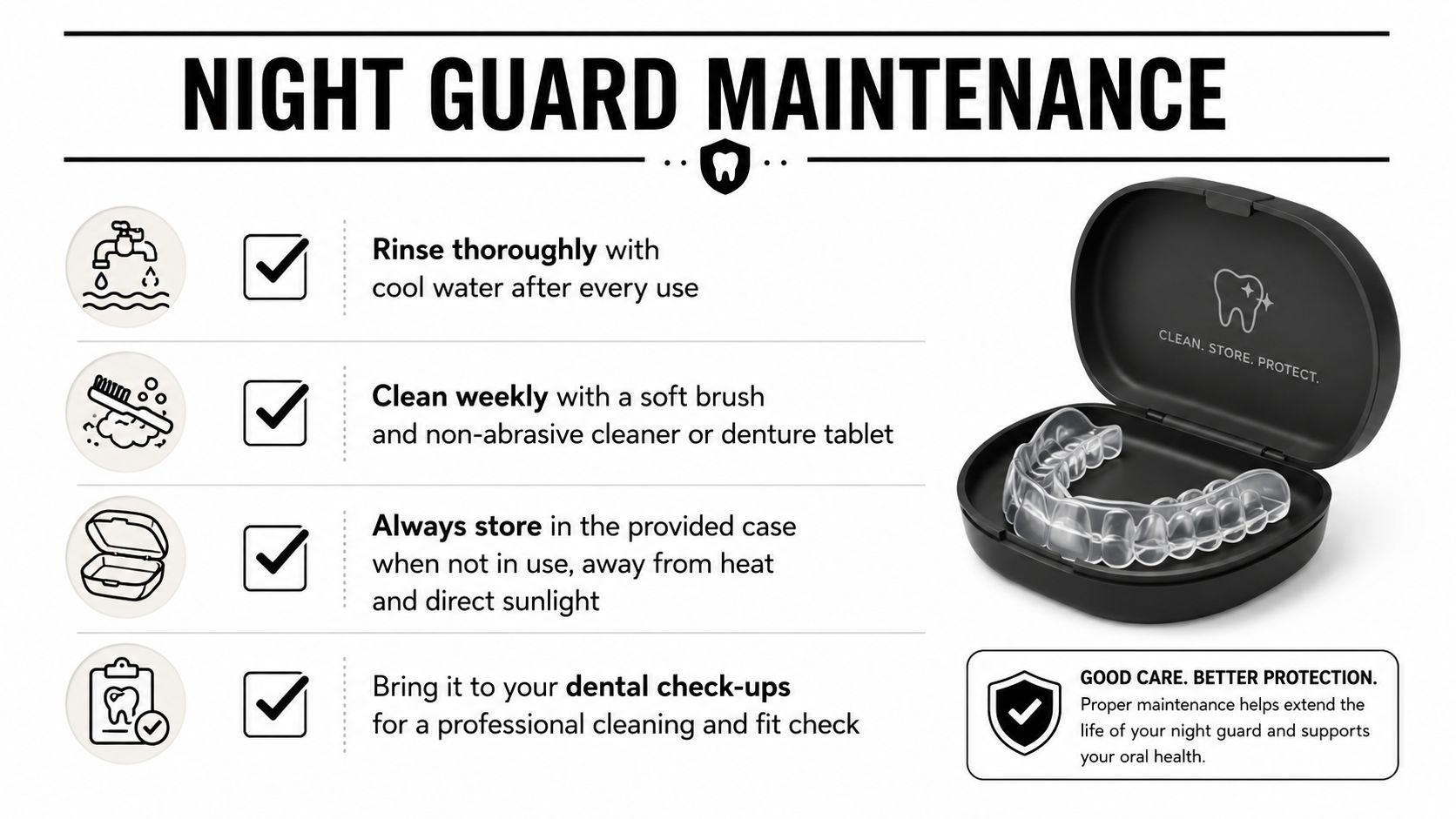
Caring for Your Night Guard So It Lasts
A guard only helps if it stays clean, comfortable, and properly shaped. The night you bring it home matters just as much as the day it was made.
Daily and weekly habits that protect the fit
Use a simple routine.
- Rinse it with cool water after every wear.
- Brush it gently with a soft toothbrush and a non-abrasive cleaner.
- Store it in the case when you're not using it.
- Keep it out of heat, including a hot car or a sunny windowsill.
Hot water can warp acrylic, and a warped guard can stop fitting evenly. Chewing on the guard also shortens its life because it creates stress points in the material. The cleaner the appliance stays, the easier it is to wear every night without irritation.
Signs that it may need attention include cracks, thin spots, persistent odor, or a loose fit. Those are the moments to bring it back in for a check rather than trying to keep forcing it to work. A custom guard should be revisited during routine dental visits so the fit and wear patterns can be reviewed before small problems turn into a replacement.
That maintenance habit is part of the value of a dentist-made appliance. The guard isn't treated like a disposable product. It's checked as part of ongoing oral care, which helps keep the bite comfortable and the teeth protected.
Common Questions and Your Next Step in Katy
People usually want to know how long a night guard lasts, and the honest answer is that it depends on how hard someone grinds and how well the guard is cared for. They also ask whether children can wear one, and that depends on the child's growth, bite, and specific dental needs, so it should be evaluated individually.
If grinding continues while wearing the guard, that doesn't automatically mean it isn't working. It may still be protecting the teeth even if the habit hasn't stopped. If there's cracking, locking, or severe pain, though, that needs prompt dental attention, and in some cases an emergency dentist visit makes sense.
If you're in Katy, TX, and you've noticed jaw pain, morning headaches, sensitivity, or a partner hearing grinding at night, schedule an exam or consultation with The Dental Retreat on Stockdick School Rd. Bring the symptoms you've been noticing, and let the team help you choose the right teeth grinding night guard and next step for your smile.
A CTA for The Dental Retreat.