You're probably here because you brush regularly, you try to do the right thing, and yet the space between your teeth still feels like a question mark. One aisle has waxed floss, tape floss, picks, tiny brushes, and water flossers. Another page online says floss is enough. The next says it isn't. For a lot of adults and families in Katy, TX, the confusing part isn't whether oral hygiene matters. It's knowing which tool fits your mouth.
That uncertainty matters more than is often realized. A toothbrush cleans the fronts, backs, and chewing surfaces of teeth, but it doesn't fully reach the contact points between them. If plaque stays there day after day, it can lead to tender gums, bleeding when you brush, trapped food, bad breath, and cavities that start where you can't easily see them.
Patients looking for a dentist near me in Katy, TX, or trying to find better dental care, often ask a very practical question. “What should I be using between my teeth if floss feels awkward or doesn't seem to work?” The answer usually isn't one-size-fits-all. It depends on your spacing, gum health, braces, implants, and how easy the tool is for you to use consistently.
Your Local Guide to a Healthier Smile in Katy
Standing in front of a shelf full of oral care products can make a simple habit feel oddly complicated. One package says “deep clean.” Another says “gum health.” A water flosser looks promising, but you're not sure if it's worth it. If you've felt stuck choosing between floss, picks, or small brushes, you're not alone.
Many people in Katy, TX already understand brushing. The missing piece is what happens between the teeth, where food debris and plaque like to settle. That area is easy to ignore because it's hard to see, and because problems there often progress unnoticed at first. You may only notice something is wrong when your gums bleed, your breath feels off, or a routine visit turns up a cavity between teeth.
Why this topic feels confusing
Part of the confusion comes from old habits and mixed messages. Lots of adults grew up hearing “just floss,” even if floss never felt easy in their hands. Others assume a quick rinse or mouthwash can do the same job. It can't.
Interdental cleaning tools are tools made to clean between teeth, where a toothbrush doesn't do the full job. That category includes traditional floss, interdental brushes, water flossers, and picks. Each one has a role, but not each one is the best fit for every mouth.
A calm rule to remember: the best between-the-teeth tool is the one that fits your anatomy, feels comfortable to use, and is gentle enough to become a daily habit.
What readers in Katy usually want to know
If you're searching for a dentist in Katy, TX, an emergency dentist, a cosmetic dentist near me, or help after noticing sore gums around a crown or implant, these are the questions that come up most often:
- Does floss still matter: Yes, especially in tight spaces where other tools won't fit well.
- Are little brushes better: For many people, yes, especially when there's enough room for them to pass through gently.
- Is a water flosser enough by itself: Sometimes it's an excellent main tool, especially for certain dental situations.
- Will bleeding mean I'm doing damage: Usually, bleeding points to inflammation and plaque, not that cleaning between teeth is a bad idea.
Good dental care should make this feel simpler, not more intimidating. Once you understand why the space between teeth matters, choosing the right tool gets much easier.
Why Cleaning Between Your Teeth Is So Important
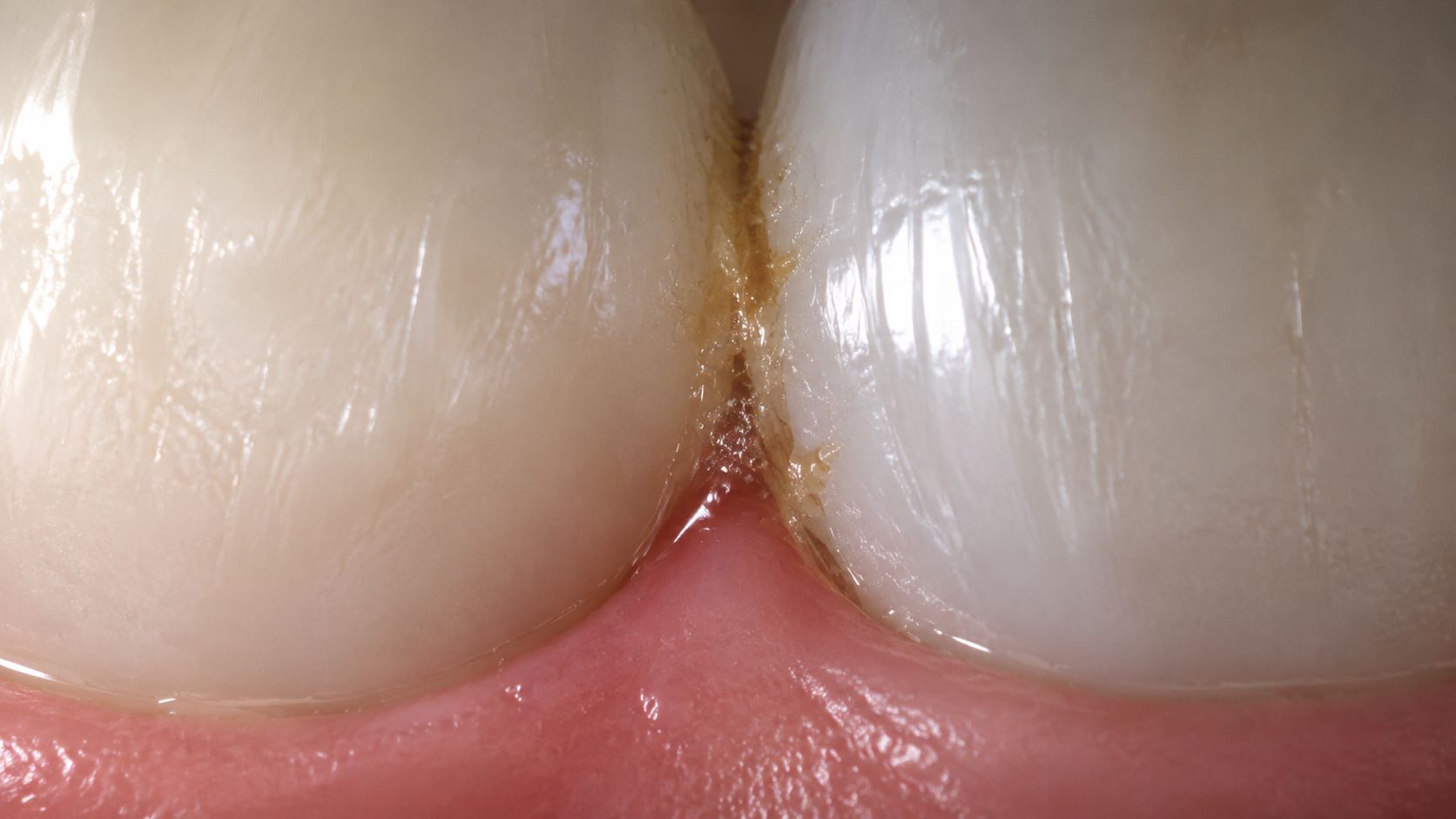
Think of brushing like sweeping the middle of a room. It does a lot of good, but it may miss the corners and edges. The tight spaces between teeth are those corners. Plaque settles there as a sticky film, and if it stays in place, it can irritate the gums and feed the conditions that lead to decay.
When patients say, “But I brush really well,” they're often telling the truth. The issue usually isn't effort. It's access. Toothbrush bristles can't fully wrap around the sides of neighboring teeth, which is why between-the-teeth cleaning is such an important part of preventive care.
What plaque does in those hidden spaces
Plaque doesn't always announce itself right away. At first, you might notice a little puffiness along the gums or a small streak of blood when brushing. Over time, the area may stay irritated because bacteria remain trapped where your toothbrush can't fully reach.
Common signs include:
- Bleeding during cleaning: Often a sign that plaque has been sitting near the gumline.
- Bad breath that comes back quickly: Bacteria between teeth can contribute to odor.
- Food trapping: This may point to spaces that need a different cleaning tool.
- Cavities between teeth: These can develop even when the visible surfaces look fine.
Why the right tool matters
Not all interdental cleaning tools work the same way. Interdental brushes are clinically proven to be more effective than floss, removing plaque as far as 2–2.5 mm below the gingival margin, which is an important depth for periodontal disease prevention, according to this clinical review on interdental cleaning effectiveness.
That doesn't mean floss has no place. It means the best tool depends on the shape of the space you're cleaning. A wider space often benefits from bristles that can touch both tooth surfaces. A very tight space may still call for floss.
Bleeding doesn't automatically mean you should stop. In many cases, it means the gums are inflamed and need gentle, consistent cleaning.
For people trying to avoid fillings, gum treatment, tooth extraction, or more complex restorative care later, this daily habit can make a real difference. It's a small step, but it protects places where dental problems often begin.
Comparing Your Interdental Cleaning Tool Options
The three tools most patients ask about are floss, interdental brushes, and water flossers. Each can help. The key is knowing what each one does well, where it struggles, and how realistic it is for your routine.
Floss, brushes, and water flossers in real life
Traditional floss is familiar, inexpensive, and useful in very tight contact areas. The challenge is technique. It takes finger control, patience, and enough space in your mouth to guide the floss gently around each tooth. Many people think they're flossing well when they're mostly snapping it straight down and back out.
Interdental brushes look small, but they're often the most effective option when there's room for them to pass through comfortably. Contrary to popular belief, rigorous meta-analyses show interdental brushes remove 73.5% of plaque compared to only 33.3% for floss users, with better outcomes for gum inflammation and pocket depth, according to this research summary on interdental brushes and oral health.
Water flossers use a stream of pulsating water to flush around the gumline and hard-to-reach areas. They're often easier for people who dislike string floss or have limited dexterity. They also appeal to patients who want a cleaner feeling without struggling with hand positioning.
Interdental Tool Comparison at a Glance
| Tool | Best For | Pros | Cons |
|---|---|---|---|
| Floss | Very tight teeth | Easy to carry, low cost, fits narrow contacts | Harder technique, less ideal for larger spaces |
| Interdental brush | Larger spaces, braces, bridges, gum maintenance | Cleans broad surfaces well, simple motion, often more effective | Must be sized correctly, won't fit every contact |
| Water flosser | Implants, sensitive gums, dexterity concerns, back teeth | Comfortable, easy around dental work, helpful in hard-to-reach areas | Higher upfront cost, needs counter space and regular use |
The myth that floss is always enough
A lot of online advice still treats floss as the default answer for everyone. That's one reason patients stay frustrated. If floss feels difficult, you may assume you're failing at oral hygiene, when the difficulty arises because the tool doesn't suit your mouth or your daily routine.
For many people, the better question is not “Should I floss?” but “Which interdental cleaning tool will I use well every day?” If you're curious how oral irrigators compare in daily care, this guide on water flosser effectiveness is a helpful next read.
How to Choose the Right Tool for Your Dental Needs
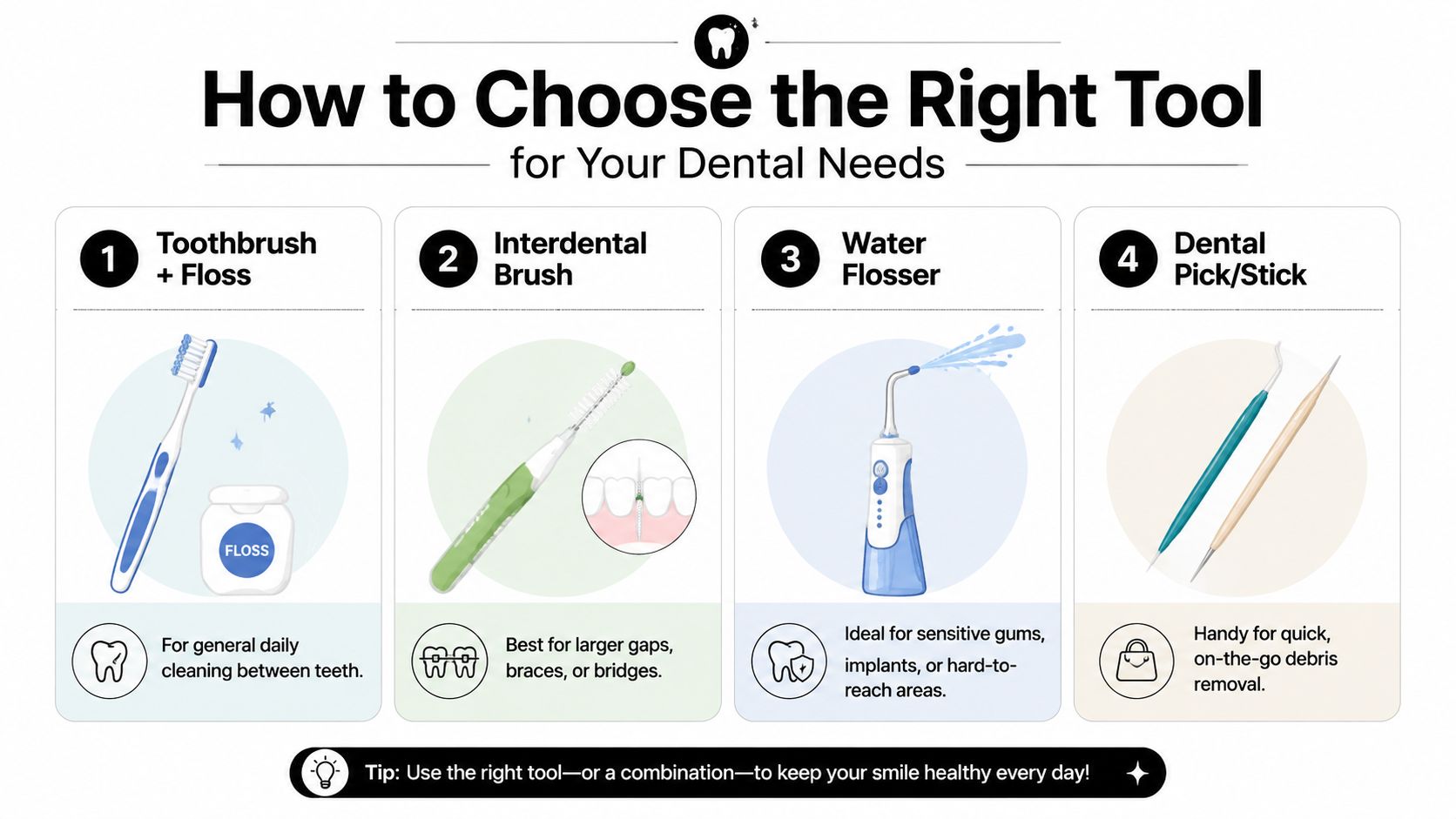
A personalized recommendation makes this much easier. The right interdental cleaning tools depend on the shape of your teeth, the amount of space between them, the condition of your gums, and whether you have braces, bridges, or implants.
If you have braces or a permanent retainer
Braces create extra ledges where plaque can collect. A fixed retainer adds a wire that blocks normal flossing paths. In these situations, many people do better with an interdental brush that can slide around brackets and under wires. A water flosser can also help rinse around hardware that traps food.
A practical routine often looks like this:
- Start with a water flosser: It helps flush around brackets and under wires.
- Use a small interdental brush next: This reaches around areas a toothbrush misses.
- Keep floss for selective spots: It's useful where contacts are too tight for a brush.
If you have implants or a bridge
Implants and bridges need careful cleaning because plaque can gather around their edges and underneath connector areas. Oral irrigators are highly effective for patients with dexterity issues or dental implants, as they reduce gingival inflammation and cause less bleeding around implants compared to floss, as described in this overview of interdental cleaning methods.
That matters because implant tissues can become irritated even when the implant itself feels stable. A water flosser may be the most comfortable starting point here, sometimes combined with a specialty brush for the outer surfaces.
For implants, gentleness matters as much as consistency. You want steady daily cleaning without scraping or forcing a tool into delicate tissue.
If you have larger gaps or periodontal pockets
When there's visible space between teeth, floss may pass through without touching enough tooth surface to clean well. That's where an interdental brush usually shines. The bristles contact the sides of the teeth and the gumline more directly.
The fit should feel snug, not tight. If the brush bends heavily or feels forced, it's too large. If it glides through without touching anything, it's too small.
If your teeth are very tight
Very tight contacts often still call for floss. This is one place where old-fashioned string floss keeps its value. It can pass where a brush can't.
Patients sometimes ask about picks or sticks. These can be handy for quick debris removal on the go, but they usually work best as a backup, not your main daily cleaning method. If you've had dental implants near me on your search list, or you're planning restorative dentistry, choosing the right home-care tool now can also protect the work you invest in later.
A Step-by-Step Guide to Proper Technique
Good technique should feel controlled and gentle. If you're pressing hard, snapping, or forcing a tool into place, something needs to change.
How to use floss without irritating your gums
- Guide, don't snap: Ease the floss gently between the teeth.
- Curve it around one tooth: Hug the side of the tooth rather than moving straight up and down in the middle.
- Clean below the contact area: Slide carefully under the gumline, then wipe upward.
- Repeat on the neighboring tooth: Each space has two tooth surfaces to clean.
- Use a fresh section often: This keeps you from spreading debris around.
If floss has always felt awkward, this walkthrough on how to floss teeth correctly can help you fine-tune the basics.
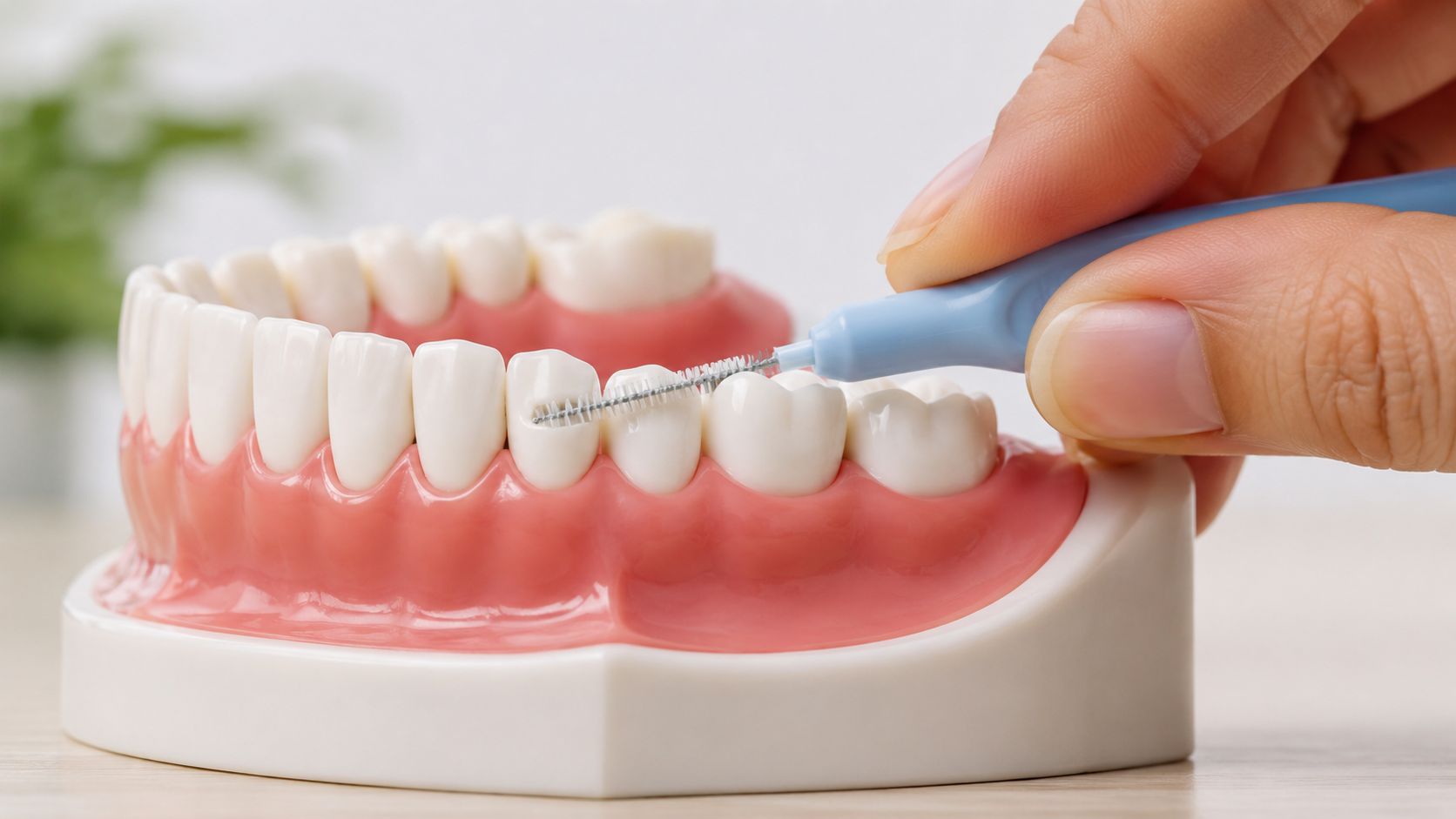
How to use an interdental brush safely
Choose a size that enters with slight resistance but never force. Insert the brush straight through the space, then move it back and forth 2–3 times to full insertion length once daily, as summarized in the earlier source on interdental cleaning methods. If you're bleeding a bit at first, that often reflects inflammation from plaque buildup rather than damage from the tool.
Common mistakes to avoid:
- Don't jam a brush into a tight space: That can irritate the gums.
- Don't angle wildly: A simple, controlled path works best.
- Don't assume one size fits all: Different areas of the mouth may need different brush sizes.
Here's a visual demonstration many patients find helpful:
How to use a water flosser well
Fill the reservoir with lukewarm water if cold water feels uncomfortable. Lean over the sink, place the tip in your mouth, and start on a low pressure setting. Trace slowly along the gumline and pause briefly between teeth.
Practical technique: close your lips enough to reduce splashing, but let water fall from your mouth into the sink as you work.
A water flosser isn't about blasting as hard as possible. It's about slow, even coverage. Think steady passes, not speed.
The Long-Term Rewards of Daily Interdental Care
Daily between-the-teeth cleaning is one of those habits that feels small in the moment but matters over the years. It helps keep the gums calmer, reduces places where odor-causing bacteria collect, and supports the kind of mouth that feels comfortable day to day.
The biggest reward is simpler. You're protecting your natural teeth. A landmark long-term study confirms that consistent use of appropriate interdental cleaning tools results in a significantly lower risk of tooth loss over a person's lifetime compared to those who do not clean between their teeth, according to this Sunstar summary of the long-term interdental cleaning study.
Why this matters beyond the bathroom sink
Keeping teeth clean between appointments can help you avoid a chain reaction of problems. Gum irritation can turn into deeper periodontal concerns. Cavities between teeth can lead to fillings, crowns, or more extensive restorative treatment. If a tooth becomes too damaged to save, the conversation may shift toward tooth extraction and replacement options.
A steady home routine supports:
- Healthier gums
- Fresher breath
- Lower risk of hidden decay between teeth
- Better protection for crowns, bridges, and cosmetic dental work
For adults searching for a dentist near me because they want fewer surprises at routine visits, this habit is one of the strongest forms of prevention. It also supports the comfort and confidence that come with keeping your own teeth longer.
Partner with Your Katy Dentist at The Dental Retreat
Choosing a tool is one thing. Knowing whether it fits your mouth correctly is another. That's where an in-person exam helps. A dentist can look at tight contacts, implants, gum recession, bridges, or crowded teeth and give you a recommendation that matches what's happening in your mouth.
For patients in Katy, TX, including Sunterra, Cane Island, Katy Manor, Kingscrossing, Lakehouse, Marisol, The Grange, Anniston, Katy Lakes, Elyson, and Ventanna Lakes, that kind of guidance can be part of a much more comfortable dental experience. Some people come in because they want a routine checkup and better home-care advice. Others are also looking for cleaning and exams, dental X-rays, new patient exams, cosmetic dentistry, teeth whitening, restorative dentistry, dental implants near me, or an emergency dentist after pain starts.
Why consistency matters more than perfection
One reason power-assisted options have become so popular is that people often stick with them more reliably. Power-driven interdental cleaning tools often show higher patient compliance than traditional flossing and reduce interproximal bleeding in 100% of clinical studies reviewed when used daily, according to this review of power-driven interdental cleaning tools.
That's encouraging if you've ever felt guilty about flossing. The goal isn't perfection. The goal is finding a method you can maintain without dread.
A comfortable first step for new patients
At The Dental Retreat in Katy, care is built around comfort and clarity. The spa-inspired setting includes amenities designed to ease anxiety, including aromatherapy, massage and heated chairs, noise-cancelling headphones, and TVs in every room. For people who've delayed care because they were nervous, that matters.
The office also makes it easier to get started if you don't have insurance. New patient offers include a $139 complete exam with cleaning and X-rays and a $79 problem-focused visit. If your concerns go beyond hygiene and into missing teeth, broken teeth, or smile improvements, you can also ask about implant, cosmetic, orthodontic, oral surgery, and emergency services.
If you're ready for personalized, judgment-free guidance on the best interdental cleaning tools for your smile, schedule a visit with The Dental Retreat. Whether you need a family dentist in Katy, TX, help with sore gums, cleaner implant maintenance, or a fresh start with preventive dental care, the team can help you choose a routine that feels realistic, comfortable, and built around you.