You sip something cold after lunch, feel a sharp zing at the edge of a tooth, and suddenly that harmless habit doesn't feel so harmless anymore. That's often how acidic foods and teeth problems first show up, not with dramatic pain, but with a small warning that enamel may be getting stressed. If you're in Katy, TX, and you've noticed sensitivity after soda, citrus, sports drinks, or even frequent snacking, a local dentist can help you protect your smile before the wear gets worse.
At The Dental Retreat on Stockdick School Road, patients from Sunterra, Cane Island, Katy Manor, Kingscrossing, Lakehouse, Marisol, The Grange, Anniston, Katy Lakes, Elyson, and Ventanna Lakes can get help from a family dentist who understands both comfort and prevention. A new patient visit can include a $99 exam, cleaning, and X-rays, which is a practical way to check for early enamel changes, sensitivity, and other concerns before they turn into bigger problems.
Dentist Near Me in Katy TX
A lot of people think tooth sensitivity means they need to stop enjoying every acidic food forever. That's not the primary issue. The bigger concern is repeated acid contact, especially when drinks are sipped slowly, held in the mouth, or taken often throughout the day. That pattern can leave enamel exposed long enough for wear to start.
A Katy patient might notice the first clue after soda, lemonade, or a citrus drink with dinner, then shrug it off because the tooth “only” aches for a moment. That brief sting can still matter. Enamel doesn't grow back once it's lost, so the safest move is to catch the problem while it's still manageable with routine dental care and practical habit changes.
Why local care matters
A dentist near me search usually starts when something feels off. Maybe cold water bothers one tooth, or the edges of front teeth look thinner than they used to. In a community like Katy, with busy families and working adults in areas like Sunterra and Cane Island, it helps to have a nearby office that can check the cause without making the visit stressful.
Practical rule: if acidic drinks are part of your daily routine, don't wait for pain to get severe before booking a visit.
The Dental Retreat focuses on that early, patient-first approach. A cleaning and exam can reveal whether your sensitivity is linked to erosion, grinding, gum recession, or something else, and that makes the next step much clearer. If the issue is caught early, treatment is usually simpler and more conservative.
Understanding Acid Erosion and Tooth Enamel
Tooth enamel is the hard outer layer that helps protect the softer parts of the tooth underneath. It's strong, but it isn't immune to chemistry. When acids sit on teeth long enough, they pull minerals out of enamel in a process called demineralization, which is the first step in erosion.
The important threshold is pH 5.5. Beverages at or below that level can soften enamel, and low-pH drinks in the 2.0 to 3.5 range are especially linked with erosive tooth wear PMC review on enamel softening and erosive wear. That doesn't mean every acidic food is a disaster. It means the mouth needs time and saliva to recover between exposures.
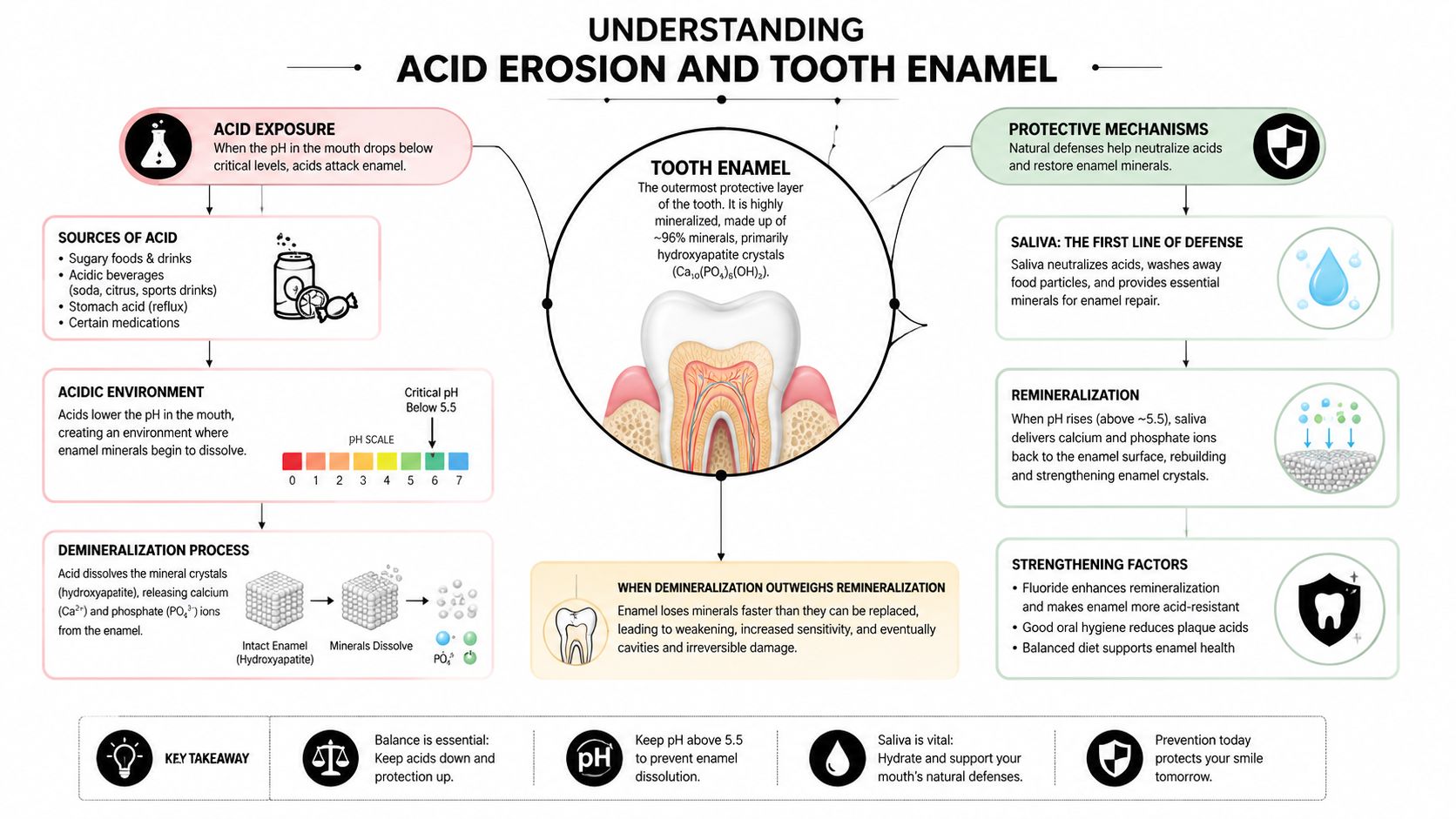
A useful way to think about it is this. Enamel is mineralized armor, acids are what gradually weaken that armor, and saliva is part of the repair system. If acid arrives once in a while, the mouth can often recover. If acid keeps arriving, especially between meals or at bedtime, enamel spends more time in a softened state and less time rehardened.
The long-term consequences show up slowly, then all at once. Teeth may feel more sensitive, edges can look translucent, and the surface can lose its smooth shine. For a straightforward explanation of enamel wear, see The Dental Retreat's guide to tooth enamel erosion.
Common Acidic Foods and Drinks to Watch
A morning coffee, a glass of juice, or a sports drink after practice can seem harmless on its own. The problem is repeated contact, especially when acidic drinks are sipped slowly or kept in the mouth for a long time. Research keeps pointing to carbonated drinks as the beverage most often linked with erosion, and they showed up in 51% of erosion studies that found an association Griffith review. The same review found confectionery and sauces in 43% of studies, while fruit juice, sports and energy drinks, and tea appeared in 29% each, and citrus fruits and vinegar in 26% Griffith review.

That list surprises many patients because several of those items feel routine, healthy, or even protective. Citrus fruit can be part of a balanced diet, tea may not taste sharp, and sauces often do not seem acidic at all. The question is not whether a food sounds bad. It is how often it reaches the teeth and how long it stays there.
A simple way to sort these items is by contact time. Drinks that are sipped over a long period keep acid on enamel longer than a food eaten and swallowed quickly, and sticky foods can do the same by clinging to tooth surfaces. In a Katy family's daily routine, that difference matters just as much as the food itself. An acidic snack at lunch gives saliva time to recover. The same snack nibbled throughout the afternoon keeps the mouth in an acid cycle much longer.
- Carbonated sodas: Frequent sipping keeps acid in contact with enamel.
- Fruit juices: Even natural juice can be acidic enough to matter.
- Sports and energy drinks: Common in active households and often rough on enamel.
- Tea: Often overlooked, but it appears in erosion research.
- Confectionery: Sticky candy can hold acid against teeth longer.
- Sauces: Some savory foods are more acidic than people expect.
- Citrus fruits: Healthy in moderation, but timing still matters.
For patients at The Dental Retreat in Katy, TX, the practical question is usually not whether they must avoid every acidic food. It is how to reduce repeated exposure so enamel has time to recover between meals and snacks. That means being mindful of grazing, sipping, and bedtime exposure, because those patterns keep acid on teeth far longer than a single serving does.
Recognizing Signs of Acid Damage
The earliest signs of erosion are easy to miss because they don't always hurt much. Teeth may feel more sensitive to cold, look a little flatter, or develop edges that seem thin or translucent. Some people also notice a duller surface or small dips and pits where enamel has started to wear.
A helpful clue is pattern. A study found dentine hypersensitivity was more common in adults consuming ≥ 3 dietary acids between meals daily (53% vs 47%) and in those drinking ≥ 2 acidic drinks between meals (54.9% vs 43.2%) King's College London study. That doesn't mean everyone with those habits will have symptoms, but it does show that between-meal contact time matters.
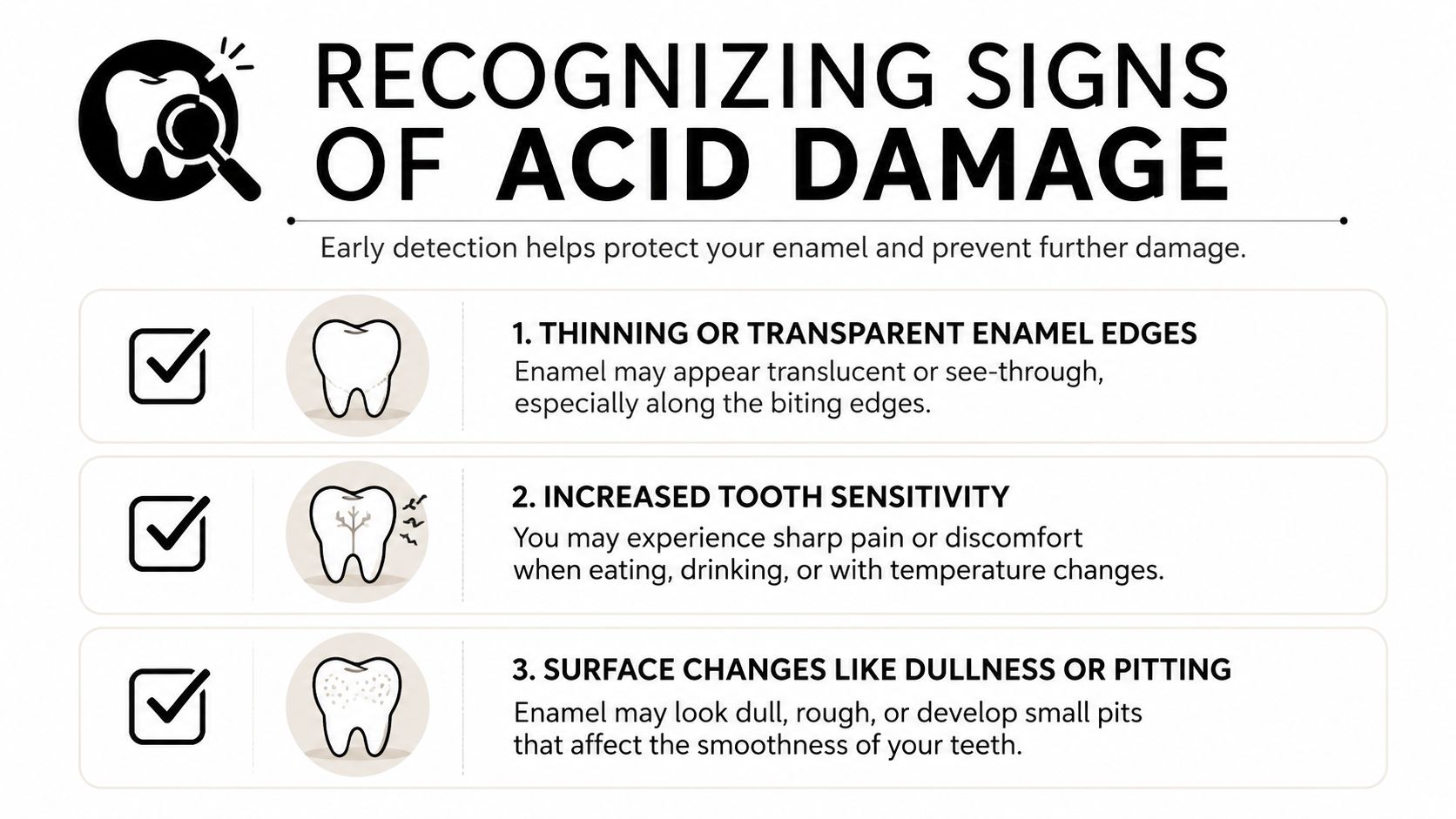
If these changes sound familiar, don't guess. Sensitivity can come from erosion, but it can also come from gum recession or cavities. A dentist can sort out what's happening and decide whether simple prevention is enough or whether repair is needed.
Teeth often warn you early. The mistake is assuming the warning will stay minor on its own.
Preventing Acidic Erosion at Home
A patient who sips citrus water all afternoon is giving enamel a much longer acid bath than someone who finishes it with a meal. Timing matters because enamel spends more time softened when acids linger on the teeth between meals, and that is when small habits at home can make a real difference.

One major dental organization advises waiting at least 30 minutes before brushing after acidic exposure so saliva has time to neutralize the acids and help enamel reharden MouthHealthy guidance. Brushing too soon can rough up softened enamel the way scrubbing a damp wall can leave a mark. The same guidance also recommends drinking water after acidic foods, using a straw, and chewing sugar-free gum to support saliva flow MouthHealthy guidance.
Simple habits that help
- Keep acid with meals: Finish acidic drinks with food instead of sipping them all day.
- Rinse with water: A quick rinse helps clear acid from the mouth.
- Use a straw when it makes sense: This can reduce direct contact with front teeth.
- Wait before brushing: Give saliva time to do its job first.
- Choose saliva-friendly snacks: Sugar-free gum can help stimulate flow.
The Dental Retreat also offers practical guidance through natural enamel support tips. For families in Katy, that kind of coaching can help turn good intentions into routines that fit real life, without making every acidic food feel off-limits.
Clinic Treatments for Acid Erosion at The Dental Retreat
When erosion has already started, treatment depends on how much structure is missing and how sensitive the teeth feel. Some patients only need stronger preventive care and monitoring. Others need restorative options that rebuild shape, protect exposed areas, or improve appearance.
A long-term study of 55 adults over 6 years found that drinking acidic beverages twice daily between meals made participants over 11 times more likely to have moderate or severe erosive tooth wear British Dental Journal study. That finding is one reason prompt evaluation matters. Frequent acid exposure can move from mild sensitivity to more advanced wear faster than people expect.
Professional options may include fluoride varnish, mineralizing gels, bonding, veneers, and conservative restorations. In plain terms, those treatments can help protect vulnerable enamel, smooth rough areas, and restore tooth structure that no longer holds up well on its own. If wear is tied to other issues like chips or painful fractures, your dentist may also discuss restorative dentistry, cosmetic dentistry, emergency repair, tooth extraction, or dental implants when a tooth can't be saved.
At The Dental Retreat in Katy, those choices are made with comfort in mind and adapted to the extent of the damage. The goal isn't to over-treat. It's to keep small erosion from turning into a bigger repair later.
A Comfortable Approach to Protecting Your Enamel
The first visit is meant to feel calm, not hurried. Patients are welcomed into a spa-inspired setting with comforts like aromatherapy, heated massage chairs, and noise-cancelling headphones, along with bilingual support and extended hours that fit busy Katy schedules. That kind of setting helps when tooth sensitivity has already made eating and drinking feel uncertain.
The team starts with a thorough exam, cleaning, and X-rays so they can see your enamel, bite, and any areas that need protection. Acid exposure often works like repeated rain on stone. One acidic meal or drink may not cause obvious harm, but repeated exposure without enough time for saliva to buffer the teeth can wear the surface down. That is why the timing of acid matters, not just the foods themselves.
From there, you'll get a plan based on your symptoms, your daily habits, and your long-term goals for a healthy smile. At The Dental Retreat in Katy, that plan is built around comfort and practical prevention, so you know what is happening and why each step is being recommended.
If sensitivity from acidic foods and drinks is becoming part of your daily life, don't wait for the problem to grow. Schedule a visit, get clear answers, and protect your enamel before the wear gets deeper.
A CTA for The Dental Retreat.