You notice the same thing in the same place. Maybe it's the hard, rough strip behind the lower front teeth, or a yellow edge along the gumline that wasn't there a few weeks ago. It's easy to feel annoyed or embarrassed, especially if you've been brushing and still seeing buildup return, but tartar buildup removal is usually about a predictable process in the mouth, not a personal failure.
For families looking for a dentist near me or a dentist in Katy, TX, that distinction matters. Tartar forms quickly, it comes back in patterns, and the right cleaning plan can calm the cycle down without judgment. If you're in Katy, Sunterra, Cane Island, Katy Manor, Kingscrossing, Lakehouse, Marisol, The Grange, Anniston, Katy Lakes, Elyson, or Ventanna Lakes, a local dental team can help sort out what's routine buildup and what needs a deeper look.
What Tartar Buildup Really Is and Why It Matters
A lot of people first notice tartar the same way. They run a finger or tongue along the back of the lower front teeth and feel a ridge that was not there before, or they spot a rough, dark patch near the gumline after coffee, smoking, or a stretch of rushed hygiene. That roughness is the clue that the soft film has already changed into something harder and more stubborn.

From plaque to calculus
Tartar, also called dental calculus, starts as plaque that stays on the teeth long enough for minerals from saliva to be incorporated into it, which makes the deposit hard and firmly attached to tooth surfaces (Gentle Dental). That change can happen within a few days if plaque is not removed. Once it hardens, brushing and flossing cannot reverse it.
Practical rule: if it feels hard and crusted, it is no longer just plaque.
That is why tartar often seems to come back even in people who brush every day. The problem is not that the mouth stopped making plaque. A rough, mineralized surface gives more bacteria a place to cling, so the cycle keeps restarting in the same high-risk spots. A clear explanation of that sticky early layer is in dental biofilm basics.
Why the color changes
Tartar can stay pale, but it can also darken after exposure to smoking, colored drinks, or poor daily hygiene, and black or brown deposits can be especially noticeable near the gumline (Bi-Maristan). The important takeaway is simple, tartar is not something you can scrub away once it sets. It has a clear solution, and that solution is professional removal.
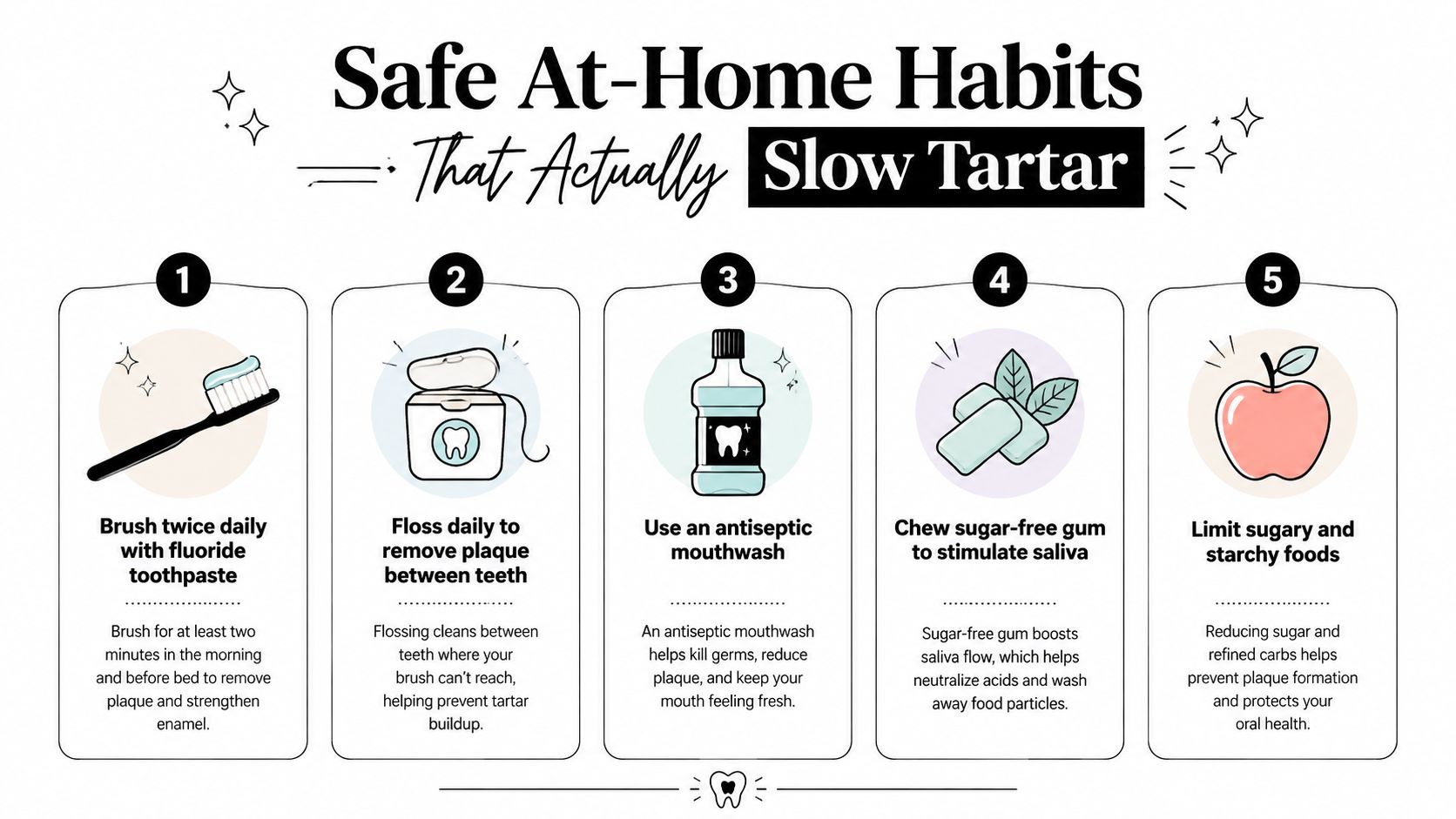
Safe At-Home Habits That Actually Slow Tartar
Home care still matters, just in a different way than many people expect. It can slow fresh plaque before it mineralizes, but it can't chip away hardened calculus once it's attached. That's why the goal at home is consistency and full coverage, not chasing the perfect gadget or a special brushing style.
Keep the routine boring and complete
A few habits do the heavy lifting:
- Brush twice a day with fluoride toothpaste. The point is to remove soft plaque before it hardens, not to scrub harder.
- Clean between teeth every day. Floss works well, and interdental brushes can be helpful in tighter spaces or around restorations.
- Use a tartar-control or antimicrobial rinse as an add-on. It can help reduce lingering bacteria, but it's a support step, not a replacement for brushing and interdental cleaning.
- Drink water often. Saliva helps wash away debris, so dry mouths tend to hold onto plaque longer.
- Limit repeated snacking on sugary or starchy foods. Frequent fuel gives plaque bacteria more chances to stay active.
A busy adult in Sunterra or Elyson doesn't need a complicated routine. Brush before work, floss at night, and rinse after the last snack if you're prone to buildup.
The technique debate is often overblown. A PubMed review found insufficient evidence that any one manual toothbrushing method is superior, which is why consistency and complete coverage matter more than memorizing a named technique (PubMed). Interdental brushes were more effective than a manual toothbrush alone for plaque reduction in a periodontal maintenance review, which fits what hygienists see every day, plaque hides where bristles miss.
A realistic day in Katy
A workable routine for a parent, commuter, or student in Katy can be short and steady. Brush after breakfast, floss at night, and use an extra rinse if your mouth feels dry or sticky. If you already know tartar forms fast in the same spots, that routine should be treated like maintenance, not a one-time reset.
What Happens During a Professional Tartar Removal Visit
When tartar has hardened, professional care is the only way to remove it. A hygiene visit usually starts with a visual exam and then moves into mechanical debridement, which means using manual scalers or ultrasonic instruments to break up and remove hardened deposits above and below the gumline (PMC clinical trial). After that, the teeth are polished, which helps smooth the surface and makes it harder for fresh plaque to cling.
Routine cleaning versus deeper cleaning
A routine cleaning removes buildup that sits above the gumline. If the hygienist sees deeper pockets, more stubborn deposits, or signs that the gums are losing attachment, the visit can shift toward scaling and root planing, a deeper cleaning that reaches beneath the gums and smooths the root surfaces. That deeper access matters because the main bottleneck isn't just what you can see on the tooth, it's getting to the hidden areas where tartar is anchoring itself.
The tools sound more dramatic than they usually feel. An ultrasonic scaler makes a vibrating sensation with water irrigation, and manual instruments are used in tighter spots where precision matters. Most patients describe the visit as noisy or slightly odd, not painful, especially when the gums aren't highly inflamed.
What the hygienist is looking for
During the appointment, the hygienist is watching for more than deposits. They're checking the gumline, the spaces between teeth, areas of recession, and any place where plaque retention keeps happening. A short clinical note on tartar management explains the core limitation clearly, once plaque mineralizes, brushing alone won't remove it, and polishing helps after removal by smoothing the enamel and reducing future cling.
If tartar keeps coming back in the same place, the cleaning is also a diagnostic visit.
That's why a cleaning can feel surprisingly informative. It tells the team whether the issue looks like ordinary buildup, deeper gum inflammation, or a pattern that needs a different maintenance schedule. A practical local guide on what to say before a cleaning is here: what to say before your Katy cleaning.
Why Tartar Keeps Coming Back in the Same Spots
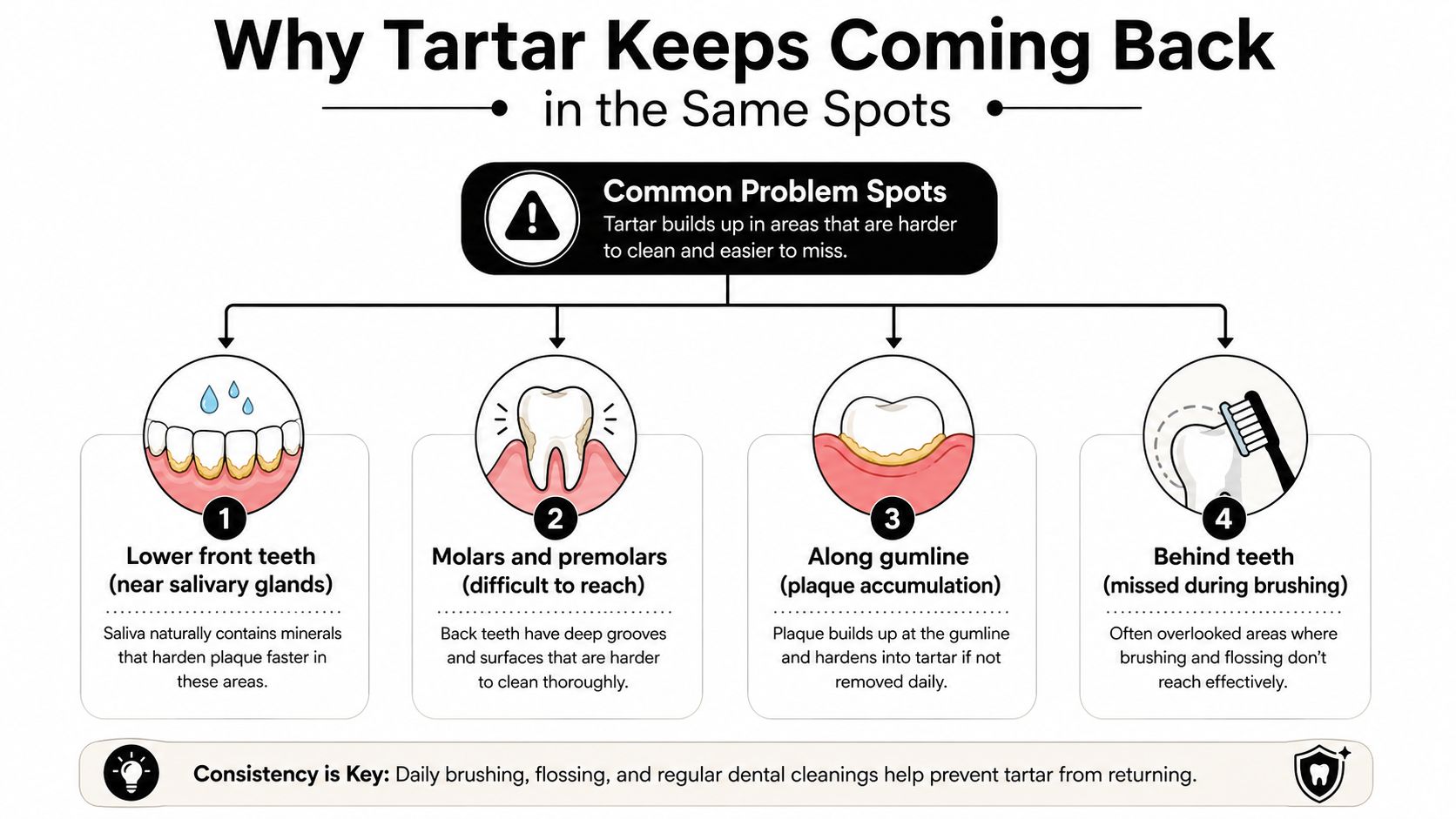
Recurrence doesn't always mean you're failing at home care. It often means the mouth has a few predictable trap zones, and those zones collect plaque faster than the rest of the mouth. In many adults, the same areas keep showing buildup because saliva, tooth shape, alignment, and dental work all change how easy it is to clean.
The usual trouble spots
Tartar often returns:
- Behind the lower front teeth. Saliva from nearby glands can make this area a frequent deposit zone.
- Along the gumline. Tiny margins collect plaque fast, especially if brushing misses the edge.
- Between crowded teeth. Overlapping teeth hide plaque from bristles.
- Around crowns, bridges, or old fillings. Any rough edge or contour can hold debris.
Tobacco use, dry mouth, hormonal changes, genetics, and crowded alignment can all make recurrence more likely. A separate issue is that some dental work has contours that are harder to clean, so the buildup seems to “favor” one side or one tooth. That's not random, it's anatomy and access.
When the pattern changes the plan
A recurring pattern can mean the patient needs more than a standard cleaning every six months. Some people do better on a periodontal maintenance schedule, especially if they've already had deeper deposits, gum pocketing, or repeated buildup in the same areas. That doesn't mean something is wrong with them. It means the mouth is sending a useful signal that maintenance needs to be more frequent or more targeted.
The right question isn't, “Why do I keep getting this?” The better question is, “What in my mouth keeps making this area harder to clean?”
That shift matters because it changes the conversation from blame to planning. A hygienist can look at crowding, restorations, and gum health together, then adjust the cleaning approach instead of repeating the same routine and hoping for a different result.
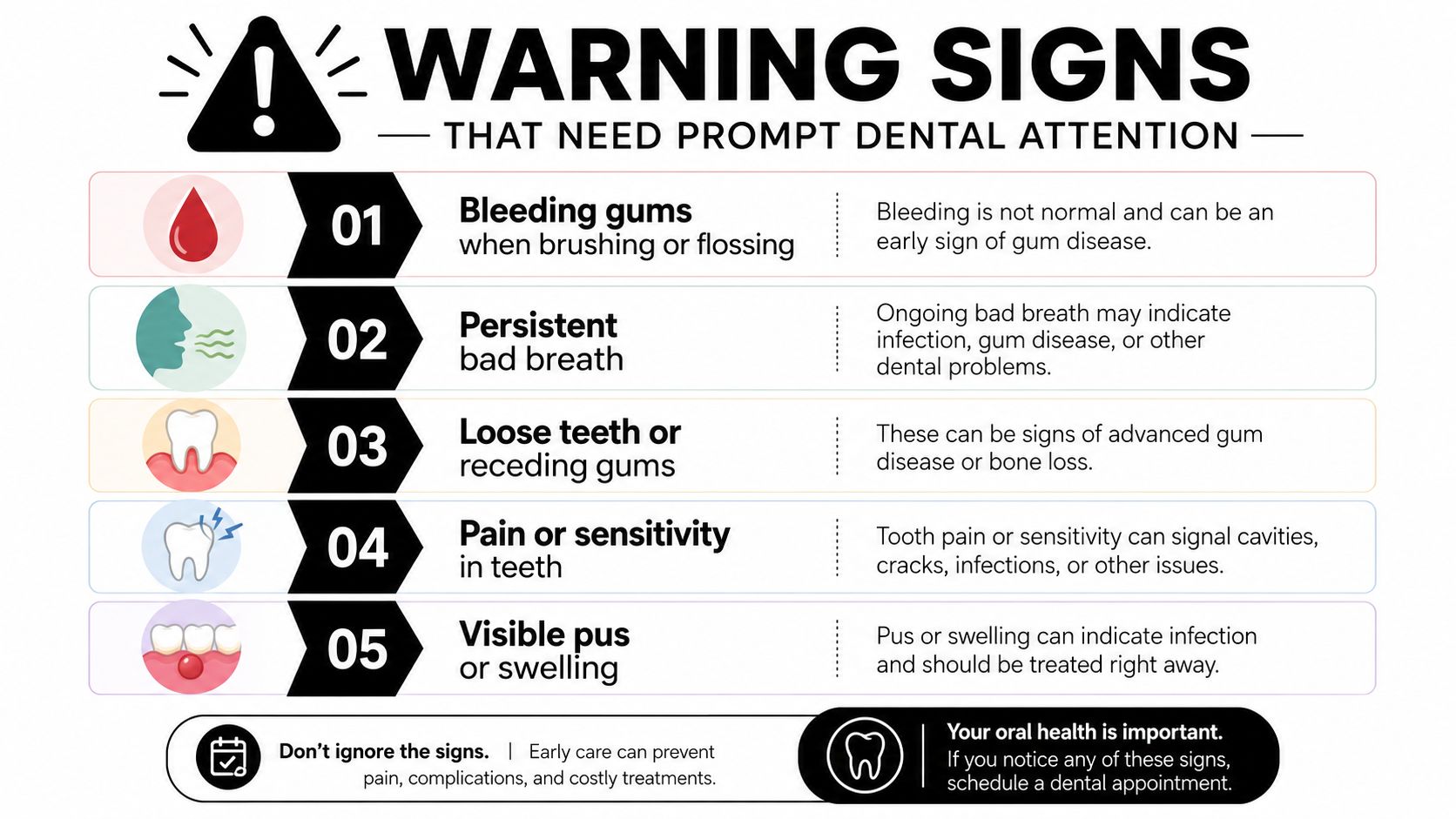
Warning Signs That Need Prompt Dental Attention
Some tartar buildup is routine. Some signs point to active gum disease or a problem that needs attention sooner rather than later. If you're seeing the same buildup and also noticing bleeding, looseness, or swelling, waiting for the next regular cleaning isn't the right move.
Signs to treat as a real dental problem
- Bleeding gums when brushing or flossing. This often points to gingivitis, which is early gum inflammation.
- Persistent bad breath or a metallic taste. Tartar can trap odor-causing bacteria that home care doesn't fully clear.
- Gums pulling away from teeth. Recession can expose root surfaces and signal deeper periodontal change.
- Loose teeth or sensitivity that's new. That can reflect advancing support loss around the tooth.
- Swelling, pain, or visible pus. Those signs need prompt professional assessment because they may indicate infection.
A separate clinical summary of tartar notes that it can contribute to gingivitis, periodontitis, recession, and other complications when it isn't removed (AZ Dentistry). The earlier these signs are caught, the simpler the care usually is. That's especially true for busy families in places like Ventanna Lakes or Marisol, where dental visits can get pushed down the list until symptoms become hard to ignore.
When to call sooner
If the problem is local swelling, a tooth that feels high or sore, or gum pain that's worsening, don't wait for a routine slot. If a tooth ever feels suddenly unstable or there's swelling along the jaw, that's a clear reason to be seen promptly. Early treatment is usually more straightforward than trying to fix a problem that's had time to spread.
What to Expect at The Dental Retreat in Katy
A first visit at The Dental Retreat is designed to feel calm, organized, and judgment-free. The practice is on Stockdick School Rd. in Katy, and the environment includes aromatherapy, noise-cancelling headphones, massage or heated chairs, and TVs in every room, which helps make cleaning appointments feel less clinical and more manageable for anxious patients and families.
For new patients without insurance, the office offers a $99 exam, cleaning, and X-rays special, a $49 problem-focused visit, and a $350 in-office Zoom whitening option. Membership plans start at $299 per year, with savings on periodontal maintenance, which matters for people whose tartar keeps returning and who may need more frequent hygiene visits than a standard schedule allows.
How the visit fits your situation
If your main concern is recurring tartar, the team can start with routine cleanings and exams, then move to periodontal maintenance if your gums need closer follow-up. If you also want a brighter smile, cosmetic services like whitening can be paired with preventive care. If alignment or missing teeth are part of the bigger picture, the practice also provides clear aligners, restorative dentistry, dental implants near me searches, tooth extraction, sedation support, and emergency care when a problem can't wait.
That broader care matters because tartar rarely exists in isolation. Crowding, worn margins, or old restorations can all contribute to repeat buildup, so one cleaning plan may not fit every mouth. A local dental office that sees adults and families across Katy, Anniston, Lakehouse, The Grange, and Katy Lakes can look at the pattern, not just the spot.
A practical next step
For patients who feel embarrassed, the first appointment usually brings relief faster than people expect. The team checks what's happening, explains the pattern in plain language, and maps out the next cleaning or maintenance interval without pressure.
Your Next Step Toward a Healthier Smile
If cost, time, or anxiety has kept you away, you're not alone. Tartar is one of the most common things a dental team sees, and early care is usually straightforward once someone takes the first step. A single consultation can replace a lot of guessing and help you understand whether you need a routine cleaning, deeper maintenance, or a more careful periodontal look.
If you've been searching for a cosmetic dentist near me, an emergency dentist, or a dentist in Katy, TX who won't make you feel judged, book the visit and get a clear plan for your mouth. The goal is comfort, confidence, and fewer surprises for the whole household.
The Dental Retreat helps Katy patients manage tartar buildup with cleanings, exams, periodontal maintenance, and a calm, spa-inspired setting that makes it easier to keep up with care. If you're ready to stop guessing about the buildup on your teeth, visit The Dental Retreat and schedule a visit that fits your needs.