You may be noticing that your teeth look a little longer, the gumline seems uneven, or cold drinks send a sharp zing through one spot. That's the kind of moment that sends people in Katy, TX searching for a dentist near me and trying to figure out whether a small change is just cosmetic or something that needs real attention. If you've been told you have recession, or you're worried that your gums are pulling back, this guide will walk you through the decision in plain language, the same way a calm dental team would explain it chairside.
At a local visit, the first question usually isn't, “Do you need surgery?” It's, “Is this recession stable, or is it changing?” That distinction matters because some gum changes are monitored, some are managed by adjusting brushing habits or other contributing factors, and some are treated with gum grafting to protect the root surface and support long-term gum health. For patients in Katy, TX, including Sunterra, Cane Island, Katy Manor, Kingscrossing, Lakehouse, Marisol, The Grange, Anniston, Katy Lakes, Elyson, and Ventanna Lakes, that's the starting point, not a sales pitch. If you want a deeper look at causes, this overview of receding gums in adults is a helpful place to begin.
Noticing the Signs That Lead Patients to Ask About Gum Grafting
A lot of people don't come in saying, “I need gum grafting.” They come in saying their teeth look longer than they used to, one tooth feels sensitive to cold water, or a hygienist mentioned recession during a routine cleaning. Sometimes it's a mirror moment in the morning. Sometimes it's the first time a toothbrush bristles against a tender spot and it feels sharper than it should.
Those small warnings can be easy to brush off, especially if the tooth still looks healthy from the front. But exposed root surface can change how a smile feels day to day, and it can make patients worry about future problems they can't yet see. In a practice like The Dental Retreat in Katy, that conversation usually starts with reassurance, then moves toward figuring out whether the tissue is thin, actively receding, or already exposing more root than it should.
When concern starts to feel practical
Some patients mainly want comfort back. Others are thinking ahead because they've been told recession can matter before cosmetic dentistry, clear aligners, or implant planning. The concern isn't always pain, either, because a receding gumline can also make people self-conscious when they smile or speak. A careful exam helps separate appearance concerns from problems that are more about protection and long-term stability.
Practical rule: if the gumline looks different, but you're not sure whether it's getting worse, that's the point to ask for an evaluation instead of guessing at home.
If you're in Katy or one of the surrounding neighborhoods, that evaluation gives you a clear answer about whether monitoring makes sense or whether gum grafting is the right next step. It also keeps you from treating every gum change like an emergency when it may not be one. The goal is simple, understand what's happening before you commit to anything more involved.
What Gum Grafting Surgery Actually Does
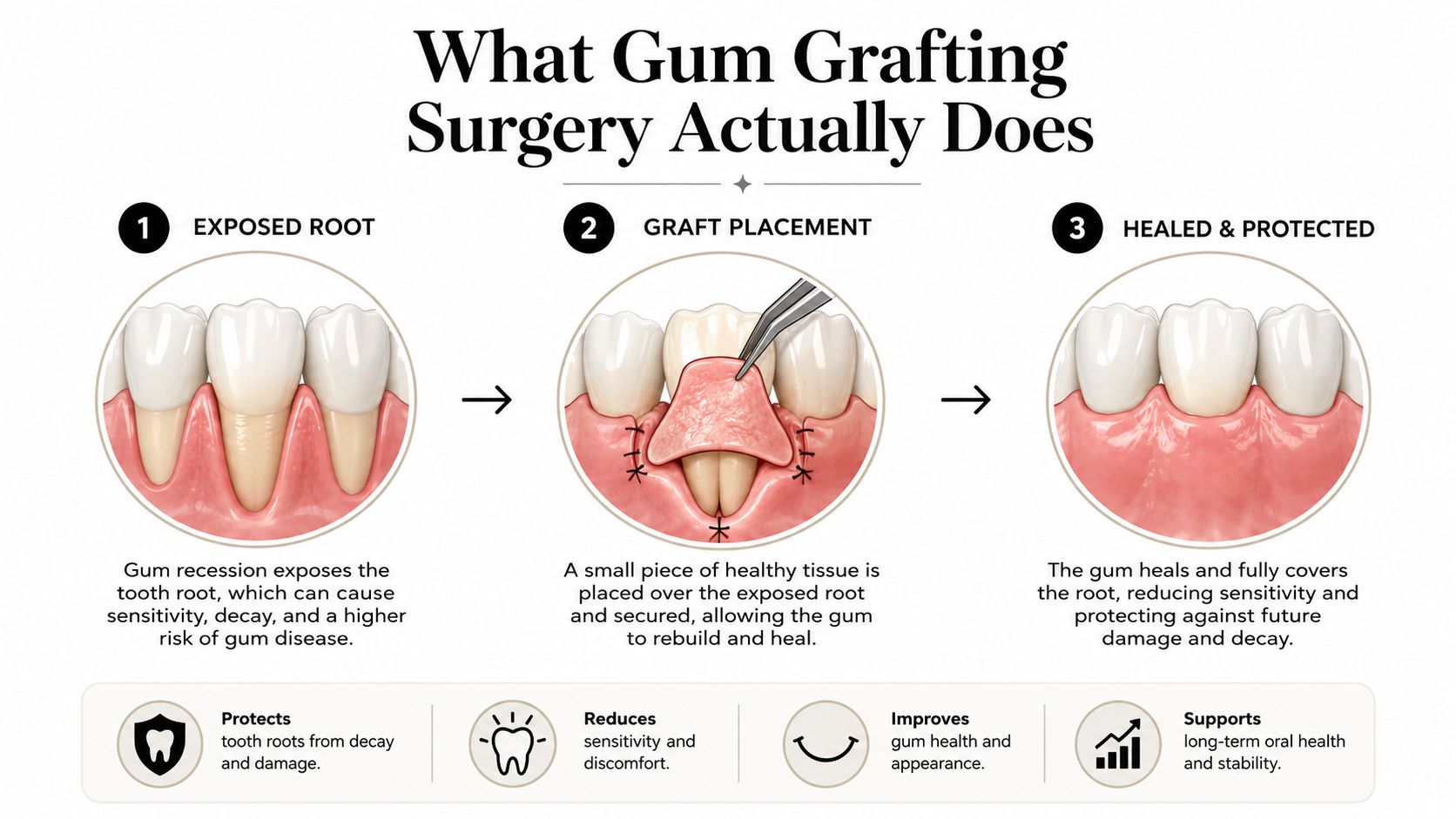
Gum grafting surgery is a periodontal plastic surgery that moves or adds soft tissue to cover an exposed root surface. In everyday terms, think of gum tissue as a protective blanket around the teeth. When that blanket has worn thin or pulled back, the root is left more vulnerable, and grafting helps restore coverage, thicken the gum tissue, and support a healthier margin around the tooth.
The clinical definition is straightforward, but the reason it matters is practical. Recession can leave root surfaces less protected, and the graft helps rebuild that barrier. Cleveland Clinic describes gum grafting as a common periodontal procedure in the U.S., which matches what many patients experience in real life, it's a routine part of periodontal care, not an exotic fix.
The procedure in plain steps
First comes local anesthesia, so the area is numb and you're comfortable during treatment. Next, the dentist prepares the site and places the graft where the root is exposed. Finally, the tissue is stabilized with sutures so it can attach, gain blood supply, and integrate with the surrounding area.
That blood-supply step, called revascularization, is easier to understand if you think of a transplanted plant. The roots need time to connect with the new soil before they can thrive on their own. Gum tissue works the same way, it needs a stable, protected environment while it heals and becomes part of the site.
What people usually want to know is whether the surgery is “fixing the gum” or just hiding the problem. It's doing both. It covers the root, thickens the tissue, and helps create a more durable gumline so the area isn't as likely to keep wearing down.
Bottom line: gum grafting isn't only about appearance. It's about building back a stronger, more protective gum seal around the tooth.
The Three Main Types of Gum Grafts and How They Differ
A patient sitting in the chair usually wants one clear answer: which graft fits this tooth, this gumline, and this mouth. The right choice depends on how much root coverage is needed, how thick the existing tissue is, and whether the goal is to add volume, strengthen the margin, or do both at once.
Connective tissue graft
This is the most common type. WebMD explains that the surgeon lifts a flap in the roof of the mouth, removes connective tissue from underneath, then stitches the flap back down while attaching the graft to the exposed area. Because the outer palatal tissue stays in place, many patients can picture this as keeping the “cover” while borrowing the support layer beneath it. It is often used when the main goal is root coverage and a gumline that looks natural.
Free gingival graft and pedicle graft
A free gingival graft takes a thin layer from the roof of the mouth and places it where more tissue is needed. Periodontal literature summarized in dental reviews reports free gingival graft success rates of 76% to 95.5% a review of gum grafting success rates. A pedicle graft uses nearby gum tissue and moves it over the exposed root instead of taking tissue from the palate. That can be a good fit when the tooth already has enough adjacent tissue to work with.
Revascularization works like a transplanted plant, the roots need time to connect with the new soil before they can thrive on their own. Gum tissue behaves the same way, it needs a protected, stable environment while it heals and joins the surrounding area.
Comfort often tracks with the donor site. If tissue comes from the palate, patients may notice a second healing area. If nearby tissue is used, the experience can feel simpler, but the tooth still needs the right anatomy for that option.
| Comparing the Three Main Gum Graft Types | Tissue Source | Best For | Comfort Notes |
|---|---|---|---|
| Connective tissue graft | Beneath a flap in the palate | Root coverage and thickening thin tissue | Common choice, involves a palatal donor site |
| Free gingival graft | Thin layer from the roof of the mouth | Building thickness and reinforcing delicate tissue | Can involve more obvious palate healing |
| Pedicle graft | Nearby gum tissue | Cases where adjacent tissue can be moved safely | No separate palate harvest, but only fits certain anatomy |
The right choice usually comes down to anatomy, not preference alone. A careful consultation helps make that distinction clear, so you are not left trying to decode dental terms on your own.
Who Is a Good Candidate and When Surgery Makes Sense
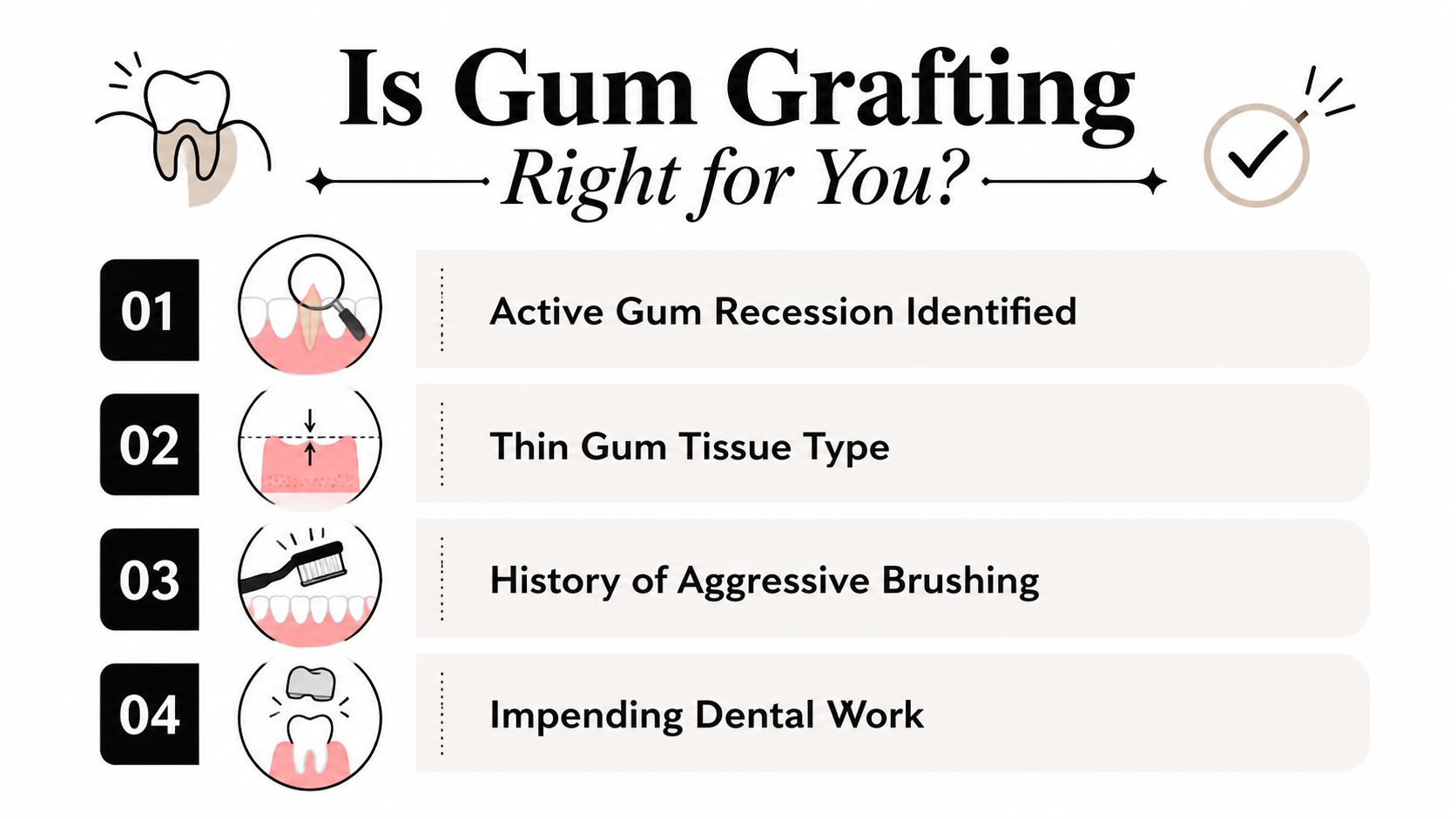
Not every receding gumline needs immediate surgery. In periodontal care, the first question is whether the recession is active or stable. If it's stable, the answer may be monitoring and prevention. If it's progressing, protecting the root sooner can make more sense than waiting for more tissue loss.
People usually become candidates for grafting when they have visible root exposure, ongoing sensitivity, thin gum tissue, or a smile line that feels uneven. It can also come up before orthodontic work or implant planning, because healthy, thicker tissue gives the mouth a better foundation. Recession can be tied to brushing trauma, thin tissue phenotype, orthodontic movement, or bite-related forces, so the evaluation should look at the cause, not just the appearance.
When monitoring is the smarter first step
If the gumline hasn't changed and the root isn't getting more exposed, surgery may not be urgent. A dentist might recommend softer brushing, addressing a contributing bite issue, or treating gum inflammation first. That's especially important for patients who are nervous about downtime, cost, or committing to surgery before they understand the bigger picture.
When treatment moves from optional to protective
If recession is progressing, the decision changes. At that point, grafting may help preserve the root surface, reduce sensitivity, and strengthen a thin area before it becomes harder to manage. For patients in Katy, that kind of judgment call is exactly why a consultation matters. The point is not to push everyone into the chair for surgery. The point is to choose the least invasive option that still protects the tooth.
Patients sometimes assume they need a procedure because they notice a change. Often, what they need first is a clear diagnosis. That distinction saves time, lowers anxiety, and keeps the treatment plan aligned with the actual problem.
What to Expect Before, During, and After the Procedure
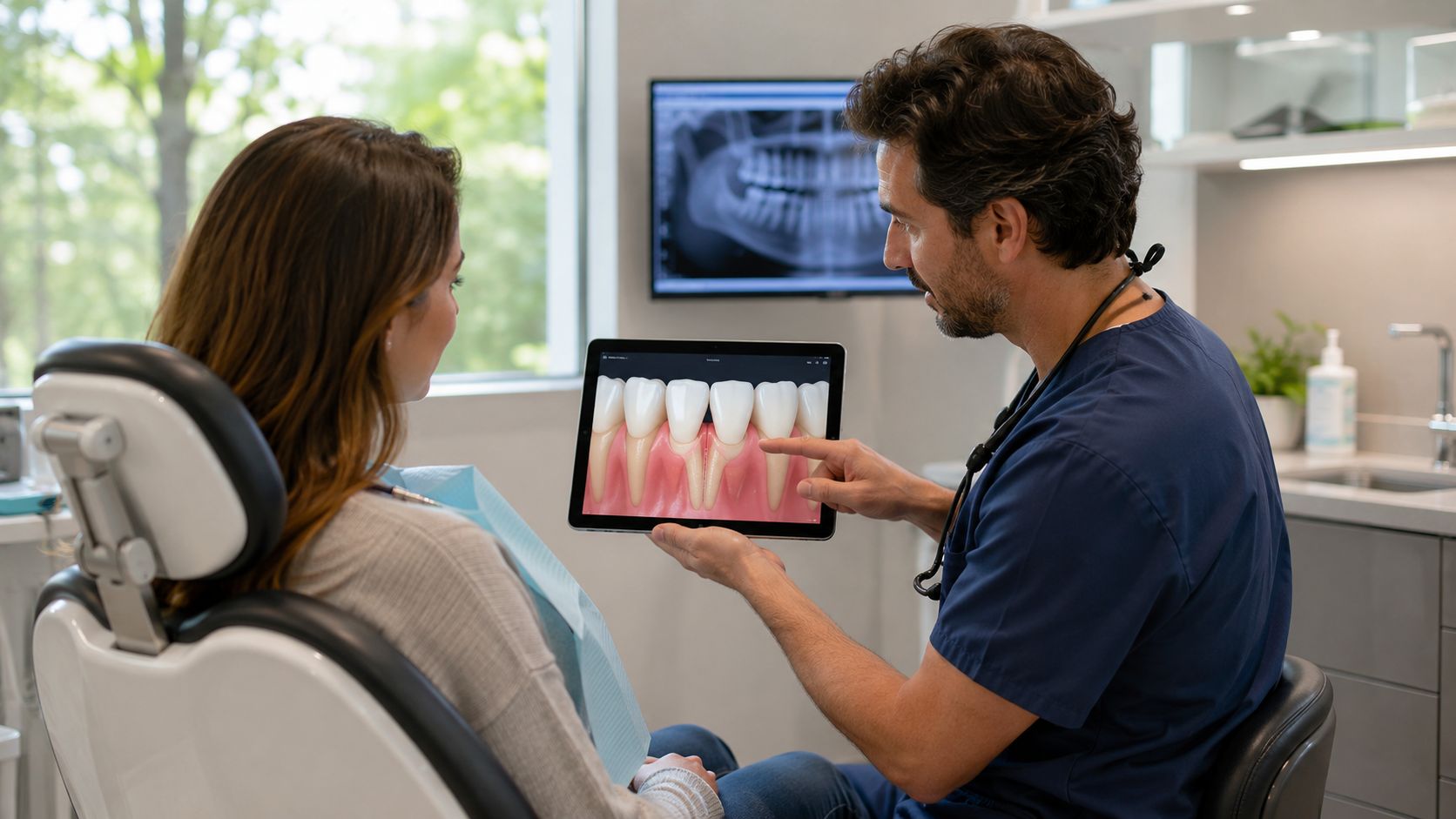
A patient usually starts with a consultation, because the first question is not whether a graft looks possible, but whether it is the right next step. The dentist checks the gumline, reviews how far the root is exposed, and decides whether the graft is meant to cover one tooth, several teeth, or support a thin area before it worsens. At The Dental Retreat, that visit also happens in a calm setting with aromatherapy, noise-cancelling headphones, TVs in every room, and heated massage chairs, which can make the appointment feel more manageable for patients who are already tense about surgery.
During the procedure, Cambridge University Hospitals says gum grafting usually takes about one hour CUH gum grafting procedure. You will be numb, the tissue will be held in place with sutures, and the team will focus on keeping the graft steady so it can heal. The process is less about spectacle and more about precise placement, which is why many patients are surprised by how contained the experience feels.
Recovery becomes the part patients notice most. Stitches are typically removed or dissolve at a follow-up visit in 7 to 21 days, and complete healing can take a few weeks to a few months depending on the person and the case. That time matters because the graft needs to settle without being pulled, rubbed, or disturbed, so soft foods and gentle brushing are usually part of the plan. For patients who want a clearer home routine, The Dental Retreat's gum grafting surgery recovery guide gives a practical look at what those first days at home usually involve.
Patients often feel calmer when they know the sequence before they arrive, then during the visit, then at home. That is usually the point where a treatment decision starts to feel concrete instead of abstract, and where people in Katy can decide whether to monitor the area, treat it preventively, or commit to surgery with a clearer sense of what the next few weeks will require.
Recovery goes more smoothly when patients protect the area first and worry about appearance later. That is the order that helps the tissue settle.
Risks, Benefits, Alternatives, and What It Costs in Katy TX
A gum graft is usually chosen because the benefit reaches beyond the first healed week. Published dental reviews describe free gingival graft outcomes as generally strong, and broader clinical summaries often report routine success above 90% gum grafting success rate review. For patients in the chair, that means the question is often not whether the procedure can work, but whether the expected payoff matches the area being treated and the care the tooth will need over time.
Long-term stability is another part of the decision. Periodontal literature summarized in periodontal literature summary notes that grafted sites can stay stable for many years, and one report found 83% of sites receiving a free gingival graft maintained recession reduction for up to 35 years. In practical terms, a successful graft can act like reinforcement for the gumline, helping protect the tooth long after the first soreness has passed. The point is not just closure of recession, but keeping that result steady enough to matter in everyday brushing, eating, and future dental care.
Realistic downsides to discuss
Swelling and donor-site soreness are common concerns, especially if tissue comes from the palate. Some grafts can shrink a little as they heal, and a small number of cases may need revision if healing does not go as planned. Those are not reasons to panic. They are reasons to plan carefully, ask what recovery will feel like, and follow aftercare instructions closely so the tissue has the best chance to settle well.
Alternatives can sometimes fit the case. If the recession pattern and tissue anatomy are appropriate, a less invasive option such as the pinhole surgical technique may be discussed. The right choice depends on the tooth, the tissue, and the goal, because not every recession defect is treated the same way. For some patients, monitoring the area is still reasonable. For others, preventive treatment makes more sense before the gumline recedes further.
Cost also shapes the decision for many families in Katy. Gum grafting is an investment, so patients often want an exam before they commit. The Dental Retreat offers a $139 new-patient exam with cleaning and X-rays, a $79 problem-focused visit, and a $299 annual membership that includes savings on periodontal maintenance, which can make it easier to get a clear answer before treatment planning starts. Those visit options can help patients compare monitoring, preventive care, and surgery without feeling rushed into a choice.

Planning Your Visit With The Dental Retreat in Katy TX
If you've been putting off a gum evaluation because you're worried the answer will automatically be surgery, that's exactly the kind of concern a good consultation should clear up. The Dental Retreat in Katy, TX, combines general, cosmetic, restorative, implant, and periodontal care in a spa-inspired setting on Stockdick School Rd., with extended hours, bilingual care, sedation options, and comfort-focused amenities built for anxious patients. That matters if you live in Sunterra, Cane Island, Katy Manor, Kingscrossing, Lakehouse, Marisol, The Grange, Anniston, Katy Lakes, Elyson, or Ventanna Lakes, because a local appointment should feel easy to reach and easy to follow through on.
Patients often ask about gum grafting in the same breath as cosmetic dentistry, clear aligners, whitening, or dental implants, because oral health decisions don't happen in isolation. A strong gumline supports a healthier smile and can make future treatment planning smoother.
If you're ready to find out whether your recession should be monitored, treated preventively, or addressed with surgery, schedule a visit and get a real plan instead of guessing from the bathroom mirror.
The Dental Retreat offers thoughtful gum evaluations, comfort-focused care, and treatment planning for patients who want clear answers about recession and grafting. If you're in Katy or nearby neighborhoods and want help deciding what makes sense for your gums, visit The Dental Retreat to schedule a consultation and take the next step with a team that keeps comfort and long-term oral health in view.