Bonding averages roughly $431 per tooth, while porcelain veneers average roughly $1,765 per tooth in U.S. national data. The smarter choice depends less on the sticker price than on how many teeth you want treated and how long you expect the result to last.
You may be sitting in a Katy treatment room with a small chip in one front tooth, or looking at a broader smile refresh because several teeth are stained, worn, uneven, or misshapen. Both situations can lead to the same question: What's the veneers vs bonding cost, and which option gives me better value?
For a single visible tooth, bonding is usually the sensible starting point. For a coordinated smile redesign, porcelain may justify its higher entry price. The right answer also depends on maintenance, future repairs, the number of teeth involved, and whether a Katy dental practice can apply an in-house special or membership plan to your treatment.
A Katy Patient's Real Choice Between Veneers and Bonding
A patient from Sunterra comes in after chipping a front tooth. The chip is small, the tooth is healthy, and the patient wants the smile repaired before an upcoming event. Bonding can often solve that problem in one visit without turning a one-tooth repair into a full cosmetic project.
Another patient from Cane Island has several front teeth with persistent discoloration and uneven edges. That person isn't really choosing between one bonding appointment and one veneer appointment. They're deciding whether to correct isolated imperfections gradually or invest in a coordinated smile plan.
The price gap is clear. One independent U.S. cost summary places average cosmetic bonding at about $431 per tooth, compared with about $1,765 per tooth for porcelain veneers, making veneers roughly four times more expensive per tooth on average (Real Dental Costs' bonding comparison). A broader treatment plan can quickly move from a lower four-figure commitment to a five-figure smile investment when multiple teeth are treated.
The number of teeth changes the decision
Bonding works well when the problem is limited. A chipped edge, a small gap, or a minor contour issue may need only one or two teeth. You pay for the teeth that need correction, and you can leave the rest of the smile alone.
Veneers make more sense when the visible teeth need to look uniform. Treating several front teeth with matching porcelain can create consistency in color, shape, and proportion that isolated bonding may not deliver.
Published cost guides commonly list bonding at about $100 to $700 per tooth, while porcelain veneers are often listed at about $900 to $2,500 per tooth (Shedd Family Dental's cosmetic bonding comparison). The final quote still depends on the examination, materials, number of teeth, and preparation required.
Practical rule: If one tooth is the problem, start by pricing a one-tooth solution. If your concern is the overall smile, ask for a full treatment plan rather than multiplying a single-tooth price.
The timeline matters just as much
Bonding usually gives you a fast, conservative correction. Porcelain veneers require more planning, laboratory fabrication, and long-term commitment. A calm, judgment-free consultation should make those differences clear before you choose.
For Katy patients in Katy Manor, Kingscrossing, Lakehouse, or Marisol, the best financial conversation isn't “Which one costs less?” It's “Which treatment fits the correction I need, and what maintenance will I accept later?”
What Bonding and Veneers Actually Are
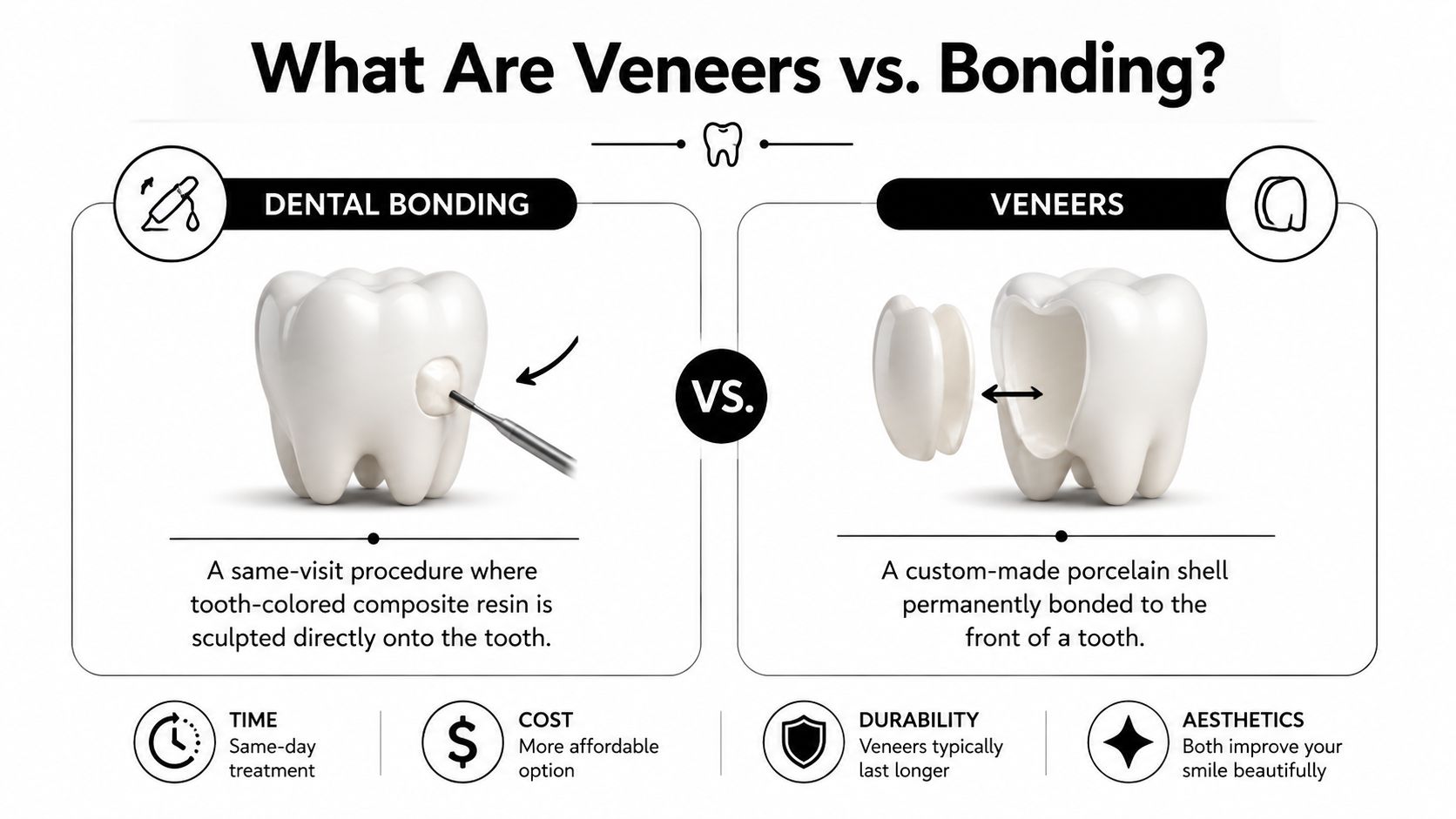
Dental bonding uses tooth-colored composite resin. The dentist prepares the enamel lightly, applies the material directly to the tooth, shapes it by hand, hardens it with a curing light, and polishes the finished surface.
There's no outside laboratory for standard bonding and usually no temporary restoration. That chairside process keeps the treatment direct and makes bonding a practical choice for small chips, limited reshaping, and minor gaps. You can learn more about the procedure in this guide to what cosmetic bonding involves.
Bonding is a chairside repair
Bonding is like sculpting a small restoration directly onto the tooth. The material can be layered and contoured so the repaired edge follows the neighboring teeth.
That makes it useful when the tooth underneath is healthy and the requested change is modest. It also usually preserves more natural tooth structure than treatment that requires preparation for a porcelain shell.
Composite can stain or chip over time, particularly when it's placed on teeth that receive heavy biting pressure. A dentist must also match the shade and polish carefully, because a small repair on one front tooth has to blend with the surrounding enamel.
Veneers are custom shells
A veneer covers the front surface of a tooth. Composite veneers are shaped directly in the office from the same general type of resin used for bonding, but they cover more of the visible tooth and are planned as a broader cosmetic change.
Porcelain veneers are different. The dentist evaluates the smile, prepares the tooth when appropriate, records the shape with impressions or digital scans, and sends the design to a dental ceramist. Temporary veneers may protect the prepared teeth while the laboratory fabricates the final shells.
At the final appointment, the dentist evaluates the color and fit, makes adjustments, and bonds the porcelain permanently. The laboratory step is a major reason porcelain costs more than a straightforward chairside repair.
Side-by-Side Cost and Longevity Comparison
The most useful comparison looks beyond the initial invoice. Bonding costs less at the start, but it generally has a shorter service life. Porcelain costs more upfront, but it can remain functional and attractive longer when the patient maintains good oral hygiene and avoids damaging habits.
A clinical consumer source places bonding's typical lifespan at about 5 to 10 years, while porcelain veneers commonly last about 10 to 15 years or longer with good care (Smile Dentist's longevity guide). Those figures aren't a promise for an individual patient. They're a useful planning framework.
| Criteria | Dental Bonding | Porcelain Veneers |
|---|---|---|
| Typical U.S. cost | About $100 to $600 per tooth in one independent guide (Real Dental Costs) | About $900 to $2,500 per tooth in the same comparison (Real Dental Costs) |
| National average anchor | About $431 per tooth (CareCredit's bonding overview) | About $1,817 per tooth in that comparison (CareCredit's bonding overview) |
| Typical lifespan | About 5 to 10 years (Smile Dentist) | About 10 to 15 years or longer with appropriate care (Smile Dentist) |
| Stain resistance | More vulnerable to staining and surface wear | Generally offers a more stable, glass-like surface |
| Chip resistance | Can be repaired chairside, but may chip under stress | Strong and durable, but can still fracture under significant force |
| Appearance | Can look natural for a focused repair | Offers coordinated color and shape across treated teeth |
| Reversibility | Usually more conservative and easier to revise | Often involves preparation and is a long-term commitment |
| Appointments | Commonly completed chairside in one visit | Requires planning, preparation, laboratory work, and final placement |
What a longer horizon changes
If bonding needs repair or replacement during a longer ownership period, the initial savings can narrow. That doesn't make bonding a poor choice. It means you should compare the likely treatment pathway, not only today's price.
Porcelain may offer stronger lifecycle value when several teeth need coordinated treatment and you want a stable result for many years. It's still not maintenance-free. You'll need routine cleanings and exams, careful home care, and protection from habits such as biting hard objects.
Why the finish can differ
Composite lets the dentist make immediate adjustments. That's a major benefit for a small repair, but the material may not maintain the same surface character as porcelain over time.
Porcelain veneers are fabricated to a planned shape and shade. For patients seeking a full smile makeover, that laboratory control can make the higher upfront cost easier to justify.
What Drives the Final Price for Katy Patients
A quote for cosmetic dentistry should show what you're paying for. Two Katy consultations can produce very different totals because the treatment plans may involve different numbers of teeth, materials, preparation, or laboratory services.
The number of teeth is usually the first major variable. One-tooth bonding is a narrow repair. A six-to-eight-tooth veneer plan is a coordinated smile design, and published guidance places a six-to-eight-veneer U.S. smile makeover at about $13,954 on average (Shedd Family Dental's veneer and bonding guide).
| Cost Driver | Impact on Bonding | Impact on Veneers |
|---|---|---|
| Number of teeth | Usually scales directly by tooth | Can become a larger coordinated smile plan |
| Material | Composite resin keeps the process chairside | Porcelain selection affects laboratory design and fabrication |
| Laboratory involvement | Often limited or absent | Custom ceramist work adds planning and fabrication costs |
| Tooth preparation | Usually minimal for suitable cases | Preparation may be required before shell placement |
| Preliminary services | Whitening or gum shaping can change the plan | Whitening, gum contouring, or restorative work may come first |
| Comfort needs | Anxiety support or sedation may add services | Longer visits or extensive cases may require additional support |
| Provider experience | Skill affects contour, shade matching, and finishing | Experience affects smile design, preparation, try-in, and bonding |
Material and laboratory choices matter
Composite bonding and composite veneers are often blended together online, but they aren't identical treatments. Bonding may repair a limited area, while composite veneers cover more of the visible tooth surface.
Porcelain veneers also aren't one uniform product. A dentist may discuss options such as e.max or feldspathic porcelain, but the right selection depends on the tooth, bite, desired appearance, and design. Ask whether the quote includes the ceramist, scans, temporaries, try-in, adjustments, and final bonding.
Katy-specific questions to ask
Local labor costs, office systems, and provider experience can influence the quote in Katy and the greater Houston area. A case that requires gum contouring, sedation, whitening, or treatment for decay won't compare directly with a straightforward cosmetic repair.
Ask these questions before accepting a price:
- What teeth are included? Confirm the exact number and whether both arches are part of the plan.
- Which material is planned? Ask whether the restoration is composite or porcelain and which porcelain option is recommended.
- What's included? Clarify scans, temporaries, laboratory fees, adjustments, and follow-up visits.
- What must happen first? Make sure the dentist identifies cavities, gum disease, bite concerns, or whitening needs before cosmetic treatment.
- What happens if a repair is needed? Ask about future maintenance, replacement, and repair fees.
What the Treatment Timeline Looks Like
Bonding is built around convenience. At a modern Katy practice, the visit typically starts with an examination, shade selection, and photographs or other records needed to plan the shape.
The dentist lightly prepares the enamel, applies the composite in layers, sculpts the contour, cures each layer with a light, and polishes the result. A single tooth may be completed during one visit, often in about 30 to 60 minutes per tooth, according to the treatment guidance provided for this comparison.
Bonding follows a compact workflow
The dentist doesn't send the restoration to a laboratory. That means you can review the shape during the appointment and request reasonable contour adjustments before the final polish.
The process commonly includes:
- Consultation and shade matching. The dentist evaluates the tooth and chooses a composite shade that blends with the smile.
- Light etching and preparation. The surface is prepared so the composite can attach properly.
- Layered sculpting. The dentist builds the missing edge or contour with tooth-colored material.
- Curing and polishing. A curing light hardens the composite, then the dentist refines the bite and finish.

Veneers require more calendar space
Porcelain treatment usually begins with a cosmetic consultation, photographs, scans or impressions, and a diagnostic mock-up. The dentist then prepares the teeth when necessary and places temporary veneers while the ceramist fabricates the final restorations.
A typical plan involves two to three appointments, with temporary veneers worn for about one to three weeks, according to the treatment outline supplied for this article. The final visit includes a try-in, shade and fit evaluation, adjustments, and permanent bonding.
Busy patients traveling from Cane Island, Elyson, Ventanna Lakes, or The Grange should ask how many visits the proposed plan requires and whether appointments can be combined. Full-arch treatment, sedation, and additional gum or restorative care can extend the schedule.
Insurance, Financing, and Smart Ways to Afford Either Option
Cosmetic treatment is usually an out-of-pocket decision. Most dental plans exclude purely cosmetic veneers, and bonding may also be excluded when it's performed only to improve appearance.
The exception is functional repair. Bonding may receive coverage when it restores chipped or decayed tooth structure, although the plan's rules, deductible, exclusions, and annual limits control the actual benefit. One insurance guide describes preventive care as often covered at 80% to 100%, basic restorative care at about 70% to 80%, and major restorative services at about 50% or less (this dental insurance coverage guide).
Start with a benefits check
Before assuming insurance will pay, ask the dental office to submit a pre-treatment estimate when appropriate. Cosmetic wording, accident history, tooth damage, and the procedure code can all affect how the insurer processes the claim.
For patients without insurance, a membership plan can make routine care and selected services easier to budget. The Dental Retreat offers a cosmetic dentistry payment plan option for patients who want to discuss affordability before committing to treatment.
Third-party financing may also be available through providers such as CareCredit or Cherry, subject to approval and the terms of the financing agreement. Financing doesn't make an expensive treatment inexpensive, so compare the total repayment amount, not just the scheduled payment.
Match the payment strategy to the case
Bonding generally offers stronger short-term value when you're correcting one or two healthy teeth and want a conservative result. It lets you address the visible concern without paying for a larger transformation you may not need.
Porcelain can make more financial sense when many visible teeth need a coordinated result and you're prepared to maintain the restorations over a longer period. Ask about current new-patient specials, seasonal whitening bundles, and membership savings during the consultation. A transparent office should separate cosmetic fees from necessary diagnostic or restorative care.
Which Option Is Right for Your Smile and How to Start
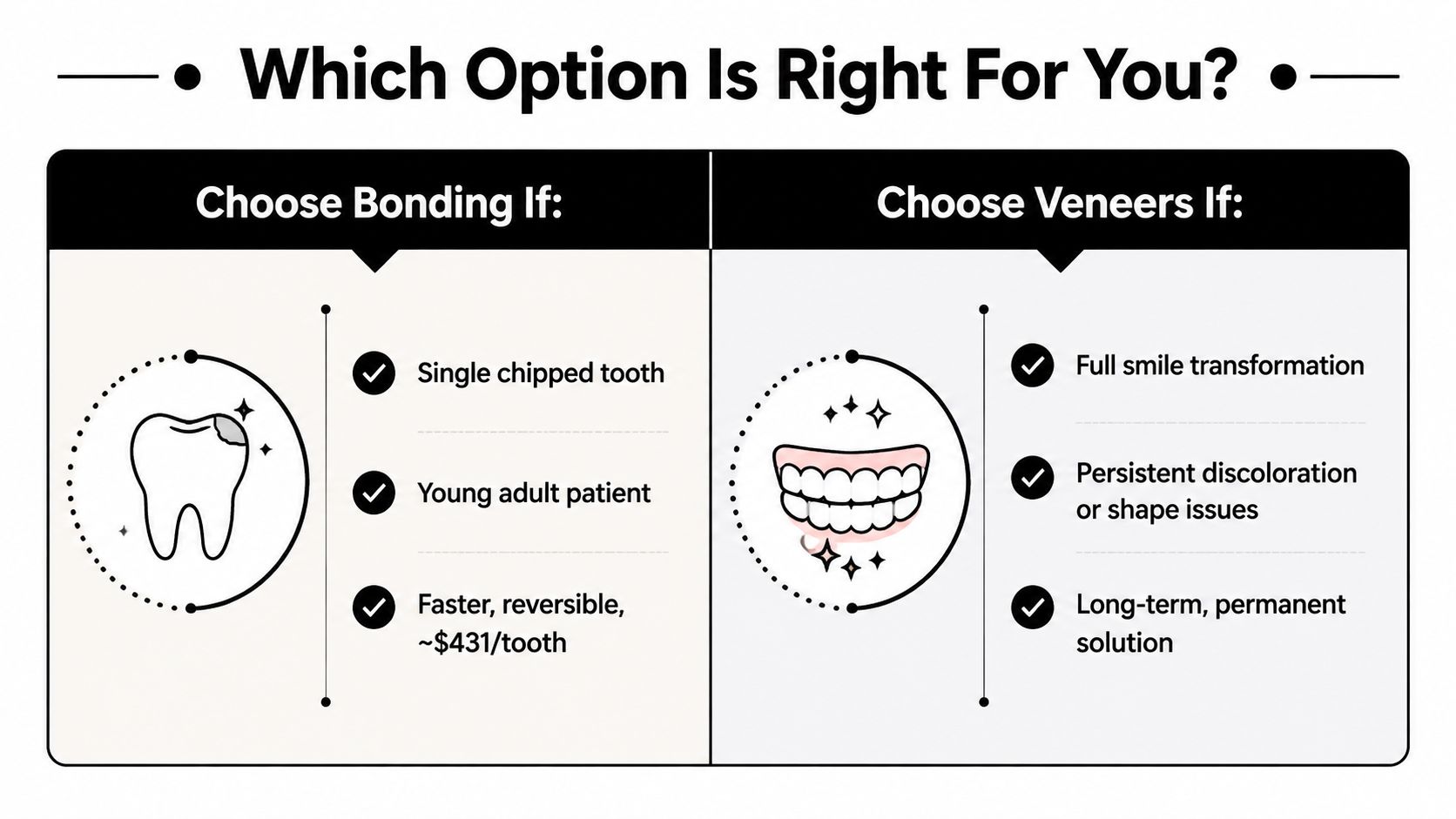
For a single chipped front tooth, I'd usually recommend bonding first if the tooth is healthy and the cosmetic change is limited. It's faster, more conservative, and commonly costs far less per tooth than porcelain. A young adult who expects future changes to tooth shape, shade, or alignment may also value the ability to revise the treatment more easily.
For a full smile redesign, porcelain deserves serious consideration. Persistent discoloration, worn enamel, multiple irregular edges, or a desire for consistent shape across the visible smile can justify the additional planning and laboratory work.
Use the treatment that fits the problem
Bonding is usually the better fit when:
- The concern is isolated. One chipped edge or small gap doesn't automatically call for a full veneer plan.
- You want a conservative repair. The dentist can often add composite without extensive preparation.
- Your budget is limited today. You can stage care and address the most visible tooth first.
- You want speed. Chairside treatment often avoids temporary restorations and a laboratory wait.
Porcelain is usually the better fit when:
- Several visible teeth need coordination. Matching multiple teeth can be easier with a planned veneer design.
- Discoloration persists. Porcelain can provide a more uniform visual result than spot repairs.
- You prioritize longevity. The typical lifespan is longer than bonding when care and bite conditions are favorable.
- You want a deliberate smile transformation. A complete plan can improve proportions rather than patching individual concerns.
Staging treatment can be reasonable for a budget-driven patient. Start with the teeth that show most when you smile, then reassess after healing and living with the result. If longevity is the priority, choose the material and number of teeth that support the final smile from the beginning instead of paying for an interim solution that doesn't match your long-term goal.
A cosmetic consultation at the Katy practice can include an examination, X-rays when needed, photographs, and a personalized quote in one appointment. Ask about the in-house membership plan and current new-patient specials, then choose a practice that makes the experience comfortable and judgment-free, whether you're coming from Sunterra, Katy Manor, Kingscrossing, Lakehouse, Marisol, Anniston, Katy Lakes, Elyson, Ventanna Lakes, or The Grange.
The Dental Retreat can help you compare bonding and veneers with a personalized plan based on your teeth, smile goals, and budget. Visit The Dental Retreat in Katy to request a cosmetic consultation, review available specials and membership options, and take the next step toward a comfortable smile upgrade.