Complete dental implant healing typically takes 3 to 6 months before the final permanent crown is placed, although soft-tissue recovery usually happens within the first couple of weeks. The first days can bring swelling and soreness, but the deeper bone-healing process continues long after your gums look and feel better.
You may be reading this after a tooth extraction, noticing that eating feels awkward or that smiling in photos no longer feels natural. A missing tooth can affect much more than appearance. It can change how you chew, speak, and feel about everyday interactions.
For patients looking for a dentist near me in Katy, TX, understanding the dental implant healing timeline makes the decision less intimidating. At The Dental Retreat, implant care is planned around your anatomy, health, comfort, and long-term goals, whether you live in Sunterra, Cane Island, Katy Manor, Kingscrossing, Lakehouse, Marisol, The Grange, Anniston, Katy Lakes, Elyson, or Ventanna Lakes.
Finding Your Dental Partner in Katy TX
A Katy resident may begin with a simple frustration. A missing molar makes one side of the mouth do more work, or a missing front tooth changes the way they smile at work, school, or community events. Over time, the patient may stop choosing certain foods, cover their mouth while talking, or postpone treatment because the process seems complicated.
That situation is common in implant consultations. Patients often want a permanent replacement, but they also want honest answers about surgery, healing, cost, comfort, and the time before the final tooth is attached. They aren't just searching for Dental implants near me. They're looking for a dental team that will explain each decision without pressure.
Care that begins with listening
A responsible implant evaluation starts with a detailed health and dental history, an examination, dental X-rays, and a discussion of your bite and goals. The dentist may also assess whether an extraction, periodontal care, or bone grafting is needed before implant placement. That planning matters because an implant should be supported by healthy tissue and suitable bone.
The Dental Retreat offers general, restorative, cosmetic, implant, oral surgery, sedation, and emergency dental services in Katy. Its calm, spa-inspired setting includes amenities such as aromatherapy, heated or massage chairs, noise-cancelling headphones, and TVs in treatment rooms. Those details don't replace clinical planning, but they can make a significant procedure feel more manageable for an anxious patient.
A useful first question: Ask what must heal before the next stage begins, not only when you can return to work.
Whether you need a tooth extraction, a single implant, or a full-arch option such as All-on-4, your treatment plan should identify the biological milestones and the appointments that confirm progress. A local practice also makes follow-up care easier when questions arise during recovery.
Understanding Osseointegration
The key biological event in implant treatment is osseointegration, the phase when the implant fuses with the jawbone. Guidance summarized in this dental implant healing timeline explanation places this process at 3 to 6 months in usual cases.
An implant post acts like a replacement tooth root. After placement, the surrounding jawbone gradually remodels and forms direct contact with the implant surface. A simple comparison is a tree root settling into soil. The gum may close over the area relatively quickly, but the deeper foundation needs time to become firm.

Why a closed gum isn't a finished implant
Soft tissue and bone heal on different schedules. The incision can look closed while the implant is still gaining biological stability inside the jaw. That distinction explains why a patient may feel comfortable but still need to avoid heavy chewing directly over the implant.
The implant is typically left in place during this period before the permanent restoration is attached. Your dentist evaluates healing through follow-up examinations and may use imaging or other clinical checks to determine whether the foundation is ready for the next restorative step.
What the waiting period protects
The longer phase isn't wasted time. It gives bone the opportunity to develop a stable relationship with the implant before the final crown receives normal biting forces. Loading too soon can place unnecessary stress on a foundation that hasn't matured.
Patients also heal differently depending on the implant site and the quality of available bone. Lower-jaw implants may heal faster than upper-jaw implants because the upper jaw often contains softer bone, as described in this overview of the dental implant osseointegration timeline. Your Katy dentist should explain how those anatomical details affect your own schedule rather than promise a fixed date.
The Dental Implant Healing Timeline
The dental implant healing timeline has a visible phase and a less noticeable internal phase. Knowing what usually happens at each point can help you separate normal recovery from a reason to call your dental office.
The first 24 to 72 hours
Your body begins forming a clot around the surgical site during the first 24 to 72 hours, according to this explanation of implant osseointegration and soft-tissue recovery. Mild bleeding, tenderness, swelling, and a tight or unfamiliar feeling can occur during this early period.
Swelling often peaks around days 2 to 3 and generally improves substantially by day 7. Visible swelling commonly resolves within about 7 to 10 days when post-operative instructions are followed, as outlined in this guide to swelling after dental implant surgery.
Rest, prescribed medication, a soft diet, and protection of the surgical area help your body establish the first stage of healing. Don't test the implant by pressing it with your tongue or chewing on it because it feels stable.
The first one to two weeks
During week 1, discomfort and swelling usually begin to settle. The gum tissue continues closing around the site, and you can gradually return to routine activities according to your dentist's instructions. The early surgical recovery phase typically lasts about 1 to 2 weeks, as summarized in this dental implant recovery timeline.
Visible gum healing may continue for about 2 to 4 weeks. That doesn't mean the implant is ready for unrestricted pressure. A comfortable gum surface can create a false sense of security while bone remodeling continues underneath.
The months of bone integration
Osseointegration is the longest part of standard implant healing. The implant remains protected while the jawbone develops the stability needed for the abutment and permanent crown. Some patients notice almost nothing during this phase, which makes scheduled follow-up especially important.
The practical rule: Feeling fine tells you that symptoms have settled. It doesn't prove that the implant is ready for a crown or heavy chewing.
Your treatment plan may include a temporary tooth during healing, depending on the implant location and the stability achieved at placement. The final restoration is attached only after your dental team determines that the implant has integrated sufficiently.
Immediate vs Delayed Implant Placement
The timing of implant placement after an extraction depends on the condition of the socket, the surrounding bone, the gum tissue, infection status, and the stability achievable during surgery. Immediate placement means the implant is placed during the same appointment as the extraction for a suitable candidate. Delayed placement allows the extraction site to heal before implant surgery.
Neither option is automatically better. Immediate placement can reduce the number of surgical stages and may help preserve the planned position of the replacement tooth. It still requires careful case selection, and the implant must achieve dependable stability without compromising healing.

The trade-off between speed and predictability
Delayed placement can give damaged or infected tissue time to recover and may allow a dentist to rebuild deficient bone before inserting the implant. The trade-off is a longer overall journey and, in some cases, an additional procedure.
Immediate load protocols can provide a temporary tooth or prosthesis sooner, but they aren't appropriate for every mouth. They depend on factors such as implant stability, bone quality, bite forces, and the number and position of implants.
All-on-4 full-arch treatment follows a different planning model from a single-tooth implant. It replaces an entire arch with an implant-supported restoration, and the temporary and final prostheses follow a staged plan. A consultation should clarify whether your priorities favor fewer procedures, faster temporary function, or a more cautious healing sequence.
Ask your Katy dentist:
- Eligibility: Is the extraction site suitable for immediate placement?
- Bone support: Would grafting improve the foundation?
- Temporary function: What can I safely wear or eat during healing?
- Final timing: Which clinical findings determine when the permanent restoration is attached?
Factors That Affect Your Recovery Speed
The usual timeline is a guide, not a promise. The health of the bone and gums, the implant location, the complexity of surgery, and your general health all influence how your body responds.
Bone quality is especially important. Low-density bone can take longer to provide dependable support, and a bone graft may be recommended when the existing foundation isn't adequate. This guide to bone grafting for dental implants explains why rebuilding the site can become part of the treatment plan.
Factors your dentist evaluates
- Bone and anatomy: The upper jaw can contain softer bone than the lower jaw, and grafting can extend the schedule.
- Health conditions: Medical issues that affect circulation, immunity, or bone repair should be discussed before surgery.
- Tobacco exposure: Smoking can interfere with gum and bone healing, so your dental team may recommend stopping.
- Oral hygiene: Plaque control protects the healing tissue and reduces avoidable irritation.
- Bite pressure: Grinding, clenching, or chewing directly over the site can challenge the developing foundation.
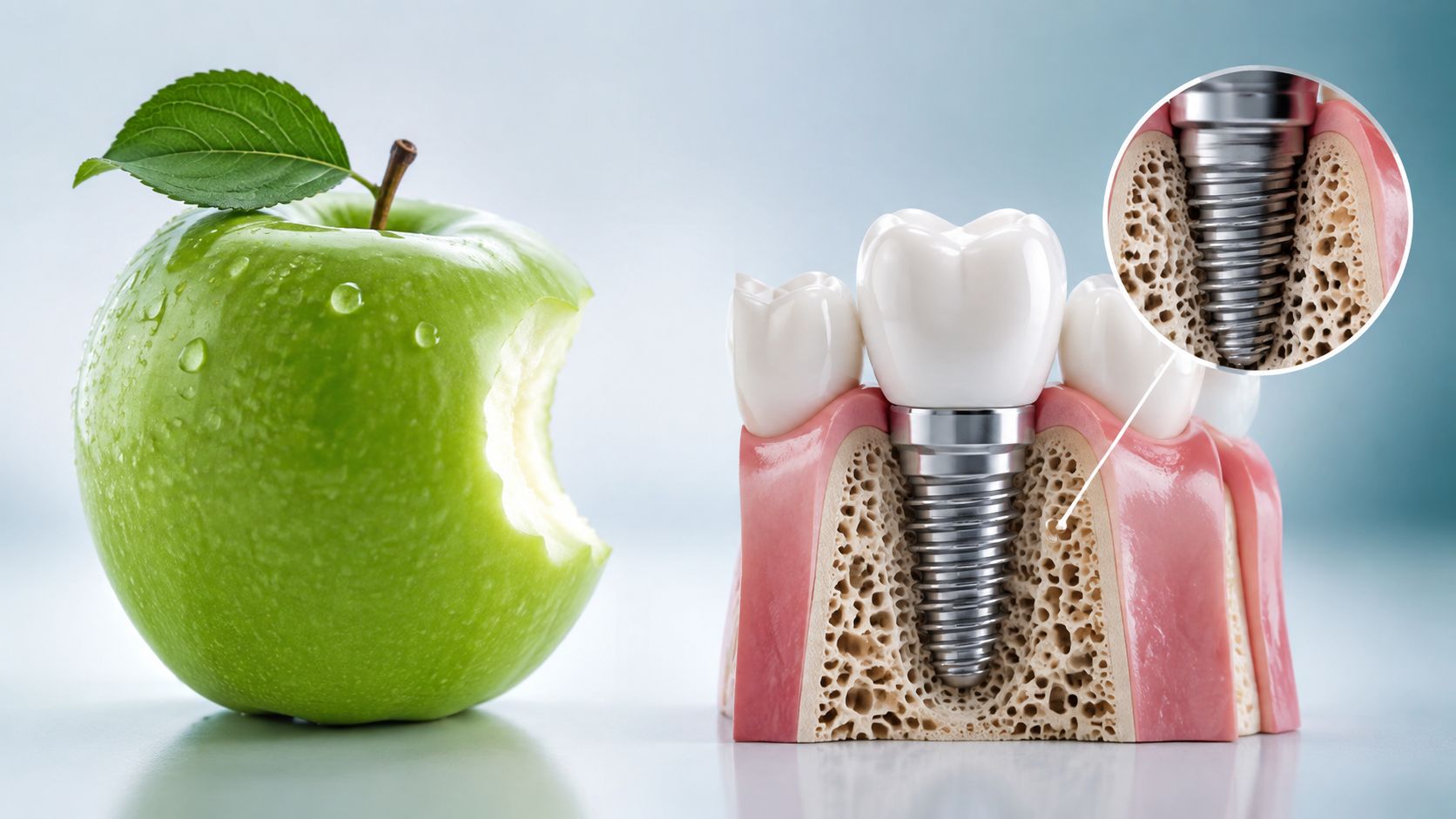
A patient can't force osseointegration to happen faster, but they can remove obstacles. Following the surgical plan, attending review appointments, avoiding pressure on the implant, and reporting unusual symptoms promptly give the healing process the best possible conditions.
Post-Op Care and Warning Signs
Your written instructions take priority because your procedure and medical history are individual. In general, protect the site during the first days, choose foods that don't require forceful chewing, and keep nearby teeth clean without scrubbing the surgical area.
First-week habits that support recovery
- Choose soft foods: Yogurt, soup, eggs, and other gentle foods reduce chewing pressure.
- Rinse carefully: Use gentle saltwater rinses only as directed, without vigorous swishing.
- Protect the clot: Avoid smoking and straws because suction and irritation can disturb the early surgical site.
- Manage discomfort: Take medication exactly as prescribed or recommended by your dental team.
- Keep appointments: Follow-up visits let the dentist assess tissue healing and implant stability.
More detailed daily guidance is available in The Dental Retreat's instructions for caring for dental implants.

When to contact the dental team
Call promptly if bleeding doesn't settle, pain becomes severe or remains intense after the expected early period, swelling worsens instead of improving, or you notice pus, a foul taste, fever, or another concerning change. Severe swelling past the early recovery period also deserves professional advice.
Don't wait for a routine cleaning and exam if something feels wrong around an implant. A prompt assessment can distinguish expected healing from irritation, infection, or a problem with the restoration.
For a visual overview of care and warning signs, watch the following patient education video:
Your Path to a Complete Smile in Katy
A missing tooth doesn't require you to accept permanent limits on eating, speaking, or smiling. Dental implants can provide a stable foundation, but the result depends on respecting the healing process and choosing a plan that fits your bone, gums, bite, and health.
The most important distinction is simple. Gum recovery happens first, often within days to weeks, while osseointegration continues for months. You may feel normal before the implant is ready for the final crown, so your dentist's examination matters more than comfort alone.
A plan built around your needs
Your visit may begin with a new patient exam, dental X-rays, and a conversation about your goals. If a failing tooth needs removal, the team can discuss tooth extraction and the timing of implant placement. If bone support is limited, grafting may become part of the plan. Patients needing a broader smile solution can also ask about restorative dentistry, cosmetic dentistry, or full-arch options.
The Dental Retreat serves patients seeking a dentist in Katy, TX, an emergency dentist, or a cosmetic dentist near me, as well as individuals exploring implants and All-on-4. Its approach combines dental care with a calm setting for patients who feel anxious about treatment. Extended hours, bilingual care, sedation options, and transparent planning can make the process easier to manage.
Whether you live near Sunterra, Cane Island, Katy Manor, Kingscrossing, Lakehouse, Marisol, The Grange, Anniston, Katy Lakes, Elyson, or Ventanna Lakes, the right next step is an evaluation rather than a guess about timing. A consultation can show whether immediate or delayed placement is appropriate and what milestones will guide your recovery.
Schedule an implant consultation with The Dental Retreat in Katy to discuss your tooth replacement options, healing timeline, and any need for extraction or bone support. The team can guide you from examination and treatment planning through recovery and final restoration in a calm, patient-focused environment.