You may notice blood on your toothbrush, a persistent bad taste, or breath that doesn't improve after brushing. Many Katy patients put off care because their gums aren't causing severe pain yet, then search for a dentist near me when bleeding or tenderness becomes difficult to ignore. At The Dental Retreat on Stockdick School Rd., you can receive a calm, judgment-free evaluation and a clear explanation of which gum disease treatment options fit your condition.
Gum disease is common and treatable, but the right plan depends on what's happening below the gumline. Pocket depth, bleeding, gum attachment, and bone support help determine whether professional cleaning is enough, whether scaling and root planing is appropriate, or whether advanced periodontal care deserves consideration.
Recognizing the Signs of Gum Disease in Katy TX
A patient from Sunterra may notice pink foam in the sink after brushing. Someone in Cane Island may keep mints nearby because bad breath returns quickly. Another patient searching for a dentist in Katy TX may feel embarrassed by tender gums and assume the problem reflects poor care. These symptoms are common reasons to schedule an evaluation, not reasons to feel judged.
Early gum inflammation is often called gingivitis. The gums may look red or swollen and bleed during brushing or flossing. With attention to home care and professional cleaning, this stage can often be controlled. The early signs of gum disease deserve attention because gum disease can progress even when discomfort remains mild.
Established periodontitis affects the tissues and bone that support teeth. Pockets can deepen as inflammation separates the gum from the tooth, creating spaces where plaque and tartar are harder to remove. Bone loss can eventually affect tooth stability, so a thorough examination matters even if a tooth doesn't hurt.
What a Katy evaluation can clarify
A periodontal evaluation may include:
- Gum measurements: The dental team checks the depth of the spaces between your gums and teeth.
- Bleeding assessment: Bleeding during probing helps identify active inflammation.
- Dental X-rays: Images can reveal bone changes that aren't visible during a routine look.
- Home-care review: Brushing, flossing, interdental cleaning, medications, and lifestyle factors all help shape the plan.
The CDC reports that about 42% of U.S. adults age 30 and older had periodontitis during 2009–2014, with severe periodontitis affecting about 8%. Adults age 65 and older were affected at a rate of about 60%, according to the reported CDC gum disease statistics. These figures explain why gum evaluations are an important part of preventive dental care for adults and families in Katy, including Katy Manor, Kingscrossing, and Lakehouse.
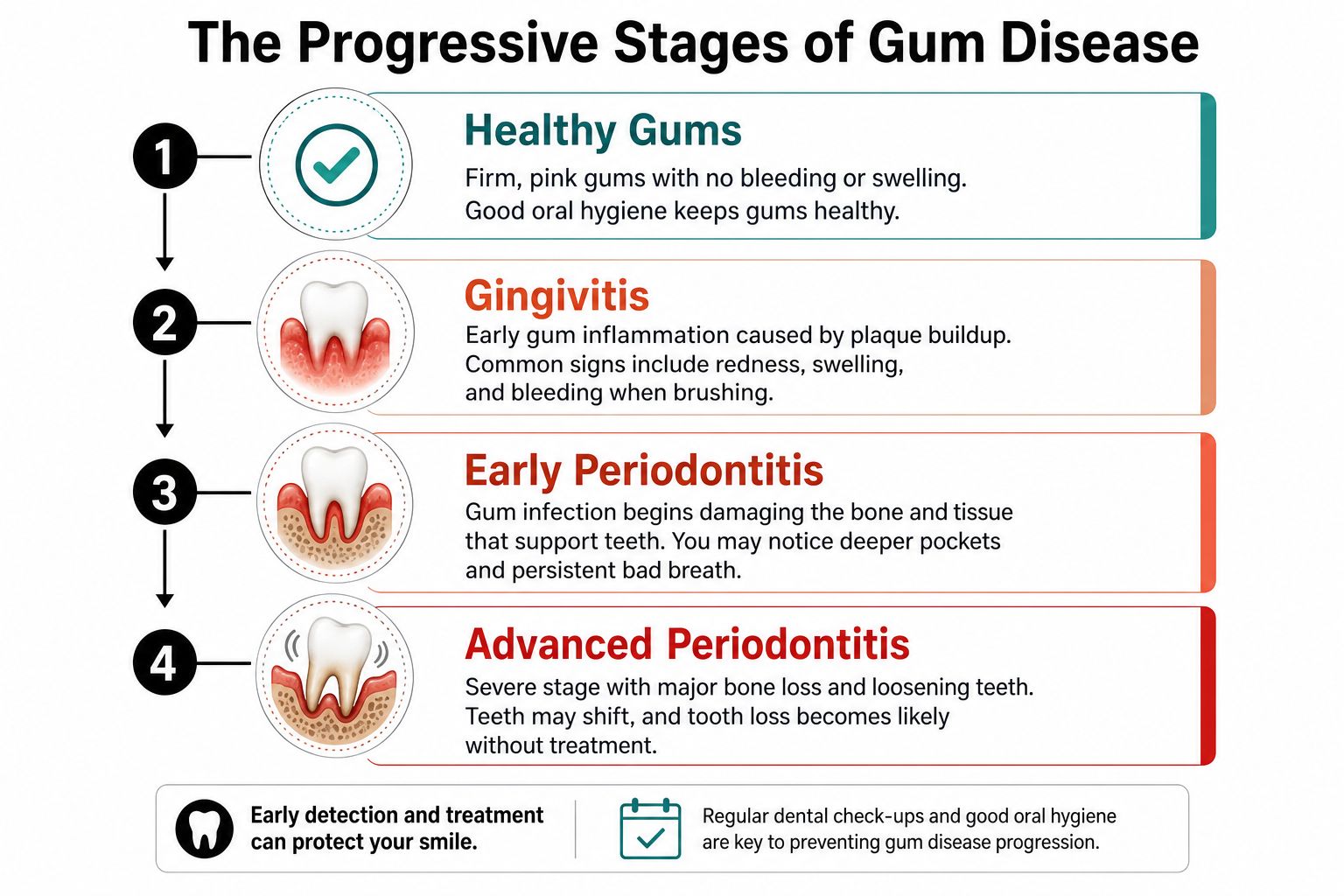
Understanding the Stages of Gum Disease
Gum disease is easier to understand when you think of the gums and bone as a foundation. A small area of inflammation may be corrected with cleaning and better daily care. If inflammation continues, the supporting foundation can weaken, and treatment becomes more involved.
Stage one is gingivitis
Gingivitis is the earliest stage. Plaque irritates the gum margin, causing redness, swelling, and bleeding. The bone supporting the teeth hasn't been damaged by periodontitis at this stage, so professional cleaning and consistent home care can often restore healthier gums.
Bleeding isn't something to dismiss as normal. It usually signals inflammation that needs attention, even when there's no pain.
Periodontitis creates deeper problems
As periodontitis develops, the gum tissue can pull away from the tooth and form a deeper pocket. The condition may be described as mild, moderate, or severe based on findings such as attachment loss, bone loss, pocket depth, bleeding, and tooth stability.
A pocket measurement is taken with a periodontal probe. The number doesn't tell the entire story, but it helps guide decisions. One clinical reference states that treatment is needed when pockets are at least 4 millimeters deep, while another recommends repeating subgingival instrumentation for residual pockets of 4 to 5 millimeters and considering access flap surgery when residual pockets are 6 millimeters or deeper. These thresholds are summarized in the NCBI clinical guidance on periodontal treatment.
Why the measurements matter
A 4-millimeter pocket may call for focused subgingival treatment and careful reassessment. A persistent 6-millimeter pocket can be harder to clean without improved access, particularly when bone loss or bleeding is present. The treatment choice should follow the findings rather than the name of a procedure.
The EFP guidance uses bleeding and pocket-depth endpoints after therapy. Reassessment should confirm either no pockets of 5 millimeters or more with bleeding on probing, or no pockets of 6 millimeters or more. If those endpoints aren't met, the patient should move to the next treatment step, as outlined in the EFP periodontitis treatment guidance.
Non-Surgical Gum Disease Treatment Options
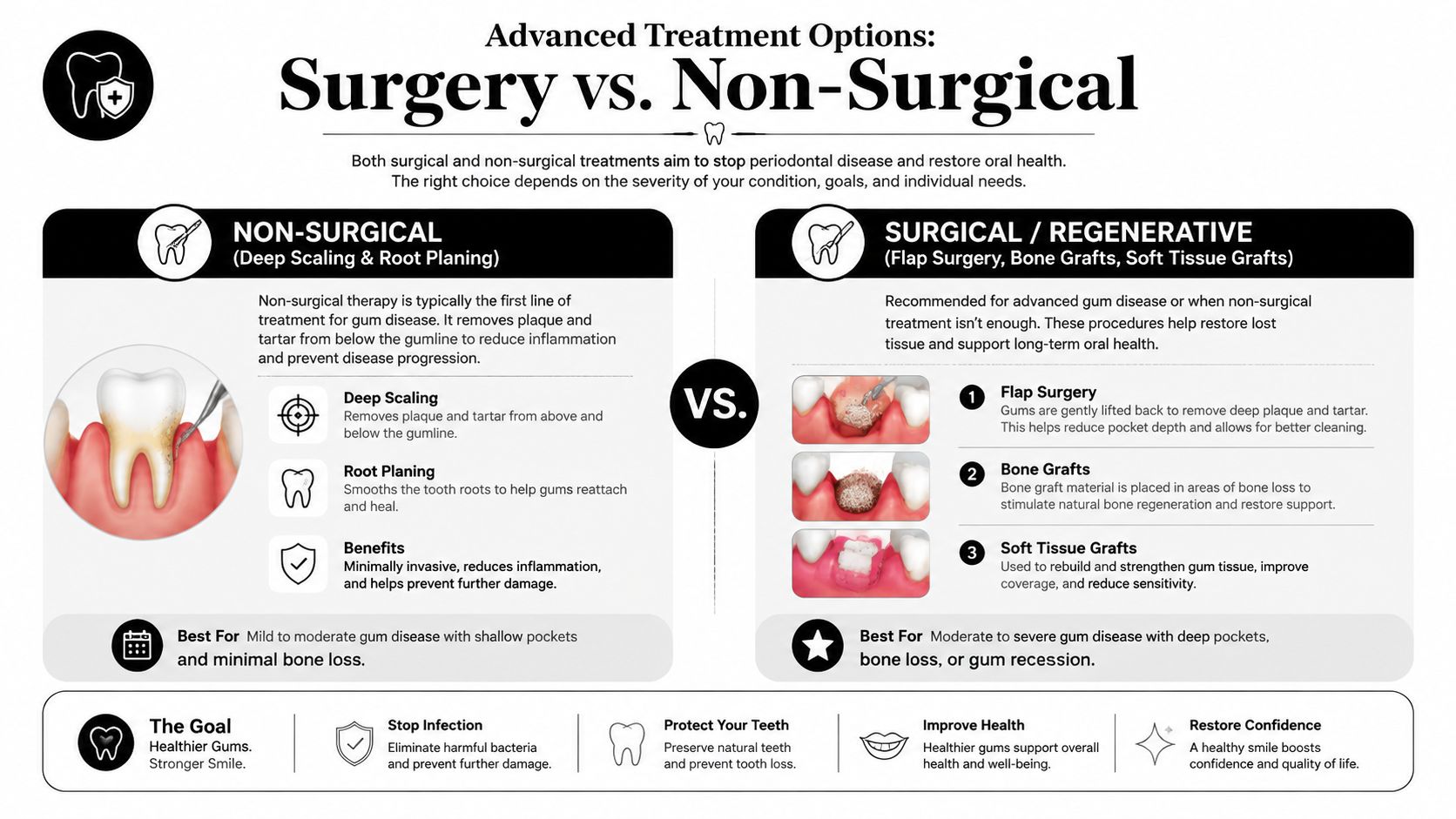
For many patients, treatment begins without surgery. The foundation is mechanical removal of plaque and tartar, followed by home care and reassessment. A routine professional cleaning may be appropriate for gingivitis, while periodontitis commonly requires scaling and root planing, often called a deep cleaning.
What deep cleaning does
Scaling and root planing cleans affected tooth and root surfaces below the gumline. The clinician removes hardened tartar and smooths rough areas on the roots, giving the gums a cleaner surface to heal against. The CDC describes this as a nonsurgical procedure, and Cleveland Clinic explains that it reaches beneath the gumline to remove plaque and tartar and smooth rough root areas, as described by the CDC's explanation of periodontal disease.
Treatment may be divided by areas of the mouth. Local anesthetic can help keep the procedure comfortable, and the plan may include updated brushing, flossing, or interdental-cleaning instructions.
Antibiotics are not a substitute
Systemic antibiotics shouldn't be used alone for chronic periodontitis. SRP by itself produces about 0.5 millimeters of average clinical attachment gain, while systemic antibiotics add roughly 0.20 to 0.24 millimeters of attachment gain and about 0.28 millimeters of probing-depth reduction compared with SRP alone, according to the review of systemic antibiotics used with periodontal therapy.
That incremental benefit may matter in selected cases, such as progressive attachment loss, invasive subgingival pathogens, multiple deep pockets, or initially severe disease. It doesn't justify routine antibiotics for every patient. The clinician first disrupts the biofilm mechanically, then considers whether medication adds enough value for the individual diagnosis.
Sustained-delivery local antimicrobials may add about 0.4 millimeters of pocket-depth reduction and 0.3 millimeters of attachment gain in persistent or recurrent localized deep sites. In moderately deep pockets measuring 4 to 6 millimeters, reported gains are smaller, around 0.3 millimeters of pocket reduction and 0.2 millimeters of attachment gain. These figures come from the review of adjunctive periodontal antimicrobials.
Non-surgical treatment outcomes at a glance
| Treatment | Pocket Depth Reduction | Attachment Gain | Best For |
|---|---|---|---|
| Professional cleaning and improved home care | Qualitative improvement | Not applicable to established bone loss | Gingivitis and early inflammation |
| Scaling and root planing | Depends on site and starting condition | About 0.5 mm average with SRP alone | Periodontitis requiring subgingival cleaning |
| Systemic antibiotics with SRP | About 0.28 mm additional reduction versus SRP alone | About 0.20 to 0.24 mm additional gain | Selected higher-risk or more severe cases |
| Local sustained-delivery antimicrobial | About 0.4 mm at persistent localized deep sites | About 0.3 mm at those sites | Persistent or recurrent localized pockets |
The practical question isn't, “Which add-on can I receive?” It's, “After mechanical treatment, do my pockets and bleeding show a response that supports continued nonsurgical care?”
When Surgery and Advanced Procedures Are Needed
Surgery isn't the automatic next step after a gum disease diagnosis. It becomes more relevant when deep pockets remain after appropriate nonsurgical care, when tartar and infected tissue can't be predictably accessed, or when bone defects require a procedure designed to improve support.
Comparing advanced approaches
Periodontal flap surgery gently lifts the gum tissue so the clinician can see and clean areas hidden beneath the gumline. The tissue is then repositioned to improve access and reduce the space where bacteria can collect. Residual pockets of 6 millimeters or deeper are a commonly cited threshold for considering access flap surgery, although the final decision also depends on bleeding, bone loss, anatomy, and the response to previous care.
Regenerative procedures may involve bone grafting, guided tissue regeneration, or materials intended to support the body's repair of selected defects. Regeneration isn't suitable for every type of bone loss. The shape of the defect and the condition of the tooth determine whether the procedure has a reasonable purpose.
Soft-tissue grafting addresses exposed roots or thin gum tissue rather than removing deep infection alone. It may improve tissue coverage and protection in carefully selected situations.
Laser therapy may be discussed as an adjunct in some practices. It shouldn't be presented as a replacement for diagnosis, mechanical debridement, or supportive maintenance. The central question remains whether the clinician can remove the deposits and control the persistent pocket.
Preserving or replacing a tooth
Advanced periodontitis can make a tooth loose or impossible to maintain. Extraction may be appropriate when the tooth has inadequate support, a poor restorative outlook, or infection that can't be controlled. A tooth extraction should be considered a carefully evaluated last step for a tooth that can't be predictably saved, not a shortcut around periodontal treatment.
When a tooth is lost, replacement options may include a dental implant, bridge, or removable restoration. Patients searching for dental implants near me may also ask about full-arch options such as All-on-4. Implant planning still requires attention to gum health, bone volume, bite forces, and long-term maintenance. A practice such as The Dental Retreat can coordinate periodontal, implant, oral surgery, and restorative planning in one care setting.
Advanced care can sound intimidating, but the purpose is precise access, infection control, tissue preservation, or replacement of structures that no longer provide reliable support.
What to Expect During Treatment and Recovery
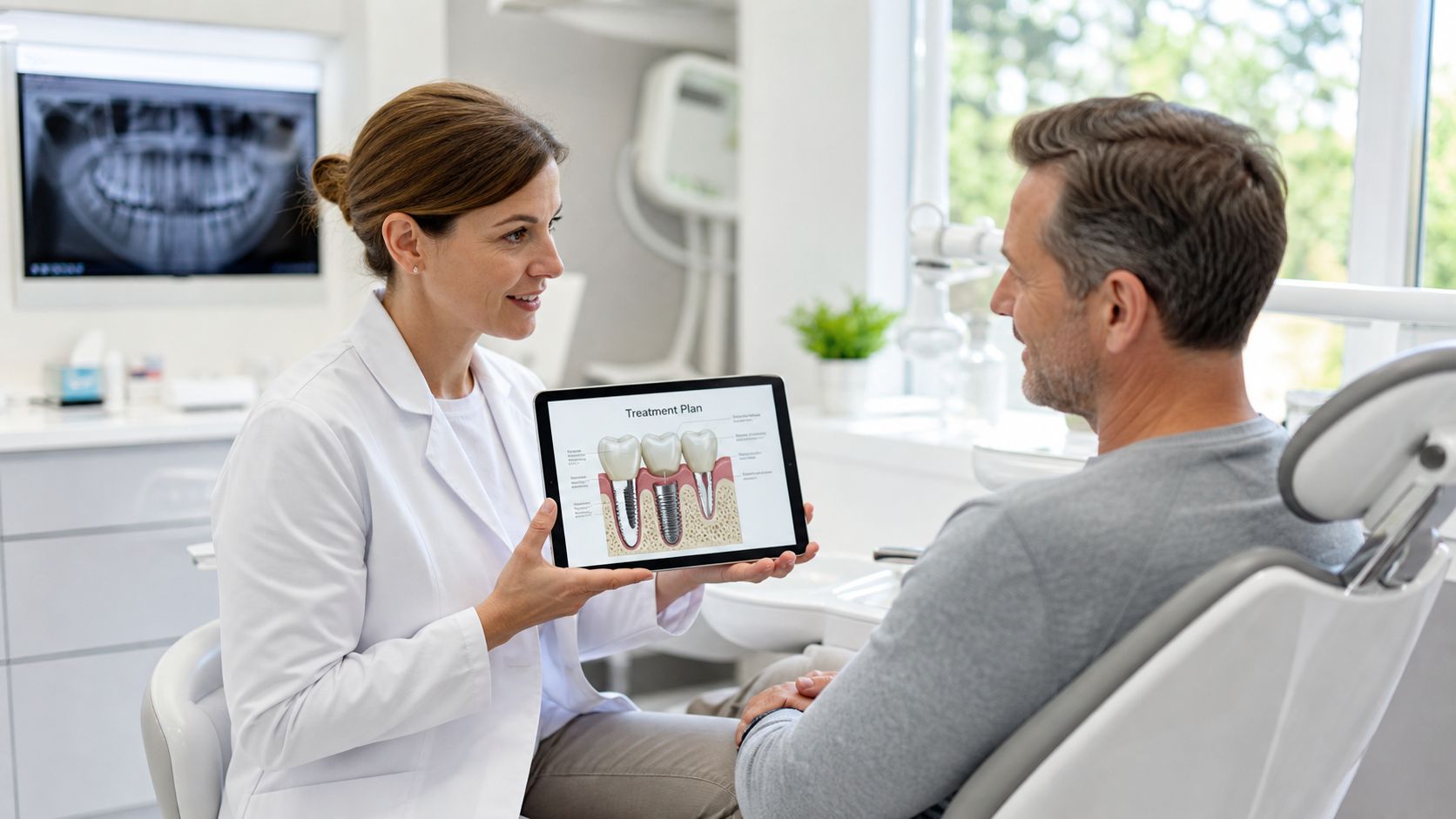
Your first visit should answer practical questions, not leave you with a procedure name and no explanation. At The Dental Retreat, the process begins with an examination, dental X-rays when indicated, gum measurements, and a conversation about symptoms, medical history, home care, and your priorities.
The appointment sequence
A typical care path may include:
- Evaluation: The team identifies bleeding, pocket depths, tartar, recession, tooth mobility, and bone changes.
- Diagnosis and planning: You receive an explanation of whether the findings fit gingivitis, periodontitis, or another problem.
- Active treatment: Care may involve professional cleaning, scaling and root planing, local medication, systemic medication in selected cases, or referral-level procedures.
- Reassessment: The clinician checks healing, bleeding, pocket depths, and home-care progress before deciding whether to continue or escalate.
The practice's spa-inspired setting includes aromatherapy, massage and heated chairs, noise-cancelling headphones, and TVs in every room. These details don't change the clinical indication for treatment, but they can make a difficult appointment feel more manageable for anxious patients.
Recovery depends on the procedure
After a routine cleaning, most patients return to normal activities quickly. Scaling and root planing can cause temporary gum tenderness or tooth sensitivity, especially when inflamed tissue and exposed root surfaces are cleaned. Following instructions for brushing, cleaning between teeth, and any recommended rinses helps protect the treated areas.
Surgical or regenerative treatment involves more detailed aftercare. You may receive instructions about eating, brushing near the site, medication, and follow-up visits. Sedation options can be discussed when anxiety is a barrier to care, and bilingual support helps Spanish-speaking families communicate comfortably about symptoms and treatment choices.
Call the practice promptly for worsening swelling, persistent severe pain, fever, or other unexpected symptoms after treatment. An emergency dentist can help determine whether urgent care is needed.
Long-Term Maintenance and Prevention Strategies
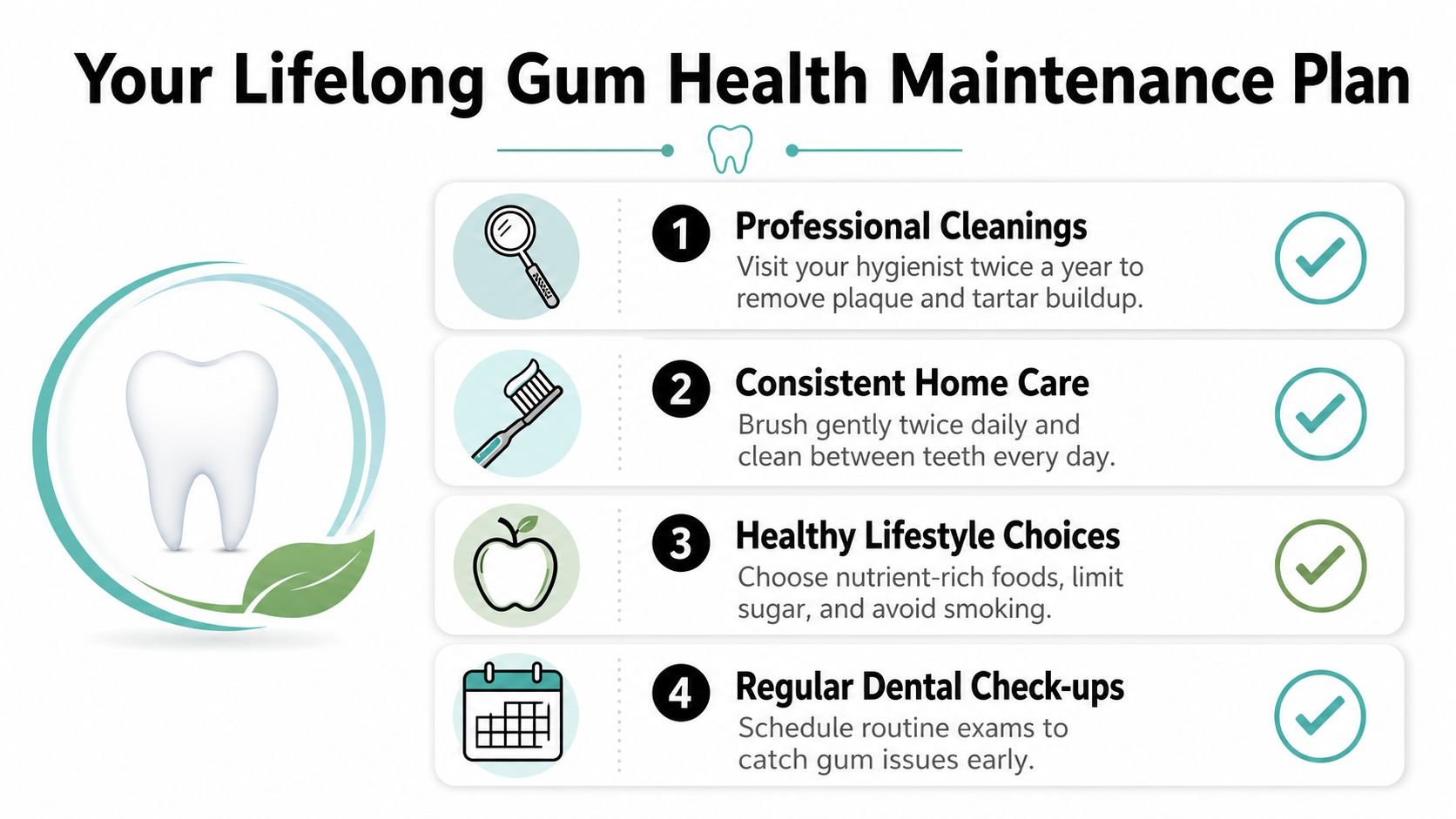
Gum disease treatment doesn't end when the cleaning or procedure is complete. Bacteria return to the mouth every day, and supportive periodontal therapy helps clinicians identify inflammation or deeper pockets before they become harder to manage.
A maintenance plan that fits real life
Patients with a history of periodontitis often need professional periodontal maintenance more frequently than someone with healthy gums. A common approach is visits every 3 to 4 months, adjusted to the patient's bleeding, pocket depths, home care, risk factors, and response to treatment.
At home, focus on consistency rather than force:
- Brush gently and thoroughly: Use a soft-bristled toothbrush and clean along the gumline without scrubbing aggressively.
- Clean between teeth: Floss, interdental brushes, or another recommended cleaner can reach areas a toothbrush misses.
- Follow personalized instructions: A larger interdental brush may work better than floss in some spaces, while tighter contacts may need floss.
- Address tobacco use: Smoking can interfere with gum health and healing, so cessation support is a meaningful part of prevention.
- Keep dental checkups: Routine exams can identify new cavities, cracked teeth, bite concerns, and periodontal changes.
The gum disease prevention guide can help you turn professional recommendations into daily habits.
Planning for the financial side
Maintenance is also a practical financial decision. Repeated inflammation can lead to more complex treatment, while regular visits help manage problems earlier. The Dental Retreat offers membership plans starting at $299 per year, with savings for periodontal maintenance. New patients without insurance may also qualify for a $99 exam special that includes cleaning and X-rays.
Ask for a written plan that separates diagnosis, active treatment, maintenance, and optional services. Clear costs make it easier to choose care without postponing the steps that protect your teeth.
Schedule Your Gum Disease Consultation in Katy TX
Bleeding gums, bad breath, tenderness, gum recession, and loose teeth all deserve an explanation. You don't need to decide between deep cleaning, medication, surgery, extraction, or implants before your examination. The right choice depends on the findings, especially pocket depth, bleeding, attachment, bone support, and response to initial treatment.
A consultation can also connect gum health with the rest of your dental needs. If damaged teeth require restorative dentistry, if you're considering dental implants, or if you're looking for a cosmetic dentist near me for whitening or a smile plan after your gums are stable, a coordinated evaluation keeps those decisions in the proper order. Gum health should support any future cosmetic or restorative work, not be treated as an afterthought.
The Dental Retreat serves patients near Sunterra, Cane Island, Katy Manor, Kingscrossing, Lakehouse, Marisol, The Grange, Anniston, Katy Lakes, Elyson, and Ventanna Lakes. The Stockdick School Rd. practice offers a judgment-free environment, insurance-friendly payment options, membership plans, sedation options, extended hours, and bilingual care for Spanish-speaking families.
Don't wait for severe pain before seeking help. Early evaluation may keep care simpler, while persistent deep pockets or bone loss require a more deliberate plan. Whether you need a new patient exam, periodontal maintenance, a tooth extraction, implant consultation, or urgent dental services, a conversation with a Katy dental team can replace uncertainty with clear next steps.
The Dental Retreat provides periodontal evaluations, deep cleanings, maintenance care, advanced gum treatment planning, tooth replacement, and dental services in a calm Katy setting. Visit The Dental Retreat to request an appointment and discuss the gum disease treatment options that fit your needs.