A single veneer in the U.S. typically runs about $1,455, while a single dental implant averages about $4,507. The implant costs more upfront, but that headline gap is misleading because veneers cover existing teeth and implants replace missing ones.
You may be sitting at your kitchen table in Katy, looking at a chipped front tooth, a failing crown, or a gap left after a tooth extraction, and wondering whether a veneer or implant makes more sense. The answer starts with the condition of the tooth, not the price tag. A cosmetic dentist near me can improve a healthy tooth with a veneer, while a dentist treating a missing or unsalvageable tooth will usually discuss structural replacement.
For patients searching for a dentist in Katy, TX, the practical question is this: what does each dollar buy, and how often might you pay for the result again? The following comparison uses published U.S. pricing data, then applies it to a Katy treatment conversation at The Dental Retreat.
When a Smile Decision Costs More Than Money
A teacher near Cane Island chips a front tooth during lunch before returning to class. The tooth remains in place, but its rough edge shows whenever she speaks. Searching for a dentist near me, she sees veneer and implant prices and assumes the lower quote is the smarter choice.
That shortcut can lead to the wrong treatment. A healthy tooth that can support a veneer should not be replaced with an implant. A crack extending below the gumline, or a tooth that cannot be predictably restored, changes the recommendation. The decision rests on candidacy, function, appearance, and the time horizon you're using to judge value.
Published U.S. pricing places one veneer at $1,455 per tooth, with a reported range of $1,020 to $2,506 based on material and location. A set of six to eight veneers averages $13,954, according to CareCredit's dental veneer cost guide. A separate 2026 comparison puts one implant at about $4,507 nationwide, with state averages ranging from roughly $3,759 in Alabama to $5,733 in California, as shown in the 2026 state pricing dataset.
Those figures describe entry costs, not the full lifetime decision. Veneers preserve a natural tooth but may need future replacement. Implants replace a missing or unsalvageable tooth and involve a more involved treatment path. Compare the condition of the tooth, the required procedures, and long-term maintenance before comparing quotes.
Practical rule: A veneer is usually the lower entry price for improving a tooth you still have. An implant is the replacement option when the tooth is missing or cannot be saved.
At The Dental Retreat, patients from Sunterra, Katy Manor, Kingscrossing, Lakehouse, Marisol, The Grange, Anniston, Katy Lakes, Elyson, and Ventanna Lakes should receive a treatment roadmap, not only a printed estimate. The visit should clarify candidacy, follow-up care, and how each option fits the tooth's function and appearance. Transparent pricing, calming amenities, and a staged plan make the cost easier to judge.
What Veneers and Implants Fix
If you still have a workable natural tooth, veneers and implants are not interchangeable choices. Veneers cover existing teeth. Implants replace missing teeth. The right comparison starts with candidacy and the problem each treatment is designed to solve, not with the lower sticker price.
Veneers improve the visible surface
A veneer is a thin porcelain or composite shell bonded to the front of a natural tooth. It can conceal a chip, discoloration, small gap, mild crowding, or worn enamel. Your dentist typically removes a limited amount of enamel to make room, then designs, fits, and bonds the restoration over the tooth.
The tooth must remain present and healthy enough to support that veneer. Veneers can change the appearance of a smile, but they do not replace a root, restore missing jaw support, or close a space where a tooth is gone. A cosmetic dentist near me may first address decay, gum disease, bite problems, or other conditions that could weaken the result.
Choose veneers when the tooth is structurally sound and your priority is appearance. The treatment improves the visible surface while preserving the underlying tooth.
Implants rebuild what's missing
A dental implant replaces a tooth through three connected parts:
- Titanium post: Surgically placed in the jawbone, it acts as an artificial root.
- Abutment: The connector joins the post to the visible restoration.
- Custom crown: The crown restores the tooth's shape, appearance, and chewing surface.
An implant does not rely on neighboring teeth for support. It fills the space left by a missing tooth and provides a stable foundation for the crown. A dental implant consultation also reviews gum health and available bone before treatment starts.

An implant estimate covers more than the visible tooth. It includes surgical placement, healing and integration, an abutment, and a crown. A veneer estimate covers cosmetic preparation and a laboratory-made covering for an existing tooth. Compare those treatment goals before deciding which cost is lower.
Real Price Ranges for Implants and Veneers in 2026
A useful estimate starts with two questions: what is being treated, and what does the quoted price include? “Per implant” may refer only to the post or to a completed tooth with surgery, abutment, and crown. Those figures cannot be compared fairly.
The verified U.S. averages offer a starting point. A veneer averages $1,455 per tooth, while the 2026 national average for an implant is about $4,507 per tooth. Other U.S. guidance places porcelain veneers around $1,200 to $2,500 per tooth and a complete implant with crown around $3,500 to $6,500 or more, according to this implant and veneer cost comparison.
| Treatment | U.S. Average | Texas Range | Includes |
|---|---|---|---|
| Porcelain veneer | $1,455 per tooth | About $1,200 to $2,000 per tooth | Consultation, preparation, laboratory work, and bonding |
| Single dental implant | About $4,507 per tooth | About $3,500 to $6,500 with crown | Implant surgery, post, abutment, and crown |
| Full-arch All-on-4 | $15,176 average | Personalized by treatment scope | Multiple implant components and a full-arch restoration |
Use these figures to plan, not to predict a Katy patient's final bill. The national All-on-4 average of $15,176 reflects a larger reconstruction, not replacement of one missing tooth. Full-arch treatment requires a separate evaluation.
Before accepting an estimate, ask whether it includes X-rays, the surgical visit, temporary teeth, the final crown, laboratory fees, and any extraction. Veneer estimates should identify the material, preparation, temporary coverage, lab work, bonding, and number of teeth. The Dental Retreat's guide to veneer costs gives you a focused list of questions for a personalized Katy treatment plan. A lower sticker price means little if it leaves surgery, temporaries, or the final restoration outside the quote.
Side-by-Side Comparison of Implants and Veneers
Price matters, but it shouldn't be the only column on your scorecard. A veneer may be completed quickly and create a dramatic cosmetic improvement, while an implant takes longer because the jaw needs time to support the replacement root. The two options also place different demands on the tooth and surrounding tissues.
| Criteria | Dental Implants | Veneers |
|---|---|---|
| Upfront cost per tooth | About $4,507 U.S. average | About $1,455 U.S. average |
| Typical service life | About 15 to 25 or more years, potentially longer with maintenance | About 10 to 20 years depending on material and care |
| Treatment timeline | Staged care with surgical healing and final restoration | Usually completed through a short cosmetic treatment sequence |
| Candidacy | Missing or failing tooth, healthy gums, and sufficient jawbone | Existing tooth with adequate structure and healthy supporting tissues |
| Main purpose | Structural tooth replacement | Cosmetic enhancement |
| Maintenance | Brushing, flossing, professional care, and monitoring around the implant | Daily hygiene, professional care, bite protection, and attention to chips or bonding |
The service-life ranges come from a long-term comparison of veneer and implant economics. They're useful for planning, but no restoration has a guaranteed outcome. Grinding, trauma, gum disease, oral hygiene, bite forces, and general health can all affect how a treatment performs.
The implant scorecard
Choose the implant path when the tooth is missing or structurally compromised beyond predictable repair. The process includes surgery and a healing period, but the result replaces the root and crown rather than decorating a neighboring tooth. You'll need a clinical evaluation of bone and gum health before the dentist can confirm candidacy.
The veneer scorecard
Choose veneers when the tooth is present, stable, and your goal is appearance. Veneers can address visible concerns such as stains, small chips, mild spacing, or uneven edges without replacing the entire tooth. They do require permanent enamel preparation, so you should treat the decision as a long-term commitment, not a temporary trial.
Maintenance is active for both options. Implants need careful cleaning around the gums and periodic monitoring. Veneers need normal hygiene, sensible eating habits, and protection if you grind your teeth. Routine cleaning and exams, dental X-rays when indicated, and new patient exams help protect the teeth supporting either treatment.
How Geography and Treatment Scope Change the Math
A national average can orient you, but it can't predict your Katy estimate. Local laboratory relationships, practice overhead, the complexity of the bite, materials, imaging, surgical needs, and the number of teeth involved all move the final price.
The verified data shows why location deserves attention. In the 2026 state comparison, a single implant average ranged from roughly $3,759 to $5,733 across the listed state averages, a difference of more than half between those figures. The same dataset lists veneers around $1,759 on average, reinforcing that veneers generally cost less for front-tooth aesthetic correction. The underlying state and affordability dataset also emphasizes that local cost of living changes the burden patients feel, even when the procedure name stays the same.
Treatment scope changes the math even more. One veneer and a full smile makeover are not comparable purchases. One implant and a full-arch restoration are different clinical plans, with different surgical, laboratory, and restorative requirements. CareCredit lists All-on-4 implants at a $15,176 average, while a single full-size implant appears at $2,143 in its procedure cost list, showing how much inclusion and scope can affect a published figure. Those numbers should be read carefully because a procedure list may not define every component the same way.
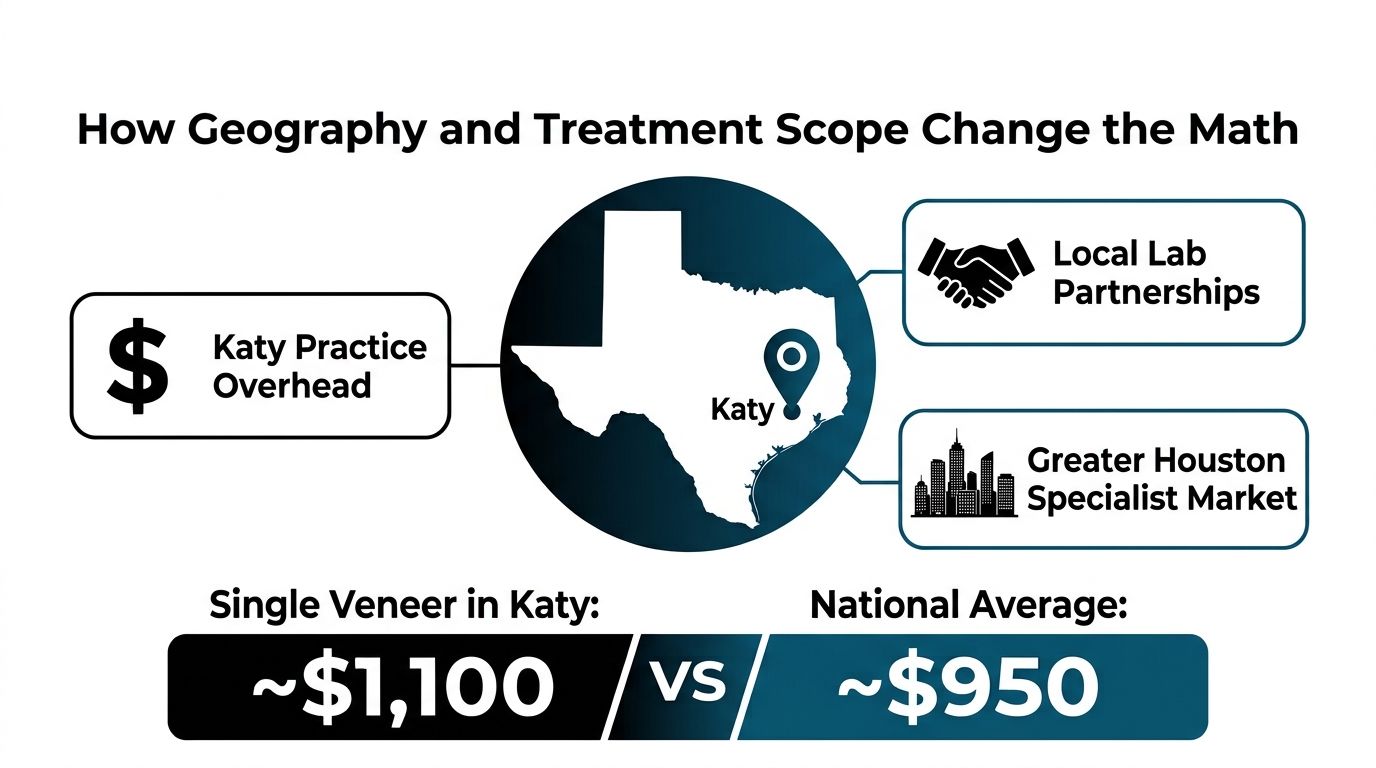
Materials also influence the conversation. Porcelain veneer types can differ in appearance and strength, while implant systems and crown materials can vary by case. Before approving care, ask for an itemized estimate that separates the procedure, restoration, lab work, imaging, and any additional treatment. The Dental Retreat's guide to dental implant pricing factors provides a useful checklist for that discussion.
Which Option Fits Your Smile Goals
The recommendation should follow the tooth's condition.
A missing molar after a failed root canal points toward an implant because a veneer cannot replace the absent tooth. If the tooth is still present but damaged beyond predictable repair, the dentist may discuss tooth extraction followed by implant planning. Waiting to make that decision can allow the gap to affect the bite and may complicate future restorative planning.
Front teeth present a different scenario. If they're healthy but chipped, stained, mildly uneven, or worn, veneers may create the cosmetic improvement you want without surgical treatment. Patients searching for cosmetic dentistry, teeth whitening, or a smile makeover often benefit from discussing the full visual plan, including shade, tooth shape, gum display, and how the result will look beside untreated teeth.
Match the treatment to the problem
- One missing tooth: Ask about an implant and crown. This is restorative care, not a veneer decision.
- Healthy chipped or discolored front teeth: Discuss porcelain veneers after the dentist confirms the enamel and gums can support them.
- Several missing teeth: Explore implant-supported solutions rather than trying to use cosmetic coverings for a structural gap.
- Widespread tooth loss: Full-arch options such as All-on-4 may be more appropriate than individual restorations, with the final plan based on examination and imaging.
- Dental anxiety: Tell the team before treatment. A calm environment, sedation options, and a clear visit sequence can make either path easier to manage.
- A mix of problems: Some patients may need an implant in one area and cosmetic treatment on existing teeth elsewhere. The dentist should plan the bite and appearance together.
If the tooth can be saved predictably and your priority is appearance, start with a veneer consultation. If the tooth is gone or cannot be restored reliably, invest in replacement rather than cosmetic camouflage.
A dentist near me can help separate an aesthetic concern from a structural one through an exam, dental X-rays, photographs, and a bite assessment. If pain, swelling, trauma, or a loose restoration is involved, look for an emergency dentist first. Cosmetic planning can wait until the urgent problem is controlled.
Financing, Insurance, and Katy Specials Worth Knowing
The financing conversation should begin with the treatment plan, not after you've agreed to care. Ask the office to separate the clinical fee from the laboratory and restorative components, then review what insurance may contribute and what remains your responsibility.
Dental plans often treat implants as major procedures, while veneers are commonly classified as cosmetic. Coverage varies by plan, annual limits, exclusions, waiting rules, and whether the missing tooth resulted from a covered event. Never assume a percentage applies until the office confirms your specific benefits.
Third-party financing may be available through providers such as CareCredit, Cherry, or LendingClub. Promotional terms differ, and some offers require repayment within a defined period to avoid interest charges. Read the agreement carefully, including the regular interest rate, minimum payment, and consequences of a missed payment.

For uninsured patients, The Dental Retreat lists a $139 exam with cleaning and X-rays, a $79 problem-focused visit, and $450 in-office Zoom whitening in its publisher information. Its membership plans start at $299 per year and include preventive care and savings for periodontal maintenance. These offers may change, so confirm current eligibility and terms directly with the practice.
A practical appointment call should produce one understandable number. Ask the team to combine your exam findings, insurance estimate, financing terms, active specials, and the treatment sequence into a monthly budget. You can call (281) 769-2273 or request an appointment online, then decide with the full financial picture in front of you.
Your First Visit to The Dental Retreat in Katy
Your first visit begins at The Dental Retreat on Stockdick School Road in Katy, TX. Patients from Sunterra, Cane Island, Katy Manor, Kingscrossing, Lakehouse, Marisol, The Grange, Anniston, Katy Lakes, Elyson, and Ventanna Lakes can ask the team to plan the appointment around their concerns, whether that means a cosmetic consultation, implant evaluation, emergency dental services, or routine preventive care.
The environment is designed for patients who feel tense in a dental chair. Heated massage chairs, weighted blankets, noise-canceling headphones, aromatherapy, televisions, and refreshments give you practical ways to stay comfortable. If anxiety has kept you from scheduling, mention it when you book so the team can discuss comfort and sedation options before treatment.
The clinical portion focuses on answers, not pressure. A thorough evaluation may include:
- Digital dental X-rays: Review teeth, roots, and supporting bone.
- Intraoral photographs: Examine chips, stains, gum contours, and existing restorations.
- Periodontal assessment: Check gum health before cosmetic or implant treatment.
- Smile and bite discussion: Explain what you want changed and what must remain functional.
- Treatment alternatives: Compare veneer, extraction, implant, restorative, and cosmetic paths when relevant.
The dentist then presents a phased roadmap with expected appointments, materials, maintenance, and itemized pricing. Bring your insurance information, medication list, prior dental records if available, and a short list of questions. If financing matters, ask about pre-approval before committing to a treatment sequence.
The best first visit leaves you with a clear next step, whether that's a filling, a tooth extraction, a new patient exam, teeth whitening, a veneer design appointment, or a dental implant consultation.
The Dental Retreat provides dental care in Katy, including cosmetic dentistry, restorative services, dental implants, All-on-4 planning, sedation, emergency care, cleaning and exams, and personalized financing discussions. Visit The Dental Retreat to schedule a consultation and get a treatment plan that explains what your smile needs and what each option will cost.