You're staring at a dental appointment you've already postponed once, wondering whether the pain, drilling, gag reflex, or memories of a difficult visit will be too much. That hesitation is common, but delaying a tooth extraction, dental implant, restorative treatment, or emergency dental care can allow a manageable problem to become more complicated.
Sedation dentistry can make necessary treatment feel calmer and more manageable. At The Dental Retreat in Katy, TX, patients can discuss sedation alongside a comfortable, spa-inspired setting that includes aromatherapy, heated massage chairs, noise-cancelling headphones, and TVs in every room. The purpose isn't only to help you feel relaxed for an hour. It's to help you access and complete dental care without allowing fear to control your oral health.
Introduction to Sedation Dentistry
A patient may arrive at a dentist near me search after weeks of avoiding care. Perhaps a cracked tooth hurts when they chew, or a missing tooth has made them search for dental implants near me. They want help, but the thought of sitting through a long appointment creates so much tension that they keep delaying the call.
At a Katy, TX practice such as The Dental Retreat, the visit can begin differently. The team can talk through the source of your anxiety, explain the planned procedure, and discuss whether sedation is appropriate. Comfort details, such as aromatherapy, a heated massage chair, or noise-cancelling headphones, can reduce the sensory triggers that make dental care feel overwhelming.
Sedation doesn't replace local anesthetic, and it doesn't mean every patient will be completely asleep. Depending on the method, you may remain awake and able to respond while feeling less worried, less aware of time, or less distressed by the procedure.
Patient acceptance has been high in published procedural sedation research. Ninety-three percent of patients rated their overall experience as good, and 92.6% said they'd recommend sedation dentistry to others, according to a procedural sedation study. For someone who has avoided a cleaning and exam, dental X-rays, cosmetic dentistry, or complex restorative care, that comfort can be the first step toward finishing treatment.
How Sedation Dentistry Works and Who Qualifies
A patient who has postponed care because of fear may need more than reassurance to get through an appointment. Sedation dentistry uses medication to lower anxiety and help the body relax, while local anesthetic provides numbness when the procedure requires it. Depending on the method, you may remain awake, respond to the dentist, and feel less aware of time.
The process works like matching a key to a lock. The dental team first learns what makes treatment difficult, then selects an approach that fits your health and planned care.
- Discuss your concerns. Explain whether needles, pain, sounds, a sensitive gag reflex, or a previous experience causes worry.
- Review your health history. Share medical conditions, allergies, current medications, and past reactions to anesthesia or sedation.
- Match the method to the appointment. A short preventive visit may suit lighter sedation, while dental implants, oral surgery, or extensive restorative dentistry may call for another plan.
- Follow preparation and transportation instructions. The office will explain eating, medication, and escort requirements for the selected method.
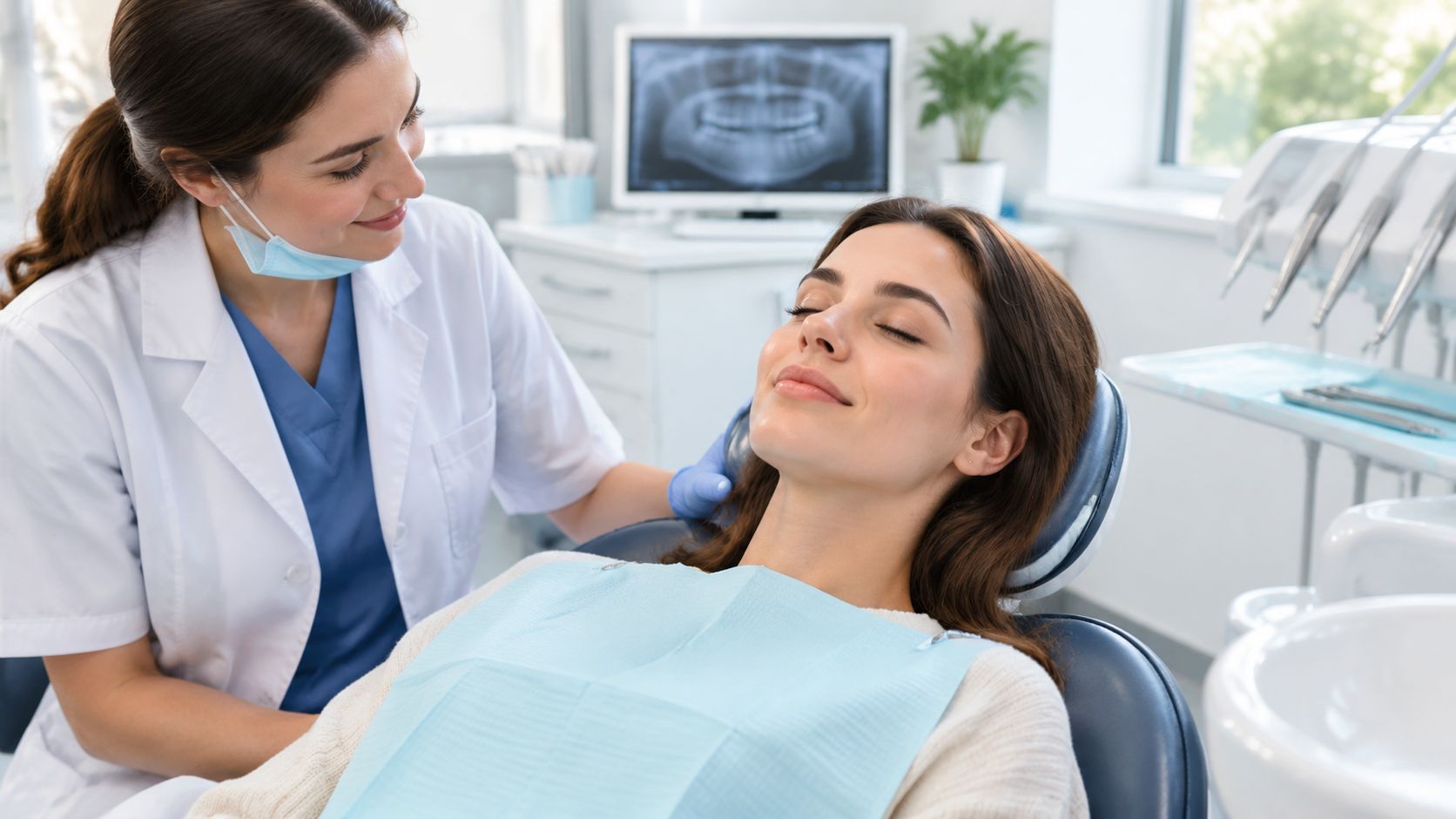
Sedation may be appropriate to discuss if you have severe dental fear, difficulty sitting still, a pronounced gag reflex, unusually sensitive teeth, or several procedures that require coordinated care. It can also help when anxiety has led to repeated cancellations or kept you from beginning treatment. By making care feel manageable, the right plan may help you complete treatment instead of postponing it again.
Eligibility depends on your medical history, medications, overall health, and the procedure itself. One method may be suitable while another is not. The Dental Retreat's bilingual team can explain available options to patients in Katy, TX, and nearby communities including Sunterra, Cane Island, Katy Manor, Kingscrossing, Lakehouse, Marisol, The Grange, Anniston, Katy Lakes, Elyson, and Ventanna Lakes.
For a plain-language explanation, review how dental sedation works. A lighter approach may support a calmer visit, but your dentist should determine the safest choice after reviewing your needs.
Clinical and Emotional Benefits of Sedation Dentistry
The strongest benefit of sedation dentistry is often practical: it can help you complete treatment. Anxiety may cause a patient to cancel, stop halfway through a procedure, or divide care into multiple appointments because the experience feels unmanageable. When medication lowers that anxiety, the patient can cooperate more comfortably and the dental team can focus on providing the planned care.
This matters during procedures that take longer or involve surgery. A patient considering an implant consultation, full-arch restoration, tooth extraction, or extensive restorative dentistry may need to remain comfortable while the dentist works carefully. Better cooperation can make positioning, mouth opening, and communication easier.
Practical rule: The right sedation plan should support treatment completion, not simply make the appointment feel shorter.
A large clinical audit of intravenous sedation during advanced extensive implant treatment found improved cooperation during surgery and stronger post-operative satisfaction. The audit also examined whether patients accepted additional implant procedures later, making the finding especially relevant for people whose care happens in stages as reported in the clinical audit.
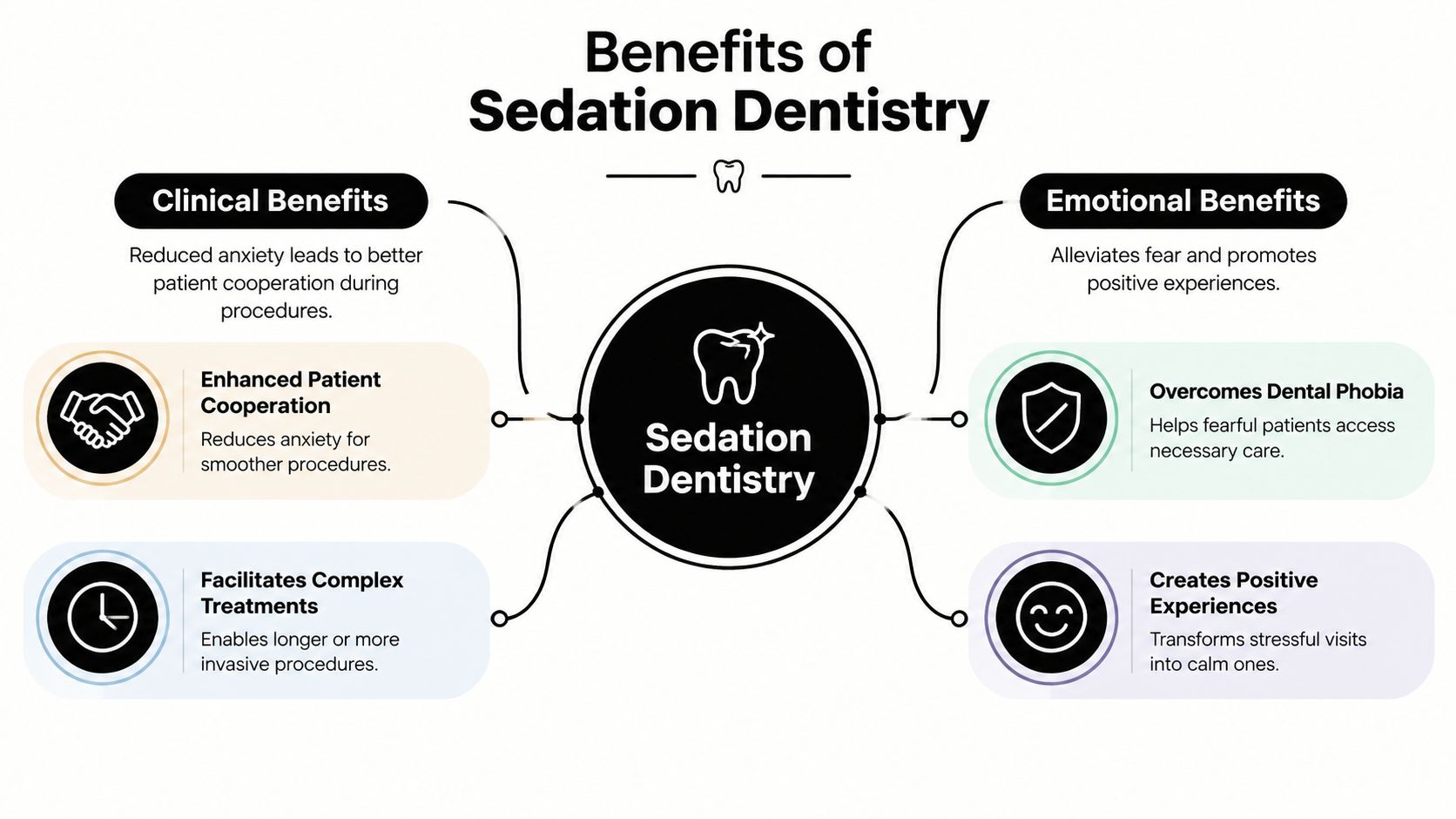
The emotional effect can last beyond the appointment
Fear isn't only a feeling during treatment. It can influence whether you schedule a follow-up, return for periodontal maintenance, accept a recommended crown, or move forward with dental implants. A difficult appointment can become a memory that reinforces avoidance.
Moderate sedation may change that memory. In an oral surgery study, patients who received moderate sedation recalled less procedural pain and anxiety one month later than patients treated with local anesthetic alone in the PubMed-indexed research. That doesn't guarantee that every patient will forget the procedure, but it shows why remembered distress deserves attention when planning future care.
Sedation can also help patients with a strong gag reflex tolerate dental X-rays, impressions, surgical care, or longer procedures. A review of conscious sedation in oral surgery identified lower anxiety, reduced post-surgical pain, greater patient and surgeon satisfaction, and gag-reflex inhibition among the main benefits in the clinical review.
Comfort supports continuity of care
A patient who completes one appointment calmly may feel more prepared for the next. That can matter for treatment plans involving a tooth extraction followed by healing and dental implant placement, or restorative work that requires several coordinated visits.
Sedation isn't a shortcut around diagnosis, preventive care, or good home habits. It's a tool that can remove a barrier. The broader value is the chance to move from avoidance to action, whether you need an emergency dentist for urgent pain, a cosmetic dentist near me for a smile consultation, or routine cleaning and exams.
Types and Levels of Sedation Options
Different patients need different levels of support. Nitrous oxide may be enough for mild anxiety, while oral or IV sedation may be considered for more intense fear or lengthy procedures. Intranasal sedation is an emerging option that may offer another route for selected patients.

| Option | How it's given | Typical experience |
|---|---|---|
| Nitrous oxide | Inhaled through a nose mask | Mild relaxation, with rapid onset and recovery |
| Oral conscious sedation | Prescribed medication taken by mouth | Deeper relaxation, while the patient may remain responsive |
| IV sedation | Medication delivered into a vein | More adjustable, deeper relaxation for selected procedures |
| Intranasal agents | Medication administered through the nose | An emerging conscious-sedation pathway with varied levels |
Nitrous oxide, often called laughing gas, has anxiolytic, analgesic, and amnestic effects, with rapid onset and recovery. A 2021 systematic review and meta-analysis covering 1,293 dental patients reported a 94.9% cumulative success rate for nitrous oxide and oxygen sedation as summarized in the cited evidence.
Oral sedation may suit patients who prefer medication rather than an inhaled method. IV sedation allows closer adjustment during treatment, but recent research indicates that stronger anxiety reduction can come with more adverse effects than oral midazolam. Intranasal sedation is being studied as an effective conscious-sedation option that may help overcome limitations associated with other delivery methods in the recent scoping review.
The choice isn't based on anxiety alone. Your procedure, medical history, medications, ability to arrange transportation, and recovery needs all matter.
Safety Measures and What to Expect During Your Visit
Safe sedation begins before medication is administered. During your consultation, the dental team reviews your health history, current medications, allergies, previous sedation experiences, and the details of the planned treatment. This information helps determine whether sedation is appropriate and which level offers a reasonable balance between comfort and safety.
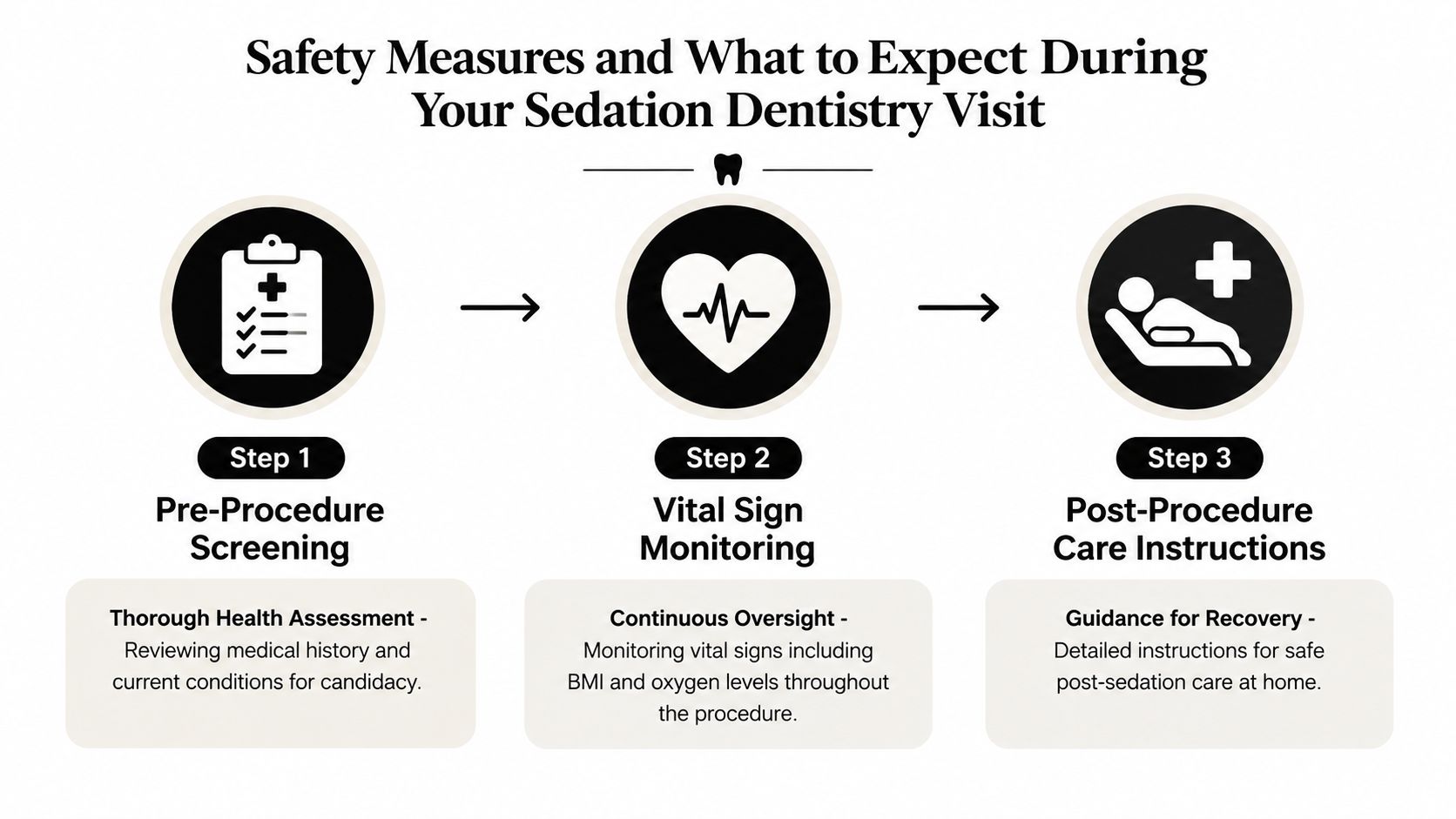
Screening comes first
Your dentist may give instructions about eating, drinking, medications, and arranging a responsible adult to take you home. Follow the instructions for your specific sedation plan rather than relying on advice from a previous appointment.
The American Dental Association's updated guidelines, released in April 2026, add precise documentation for weight-based dosing, include body mass index in baseline vital signs, and recommend supplemental oxygen for moderate sedation through general anesthesia in the ADA guidance. These details show why dosing and monitoring must be personalized.
Monitoring continues throughout care
The team monitors your vital signs and sedation response during treatment. You'll be observed closely rather than left to manage the medication alone. The dentist also maintains communication appropriate to your sedation level, using local anesthetic for treatment-related numbness when needed.
The experience may feel quiet and dreamlike, or you may remain fully aware but less tense. The exact sensation varies by medication and patient.
Recovery is part of the appointment
After treatment, you'll receive instructions for eating, drinking, activity, medications, and warning signs that require a call to the office or additional care. Nitrous oxide generally allows a faster return to normal alertness, while oral and IV sedation can require more recovery planning.
Your responsibility after sedation: Arrange transportation when instructed, rest as advised, and don't make important decisions until the dental team says you're ready.
The Dental Retreat's calm environment can make the transition from treatment to recovery feel less abrupt. Ask every question you have before leaving, especially if you're receiving sedation for oral surgery, dental implants, or an emergency dental visit.
Cost Considerations and Insurance Coverage
Sedation fees depend on the method, appointment length, monitoring requirements, and complexity of the dental procedure. A short visit involving nitrous oxide may have different charges from IV sedation paired with implant surgery or an extensive restorative plan. The dental treatment itself remains a separate part of the financial discussion.
Insurance policies also differ. Some plans may contribute when sedation is considered clinically necessary, while others may limit or exclude it for routine procedures. Ask the office to review your benefits before treatment, and request a written estimate that separates sedation, local anesthetic, imaging, surgery, restoration, and follow-up care.
Patients without insurance can also compare the practice's available payment approaches. The Dental Retreat lists membership plans starting at $299 per year, along with value-focused new-patient options such as a $139 full exam with cleaning and X-rays, a $79 problem-focused visit, and $450 in-office Zoom whitening. Those amounts are practice-specific and may not apply to sedation or every treatment plan.
For a more detailed discussion of pricing factors, read whether sedation dentistry is expensive. The most useful financial question isn't only “What does sedation cost?” It's “What will my complete plan cost, what does insurance cover, and which payment options are available?”
Before booking, ask:
- Fee structure: Is sedation billed separately from the dental procedure?
- Insurance review: Will the office check whether your plan offers benefits for sedation?
- Payment timing: When is payment due, and are in-office arrangements available?
- Treatment sequencing: Could completing related care in a coordinated plan reduce repeated appointments?
Clear answers help prevent surprises and let you choose care based on both clinical needs and budget.
Frequently Asked Questions
Can I drive home after sedation?
Your transportation plan depends on the sedation method and your dentist's instructions. Oral or IV sedation commonly requires an adult escort, and you should not drive until the dental team confirms that the effects have cleared. Arrange transportation before the appointment rather than waiting until treatment day.
How soon can I eat after nitrous oxide?
Your dental team will explain when eating is appropriate, considering the procedure, local anesthetic, and care instructions for the treated area. Nitrous oxide wears off quickly, but local anesthetic may leave your mouth numb. That numbness can make chewing and sensing hot temperatures less safe, so follow the office's guidance.
Can children receive sedation dentistry?
Some children may qualify. Age alone does not decide eligibility. The dentist reviews the child's health, anxiety, ability to cooperate, planned procedure, and proposed sedation method. Parents should provide a complete medical history and follow preparation and supervision instructions carefully.
What side effects should I watch for?
Some sedation methods may cause temporary drowsiness, dizziness, nausea, or lingering grogginess. Contact the dental office if symptoms feel unusually strong, last longer than expected, or cause concern. The recent evidence comparing IV sedation with oral midazolam shows that benefits and side effects can differ according to the medication and treatment protocol, as described in the randomized trial summary.
Does sedation work for emergency dental care?
Sedation may be considered when anxiety makes urgent treatment difficult. First, the dentist must assess the emergency, review your medical history, and choose a safe approach for pain and infection. Call an emergency dentist promptly for severe pain, swelling, trauma, or a broken tooth. Sedation can support care, but it does not treat the underlying dental problem by itself.
Conclusion and Call to Action
The benefits of sedation dentistry extend beyond a calmer feeling in the chair. Sedation can help reduce fear, improve cooperation, support comfort during complex care, and make it more likely that you'll complete treatment and return for follow-up.
That can change the path for a patient who has delayed a tooth extraction, avoided dental implants, or searched repeatedly for a dentist near me without booking. A consultation gives you a chance to discuss nitrous oxide, oral sedation, IV sedation, or other appropriate options without committing to a method before your health and treatment needs are reviewed.
The Dental Retreat serves patients in Katy, TX, including families and adults near Sunterra, Cane Island, Katy Manor, Kingscrossing, Lakehouse, Marisol, The Grange, Anniston, Katy Lakes, Elyson, and Ventanna Lakes. Its spa-inspired amenities, including aromatherapy, heated massage chairs, noise-cancelling headphones, and TVs in every room, support a more comfortable visit. New patients can also ask about the $139 complete exam with cleaning and X-rays and other current practice options.
The Dental Retreat offers sedation dentistry, emergency care, dental implants, restorative treatment, cosmetic dentistry, cleaning and exams, and a full scope of care in a calm Katy, TX setting. If anxiety has kept you from finishing needed treatment, visit The Dental Retreat to request a consultation and discuss a plan built around your comfort.