You notice pink in the sink after brushing, or your gums feel tender when you floss. Maybe your breath has changed, or one tooth seems more sensitive than it used to be. These signs can create a quiet worry, especially when you're searching for a gum disease treatment dentist in Katy, TX and wondering whether you need a routine cleaning, a deep cleaning, or something more involved.
The good news is that gum disease is common, and professional care can slow or manage it. Roughly 42% of dentate U.S. adults aged 30 or older had some form of periodontitis in 2009–2014, while severe periodontitis affected about 8% of adults 30 and older, according to the American Dental Association's periodontitis overview. Looking for help early is a sensible first step, not a reason to feel embarrassed.
The Dental Retreat serves patients in Katy and nearby communities including Cane Island, Elyson, and Sunterra, with periodontal care in a calm, spa-inspired setting. This guide will help you understand what bleeding means, how dentists measure gum health, which treatment matches each stage, and what to expect when you schedule care.
Why Bleeding Gums Deserve Attention in Katy TX
A Katy patient may first notice bleeding while brushing before breakfast. The blood might be light, and the tenderness may disappear quickly, so it's easy to dismiss. But healthy gums generally shouldn't bleed regularly when you brush or floss. Repeated bleeding can signal inflammation caused by plaque along the gumline.
That doesn't mean every episode requires urgent treatment or that tooth loss is inevitable. It does mean your gums deserve an examination. A dentist can determine whether the problem is early gingivitis, a deeper periodontal condition, irritation from brushing technique, or another concern that needs attention.
A practical rule: Don't stop flossing because your gums bleed. Ask a dentist to find out why they bleed and show you how to clean gently and effectively.
Gum disease is a major oral-health burden worldwide. One analysis of the Global Burden of Disease study found about 1.1 billion prevalent cases of severe periodontitis worldwide in 2019, and the age-standardized prevalence rate rose by 8.44% from 1990 to 2019. Population growth explained 67.9% of the increase in prevalent cases during that period, as reported in the Journal of Clinical Periodontology analysis. Those figures describe a widespread condition, not a personal failure.
Why early attention helps
Plaque is a sticky film containing bacteria. If it remains along or below the gumline, the surrounding tissue can stay inflamed. Hardened plaque, called tartar or calculus, can't be removed completely with a toothbrush, which is why an examination and professional cleaning matter.
Your first appointment may include a visual assessment, dental X-rays, measurements around the teeth, and a conversation about smoking, diabetes, medications, and home care. The goal isn't to judge your routine. It's to identify the cause and choose the least invasive treatment that can control the disease.
If you're looking for a dentist near me in Katy, The Dental Retreat offers periodontal evaluations alongside general dental care, restorative dentistry, dental implants, cosmetic dentistry, and emergency dental services. Your next appointment should give you a clear diagnosis and a plan you can understand.
Understanding Gum Disease From Gingivitis to Periodontitis
Think of a splinter under the skin. The body keeps reacting because the irritant remains in place. Plaque along the gumline can work in a similar way. The tissue becomes red, puffy, and prone to bleeding because bacteria and deposits continue to irritate it.
Gingivitis is the early stage of gum disease. At this point, the gums may look red or swollen and bleed during brushing or flossing, but the fibers and bone supporting the teeth haven't suffered the structural damage seen in periodontitis. With professional cleaning and improved daily plaque removal, early gingivitis may be reversible. The Cleveland Clinic guidance summarized in this clinical report explains that early gingivitis may improve with routine cleaning and better oral hygiene.

When gingivitis becomes periodontitis
Periodontitis is different because inflammation and infection extend deeper around the tooth. The gum can pull away from the tooth, creating a periodontal pocket where plaque and tartar are harder to reach. Over time, the bone and connective fibers that hold the tooth in place may break down.
This distinction changes the treatment conversation. Gingivitis can often be reversed. Periodontitis can't be cured once structural support has been lost, but professional care can manage and slow it. Treatment depends on the stage, severity, location of the affected sites, and your overall health.
A person with mild bleeding and no attachment loss may need a professional cleaning plus a better home-care routine. Someone with deep pockets, recession, bone loss, or loose teeth may need scaling and root planing, periodontal maintenance, or surgical care. The same symptom, such as bleeding, can therefore lead to different recommendations.
What this means for your appointment
Your dentist won't diagnose the stage from symptoms alone. They'll examine the gums, measure pocket depths, check bleeding, evaluate tooth stability, and use dental X-rays when appropriate. That information shows whether the irritant is limited to the gumline or has affected the support around the teeth.
Come prepared to describe bleeding, sensitivity, bad breath, changes in your bite, or any loose teeth. An honest conversation helps your Katy dental team choose treatment based on what your gums need now, rather than on a generic list.
Warning Signs It Is Time to See a Gum Disease Treatment Dentist
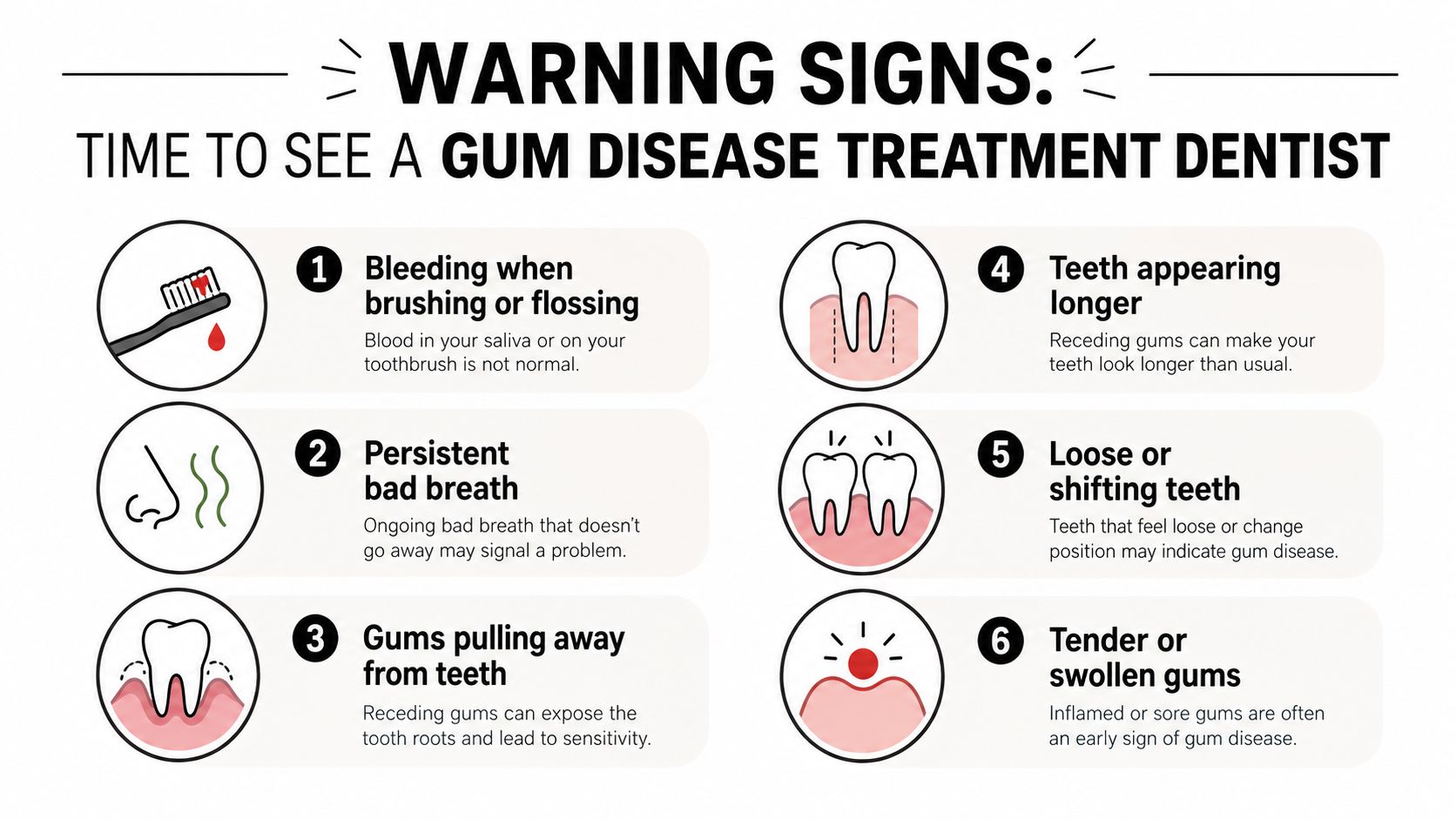
Bleeding is only one possible clue. Gum disease can develop gradually, and some people notice little discomfort even when deeper pockets are present. Make an appointment if you're experiencing:
- Bleeding during brushing or flossing: Repeated bleeding suggests gum inflammation that needs assessment.
- Persistent bad breath: Odor that returns despite brushing can come from bacteria and deposits below the gumline.
- Receding gums: The gumline may move away from the tooth, exposing more of the tooth surface.
- Teeth that look longer: This can happen when gum tissue recedes.
- Loose or shifting teeth: Movement can indicate weakened supporting structures.
- Tender or swollen tissue: Redness, puffiness, or soreness may accompany active inflammation.
How a dentist measures gum health
A periodontal examination uses a small probe to measure the space between each tooth and the surrounding gum. The Scottish Dental Clinical Effectiveness Programme review-charting guidance specifies recording probing at six sites around each tooth. In patients diagnosed with periodontitis, pockets measuring 4 mm or more should be documented at least annually.
The measurements help your dentist identify patterns rather than focus on one isolated number. Probing depths of 3 mm or less, with bleeding on probing under 10% of sites, indicate a stable periodontium, while pockets of 4–5 mm represent deeper areas that may require treatment. Pockets of 6 mm or more are more advanced and need careful evaluation, as described in the FDI chairside periodontal guide.
The PubMed evidence summary on periodontal stability and tooth loss associates pocket depths of 6 mm or more and bleeding scores of 30% or higher with increased tooth-loss risk. These thresholds don't determine your entire treatment plan by themselves, but they explain why home care alone may not be enough.
A comfortable examination gives you a baseline and shows what needs attention first. Your next appointment should leave you knowing your pocket measurements, bleeding pattern, and recommended treatment.
How Dentists Treat Gum Disease at Every Stage
Treatment should match the disease stage. A professional cleaning may be enough for gingivitis, while periodontitis often requires cleaning below the gumline and long-term monitoring. Your dentist may also recommend changes to home care and risk factors, because removing deposits is only part of controlling inflammation.
| Stage | Typical Finding | Treatment | Goal |
|---|---|---|---|
| Early gingivitis | Red, swollen, bleeding gums without structural support loss | Professional cleaning and improved home care | Remove irritants and restore healthier gum tissue |
| Periodontal pockets | Deposits below the gumline, deeper pockets, or bleeding sites | Scaling and root planing, often called deep cleaning | Remove subgingival deposits and reduce inflammation |
| Persistent inflammation | Selected sites remain inflamed after thorough instrumentation | Prescription antimicrobial rinses or localized or systemic adjuncts when appropriate | Support mechanical treatment at specific problem sites |
| Advanced periodontitis | Significant pockets, bone loss, recession, or tooth instability | Periodontal surgery or regenerative procedures when indicated | Improve access, reduce pockets, and protect remaining support |
Professional cleaning and deep cleaning
For gingivitis, a routine professional cleaning can remove plaque and tartar from accessible tooth surfaces. Your dental team will also review brushing, interdental cleaning, and any tools that could make daily care easier.
Scaling and root planing, or SRP, is the first-line mechanical treatment for many patients with periodontitis. Scaling removes deposits from the tooth and below the gumline. Root planing smooths affected root surfaces so bacteria and tartar have fewer irregular areas to cling to, while the gums have an opportunity to heal around the tooth.
A systematic review found that SRP produced about 0.5 mm of average clinical attachment level improvement, while adjuncts such as systemic subantimicrobial-dose doxycycline, systemic antimicrobials, chlorhexidine chips, or diode-laser photodynamic therapy added about 0.2–0.6 mm more on average, according to the British Dental Journal review. The clinical message is straightforward. Thorough mechanical debridement remains the foundation, and add-on therapies should be selected for specific situations rather than used as substitutes.
When medication or surgery enters the discussion
Prescription antimicrobial rinses or antibiotics may be considered when particular sites remain inflamed after instrumentation. They're adjuncts, not replacements for removing plaque and tartar. Your dentist should explain why a medication is being recommended and whether it targets a specific residual problem.
Advanced disease may require pocket reduction surgery or regenerative procedures. Surgery can help the dentist access areas that instruments can't clean adequately, reduce persistent pockets, or support the repair of selected defects. It isn't automatically the next step after a diagnosis. The decision depends on your measurements, X-rays, response to nonsurgical care, and overall health.
Once gum disease is controlled, related services such as restorative dentistry or dental implants may be considered when missing or damaged teeth need replacement. Disease control comes first because a stable foundation supports predictable long-term care. Your appointment should identify the appropriate rung on the treatment ladder, not push you toward every available service.
Maintenance Care That Keeps Gum Disease Under Control
Finishing deep cleaning is a milestone, not the end of periodontitis care. Lost structural support cannot be fully restored through routine cleaning, so maintenance works like a scheduled safety check. It keeps inflammation low, identifies recurrence early, and protects teeth that remain stable. At your next appointment, the dentist can compare current findings with your earlier measurements.
A periodontal maintenance visit may include updated probing, bleeding checks, removal of deposits, and focused cleaning where pockets remain. The timing should match your history and risk factors. Someone who has had periodontitis may need closer, more individualized attention than a person with healthy gums and no previous periodontal breakdown. That difference helps the dentist set a recall plan suited to your stage of disease.

Why a fixed cleaning schedule isn't right for everyone
A high-certainty Cochrane review of routine scale and polish found that, for adults without severe periodontitis who already receive routine dental care, scheduled scale-and-polish visits showed little measurable difference in gingivitis or pocket depths over 2–3 years compared with no scheduled maintenance. The review noted that evidence for other outcomes was limited. The finding supports individualized planning rather than one fixed schedule for every patient.
Recall should be risk-stratified. Established periodontitis, continuing bleeding, deeper pockets, smoking, diabetes, and difficulty controlling plaque can all increase the support you need. Bring these factors to your next visit so the dentist can decide whether monitoring, professional cleaning, or closer review fits your condition.
The daily factors that influence stability
Smoking can make gum disease harder to control, and diabetes can affect inflammation and healing. Plaque biofilm remains a central local driver. Depending on the spaces around your teeth and your dexterity, home care may include a soft-bristled toothbrush, interdental brush, water flosser, or antimicrobial rinse.
The Dental Retreat offers membership plans with savings on periodontal maintenance. Its guide to periodontal maintenance procedures can help you discuss how maintenance fits your measurements, home routine, and health history. Use that conversation to identify vulnerable sites, practical home-care changes, and an appropriate review interval.
Choosing the Right Gum Disease Treatment Dentist in Katy
Choosing a gum disease treatment dentist in Katy is about more than finding the closest listing for “dentist near me.” Look for a practice that can evaluate your gums carefully, explain the findings in plain language, and coordinate treatment without making you repeat your story at every office.
A practical shortlist includes:
- Complete periodontal care: Ask whether the practice evaluates gingivitis and periodontitis, provides scaling and root planing, and can discuss surgical options when necessary.
- Comfort support: Anxious patients may benefit from sedation options, aromatherapy, massage or heated chairs, noise-cancelling headphones, and TVs during treatment.
- Accessible communication: Bilingual care can make it easier for every family member to understand diagnoses, home instructions, and consent discussions.
- Convenient scheduling: Extended hours help working parents and patients balancing school, commuting, and family responsibilities.
- Clear financial information: Ask for costs before treatment begins, and check whether membership plans or new-patient specials are available.
A local option for coordinated care
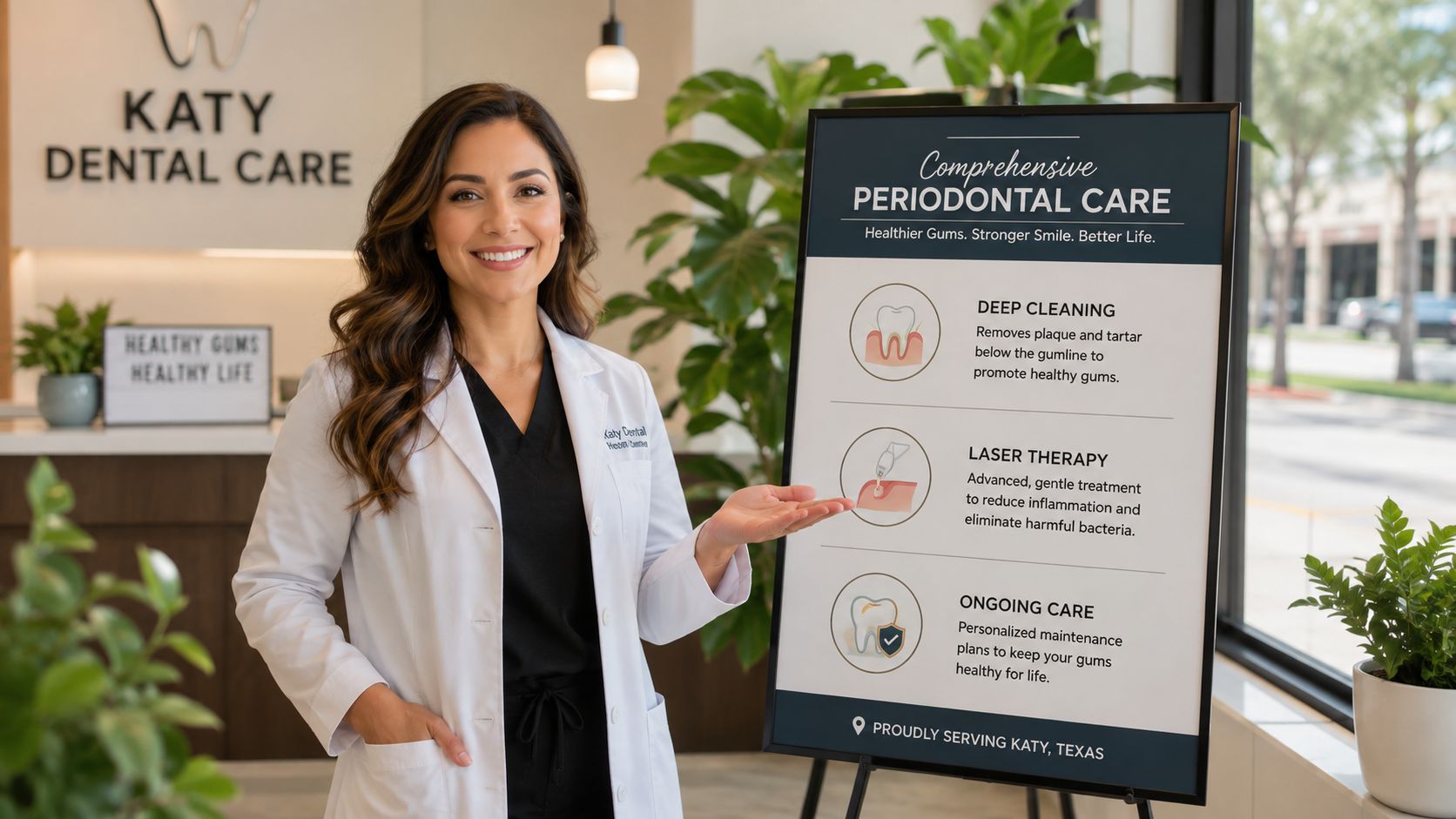
The Dental Retreat provides general, periodontic, sedation, oral surgery, implant, endodontic, cosmetic, orthodontic, and emergency services in Katy. Its spa-inspired environment is designed for patients who want clinical care with comfort features, including aromatherapy, massage chairs, noise-cancelling headphones, and TVs in every room.
That range can matter when gum disease overlaps with another concern. A tooth affected by advanced periodontal damage may eventually need tooth extraction, followed by restorative treatment or dental implants after the gums are stabilized. A patient searching for Dental implants near me, a cosmetic dentist near me, or an emergency dentist may need a coordinated plan rather than separate, disconnected appointments.
Patients in Sunterra, Cane Island, Katy Manor, Kingscrossing, Lakehouse, Marisol, The Grange, Anniston, Katy Lakes, Elyson, and Ventanna Lakes can use the same checklist when comparing local access. Your next appointment should feel like a conversation about your health, not a sales presentation.
Your First Visit Costs and Recovery at The Dental Retreat
A first periodontal visit should remove uncertainty. Your dentist may complete an exam, take dental X-rays when needed, measure periodontal pockets, record bleeding, and discuss your health history. You should receive a personalized treatment plan and understand the costs before treatment begins.
For patients without insurance, The Dental Retreat lists a $139 new-patient exam with cleaning and X-rays and a $79 problem-focused visit. Membership plans start at $299 per year and include savings for periodontal maintenance. You can review the practice's gum disease treatment cost information and ask which option matches your concern.
The exam may show that you need routine cleaning and improved home care, or it may identify pockets that require scaling and root planing. If deep cleaning is recommended, your team will explain the areas involved, comfort measures, home instructions, and follow-up plan. Local anesthetic and careful technique can make treatment more comfortable, although mild tenderness or sensitivity may occur afterward.
What recovery usually involves
After deep cleaning, follow the instructions you receive about brushing, interdental cleaning, food choices, and any prescribed rinse. Mild tenderness and sensitivity should resolve within days, and follow-up visits help confirm that the gums are healing and that inflammation is moving in the right direction.
A judgment-free appointment is especially important if you've delayed care. Whether you're looking for a dentist in Katy, TX, routine dental care, tooth extraction, restorative dentistry, or periodontal treatment, you deserve a clear explanation and a manageable next step.
The Dental Retreat provides periodontal evaluations, deep cleaning, maintenance care, sedation options, and coordinated dental services for patients in Katy and surrounding communities. Visit The Dental Retreat to request an appointment and take the first step toward healthier, more comfortable gums.