You're sitting in the dental chair, listening as a hygienist reads out gum-pocket measurements that sound more technical than they feel. Your gums may be tender, bleed when you brush, or leave a persistent bad taste, yet you may not have significant pain. At The Dental Retreat in Katy, TX, that combination can lead to a recommendation for the scaling and root planing procedure, often called a deep cleaning.
Scaling and root planing, or SRP, is different from routine cleaning and exams. It treats plaque, calculus, and inflammation below the gumline, then creates a cleaner root surface that gives gum tissue a better chance to heal. For patients searching for a dentist near me, an emergency dentist, or periodontal care in Katy, Sunterra, Cane Island, Katy Manor, Kingscrossing, Lakehouse, Marisol, The Grange, Anniston, Katy Lakes, Elyson, or Ventanna Lakes, understanding the process can make the recommendation feel much less intimidating.
When a Katy Dentist Recommends Scaling and Root Planing
At The Dental Retreat in Katy, a periodontal visit may begin with you leaning back while the hygienist reviews measurements tooth by tooth. A probe gently checks how far the gum tissue sits around each tooth, and the dentist considers those readings alongside bleeding, visible calculus, and dental X-rays.
SRP is commonly considered when pockets measure 4 mm or deeper, especially when bleeding on probing, below-gum calculus, or radiographic bone loss is also present. An ADA periodontal claims guide identifies SRP as an initial definitive treatment when clinical indicators support it. Some insurance policies also require a combination of pocket depth, bleeding, and bone-loss findings before coverage applies.
Why symptoms can be easy to miss
Gum disease doesn't always announce itself with a toothache. You might notice:
- Tender or swollen gums: Tissue may feel sore during brushing or flossing.
- Persistent bad taste: Bacteria and inflammation below the gumline can affect how your mouth tastes.
- Loose teeth: Reduced support can make a tooth feel different when you bite.
- Bleeding: Bleeding during brushing or probing signals inflammation that deserves evaluation.
The procedure is usually the first phase of a measured periodontal plan, not a one-time appointment that permanently “fixes” the gums. The team records baseline pocket depths, treats diseased areas, reinforces home care, and then checks how the tissues respond. If deep pockets remain after healing, the dentist can discuss additional treatment, including whether a periodontal referral or surgery is appropriate.
Practical rule: The recommendation should be tied to specific findings, not simply to the phrase “deep cleaning.”
The rest of the process becomes easier to understand once you know what SRP is removing and why the roots matter.
What Gum Disease Really Is and Why SRP Helps
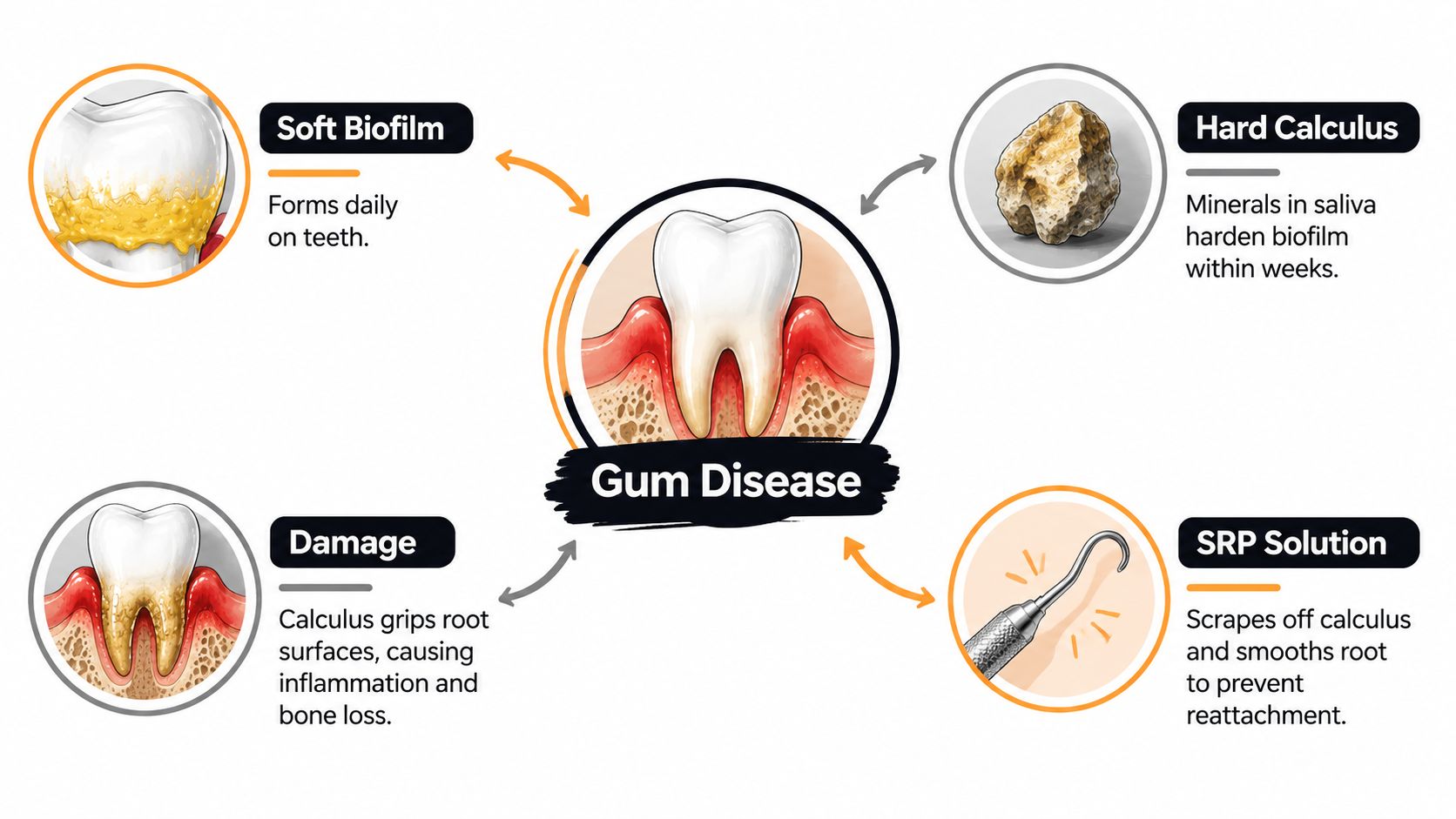
Gum disease starts with soft biofilm, the sticky layer that forms on teeth every day. Brushing and flossing can disturb much of it, but missed areas collect more material. Minerals in saliva can harden that biofilm into calculus within weeks, and a toothbrush can't remove calculus once it grips the tooth.
The pocket becomes the problem
When bacteria remain against the gumline, the immune system responds with inflammation. The gums can pull away from the teeth, creating pockets where more bacteria and calculus collect. As inflammation continues, the bone supporting the teeth can shrink, leaving teeth less stable over time.
Think of a healthy gumline as a snug seal around a fence post. Gum disease loosens that seal. The deeper the space becomes, the harder it is for ordinary brushing and flossing to reach the bottom.
Scaling and root planing addresses that space in two related ways:
- Scaling: The clinician removes plaque and hardened calculus from above and below the gumline, including deposits on the crown and root.
- Root planing: The clinician carefully smooths contaminated root surfaces while preserving sound tooth structure, giving healing gum tissue a cleaner surface to contact.
This is why SRP is therapy, not just a more thorough polish. It disrupts the biofilm and removes the deposits that keep inflammation active. The response can then be checked through changes in bleeding, tissue firmness, and probing-depth measurements.
Evidence summarized in a meta-analysis of nonsurgical periodontal treatment shows that response depends on starting pocket depth. Shallow pockets showed little significant improvement, medium pockets had about a 1 mm probing-depth reduction, and deep pockets had about a 2 mm reduction. Attachment gain was about 0.50 mm in medium pockets and slightly more than 1 mm in deep pockets.
Those figures aren't promises for every tooth. They explain why a Katy dentist evaluates each site instead of treating every surface identically.
How the Scaling Root Planing Procedure Works Step by Step
The appointment follows a deliberate sequence. You'll know what's happening before instruments reach the gumline, and you can ask for a pause whenever you need one.
Medical history review: The team confirms medications, allergies, health conditions, and any factors that could affect treatment or healing.
Blood pressure check: Vital signs help the dental team plan safely, particularly when sedation or a more involved periodontal visit is being considered.
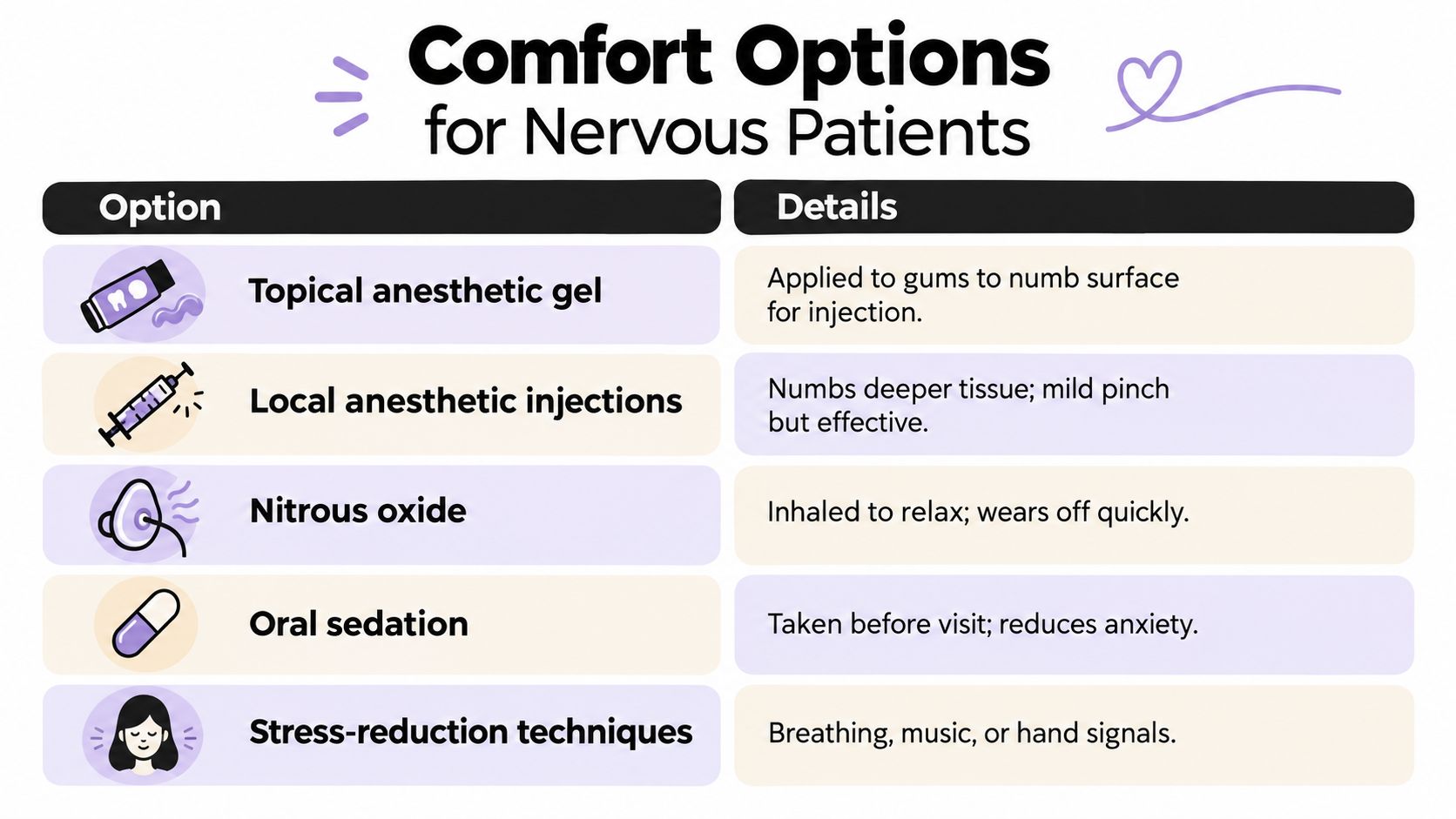
Topical numbing gel: A gel is placed first so the gum feels less sensitive before the local anesthetic.
Local anesthetic: Small injections numb the area being treated. You remain awake, but the goal is to prevent sharp sensations.
Ultrasonic scaling: A vibrating scaler breaks up calculus while a water spray rinses away loosened debris. The sound can be unfamiliar, but the vibration is usually easier to tolerate than patients expect.
Hand instrumentation: Fine curettes allow the hygienist to work carefully along individual root surfaces and reach areas that need detailed attention.
Rinse, polish, and instructions: The area may be irrigated with an antimicrobial rinse, localized antibiotics may be discussed for selected sites, and the teeth are polished. You'll receive home-care instructions and a plan for re-evaluation.

How many visits should you expect
The mouth is commonly divided into quadrants so the clinician can keep the appointment manageable and maintain effective anesthesia. Treatment may take one to two visits of about 60 to 90 minutes, while Cleveland Clinic describes scaling and root planing appointments as typically taking one to two hours and being performed with local anesthesia in its patient guide to tooth scaling and root planing.
The exact schedule depends on the number and depth of affected sites, your comfort, and the treatment plan. A follow-up is generally scheduled for 4 to 6 weeks later to review healing and measure the treated pockets.
This video offers another visual explanation of the instruments and sequence:
Clinical reviews also describe measurable changes beginning early after root planing, with probing-depth reduction reported as soon as 1 week and additional attachment changes by about 3 weeks. A periodontal literature review explains why early healing doesn't replace the planned re-evaluation.
Anesthesia and Comfort Options for Nervous Patients
The most common comfort plan combines topical gel with local anesthetic. The gel reduces surface sensitivity, and the injections numb the deeper tissue in the quadrant being treated. You'll stay conscious and able to communicate, but you shouldn't feel the sharp sensation of the instruments when the area is properly numb.
The ultrasonic scaler adds vibration and cool water to the experience. Some patients find the sound surprising, while others prefer it because the instrument helps flush away loosened calculus as it works. The hygienist can check in throughout the appointment and stop if you raise a hand.
Choosing a deeper level of relaxation
For patients with significant anxiety, oral conscious sedation may be an option after a health review. It usually involves taking prescribed medication before the appointment, following fasting instructions, and arranging for a responsible driver. You may feel drowsy and relaxed, but the care team can still communicate with you.
Comfort measures at The Dental Retreat include weighted blankets, neck pillows, noise-cancelling headphones, and ceiling-mounted screens. You can also agree on a hand signal before treatment begins. That small plan matters because it gives you a reliable way to pause without trying to speak while instruments are in your mouth.
You don't have to prove that you're calm enough for dental care. The appointment should be designed around safe communication and manageable comfort.
You can review the broader options in types of sedation dentistry. Patients with severe dental phobia or complex medical histories may need referral to a specialist partner for IV sedation. Vital-sign monitoring remains part of safe appointment management, and the appropriate option depends on your medical history, procedure, and clinician assessment.
Recovery and Aftercare in the Days After Treatment
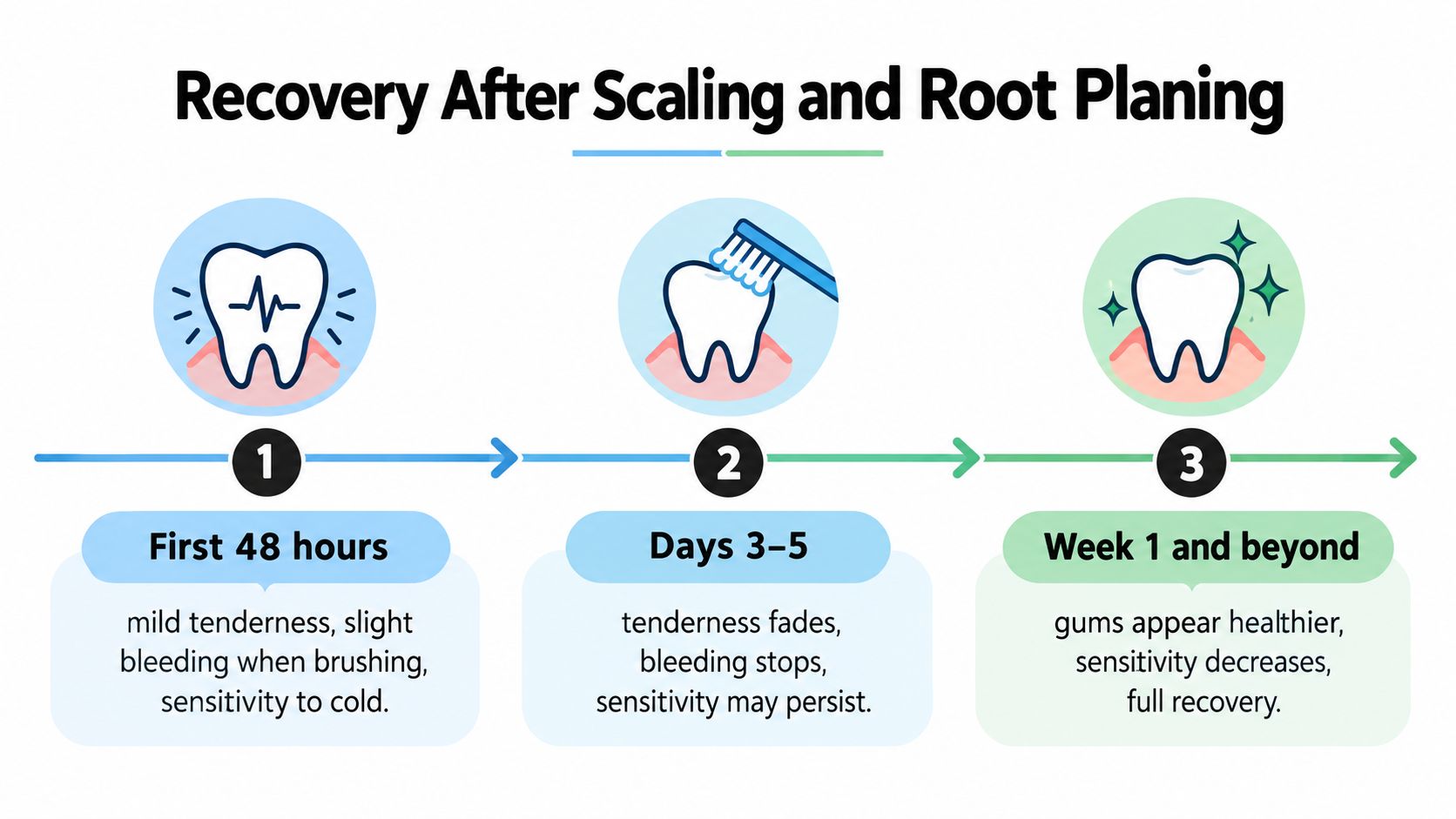
The first evening after SRP can feel different from a routine cleaning. Once the anesthetic wears off, you may notice mild tenderness, slight bleeding when brushing, or sensitivity to cold. Soft, cool foods can make the first meal easier, and your dentist may recommend ibuprofen or acetaminophen when those medicines are medically appropriate for you.
What healing usually feels like
During the first 48 hours, avoid foods that are spicy, seeded, crunchy, or difficult to chew. Brush with a soft-bristled toothbrush, but be gentle around treated tissue. Warm saltwater rinses may soothe the gums when used as directed.
By days 3 through 7, swelling should begin to fade and the gums may look tighter. Sensitivity can linger as the tissue settles. Avoid smoking, using straws, or rinsing vigorously, since forceful suction and movement can disturb the early healing environment inside the pockets.
A periodontal maintenance guide from The Dental Retreat can help you understand why SRP is followed by ongoing care rather than treated as an isolated cleaning.
The re-evaluation matters
At the 4 to 6 week visit, the hygienist re-measures pocket depths and compares them with the baseline readings. Gums that look pinker, feel firmer, bleed less, and show shallower readings are moving in the desired direction. Persistent bleeding or deep pockets may point to difficult access, remaining deposits, active inflammation, or a need for additional treatment.
Call The Dental Retreat promptly if you develop severe throbbing pain, pus, fever, or swelling that worsens after day three. Those symptoms aren't part of ordinary healing and deserve professional guidance.
Cost, Insurance, and the Dental Retreat Membership Plan
A treatment estimate can feel unclear when “deep cleaning” appears as one line. SRP pricing depends on the number of quadrants treated, the clinician's credentials, and whether optional tools such as lasers are included. A full-mouth treatment commonly runs $600 to $1,800 before insurance, according to the provided Katy-area treatment guidance. Request a written estimate that separates the clinical fee from optional additions.
Insurance usually follows the documented diagnosis, not the casual phrase “deep cleaning.” Plans may review:
- Pocket measurements: Some policies look for sites measuring 4 mm or greater.
- Bleeding on probing: Bleeding supports a finding of active inflammation.
- Radiographic bone loss: X-rays can show reduced support around teeth.
- Diagnosis: Coverage may depend on documented moderate to severe periodontitis.
The common CDT procedure codes are D4341 and D4342. Many plans cover SRP at 50% to 80% after the annual deductible, although benefits vary by plan, waiting periods, frequency limits, and documentation requirements. Verify benefits before treatment. A coverage estimate still does not guarantee payment.
Comparing payment scenarios
| Treatment Scope | Average Fee | With Typical Insurance (70%) | With Membership Plan | Out of Pocket |
|---|---|---|---|---|
| Limited periodontal area | Varies by diagnosis and sites | Subject to deductible and plan rules | Member discount may apply | Confirm with written estimate |
| Multiple quadrants | Varies by number of quadrants | Patient share depends on benefit limits | Negotiated periodontal savings may apply | Confirm with written estimate |
| Full-mouth SRP | $600 to $1,800 before insurance | Illustrative benefit depends on eligibility | Membership discount may apply | Depends on coverage and plan terms |
Without insurance, patients can ask about The Dental Retreat Membership Plan. It uses an annual fee structure that includes preventive cleanings and exams, along with a negotiated percentage off periodontal therapy. The practice may also offer SRP specials for self-pay families, so ask which offers are currently available.
Before booking, confirm how many quadrants are being treated, which codes will be submitted, and whether preauthorization is required. Compare the written estimate with your insurance benefits and membership terms. That record gives Katy families a clearer way to budget for the first phase of periodontal care and prepare for later pocket-depth measurements.
Why Katy Patients Choose The Dental Retreat for SRP
Choosing SRP isn't only about finding a clinic that can remove calculus. A sensible decision framework asks whether the practice can document the disease, explain the proposed treatment, manage comfort, and measure the response afterward.
At The Dental Retreat, the general dentist and hygienist collaborate on a periodontal plan that can include baseline pocket measurements, bleeding indices, and radiographic bone levels. Those records give you a clearer starting point than a general statement that your gums “need attention.” They also help the team decide which sites require subgingival treatment and which surfaces need routine preventive care.
A plan that continues after treatment
Continuity is especially important after SRP. The same hygienist can track pocket-depth changes at re-evaluation, discuss home-care adjustments, and help establish a personalized three to four month maintenance schedule when that frequency is appropriate. That differs from automatically assigning every patient a generic six-month cleaning schedule.
The practice's comfort-focused options include blankets, neck pillows, streaming entertainment, and oral sedation for appropriate patients. Transparent pricing and a membership plan give uninsured patients another way to discuss periodontal care, while Saturday availability can help working families arrange appointments.
Your broader dental needs can also be discussed during care. The Dental Retreat provides general, restorative, cosmetic, implant, orthodontic, endodontic, oral surgery, sedation, and emergency services. That means a periodontal evaluation can sit within a larger plan if you're also looking for a cosmetic dentist near me, dental implants near me, tooth extraction, restorative dentistry, teeth whitening, or emergency dental services.
A practical next step for residents of Katy and nearby neighborhoods is to schedule a periodontal evaluation. Bring your medication list, insurance information, and questions about comfort, treatment areas, and maintenance. The purpose isn't to pressure you into a procedure. It's to identify what your gums need and create a way to track measurable improvement.
If your gums bleed, feel tender, or have persistent bad taste, schedule a periodontal evaluation with The Dental Retreat in Katy, TX. The team can assess pocket depths, explain whether scaling and root planing is appropriate, review comfort and payment options, and build a follow-up plan for healthier gums.