Same-day temporary teeth are common after All-on-4 surgery, but true bone healing usually takes 3–6 months before the final prosthesis can be placed. Many people feel more comfortable within 1–3 weeks, yet feeling recovered isn't the same as being ready for full chewing forces.
If you're comparing full-arch dental implants while searching for a dentist near me in Katy, TX, you may be asking practical questions that deserve clear answers. How long will you be out of work? When can you eat normally? Will swelling be severe? And how long will you need to wear temporary teeth?
The honest answer is that All-on-4 recovery time happens in stages. The first stage involves swelling and gum healing. The second involves adapting to your temporary bridge and returning to daily activities. The third takes place beneath the gums, while your jawbone bonds with the implants. This guide explains each phase so you can plan calmly and know when to contact your dental team.
Choosing All-on-4 in Katy and Wondering What Healing Really Looks Like
You may be sitting at home in Katy, comparing full-arch dental implants and wondering whether you can manage the recovery. Perhaps you need several extractions, struggle with loose or painful teeth, or wear dentures that make eating and speaking frustrating. You may also be searching for dental implants near me, while worrying about missing work, relying on soft foods, or feeling uncomfortable in public.
All-on-4 is designed to provide immediate function. In many protocols, patients leave surgery with temporary fixed teeth on the same day. The temporary bridge gives you a smile and allows limited function while the implants begin the slower biological process of integrating with your jawbone. The final teeth come later, after your dentist confirms that healing has progressed appropriately.
That combination can feel confusing. You may look in the mirror and see a complete smile, then assume your recovery is finished. In reality, the visible restoration and the invisible healing process follow different schedules.
A staged approach makes the timeline easier to understand
Think of recovery as three overlapping tracks:
- Soft-tissue comfort: Swelling, bruising, gum tenderness, and incision healing improve first.
- Functional adaptation: You learn to speak, clean, and eat carefully with the temporary bridge.
- Bone integration: The implants stabilize inside the jaw over several months.
The practice supporting your care should explain what each stage means, check your progress, and adjust the temporary restoration when needed. A calm setting and accessible follow-up can make it easier to ask questions rather than ignoring a pressure point or worrying in silence.
Practical rule: If your mouth feels better quickly, keep following the healing restrictions until your dentist confirms that the implants can safely handle more force.
The rest of your timeline depends on your health, the complexity of treatment, your response to surgery, and how closely you follow aftercare guidance. There isn't one universal answer for every patient, but there is a reliable framework for understanding what happens next.
The Three Layers of All-on-4 Recovery Time You Should Understand
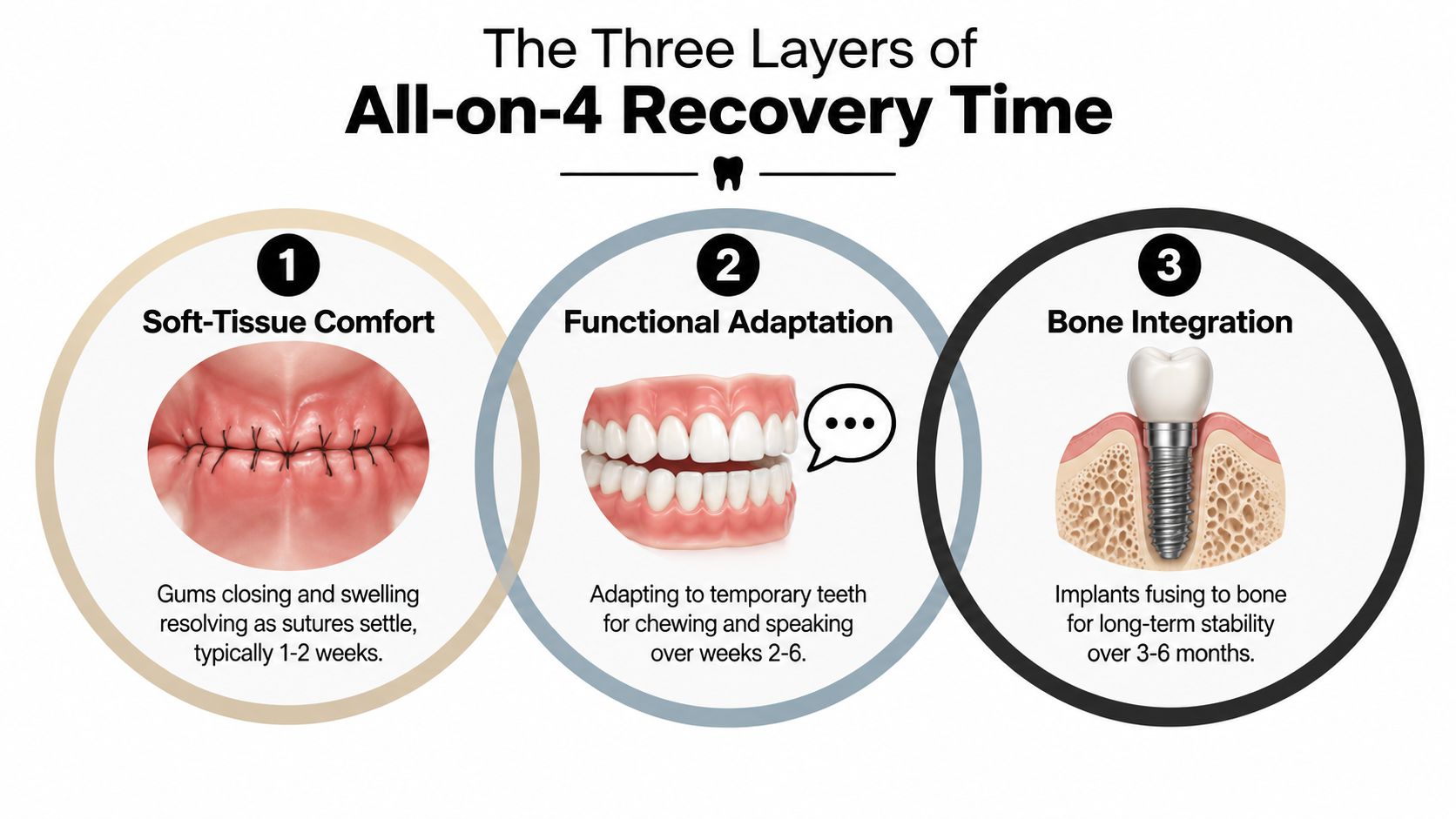
You may feel comfortable with your temporary teeth and assume healing has finished. All-on-4 recovery follows three overlapping layers: soft-tissue comfort, functional return, and osseointegration. Each answers a different question about your progress.
Layer one involves comfort and surface healing
During the first 1–3 weeks, the gum tissue closes and settles. Swelling, bruising, and tenderness usually ease, while sutures dissolve or are removed when appropriate. This layer affects sleep, facial appearance, speech, and everyday comfort, so it is often the recovery stage patients notice first.
Healthier-looking gums provide encouraging evidence of surface healing. The bone around the implants continues changing underneath, however, and that process cannot be judged by comfort alone.
Layer two involves using the temporary bridge carefully
Functional return develops through practice. Speaking may feel unusual because the temporary teeth have a different shape and position from your natural teeth or dentures. Eating also takes adjustment, and your dental team may recommend soft foods to limit force on the healing implants.
Over the first several weeks, daily activities often become easier. The temporary bridge still needs protection while your mouth adapts. Your dentist can adjust the bite or relieve a spot that rubs against healing tissue. The dental implant healing timeline can help you organize follow-up visits and understand how these stages overlap.
Layer three is the biological gatekeeper
Osseointegration describes bone bonding with the implant surface. The final prosthesis phase commonly occurs after about 3–6 months of integration, even when temporary fixed teeth are placed on the day of surgery, according to systematic review and long-term evidence.
The definitive bridge must handle demanding, long-term function. Clinical examinations and imaging help your dentist determine whether the implants can safely support it. Feeling normal is encouraging, but only clinical confirmation shows that osseointegration is complete.
Your recovery is complete when these layers align: comfortable soft tissue, dependable use of the temporary teeth, and stable implants ready for the final restoration. Follow-up gives your dental team opportunities to check each layer and guide the next decision.
The First 72 Hours and the First Two Weeks After Surgery
Consider a typical patient named Maria, who has All-on-4 surgery in Katy and returns home with temporary fixed teeth. On the first day, she notices numbness, mild oozing, facial tightness, and fatigue. These sensations can be unsettling, but the early phase is also when rest and simple care have the greatest value.
During the first 24 hours, Maria follows the team's directions for gauze pressure, rests, and uses cold compresses. She keeps her head raised and avoids vigorous rinsing, spitting, and unnecessary activity. Her meals are cool or lukewarm and very soft, and someone else handles transportation and household tasks while she recovers from sedation.
Days two and three can look worse before they look better
Swelling commonly reaches its peak around 48–72 hours, and bruising may become visible around the cheeks, jaw, or lower face. Maria may feel fuller or tighter than she did immediately after surgery. That change doesn't automatically signal a problem. Acute inflammation often becomes more noticeable before it begins to settle.
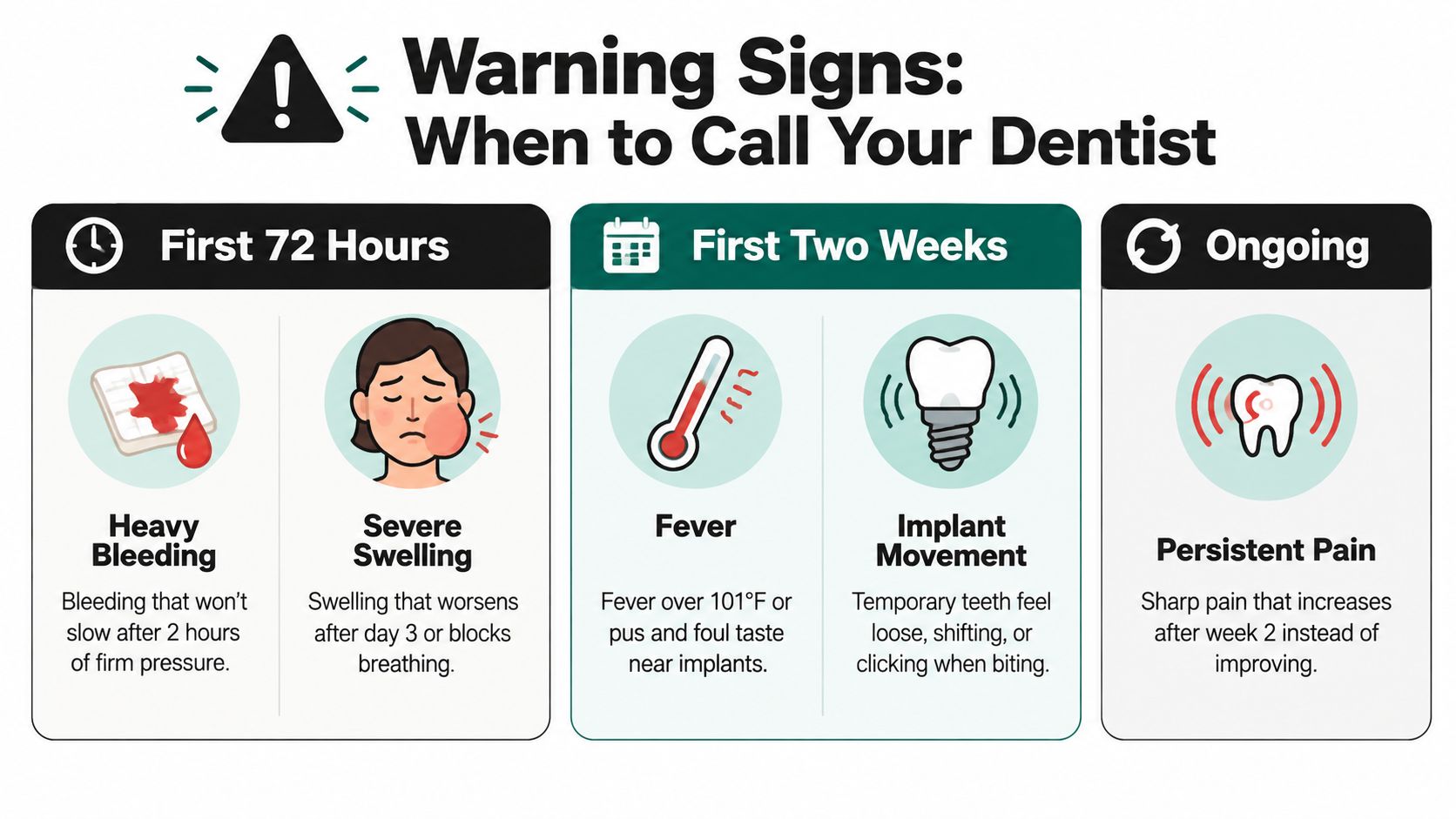
The important distinction is whether symptoms follow the expected direction afterward. Severe or escalating pain, uncontrolled bleeding, or swelling that interferes with breathing requires prompt contact with the dental team.
By days four through seven, many patients notice gradual improvement. Bruising begins to fade, energy returns, and soft foods become easier. The temporary prosthesis remains primarily a protective and aesthetic restoration, so Maria doesn't test it with hard or sticky foods just because she feels better.
Weeks one and two bring visible progress
During the second week, gums often feel more stable, and sutures may be removed or dissolve according to the treatment plan. Many patients can return to non-strenuous work during this period, although a desk-based schedule and a physically demanding job place different demands on the body.
The Katy team may check the surgical sites, inspect the temporary bridge, and address sore areas. A small adjustment can make speaking and eating more comfortable, while the patient still protects the implants from excessive pressure.
Your temporary teeth give you function during healing, not permission to rush the healing.
This is also when anxious patients sometimes stop asking questions because the worst discomfort has passed. Keep attending planned visits and report changes early. A short phone call can clarify whether a symptom is expected or deserves an examination.
Managing Pain, Swelling, Diet, and Daily Activity After Your Procedure
Recovery is easier to manage when each task has a clear purpose. Pain control supports rest, swelling care protects comfort, and careful eating reduces pressure on the healing implants. Follow your treating dentist's written directions for medication, rinsing, and cleaning around the temporary bridge.
Control the early inflammation
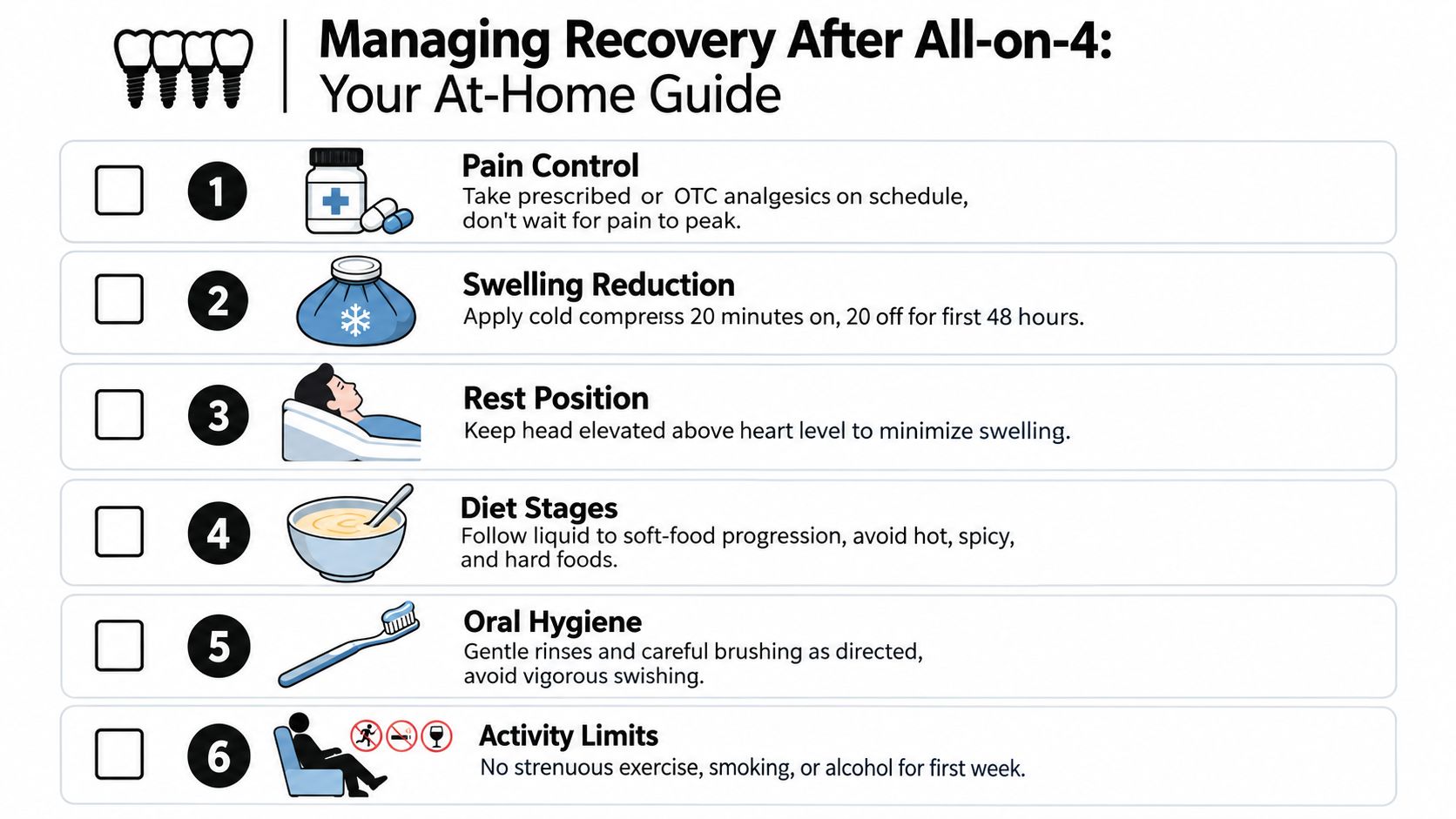
Use prescribed or over-the-counter pain relief only as directed for your health history. Taking medication on schedule may prevent discomfort from becoming harder to control. Apply a cold compress for 20 minutes at a time during the first 24–48 hours (postoperative aftercare guidance). Keep your head raised while sleeping for several nights, and avoid repeated bending or heavy lifting. Swelling often reaches its highest point around day three before easing.
Protect the implants through food and movement
Begin with liquids and very soft foods, such as yogurt, lukewarm broth, and smooth foods that need little or no chewing. As your dentist permits, add mashed potatoes, scrambled eggs, and soft pasta. Soft-food restrictions may last roughly 12 weeks to 3 months, since feeling comfortable can return before the implants can tolerate heavier chewing (recovery and aftercare timeline).
Avoid straws, smoking, forceful spitting, and vigorous rinsing early in healing. Suction and pressure can disturb the tissues around the surgical sites. Avoid strenuous exercise during the early recovery period, then resume light walking only when your clinician approves it.
Clean gently, not aggressively
Use a soft toothbrush and small, gentle movements on the temporary prosthesis. Near an incision, angle the bristles toward the bridge rather than scrubbing the fresh surgical area. Follow your dentist's instructions for rinsing, and do not swish forcefully unless directed.
For a visual demonstration of recovery care, review the following patient education video after receiving your practice's own instructions:
Months Two Through Six and the Move to Your Final Teeth
By the second month, many patients feel close to normal. The temporary arch may feel familiar, speaking may be easier, and meals may require less planning. Comfort is only one layer of recovery, however. The gums may feel settled while the bone is still building a firm connection with the implants.
The temporary bridge remains part of the treatment plan
During months two and three, your dental team checks gum maturity, implant stability, bite pressure, and the temporary restoration's fit. Hygiene visits help remove buildup around areas that are difficult to reach beneath a full-arch bridge. Your dentist may also check the screws or adjust the bite if you notice a sore spot, pressure point, or uneven contact.
These visits connect comfort with function. Feeling able to chew does not automatically mean the implants are ready for the final teeth.
When healing findings support the next stage, the team may collect digital scans, impressions, and bite records. These records show how the arches meet and help guide the shape, position, and appearance of the definitive restoration. The schedule depends on clinical findings, not the calendar alone.

Final fabrication follows confirmation of healing
After your dentist confirms adequate osseointegration, the laboratory designs the final prosthesis around your bite, facial proportions, speech, and aesthetic preferences. The workflow can include digital planning, laboratory fabrication, a seating appointment, and bite refinement. Your team may make adjustments before confirming the final fit.
The waiting period can feel frustrating because soft-tissue comfort and everyday function often improve before bone-level healing is complete. Allowing the bone to provide a stable foundation helps the final restoration work with the implants instead of asking them to handle full demands too soon. Your temporary teeth continue providing function while this foundation develops.
Long-term research supports protecting this staged healing process (long-term All-on-4 evidence). The findings do not predict one patient's result, but they help explain why clinicians confirm healing before final loading.
What Can Make Your All-on-4 Recovery Faster or Slower
Two patients can receive similar restorations and experience different practical recovery timelines. Your dentist considers medical history, surgical details, habits, and the demands of your daily life before giving activity and diet guidance.
Smoking and nicotine exposure deserve particular attention. Nicotine can restrict blood flow and interfere with gum and bone healing, so patients who smoke or vape should discuss cessation before surgery and throughout integration. A history of gum disease also matters because inflammation around the implants can complicate hygiene and ongoing stability.
Medical conditions require coordination rather than guesswork. Uncontrolled diabetes, osteoporosis, immune conditions, and medications that affect healing may change monitoring needs. Share your complete medication list and medical history during the consultation.
| Factor | Effect on Healing | Practical Implication |
|---|---|---|
| Smoking or nicotine use | Can interfere with soft-tissue and bone healing | Discuss cessation and follow the clinician's restrictions |
| Gum disease history | May increase the importance of inflammation control | Keep follow-up hygiene visits and clean carefully around the bridge |
| Diabetes or immune conditions | May require closer medical and dental coordination | Provide current health information before treatment |
| Bone quality | Influences initial implant stability | Follow the specific loading and diet plan provided |
| Extractions during surgery | Can add to the early tissue-healing demands | Plan rest and follow-up around the complete procedure |
| Sedation and anesthesia | Can affect transportation and early activity | Arrange a responsible adult and avoid driving until cleared |
| Job demands | Physical work can place different demands on recovery than desk work | Ask for individualized return-to-work guidance |
| Oral hygiene and adherence | Poor cleaning or premature pressure can complicate healing | Follow cleaning, diet, and appointment instructions closely |
Age alone rarely determines the outcome. Overall health, bone condition, smoking status, gum health, and adherence to aftercare usually provide more useful context.
Warning Signs and Complications Worth Calling Your Dentist About
Recovery doesn't need to be symptom-free to be healthy. Mild tenderness, early swelling, bruising, and temporary tightness can occur. The more useful question is whether symptoms are improving in the expected direction or changing in a concerning way.
During the first 72 hours
Call your dentist if you have:
- Persistent bleeding: Bleeding that doesn't slow after firm pressure deserves guidance.
- Severe pain: Contact the practice when prescribed medication doesn't control the pain.
- Breathing problems: Swelling that affects breathing is urgent.
- Medication reactions: Hives, facial swelling, or other signs of an allergic reaction require immediate attention.
A fever above 101.5°F is also a reason to contact the dental team promptly. Don't wait for a routine appointment when symptoms feel severe or rapidly worsen.
During weeks one and two
Increasing swelling after the early peak, pus, or a foul taste near the surgical sites may indicate a problem. A temporary bridge that feels loose, clicks unexpectedly, or shifts when you bite should be checked rather than tested repeatedly.
Difficulty opening your mouth that worsens instead of improving also merits a call. You don't need to diagnose the cause before contacting the practice. Describe when the symptom began, whether it is improving, and what you have already taken or done.
During months one through six
Persistent implant mobility, gum recession that exposes metal, a continuing bad taste, or a sudden bite change should be evaluated. A bite that feels different after the temporary bridge settles may only need an adjustment, but only an examination can distinguish a minor prosthetic issue from a concern involving implant stability.
Clinical series show why follow-up matters. One one-year study reported 98.0% overall implant survival, with restoration-level survival of 93.3%, demonstrating that recovery includes prosthetic maintenance as well as biological healing (one-year clinical series).
When you call, ask how after-hours concerns and same-day emergency visits are handled. A responsive dental office should give you a clear route for urgent symptoms, and no recovery question is too small to raise.
Planning Your All-on-4 Journey with The Dental Retreat in Katy, TX
At The Dental Retreat in Katy, your All-on-4 planning begins before surgery. The consultation typically includes a review of your medical history, diagnostic imaging such as a CBCT scan, an assessment of your remaining teeth and gums, and a conversation about sedation and comfort preferences. If extractions, periodontal treatment, or other restorative dentistry are needed, the team can include those needs in the treatment plan.
On procedure day, the team reviews the plan and comfort options before treatment begins. Sedation may be discussed for patients who feel anxious, and the intended result includes leaving with temporary fixed teeth when the clinical plan supports immediate function. You should arrange transportation and follow the medication, food, and activity directions provided for your specific case.
Follow-up gives each phase a clear checkpoint
A structured schedule may include a day-three check, a two-week suture and tissue evaluation, monthly monitoring, and a four-to-six-month appointment for final impressions once healing is confirmed. At these visits, the team can examine the gums, check the temporary bridge, assess bite contacts, reinforce hygiene techniques, and identify pressure points before they become major distractions.
That access matters because recovery isn't only biological. Patients who can ask questions easily are less likely to ignore a loose-feeling temporary tooth, skip cleaning because it feels uncomfortable, or resume hard foods too early. The practice's calm, patient-centered setting, private comfort amenities, and clear communication are intended to make care easier for nervous patients.
You can review what to expect during dental implant treatment before your consultation. Patients from Sunterra, Cane Island, Katy Manor, Kingscrossing, Lakehouse, Marisol, The Grange, Anniston, Katy Lakes, Elyson, and Ventanna Lakes can contact the Katy office to discuss their concerns and treatment goals.
Bring your medication list, relevant medical records, questions about sedation, and a clear description of your work and travel plans. Whether you're looking for an emergency dentist, tooth extraction, restorative dentistry, cosmetic dentistry, or a full-arch implant consultation, the team can explain which appointment fits your needs.
The Dental Retreat offers personalized All-on-4 planning, temporary fixed teeth, recovery guidance, and follow-up care in a calm Katy, TX setting. Visit The Dental Retreat to request a consultation and discuss your dental implant goals, health history, and preferred recovery timeline with the team.