You're sitting in the chair, hearing the suction, smelling the disinfectant, and thinking about the crown you've already put off twice. That's the moment many Katy, TX patients start searching for a calmer way to get care, and sedation dentistry is often the option that makes treatment feel manageable instead of overwhelming.
At The Dental Retreat in Katy, sedation is used to help patients feel more relaxed during dental care while still keeping treatment controlled and safe. For some people, that means gentle calming with nitrous oxide. For others, it means a deeper, drowsier visit for a longer procedure. Either way, the goal is simple, give anxious patients a way to get the dental care they need without white-knuckling every minute in the chair.
A Calmer Way to Get the Dental Care You Need
A lot of people in Katy have a story like this. They've meant to schedule the crown, extraction, implant consult, or overdue cleaning, but the sounds, the smells, and the uncertainty of the appointment feel bigger than the problem itself. By the time they finally look for a dentist near me or a dentist in Katy, TX, the worry has often been building for months.
What is sedation dentistry? In plain language, it's the use of medication to help you stay calm during dental treatment. Depending on the method, you may feel lightly relaxed, drowsy, or only partially aware of the visit. Many patients are not fully asleep, and many still receive local numbing so the area being treated stays comfortable.
Practical rule: sedation is meant to lower fear and tension, not to replace careful dental treatment or safety monitoring.
That matters because modern sedation isn't a one-size-fits-all service. It's adjusted to the procedure, your health history, and how anxious you feel that day. A cleaning and exam, a tooth extraction, a cosmetic visit, or restorative work like a crown or implant consult may call for different approaches.
For patients in Sunterra, Cane Island, Katy Manor, Kingscrossing, Lakehouse, Marisol, The Grange, Anniston, Katy Lakes, Elyson, and Ventanna Lakes, the appeal is practical too. A calmer visit can make it easier to keep up with routine care, return for follow-ups, and avoid the cycle of delay that often turns a small problem into a larger one.
How Sedation Dentistry Works on a Continuum
Sedation is best understood as a continuum, not a single switch. The level chosen depends on how much relaxation you need, what procedure you're having, and how your body responds to medication. In dentistry, that range goes from minimal sedation all the way to general anesthesia, and the depth changes how aware you are, how much you remember, and how closely you need to be monitored.
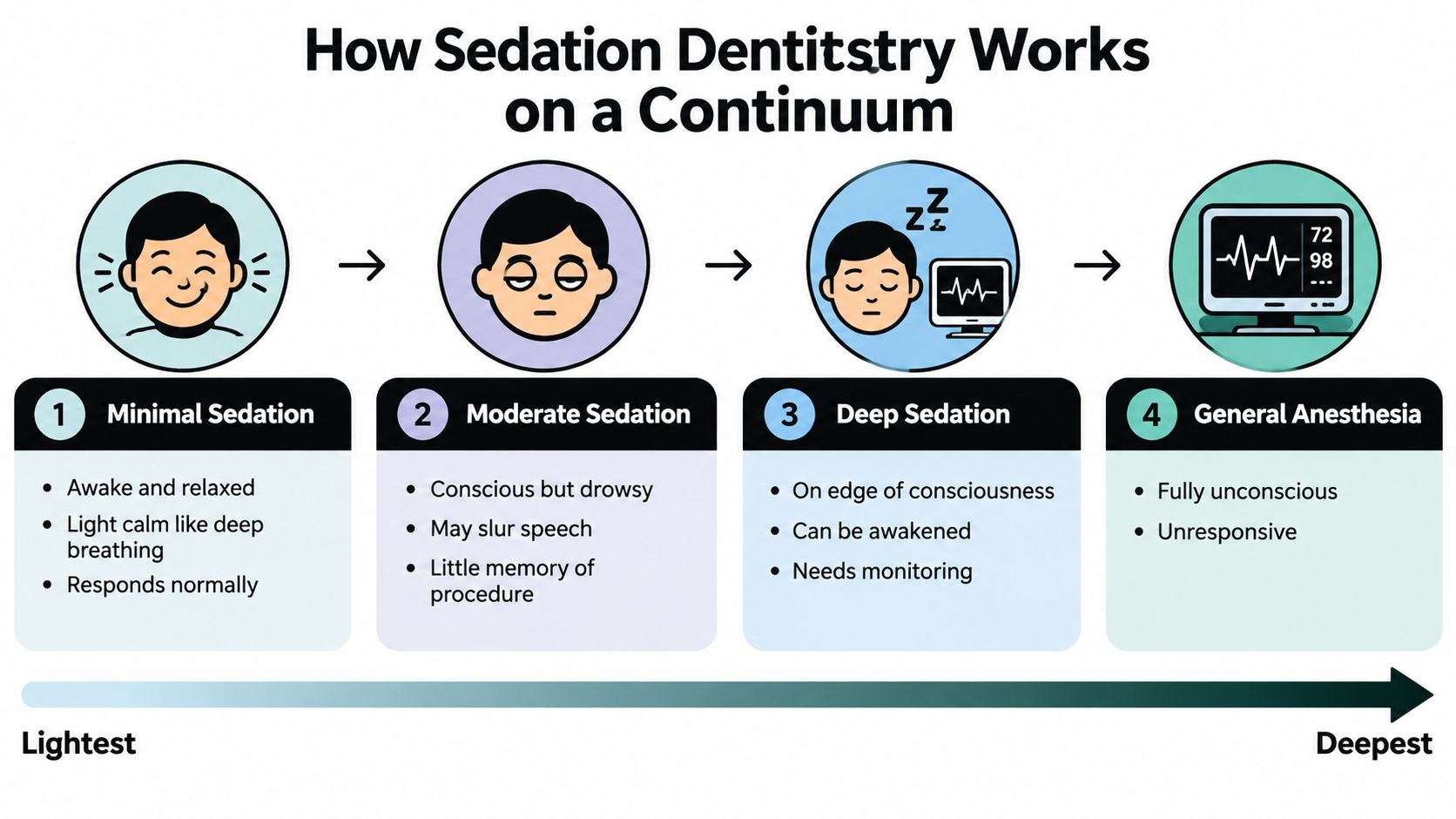
The four levels in plain language
Minimal sedation is the lightest level. You're awake, relaxed, and able to respond normally, which is why people often compare it to feeling calm on the couch after a quiet evening. In an everyday dental setting, this is often the level patients want when they're nervous but still want to stay fully aware.
Moderate sedation is deeper. You're still conscious, but you may sound slurred, feel drowsy, and remember little of the appointment afterward. People sometimes describe it as a twilight state, because you're not gone, just far less keyed up than usual.
Deep sedation sits closer to the edge of consciousness. You can still be roused if needed, but the team has to monitor you carefully because breathing and responsiveness can change more easily.
General anesthesia is the deepest level. You're fully unconscious and unresponsive, which is why it's usually reserved for hospital or surgical settings rather than a standard dental operatory.
The key point is that most dental sedation visits in a general office use minimal or moderate options, not full anesthesia. The dentist and team tailor the level to the procedure and to your comfort, which is exactly why a consultation matters.
Most people want calm, not oblivion. The right level of sedation should help you cooperate comfortably while the team keeps treatment controlled.
The Main Types of Sedation Available in Katy TX
Katy patients usually hear about four main choices, and each one serves a different purpose. The right fit depends on whether you need a mild reset, a longer window of calm, or deeper support for a more involved visit.
| Comparing Sedation Options for Katy Patients | How It Feels | Best For | Recovery |
|---|---|---|---|
| Nitrous oxide | Light, floaty, relaxed while staying awake | Mild anxiety, shorter visits, patients who want quick wear-off | Wears off quickly, many patients can resume normal activities sooner |
| Oral conscious sedation | Drowsy, calm, less aware of time, possible memory gaps | Anxiety, longer appointments, patients who prefer a pill-based option | Needs a ride home, lingering grogginess is common |
| IV sedation | Deep relaxation with adjustable dosing | Longer or more complex treatment, strong anxiety, tighter control needed | Requires someone to drive you home and monitor you afterward |
| General anesthesia | Fully unconscious | Extensive surgical cases or special situations | Recovery is more involved and usually happens in a surgical setting |
Nitrous oxide and oral sedation
Nitrous oxide is the gentlest option many dental teams use. You breathe it through a small nose mask, and it helps take the edge off without putting you to sleep. Because it wears off quickly, it's often chosen for patients who want a calmer visit but still need to get back to daily life sooner.
Oral conscious sedation is different. You take a prescribed pill before the appointment, and the medicine makes you drowsy and less aware of the experience. You're still responsive, but the visit can feel distant, which helps patients who don't want to feel as much of the appointment as it happens.
IV sedation and general anesthesia
IV sedation is delivered through a vein, so the team can adjust the dose more precisely during treatment. That makes it useful for longer procedures, stronger anxiety, or visits where the dentist wants more control over the depth of relaxation.
General anesthesia is reserved for the most involved cases and is typically handled in a surgical setting. It's not the usual choice for routine dentistry, and it's far beyond what most anxious patients need.
For more detail on common options, the office's overview of types of sedation dentistry is a helpful starting point. A consultation is still the decision point, because the same method won't fit every patient or every procedure.
Who Is a Good Candidate and Who Needs Extra Review
Sedation candidacy is a conversation, not a gate. The patients who often benefit most are adults with dental anxiety or phobia, people with a strong gag reflex, patients facing long or complex treatment in one visit, those with traumatic dental memories, and individuals who need extra support because of special needs. Children who can't cooperate for treatment may also need a more carefully planned approach.
What the review usually covers
The first step is usually a careful look at your medical history, medications, allergies, breathing concerns, and any past reactions to sedation. Pregnancy and substance use also matter, because both can change how a sedative should be chosen and monitored. Deeper sedation levels call for stricter review because they place more demand on the airway and cardiovascular system.
The Dental Retreat follows that kind of cautious screening because it's the safest way to match the medication to the person, not just the procedure. That's the right mindset for dental care, whether the visit is for a tooth extraction, a restorative appointment, or a larger treatment plan.
If you're nervous enough to avoid care, that alone is a reason to ask about sedation.
Some patients need extra review before any plan is finalized, especially if they have certain respiratory issues, heart concerns, recent surgery, or medications that can interact with sedatives. That doesn't automatically rule sedation out. It just means the team should slow down, review the details, and choose the safest level.

What a Sedation Visit Actually Feels Like
The day usually starts before you even arrive. If your dentist gives fasting instructions, that part matters. So does arranging a driver, wearing comfortable clothes, and leaving contact lenses off if that's part of your routine. Those small steps make the rest of the visit feel easier.
At The Dental Retreat, the experience is designed to feel less clinical and more settled. Patients may be offered a calm waiting space, warm towels, blankets, and noise-cancelling headphones before treatment begins. That softer setup matters for anxious patients, because the hours before the procedure can be just as stressful as the procedure itself.
From check-in to recovery
Once you're seated, the team checks your baseline vital signs and reviews consent and questions one more time. The sedative is then given in the form you and the dentist chose, and the sensations vary by method.
If you're using nitrous oxide, the nose mask goes on first, and the effect usually builds gently. If you're taking oral sedation, the drowsiness comes on more gradually, and the team tends to speak slowly and keep instructions simple.
During treatment, you're monitored throughout. A trained clinician watches your blood pressure, pulse, and oxygen levels while the dentist works. That monitoring is part of the safety net, not a formality.
Later in recovery, you're usually given time to sit, sip water, and have a soft snack if the team approves it. Your driver takes you home, and most patients remember the visit as much quieter than they feared.
Here's a useful anchor from the ADA's updated guidance, dentists should use documented protocols, regular emergency training drills, supplemental oxygen for moderate sedation through general anesthesia, and weight-based dosing documentation, with body mass index added to baseline vital signs and updated fasting and ASA physical-status recommendations. ADA's updated sedation and anesthesia guidance reflects how seriously modern sedation is managed.
Cost, Insurance, and Making Sedation Affordable
Sedation pricing depends on the type you need, how long the appointment lasts, and whether the sedative is part of a larger procedure. In general, nitrous oxide tends to be the most affordable add-on, oral sedation usually falls in the middle, and IV sedation or general anesthesia cost more because they involve more training, more monitoring, and more chair time.
| Typical Sedation Cost Ranges in Katy TX | Sedation Type | Typical Cost Range | Insurance Behavior | Recovery |
|---|---|---|---|---|
| Lower-cost option | Nitrous oxide | Varies by practice and procedure | May be treated as an add-on, coverage depends on the plan | Shorter recovery, often quicker return to normal |
| Mid-range option | Oral conscious sedation | Varies by practice and procedure | Often not covered alone, may be bundled with treatment | Needs a ride home, grogginess can linger |
| Higher-cost option | IV sedation | Varies by complexity and duration | Often reviewed case by case, sometimes tied to medical necessity | Requires driver and post-visit rest |
| Highest-cost option | General anesthesia | Varies by surgical setting and complexity | More likely to be separate from routine coverage | More involved recovery process |
Most insurance plans don't treat sedation as a standalone benefit, but they may cover it when it's paired with a covered procedure or considered medically necessary. A written estimate helps because it separates the treatment fee from the sedation fee, so you can see exactly what's included before you commit.
For a practical price discussion, the office's page on whether sedation dentistry is expensive is a useful reference. Patients who don't want to pay everything at once can also ask about monthly financing through CareCredit, or about any in-house membership options or new-patient specials that may apply to the broader treatment plan.
Choosing the Right Sedation Dentist in Katy TX
A good sedation provider should be easy to evaluate. Start with credentials. State licensure, sedation permits, and emergency training matter because sedation is not just about comfort, it's about controlled delivery and rescue readiness if the level of relaxation changes.
Four things to look for
- Credentials. Ask who is trained to provide sedation and what certifications they hold.
- Monitoring. Look for blood pressure checks, pulse oximetry, oxygen availability, and clear emergency preparedness.
- Patient comfort. Private rooms, headphones, and clear pre-visit communication make a real difference.
- Local access. A Katy location, family-friendly hours, and the ability to treat different ages under one roof can simplify care.
A clinic that only offers nitrous oxide can still help many patients, but a full-service sedation practice gives you more flexibility if your needs change. That matters if you're planning restorative work, a cosmetic dentist near me visit, dental implants near me treatment, or an emergency appointment where anxiety is part of the problem.

The Dental Retreat in Katy, TX brings those pieces together in one place, with sedation options, a spa-like setting, and a team used to helping nervous patients through care at a comfortable pace. For patients who want one dental home for routine cleanings, emergency dentist visits, implants, or smile work, that kind of continuity can make each appointment easier to schedule and easier to keep.
FAQs and Your Next Step Toward a Calmer Visit
Will I be awake during sedation dentistry? Often, yes. With minimal and moderate sedation, you usually stay awake or partly awake, but you feel much calmer and less bothered by the appointment.
Will I remember the visit? Sometimes not much. Memory can be reduced with some forms of sedation, especially when the medication is designed to make you drowsy and less aware of time.
Is modern sedation safe? It can be, when it's planned by a trained team, matched to your health profile, and monitored carefully throughout the appointment. Safety depends on the right screening, the right dose, and the right level of observation.
When can I drive again? That depends on the method. Nitrous oxide may wear off quickly, while oral sedation, IV sedation, and general anesthesia usually require a driver and the rest of the day set aside for recovery.
Can children or teens qualify? Sometimes, yes. The decision depends on age, cooperation, medical history, and the type of treatment needed.
What about special needs patients? Sedation can be helpful for some special needs patients, but it requires thoughtful review and a plan that fits the person, not just the procedure.
If you're looking for a dentist in Katy, TX who understands anxiety and keeps the visit calm from the start, The Dental Retreat is worth a conversation. A first appointment is a chance to talk through your concerns, review options, and decide what feels manageable.
If you've been postponing care because the chair feels stressful, reach out to The Dental Retreat and ask about sedation dentistry in Katy. The team can help you compare options, explain what the visit will feel like, and build a plan that makes room for comfort as well as treatment.