In-office whitening commonly uses hydrogen peroxide around 25–35%, with some protocols reaching 35–40%, and it can brighten your smile during a single chairside visit. If you're hoping for a noticeably whiter smile before a wedding, reunion, or job search, The Dental Retreat in Katy offers a $450 Zoom whitening special for new patients.
You may be checking your smile in the bathroom mirror while pinning your hair for a spring wedding at The Springs, updating a LinkedIn photo before a career fair, or getting ready to walk into a high school reunion. Coffee, tea, wine, tobacco, and time can all leave natural teeth looking less bright, and waiting months for a gradual change may not fit your schedule.
Teeth whitening in office offers a faster option. A dental professional applies whitening gel under controlled conditions, protects your gums, and monitors your comfort while the treatment works. The Dental Retreat, located on Stockdick School Rd. in Katy, provides chairside Zoom whitening and lists a $450 in-office whitening special for new patients.
Speed is the main reason people choose professional whitening. It doesn't necessarily create a better final shade than a well-designed at-home program, and it won't change the color of existing crowns, veneers, fillings, or bonding. This guide covers the appointment, realistic results, candidacy, safety, cost, and aftercare, so you can decide whether an in-office visit fits your smile goals.
A Brighter Smile Without the Wait
A Katy resident preparing for a wedding may not want to begin a lengthy cosmetic plan when the event is close. The same is true for someone refreshing a professional photo, interviewing for a new job, or attending a reunion at a local school. In those moments, the goal usually isn't perfection. It's a smile that looks cleaner, brighter, and more like the version you remember.
Professional whitening became a recognized dental category decades ago. The American Dental Association's historical whitening information notes that Colgate Platinum, a dentist-administered 14-day professional system, received the first ADA Seal of Acceptance for a tooth-whitening product in July 1995. Colgate Platinum Overnight later received the Seal in 1998, with whitening in as little as 3 nights.
That history helps explain why chairside treatment remains appealing. The dentist controls where the gel goes, manages the timing, and gives you a visible change without asking you to remember a home routine for weeks. The ADA resource also describes evidence in which an over-the-counter technique took 16 days to reach the whitening level achieved by a seven-day at-home tray system and a one-day in-office procedure.

What the Katy experience should feel like
A comfortable appointment starts with more than the gel. The team should check whether your teeth and gums are healthy enough for whitening, explain what the treatment can and can't change, and discuss sensitivity before beginning. At The Dental Retreat, the environment is designed to feel calm and patient-focused, with comfort amenities that can help people who feel uneasy about dental care.
The current $450 Zoom special gives patients in Katy and nearby communities, including Sunterra, Cane Island, Katy Manor, Kingscrossing, Lakehouse, Marisol, The Grange, Anniston, Katy Lakes, Elyson, and Ventanna Lakes, a local option to ask about. Pricing and availability can change, so confirm the current details before booking.
Practical rule: Choose chairside whitening for the controlled timing and same-day convenience, not because it guarantees a permanently whiter smile.
What Happens During In-Office Whitening
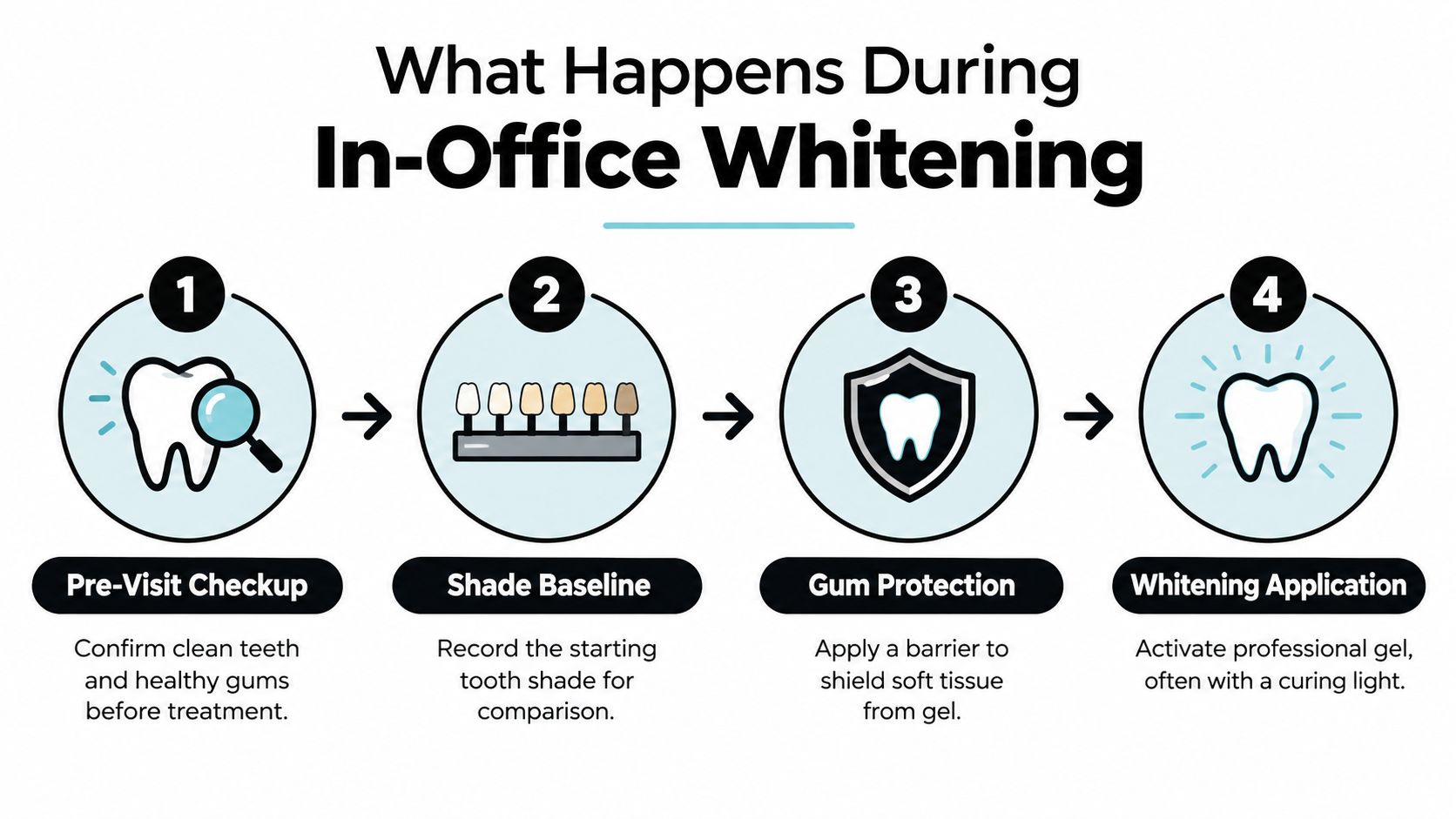
You arrive with coffee stains, a busy schedule, and no interest in managing trays for weeks. In Katy, an in-office visit follows a controlled sequence, from the health check to the final shade comparison. Each step protects your gums, keeps the gel on the intended surfaces, or helps the team adjust treatment for your comfort.
Before the gel touches your teeth
The dental professional first checks for untreated cavities, cracks, gum inflammation, worn enamel, and exposed root surfaces. A cleaning may be recommended if plaque or tartar covers parts of the enamel, since whitening gel distributes more evenly across a clean surface.
Your starting shade is recorded before treatment. That reference makes the change easier to judge than memory alone. It also opens an important conversation if you have crowns, veneers, fillings, or bonded restorations on front teeth. Whitening changes natural enamel, while many restoration materials keep their existing color.
Isolation and application
You recline while cheek retractors, cotton, or suction help keep the treatment area dry. A painted-on barrier covers the gumline and nearby lips, creating a protective border between soft tissue and peroxide gel.
The provider applies concentrated hydrogen peroxide or carbamide peroxide to the visible front surfaces of the teeth. In-office protocols vary, and the clinical review of in-office bleaching discusses controlled exposure periods and repeated applications.
Zoom-style systems may include a specially designed LED light. The light supports the selected protocol, but the gel performs the whitening work. You can relax in the chair while the team monitors the process.
Short cycles and comfort checks
Many appointments use several short cycles rather than leaving gel in place for one uninterrupted period. Fresh gel may be applied between cycles, while the team checks shade progress and asks whether you feel sensitivity.
At the end, the gel and barrier are removed and you rinse. A fluoride or desensitizing product may be offered when appropriate. Before you leave, the team compares your immediate shade with the starting reference.
The practical advantage is chairside speed and supervision, not a guarantee of a better long-term shade than home whitening. At The Dental Retreat, that controlled visit can suit Katy patients who want a local appointment and the current $450 Zoom special. Pricing and availability can change, so confirm the details before booking.
How White Can Your Teeth Really Get
A brighter smile doesn't have to look artificial, and a professional appointment shouldn't come with a promise of a television-style result. Your starting shade, the type of discoloration, the condition of your enamel, and your restoration history all influence what you'll see.
Yellow-toned surface staining from coffee, tea, wine, tobacco, and aging often responds more predictably than gray or brown discoloration associated with medication or trauma. Some stains are located deeper within the tooth and may need a different cosmetic plan. A consultation gives the dentist a chance to identify whether whitening is likely to help before you pay for treatment.
The strongest evidence doesn't support claiming that in-office treatment is automatically better than at-home whitening in its final shade result. A 2024 umbrella review included 28 systematic reviews and 416 randomized clinical trials and found no difference between in-office and at-home techniques for color change, with p = 0.95, or post-treatment sensitivity, with p = 0.85. The practical advantage is speed, clinician control, and presentation of a result within a short visit.
Use a shade conversation, not a promise
Shade guides help the team compare your starting and ending color, but they don't predict an identical result for every patient. The table below is a planning tool, not a guaranteed outcome.
| Starting Shade | Average Shade Lift | Typical Result Duration |
|---|---|---|
| Yellow-toned surface staining | Often responds visibly and predictably | Depends on diet, hygiene, tobacco use, and touch-ups |
| Mild natural darkening | Usually produces a noticeable brightening | Varies with daily habits and maintenance |
| Gray or brown intrinsic discoloration | May respond less evenly or modestly | May require an alternative cosmetic plan |
The brighter appearance will gradually soften as teeth encounter staining foods and drinks. Patients who smoke, drink staining beverages frequently, or skip regular dental care may want maintenance sooner than patients with lighter-staining habits. Think of chairside whitening as a fast jumpstart, not a permanent transformation.
In-Office Whitening vs At-Home Options
Suppose you have a Katy event coming up and want your smile to look brighter before the weekend. In-office whitening puts the treatment into one supervised appointment. Custom trays and over-the-counter products give you more control over timing, but they require a consistent home routine.
The main difference is speed, not a guaranteed superior final shade. Professional treatment often uses peroxide in the 25–35% range, with some products or protocols reaching 35–40%. A review of whitening concentration and sensitivity found that lower-to-medium concentrations can produce comparable whitening outcomes to higher concentrations while causing less sensitivity.
Compare the trade-offs
| Feature | In-Office Whitening | Custom Take-Home Trays | OTC Strips/Kits |
|---|---|---|---|
| Application | Dental professional applies the gel | Patient applies dentist-provided gel | Patient applies the product |
| Pace | Fast, chairside treatment | Gradual home routine | Gradual and less predictable |
| Control | Gum isolation, timed cycles, comfort checks | Custom fit with professional instructions | Fit and coverage vary |
| Final shade | Comparable to at-home treatment over time | Gradual, meaningful change | Often more modest or uneven |
| Best fit | Upcoming event or preference for supervision | Patient comfortable following a routine | Convenience and lower upfront commitment |
The ADA's whitening overview describes professional whitening as dentist-supervised care that may use concentrated peroxide and light activation. That oversight helps when you have sensitive teeth, gum recession, previous dental work, or uncertainty about why your teeth look darker.
At-home whitening can suit patients who value flexibility and a lower upfront commitment. In-office care suits a busy Katy schedule, especially when you want the treatment completed before an event. Ask the Dental Retreat team about current special pricing when comparing options, since details may change.
Neither approach whitens crowns, fillings, veneers, or bonding. Neither replaces a cleaning or exam when plaque, tartar, decay, or gum disease affects your smile. The best choice balances timing, supervision, comfort, and the type of discoloration being treated.
Are You a Good Candidate
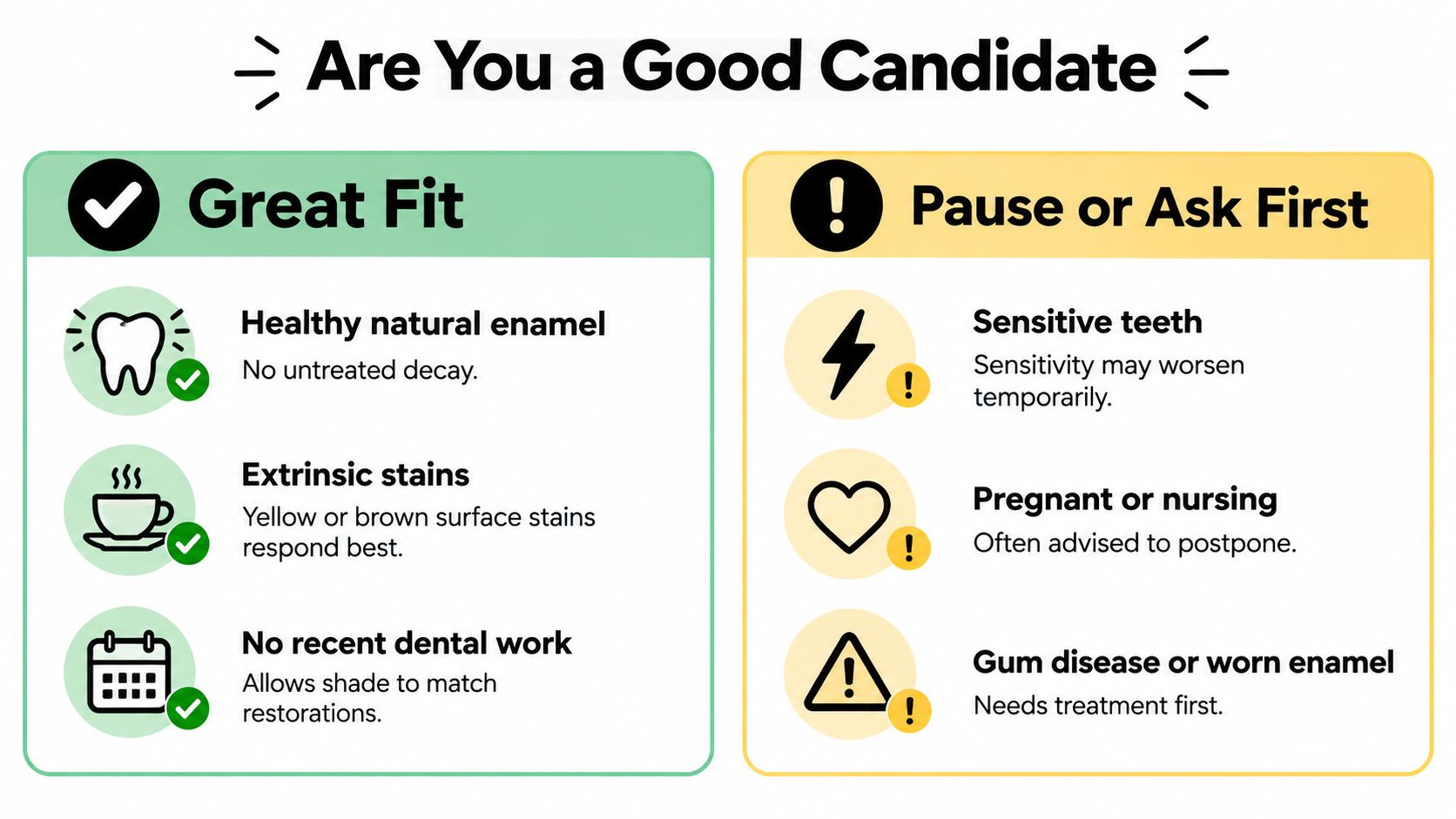
A good candidate usually has healthy natural enamel, surface staining, and realistic expectations. If you are getting ready for an event in Katy, the main advantage of in-office treatment is chairside speed. It can brighten your smile in one visit, although it does not promise a better long-term shade than a well-followed home routine.
Coffee, tea, wine, tobacco, and aging can darken enamel. Peroxide-based treatment may respond well to these external stains. An examination should come first if you have tooth pain, untreated decay, cracked teeth, bleeding or inflamed gums, worn enamel, or exposed roots. Whitening can intensify discomfort in an already sensitive area, and it cannot correct the dental problem causing that symptom.
A simple candidacy checklist
- Healthy teeth and gums: Active cavities and gum disease need treatment before cosmetic whitening.
- Natural front teeth: Whitening gel changes natural tooth structure, not the color of crowns, veneers, fillings, or bonding.
- Surface staining: Yellow or brown external stains often provide a clearer starting point than deep gray or trauma-related discoloration.
- Restoration planning: A visible crown or veneer may look mismatched after natural teeth brighten. Discuss the order of treatment before whitening.
- Timing awareness: Pregnancy and nursing are common reasons to postpone elective whitening. Teens under 16 typically wait while the pulp chamber develops.
Restorations deserve a direct conversation
Whitening natural teeth before veneers, bonding, or a crown can give the dental team a more useful shade target. Patients with sensitivity-prone teeth may also need a modified plan. A 2025 review of peroxide concentration and sensitivity indicates that carbamide peroxide may provide comparable or stronger whitening with less sensitivity than higher-concentration hydrogen peroxide gels. That option still needs to match your teeth and treatment goals, so discuss the formula with your dentist.
Side Effects and Safety Considerations
The most common experience after professional whitening is temporary sensitivity. You may notice a quick zing from cold air or water, or a dull ache that fades after the appointment. People who already have sensitive teeth, gum recession, or small enamel cracks may be more aware of these sensations.
Gum irritation can occur if gel reaches soft tissue. A properly placed barrier reduces that risk, and mild irritation usually settles after the area is cleaned. Call the office if discomfort is severe, continues to worsen, or doesn't begin settling as expected.
What can look unusual at first
Some patients notice temporary white spots or uneven areas immediately after treatment. Teeth can look patchy while they rehydrate, and the appearance may even out as the enamel returns to its normal moisture balance.
Whitening literature also raises concerns that deserve honest discussion, including possible surface roughening, greater susceptibility to demineralization, and mismatched color around crowns or other restorations. These risks reinforce the value of an examination, appropriate isolation, and a concentration selected for your teeth rather than the assumption that stronger gel is always better.
Questions to ask before treatment
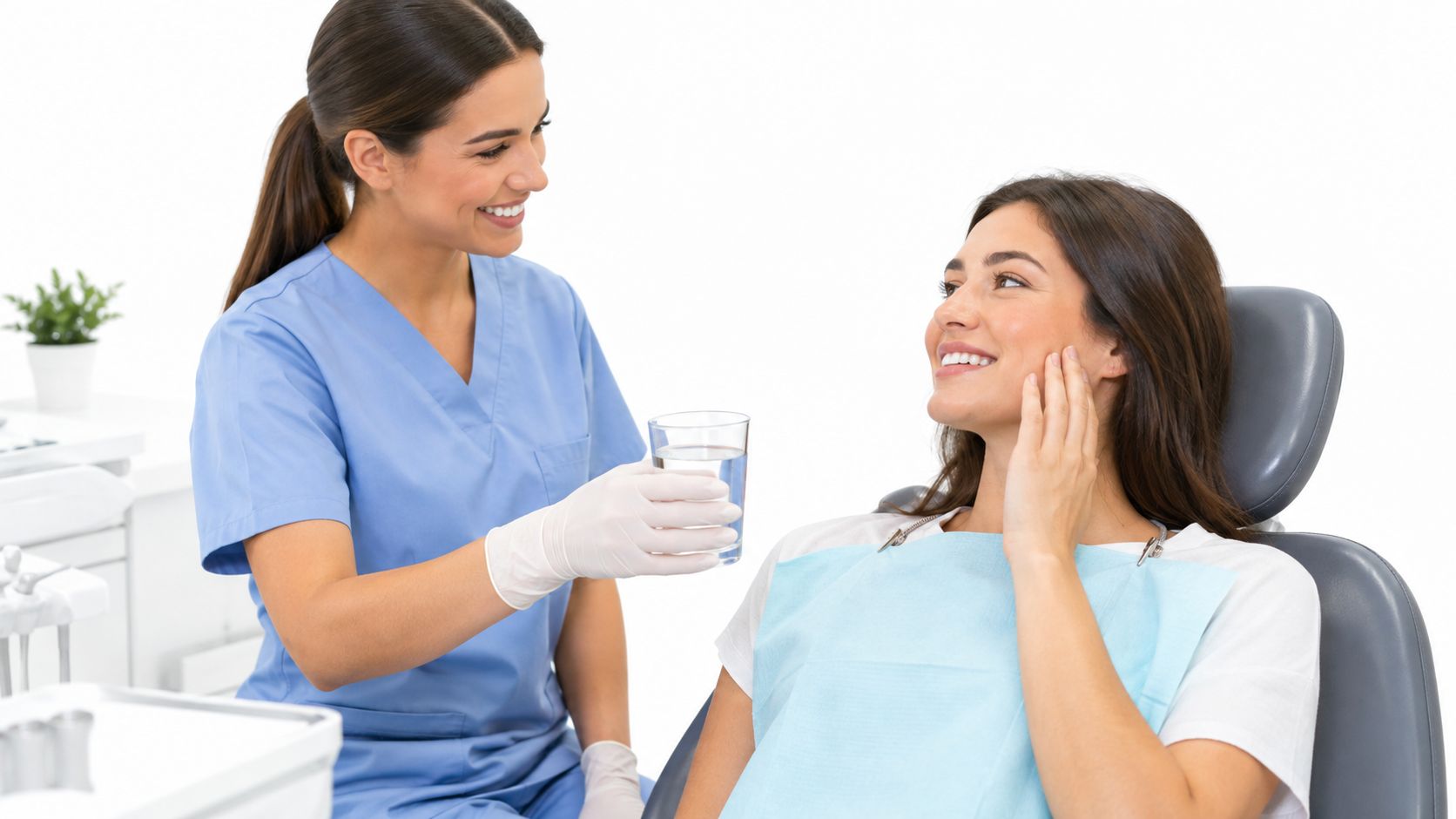
Ask which gel will be used, how the gums will be protected, what sensitivity prevention is available, and whether restorations are visible in your smile. You should also understand what the quoted fee includes and what aftercare the team recommends.
Neutral guidance from WebMD's tooth-whitening overview identifies temporary tooth sensitivity and gum irritation among the common side effects, while also discussing restoration discoloration and other less obvious concerns. Hydrogen peroxide-free color-correcting products are being explored, but they remain an emerging option rather than a replacement for standard professional whitening.
Cost and Specials in Katy
Professional whitening is usually an elective cosmetic service, so dental insurance commonly doesn't pay for it as it would for treatment of disease, injury, or functional problems. The final fee can vary according to the whitening system, the appointment protocol, the examination, gum protection, desensitizing products, take-home materials, and whether cleaning or other dental care is needed first.
Because practices package whitening differently, compare what you receive rather than looking only at the headline price. A low advertised fee may exclude the exam, trays, sensitivity support, or follow-up instructions. A higher fee may include more of those elements.
What to compare locally
| Provider Type | Typical Price Range | What's Included |
|---|---|---|
| General dental practice | Varies by office and protocol | May include professional gel and chairside supervision |
| Cosmetic-focused practice | Varies by system and added services | May include light activation, comfort products, or maintenance guidance |
| New-patient promotional offer | Confirm current terms directly | May bundle an exam, treatment steps, and aftercare instructions |
The Dental Retreat lists a $450 Zoom in-office whitening special for new patients in Katy. The practice describes its broader patient offers and whitening services on its page about professional whitening cost and treatment details. Confirm whether the current special includes the exam, isolation, gel application, light activation, and take-home instructions, because promotional terms can change.
Patients without insurance can also ask about the practice's membership plan, which starts at $299 per year according to the practice information provided. Membership may be relevant for people who want ongoing preventive care and savings, not only a single cosmetic visit.
A smart phone call can answer the practical questions quickly:
- Included care: Ask whether the exam, gel, light activation, and desensitizing support are bundled.
- Maintenance: Ask whether custom trays or future touch-ups cost extra.
- Eligibility: Confirm whether the special applies to new patients and whether a dental examination is required first.
- Restorations: Ask how visible crowns, veneers, fillings, or bonding could affect the plan.
Aftercare That Keeps Your Smile Bright
The first 48 hours deserve extra care because recently treated enamel can be more receptive to new staining. Choose lighter-colored foods and drinks while the initial result settles, and follow any specific instructions from the dental team.
Skip coffee, red wine, dark berries, soy sauce, and tomato-based sauces during this early period. Safer choices include white cheese, chicken, plain yogurt, and water. If you do drink something that may stain later, using a straw can reduce contact with the front teeth, but it doesn't replace brushing, flossing, and regular professional care.
Make sensitivity easier
Use a desensitizing toothpaste if your dentist recommends it, and ask whether fluoride gel is appropriate for you. Lukewarm beverages may feel more comfortable than icy drinks while sensitivity is present.
Brush twice daily with a whitening-safe toothpaste, floss every day, and schedule routine cleanings and exams. A cleaning removes deposits that home brushing can't handle and gives your dentist a chance to identify cavities, gum concerns, worn enamel, or restoration problems before they become painful.
Protect the result over time
Touch-up whitening may help maintain the shade when your dentist considers it appropriate. The best timing depends on your staining habits, oral hygiene, smoking status, and the condition of your teeth, so don't assume that repeating treatment frequently will produce a better smile.
Smoking is one of the most important lifestyle issues to address if you want to protect a whitening investment. Cutting back or quitting also supports gum health and lowers the ongoing exposure of your teeth to staining substances.
For a practical maintenance routine, review how to keep teeth white after whitening and bring your questions to your dental team. If whitening isn't appropriate, The Dental Retreat can also discuss related cosmetic dentistry, restorative care, veneers, dental implants, tooth extraction, or emergency dental services based on your needs.
The Dental Retreat offers dentist-supervised Zoom whitening in a calm Katy setting, with an examination and personalized guidance to help you understand what your natural teeth and restorations can achieve. Visit The Dental Retreat to ask about the current $450 whitening special, membership options, and an appointment before your next important event.