Implant surgery is performed under local anesthesia, so you typically feel pressure or vibration rather than sharp pain. Soreness usually peaks during the first 24 to 72 hours, declines sharply within a week, and many patients find recovery easier than a tooth extraction.
You may be in Katy staring at a gap in your smile, searching “do dental implants hurt” before you search for a dentist near me. Maybe you're worried about the procedure, the recovery, or what will happen when the numbness fades. Those concerns are normal, and you deserve a direct answer instead of vague reassurance.
At The Dental Retreat in Katy, TX, anxious patients can discuss dental implants in a calm, spa-inspired setting without judgment. This guide explains what implant surgery feels like, how discomfort changes from day to day, which comfort measures help, why some procedures feel more involved than others, and when pain deserves a prompt call.
Do Dental Implants Hurt? An Honest Answer for Katy Patients
A patient from Sunterra might arrive expecting the worst, bracing for sharp pain and a difficult recovery. Instead, during implant placement, the local anesthetic numbs the treatment area so the patient feels pressure, movement, or vibration rather than sharp pain. Afterward, soreness and swelling are possible, but they typically reach their highest point during the first few days and then begin to settle.
A systematic review of randomized clinical trials found that pain control matters most during the first 72 hours after implant surgery. The review included 9 eligible randomized trials and found that nonsteroidal anti-inflammatory drugs reduced postoperative pain and the need for additional pain medicine compared with placebo. It also noted that studies varied, so there isn't one medication schedule that fits every patient.
That distinction matters. Comfortable surgery and short-term soreness can exist together. You may feel tender when chewing, notice pressure near the implant, or see swelling in the gum or cheek after the anesthetic wears off. These sensations don't mean the implant procedure failed.
What recovery can feel like
A small pilot study of 30 adults treated for 3 days after implant placement found that participants generally reported no pain or mild pain. The median maximum pain score during the inpatient period was 2, with an interquartile range of 0 to 3.25 on that study's pain scale. Naproxen sodium produced lower pain scores than acetaminophen in that trial, but your own medical history determines which medication is appropriate.
The experience can differ after a simple implant, tooth extraction with bone grafting, or full-arch treatment. At The Dental Retreat, patients can ask questions about anesthesia, sedation, expected soreness, and aftercare before choosing a plan.
Why the Fear of Implant Pain Delays Better Care
A dental implant is a small titanium post that replaces the root of a missing tooth. A natural tooth has a root below the gum and a crown above it. An implant follows the same basic idea, with the post supporting a connector and a visible crown.
The post gradually integrates with the jawbone through a process called osseointegration. That means living bone forms a direct structural and functional connection with the implant surface, creating a stable foundation for a replacement tooth or prosthesis. You won't feel the bone integrating day by day, but your dentist monitors healing before placing the final restoration.
Fear can keep people in Katy, Cane Island, Katy Manor, and Kingscrossing living with a missing tooth longer than they intended. They may chew on one side, avoid certain foods, feel self-conscious in photographs, or worry that nearby teeth are moving into the open space. A missing tooth can also affect the surrounding bite and the strength of the jawbone over time.

A useful way to think about it: the question isn't whether healing involves any sensation. It does. The practical question is whether the discomfort is planned, controlled, and improving.
Comfort-focused care doesn't dismiss anxiety or tell you to “just relax.” It gives you information, choices, and a treatment plan that accounts for your concerns. A consultation may also identify whether you need a tooth extraction first, whether bone support is adequate, or whether restorative dentistry offers another suitable path.
What Happens During Implant Surgery Without the Pain
The placement appointment is more structured than many first-time patients expect. Knowing what happens at each stage can make the experience feel less mysterious.
Before treatment begins
The dentist reviews your health history, medications, dental concerns, and goals. Dental X-rays help evaluate the tooth area, jawbone, nearby structures, and the proposed implant position. If you need a new patient exam, tooth extraction, periodontal care, or another procedure first, the team can explain how those steps affect timing and recovery.
The treatment area is then numbed with local anesthesia. The goal is for you to remain comfortable while the dentist works. Tell the team if you feel anything sharp, because they can pause and provide more anesthetic.
During placement
Once the area is numb, you may notice pressure, vibration, or movement. Those sensations can feel strange, but they aren't the same as sharp surgical pain. You can agree on a signal before treatment so you can communicate without speaking while the procedure is underway.
The Dental Retreat offers sedation options for patients who feel nervous about dental care. Its comfort-focused environment includes noise-cancelling headphones, massage or heated chairs, and aromatherapy. These features don't replace anesthesia, but they can make it easier to stay settled during treatment.
The modern implant milestone that shaped today's expectations for predictable function occurred in 1965, when Gösta Larsson became the first human patient to receive Brånemark's osseointegrated titanium implants. The history of osseointegration from the Foundation for Oral Rehabilitation describes Larsson receiving four mandibular implants supporting a fixed full-arch prosthesis. Those implants reportedly remained functional for more than 40 years, until his death in 2006.
After placement
The implant usually heals beneath the gum before it supports the final crown. You may leave with written instructions about medication, food, activity, hygiene, and follow-up. The early soreness is part of the soft-tissue healing period, while the deeper bone integration proceeds without noticeable sensation.
Your Day-by-Day Implant Recovery Timeline
The most useful recovery question isn't just, “Will dental implants hurt?” It's, “What should the pattern look like as I heal?” Expected discomfort should be strongest early and then move steadily downward.
A prospective patient-recovery study reported severe pain, defined as 8 to 10 on a 10-point scale, in 52.5% of participants at some point on postoperative day one. That proportion declined to 22.5% on day two and 12.5% on day three. Analgesic use also declined from 80% on day one to 45% on day two and 30% on day three, while swelling took approximately 4 to 5 days to settle. These figures describe one study population, not a promise about every patient. See the practice's dental implant healing timeline for additional recovery guidance.
| Recovery Stage | Typical Discomfort | Swelling and Eating | What to Do |
|---|---|---|---|
| Days 1 to 2 | Tenderness, pressure, or a dull ache may be most noticeable. | Swelling can increase before it improves. Choose soft, cool or lukewarm foods and chew away from the surgical area. | Follow the prescribed or recommended medication plan, rest, and use cold compresses as directed. |
| Days 3 to 5 | Discomfort should begin easing. Pain that becomes stronger instead of weaker deserves a call. | Swelling usually starts settling. Eating becomes easier, but avoid hard pressure on the implant site. | Continue gentle oral hygiene and follow all written aftercare instructions. |
| Days 6 to 7 | Many patients have only mild tenderness or chewing sensitivity by the end of the first week. | Most routine swelling should be improving, with gradual return to more comfortable eating. | Keep the follow-up appointment and report symptoms that aren't following the expected pattern. |
In a cross-sectional study of 366 patients, reported discomfort fell from 57.7% on the first postoperative day to 36.1% on day three and 17.5% on day seven. The study found that 67.8% said discomfort lasted less than three days, and all participants reported that it lasted less than 14 days. These results support a practical expectation: soreness is common shortly after treatment, but it generally becomes less noticeable during the first week.
Another clinical study reported mean pain of 3.5 out of 10 at 6 hours, 2.1 out of 10 at 24 hours, and 0.9 out of 10 by day seven. A separate review found that about 17% of patients still reported pain one week after implant placement, with no significant difference associated with antibiotic groups. Pain alone doesn't prove infection, but pain that intensifies after improving should be evaluated.
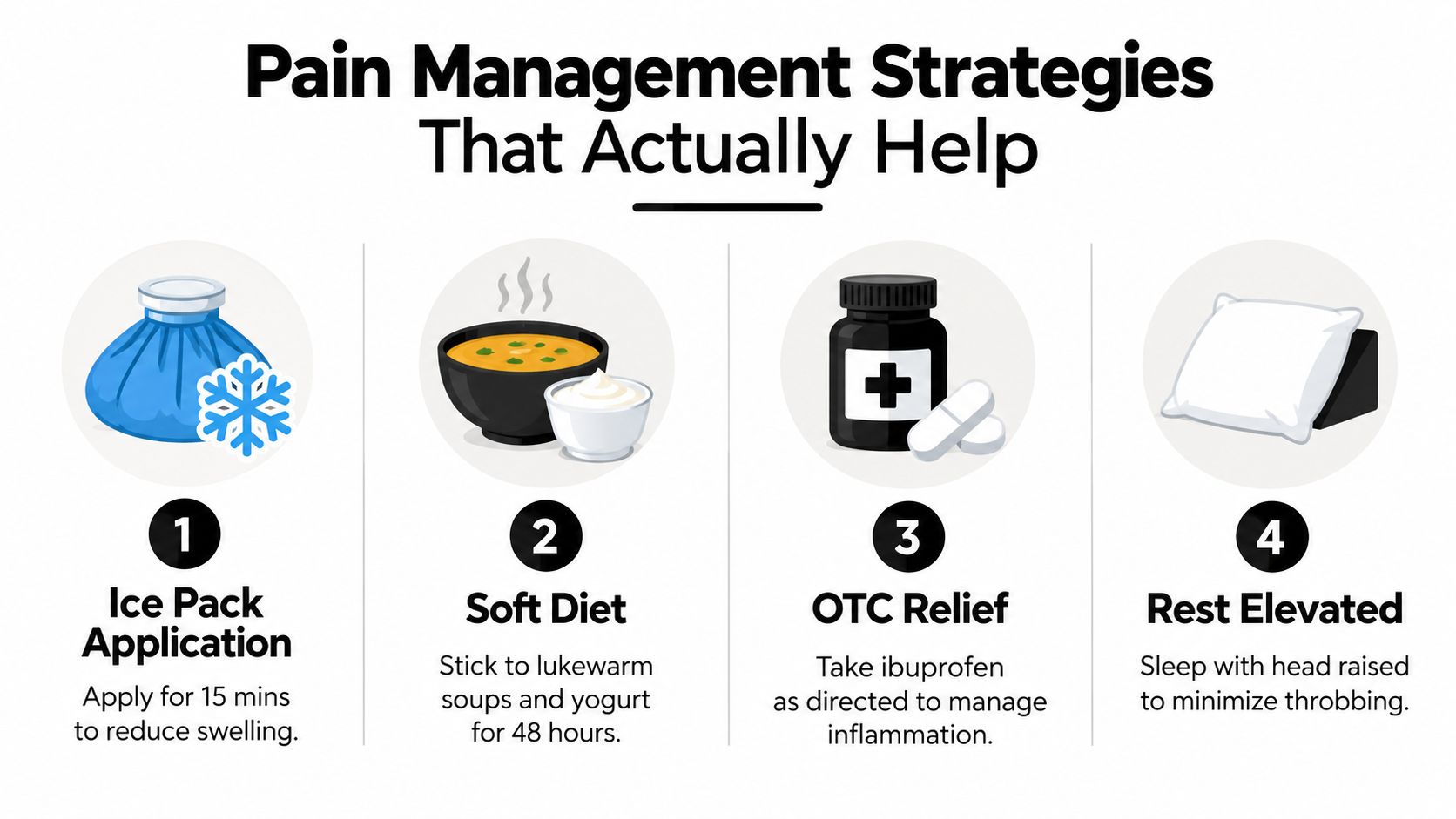
Pain Management Strategies That Actually Help
Your comfort plan begins before you leave the office. Use medication exactly as directed, and tell the dental team about allergies, stomach problems, kidney disease, blood thinners, pregnancy, or other health conditions before taking an over-the-counter pain reliever.
Anti-inflammatory medication is commonly useful during the first few days because inflammation contributes to soreness and swelling. The evidence reviewed earlier found NSAIDs reduced postoperative pain and rescue-medication needs compared with placebo, but it didn't establish one universal schedule. Don't combine products or exceed the recommended dose unless your clinician specifically tells you to.
Simple steps at home
- Use a cold compress: During the first 24 to 48 hours, place a cold pack against the outside of the cheek for about 20 minutes, then remove it for about 20 minutes. Protect your skin with a cloth.
- Choose soft foods: Yogurt, scrambled eggs, smoothies, mashed foods, and lukewarm soups can reduce chewing pressure. Don't use a straw, since suction can disturb the healing area.
- Rest with your head raised: Elevation can make throbbing feel less noticeable. Avoid strenuous activity while your dentist advises you to take it easy.
- Protect the site: Don't smoke or use tobacco during healing. Avoid poking the area with your tongue or fingers.
- Clean gently: Follow the practice's instructions for brushing and rinsing. Keep the rest of your mouth clean, but don't scrub directly over the surgical site unless instructed.
Most patients need only short-term analgesic use, although the appropriate choice depends on the procedure and your health. The oral surgery pain-management guidance can help you prepare questions for your appointment.
The Dental Retreat provides written aftercare instructions and a phone contact for recovery questions. If you're unsure whether a symptom is expected, calling is safer than guessing.
Why Some Implant Procedures Hurt More Than Others
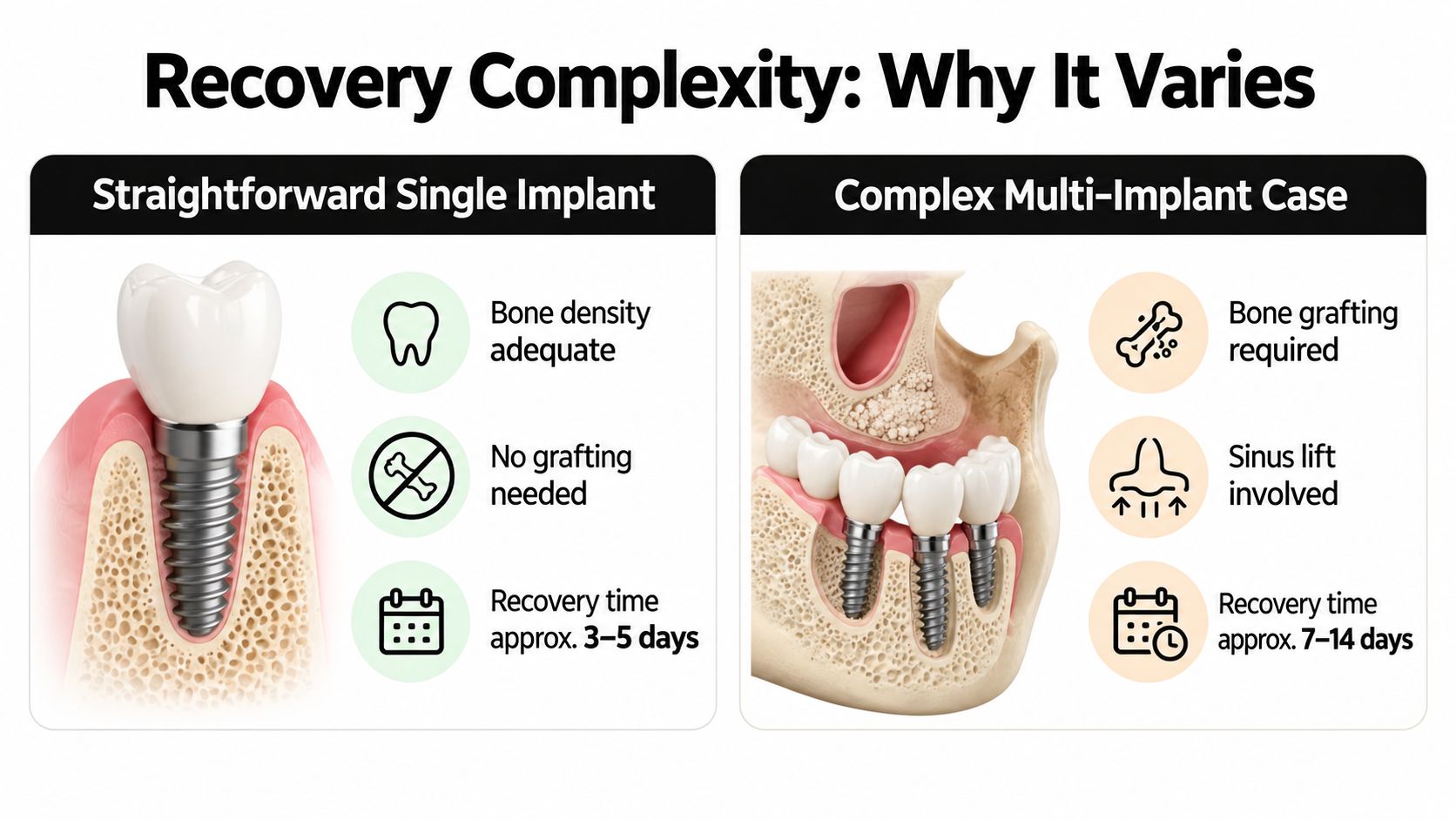
Two patients can both say they had “implant surgery” and still have very different recoveries. A straightforward single implant may involve less tissue disturbance than an extraction followed by bone grafting, sinus augmentation, or full-arch treatment such as All-on-4.
The more extensive the procedure, the more likely you are to experience swelling, tenderness, and a longer adjustment period. Surgical duration, the amount of tissue involved, the location of the implant, and whether bone augmentation is necessary all shape the recovery. This isn't a reason to avoid treatment. It is a reason to ask for a personalized explanation.
A systematic review found stronger evidence of greater acute pain after flap surgery compared with flapless surgery, longer operations, anxiety, and expecting more pain beforehand. Evidence was inconclusive for age, sex, smoking, implant number, and immediate versus delayed loading. Patient-reported data also associated bone augmentation, alcohol consumption, age, and pain during surgery with greater or longer postoperative discomfort. A systematic review of factors affecting implant pain explains why no honest dentist can promise the exact same recovery for every person.
Questions that make planning easier
Before scheduling, ask:
- Will I need a tooth extraction, bone graft, or sinus augmentation?
- How many implants are you placing, and what areas will be treated?
- What local anesthesia and sedation options are available?
- What level of soreness and swelling is realistic for my procedure?
- Who should I call if pain increases after I go home?
Anxiety can influence how you experience treatment, but that doesn't mean the pain is imaginary. Fear can increase muscle tension, attention to bodily sensations, and concern about every change during healing. A calm explanation, agreed communication signal, and appropriate sedation can help you feel more in control.
Warning Signs That Mean It's Time to Call Your Dentist
Normal soreness should trend downward. It may fluctuate during the first few days, but pain or swelling that intensifies after you had begun to improve isn't a pattern to ignore.
Call the practice promptly, ideally the same day, if you notice:
- Progressive swelling: Puffiness continues to expand or becomes more pronounced several days after surgery.
- Fever or feeling unwell: These symptoms can accompany an infection and need clinical review.
- Pus or drainage: Exudate from the surgical area isn't routine healing.
- Persistent bleeding: Bleeding that doesn't settle with the instructions provided warrants advice.
- Foul taste or odor: This can signal wound contamination or infection.
- Difficulty swallowing or breathing: Seek urgent medical attention if swelling affects either function.
- Altered lip or chin sensation: Numbness or unusual sensation should be reported.
- Pain that medication doesn't control: Severe or escalating pain needs examination.
Early postoperative infection can involve edema, exudate, and pain during the first few days. Other causes of worsening pain can include retained debris, wound breakdown, bite-related overload, nerve irritation, or another mechanical issue. A dentist may need an examination and dental X-rays to identify the cause.
Don't self-prescribe leftover antibiotics. The need for an antibiotic depends on the examination, infection risk, allergies, and the procedure. Unnecessary antibiotics can cause harm and won't treat a nonbacterial cause of pain.
Persistent or returning pain around an implant can also occur with peri-implant disease after the implant has been functioning for some time. A systematic review of peri-implantitis reported a mean population prevalence of approximately 22%, with published estimates ranging from 1% to 47%. The condition involves inflammation around the implant and progressive supporting-bone loss, which is why regular examinations, dental X-rays when indicated, and professional maintenance remain important even after the implant feels comfortable.
The Dental Retreat provides emergency dental services for patients in Katy and nearby communities when a concern arises between scheduled visits.
Comfortable Implant Care Starts With a Conversation
The honest answer to “do dental implants hurt” is balanced. The placement itself is performed with local anesthesia, so sharp pain shouldn't be the expected sensation. Recovery can include soreness, swelling, bruising, and chewing tenderness, but these symptoms usually improve as the first several days pass. Pain that doesn't follow a downward pattern deserves a call, not silence.
A consultation gives you a chance to understand whether you need a single implant, tooth extraction, bone grafting, All-on-4 treatment, or another restorative option. It also lets you discuss sedation, comfort preferences, healing expectations, and transparent costs before treatment begins.
At The Dental Retreat on Stockdick School Rd. in Katy, patients from Sunterra, Cane Island, Katy Manor, Kingscrossing, Lakehouse, Marisol, The Grange, Anniston, Katy Lakes, Elyson, and Ventanna Lakes can request implant planning in a judgment-free environment. The practice also provides general dental care, cleaning and exams, cosmetic dentistry, teeth whitening, clear aligners, restorative dentistry, and emergency services.
New patients without insurance can ask about the $99 thorough exam with cleaning and X-rays, the $49 problem-focused visit, and $350 in-office Zoom whitening. Those offers may change, so confirm current details when you contact the office. If dental anxiety has kept you from replacing a missing tooth, you can discuss sedation options and create a plan that respects both your health needs and your comfort.
The Dental Retreat offers personalized dental implant consultations, local anesthesia, sedation options, and clear recovery guidance for patients who are worried about pain. Visit The Dental Retreat to request an appointment in Katy and take the first step toward a complete, comfortable smile.