If your porcelain veneers looked bright when they were first placed but now seem dull, darker, or less even beside your natural teeth, you're not alone. Coffee, red wine, tobacco, gumline buildup, surface wear, and changes in nearby enamel can all affect how your smile looks, even when the porcelain itself hasn't changed shade.
Patients searching for a dentist near me in Katy, TX, often want one simple answer: can whitening make the veneers brighter? The honest answer is that bleaching usually can't change porcelain color. A cosmetic dentist at The Dental Retreat can instead determine whether you need professional polishing, whitening for the surrounding natural teeth, or replacement of a damaged or mismatched veneer. That same evaluation can also connect your cosmetic goals with preventive dental care, cleaning and exams, dental X-rays, restorative dentistry, or other services available in Katy, Sunterra, Cane Island, Katy Manor, Kingscrossing, Lakehouse, Marisol, The Grange, Anniston, Katy Lakes, Elyson, and Ventanna Lakes.
What Patients Really Want to Know About Brightening Veneers
A common concern sounds like this: “My veneers used to look glossy and white. Why do they look dull now, and can I whiten them again?” The answer depends on whether the problem is surface stain, contrast with natural teeth, damage to the porcelain, or a true need for replacement.
Porcelain is a nonporous ceramic. Peroxide-based whitening products are designed to affect natural enamel, not fired porcelain, so whitening strips, gels, and LED kits generally won't lift the original shade of a veneer. The surrounding natural teeth may brighten, but the veneer will remain the same color. Professional guidance on whitening veneers also emphasizes why whitening order matters when a smile includes both natural teeth and restorations.
That doesn't mean you're out of options. A Katy cosmetic dentist can separate the problem into three practical paths:
- Professional polishing: This can remove a film of extrinsic stain and restore some surface shine when the glaze is intact.
- Whitening adjacent natural teeth: This can reduce the contrast between older veneers and enamel that has darkened with age, food, drinks, or tobacco.
- Veneer replacement: This becomes more realistic when porcelain is chipped, cracked, rough, permanently mismatched, or no longer fits the gumline well.
Practical rule: Don't try to make a veneer lighter before identifying what actually looks darker.
The safest plan protects the glaze and the natural tooth beneath it. During an evaluation, your dentist can examine the veneer margins, check the surrounding enamel, and decide whether a conservative polish is enough or whether cosmetic dentistry should be planned in stages.
Why Porcelain Veneers Do Not Respond to Regular Whitening
Porcelain veneers receive their color during fabrication. A dental laboratory shapes ceramic to fit the prepared tooth, builds the planned shade into the restoration, and finishes the surface with a smooth glaze. The result is a dense, glass-like material rather than the porous structure of natural enamel.
Natural-tooth whitening works by allowing peroxide to interact with organic discoloration within enamel. Porcelain doesn't provide the same pathway. Its glazed ceramic surface blocks meaningful penetration, so applying peroxide to the outside of a veneer won't produce the same chemical change that it can produce in natural teeth. This is why patient guidance from Colgate on whitening veneers distinguishes between brightening natural enamel and changing porcelain shade.
That resistance is also one of the advantages of porcelain. Veneers are generally color-stable and stain-resistant, although plaque, food residue, tobacco film, marginal discoloration, and surface damage can change how they reflect light. A veneer may look less brilliant without having truly become darker.
A home whitening kit can therefore create confusion. It may brighten natural teeth while leaving the veneer unchanged, which can make the smile look less uniform. Strong or abrasive products may also roughen the surface over time, making it easier for stain film to cling.
If the concern is dullness, the better first step is usually a dental assessment followed by a veneer-safe cleaning or polish. Bleaching products can't replace that diagnosis, and they can't repair a chip, worn glaze, open margin, or stained bonding edge.
Professional Polishing and Stain Removal Options
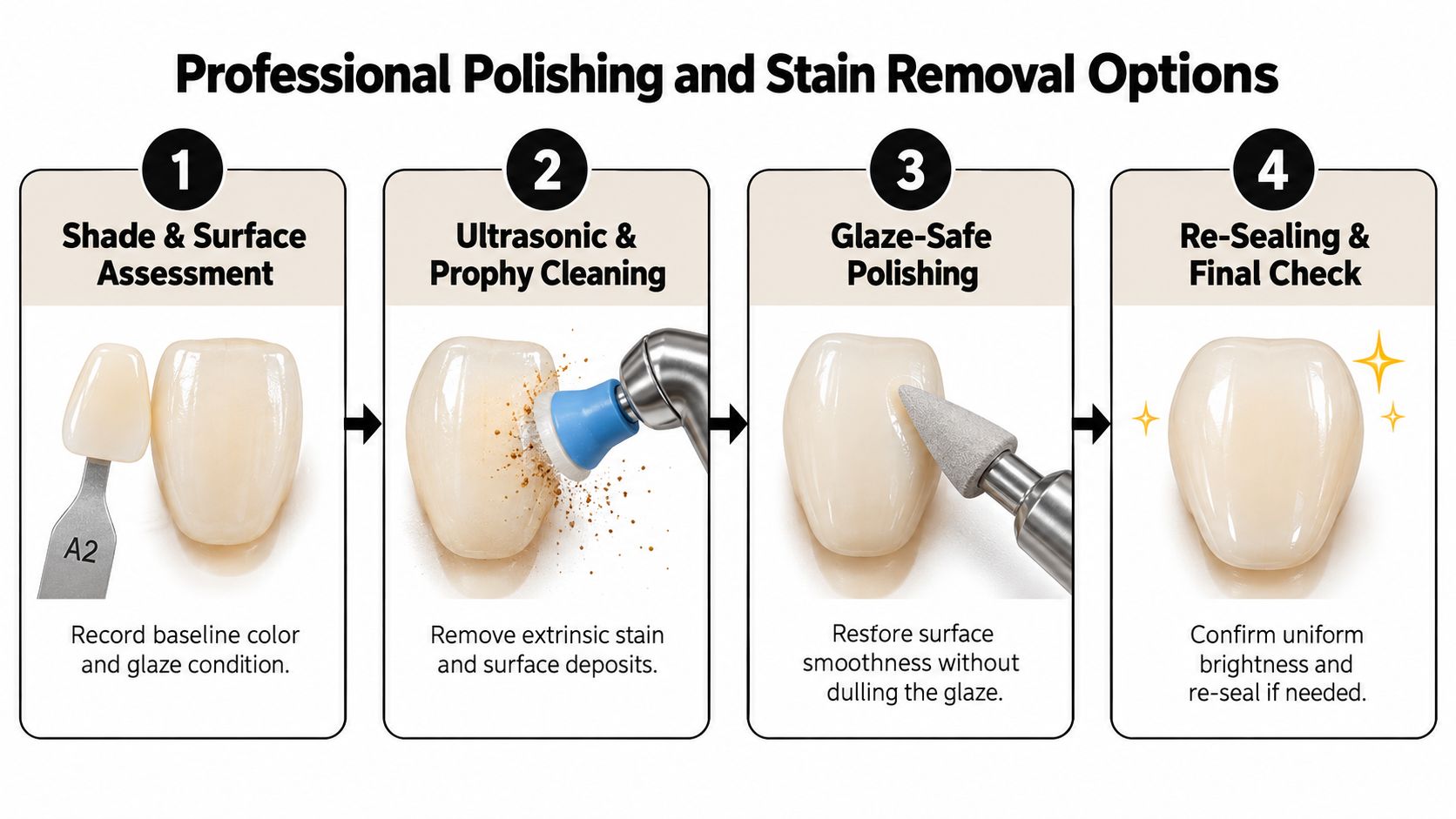
Professional polishing starts with identifying what changed. Your dentist or hygienist can compare the veneer with adjacent teeth, inspect the gumline, and look for film from coffee, tea, red wine, tobacco, or plaque. The team may also document the appearance under consistent lighting so the recommended treatment matches the actual problem rather than relying on a quick visual impression.
A conservative visit generally follows a sequence like this:
-
Surface assessment comes first. The clinician checks the shade, smoothness, margins, and glaze. This helps distinguish removable surface discoloration from a fixed mismatch or damaged ceramic.
-
Cleaning removes buildup around the restoration. Professional instruments and appropriately selected polishing materials can lift deposits near the gumline and between teeth. The goal is to clean without scratching or dulling the porcelain.
-
Polishing restores reflection when the surface allows it. If the stain is superficial, a careful porcelain-safe polishing sequence may improve smoothness and bring back some of the original gloss. A smoother surface reflects light more evenly than one covered with residue or minor buildup.
-
The dentist avoids aggressive shortcuts. Harsh abrasives, unsuitable pumice, acid exposure, and strong bleaching agents can damage the finish instead of improving it. Once a glossy surface becomes rough, future stain may become more noticeable.
An in-vitro study of veneer-like materials found that stain-removal procedures reduced color change after artificial aging, but neither approach restored the original baseline color. The procedures also affected surface roughness and gloss retention, which supports a cautious approach rather than repeated aggressive polishing. The full study on stain removal and surface effects explains why technique and material selection matter.
Polishing can recover noticeable brightness when a stain film is responsible for the dull appearance. It can't make the original porcelain shade lighter, and it won't correct a crack, chip, exposed dark margin, or structural problem.
Whitening the Natural Teeth Around Your Veneers
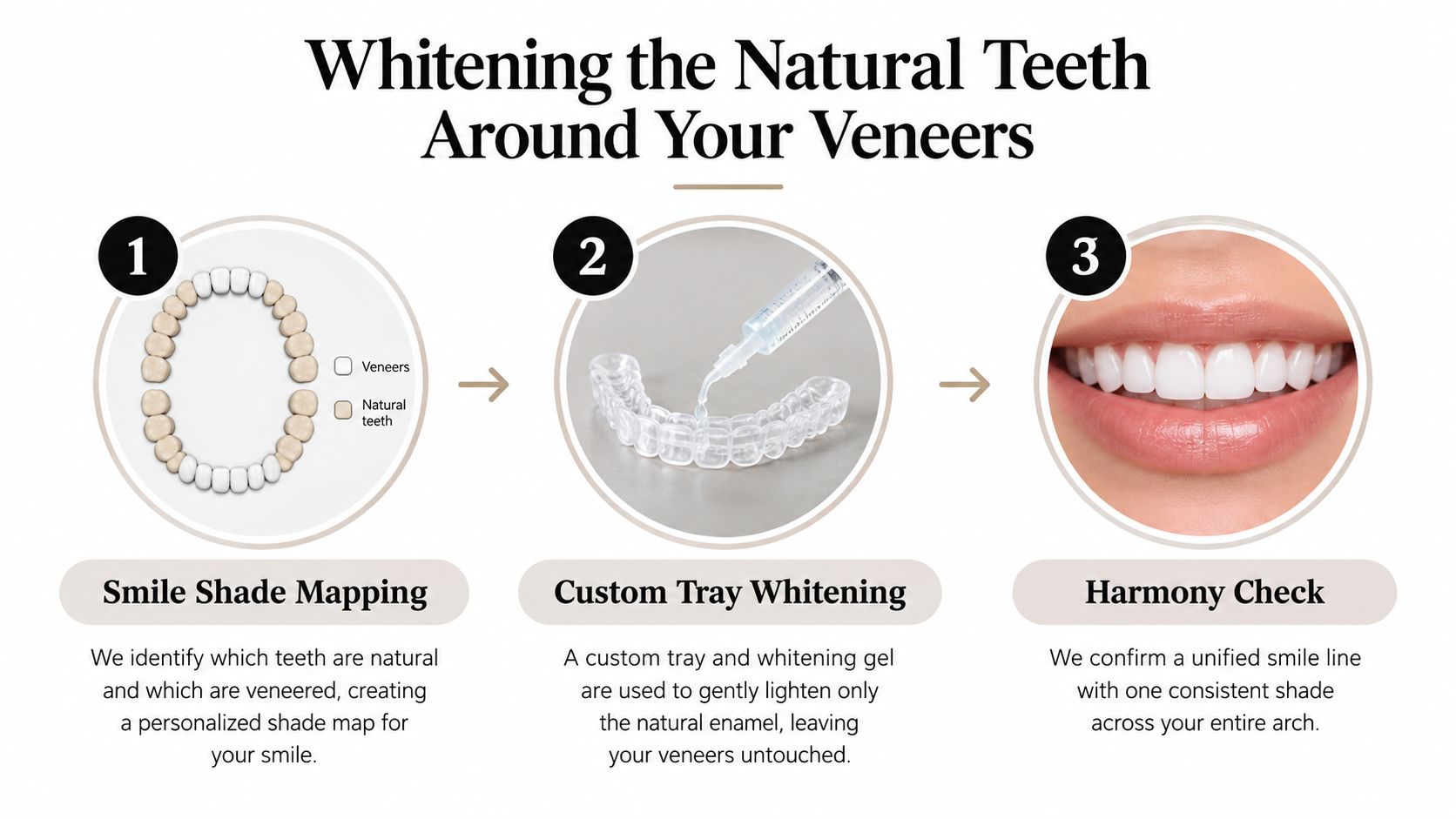
When the veneers are healthy but the surrounding enamel has darkened, the most predictable cosmetic strategy is to bring the natural teeth closer to the existing porcelain shade. The goal isn't to bleach the veneers. It's to reduce the contrast so the smile reads as one coordinated color.
Your Katy cosmetic dentist first maps which teeth are natural and which teeth have veneers. The evaluation also considers which teeth show when you smile, whether the enamel is healthy enough for peroxide, and whether the gumline is likely to be irritated by whitening gel. Shade comparison matters because the natural teeth should be checked against the fixed veneer color before treatment ends.
Two approaches may be considered:
- In-office whitening: A controlled chairside treatment can brighten visible natural enamel while the dental team protects the gums and monitors the result.
- Custom trays: A fitted tray can be designed so gel is directed toward natural teeth and kept away from veneer margins. Fit is important because poorly controlled gel can irritate the gum tissue around restorations.
- Staged shade review: The dentist can pause and compare the natural teeth with the veneers instead of assuming that more whitening is automatically better.
Whitening before veneer placement is usually easier because the final porcelain shade can be selected after the natural teeth reach the desired baseline. If veneers are already present, treatment must be more selective. A professional in-office whitening option in Katy can be discussed as part of a broader shade-matching plan rather than as a way to change the porcelain.
A common mistake is to whiten first and compare later. That can make the natural teeth temporarily look brighter than the veneers. Careful shade mapping helps the dentist decide when the surrounding enamel is close enough to the fixed restoration for a balanced result.

When Replacement Is the Better Answer
Polishing and natural-tooth whitening can't solve every cosmetic concern. Replacement becomes the more realistic option when the veneer itself has a problem that cleaning cannot reverse.
Look for signs such as:
- Permanent discoloration: The porcelain no longer matches the smile, even after a professional evaluation confirms that the surface is clean.
- Cracks or chips: Damaged ceramic can catch stain, irritate the tongue, or compromise the restoration.
- A rough or pitted surface: Lost or altered glaze can make the veneer look flat and allow new buildup to cling.
- Changing gumlines: Gum recession may expose a darker margin or the natural tooth beneath the veneer.
- Marginal staining or gaps: Discoloration at the bonded edge may reflect aging cement, poor adaptation, or another issue that needs examination.
The decision shouldn't be based on age alone. A 2025 review reports veneer failure rates ranging from 14% to 33%, commonly associated with case selection, bonding, or bite-related concerns, as summarized in this clinical review of porcelain veneer maintenance. A separate systematic review summarized in the same source found a 95.5% cumulative survival rate at 10 years for about 6,500 porcelain laminate veneers. Another clinical group of 233 ceramic veneers showed about 89% survival after 9 to 10 years, while 79.4% of surviving veneers had complications, including marginal discoloration, adaptation concerns, and gingival inflammation.
Those figures don't predict what will happen to your individual restoration. They do show why a cosmetic examination should consider fit, gum health, bite, and surface condition, not just whiteness.
If replacement is appropriate, the dentist can select a new shade after the natural teeth are stabilized, then discuss minimal-preparation or no-preparation possibilities where clinically suitable. The new restoration must fit the tooth, the bite, the gumline, and the surrounding smile, not just look whiter in isolation.
At-Home Habits That Keep Veneers Looking Their Best
Daily care protects both the veneer and the natural tooth underneath it. Brush gently with a soft-bristled toothbrush and a non-abrasive fluoride toothpaste. Floss around each veneer margin so plaque doesn't collect where the restoration meets the gum.
A water flosser may be useful for patients who struggle with string floss, especially around crowded teeth or fixed dental work. An alcohol-free mouthwash can support routine hygiene without adding unnecessary dryness to the mouth. Your dentist can help you choose products based on gum health, sensitivity, decay risk, and the type of restorations you have.
Dark foods and drinks don't bleach porcelain, but they can leave film around margins and on nearby enamel. Rinse with water after coffee, red wine, dark tea, curry, or balsamic vinegar, particularly when brushing isn't practical. Smoking and vaping can stain veneer edges and adjacent teeth, so reducing or stopping tobacco exposure protects the appearance of the entire smile.
Avoid trying to polish the surface yourself. Charcoal powders, baking soda scrubs, rough whitening toothpastes, and over-the-counter whitening strips can create a mismatch or wear the smooth finish. These veneer-care recommendations offer a safer framework for cleaning, flossing, protecting margins, and discussing habits that may affect your restorations.
A professional cleaning gives the dental team a chance to remove buildup and inspect the edges. If a veneer feels rough, catches floss, or changes appearance suddenly, schedule an evaluation rather than increasing brushing pressure. Gentle maintenance preserves more than shine. It also helps the dentist identify gum inflammation, decay, bonding concerns, or bite stress before they become harder to manage.
Your Next Step Toward a Brighter Smile in Katy
A brighter veneer smile usually comes from choosing the correct treatment for the cause. Professional polishing is appropriate when surface stain or buildup is blocking the gloss. Whitening the surrounding natural teeth can improve harmony when enamel has darkened beside stable porcelain. Replacement is more appropriate when the veneer is cracked, chipped, structurally worn, permanently mismatched, or affected by a problematic margin.
A short in-person consultation can sort those possibilities out. The dentist can inspect the glaze, check the veneer margins, evaluate the gums, compare natural-tooth shade, and look for signs of bite pressure or bonding failure. That approach is more reliable than judging the result from a bathroom mirror or ordering another whitening kit.
Bring a list of your current oral-care products, photos from when the veneers were first placed if you have them, and notes about sensitivity or recent whitening attempts. Those details can help explain why the smile changed and which products may have affected the surface.
At The Dental Retreat, the team can use digital shade measurements, clinical photographs, and a staged plan when new veneers are being considered. Whitening of natural teeth can be completed before fabrication so the selected porcelain shade reflects the smile you'll maintain. The practice also provides broader care when needed, including a new patient exam, dental X-rays, restorative treatment, tooth extraction, emergency dental services, and implant planning for patients searching for dental implants near me.
Patients in Katy, including Sunterra, Cane Island, Katy Manor, Kingscrossing, Lakehouse, Marisol, The Grange, Anniston, Katy Lakes, Elyson, and Ventanna Lakes, can request a consultation and receive an honest assessment of whether polishing, whitening, or replacement makes sense. If you're comparing a cosmetic dentist near me with a general dental office, ask how the provider evaluates shade, margins, bite, and long-term tooth health before recommending cosmetic treatment.
The Dental Retreat offers personalized cosmetic consultations in Katy for patients whose veneers look dull, mismatched, damaged, or difficult to maintain. Visit The Dental Retreat to schedule an evaluation and learn which conservative step can help your smile look brighter without trying to bleach porcelain.