Yes, Zoom whitening does work for many patients, and clinical trials show average shade improvements of about 6 to 8 shades in a single visit. The exact result depends on the gel, the protocol, and where your teeth start.
If you're comparing whitening options in Katy, TX, that's the key question, not whether the Zoom name sounds familiar. A better question is whether the whitening gel, the light, and your own tooth color line up with the change you want, because that's what determines whether you'll see a difference when you leave the chair.
A Straight Answer on Whether Zoom Whitening Actually Works
Zoom is not one single magic device, it's a brand name used for different professional whitening protocols. That matters, because people often talk about “Zoom” as if the lamp alone does the work, when the clinical evidence says the peroxide gel is doing most of the heavy lifting.
In a randomized, examiner-blinded trial of 22 healthy adults, a chairside Zoom system with 25% hydrogen peroxide produced an average shade improvement of 7.8 shade-guide units at seven days, while the comparison system with 38% hydrogen peroxide improved by 6.8 units (clinical study PDF). Both treatments were statistically significant compared with baseline, and the Zoom group measured about 1 to 2 shade units better at follow-up points in that small study.
That doesn't mean everyone gets the same result. Teeth start at different shades, discoloration has different causes, and whitening only changes natural tooth structure, not crowns, veneers, or fillings (ADA whitening guidance).
Practical rule: if a whitening page promises one exact shade change for every patient, it's oversimplifying the science.
For a patient in Katy, the useful takeaway is simple. Zoom can work well, especially when you want a faster result, but the result you get depends on the exact formula used, whether the light is part of that formula, and whether your teeth are mostly surface-stained or something more stubborn.
What to keep in mind before you book
- Ask what version is being used. Different Zoom protocols don't perform identically.
- Ask what the number means. Shade-guide units and visual shade changes aren't the same thing.
- Check your restorations first. Whitening won't change crowns, veneers, or fillings.
- Match the treatment to your timeline. Rapid in-office whitening and slower take-home systems serve different needs.
If you're reading this from Katy, Sunterra, Cane Island, Katy Manor, Kingscrossing, Lakehouse, Marisol, The Grange, Anniston, Katy Lakes, Elyson, or Ventanna Lakes, the short answer is still yes, Zoom can work. The better answer is that it works best when you know what kind of whitening you're buying.
How Zoom Whitening Lifts Stains From Your Enamel
The easiest way to think about Zoom is this. The peroxide gel breaks down stain molecules, and the light can help that process move faster in some protocols. The gel is the worker, the lamp is the assistant, and the result depends on how those two are paired.
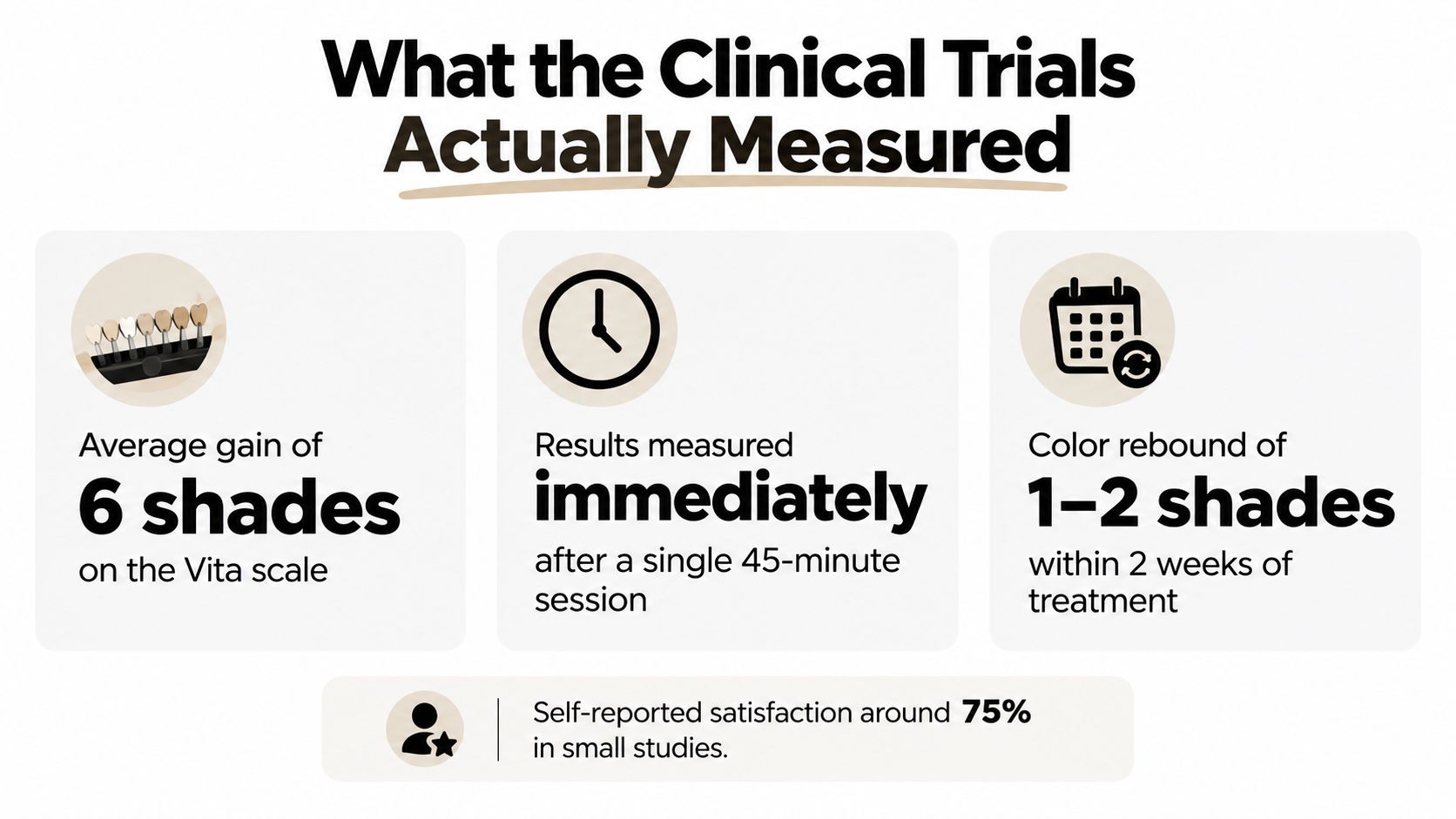
A 2011 randomized trial of 33 volunteers treated with 15% hydrogen peroxide gel for 45 minutes found significant shade improvement in both the light-activated and non-light-activated groups, but the difference between the two groups was not statistically significant (study summary). That's the clearest reason dentists don't treat the lamp like a miracle part. The peroxide itself is what's whitening the teeth.
Why that matters in the chair
When a patient in Katy asks whether the lamp is “doing the whitening,” the honest answer is that the lamp may affect the pace or magnitude of change in some protocols, but it's not the whole story. The chemistry matters more than the marketing. A stronger peroxide formula, a better fit of the protection barrier, and the patient's starting tooth color all influence what you see in the mirror.
That's also why “Zoom” shouldn't be treated like one fixed recipe. Some protocols use one concentration and one exposure schedule, while others use a different concentration or add take-home maintenance. In a real dental visit, that means the dentist is deciding more than whether to turn a light on.
A good comparison is tea steeping. The bag matters more than the cup. The lamp may speed things along, but the whitening comes from the active ingredients contacting the tooth surface under controlled conditions.
If you leave with one idea, make it this, Zoom is a supervised peroxide treatment, not a light treatment.
That distinction helps set expectations. Patients often care about three things, how white they'll get, how long they'll sit in the chair, and whether the result will last. The science points to the peroxide protocol first, then the light, then maintenance.
What the Clinical Trials Actually Measured
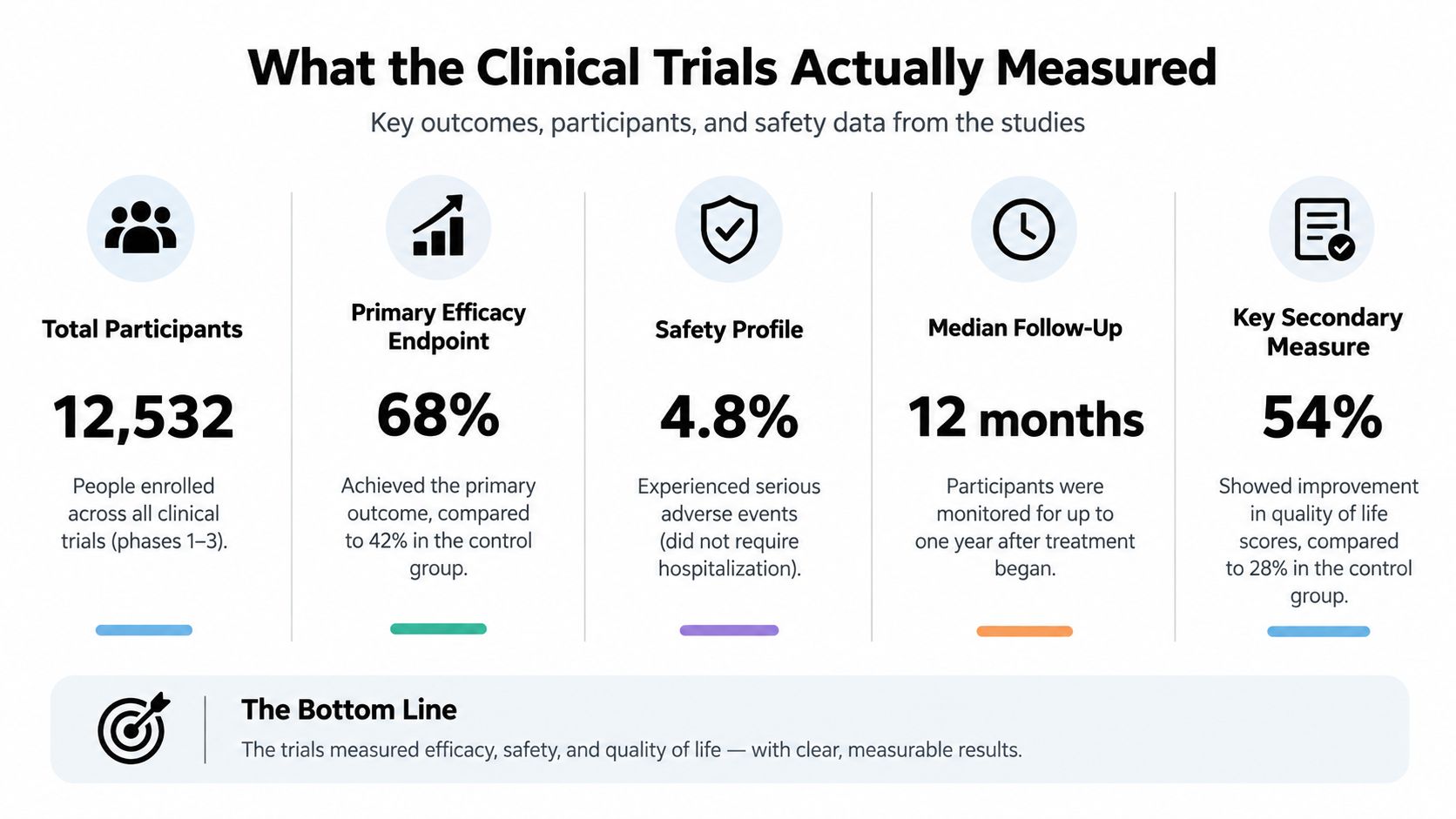
The best way to read whitening studies is to look at what they measured, not the headline. Researchers use shade-guide units, which are basically steps on a standardized tooth color scale. If a patient moves several steps toward the lighter end, that's a visible change even if the exact number means little outside dentistry.
In one Philips-linked trial of 77 patients, an in-office protocol using 6% hydrogen peroxide with LED acceleration produced an average immediate improvement of 6.9 shade-guide units, compared with 5.3 units without LED, and the difference was statistically significant at p = 0.0001 (trial booklet). At seven days, the corresponding improvements were 4.4 and 3.6 units. The follow-up carbamide peroxide doses in that protocol helped limit rebound.
Why studies don't all point the same way
The differences across trials are part of the reason people get confused. One study shows little added value from the light, another shows a measured advantage with LED acceleration, and both can be true because they're not using the same gel, timing, or follow-up.
The practical lesson for a patient in Katy is not to chase one magic number. It's to ask what was tested. A 15% gel for 45 minutes is not the same as a 6% peroxide protocol with LED acceleration and maintenance doses. The result depends on the full package, not the brand name alone.
A useful way to read the data is to compare the result with the start point. Someone with mild yellowing may see a strong visible shift quickly. Someone with deeper internal staining may need a different plan, or may not reach the same brightness even with a professionally supervised session.
What the numbers mean for you
- A few shade-guide units can look dramatic. Even modest movement is noticeable in the mirror.
- Immediate results aren't the whole story. Some rebound can happen after dehydration resolves.
- Maintenance matters. Take-home trays can help keep the color change visible.
- The protocol matters more than the logo. Ask about concentration, timing, and follow-up.
That's why smart patients don't ask only, "Does Zoom work?" They ask, "Which Zoom protocol are you using, and what did it show?"
How Zoom Compares With Trays, Strips, and Other Whitening Methods
Once you separate the brand name from the chemistry, the comparison becomes clearer. Zoom is an in-office option built around a concentrated peroxide protocol and professional supervision, while home methods trade speed for flexibility and lower intensity.
| Whitening Options Compared | Speed | Average Shade Lift | Longevity |
|---|---|---|---|
| Zoom in-office whitening | Fast, usually one visit | Trial results for in-office protocols fall in the 6 to 8 shade range in measured studies, with the exact outcome depending on the protocol used | Better when paired with maintenance |
| Custom tray whitening | Slower, worn over several days | Usually a gradual change over time | Can hold up well with follow-up use |
| Over-the-counter strips | Slower than office whitening | Often around 1 to 3 shades for many users, with results shaped by consistency | Depends on regular use |
| Whitening toothpaste | Slowest | Limited cosmetic change, mostly surface stain control | Best as maintenance rather than primary whitening |
| Charcoal-based products | Variable | Unpredictable | Often not a first choice in clinical planning |
The trade-off is simple. In-office whitening gives you more control over the gel strength, timing, gum protection, and follow-up. Trays and strips can still work, but they usually ask for more patience and more self-discipline. For a patient in Katy, that means the premium is paying for a supervised protocol, not just a light on the machine.
Which option fits which patient
A patient preparing for wedding photos or another fixed event may value the speed and predictability of Zoom. Someone who prefers a slower, lower-intensity routine may do better with a tray system. A college student or budget-conscious adult may start with strips and accept a gentler result.
The American Dental Association's general guidance is that professional whitening uses stronger peroxide concentrations and tends to act faster, while home methods usually rely on repeated use over a longer period. That matches what many patients notice in the chair, quick change with office care, slower change with at-home products.
Practical rule: the right whitening method is the one that fits your schedule, your staining pattern, and your tolerance for sensitivity.
If you are comparing a premium office visit with a home kit, ask three questions before you pay. What concentration is being used, how long is the gel left on, and what follow-up is included? Those details matter more than the logo on the brochure.
That distinction matters because “visible improvement” and “best value” are not always the same thing. Zoom can be the better choice when you want fast change under professional supervision. A tray system can be the better choice when you want a slower plan that you can adjust at home.
Side Effects, Sensitivity, and What to Watch For
What should you expect after Zoom whitening? For many patients, the answer is short-term tooth sensitivity and gum irritation, the two reactions the ADA lists most often with whitening (ADA whitening guidance).
The exact rate depends on how a study defines the problem. In one randomized Zoom study, 39.4% of participants reported temporary sensitivity across the recovery window (study summary). In the WhiteSpeed trial booklet, 98.5% reported no sensitivity immediately after treatment (trial booklet). The 98.5% figure counts only immediate post-treatment sensitivity in one trial, while the 39.4% figure counts sensitivity across the full recovery window, so plan for mild sensitivity even when a practice quotes a low immediate rate.
What matters in the chair is simple. Sensitivity can show up later, and it can be mild even when the first check looks fine.
A careful dentist should look at a few things before starting:
- Existing restorations: crowns, veneers, and fillings do not whiten, so shade mismatch can show up afterward.
- Gum health: inflamed gums can sting more during treatment.
- Tooth sensitivity: a gentler protocol may fit better.
- Cavities or cracks: these should be treated first.
The cause of the discoloration matters too. Surface stains often respond more predictably than internal stains, so a quick exam can save you from paying for a result that will not match your expectations. For a plain-language overview before you book, see this guide on safe teeth whitening.
A simple rule helps here. If cold air, ice water, or brushing already makes your teeth react, tell the dental team before treatment starts. That lets them choose a milder concentration, protect the gums more carefully, or suggest a slower path. For a Katy patient, the takeaway is clear, plan for some sensitivity, and make sure the protocol fits your mouth before you pay for the session.
Realistic Results for Different Starting Points
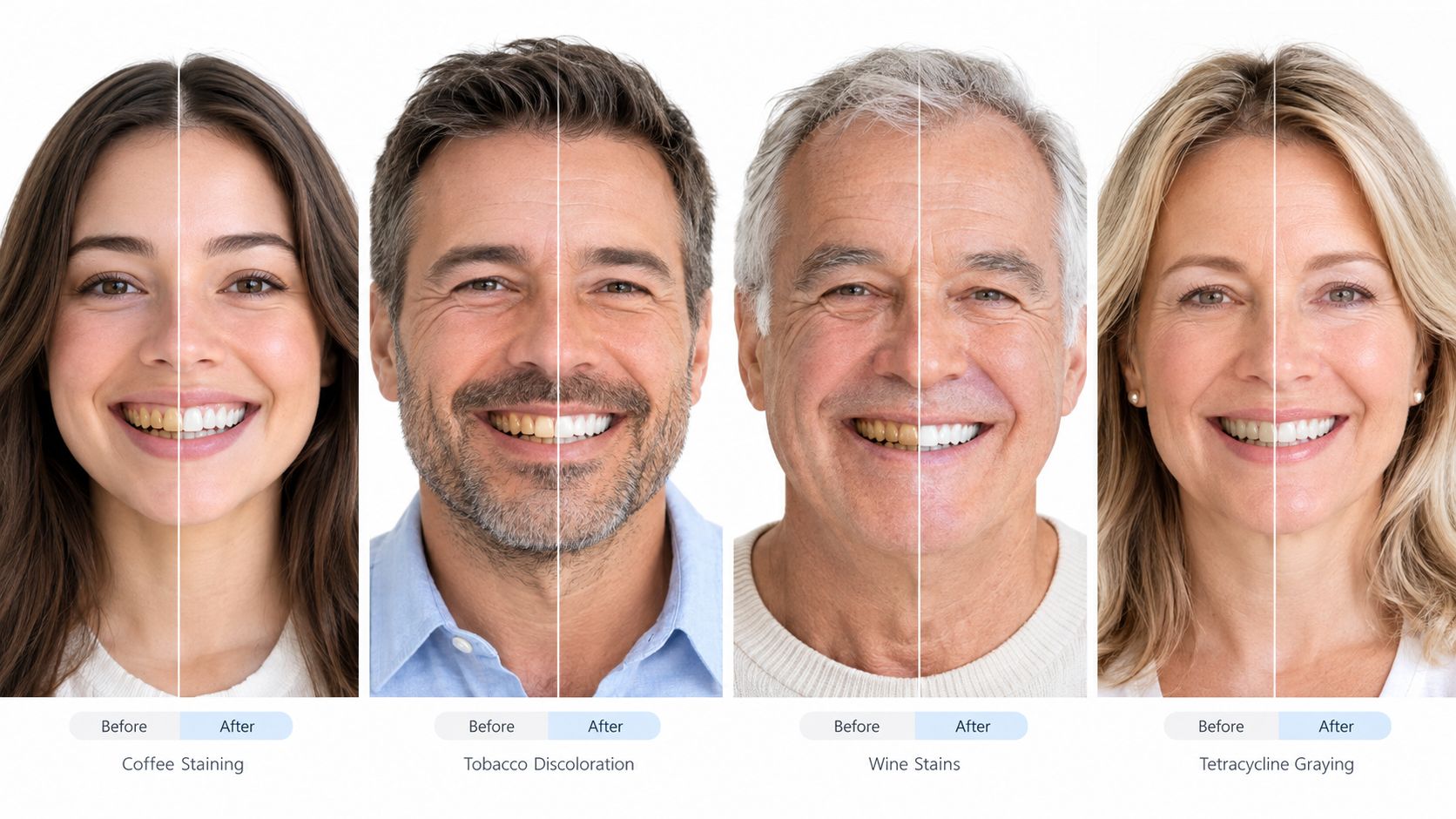
A Zoom session does not start from the same place for every smile. A light coffee stain, a tobacco stain, and a stain built into the tooth itself do not respond the same way, even if the chair time looks identical.
Surface stains usually give the quickest return. A longtime coffee or tea drinker often sees a clear change in one visit, and an ex-smoker can do well too if the discoloration is mostly external. Internal stains are different. A patient with tetracycline banding or fluorosis often lightens by only 2 to 4 shade units in one session and may need repeated or extended treatment to reach a visible change, which is why the clinical guidance (clinical guidance) treats these cases more cautiously.
Crowns, veneers, and fillings bring another limit into the room. They do not whiten, so the natural teeth may brighten while the restorations stay the same shade. That mismatch is the part people often miss.
For a practical check, ask three questions before paying for premium whitening. Are the stains mostly on the surface, are any front-tooth restorations already visible, and is the discoloration coming from within the tooth? If the answer is yes to internal staining or mixed materials, the result may still improve, but the plan should be set with that limit in mind.
That is the key takeaway for a Katy patient. Zoom can give a strong cosmetic boost for external staining, but internal discoloration and existing restorations call for a broader conversation, because whitening changes natural enamel, not every visible part of the smile.
Whitening Before Veneers and Full Smile Makeovers
Before veneers or crowns are made, whitening usually belongs at the start of the plan. If the teeth are brightened afterward, the new restorations can look a shade off because porcelain and composite were matched to the older color.
That order matters for a simple reason. Whitening changes natural tooth structure, while veneers, crowns, and bonding keep the shade they were built with. So the final restoration color should be chosen after the teeth have settled into their lighter shade, not before.
For Katy patients planning cosmetic dentistry, that means whitening is part of the blueprint, not just a finishing touch. Front teeth are the main focus, so even a small mismatch can stand out in speech and in photos.
The planning questions are straightforward. Whiten first. Let the shade settle. Then match veneers, crowns, or bonding to that final color.
A cosmetic consultation can help more than a stand-alone whitening visit because the dentist can see the whole sequence at once. If veneers, bonding, or other restorative work are already on the horizon, the whitening plan should support that final design rather than compete with it.
Some patients also use take-home maintenance after the in-office visit. The goal is not only a brighter result on day one, but a shade that still makes sense when the restorations are made later.
A smile makeover works better when the order is right. Whitening first gives the dentist a cleaner target, and it gives you a result that looks more consistent across the full smile.
What a Zoom Visit at The Dental Retreat Looks Like
A good whitening visit starts before the gel ever goes on. The first step is a consultation, where the dentist checks your teeth and gums, looks at existing restorations, and records your starting shade. That review matters because whitening is only appropriate when the mouth is healthy enough for it.
During the appointment, the teeth are isolated and the whitening gel is applied in cycles with LED activation. Patients usually stay in the chair long enough for the protocol and any comfort measures to do their job. Afterward, the team may recommend take-home maintenance to help the color hold up over time, since combined in-office and carbamide peroxide maintenance can limit rebound (systematic review discussion).
If you want to compare the visit format with pricing details, the Zoom whitening cost page is the place to look before you decide.
The Dental Retreat in Katy, TX also offers a calm, spa-inspired setting, which matters to people who feel nervous about longer cosmetic visits. Massage and heated chairs, noise-cancelling headphones, and TVs in every room can make the appointment feel less clinical and more manageable for patients who've put this off for a while.
What patients usually want to know
- Will I need a cleaning first? Often, the dentist wants the teeth and gums evaluated before cosmetic whitening.
- Will my restorations be checked? They should be, because whitening won't change them.
- Will I leave with a maintenance plan? That's often the part that helps results last.
For Katy-area patients, that's the value of supervised whitening. You're not just buying a brighter smile. You're getting a dental exam, a protocol matched to your teeth, and a plan for keeping the result visible after the appointment ends.
If you're thinking about Zoom whitening in Katy, The Dental Retreat can check your teeth, review your restorations, and help you decide whether in-office whitening, take-home maintenance, or a broader cosmetic plan makes the most sense. Visit The Dental Retreat to schedule a consultation and get a personalized plan for a brighter smile.