Zoom whitening is a dentist-supervised, in-office bleaching treatment that uses hydrogen peroxide gel, often with an LED light, to lighten natural teeth in a single visit; understanding how it works, who it suits, and what a Katy appointment involves can help you decide whether it's right for you.
Maybe you've noticed your smile looks darker in photos, or you're preparing for a wedding, graduation, or important work event. If you're searching for a dentist in Katy, TX, you probably want more than a brighter shade. You want to know what treatment feels like, whether sensitivity is manageable, and what it will cost before you settle into the chair.
A Quick Look at Zoom Whitening for Katy Patients
You've typed Zoom whitening near me into your phone, but it's hard to picture what happens between booking the appointment and seeing your smile afterward. Is it a cleaning? Does the light do all the work? Will you need to set aside your entire day?
The simplest way to understand Zoom is as a professionally controlled bleaching appointment, not a more powerful tooth polishing. The dentist first considers your oral health and cosmetic goals, then chooses an appropriate treatment approach. You shouldn't have to select a peroxide strength or decide how long to leave the gel on yourself.
Start with your goal, not a shade promise
An adult preparing for wedding photographs may prioritize timing. A professional who speaks with clients might want a subtle change rather than the brightest possible result. Someone disappointed with whitening strips may mainly want to understand whether an office procedure offers a different approach.
Bring those priorities to the consultation. Useful questions include:
- Your desired result: Are you hoping for a noticeable change or a modest refresh?
- Your schedule: Is there an upcoming event that the dentist should consider?
- Your experience: Have whitening products caused discomfort before?
- Your dental work: Do you have visible bonding, crowns, or veneers?
These questions make a cosmetic consultation more useful than asking how white your teeth can become.
Think beyond the treatment itself
If you're comparing a cosmetic dentist near me, look for a conversation about comfort, expectations, aftercare, and total cost, not just a before-and-after photograph. A useful plan explains what can reasonably change and what may need a different solution.
For patients in Sunterra, Cane Island, and Katy Manor, the next step doesn't have to be a commitment to treatment. It can be an examination and a discussion. You should leave knowing whether whitening fits your mouth, your schedule, and your expectations.
How the Whitening Chemistry Actually Works
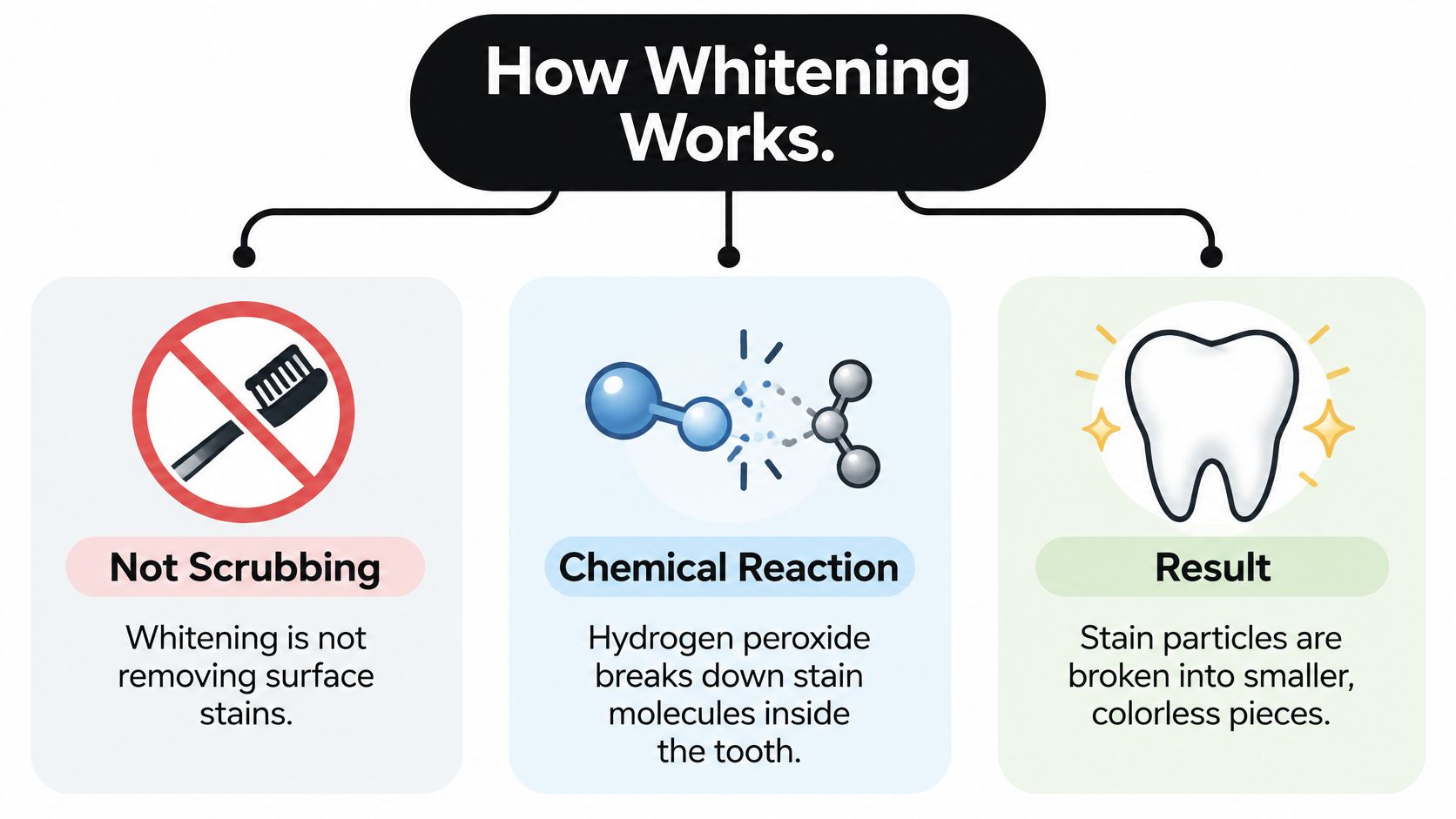
Whitening isn't scrubbing stains away. Think about a coffee stain on a white shirt: rubbing the fabric and chemically changing the stain are different approaches. Tooth bleaching uses the chemical approach, although dental peroxide is formulated and controlled specifically for use on teeth.
Hydrogen peroxide travels into dental hard tissues and reacts with chromogens, the colored molecules responsible for discoloration. Its reactive oxygen compounds break down those molecules, reducing how much light they absorb. That makes the tooth appear lighter without replacing its enamel.
The chemistry is easier to understand when separated from the equipment.
Why professional dosing matters
Dental professionals commonly use approximately 15% to 43% hydrogen peroxide for in-office bleaching, and professionally supervised whitening can brighten teeth by as much as eight shades in a single visit, although starting color, stain characteristics, and individual response affect the outcome, according to the American Dental Association's overview of whitening options.
Those figures describe professional whitening broadly. They aren't a guarantee about your result or the concentration used in every Zoom system. A dentist selects the protocol rather than assuming the strongest gel is automatically the right choice.
Practical distinction: A cleaning removes deposits from teeth. Bleaching changes the colored compounds within natural tooth structure.
Why the light isn't the whole treatment
The peroxide performs the bleaching. An LED may serve as an acceleration component, but it shouldn't be mistaken for the active whitening ingredient.
In a randomized trial involving 77 adults, a protocol using 6% hydrogen peroxide with Zoom WhiteSpeed LED acceleration produced statistically greater shade reduction than the comparison protocol at the assessed time points, as described in the Philips WhiteSpeed clinical report.
Restorations are the important exception. Crowns, fillings, veneers, and implant restorations don't predictably bleach like natural teeth. If a front restoration already matches your current color, whitening the surrounding teeth may make that match less convincing. That's a planning issue to discuss before treatment, not a surprise you should discover afterward.
What Happens During the Appointment Step by Step
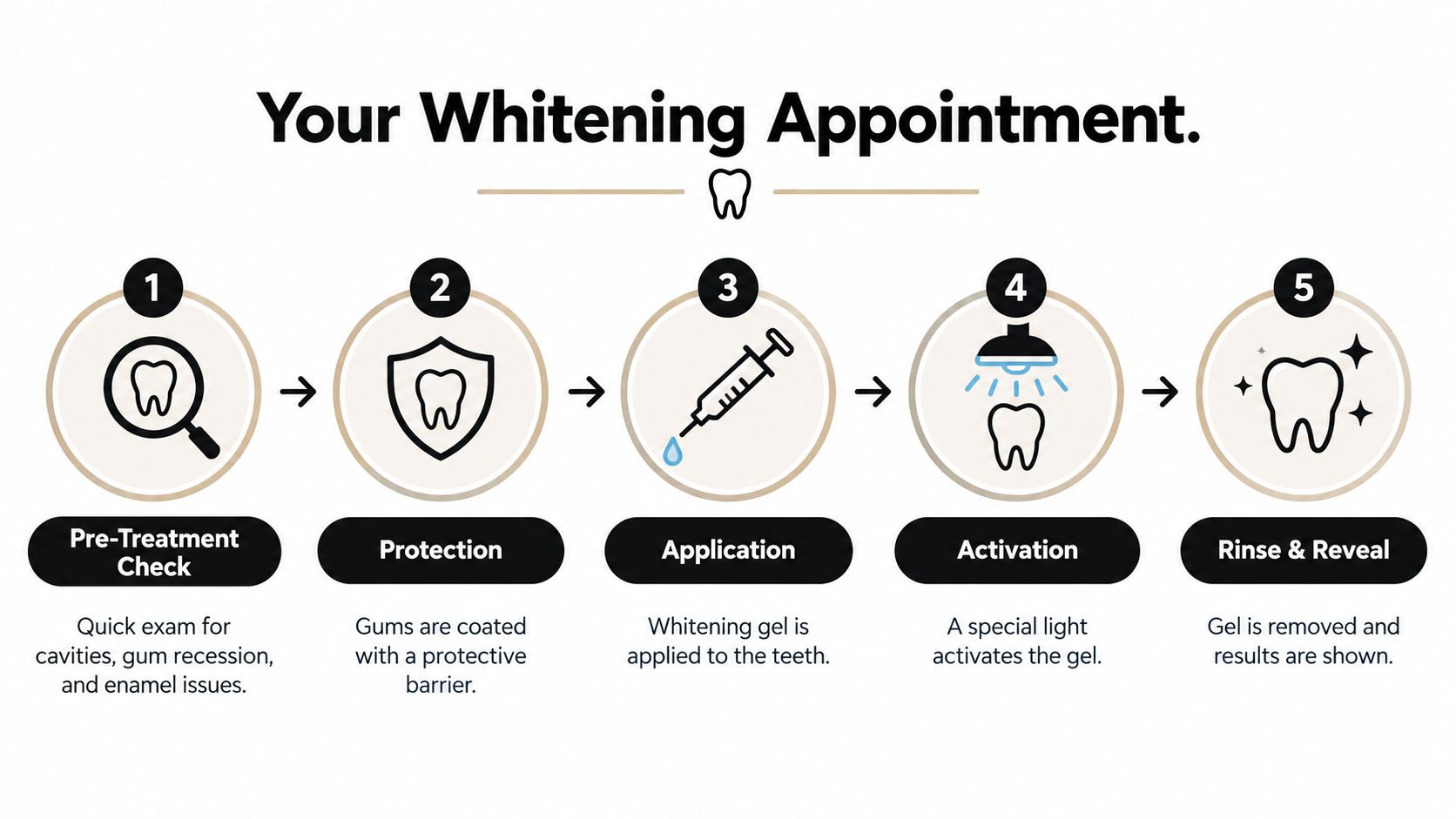
You arrive, settle in, and review what you want to change. Before the whitening gel comes out, the dentist checks whether your teeth and gums are ready. Cavities, recession, exposed dentin, cracks, and older restorations can affect comfort or the appearance of the final result.
The appointment follows a protective sequence rather than just applying gel and turning on a lamp.
Getting comfortable and protecting the gums
A cheek retractor helps keep your lips away from the treatment area. The team places a protective barrier over the gums so the bleaching material stays where it belongs. Depending on your history and the planned protocol, the dentist may also discuss a desensitizing pretreatment.
This preparation can feel unfamiliar, but every part has a purpose. Before treatment begins, ask how to signal if you need attention. You don't need to tolerate a sharp sensation because you're worried about interrupting.
Applying the gel in controlled cycles
The team applies peroxide gel and monitors timed treatment cycles, with LED use determined by the system. Published protocols illustrate why appointment estimates vary: a Zoom2 study used 45 minutes of treatment, while a Philips protocol used four 15-minute applications, totaling 60 minutes, as documented in the Zoom2 clinical study and the Philips clinical studies booklet.
Those are treatment durations, not a promise that your entire visit, including examination and preparation, will fit within the same window. Confirm your scheduled appointment length when booking.
The Philips protocol produced color changes exceeding internationally defined perceptibility and acceptability thresholds. In plain language, the improvement was large enough to be clinically visible, not merely detectable by an instrument.
For another visual introduction to the procedure, you can watch the following video.
At the end, the team removes the gel and protective materials, rinses the treatment area, and reviews your appearance with you. Before leaving, make sure you understand the first-day instructions, how to manage discomfort, and whom to contact with questions.
Realistic Results and How Long They Last
A satisfying whitening result starts with a realistic comparison: your treated natural teeth versus your starting shade, not your smile versus an edited photograph. Tooth color, stain chemistry, enamel characteristics, and the dental work already present all influence what's achievable.
Coffee, tea, wine, tobacco exposure, and age-related discoloration are useful topics to discuss during your examination. If a tooth has become gray after an injury or you suspect medication-related staining, mention that history rather than assuming every dark area needs the same treatment.
Judge the result in context
The upper-end shade improvement described earlier isn't a typical-result promise. You may value a natural-looking change more than an unusually bright shade, especially if you want your smile to remain consistent with your facial appearance.
Avoid making immediate decisions about replacing visible dental work based solely on the first mirror check. Your dentist should guide reassessment and shade selection after the color has stabilized.
A successful outcome is an improvement you understand and feel comfortable maintaining, not a shade someone else chose for you.
Maintenance without making life complicated
Professional whitening isn't permanent. The ADA overview cited earlier notes that results can remain positive for more than one year with appropriate maintenance, but diet, hygiene, tobacco exposure, and recurring staining habits affect longevity.
The Zoom2 study discussed above reported no detectable shade relapse at its three-month assessment. That's encouraging, but it doesn't mean everyone will maintain exactly the same shade or never need a touch-up.
A practical routine focuses on consistency rather than strict perfection:
- Keep up with dental care: Follow your recommended cleaning and examination schedule.
- Discuss staining habits openly: Your dentist can help you plan around coffee, tea, or other regular exposures.
- Use touch-ups deliberately: Ask before restarting bleaching products rather than layering treatments on your own.
For everyday guidance, review how to keep teeth white after whitening. The goal is a manageable routine that supports your result, not a promise that you'll never enjoy a favorite drink again.
Who Makes a Good Candidate and Who Should Wait
Candidacy is a conversation, not a test. An adult with generally healthy teeth and gums, manageable sensitivity, and realistic expectations may be a good candidate. The examination helps determine whether bleaching is appropriate now or whether another concern deserves attention first.
A whitening consultation should consider your medical history as well as your smile. Mention pregnancy, previous reactions to whitening, current discomfort, and any cosmetic treatment you're considering. These details help the dentist decide whether to proceed, modify the plan, or postpone an elective procedure.
Reasons to pause and evaluate
The purpose of the pre-treatment check is to avoid applying bleaching material to a mouth that needs treatment first.
- Active cavities or questionable fillings: These need assessment before cosmetic bleaching.
- Cracks, exposed dentin, or gum recession: Tell the dentist where you feel discomfort, especially with temperature changes.
- Untreated gum problems: Ask whether your gums need care before whitening.
- Significant existing sensitivity: A different approach or a delay may be more appropriate.
- Upcoming restorative work: Share plans for visible crowns, veneers, bonding, or implant restorations.
A clinical explanation of these considerations appears in the Philips professional whitening clinical booklet, which discusses examination findings and restoration shade planning.
Plan cosmetic and restorative care together
If your goals include veneers or an implant crown, the sequence matters. Natural teeth are generally whitened before definitive restoration shade selection, allowing the dentist to match the restoration to the stabilized color.
That's why a search for dental implants near me and a search for teeth whitening can lead to the same planning conversation, even though the treatments serve different purposes. One replaces missing tooth structure; the other addresses the color of natural teeth.
If you're unsure whether office bleaching or a supervised home approach fits you, compare the best teeth whitening options before your consultation. You don't need to arrive with the answer. You only need to explain what you'd like to change and what concerns you.
Side Effects, Sensitivity, and Smart Aftercare
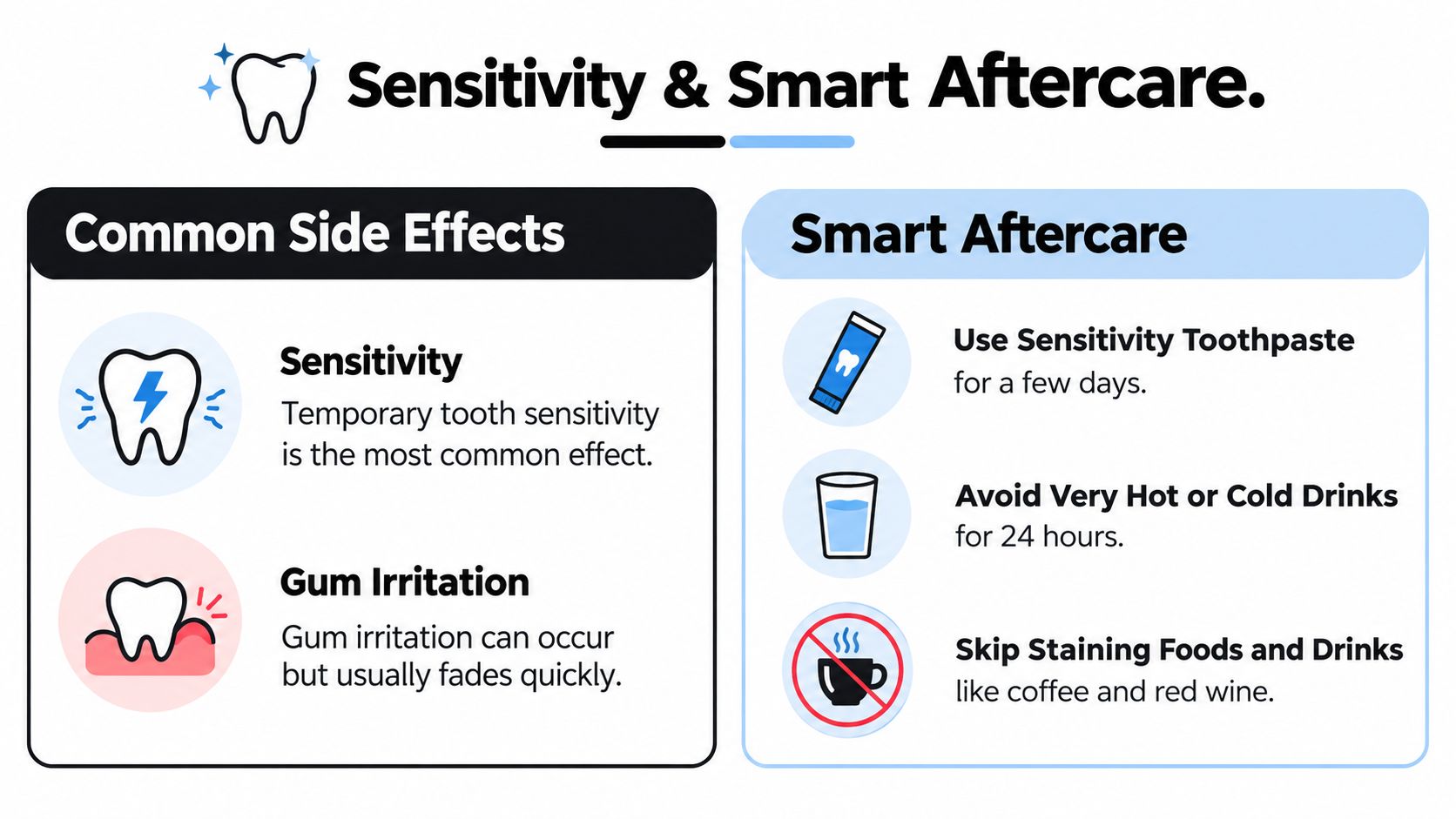
The main comfort concern is temporary tooth sensitivity, sometimes accompanied by gum irritation. The American Dental Association's whitening guidance identifies these as the most common adverse effects, explains that they typically resolve after treatment, and notes that risk tends to increase with stronger active-agent concentrations.
That doesn't mean discomfort is inevitable or that you should ignore it. Tell the team about previous bleaching reactions so your treatment and aftercare can be individualized.
Make a simple plan before leaving
Use the first 48 hours as a practical planning window, not a guarantee that everyone's sensitivity follows the same schedule. Follow the specific instructions your dentist gives you, including any recommendations about food, drinks, and desensitizing products.
- Choose comfortable temperatures: Avoid very hot or cold foods and drinks while your teeth are sensitive.
- Pause staining favorites if advised: Plan alternatives to coffee, red wine, berries, and other strongly colored foods during the initial aftercare period.
- Ask about sensitivity products: Use a sensitivity toothpaste or desensitizing gel if your dentist recommends it.
- Check before taking medication: If you need an over-the-counter pain reliever, confirm that it's appropriate for your health history and other medicines.
Keep these reminders handy after your visit.
Know when to call
Don't assume every uncomfortable tooth needs time. Persistent, worsening, or localized pain deserves a call to the dental team rather than another whitening application.
Comfort rule: Tell the dentist what you feel instead of trying to push through treatment to reach a particular shade.
Professional supervision matters because the dentist controls exposure and protects surrounding tissues. The Australian Dental Association's bleaching policy supports peroxide use according to professional directions or under dental supervision.
Whitening is cosmetic. It doesn't treat decay, relieve an infected tooth, or replace restorative care. If pain is what prompted your search for an emergency dentist, address that problem first; tooth extraction or another treatment should only enter the discussion when the examination supports it.
What to Expect at a Katy Practice and the Next Step
You check in a few minutes early, still deciding whether whitening is worth it. At the spa-inspired office on Stockdick School Rd. in Katy, that first conversation is meant to slow things down: review your medical history, explain what you want your smile to look like, and ask questions before anyone talks about scheduling treatment.
Comfort amenities include aromatherapy, heated or massage chairs, noise-cancelling headphones, and TVs in every room. If dental visits make you tense, say so when booking. The team can explain which options may help you settle in and how they pace a visit for anxious patients.
A calm reception area can make that first conversation feel less intimidating.

Practical planning for local patients
Extended hours and bilingual care can make appointments easier to arrange around school pickup, shift work, and family schedules. Patients in Kingscrossing, Lakehouse, Marisol, The Grange, Anniston, Katy Lakes, Elyson, and Ventanna Lakes can ask whether the examination and whitening should happen on separate days if that fits the calendar better.
The practice provides general, cosmetic, restorative, implant, and emergency dental services. The consultation can therefore cover routine cleaning and exams, dental X-rays when appropriate, or treatment needs that should come before cosmetic care.
Understand the special before booking
For new patients without insurance, the practice currently advertises a $99 examination, cleaning, and X-rays package, a $49 problem-focused visit, and $350 in-office Zoom whitening. Confirm current pricing, eligibility, and exactly what each offer includes when you book.
Ask whether the examination identifies gum inflammation, cavities, exposed roots, or older fillings and crowns that could change the plan. A promotional fee does not replace clinical clearance, and you should leave knowing whether preparation or follow-up care could affect the total cost.
Bring your questions about sensitivity, existing dental work, event timing, and shade goals. A good consultation ends with a written plan you understand, including what happens if whitening is delayed.
For dentist-supervised Zoom whitening, dental care, and a spa-inspired setting in Katy, visit The Dental Retreat. Schedule a consultation to review your smile, confirm the current whitening offer, and decide together whether an in-office treatment is the right next step for you.