You're brushing your teeth before heading out when you notice pink foam in the sink. Maybe your gums look puffy, or one tooth seems a little longer than it used to. Bleeding can be worrying, but it doesn't tell you by itself whether you have gingivitis or periodontitis.
The difference between gingivitis and periodontitis comes down to whether inflammation is limited to the gums or has damaged the tissues and bone that support your teeth. A dental exam can check that distinction. If you're looking for a dentist in Katy, TX, an assessment at The Dental Retreat can help clarify what's happening and what care may be appropriate.
How Gingivitis and Periodontitis Differ Inside the Mouth
Gingivitis affects the gums, the soft tissue around your teeth. Plaque at the gumline can irritate that tissue, making it red, swollen, tender, or prone to bleeding during brushing. The important point is that, with gingivitis, the supporting ligament and bone haven't been destroyed.
Periodontitis involves deeper structures. Ongoing inflammation can break down the periodontal ligament, which helps anchor each tooth, and the alveolar bone that supports it. As those tissues are lost, pockets can form between teeth and gums; gums may recede, teeth may become mobile, and tooth loss can eventually occur.
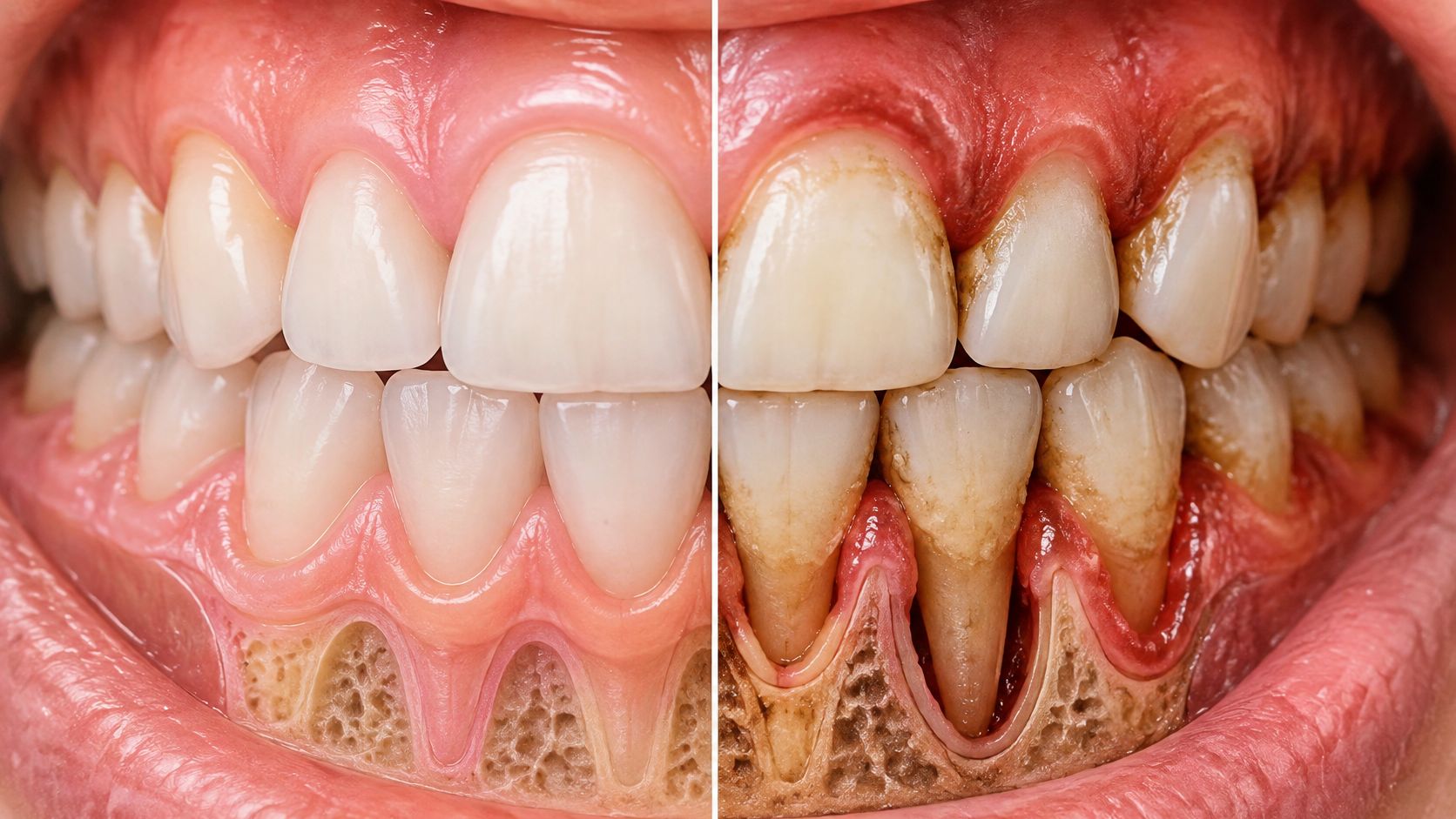
A simple comparison may help. Gingivitis is like a warning light on a car dashboard: it signals that something needs attention, but it doesn't prove that a major part has been damaged. Periodontitis is more like damage to the engine itself. The warning matters in both cases, but the extent of the problem is different.
The practical dividing line: It's not how much your gums bleed. It's whether an examination finds measurable loss of the tissues supporting your teeth.
Gingivitis is generally reversible when plaque and hardened deposits called calculus are controlled with professional cleaning and consistent home care. Periodontitis is more advanced because the supporting structures have been affected. Treatment can manage the disease, but lost attachment and bone don't return through brushing alone.
That's why appearance and bleeding aren't enough to settle the question. A dentist checks gum pockets and attachment levels, and may use dental X-rays to assess bone levels. Those findings help distinguish inflammation that remains in the soft tissue from disease that has caused structural damage.
Signs and Symptoms That Set the Two Conditions Apart
You brush or floss, see blood, and wonder whether it means your gum disease has progressed. Bleeding is a reason to pay attention, but it can't identify the stage on its own. Early gingivitis often causes redness, swelling, tenderness, and bleeding, while periodontitis may involve deeper changes beneath the gumline.
| Feature | Gingivitis | Periodontitis |
|---|---|---|
| Main area affected | Primarily the gum tissue | Gums and the structures supporting teeth |
| Common signs | Redness, swelling, tenderness, bleeding | Pockets, gum recession, possible tooth mobility |
| Supporting-tissue loss | Not present | Attachment and bone loss may be present |
| Can symptoms alone confirm it? | No | No |
Gingivitis can make gums sore or sensitive, particularly when brushing. Periodontitis can cause gums to pull away from teeth, pockets to form, or teeth to feel loose. But these signs aren't a substitute for a dental evaluation. Some people with periodontitis have little or no discomfort, so waiting for pain can delay diagnosis.
Bleeding can also have contributors besides plaque-related gum inflammation. Diabetes, hormonal changes, teeth grinding, and vitamin deficiencies may affect gum symptoms or complicate self-assessment. That doesn't mean bleeding is harmless; it means a dentist needs to consider the full picture rather than infer the diagnosis from one symptom.
For a plain-language overview of warning signs, you can also read early signs of gum disease you shouldn't ignore. If your gums continue to bleed, look as though they're receding, or feel tender, arrange an assessment rather than brushing harder in an attempt to stop the bleeding.
How Gingivitis Can Progress to Periodontitis
Gum disease doesn't always announce a clear turning point. Gingivitis begins with inflammation limited to the gums. If plaque and calculus remain around the gumline and inflammation continues, the body's response may eventually damage the ligament and bone that hold teeth in place. That structural damage marks periodontitis.
The shift doesn't happen to everyone with gingivitis, and bleeding doesn't mean that it has already happened. Still, population data show why gum inflammation deserves attention. A CDC analysis based on 2009–2010 examinations found periodontitis in approximately 47.2% of U.S. adults aged 30 and older, or about 65 million people. In that analysis, 8.7% had mild disease, 30.0% moderate disease, and 8.5% severe disease (CDC analysis of U.S. periodontitis).
More recent estimates using 2009–2014 data found periodontitis in 42.2% of dentate U.S. adults aged 30 and older, including 34.4% with nonsevere disease and 7.8% with severe disease. The same CDC data indicate that about 60% of adults aged 65 or older had periodontitis during that survey period. These estimates come from different survey periods and diagnostic categories, so they shouldn't be added together. The same CDC material describes gingivitis as affecting roughly two out of every four adults with teeth, but that's a separate category, not an additional share of the periodontitis figures.

The illustration traces a possible progression, not a guaranteed outcome. Early attention matters because care can address inflammation before the supporting tissues are damaged. If you've noticed bleeding, a cleaning and exam can clarify whether the issue is limited to the gums or needs further periodontal care.
How Dentists Diagnose Gum Disease Accurately
Your gums bleed when you brush, but that symptom alone cannot tell you whether you have gingivitis or periodontitis. A dental exam checks a more meaningful dividing line: whether the ligament and bone supporting the teeth have been lost.
The dentist uses a periodontal probe, a slim measuring tool, to check the space between each tooth and the gum. These measurements record pocket depth and whether gentle probing causes bleeding. The dentist also checks clinical attachment levels, which show whether the gum and supporting tissue have shifted away from their usual position around a tooth.
X-rays may be recommended to assess the bone around the roots. They show structures that a visual check or gum measurements alone may not fully reveal. Together, probing, attachment measurements, and imaging help distinguish inflammation limited to the gums from damage to the tooth's support.
Under the 2017 periodontal classification, gingivitis is generally identified when at least 10% of examined sites bleed with gentle probing, with no clinical attachment loss and pocket depths no greater than 3 millimeters (NIDCR overview of periodontal disease). Periodontitis requires evidence of supporting-tissue breakdown, such as attachment loss between teeth, generally alongside pockets deeper than 3 millimeters at qualifying sites (2017 periodontal classification criteria).
The measurements work like a map of the gumline: they help the dentist see where inflammation is present and whether support has changed. A spot of blood is one finding, not a diagnosis.
The dentist also assesses how extensive any damage is. For example, the classification describes severe disease as attachment loss of 6 millimeters or more at two or more nonadjacent sites between teeth, together with at least one such pocket measuring 5 millimeters or more (2017 periodontal classification criteria). These are clinical thresholds, not measurements a patient can judge at home.
The exam findings guide the care recommendation. If the supporting structures remain intact, the issue may be limited to gum inflammation. If attachment or bone loss is present, the dentist can explain what periodontal follow-up may be appropriate.
Treatment and Daily Habits That Keep Gums Healthy
A cleaning can often settle gingivitis by removing plaque and hardened buildup from the teeth. At home, brush twice a day with fluoride toothpaste and clean between your teeth daily. These steps limit the buildup that irritates the gumline.
If an exam finds periodontitis, treatment also needs to address the tissues supporting the teeth. Your dentist will recommend care and follow-up based on the measurements and other findings. Periodontal maintenance may help keep the condition stable over time. Learn more about periodontal disease treatment.
Bleeding alone cannot show whether you have gingivitis or periodontitis. The key difference is whether measurable loss of the supporting ligament and bone has occurred, which a dentist assesses through an exam and, when needed, X-rays. If bleeding continues despite careful home care, arrange an assessment rather than brushing harder. Forceful brushing can irritate gums without addressing the cause. The Dental Retreat provides periodontal care and can explain treatment options based on your findings.

A manageable routine can begin tonight:
- Brush gently: Use fluoride toothpaste and clean along the gumline without pressing hard.
- Clean between teeth: Use floss or another interdental cleaner daily to reach areas a toothbrush can miss.
- Notice changes: Pay attention to persistent bleeding, tenderness, recession, or teeth that feel different.
- Keep dental visits: Follow the cleaning and maintenance schedule recommended for your gums.
These habits support gum health, but persistent symptoms still deserve an exam. Your dentist can advise whether home care and routine cleaning are enough or whether additional treatment is appropriate.
Choosing a Dentist in Katy for Gum Care
When gum health is the concern, look for a dental team that can explain its findings, not just point out that your gums are bleeding. A thorough periodontal exam should assess pocket depths and attachment levels. The office should also be able to take dental X-rays when indicated, discuss follow-up care, and explain expected costs before treatment begins.
The Dental Retreat is located on Stockdick School Rd. in Katy, TX, and provides general dentistry, periodontic care, and emergency services. Its calm, spa-inspired setting includes aromatherapy and massage or heated chairs, with sedation options for patients who feel anxious about dental care. Extended hours and bilingual care can make it easier for local households to arrange a visit.
For patients without insurance, the practice lists a $99 exam with cleaning and X-rays, a $49 problem-focused visit, and membership plans starting at $299 per year, with savings for periodontal maintenance. These are practice-specific offers and plan details; ask the office to confirm what applies to your appointment and the care recommended after an exam.
Patients in Cane Island, Sunterra, Lakehouse, Elyson, and nearby Katy neighborhoods can consider the office for cleaning and exams, dental X-rays, or periodontal evaluation. The Grange, Anniston, Katy Lakes, Ventanna Lakes, Katy Manor, and Kingscrossing are also among the local communities served. Whether you searched for a dentist near me or a dentist in Katy, TX, choose a team that gives you a clear explanation and a care plan you understand.
Booking Your Gum Health Visit in Katy TX
Arrange a visit if bleeding continues, gums appear to be pulling away from teeth, or a tooth feels loose. These signs don't confirm periodontitis, but they do warrant an examination. You don't need to wait for pain before asking a dentist to check your gums.
At a first visit to The Dental Retreat, the team can assess your gum health with an exam and, when appropriate, dental X-rays. The clinician can explain what the measurements show in plain language and outline a personalized plan, including costs, before you decide how to proceed. Ask the office what your visit includes and whether the listed new-patient options apply to your needs.
If dental visits make you uneasy, mention that when booking. The practice offers sedation options and a comfort-focused setting, including aromatherapy, massage or heated chairs, noise-cancelling headphones, and TVs in every room. You can also request bilingual care.
A gum evaluation can help distinguish an early, potentially reversible problem from disease affecting the tooth's support. If you're in Katy or one of the nearby neighborhoods and have noticed a change in your gums, contact the office to schedule an appointment or request a consultation.
The Dental Retreat offers gum evaluations, periodontal care, and a calm, patient-focused setting for dental visits in Katy. Schedule an appointment with The Dental Retreat to have persistent bleeding, gum recession, or loose-feeling teeth assessed and discuss your next steps.