You're getting ready for work in Katy, TX. You look in the mirror. One front tooth has a small chip. Another looks darker than the rest. You search for a cosmetic dentist near me and two options keep coming up, Tooth Veneers vs Bonding. They sound like they do the same job, and in photos they often look similar. They don't work the same way, though, and the right choice depends on your tooth, your bite, and how much upkeep you're willing to do.
Why Veneers and Bonding Are Hard to Tell Apart in Katy, TX
A patient from Sunterra came in with a chipped front tooth she kept covering when she smiled. She'd already read about veneers online. She assumed that was her only option. After looking at the tooth, bonding was also on the table. That surprise is common, because both treatments can improve shape, color, and small gaps.
A porcelain veneer is a thin, custom shell made outside your mouth and bonded to the front of a tooth. Dental bonding is tooth-colored resin your dentist sculpts directly onto the tooth. Both are part of cosmetic dentistry, and both can look natural on day one. That's where the confusion starts.
The photo doesn't tell you what matters most. It doesn't show how much enamel was removed, how the edge will hold up when you bite, or what happens if it chips in two years. Those details are what separate the two options for your smile.
A Quick Side by Side Look
| Factor | Porcelain Veneers | Composite Bonding |
|---|---|---|
| How it's made | Custom shell made in a lab | Resin shaped by hand on the tooth |
| Enamel removed | Some, to make room for the shell | Little to none in most small cases |
| Visits | Usually more than one | Often one |
| If it chips | Small chips may be patched, larger breaks often need replacement | Usually repaired and reshaped in the mouth |
| Best known for | Long term color stability | Preserving natural tooth and easy repair |
At The Dental Retreat, we see this question from patients across Katy and nearby neighborhoods like Cane Island and Elyson. Some want one tooth fixed before photos. Others want several front teeth to match in color and shape. The goal may sound the same, fix my smile, but the best route to get there isn't.
Think of it this way. You're not really choosing between temporary and permanent. You're choosing how much intervention this tooth will need over its lifetime. That includes the first appointment, the polish visits, the repairs, and the eventual replacement. We'll walk through procedure steps, longevity, looks, upkeep, cost, and reversibility so you can weigh that full picture.
How Each Procedure Works From Start to Finish
Both paths start the same way, with a look at the tooth itself. Your dentist checks the enamel, your bite, and your gums, and asks what bothers you most. Sometimes cleaning and exams or dental x-rays come first, because bonding or a veneer placed over decay or gum problems won't last. You can learn what cosmetic bonding involves at our Katy practice; that first exam is where we map it out for your specific tooth.
This side by side view shows where the two paths split.

Porcelain Veneers Step by Step
First, you and your dentist plan the shape and shade together. Then a small amount of enamel is removed from the front of the tooth. This makes room so the shell sits flush and doesn't look bulky. It also roughens the surface so the ceramic can adhere well.
Next, your dentist takes impressions or a digital scan and sends them to a dental lab. The lab makes your custom shell while you wait. You may wear a temporary cover in the meantime, so the prepared tooth isn't left exposed or odd looking.
At the final visit, the temporary comes off and the dentist checks the fit and color of the veneer. Once it looks right, it's bonded in place and polished. That lab step is the main reason veneers take more than one appointment. You're waiting on something made just for your tooth.
Composite Bonding Step by Step
Bonding skips the lab entirely. Your dentist picks a resin shade that matches your tooth, then lightly prepares the surface. In most small cases, there's little or no enamel removal. The resin goes on in layers, right there in the chair.
Your dentist sculpts it into shape by hand, hardens it with a curing light, then trims and polishes it until it blends in. You leave with the finished result, often after a single visit. If you plan on teeth whitening, ask about timing, since resin is matched to your current shade.
This short video walks through what chairside treatment can look like.
Comfort is similar for both, and neither should be a painful ordeal. Bonding usually needs little numbing because so little tooth is touched. Veneer preparation is also conservative, but it's a bigger commitment. At The Dental Retreat, sedation options and a calm, spa inspired setting are available for anxious patients for either procedure, along with bilingual care and extended hours for busy Katy families.
The visit count tells you a lot. If it can be sculpted and finished while you sit in the chair, it's bonding. If a lab has to build it first, it's a veneer.
How Long Veneers and Bonding Typically Last
This is usually the first question patients ask a dentist in Katy, TX. It's a fair one. The honest answer is that porcelain has the stronger long term record in clinical research, but neither option comes with a guarantee. If you want more detail before your visit, our guide on how long veneers last and what affects their lifespan breaks down the daily habits that matter.
What the Veneer Numbers Actually Mean
The 2021 systematic review of porcelain laminate veneer studies estimated a 10-year cumulative survival rate of 95.5%, though outcomes depended on preparation design, bonding quality, bite forces, oral hygiene, and habits such as bruxism. That's a strong result. It helps explain why dentists consider ceramic a longer lasting cosmetic option.
Survival has a specific meaning here, and it's worth understanding. It measures whether the restoration is still in place, not whether it looks perfect. A veneer can survive and still need attention for a chip at the edge. Fracture, debonding, and recurrent decay can still occur, and replacement is sometimes needed.
Those figures also come from selected clinical studies, not from every mouth. Your tooth may have less enamel to bond to, or your bite may load that front tooth heavily. The study result is a guide, not a promise for your specific case.
Why Bonding Results Vary So Much
Composite bonding tells a messier story. Published survival varies widely because so much depends on case selection, the size of the restoration, the dentist's technique, and how long patients were followed. A tiny edge repair on a tooth that barely takes bite force is a very different job from rebuilding half a front tooth.
That variability doesn't mean bonding is a bad choice. It means bonding is more technique sensitive and more dependent on where it's placed. A small, well chosen repair can serve you well. A large bonding case under heavy bite stress asks a lot of the material.
Habits That Shorten the Life of Either Option
- Clenching and grinding: Heavy forces at night stress edges and can crack or loosen either material, so your dentist may suggest a guard.
- Chewing hard objects: Ice, pens, and fingernails put sharp force on thin edges that weren't built for it.
- Oral hygiene: Decay at the edge of a restoration can end its life early, even if the material itself is fine.
- Skipping exams: Small problems caught early, like a rough margin, are cheaper and simpler to fix.
Longevity lives at the intersection of material, tooth, and person. Porcelain gives you more consistent evidence for extended service. Bonding gives you a conservative start with more variable staying power. Your bite and habits tip the balance either way.
Aesthetics, Upkeep and Cost Over the Years
On the day treatment is finished, both options can look great. The differences show up in year three and year five, in your coffee cup and at your cleaning visits. That's why we talk about upkeep during planning, not after you've already decided.
How Each One Ages
Porcelain is known for color stability. Its surface resists staining and holds its shine, so a veneer tends to look much the same over time with normal dental care. If several front teeth need to match each other, that stability helps them stay matched.
Composite behaves differently. Its surface can pick up staining over time, and the edges where resin meets tooth can show marginal discoloration. It can also wear down faster than ceramic, especially on a biting edge. None of that happens overnight, but it's part of owning bonding.
Here's an interesting nuance. A recent randomized clinical trial comparing a direct composite veneer system with pressed ceramic found statistically similar short term survival, 93.4% versus 95.0%, while composite outcomes often depended on periodic polishing or repair over time. In other words, bonding can keep up in the short run. It just tends to ask for more maintenance to stay looking fresh.
The Upkeep You Can Expect
Daily care is the same for both. Brush, floss, and keep up with professional cleanings and exams. Neither material can decay, but the natural tooth around it can, so the edges need the same attention as any other part of your mouth.
Bonding adds a few extra line items. Periodic polishing can lift surface stain and restore smoothness. A chipped edge can usually be repaired and reshaped in the mouth, which is convenient, but each repair is still a visit. Veneers need less surface maintenance, though a damaged veneer is a bigger event when it happens.
Cost as a Total Picture
It's tempting to compare only the first invoice. Bonding generally starts lower because there's no lab work and it's done in one visit. Veneers cost more up front because a lab fabricates each shell. That difference is real, and for a single small chip it matters.
Practical rule: Ask what you'll likely spend over the life of the tooth, not just on treatment day. Polishing, repairs, and replacement all belong in the math.
Over the years, repeated bonding touch ups can narrow the gap, while a veneer spreads its higher cost over a longer service life. Neither answer is automatically cheaper for every patient. At The Dental Retreat, we walk through costs openly during planning, including what future repair or replacement might involve, so you're weighing the full financial picture before you choose.
Reversibility and How Much Natural Tooth You Keep
You'll often hear this choice framed as bonding is temporary and veneers are permanent. That slogan is too simple, and it can steer you wrong. The better question is about cumulative intervention, meaning everything that happens to that tooth from now on.
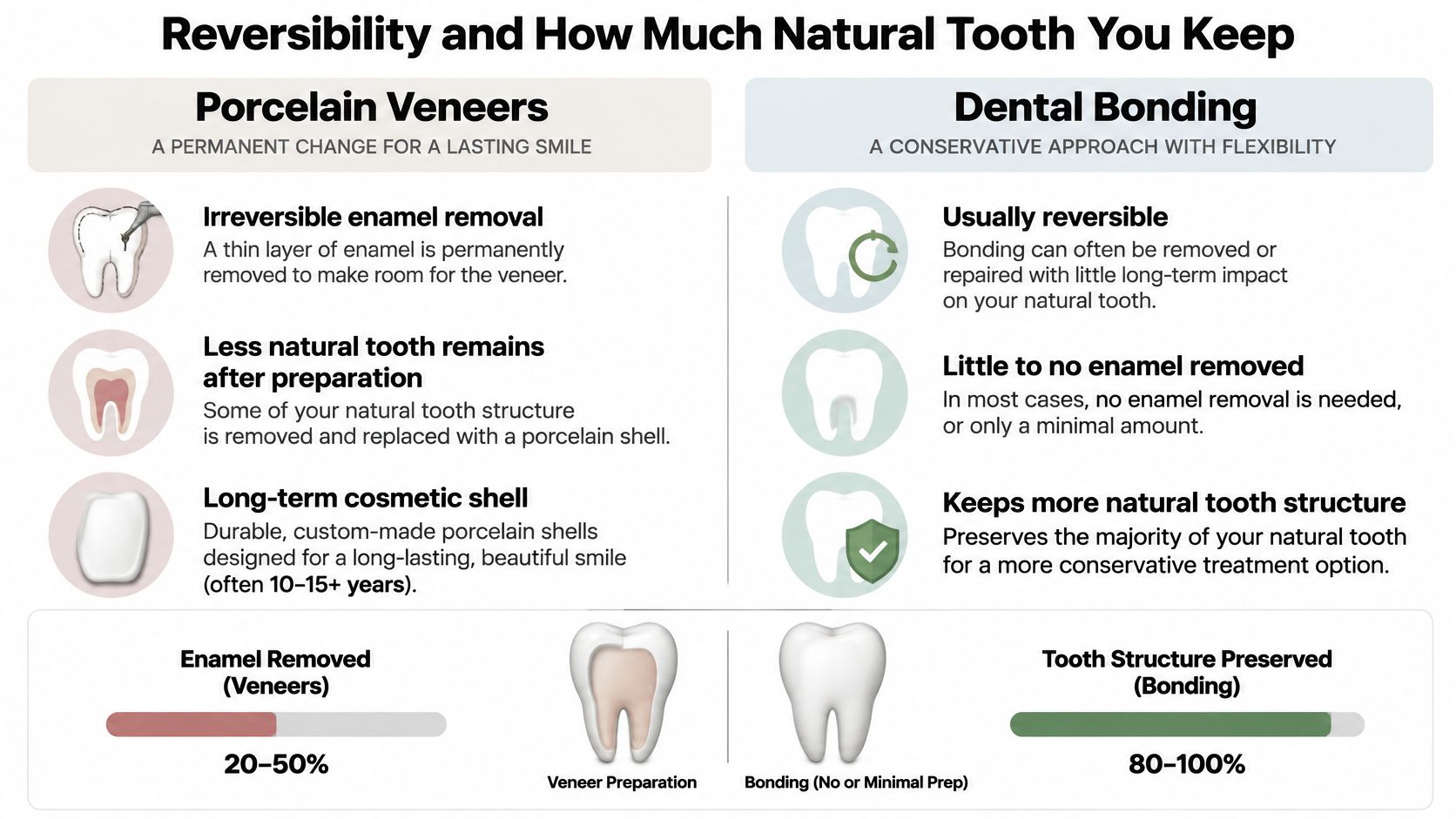
The basic facts are clear enough. Porcelain veneers require removing enamel, and enamel doesn't grow back. The Canadian Dental Association guidance on bonding and veneers notes that veneers are not reversible because enamel is removed, whereas bonding is typically used for smaller repairs and can often be completed in one visit. Once a tooth is prepared for a veneer, it will always need some form of covering.
Bonding sits on the other side of that line. It generally preserves more natural tooth, and it can often be repaired right in the mouth. If your goals change later, you usually have more options left. For a younger patient or a small defect, that flexibility has real value.
This comparison sums up what each option asks of your natural tooth.
Where the Simple Story Breaks Down
Preserving enamel doesn't automatically mean less total intervention. Bonding that stains, wears, or chips may need repeated polishing, edge repair, or eventual replacement. Each visit is small, but they add up in time, cost, and wear on the tooth. A conservative start can still become a busy maintenance schedule.
The reverse is also true. A veneer asks for irreversible preparation up front, then often asks for very little for a long stretch. You're trading one bigger, permanent step for fewer repeat visits. Neither trade is wrong. It depends on the tooth and on you.
Grinding and clenching deserve special attention here, because patients often don't mention them. Your dentist weighs those forces when recommending one option over another, since heavy loading changes how any edge or shell will hold up. Be candid about jaw soreness or worn teeth at your consultation.
So bring a better question to your appointment. Instead of asking which lasts longer, ask which option minimizes total biological and financial intervention for this specific tooth over time. That question leads to a plan built around your enamel, your bite, and your habits, not a slogan.
Which Option Fits Your Smile and Your Habits
By now you can probably see there's no universal winner in Tooth Veneers vs Bonding. There's a better fit for a given tooth, a given bite, and a given patient. Here's how that plays out in common situations we see when someone searches for a dentist near me in Katy.
When Bonding Usually Fits Best
Bonding shines on small, localized problems. A minor chip on one front tooth, a slight gap you'd like closed, or a subtle reshaping of an uneven edge are classic cases. The repair is quick, conservative, and easy to adjust later. If only one tooth needs help, preparing it for a veneer can be more treatment than the problem requires.
Bonding also suits patients who want to test a change before committing. Maybe you're not sure how a slightly longer tooth will look or feel. Bonding lets you live with the idea first. It's also a sensible pick when timing matters, like a chipped tooth before a wedding or job interview.
When Veneers Usually Fit Best
Veneers make more sense when the change is bigger or involves several teeth. Stubborn staining that whitening can't lift, multiple teeth with uneven shape or color, or a broader smile redesign all point toward ceramic. Its color stability helps several teeth stay matched over time.
Repair expectations matter here too. The ADA summary of long term veneer evidence reports an overall survival rate of about 89% after an average of nine years for feldspathic porcelain and glass ceramic laminate veneers, and small porcelain chips may sometimes be repaired with composite while larger fractures generally require replacement. So a veneer isn't failure proof. It's a durable restoration with a clear plan B, patch the small chip, replace the big break.
Quick Decision Matrix
| Situation | Porcelain Veneers | Composite Bonding |
|---|---|---|
| One small chip | More treatment than needed | Often the natural fit |
| Several stained front teeth | Strong fit for lasting color | Possible, but upkeep adds up |
| You want to keep options open | One way decision | Keeps future choices open |
| Heavy clenching | Needs careful bite planning and protection | Needs the same caution, edges may chip sooner |
| Fast result needed | Lab time required | Usually done in one visit |
| Minimal maintenance preferred | Generally fewer touch ups | Expect polishing and possible repairs |
Use this framework when you talk with your dentist. Match the option to the tooth's condition, the forces it takes, and how much maintenance you'll realistically schedule. If you'll happily come in for polishing, bonding stays attractive. If you'd rather do it once and maintain it easily, veneers earn their higher starting cost.
Booking a Consultation at The Dental Retreat in Katy
You don't have to decide this from a blog post, and you shouldn't. The choice turns on details only an exam can show, like how much enamel you have and how your front teeth meet when you bite. A consultation at The Dental Retreat in Katy, TX is where veneers and bonding get compared for your specific tooth, with photos, shade discussion, and honest talk about maintenance.
Getting started is straightforward. New patients without insurance can choose a $99 thorough exam with cleaning and X-rays as a new patient exam. If one chipped or painful tooth needs prompt attention, a $49 problem focused visit gets you seen and gives you a plan. Think of it as the same entry point you'd use with an emergency dentist, just focused on your cosmetic concern.
Follow up matters after either treatment, and the research shows why. The clinical investigation of 119 initially placed veneers found restoration level survival after 7 years was 97.5%, but patient level survival was 90.0%, which is why regular exams remain important after veneer placement. Your recall visits let us catch margin changes and bite issues early, while they're still simple to address.
We welcome patients from Lakehouse, Marisol, The Grange, Katy Manor, Kingscrossing, Anniston, Katy Lakes, and Ventanna Lakes. Extended hours, bilingual care, sedation options, and a judgment free approach make the visit easier if dental appointments make you nervous. Schedule an appointment or request a consultation, and bring your questions about your tooth, your habits, and your budget.
If you're weighing veneers or bonding for a chipped, stained, or uneven tooth, The Dental Retreat can examine your smile, compare both options for that specific tooth, and lay out the costs and upkeep for each before you commit. Book your consultation through The Dental Retreat and leave with a clear plan for a smile you're glad to show.