Scaling and root planing usually brings pressure and tenderness rather than sharp pain, and local numbing makes treatment tolerable for most patients. Soreness typically settles within the first few days. Tooth sensitivity, though, can follow a longer timeline of its own.
For patients searching for a dentist near me in Katy, TX, the useful question isn't only whether treatment hurts. It's how you'll feel during the appointment, in the short recovery window after you get home, and in the weeks that follow when you reach for a cold drink. At The Dental Retreat, planning for each phase separately helps make a deep cleaning feel predictable instead of uncertain.
Whether Scaling and Root Planing Hurts, Answered Plainly
For most patients, pressure, scraping, and tenderness are more likely than sharp pain when effective numbing is in place. You shouldn't have to sit silently through a painful spot or assume discomfort is necessary for a thorough cleaning.
Scaling and root planing treats bacterial buildup below the gumline. Scaling removes plaque and hardened deposits called calculus, or tartar. Root planing smooths rough root surfaces where those deposits collect.
The dentist or hygienist works inside narrow spaces, called pockets, between the teeth and gums. Inflamed tissue in those spaces can already be tender before an instrument touches it.
Why a deep cleaning feels different
Think of scrubbing grime from the crack between a tile and a wall when the surrounding edge is already sore. Reaching the buildup requires contact with a sensitive area. That's why a deep cleaning may need local anesthesia even if a routine cleaning usually doesn't.
Hand instruments can create a scraping sensation. An ultrasonic scaler adds vibration and water. Those sensations don't necessarily mean the anesthetic isn't working, but a sharp sting is a reason to pause and check the numbing.
Comfort rule: Tell the team when a sensation becomes sharp. You don't need to wait until it becomes difficult to tolerate.
According to the American Dental Association's scaling and root planing guidance, soreness commonly lasts 1–2 days, while temperature sensitivity may persist for up to a week. Mild swelling, tenderness, and minor bleeding can also occur as inflamed gums respond to treatment.
What shapes your experience
Exactly four considerations help the dentist build your comfort plan:
- Pocket depth and inflammation: Deeper, more inflamed areas may need more extensive treatment.
- The numbing option: Surface gel and injected anesthetic don't provide identical pain control.
- Dental anxiety: Feeling tense can change how you experience sensations and how often you need breaks.
- Smoking or existing sensitivity: Either belongs in the conversation about recovery and aftercare.
The goal isn't just to remove deposits. It's to reduce the irritation around your teeth and give the gums a better opportunity to heal.
How Long Soreness and Sensitivity Last After Treatment
Gum soreness and tooth sensitivity aren't the same symptom. Your gums can feel more comfortable while a tooth still reacts to cold air or water.
Use this timeline as a planning guide, not a deadline your mouth must meet.
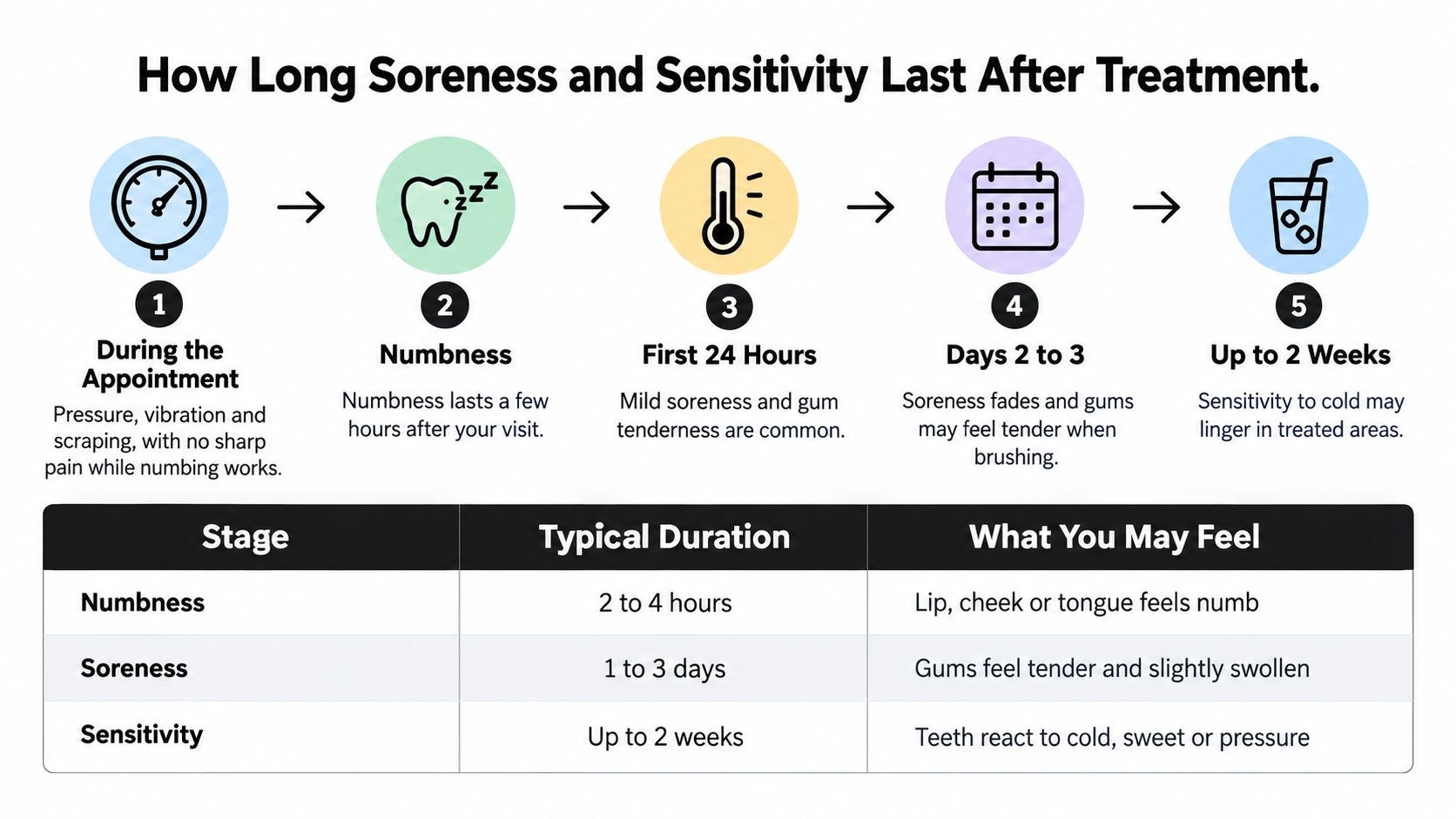
Recovery timeline after scaling and root planing
| Stage | What You May Feel | How Long It Usually Lasts |
|---|---|---|
| During treatment with numbing | Pressure, vibration, and scraping, without sharp pain when numbing works | Length of the appointment |
| First day after numbing wears off | Tenderness and mild gum soreness | About a day |
| Days two and three | Soreness and minor bleeding when brushing | Soreness commonly settles within a day or two |
| Days three to seven | Sensitivity to cold, air, and touch | Up to about a week for many patients |
| Weeks two to three | Root sensitivity may be at its strongest | Peak around the first through third weeks |
| Weeks three to four | Sensitivity gradually fading | Can remain through the fourth week |
| After four weeks | Sensitivity should be clearly improving | Severe or unchanged symptoms need assessment |
The later sensitivity pattern is supported by an Evidence-Based Dentistry evidence summary, which found that sensitivity intensity was highest roughly one to three weeks after periodontal treatment and could remain significantly increased for up to four weeks while gradually improving. That longer pattern explains why a short soreness window doesn't promise an equally short sensitivity window.
What recovery feels like in daily life
At the appointment, you may notice pushing or vibration while the area is numb. Numbness can continue for a few hours afterward, so wait until sensation returns before chewing to avoid biting your cheek or tongue.
As the anesthetic fades, the gums may begin to ache. During the early days, gentle brushing can bring out tenderness or a little bleeding, but discomfort should trend toward improvement rather than build.
Cold sensitivity can become more noticeable as swollen gums heal and settle. Root surfaces that were previously covered become exposed, making cold drinks, moving air, or touch feel sharper.
Judge recovery by the direction it's moving, not by whether every tooth feels completely normal on the same day.
If sensitivity isn't easing by the fourth week, schedule a check rather than continuing to work around it. Ask at your consultation how many areas need treatment and how many visits are planned, because separately treated areas may begin recovering at different times.
Numbing and Sedation Options Compared
| Option | Best Suited For | How It Feels | Main Trade-off |
|---|---|---|---|
| Topical gel | Shallow or less sensitive areas, patients who avoid needles | Surface numbing without an injection | Less reliable in deep pockets; additional numbing may be needed |
| Local anesthetic injection | Deep pockets, inflamed tissue, extensive treatment | Profound numbness in the treated area | Brief needle sensation and numbness lasting a few hours |
| Nitrous oxide | Mild dental anxiety, alongside numbing | Relaxed or lightheaded; effects wear off quickly | Doesn't numb the tissue by itself |
| Oral sedation | Moderate dental anxiety | Drowsiness; some patients remember little of the visit | Requires an adult escort and a review of medical eligibility |
Numbing and sedation solve different problems. Local anesthetic limits pain signals from the treatment area. Sedation helps you feel calmer, but it doesn't replace the need to numb sensitive tissue.
Needle-free comfort versus deeper anesthesia
Topical gel can be appealing if the injection is what worries you most. A review in the Journal of Dental Anesthesia and Pain Medicine reported that topical anesthetic gel reduced pain during scaling and root planing by about 50% compared with placebo; it also summarized evidence that injected anesthesia produced lower pain intensity and less need for rescue anesthesia than intrapocket gel, although the overall likelihood of experiencing some pain was similar.
That's a trade-off, not a reason to insist everyone needs an injection. Gel may suit a selected, less sensitive area, while injected anesthetic can provide more dependable coverage when the dentist needs to reach deeper deposits.
Tell the dentist whether you're more concerned about the needle, feeling treatment, or staying numb afterward. Those concerns can lead to different choices.
Calming options require their own plan
Nitrous oxide may help when you're tense but still comfortable staying alert and communicating. Oral sedation can be considered when anxiety makes the appointment harder to manage, but the dentist must review your health history, medicines, and transportation arrangements.
The Dental Retreat offers sedation options for anxious patients. Its explanation of oral sedation versus IV sedation can help you prepare questions without assuming either approach is necessary for a deep cleaning.
Oral sedation requires an adult escort. Follow the practice's instructions about eating, medicines, driving, and supervision rather than making those arrangements after treatment.
Why Some Patients Feel More Pain Than Others
Being comfortable while numb doesn't guarantee you'll feel nothing afterward. Treatment-day pain control and recovery pain are separate parts of the experience.
In a study of 218 adults receiving nonsurgical periodontal therapy under local anesthesia, 52.3% reported at least mild pain during the following 48 hours, and 46.8% used an analgesic during that period. “At least mild” includes minor discomfort, so those findings shouldn't be read as meaning that most patients experienced severe pain.
Factors that change the recovery plan
A tender bruise reacts differently from healthy skin under the same pressure. Inflamed gums can behave similarly: identical instrumentation won't feel identical in every mouth.
- Smoking: It's associated with greater postoperative pain, so discuss your smoking openly and ask for help planning your recovery.
- More severe gum inflammation: Tender, swollen, bleeding tissue may require a more individualized aftercare plan.
- Dental anxiety: It's associated with greater postoperative pain and pain-reliever use, making reassurance, breaks, and clear instructions clinically useful.
These are planning considerations, not judgments about how well someone tolerates dental care. Anxiety doesn't make your pain imaginary, and smoking doesn't mean the team should dismiss discomfort.
Plan for eating and work
If possible, schedule treatment before a lighter afternoon rather than immediately before a demanding shift or presentation. You may feel ready for routine activities, but leaving room for tenderness is more practical than assuming you'll feel completely unchanged.
Plan meals that don't require much chewing, and expect temperature sensitivity to influence food choices for several days. For example, lukewarm eggs or soft pasta may be easier than iced drinks and crunchy chips.
Bring up previous difficult dental visits, sensitive teeth, and any medicines you already use for pain. The dentist can then discuss what you should take, what you should avoid, and when to call if the plan isn't enough.
Pain Management Before, During and After Treatment
Comfort works best as a plan, not a response after pain builds. A systematic review and meta-analysis of 11 studies found that intrapocket anesthetic reduced pain during probing and scaling and root planing; the accompanying clinical findings described root-surface debridement under local anesthesia with an average pain score of 1.8 on a 0–10 scale, with individual scores ranging from 0 to 5.
This visual guide highlights practical ways to communicate and care for the treated areas.

Before your appointment
- Name sensitive spots: Tell the dentist which teeth react to brushing, cold drinks, or biting.
- Discuss numbing early: Agree on anesthesia before instrumentation rather than waiting for discomfort.
- Share anxiety: Explain past experiences and ask whether sedation would help.
- Check pain medicine: Ask whether an over-the-counter pain reliever is appropriate before your visit.
- Arrange recovery time: Keep the afternoon light and organize a ride if your sedation plan requires one.
Bring your medication list, including nonprescription products and supplements. Mention allergies or previous reactions to dental anesthetic, and don't stop prescribed medicines unless the prescribing clinician advises it.
During treatment
- Raise a hand: Use an agreed signal so the clinician can stop safely.
- Ask for a break: A short pause can help with jaw fatigue or rising tension.
- Request more numbing: Describe a sharp spot instead of trying to push through it.
You can still feel pressure while properly numb. The team needs to know when the sensation changes from pushing or vibration to pain, because that distinction helps them adjust treatment.
This video provides another way to prepare for the conversation about care.
After you get home
- Use pain relief safely: Follow the label and your dentist's advice, avoiding duplicate ingredients.
- Choose gentle meals: Eat soft, lukewarm foods during the early recovery period.
- Rinse gently: Use warm salt water if your dental team recommends it; avoid forceful swishing.
- Clean carefully: Use a soft-bristled toothbrush and ask about desensitizing toothpaste.
- Avoid smoking: Ask for support if going without tobacco will be difficult.
If you have kidney disease, stomach ulcers, take blood thinners, or are pregnant, check with your clinician before choosing a pain reliever. Deep or extensive treatment may be scheduled in stages so the team can keep each visit manageable.
Normal Discomfort Versus Signs to Call Your Dentist
| Symptom | Usually Normal? | Next Step |
|---|---|---|
| Mild soreness and tenderness in the first 1 to 2 days | Yes | Continue instructed care and monitor |
| Sensitivity to cold or air that fades week by week | Yes | Monitor; check in if it isn't improving by week 4 |
| Minor bleeding when brushing in the early days | Yes | Brush gently and monitor |
| Pain that gets worse after the first few days | No | Call the dental office |
| Sensitivity still severe or unchanged after 4 weeks | No | Schedule a check |
| A tooth that feels loose or bites differently | Needs assessment | Call the dental office |
| Facial swelling or fever | No | Call promptly |
| Difficulty swallowing or opening the mouth | No | Seek prompt assessment; use emergency care for difficulty swallowing or any breathing problem |
When the situation needs faster action
A brief cold-triggered zing is different from an expanding swollen area or feeling feverish. Facial swelling and fever can signal infection, which needs assessment rather than stronger pain medicine alone.
Call promptly if you're struggling to open your mouth or notice new facial swelling. Trouble breathing, significant difficulty swallowing, or swelling spreading toward the eye or neck requires emergency medical care. Call 911 or go to the nearest emergency room rather than waiting for a routine dental appointment.
The Dental Retreat offers emergency dental services for patients seeking same-day relief. Call to explain your symptoms and confirm availability, but don't delay emergency medical care while waiting for a dental response.
When you're unsure: Describe what changed, when it started, and whether it's getting better or worse.
What to tell the dental team
A tooth that suddenly feels different when you bite deserves attention even if the gums otherwise seem to be healing. Don't repeatedly test it by chewing hard foods, and don't assume a deep cleaning explains every new symptom.
Keep a simple daily note of your discomfort, foods that trigger it, and any medication taken. Include swelling, bleeding, or changes in your bite so the dentist can decide how quickly you need to be seen.
Book Your Gentle Deep Cleaning in Katy, TX

If fear has kept you from arranging dental care, start with an evaluation rather than committing yourself to treatment you don't yet understand. The Dental Retreat welcomes patients in Katy, TX, at its practice on Stockdick School Rd.
You can discuss sensitive teeth, bleeding gums, or an overdue cleaning without having to know which procedure you need. An exam helps distinguish routine cleaning needs from gum treatment or a separate tooth problem, and it gives you a chance to ask how the team plans comfort across three different phases: numbing for the visit itself, soreness during the first day or two, and sensitivity that can fade more slowly.
The reception setting offers a visual introduction before your appointment.
A clear path from consultation to follow-up
- Call or request a consultation online. Mention pain, swelling, bleeding, or dental anxiety when booking.
- Begin with a thorough assessment. The team reviews your history, takes appropriate dental X-rays, and measures gum pockets before deciding which cleaning is suitable.
- Review the written plan. Ask about numbing, sedation, staged visits, costs, current new-patient pricing, and membership options.
- Schedule treatment. Plan around work, caregiving, or school responsibilities so the first 24 to 48 hours are not stacked with demanding commitments.
- Continue follow-up care. Return for reassessment and periodontal maintenance on the schedule your dentist recommends.
Care that starts with your priorities
Before instruments are used for treatment, you should understand what the team plans to do and how to signal discomfort. During treatment, the clinician checks comfort with numbing in place; afterward, you receive instructions and a follow-up plan that fits the recovery window rather than a single “it hurts” or “it doesn't” answer.
Anxious patients can also ask about the practice's calmer setup, including aromatherapy, massage and heated chairs, noise-cancelling headphones, and TVs in every room. Bilingual care and extended hours can make planning easier when symptoms feel urgent but schedules are tight.
Ask for an appointment that begins with your symptoms and questions. You don't need to arrive with a diagnosis.
The Dental Retreat offers scaling and root planing, numbing options, and sedation consultations to help patients plan for treatment-day comfort and recovery. Visit The Dental Retreat to request an appointment in Katy and discuss your gum health, expected costs, and next steps.