In-office teeth whitening takes one visit of about 30 to 60 minutes, while dentist-made take-home trays take roughly 2 to 6 weeks of daily wear. Those two answers sound far apart because they describe different clocks, and confusing those clocks is where many readers get tripped up when they search teeth whitening how long does it take.
One clock measures time in the chair or in a tray. A second clock measures when you'll first see a change in the mirror. A third measures how long that brighter shade lasts before coffee, tea, and everyday life dull it again. If you're looking for a dentist near me or a cosmetic dentist near me in Katy, TX, knowing which clock matters to you helps you pick the right method before an event, a photo, or just a fresh start with your smile.
Whitening Timelines by Method at a Glance
An in-office session takes one visit of about 30 to 60 minutes. Dentist-made take-home trays take roughly 2 to 6 weeks of daily wear. Over-the-counter products fall in between, usually needing daily use for 1 to 4 weeks before you notice much.
The reason is peroxide strength and total contact time. Peroxide works like heat under a pan. A stronger gel is a higher heat, so it moves faster, but the total time under that heat still decides the final result. A weaker home product can catch up; it just needs more sessions to add up to the same exposure.
The Numbers Behind the Ranges
The American Dental Association whitening guidance describes at-home systems as lower-strength peroxide products worn for hours at a time across a course of days to weeks, with the schedule set by the concentration. In a comparison summarized there, an over-the-counter technique needed substantially longer than a dentist-provided tray system, and far longer than a single in-office procedure, to reach a similar shade.
Home products follow the same arithmetic as the chair, just spread over more days. Each short session adds exposure, visible improvement typically arrives within the first few weeks of daily use, and gains get smaller if you continue past that point.
Reading the Three Clocks in the Table
| Option | Chair or wear time | When change shows | Results last |
|---|---|---|---|
| In-office professional whitening | One visit, about 30 to 60 minutes | Same appointment | 1 to 3 years |
| Dentist-made take-home trays | Daily wear for about 2 to 6 weeks | Gradual, usually within the first 1 to 2 weeks | Up to 1 to 3 years with maintenance |
| Over-the-counter strips | Daily wear for about 1 to 4 weeks | Gradual, typically within the first few weeks | Up to 12 months |
| Whitening toothpaste | Twice-daily brushing | Surface stains only, slow | Up to 6 months |
| Deep intrinsic staining (tetracycline) | Nightly therapy over several months | Gradual over the course | Maintenance set at final shade check |
The first column gets the most attention early on, because it answers whether you need an hour or a month. The middle column is easy to underestimate: change that arrives gradually can be hard to spot day to day, then obvious in a photo. The third column is the one that decides your calendar next year, since it tells you when a touch-up may be due.
The procedure clock and the result clock are not the same clock. A one-hour visit can hold for years, and a two-week strip routine can fade within months.
Deep intrinsic discoloration is the exception to every tidy range above. Tetracycline staining sits inside the tooth rather than on the surface, so nightly therapy can run several months before the shade settles. If your staining is that deep, a dentist should set the timeline with you rather than leaving you to guess from a box label.
What Decides How Fast Your Teeth Whiten
Stain type moves the clock more than anything else. Surface stains from coffee, tea, red wine, and tobacco sit on enamel and respond fastest. Intrinsic stains sit inside the dentin under the enamel, so the gel has farther to travel and more color to break down.
Think of a fresh coffee spill on a shirt. It lifts with one wash. A stain that dried in for months needs repeated soaking, and some color may never fully lift. Teeth work much the same way, which is why two people using the same product can finish weeks apart. If you want the fuller picture behind discoloration, common causes of teeth staining explains where each type starts.
Starting Shade and Peroxide Strength
Your starting shade matters too. Darker teeth have more shades available to gain, so early change can look dramatic, while teeth that are already fairly light improve in smaller steps. Aging plays a quiet role here. Enamel thins over time, so naturally darker dentin shows through more, and whitening has to overcome that deeper color.
Peroxide strength then sets the pace within that starting point. The same 30 minutes gives you different results at different concentrations. A stronger professional gel breaks down color faster per minute than a home product, which is why the chair-based option finishes in one visit while trays ask for weeks of shorter, gentler sessions.
Consistency, Dental Work, and Health Checks
Consistency is the variable you control. Skipped tray nights don't ruin treatment, but they stretch the timeline day for day. Five missed nights in a two-week plan is roughly five extra nights at the end.
Existing dental work doesn't whiten at all. Crowns, veneers, fillings, and bonding keep their original color while the teeth around them brighten. Say you have a filling on a front tooth that matches today. After whitening it may stand out as darker, and replacing it to match your new shade becomes a separate step in the plan, sometimes alongside other restorative dentistry or cosmetic dentistry work.
Health comes before speed. Untreated cavities or inflamed gums should be handled first, because whitening gel can irritate both. A cleaning and exam with dental x-rays clears that question before you start.
Practical rule: a shade assessment at a consultation is the most reliable way to estimate your timeline, because your dentist can see the stain type, starting shade, and dental work in one look.
What Happens During an In-Office Whitening Visit
Chair time runs about 30 to 60 minutes, but your full appointment runs longer because preparation and checks come first. That gap surprises people, so it's worth knowing before you book around a lunch break.
The American Dental Association overview of whitening options reports that professional in-office bleaching agents commonly use hydrogen peroxide concentrations of approximately 15% to 43%, treatment may last about 30 to 60 minutes, and it can brighten teeth by roughly 3 to 8 shades. Higher peroxide concentrations can shorten treatment time, but you should discuss sensitivity risk and suitability with a dental professional before treatment.
This visual walks through the visit from check-in to final rinse.
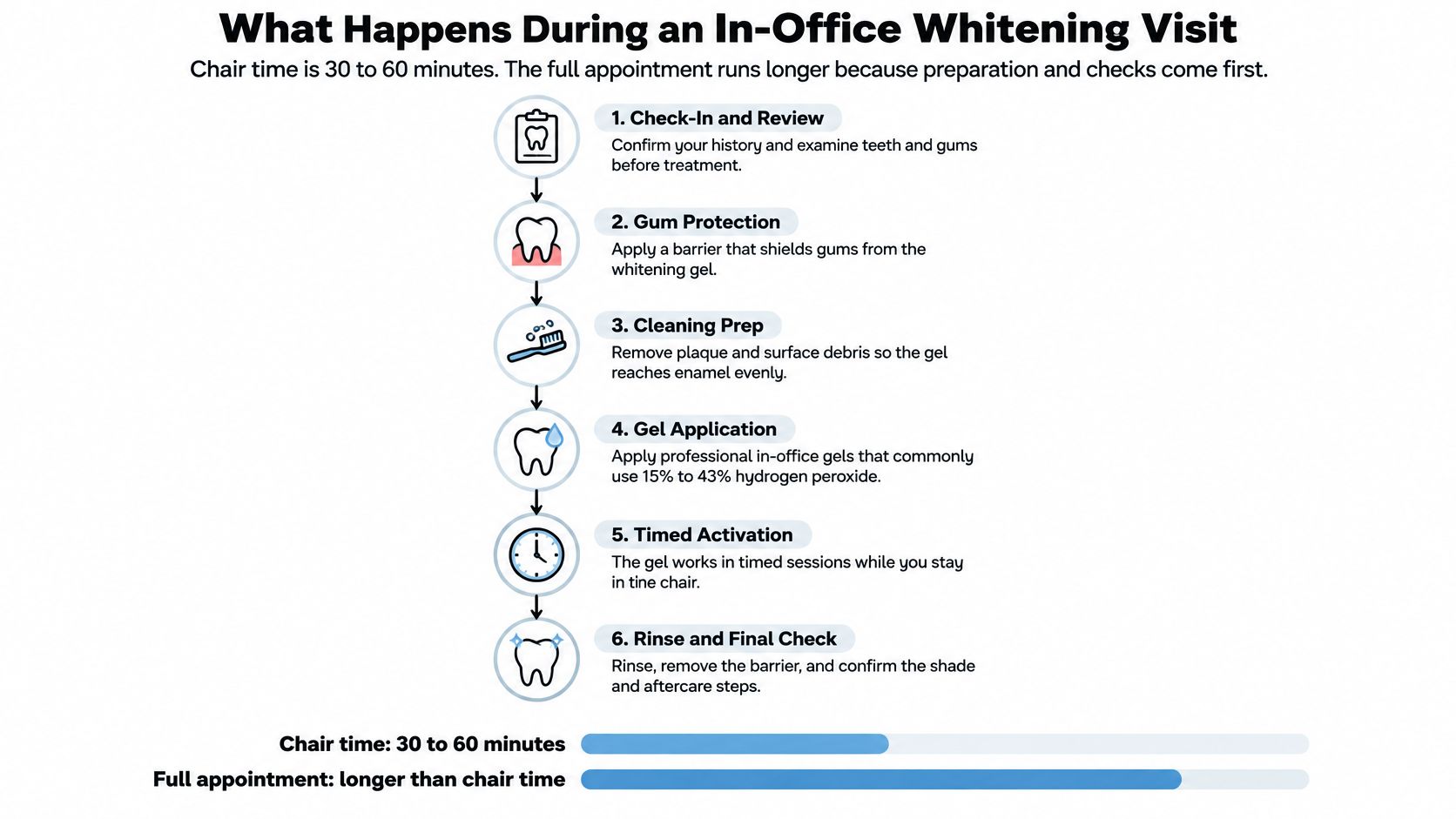
The Six Steps of the Visit
- Shade check and photo. Your dentist records your starting shade and checks for cavities, gum concerns, and any past sensitivity. This baseline is how you'll both judge the result at the end.
- Gum and lip protection. A barrier shields your soft tissue so the gel touches only your teeth. This step is the main reason in-office gel can be stronger than anything you'd use at home.
- Gel application. The whitening gel goes on in measured layers across your front teeth. Even coverage matters, because missed spots whiten unevenly.
- Timed activation. The gel sits in timed cycles as the product directs, usually totaling 30 to 60 minutes. You mostly just rest in the chair during this part.
- Rinse and shade recheck. The team removes the barrier, rinses your mouth, and compares your new shade with the starting photo alongside you.
- Aftercare guidance. You leave with written instructions and a plan for sensitivity, so you know what's normal tonight and what isn't.
Most patients feel mild warmth, tingling, or sensitivity to cool air during the gel cycles. None of that should feel sharp. You can ask to pause at any point, and a good team will check in rather than waiting for you to flag discomfort.
This short video shows the appointment flow in action.
You'll see visible change the same day. The shade often keeps improving slightly over the following days as the color settles, so judge your final result a few days out rather than in the parking lot.
Realistic Take-Home Tray and Strip Schedules
Dentist-provided custom trays generally take about 2 to 6 weeks. The NHS teeth whitening guidance describes at-home dentist-provided whitening taking about 2 to 6 weeks, with trays worn for short periods during the day or overnight depending on the product and your dentist's instructions.
That's slower than a single chair visit, and for many people that's the appeal. You control the pace at home, you can pause for a sensitive day, and the change builds gradually instead of all at once.
How the Tray Workflow Runs
- Impressions. The team takes impressions or a scan of your teeth so the trays match your mouth exactly.
- Custom tray fitting. Trays are made to hug each tooth, which keeps gel on enamel and off your gums.
- Daily wear at home. You place a small amount of gel in each tray and wear it as directed, either for a short daytime session or overnight.
- Shade check and adjustment. Your dentist reviews progress and adjusts wear time or gel strength if you're ahead of or behind the plan.
Over-the-counter strips work differently. They press a thin layer of gel against the front teeth, but they can't adapt to curves and edges the way a custom tray does, so coverage is less even. They deliver modest brightening, and gains tend to arrive early, then taper.
What predicts your finish date is total gel exposure, not the calendar alone. A 2024 systematic review in Clinical Oral Investigations examined at-home protocols lasting 7 to 13 hours and at least 14 hours, including 10% carbamide peroxide and hydrogen peroxide strip treatments. Two people can both say they've whitened for two weeks and have very different total hours behind them.
Choosing Between Trays and Strips
Choose custom trays if you want fit, control, and a steady approach your dentist can adjust along the way. Choose strips if you want modest brightening on a tighter budget and you're comfortable with a less even result. Neither choice is wrong, they just buy different things with your time.
Stop when your shade reaches your goal. Extra hours past that point bring smaller gains and more irritation risk, not a brighter finish.
Sensitivity and Side Effects to Expect Along the Way
Tooth sensitivity and temporary gum irritation are the most common short-term effects of whitening, and for the majority of users they're brief. Sensitivity usually feels like a quick zing with cold drinks or cool air. Gum irritation often comes from tray edges pressing on soft tissue or gel overflowing onto your gums.
The American Dental Association guidance on managing whitening expectations notes that sensitivity can be more intense after in-office treatment and may persist for several days, and advises contacting a dentist if side effects do not resolve after a few days. Patients who develop marked sensitivity or mouth sores should stop using the whitening product and seek dental advice rather than extending treatment on their own.
How Sensitivity Changes Your Timeline
Sensitivity doesn't usually end a whitening plan, it just reshapes it. A pause of a few days adds those days to your schedule, and then the job is typically finished comfortably. Pushing through pain to protect a deadline usually backfires, because irritated teeth and gums need longer to settle than a short planned break.
Your dentist may suggest desensitizing toothpaste before and during treatment. Wearing trays every other night instead of nightly is another common adjustment, and it's safer than forcing daily sessions through discomfort. A slightly slower plan that you actually complete beats a fast plan you abandon halfway.
Warning Signs That Mean Stop and Call
- Sharp pain that lasts beyond a few days. Brief zings are common, lingering sharp pain isn't, and it deserves a call.
- White or painful mouth sores. These can signal gel burning soft tissue, especially with a tray that doesn't fit well.
- Swelling around the gums where the tray sits. Swelling points to irritation that won't improve while you keep wearing the tray.
The rule is simple. With marked sensitivity or sores, stop the product and contact a dentist rather than extending treatment on your own. If pain is severe or sudden, an emergency dentist visit is the right call. A dentist can adjust gel strength, trim a tray edge, or space out your sessions so whitening stays comfortable.
How Long Results Last and How to Extend Them
The third clock is the longest of the three, and it decides how much value you get from the first two. Harvard Health guidance on tooth whitening reports that results from professional whitening generally last 1 to 3 years, while whitening strips may hold their effect for up to 12 months and whitening toothpaste for up to 6 months.
Whitening works like a fresh coat of paint on a fence. The color looks sharp right away, then weather and wear slowly show through. Coffee, tea, red wine, tobacco, and normal aging keep depositing new pigment, and naturally darker dentin becomes more visible as the years pass. Your shade fades because new stain keeps arriving, not because the treatment itself expired.
Touch-ups follow whichever method created your result. An in-office refresh is usually shorter than the original treatment, since your teeth are already near your target shade and only need a lift rather than a full course. Home tray refreshers should follow the wear schedule your dentist sets for your product and shade goal, and the everyday upkeep in how to keep teeth white after whitening does most of the work between sessions.
This infographic pairs the procedure clock with the habits that stretch your result.

Five Habits That Protect Your Shade
- Rinse with water after dark drinks. A quick rinse washes pigment off enamel before it settles in.
- Use a straw for coffee or cola. Less liquid washes over your front teeth, so less stain lands where it shows.
- Cut back on tobacco. Tobacco stains return faster and deeper than drink stains, and they're harder to lift again.
- Brush gently with a soft brush. Aggressive scrubbing and abrasive whitening pastes wear enamel, which lets darker dentin show through sooner.
- Keep up with professional cleanings. A cleaning removes surface buildup that dulls your shade before it becomes a deeper stain, and your dentist can set the right interval for you.
When your shade starts to slip, schedule a refresh before the stain sets deep. Catching fade early keeps the job small, since a short touch-up restores brightness while a long stretch of buildup can mean starting the full process over.
Book Your Whitening Consultation in Katy, TX
Your deadline usually decides the method. If you need a result before a wedding, reunion, or job interview, in-office whitening fits because the change happens in one visit. If you would rather whiten gradually and set the pace yourself, custom trays fit better. Whichever route you take, the consultation is where the three clocks from this article become personal: how long your appointment takes, when your change first shows, and how long your shade holds before stains creep back.
If you have cavities, gum concerns, or a history of sensitivity, say so when you book. Those issues shift the timeline, and treating them first keeps whitening comfortable.
At The Dental Retreat in Katy, TX, whitening consultations are available alongside general, cosmetic, and other dental care, so you can talk through your options with the team before choosing a method.
What Your First Visit Looks Like
- Call or request an appointment online. Say you are interested in whitening so the visit can cover your questions about methods and timing.
- Get your teeth and gums checked. Healthy enamel and calm gums respond more predictably, and any spots that need treatment get flagged before whitening gel touches them.
- Review your starting shade and sensitivity. Deep stains and thinner enamel run on slower clocks, so this step is what turns a generic timeline into your timeline.
- Choose your path. Pick an in-office session, a custom tray plan, or a maintenance schedule that matches your calendar.
| Option | What it covers | Best for |
|---|---|---|
| New patient exam | Exam, cleaning and X-rays | Checking teeth before any whitening |
| Problem-focused visit | Visit for one specific concern | Sensitivity, pain or a quick question |
| In-office Zoom whitening | Whitening in one visit | Fast, visible change |
| Membership plan | Savings including periodontal maintenance | Ongoing care and touch-ups |
The team will confirm current pricing and new-patient offers when you call, so there are no surprises. If you want to know which of the three clocks matters most for your smile, call today or request an appointment online to book your whitening consultation.
Your whitening timeline should fit your calendar, your comfort, and your starting shade, and a short consultation is the fastest way to pin down all three. The team offers in-office whitening, custom take-home trays, and maintenance planning alongside general and cosmetic care for families across Katy. Visit The Dental Retreat to request your appointment and take the first step toward a brighter smile.