Routine cleaning maintains gums without active periodontal disease, while deep cleaning treats diseased pockets below the gumline. Visible tartar alone doesn't decide which one you need.
You might be searching for a dentist in Katy, TX because your floss comes away pink, your gums feel tender, or you've been told that your usual cleaning isn't enough. Those concerns deserve an explanation you can understand, not a surprise treatment recommendation. At The Dental Retreat, the starting point is a conversation and an exam that connects your symptoms to what's happening around your teeth.
Why Your Katy Cleaning May Not Be a Polish
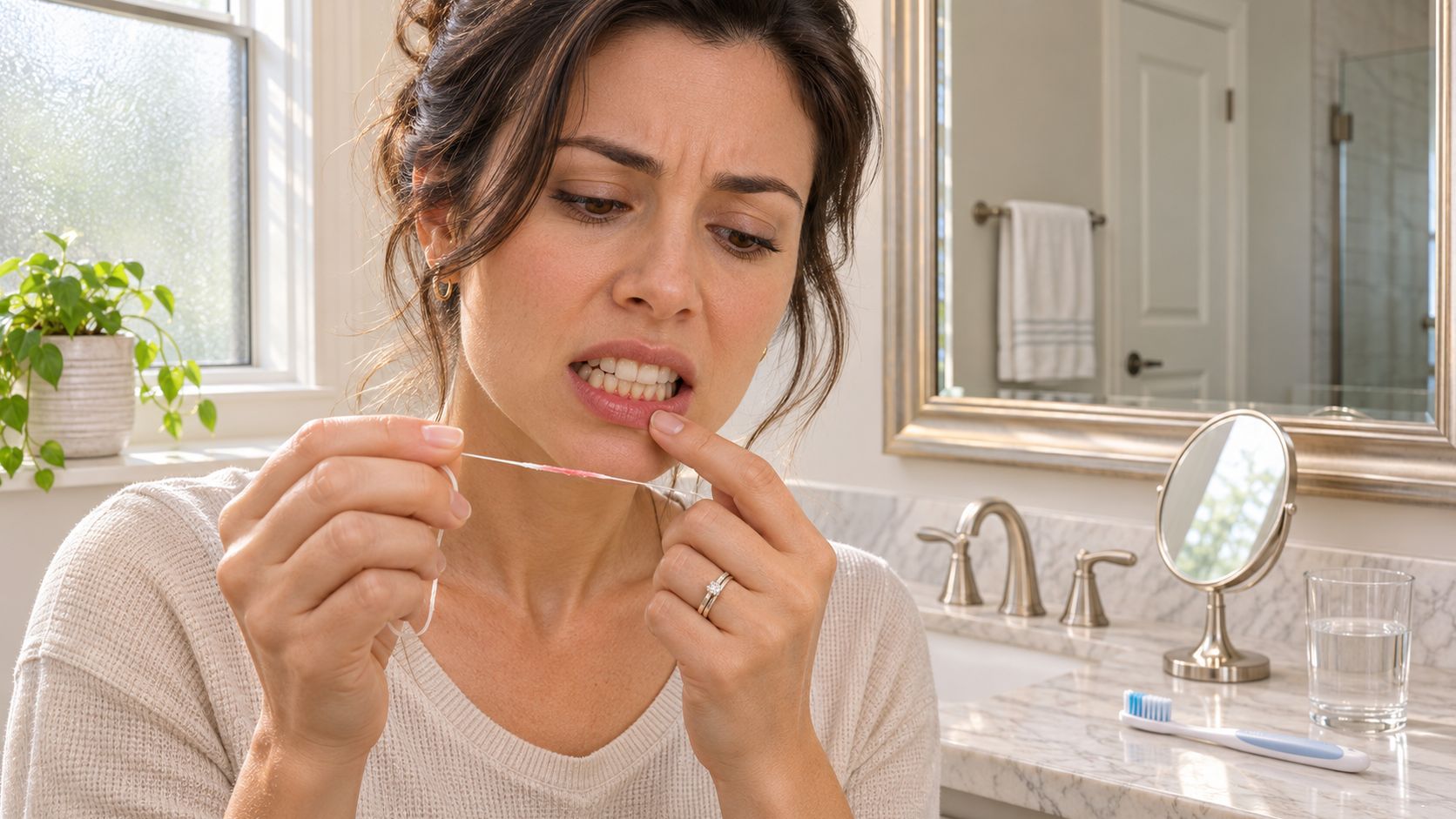
Say you live in Sunterra and book a cleaning after noticing blood when you floss. You can see a hard deposit behind your lower front teeth, and you're hoping someone can remove it and polish everything smooth before your next family gathering.
A patient from Cane Island, Kingscrossing, or Elyson might arrive with the same concern but need a different treatment. Teeth can look fairly clean while disease develops underneath the gums, and noticeable buildup doesn't always mean that supporting bone has been damaged.
Bleeding is a reason to get checked, not a reason to diagnose yourself.
Prevention and treatment have different jobs
A routine cleaning, also called prophylaxis, supports prevention when there's no active periodontal disease. A deep cleaning, or scaling and root planing, treats affected areas where bacteria and hardened deposits have collected beneath the gumline.
The National Institute of Dental and Craniofacial Research's gum disease guide describes scaling and root planing as periodontal treatment, not a cosmetic upgrade. Periodontitis affects the tissues that hold teeth in place, so the concern extends beyond how smooth or bright teeth look.
That distinction also explains why tenderness isn't a reliable shopping guide. A sore area might need periodontal care, but it could also need an evaluation for another dental problem.
A useful starting question: What did the gum measurements and X-rays show that changes my cleaning recommendation?
Your first conversation matters
At our office on Stockdick School Rd., we review your oral health history, aesthetic preferences, and concerns or anxieties from the first consultation onward. Tell us if you're nervous about numbing, embarrassed about a gap in care, or worried about cost.
The exam should connect those concerns to specific findings: bleeding, pocket depth, recession, bone support, and personal risk. You should leave knowing what needs attention, which areas are involved, how comfort will be managed, and what follow-up is likely to involve.
There's no need to arrive knowing which procedure to request. Your role is to describe what you've noticed; our role is to explain the findings and the appropriate options.
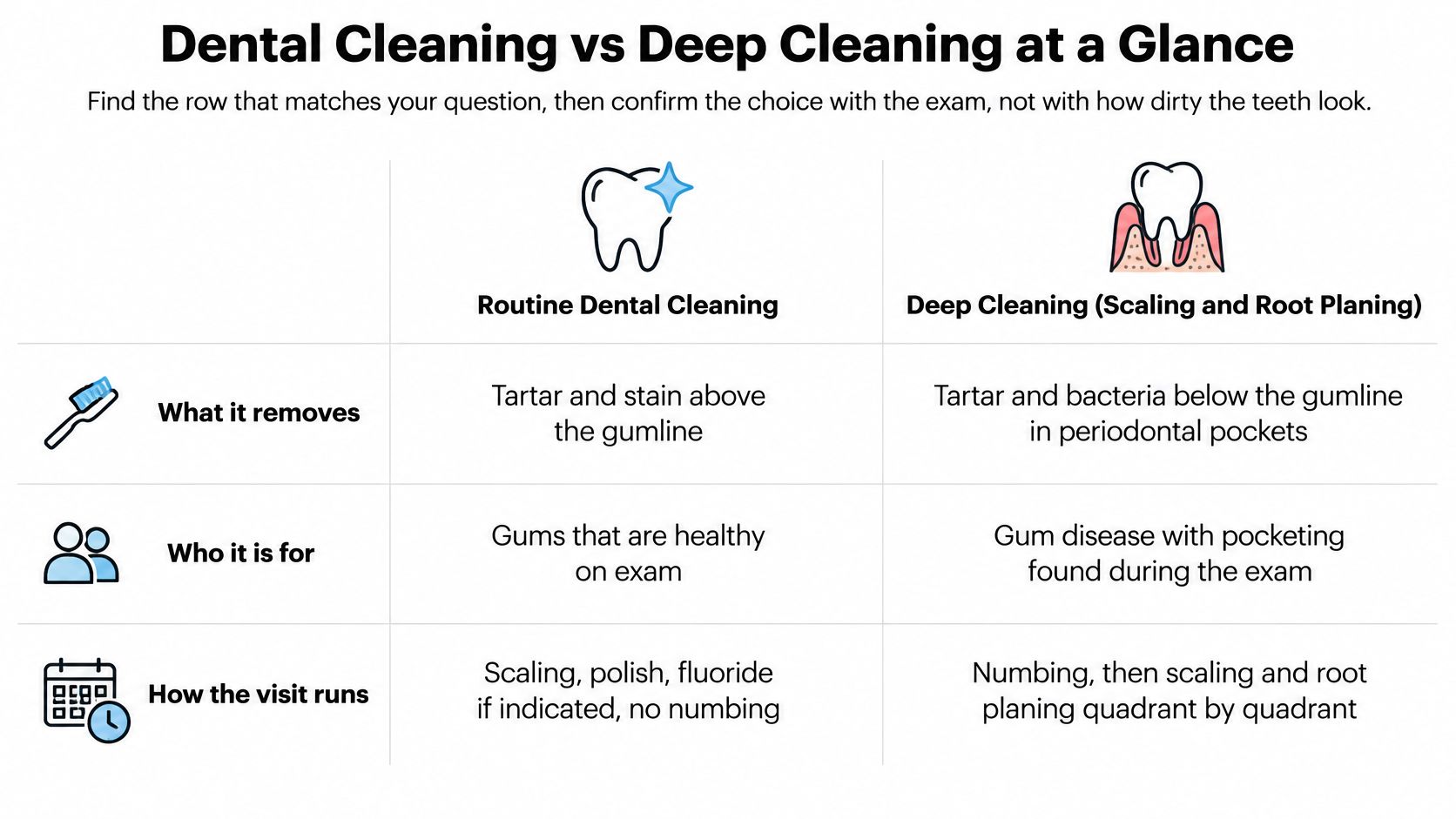
Dental Cleaning vs Deep Cleaning at a Glance
| Question | Routine cleaning | Deep cleaning |
|---|---|---|
| Clinical name | Prophylaxis | Scaling and root planing (SRP) |
| Main purpose | Prevent disease by removing plaque, tartar, and surface stains | Treat periodontitis under the gumline |
| Where instruments work | Tooth surfaces and slightly around the gumline | Above and below the gumline on affected roots |
| Who it is for | No active periodontal disease | Diagnosed disease assessed through pockets, bleeding, attachment loss, or bone loss |
| Comfort plan | Usually no numbing | Often local anesthetic; treatment may be split by area |
| What follows | Risk-based preventive recall | Healing check, then periodontal maintenance |
| What it is not | Treatment for deep pockets | A cosmetic upgrade or teeth whitening |
Match the row to your concern, then let the exam confirm the choice. How dirty your teeth look isn't the deciding factor.
The visual comparison highlights the practical differences between the appointments.
Why the diagnosis matters
A nationally representative analysis described by the CDC estimated periodontitis in 42.2% of dentate U.S. adults aged 30 and older, including 7.8% with severe disease. These national estimates explain why dentists check periodontal health, but they don't establish what treatment an individual patient needs.
Not having severe disease doesn't automatically mean someone qualifies for routine cleaning. Less advanced periodontitis may still require treatment, while a patient without active disease may need preventive care rather than SRP.
A standard cleaning isn't a substitute for periodontal treatment, and a deep cleaning isn't teeth whitening.
We provide both general cleanings and dental deep cleaning, alongside periodontics and other dental services. That allows the treatment recommendation to follow the diagnosis rather than forcing every patient into the same appointment category.
For someone comparing dental cleaning vs deep cleaning, the most useful next detail is the periodontal chart, the record of measurements around the teeth.
Pocket Depths That Change the Recommendation
A periodontal probe is a small measuring instrument that works like a tiny ruler. The clinician gently places it beside a tooth to measure the space between the tooth and gum, records the depth in millimeters, and notes whether that site bleeds.
The number describes a space, not the whole diagnosis. Inflamed tissue, existing attachment loss, root anatomy, and bone support all influence how the dentist interprets it.
U.S. surveillance reported in a CDC periodontal analysis found probing depths of at least 4 millimeters at 3.3% of measured sites, affecting 9.1% of teeth overall. Those are site and tooth measurements, not a rule that every patient with a deeper reading needs whole-mouth treatment.
Reading the chart without treating it as a verdict
The following lookup guide describes common clinical patterns. These are interpretive guideposts, not automatic treatment cutoffs; a diagnosis must account for the complete exam.
| Finding | What it means | Usual next step |
|---|---|---|
| Pockets 1–3 mm, little bleeding | A shallow sulcus, with the gumline accessible to careful home care | Routine prophylaxis if bone is stable and there's no active disease |
| 4 mm pocket with bleeding | Possible early pocketing that retains bacteria | Chart and assess X-rays; localized SRP if disease is confirmed |
| 5 mm or deeper pockets | A deeper space that ordinary home care can't adequately clean | Evaluate for SRP on affected teeth or areas |
| Attachment loss or recession | Attachment has been lost or the gum margin has moved, sometimes exposing roots | Determine the cause; periodontal therapy when indicated plus home-care coaching |
| Bone loss on X-rays | Reduced support around the tooth | Assess and manage gum disease before cosmetic or implant planning |
| Bleeding or tenderness only | A clue, not a diagnosis | Investigate rather than choosing a cleaning from symptoms alone |
Recession and attachment loss aren't interchangeable. A gum margin can recede without proving that active periodontitis is present, and exposed roots alone don't justify SRP. Likewise, an isolated deep measurement needs interpretation rather than an automatic treatment order.
Why location and history matter
The dentist also checks whether a tooth moves, where deposits sit, and whether current findings differ from previous records. Smoking and diabetes make careful charting particularly important, even when parts of the mouth appear comfortable.
A localized diseased area may need periodontal treatment while unaffected areas receive preventive cleaning. The plan should identify those areas clearly rather than describing deep cleaning as an unavoidable whole-mouth package.
If you've received different recommendations at different visits, request an explanation using your chart and X-rays. Ask which sites show disease, whether support has changed, and what findings would demonstrate improvement. That conversation helps guard against both missed disease and unnecessary treatment.
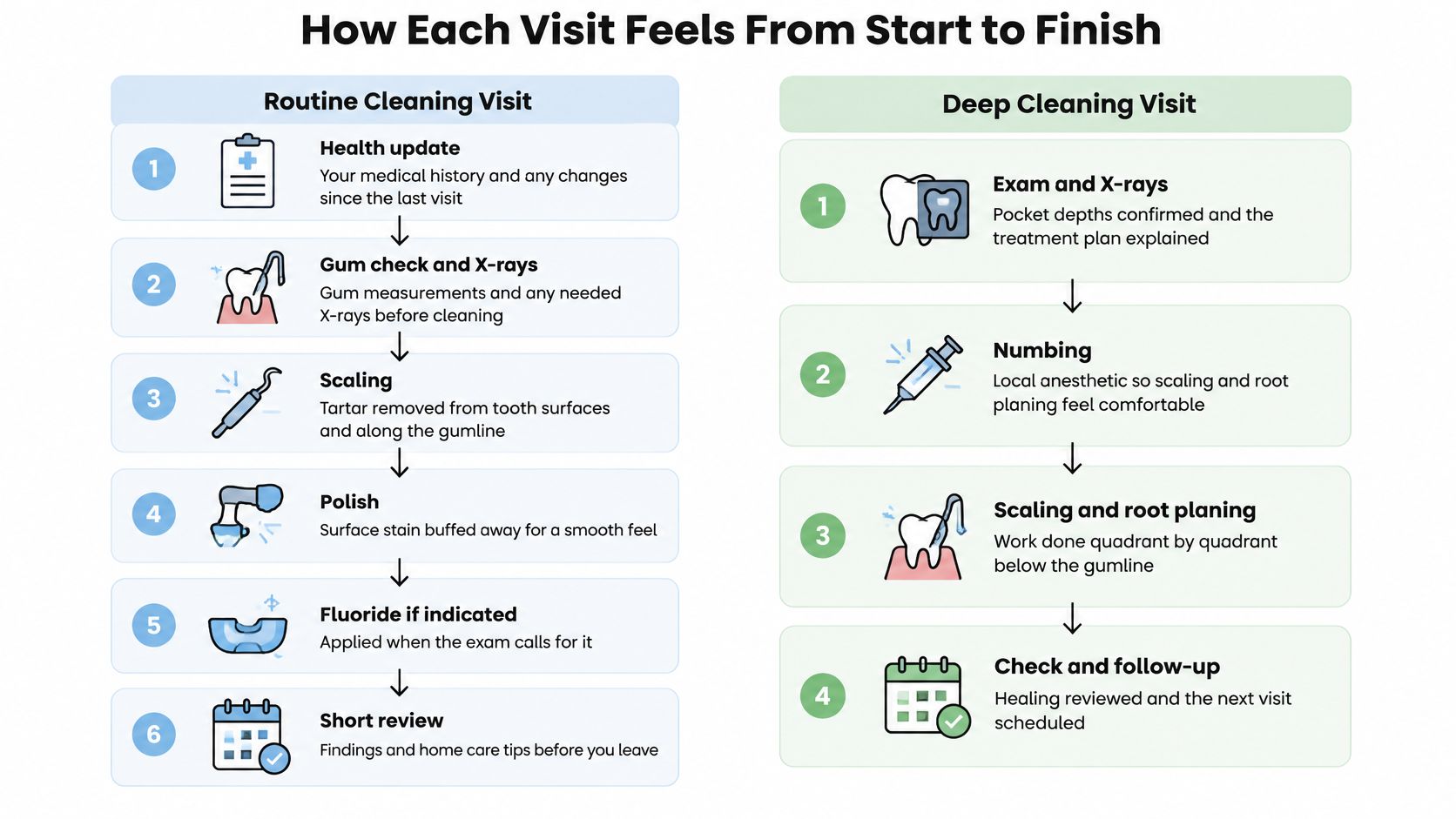
How Each Visit Feels From Start to Finish
Knowing the order of care can make an unfamiliar appointment feel more manageable. This process guide shows the usual sequence, although your exam may change which steps are needed.
During a routine cleaning
The visit begins with a health update, including medication changes and any new symptoms. Gum evaluation and dental X-rays, when indicated, help establish whether preventive cleaning is appropriate.
The hygienist removes deposits using hand instruments, an ultrasonic scaler, or both. You may notice vibration, cool water, and scraping sensations; routine cleaning usually doesn't require numbing. Polishing addresses surface stains, and fluoride may be recommended according to your cavity risk.
Before you leave, we review findings and demonstrate any useful adjustments to brushing or cleaning between teeth. Eating instructions depend on any fluoride product used rather than on polishing alone.
During periodontal treatment
For deep cleaning, the clinician confirms the affected areas and discusses comfort before beginning. As described in the CDC's gum disease guidance, treatment addresses deposits beneath the gums and may involve root planing, local anesthetic, treatment by sections, and individualized home-care instructions.
Local anesthetic helps control discomfort while the clinician works on diseased root surfaces. Root planing smooths irregular areas after deposits are removed, and an antimicrobial rinse may be included when appropriate.
- Know today's treatment area. Ask which teeth or sections are being treated and whether another appointment is planned.
- Discuss anxiety beforehand. We offer sedation options, which are discussed at the consultation before deep cleaning is scheduled.
- Use available comfort features. Our amenities include aromatherapy, heated massage chairs, and noise-cancelling headphones.
Patients traveling from Katy Lakes, The Grange, or Marisol can also clarify their appointment sequence before arranging work or family commitments. If sedation is planned, follow the specific preparation and transportation instructions provided.
This video offers another way to become familiar with periodontal cleaning.
After the appointment
Following SRP, you may experience temporary gum tenderness or sensitivity to cold. Teeth can appear longer as swollen tissue settles, revealing root surfaces that were previously less noticeable.
Wait until numbness has worn off before chewing, and follow the personalized eating and cleaning instructions you receive. Use a soft toothbrush gently rather than abandoning the treated area, and contact us if pain worsens, swelling develops, or bleeding concerns you.
Which Cleaning Fits Common Katy Situations
A healthy mouth before a special occasion. Say you live in Anniston or Katy Manor and want surface stains removed before wedding photographs. If your gum findings are stable and there's no active disease, routine cleaning is the appropriate preventive service, not deep cleaning because you want a brighter smile.
Stain removal also isn't the same as changing tooth color. A cosmetic dentistry conversation can address whitening separately, without relabeling periodontal treatment as a beauty service.
When only part of the mouth needs treatment
A new patient from Lakehouse or Ventanna Lakes might have bleeding, diseased pockets around the lower front teeth but healthy findings elsewhere. A targeted plan can address those affected roots without assuming every tooth needs SRP.
Our guide to early signs of gum disease can help you organize symptoms to discuss during your exam. Symptoms help start the conversation; charting determines the treatment category.
- Smoking or diabetes. CDC surveillance from 2009–2014 found periodontitis in about 62% of current smokers aged 30 and older and about 60% of adults with diabetes, as summarized in the CDC-supported periodontal report. These risks support careful assessment, not automatic treatment in the absence of a diagnosis.
- An upcoming restoration. Someone considering a crown, bridge, or implant needs an assessment of the tissues that will support the result. We treat and resolve periodontal disease before dental implant surgery proceeds.
Planning the next clinical step
If you're searching for dental implants near me, a cosmetic dentist near me, or help with a damaged tooth, mention that goal during the periodontal assessment. Fillings, cracked-tooth repair, and other restorative dentistry can then be coordinated with gum treatment; urgent problems may need a different sequence.
Bring prior X-rays if they're available. Comparing records helps explain whether a recommendation reflects a genuine change in your mouth rather than merely a different appointment label.
Follow-Up Timing and What the Visit Costs
A cleaning schedule and a dental examination schedule aren't necessarily the same thing. Your need for decay screening, symptom assessment, or monitoring may differ from your need for professional deposit removal.
Among adults without severe periodontitis, a Cochrane review of routine scale and polish found little or no difference over two to three years in gingivitis, probing depths, plaque, or oral-health quality of life between six-monthly, 12-monthly, and clinically indicated treatment. That finding doesn't mean preventive dental visits are unnecessary.
Choose follow-up for your risk
Exams, indicated X-rays, decay screening, and home-care coaching still serve important purposes. Gum status, cavity risk, tobacco use, diabetes, medication-related dry mouth, and access to care should help determine your recall plan.
Following SRP, a healing assessment checks the response before ongoing periodontal maintenance is established. Maintenance addresses residual problem areas and monitors for recurrence; it isn't a promise that treatment has permanently eliminated susceptibility to disease.
You're paying for diagnosis and appropriate care, not simply a shinier tooth. A polished surface alone doesn't establish that the gums are healthy.
Compare the package, not just the price
For a national benchmark, CareCredit's 2023–2024 cost study reported an average of $203 for a routine dental exam including a full cleaning and X-rays, according to Check Dental Cost. That's a comparison point, not a Katy-specific quote or a price for periodontal therapy.
Our New Patient Special is $139 and includes an exam, oral cancer screening, adult basic cleaning, and full-mouth X-rays. The basic cleaning component is appropriate when the exam supports prophylaxis; it shouldn't be mistaken for an SRP package.
For ongoing preventive care, the Healthy Adult Plan costs $299 per year and includes:
- Preventive visits. Two annual checkups and cleanings.
- Screening and imaging. One annual oral cancer screening and any additional X-rays needed.
- A limited evaluation. One limited exam and X-rays.
- Procedure savings. Twenty percent off any procedure.
For patients comparing dental cleaning costs without insurance, the important distinction is what each option includes. A preventive membership benefit doesn't change a periodontal diagnosis.
Deep cleaning requires a personalized estimate based on the treatment plan and affected areas. We provide personalized cost estimates through consultation and offer flexible financing options, so you can discuss the proposed care and payment approach before proceeding.
Book the Right Cleaning in Katy
You don't need to diagnose your gums before making an appointment. You only need to describe what you've noticed, and the exam does the rest. Bleeding when you floss, a hygienist mentioning "deeper pockets," or a planned crown waiting on healthier gums are all worth saying out loud when you book, because each one points the visit in a slightly different direction.
If your gums rarely bleed and past visits found stable measurements, request a new-patient exam with routine cleaning, subject to what the exam shows. If you've had frequent bleeding, loose teeth, or a recommendation for deep cleaning, request a consultation and periodontal assessment. The distinction matters because scaling and root planing can be limited to the diseased areas rather than treating the whole mouth, so an accurate chart is what keeps treatment matched to need.
Tell us what prompted your search
Pain deserves its own mention. If you're looking for an emergency dentist because of swelling, severe pain, or a damaged tooth, describe those symptoms rather than booking only a cleaning. Emergency dentistry, root canal therapy, oral surgery, or tooth extraction may be relevant after an assessment, and a cleaning alone won't evaluate the source of pain.
Bring the information that helps the team plan safely:
- Identification and coverage. Your photo identification and insurance card, if you have one.
- Medication details. A current list of prescriptions, nonprescription medicines, and relevant health conditions.
- Previous records. Recent X-rays, periodontal charts, and any proposed treatment plan you want explained.
- Comfort concerns. Mention dental anxiety, past difficulty getting numb, or questions about sedation, since options exist for anxious patients.
A conversation before a commitment
The first visit covers your history and concerns, a gum examination, any needed X-rays, and an explanation of the options. The recommendation may be prophylaxis, localized scaling and root planing, or periodontal maintenance, with a personalized cost estimate before you decide anything. Asking why each option fits your pocket depths and bone support is fair game, and a good answer should reference your actual measurements.
Our Stockdick School Rd. office in Katy offers bilingual service, and Saturday visits are by appointment only. Schedule a personalized consultation, bring your questions, and let the findings determine whether a polish or periodontal therapy is the right fit.
The Dental Retreat offers routine cleanings, periodontal assessment, and scaling and root planing with personalized planning and options for anxious patients. Visit The Dental Retreat to schedule a consultation in Katy and find out which cleaning matches your gum health before treatment begins.