It's 1 a.m. You've brushed, you've rinsed, you've tried lying on the other side, and the tooth that behaved all day is now the loudest thing in the room. You're typing "dentist near me" into your phone with the brightness turned all the way down, hoping someone in Katy is open.
You're not imagining the pattern, and you're not being dramatic. A toothache worse at night is one of the most common reasons people look for an emergency dentist, and the timing itself carries useful information. At The Dental Retreat in Katy, TX, we treat night pain as a clue about urgency, not as a diagnosis. Some patterns can wait for a routine visit. A few can't wait until morning, and knowing which is which lets you stop guessing and start sleeping.
Triage Your Night Toothache at a Glance
Read your own night in this table, then act on the row that fits.
| Night symptom | Likely meaning | What to do tonight | Seek care by |
|---|---|---|---|
| Cold-only sensitivity that fades within seconds | Exposed dentin or enamel wear | Use desensitizing toothpaste and avoid very cold drinks | Routine visit within a few weeks |
| Throbbing that worsens when lying down | Possibly an inflamed tooth nerve | Sleep with head raised and take a pain reliever per label | Dental visit within 24 hours |
| Pain that wakes you from sleep | Advancing decay or pulpitis | Keep head raised, avoid chewing on that side | Same day or first thing next morning |
| Swelling of cheek, jaw or gum | Possible dental abscess | Don't wait; call a dentist now | Same-day dental care |
| Fever of 100.4°F (38°C) or higher, bad taste, trouble swallowing or breathing | Possible spreading infection | Seek emergency care now | Immediately at an emergency room |
How to read the rows without panicking
The rows move from irritation to inflammation to infection. A quick zing from ice water that vanishes in seconds usually means the protective layer over the tooth's inner surface has thinned, not that the nerve is dying. Throbbing that builds when your head goes flat suggests pressure inside an inflamed tooth. Pain that pulls you out of sleep sits higher on the list, because nothing touched it, nothing triggered it, and it still won.
Swelling changes the conversation entirely. Once the cheek, jaw or gum looks puffy, you're no longer managing sensitivity, you're managing a possible infection that needs a dentist that day.
A table sorts patterns. It can't tell you which tooth is involved or how deep the problem goes. Only an examination with dental X-rays can confirm the cause.
If you're in Katy, Sunterra or Cane Island and your pain is wakeful or your face looks swollen, a same-day call is the right move rather than a wait-and-see week.
The rule to remember: the more your pain interrupts sleep, the sooner it needs a dentist.
Why Night Pain Happens and What the Timing Says
Think of the tooth's soft inner tissue, the pulp, as a small water balloon packed inside a shoebox. The walls are hard enamel and dentin, so when that tissue gets inflamed and swells, it has nowhere to expand. Lie down, and pressure in the blood vessels of your head and neck rises slightly, which turns a dull ache into a pulse you can count.
Here's the mechanism in plain terms.
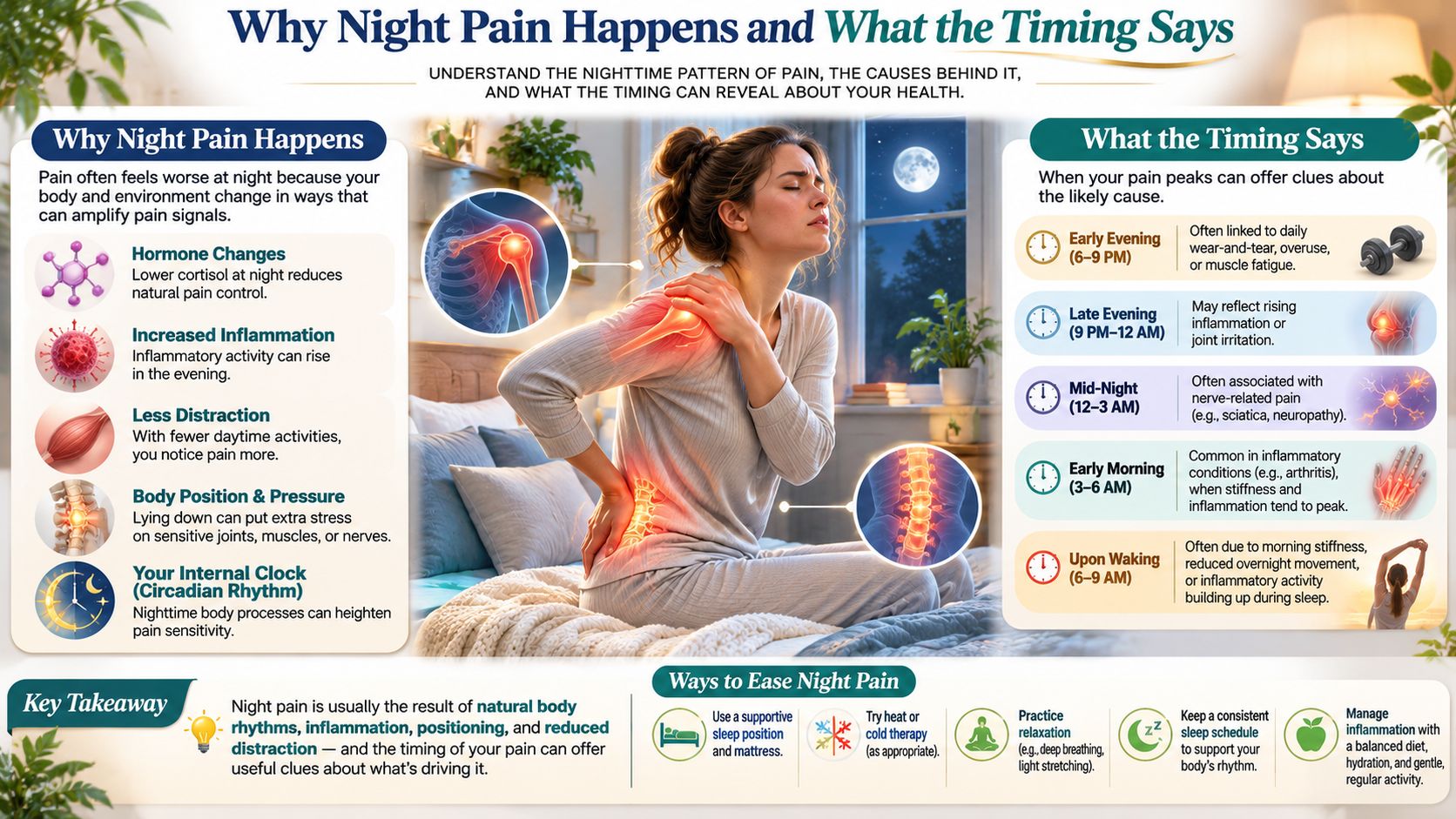
The triggers behind the pattern
Deep decay that has reached the nerve is the usual story. A crack does it too, as does a fall or a bite down on something hard like an unpopped kernel. Upper back teeth add a twist: their roots sit close to the sinus, so congestion can make several upper teeth ache at once when you lie flat or bend forward. Nighttime clenching loads an already sore tooth for hours, which is why understanding what causes teeth grinding at night sometimes explains a morning ache better than any cavity does.
What the timing research actually shows
Toothache that worsens at night is clinically linked to inflammation inside the tooth, especially pulpitis, because inflamed pulp is confined within rigid dentin with very little room to swell, and the International Endodontic Journal review of circadian pain responses after pulp exposure describes a diurnal pattern with marked nighttime exacerbation that disrupts sleep and quality of life. That 2026 experimental work used mice, so it explains direction, not a percentage of human patients. In healthy people, a controlled study of 136 men found cold-stimulus pain thresholds in front teeth highest in the early afternoon and lowest in the early morning, and electronic pulp testing showed significant daily rhythms in 21 of 28 volunteers, according to the published threshold research. Your teeth are more sensitive to pain at certain hours.
Watch this short explanation of night pain before you sort your own pattern.
Sorting your pattern, then logging it
Brief cold pain that fades in seconds behaves like sensitivity. Pain that arrives on its own, lingers well past a minute after hot or cold, wakes you, or eases when you sit upright points toward symptomatic irreversible pulpitis, an inflamed nerve that generally won't settle without treatment. A sharp sting right as you release a bite suggests a crack.
Keep a log for two or three nights: the time pain started, what triggered it, how long it lasted, whether you were flat or upright, and whether sitting up helped.
Bring the log: five lines of notes tell us more in ten seconds than a vague "it hurts sometimes" does in ten minutes.
Safe Relief Steps Until You Can See a Dentist
Everything below buys hours, not a cure. Use it to get through the night, then get the tooth looked at.
| Option | How it helps | Limits |
|---|---|---|
| Pain reliever taken per label directions | Eases pain and inflammation | Masks symptoms; doesn't fix the cause |
| Cold compress on the cheek for 15 minutes | Numbs and calms swelling | Never place ice directly on skin |
| Head raised on two pillows | Reduces pressure-related throbbing | Doesn't stop the underlying problem |
| Warm salt water rinse | Clears food debris around the tooth | Not a substitute for dental treatment |
| Aspirin placed on the gum | Not recommended | Can burn gum tissue |
An overnight routine in order
- Take an over-the-counter pain reliever exactly as the label directs, with food if the label says to.
- Wrap a cold pack or a bag of frozen peas in a thin towel and hold it against the outside of your cheek for 15 minutes, then rest before repeating.
- Prop your head on two pillows so you're not lying flat.
- Stir half a teaspoon of salt into a cup of warm water and swish gently after meals, letting it fall out of your mouth rather than spitting hard.
- Brush around the sore tooth with a soft brush and floss gently between the teeth. Trapped food is a real pain source, and clearing it sometimes takes the edge off.
- Skip very hot, very cold, very sweet and very chewy food on that side until you're seen.
Dosing safety and what to skip
Write down the clock time of every dose. Treat the label's 24-hour maximum as a ceiling, not a target, and don't stack two products that share the same active ingredient, since many combination cold and pain medicines contain the same one. Ask a pharmacist before mixing anything.
No heat on a swollen area, no chewing on the sore side, and no diagnosis built on how things feel at 3 a.m.
Practical rule: if relief wears off well before your next allowed dose, or the ache spreads into your jaw, that's a reason to call a dentist, not to double up.
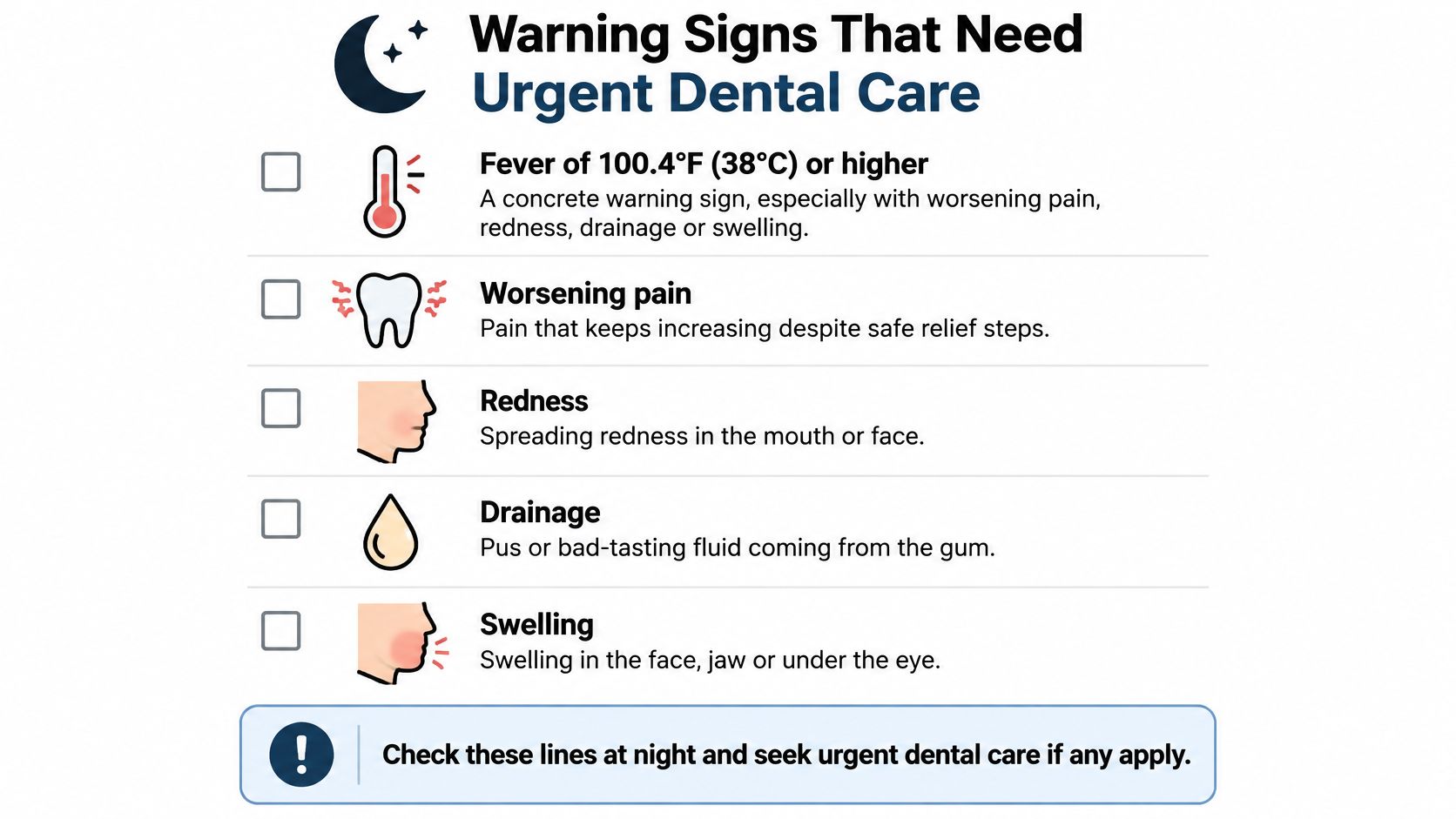
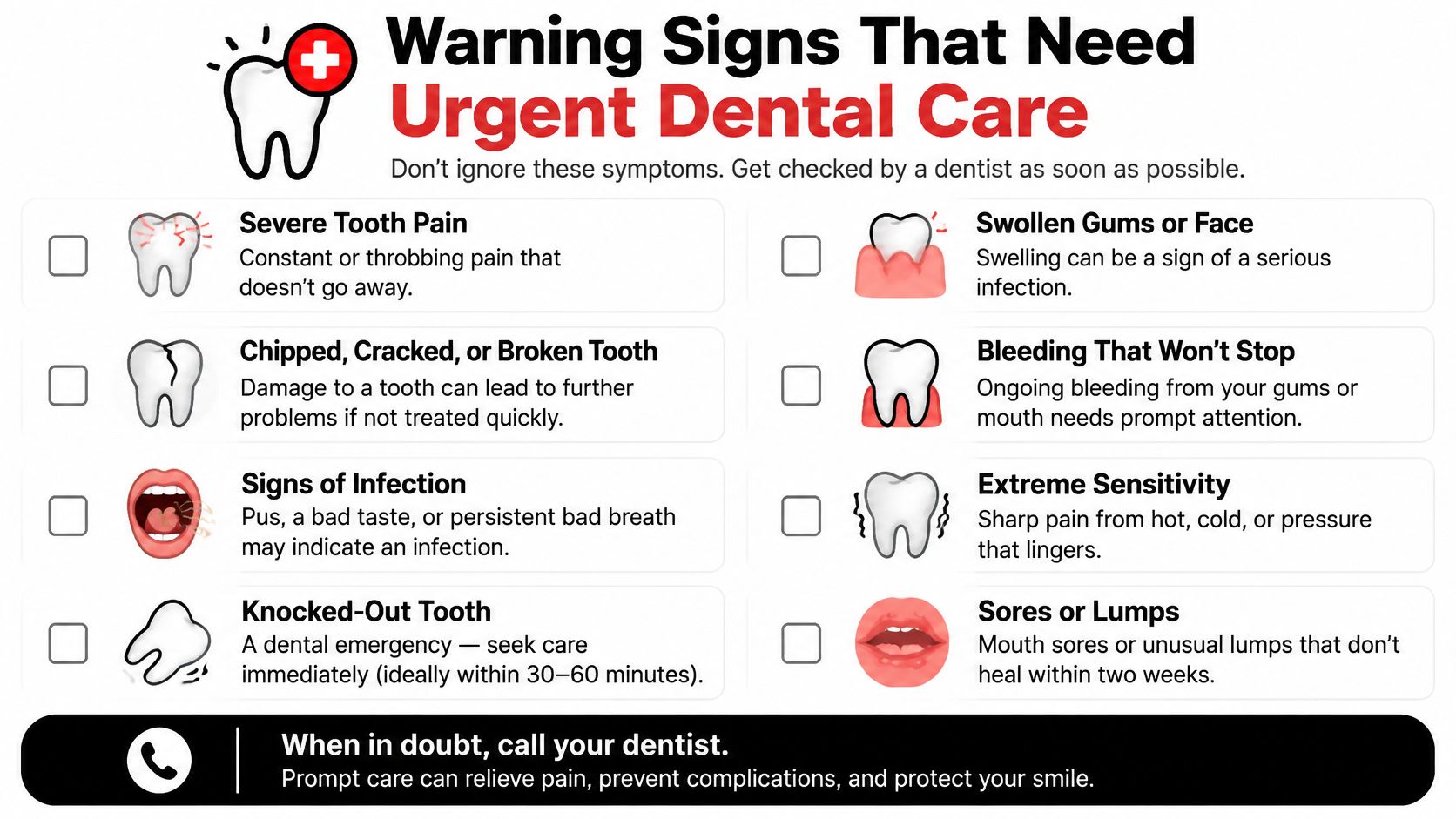
Warning Signs That Need Urgent Dental Care
Night-time pain is a clue, not a diagnosis. The symptoms alongside it determine whether you should call a dentist today or go to an emergency department now. A dental abscess is a pocket of pus in a tooth or gum. It can cause intense pain, swelling and fever, but pain intensity alone doesn't show how far an infection has spread.
Dental red flags that mean call today
- Duration: pain lasting more than two days, or not improving with over-the-counter medicine, needs dental assessment, per NHS toothache advice.
- Biting pain: pain when you close down can signal a crack or a problem around the root. Avoid chewing on that tooth while arranging care.
- Gum changes: red or swollen gums, or a pimple-like bump, deserve a same-day call.
- Bad taste: a foul or salty taste alone may mean drainage. Call a dentist today, even if the pressure or pain eases.
- Visible swelling: a puffy cheek or jaw needs urgent dental attention, even without much pain.
An abscess won't resolve on its own. Drainage can release pressure like opening a valve, while leaving the source of infection behind. That is why recognizing the signs you need a root canal matters more than finding a stronger painkiller.
Medical emergencies, not dental appointments
A fever of 100.4°F (38°C) or higher together with a foul taste, trouble swallowing or trouble breathing means seek emergency care now; NHS guidance on dental abscess also identifies breathing or swallowing difficulty and substantial swelling as emergency warning signs.
Trouble swallowing or breathing requires emergency care even without a measured fever. So does swelling around the eye or neck, or swelling that spreads quickly. Don't wait for the dental office to open.
Without those emergency signs, use temporary relief only while arranging urgent dental care. Severe pain still needs attention when there is no swelling.
U.S. emergency departments averaged 1,944,000 visits a year for tooth disorders during 2020–2022, according to national emergency-department data on tooth disorders. A 2025 survey found about 4% of U.S. adults, roughly 10.7 million people, reported an emergency-department visit for oral pain or another dental problem in the prior year, according to national reporting on dental emergency-department use.
Hospitals can treat dangerous infection, but the tooth usually still needs dental treatment.
What to Expect at Your Katy, TX Dental Visit
Say you call at 8 a.m. after a night of throbbing in a lower back tooth. Here's how that visit usually runs at our Katy office.
We start by talking, not drilling. The team reviews each patient's oral health history, aesthetic preferences, and any concerns or anxieties from the first consultation onward, so tell us about the medications you took overnight, the last dose time, and whether dental visits make you tense. Your two-night log gets read out loud here, and it shapes what we test.
The examination and the images
Next comes a focused check of the sore tooth, the gums around it and your bite. We tap gently, test cold response, and look for a crack line or a swollen gum margin. Then dental X-rays show what your eyes and ours can't: how deep decay runs, whether bone around the root tip has changed, whether an old filling has leaked underneath.
The plan, in plain words
- Shallow problem: a filling replaces the decayed part and seals the tooth.
- Inflamed or infected nerve: root canal therapy removes the damaged pulp and keeps your natural tooth in place.
- Tooth that can't be saved: a tooth extraction removes the source of infection, and we talk about replacement options afterward.
Treatment is done under local numbing, so most patients feel pressure and vibration rather than sharp pain. If anxiety is the bigger obstacle, sedation options are available, and the room comes with noise-cancelling headphones and a heated massage chair.
Patients in Sunterra, Cane Island, Katy Manor, Lakehouse and nearby neighborhoods can ask about same-day visits when they call.
The cost conversation, before anything starts
Ask for a written estimate before treatment begins. Check what your insurance covers, and confirm whether the exam and X-rays are billed separately from the treatment itself. A plan you understand is a plan you can say yes to, and nothing about an urgent toothache should leave you guessing about the bill afterward.
Book a Same-Day Toothache Visit in Katy, TX
Make the decision simple. If pain woke you last night, if your face or gum is swollen, or if the ache has hung on more than two days, book now instead of waiting for your next cleaning or new patient exam.
The Dental Retreat is a patient-centered practice in Katy offering emergency dentistry, dental X-rays and toothache treatment, with a calm pace for anyone who dreads the chair. Longer-term work such as cracked-tooth repair, dental crowns and dental implants gets planned once the urgent tooth is quiet, which is also the right order clinically: stop the pain, then rebuild.
How to book when it hurts
Call the office and use the words "night pain" early in the sentence. Read out your pattern: when it starts, how long it lingers, whether sitting up helps. Then ask directly whether a same-day slot is open.
If the line is busy, request an appointment online so your details are already in the queue. If we're closed, leave a message with a callback number and call again at opening. Say whether you've had swelling or fever, because that changes how quickly we want to see you.
Readers in Elyson, Ventanna Lakes, Katy Lakes and across Katy are all within a short drive of the office, and none of you needs to tough out another night of guessing.
Prompt care usually brings the fastest relief and the best long-term outcome for a sore tooth. The tooth that gets examined while the problem is still small is the tooth you're most likely to keep.
The Dental Retreat in Katy, TX provides same-day emergency dental care, digital X-rays, fillings, root canal therapy and tooth extractions in a calm, spa-inspired setting built for nervous patients. If your toothache is worse at night, bring your two-night pain log and let our team find the cause before another sleepless week goes by. Visit The Dental Retreat to request your appointment or call the office and ask for a same-day toothache visit.